Search results
Search for "model" in Full Text gives 1656 result(s) in Beilstein Journal of Nanotechnology. Showing first 200.
Dendrimer-modified carbon nanotubes for the removal and recovery of heavy metal ions from water
Beilstein J. Nanotechnol. 2025, 16, 1522–1532, doi:10.3762/bjnano.16.107

- ions (Pb2+ and Cd2+) from aqueous solutions with enhanced recyclability than less dendrimerized CNTs. Kinetic studies have revealed that the adsorption process followed a pseudo-second order kinetic model, and the rate-limiting step was mainly chemisorption. This study has not only excluded the
- models: pseudo-first order and pseudo-second order. These models have been described by their respective equations (Supporting Information File 1, Equations S1 and S2). For the pseudo-first order kinetic model, a linear plot of ln(qe − qt) as a function of time (t) was drawn at different initial
- concentrations of metal ions (Figure 4a and Supporting Information File 1, Table S1). The correlation coefficients were calculated to be relatively low. In contrast, the pseudo-second order kinetic model represented by the plot of t/qt against time (t) demonstrated a much better fit with higher correlation


Laser processing in liquids: insights into nanocolloid generation and thin film integration for energy, photonic, and sensing applications
Beilstein J. Nanotechnol. 2025, 16, 1428–1498, doi:10.3762/bjnano.16.104
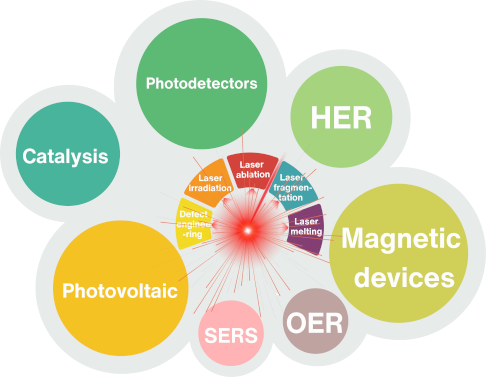
- model, which was experimentally validated. In 2010, as research on pulsed laser irradiation progressed, Koshizaki’s group explored the potential of non-focused laser beams with moderate fluence, lower than the ablation threshold, to irradiate colloidal NPs [42][48][49][64][65][66][67]. Their findings
- used to deposit photoresist films for microelectronic manufacturing, where understanding the interaction between liquid flow and mass transfer during the process became crucial as device sizes decreased. A one-dimensional model of spin coating was developed to describe film thinning due to both
- thicknesses ranging from micrometers to nanometers. A mathematical model was derived to explain the dominant mechanisms in film formation, considering factors such as evaporation and shear stress, and extending the analysis to non-Newtonian fluids [102]. Despite its widespread use, the process faces






The role of biochar in combating microplastic pollution: a bibliometric analysis in environmental contexts
Beilstein J. Nanotechnol. 2025, 16, 1401–1416, doi:10.3762/bjnano.16.102
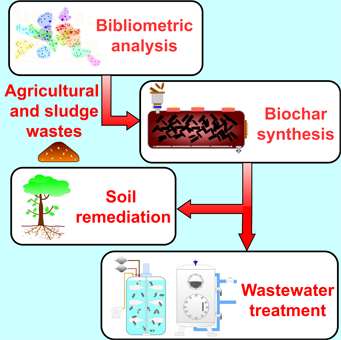
- interactions in soil [31]. Biochar properties The physical and chemical properties of biochar depend significantly on the composition of its feedstock [46]. Molecular model calculations and quantum chemistry analyses suggest that biochar derived from wood exhibits superior physical properties, such as porosity
- Information File 1, covering a range of MPs, including PE, PS, polyamide (PA), and mixtures such as LDPE, polyethylene terephthalate (PET), PA, polycarbonate, PE, PS, and PVC [33][42][66][67]. Among these, PS is frequently utilized as a model MP due to its uniform composition and quantifiability, making it a
- the heart and kidneys [69]. Therefore, the removal of increasingly smaller MPs has become an urgent focus in MP treatment research. The treatment of PS using biochar derived from London plane tree pyrolyzed at 550 °C in a complete mixing model demonstrated an adsorption capacity of 60.05 mg·g−1



Synthesis and antibacterial properties of nanosilver-modified cellulose triacetate membranes for seawater desalination
Beilstein J. Nanotechnol. 2025, 16, 1380–1391, doi:10.3762/bjnano.16.100
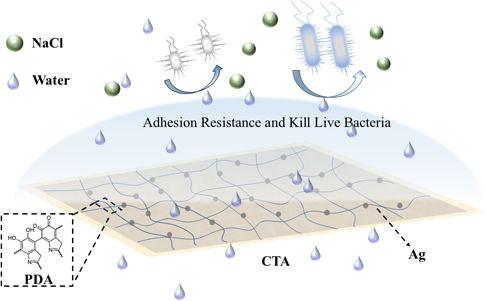
- membrane exhibited significant antibacterial activity, reducing the number of attached live bacteria by 80−95% for three different model bacterial strains (Escherichia coli, Pseudomonas aeruginosa, and Staphylococcus aureus). The Cu NPs could be reloaded onto the membrane surface after depletion


Automated collection and categorisation of STM images and STS spectra with and without machine learning
Beilstein J. Nanotechnol. 2025, 16, 1367–1379, doi:10.3762/bjnano.16.99
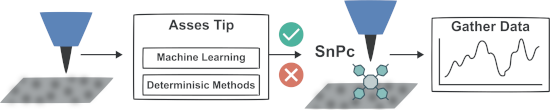
- work aimed to classify the state of a STM tip based on STS measurements of the Au(111) surface. Using a total of 1789 archived spectra, a ML model was trained which aimed to classify new spectra into one of five categories, based on the similarity of each the spectrum to an idealised surface state
- addition to the lack of data, ML models require careful labelling and a high level of knowledge from the labeller to be able to train such a model. Switching to a new substrate system is likely to require retraining of the model, and furthermore, even after a successful training, it is still often unclear
- what the model is learning from the input data, a problem which leads to these models being referred to as a “black box”. Because of these limitations, there is a strong case to develop methods which do not rely on ML, circumventing these drawbacks whilst still being able to make precise




Enhancing the therapeutical potential of metalloantibiotics using nano-based delivery systems
Beilstein J. Nanotechnol. 2025, 16, 1350–1366, doi:10.3762/bjnano.16.98
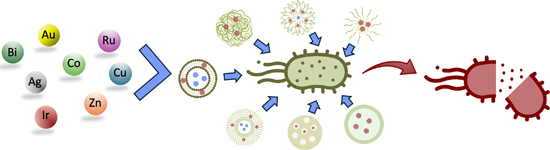
- zebrafish embryo model, showing improved survival rates against pneumococcal infections on treatment with auranofin-loaded NPs compared to free auranofin. In another example, the gold(III) bisdithiolate complex 11 (Figure 4) was encapsulated in block copolymer micelles (BCMs) to improve solubility


Deep-learning recognition and tracking of individual nanotubes in low-contrast microscopy videos
Beilstein J. Nanotechnol. 2025, 16, 1316–1324, doi:10.3762/bjnano.16.96
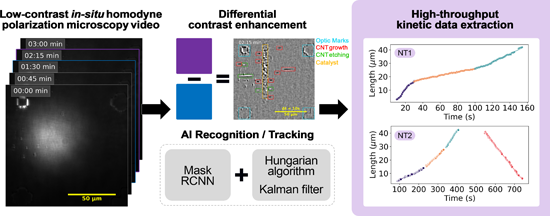
- series of video processing steps to enhance contrast and used differential treatment techniques to manage low signal and fast kinetics. The DL model demonstrates consistency with manual measurements and increased throughput, laying the foundation for statistical studies of nanotube growth. The approach
- filtering, and object edge contrast was enhanced using Gaussian difference filtering. Finally, image contrast was optimized through histogram equalization [10]. Deep learning model The deep learning model and its training are detailed in Supporting Information File 1. In short, an image recognition system
- a deep learning model to recognize and track both growing nanotubes (dark segments) and structural changes (bright segments) in such differential videos. The model was also trained at recognizing optical marks and catalyst lines (Figure 2) [20]. Kinetic data extraction proceeded in the following


Wavelength-dependent correlation of LIPSS periodicity and laser penetration depth in stainless steel
Beilstein J. Nanotechnol. 2025, 16, 1302–1315, doi:10.3762/bjnano.16.95
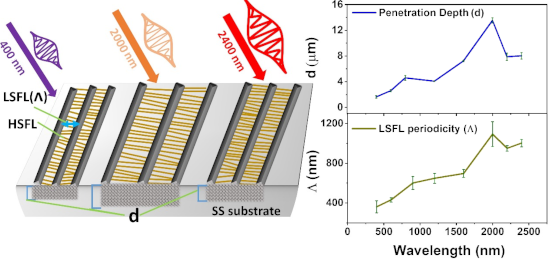
- wavelength remains not fully understood, despite numerous studies on this topic. The most puzzling aspect of our current results is the decrease in the periodicity of LIPSS after irradiation with wavelengths beyond 2000 nm. Further experiments and theoretical studies are necessary to develop a precise model
- or understand the underlying mechanisms. In pursuit of this understanding, we monitored the formation of plasma and the depth of laser penetration inside the material for all wavelengths of femtosecond laser irradiations. According to the plasmonic model, when the radiation is incident at a normal
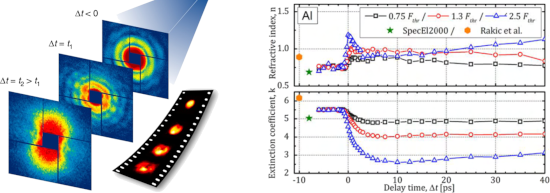
- medium) and εm = (n + ik)2, n is the real part of the refractive index of the metal, and k is the coefficient of extinction. According to this model, the periodicity should exhibit an increasing trend with wavelength when there is no resonance. However, the experiments presented in this work show some




Acrocomia aculeata oil-loaded nanoemulsion: development, anti-inflammatory properties, and cytotoxicity evaluation
Beilstein J. Nanotechnol. 2025, 16, 1277–1288, doi:10.3762/bjnano.16.93
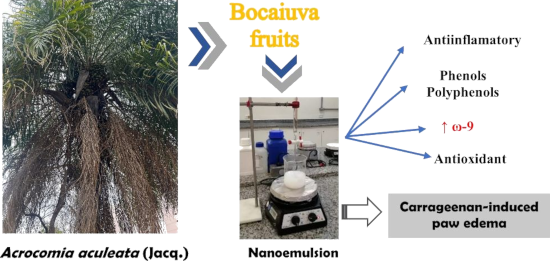
- [52]. In this study, acute inflammation was induced via subplantar injection of carrageenan, a sulfated polysaccharide known to stimulate edema through the release of pro-inflammatory mediators associated with hyperalgesia and vascular alterations [53][54]. The paw edema model provides a reliable
- efficient interaction with cellular receptors, contributing to its heightened bioactivity [57]. Collectively, these findings suggest that bocaiúva oil-based nanoemulsions hold promising potential as anti-inflammatory agents. Further analysis using the carrageenan-induced paw edema model revealed that the


Better together: biomimetic nanomedicines for high performance tumor therapy
Beilstein J. Nanotechnol. 2025, 16, 1246–1276, doi:10.3762/bjnano.16.92
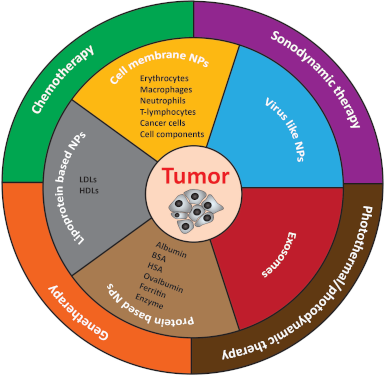
- ) surface coupling (Figure 3). Generally, RBC membranes can be separated by hypotonic treatment to remove intracellular components (Figure 3A,B). Erythrocyte drug loading has been demonstrated by encapsulating artemether as a model drug and using different modifications of the hypotonic methods [27]. When






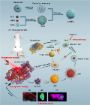

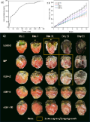
Functional bio-packaging enhanced with nanocellulose from rice straw and cinnamon essential oil Pickering emulsion for fruit preservation
Beilstein J. Nanotechnol. 2025, 16, 1234–1245, doi:10.3762/bjnano.16.91
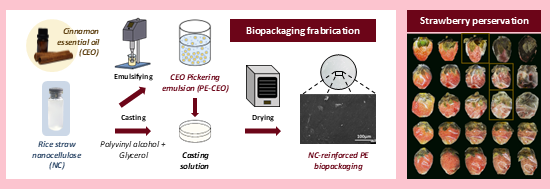
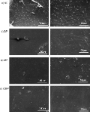
- materials (BP, rBP, and rCBP) was observed using a scanning electron microscope (SEM), model Primas E (US). The samples were coated with Pt for 30 s prior to measurement. Bioactive properties UV absorption. Transparency and UV absorption of the films were determined using UV–vis spectroscopy in the



Hydrogels and nanogels: effectiveness in dermal applications
Beilstein J. Nanotechnol. 2025, 16, 1216–1233, doi:10.3762/bjnano.16.90
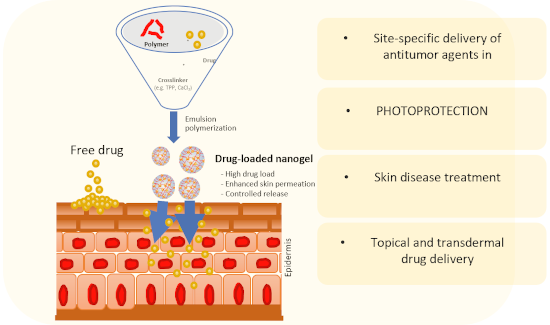
- suppressions of ear edema, pruritus, high IgE levels, epidermal swelling, and mast cell infiltration in Balb/c mouse model [62]. Temperature- and pH-responsive hydrogels loaded with gallic acid were developed using a combination of biocompatible polymers: Pluronic F-127, N,N,N-trimethyl chitosan, and
- polyethylene glycolated hyaluronic acid. The system was designed to be incorporated into therapeutic fabrics for transdermal application, making it a potentially valuable tool for treating conditions such as atopic dermatitis. The release mechanism of gallic acid followed a first-order kinetic model, in which
- test was performed with a collagen-induced arthritis model. The methotrexate nanogel showed significant improvement in the hind paw edema, reduced arthritic score, reduction in joint damage (histological and radiological), and attenuation of serum cytokines levels, such as TNF-alpha and IL-6. The


Investigation of the solubility of protoporphyrin IX in aqueous and hydroalcoholic solvent systems
Beilstein J. Nanotechnol. 2025, 16, 1209–1215, doi:10.3762/bjnano.16.89
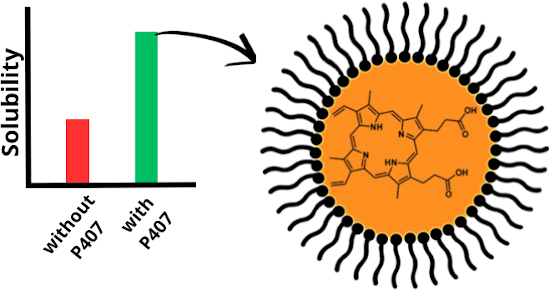
- min. The dissolution profiles of the micellar systems were also evaluated using the Korsmeyer–Peppas model with lag time (tlag), which indicated a Fickian diffusion mechanism, preceded by a thermodynamically driven accommodation stage of PpIX into the micelles. The solubility of PpIX ranged from 0.138
- , including zero-order, first-order, Higuchi, and Korsmeyer–Peppas were evaluated for both conventional and micellar systems. However, most of them could not fit the results. The best fit was obtained by using the Korsmeyer–Peppas model with lag time (tlag), only for the systems containing P407 (Table 1). The
- lag time parameter in the model reflects the initial phase of micelle formation and the subsequent accommodation of PpIX into the micellar core, which precedes the diffusion-driven dissolution process [23]. Among the systems evaluated, water + P407 and EtOH77 + P407 exhibited the highest correlation


Chitosan nanocomposite containing rotenoids: an alternative bioinsecticidal approach for the management of Aedes aegypti
Beilstein J. Nanotechnol. 2025, 16, 1197–1208, doi:10.3762/bjnano.16.88
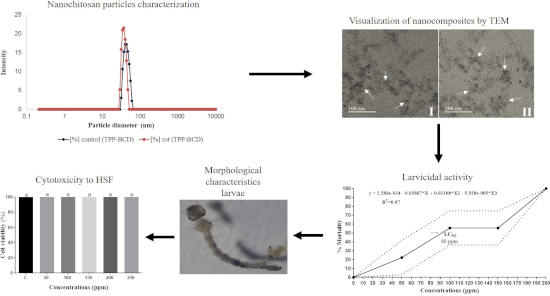
- (WHO) for larvicidal bioassays, which applies the cumulative normal distribution model. In contrast, the bioassay conducted with the nanocomposite produced by the conventional ionic gelation method (CS/TPP–rot, Figure 5A) showed an LC50 of 157.02 ppm and an LC90 of 246.52 ppm, a value notably higher
- Probit regression performed in RStudio with the glm() function (binomial family, probit link). The lethal concentrations (LC50 and LC90) were calculated based on the estimated model parameters [40]. Cellular viability assessment by MTT assay The cellular viability of human skin fibroblasts (HSF) exposed
- formazan crystals were solubilized with acidified isopropanol, and the absorbance was measured at 570 nm using a microplate reader (Thermo Labsystems Multiskan, model 352). A positive control (2% Triton X-100) and a negative control (culture medium without treatment) were used. Cellular viability was



Electronic and optical properties of chloropicrin adsorbed ZnS nanotubes: first principle analysis
Beilstein J. Nanotechnol. 2025, 16, 1184–1196, doi:10.3762/bjnano.16.87
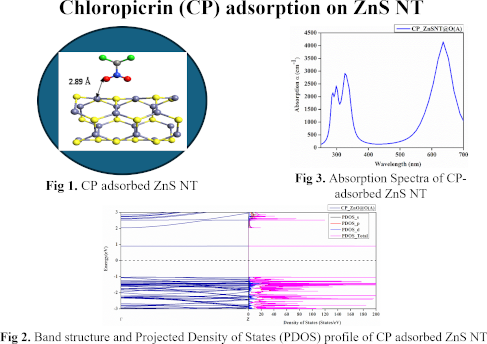
- the axis of the nanotube. A density mesh cutoff of 150 Rydberg was applied to define the real-space grid for energy calculations. The ZnS NT model, consisting of 36 atoms periodically arranged along the Z-direction, was structurally optimized to achieve geometric and energetic stability. Optimization


Mechanical stability of individual bacterial cells under different osmotic pressure conditions: a nanoindentation study of Pseudomonas aeruginosa
Beilstein J. Nanotechnol. 2025, 16, 1171–1183, doi:10.3762/bjnano.16.86
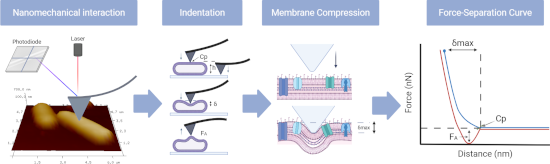
- from hypotonic to hypertonic solutions suggest a softening of the outer envelope, which we associate with intense dehydration and membrane separation between inner and outer envelopes. Application of a contact mechanics model to account for the minute differences in mechanical behavior upon deformation
- Young’s modulus is extracted after a mechanics model has been chosen in the analysis software and the appropriate parameters between the AFM tip and sample have been given. Although the apex of the tip used in this case is not a perfect cone, and the radius of the tip is about 10% of that of PA, analysis
- of the force response obtained in the force curves suggests that the Sneddon model provides a better description for the induced deformation than that of the Hertz model for the case when a spherical tip indents on an elastic planar half-space. Under the frame of the Sneddon model, a rigid conical


Transfer function of an asymmetric superconducting Gauss neuron
Beilstein J. Nanotechnol. 2025, 16, 1160–1170, doi:10.3762/bjnano.16.85
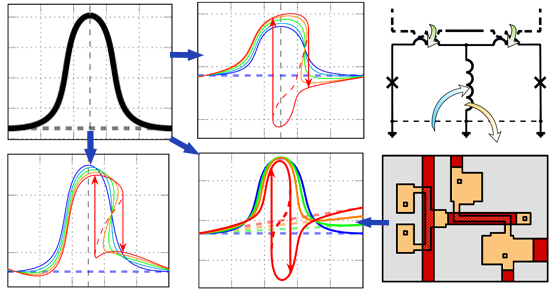
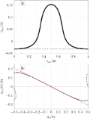
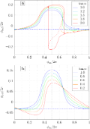
- asymmetry in our model, since they are generated through a single element Lout, common to both receiving loops. Nevertheless, Lout can lead to an effective asymmetry of the input signal supply, as will be shown below. Let us try to apply the results obtained above to the experimental data presented in our



Crystalline and amorphous structure selectivity of ignoble high-entropy alloy nanoparticles during laser ablation in organic liquids is set by pulse duration
Beilstein J. Nanotechnol. 2025, 16, 1141–1159, doi:10.3762/bjnano.16.84
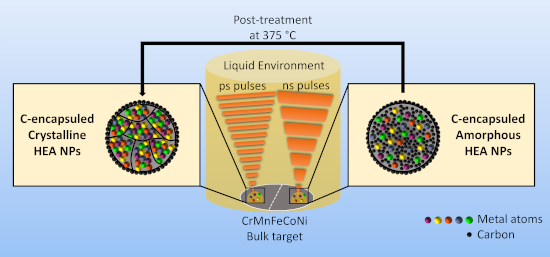
- , those numbers as well result from a computational model of pure silver and FeNi in water for ps-LAL and ns-LAL; therefore, transferability to HEA NPs in organic solvents may be limited. Additionally, the longest calculated pulse in [64] has a length of 2 ns, whereas in this work the pulse duration is 10




Deep learning for enhancement of low-resolution and noisy scanning probe microscopy images
Beilstein J. Nanotechnol. 2025, 16, 1129–1140, doi:10.3762/bjnano.16.83
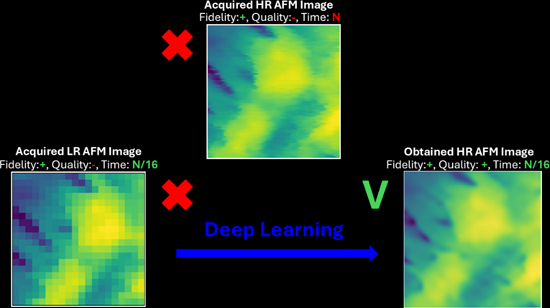
- , which may affect the reported metrics. Furthermore, deep leaning models, as a rule of thumb, perform better when they are trained on large data sets. Since we had a relatively small number of images, we opted out of training a custom model and instead chose to use state-of-the-art pre-trained deep
- , RDN, and EDSR) [27][28][29][30][31]. The model architectures are built of residual convolutional neural network blocks while each of them integrates a unique algorithmic component (see “Methods”, “Computational Pipeline” section: “Traditional methods and deep learning super-resolution models”). For
- to align and crop the images so that corresponding low- (or the model-reconstructed high-resolution image) and high-resolution GT images were perfectly aligned. In addition to reference-based fidelity methods, no-reference methods were used to assess the quality of the 4× upscaled images. In this


Towards a quantitative theory for transmission X-ray microscopy
Beilstein J. Nanotechnol. 2025, 16, 1113–1128, doi:10.3762/bjnano.16.82
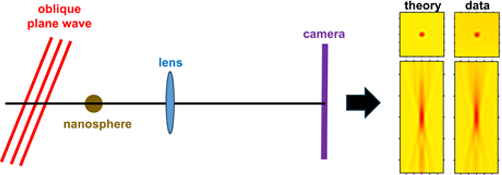
- that this model produces good qualitative agreement with our 3D measurements of 60 nm gold nanospheres, but only if both β and δ for the complex refractive index n = 1 – δ + iβ of gold are included in the model. This shows that both absorption and phase properties of the specimen influence the acquired
- TXM image. The qualitative agreement improves if we incorporate a small tilt into the condenser illumination relative to the optical axis, implying a small misalignment in the microscope. Finally, in quantitative comparisons, we show that the model predicts the nanosphere’s expected absorption as
- determined by Beer’s law, whereas the microscope underestimates this absorption by 10–20%. This surprising observation highlights the need for future work to identify the microscope feature(s) that lead to this quantitative discrepancy. Keywords: 3D imaging; mathematical model; Mie theory; nanoparticle



Influence of ion beam current on the structural, optical, and mechanical properties of TiO2 coatings: ion beam-assisted vs conventional electron beam evaporation
Beilstein J. Nanotechnol. 2025, 16, 1097–1112, doi:10.3762/bjnano.16.81
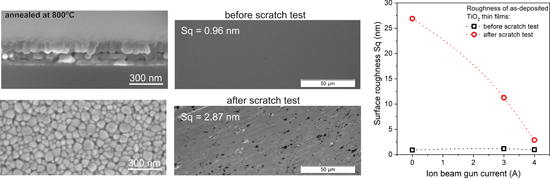
- coating was removed from the substrate (Figure 9c). The results of the mechanical properties after annealing are shown in Table 5 and Figure 10c. Based on the SEM images of the surface morphology and cross sections of the thin films, along with the mechanical results (Table 5), Thornton’s model [66][67




Single-layer graphene oxide film grown on α-Al2O3(0001) for use as an adsorbent
Beilstein J. Nanotechnol. 2025, 16, 1082–1087, doi:10.3762/bjnano.16.79
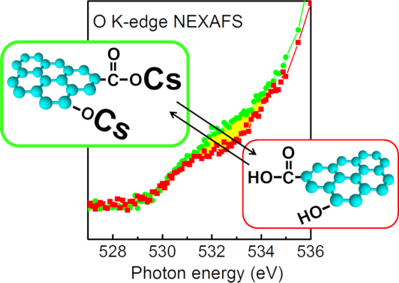
- ions, including radioactive nuclides in aqueous solutions. Large-area and single-layer graphene oxide (SLGO) grown on α-Al2O3(0001) was used as a model structure of GO since the aggregation and re-stacking of the GO sheets prevent the adequate analysis of the adsorption state. The SLGO film was
- the appearance of states derived from oxygen functional groups. Subsequently, the adsorption mechanism of Cs on GO was investigated using SLGO/α-Al2O3(0001) as the model structure. It was found that Cs adsorbs on SLGO by the substitution of H from oxygen functional groups, such as carboxyl and hydroxy


Soft materials nanoarchitectonics: liquid crystals, polymers, gels, biomaterials, and others
Beilstein J. Nanotechnol. 2025, 16, 1025–1067, doi:10.3762/bjnano.16.77
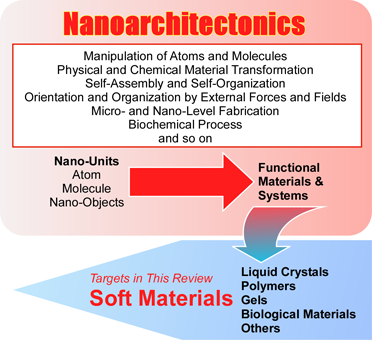
- substrate prepared by sulfonation (Figure 16). The material, which exhibits a bifunctional system of antioxidants and antibacterial properties on its surface, was employed as a model implant to effectively treat diabetic bone defects and restore the integration and remodeling of the implant and surrounding
- material was observed to eliminate excessive oxidative stress, promote the growth of H2O2-injured human umbilical vein endothelial cells, and facilitate the secretion of endothelial growth factor, which is essential for angiogenesis. The subcutaneous implant model in diabetic rats and the bone tissue
- implant model yielded notable in vivo outcomes with respect to angiogenesis and osseointegration, respectively. The LbL strategy offers a highly applicable and versatile approach to soft materials nanoarchitectonics, with the potential to contribute to a range of medical fields, including the






Time-resolved probing of laser-induced nanostructuring processes in liquids
Beilstein J. Nanotechnol. 2025, 16, 968–1002, doi:10.3762/bjnano.16.74
- coatings [17][18][19]. The understanding of LSPC in liquids has been largely stimulated by theoretical approaches and simulations. In a thermodynamic approach, the equilibration of excited electrons with the phonon bath is described in the two-temperature model (TTM) [20][21][22], which conveys important
- to liquid) should lead to restructuring. In a simple model, the laser energy is converted into heat that will be localized in the absorbing part within the laser penetration depth. Absorption is linear as expressed by the (known) absorption cross section. In the model by Takami et al. [46], which is
- ablation section, such as phase explosion, do require fast heating for the material to leave the binodal of liquid–gas coexistence and reach the critical point or the spinodal line [38]. This model offers a conceptually straightforward access to classifying structure formation according to the maximally


Shape, membrane morphology, and morphodynamic response of metabolically active human mitochondria revealed by scanning ion conductance microscopy
Beilstein J. Nanotechnol. 2025, 16, 951–967, doi:10.3762/bjnano.16.73
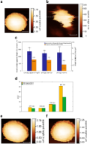
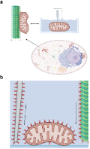
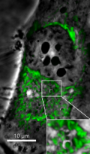
- 1.4 μm (average: 0.7 μm), indicating that they were generally smaller. A statistical analysis is provided in Figure 4b. The mitochondrial volume was used as a shape-independent parameter and was calculated from the obtained topography data without relying on any specific model. Mitochondria isolated
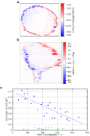
- wide variation in mitochondrial diameters (0.2–2.6 μm), we use two model objects for comparison, namely, microspheres with diameters of 1 and 3 μm. For 3 μm microspheres (Figure 7c,e), the same behaviour is observed qualitatively. However, 1 μm microspheres (Figure 7d,f) do not exhibit the