Search results
Search for "modeling" in Full Text gives 337 result(s) in Beilstein Journal of Nanotechnology. Showing first 200.
Frontiers of nanoelectronics: intrinsic Josephson effect and prospects of superconducting spintronics
Beilstein J. Nanotechnol. 2023, 14, 79–82, doi:10.3762/bjnano.14.9

- sum of the power values from two individually biased arrays. The detected phenomenon is attributed to the phase locking of Josephson junctions in different arrays via a common electromagnetic field [20]. Modeling of a multi-frequency receiving system based on an array of dipole antennas with cold
The influence of structure and local structural defects on the magnetic properties of cobalt nanofilms
Beilstein J. Nanotechnol. 2023, 14, 23–33, doi:10.3762/bjnano.14.3
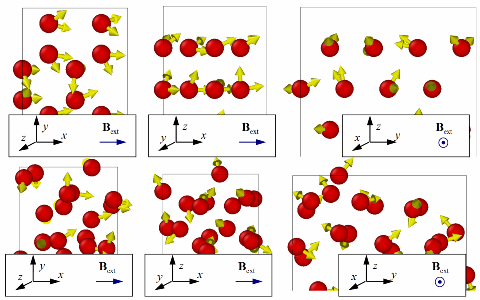
- Alexander Vakhrushev Aleksey Fedotov Olesya Severyukhina Anatolie Sidorenko Modeling and Synthesis of Technological Structures Department, Institute of Mechanics, Udmurt Federal Research Centre, Ural Division, Russian Academy of Sciences, Baramzinoy 34, Izhevsk 426067, Russia Orel State University
- is used. This approach includes methods of first principles, spin models based on the stochastic Landau–Lifshitz–Gilbert equation, and a submodel of micromagnetism, described by the Landau–Lifshitz–Bloch equation. The reference [32] is also devoted to the development of modeling methods in the field
- nanomaterial arising from its production are important tasks, often closely related to the composition of the sample in question. In this paper, we propose one mathematical model to investigate the relationship between the material structure and its magnetic properties. Mathematical modeling is used to


Atmospheric water harvesting using functionalized carbon nanocones
Beilstein J. Nanotechnol. 2023, 14, 1–10, doi:10.3762/bjnano.14.1
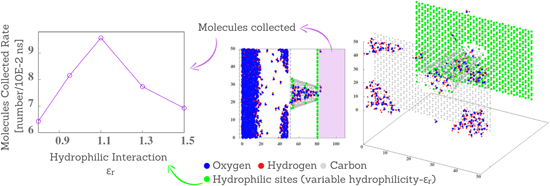
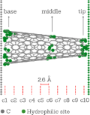
- hydrophilic sites [56][57]. Conclusion Molecular dynamics simulations were performed to study water harvesting, using a combination of hydrophobic and hydrophilic sites in carbon nanocones in contact with a vapor water reservoir. The nanocone was constructed modeling three ring-shaped hydrophilic regions




Single-step extraction of small-diameter single-walled carbon nanotubes in the presence of riboflavin
Beilstein J. Nanotechnol. 2022, 13, 1564–1571, doi:10.3762/bjnano.13.130
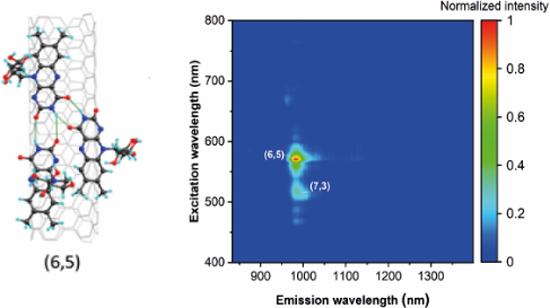
- helical densities discussed by Sharifi and co-workers [17]. For each (n,m)-SWCNT, three riboflavin molecules were deposited on its surface (Figure 4) and relaxed reproducing wrapping patterns [17]. SWCNT was excluded from ongoing modeling, while nitrogen atoms were fixed to preserve the optimized
- to a supercomputer cluster at NUST "MISiS" provided by the Materials Modeling and Development Laboratory and to the Joint Supercomputer Center of the Russian Academy of Sciences. Funding A.G.N and A.E.G thank the Council on grants of the President of the Russian Federation grant number НШ


Orally administered docetaxel-loaded chitosan-decorated cationic PLGA nanoparticles for intestinal tumors: formulation, comprehensive in vitro characterization, and release kinetics
Beilstein J. Nanotechnol. 2022, 13, 1393–1407, doi:10.3762/bjnano.13.115
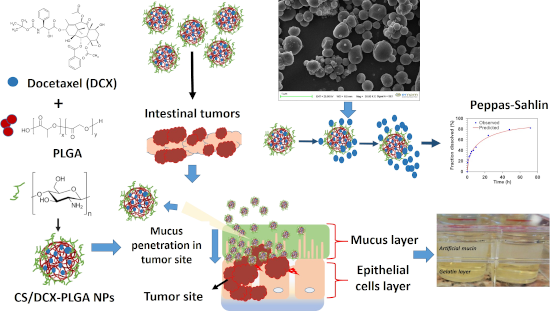
- nanoparticle material is released from the polymeric structure on the basis of diffusion as the major mechanism. It has been confirmed by mathematical modeling that the release is based on diffusion [10][61]. In contrast, the Peppas–Sahlin model describes the drug release from CS/DCX-PLGA NPs. The Peppas
- = 3, mean ± SD). Release kinetic modeling and results of DCX-loaded PLGA nanoparticles. Calculation of the differences and similarities of the release profiles of the nanoparticles formulations with the difference (f1) and similarity (f2) factors. Apparent permeability coefficient (Paap) of DCX on


Growing up in a rough world: scaling of frictional adhesion and morphology of the Tokay gecko (Gekko gecko)
Beilstein J. Nanotechnol. 2022, 13, 1292–1302, doi:10.3762/bjnano.13.107
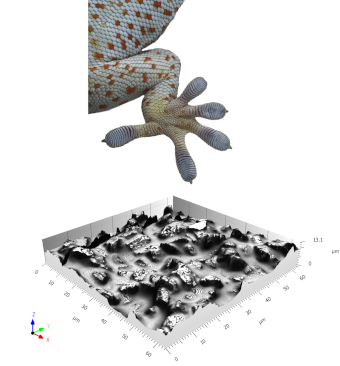
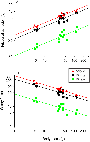
- adhesive pads is the contact area between the setae and the surface. With increasingly rough surfaces, the area for contact decreases, leading to decreased adhesive performance. In a modeling framework, the force of adhesion can be related to surface energy of the substrate, the area of the adhering pad


Enhanced electronic transport properties of Te roll-like nanostructures
Beilstein J. Nanotechnol. 2022, 13, 1284–1291, doi:10.3762/bjnano.13.106
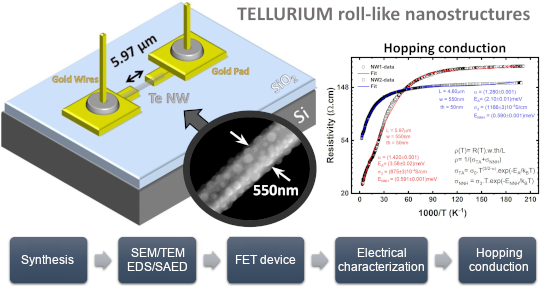
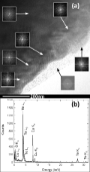
- mode. EDS point acquisitions were also performed during TEM analysis by using a silicon drift detector (SDD) from Oxford Instruments. Electronic transport The electronic transport properties of the sample were investigated by acquiring and modeling the transfer and gate curves of Te roll-like single




Nonlinear features of the superconductor–ferromagnet–superconductor φ0 Josephson junction in the ferromagnetic resonance region
Beilstein J. Nanotechnol. 2022, 13, 1155–1166, doi:10.3762/bjnano.13.97
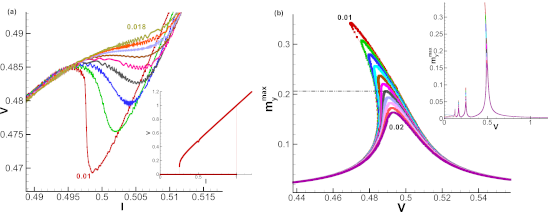
- Landau–Lifshitz model to reproduce the damping of the precessing magnetic moment. Gilbert damping is also important in modeling other resonance features, as its temperature dependence affects them [20][21], and, in turn, in the superconducting correlations that affect it [22]. The magnetization
- precession in an ultrathin Co20Fe60B20 layer stimulated by microwave voltage under a large angle requires modeling by a Duffing oscillator, too. This is aided by the so-called fold-over features, again due to nonlinearity [16][23][24]. The consequences of the nonlinear nature of the coupled set of the LLGJ


![[Graphic 14]](/bjnano/content/inline/2190-4286-13-97-i38.svg?max-width=637&scale=1.18182) at differ...
at differ...


![[Graphic 18]](/bjnano/content/inline/2190-4286-13-97-i42.svg?max-width=637&scale=1.18182) (V) on α in the damping parameter interval [0.001–0.12]....
(V) on α in the damping parameter interval [0.001–0.12]....

Recent advances in green carbon dots (2015–2022): synthesis, metal ion sensing, and biological applications
Beilstein J. Nanotechnol. 2022, 13, 1068–1107, doi:10.3762/bjnano.13.93
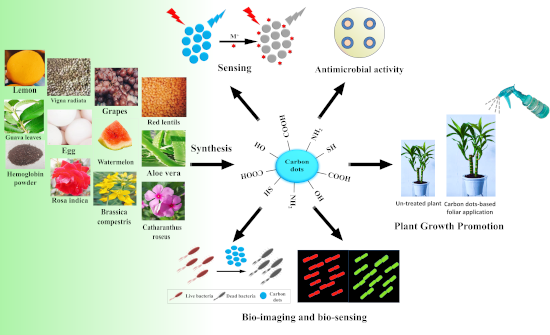
- different carbonization temperatures (200 and 450 °C) were used to prepare CDs, namely C-1 and C-2, respectively, via pyrolysis. To examine the interaction of functional groups present on the CDs with water vapor, theoretical modeling was also carried out by using the DFT-based B3LYP hybrid functional at 6




Comparing the performance of single and multifrequency Kelvin probe force microscopy techniques in air and water
Beilstein J. Nanotechnol. 2022, 13, 922–943, doi:10.3762/bjnano.13.82
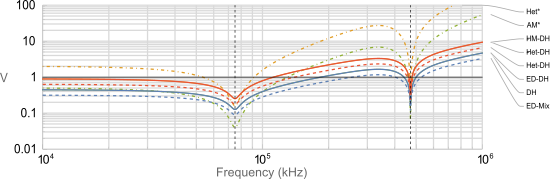
- implement, their typical operation requires the application of a DC bias, which makes them unsuitable for applications in liquid environments. Even when these modes can be operated in an OL manner, they require explicit knowledge of C′ or C″, either through measurement or modeling, which can be difficult to
Numerical modeling of a multi-frequency receiving system based on an array of dipole antennas for LSPE-SWIPE
Beilstein J. Nanotechnol. 2022, 13, 865–872, doi:10.3762/bjnano.13.77
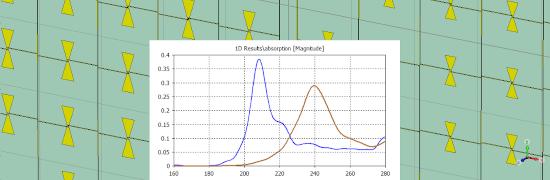
- of Sciences, GSP-105, Nizhny Novgorod, 603950, Russia Chalmers University of Technology, Department of Microtechnology and Nanoscience - MC2, Gothenburg, SE-412 96, Sweden 10.3762/bjnano.13.77 Abstract Here we present the results of a numerical modeling of mode composition in the constriction of the
- 1 Ohm at the working point. In the present paper, we describe the problems of numerical modeling for double-frequency arrays of dipole antennas connected in parallel on a single substrate with radiation going through the back-to-back horn with predefined parameters. Results Calculation of the mode
- the operating frequency range. For correct numerical modeling of the frequency response of the receiving system, it is necessary to know the distribution of the field of the incident wave on the matrix of receiving cells. The most consistent would be modeling a back-to-back horn irradiated by a plane


Self-assembly of C60 on a ZnTPP/Fe(001)–p(1 × 1)O substrate: observation of a quasi-freestanding C60 monolayer
Beilstein J. Nanotechnol. 2022, 13, 857–864, doi:10.3762/bjnano.13.76
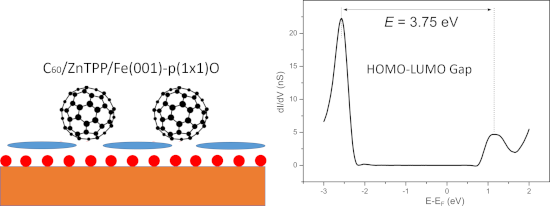
- measurements and for modeling by ab initio calculations. Periodic and compact films are generally obtained when the molecules possess enough surface mobility, that is, when the diffusion energy (Ed) is low compared to the thermal energy kBT, where T is the substrate temperature and kB is the Boltzmann constant


Modeling a multiple-chain emeraldine gas sensor for NH3 and NO2 detection
Beilstein J. Nanotechnol. 2022, 13, 721–729, doi:10.3762/bjnano.13.64
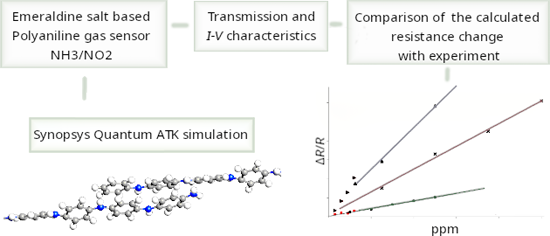
- experiment and the numerical model is good. Conclusion Several models of polyaniline emeraldine salt interacting with ammonia and nitrogen dioxide gas were established, and their I–V characteristics were computed through numerical modeling (Synopsys QuantumATK [14]) to obtain the resistance of these one


A superconducting adiabatic neuron in a quantum regime
Beilstein J. Nanotechnol. 2022, 13, 653–665, doi:10.3762/bjnano.13.57
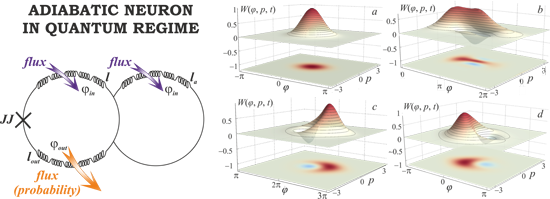
- approximation, we reduced it to the Pauli master equation (we present the results of modeling for the generalized master equation with and without the secular approximation in Appendix 3): where the dots denote a differentiation by normalized time, Wmn is the transition rate from the state n to m given by the


Fabrication and testing of polymer microneedles for transdermal drug delivery
Beilstein J. Nanotechnol. 2022, 13, 629–640, doi:10.3762/bjnano.13.55
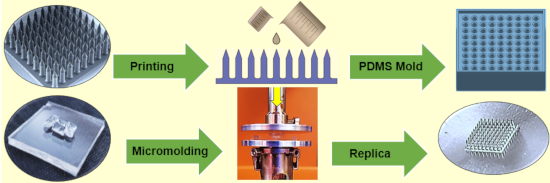
- ), Zeonor 1060R yield stress (53 MPa), and lateral shear force component estimated during insertion. According to SEM images from samples (n = 3), the location of bending from the base (x) is at 244.4 ± 2.03 µm corresponding to a lateral shear load of 0.33 to 0.34 N. Buckling modeling was based on elastic



A new method for obtaining the magnetic shape anisotropy directly from electron tomography images
Beilstein J. Nanotechnol. 2022, 13, 590–598, doi:10.3762/bjnano.13.51
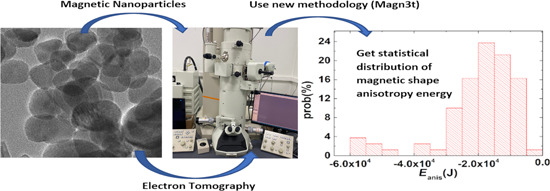
- frequent issues in magnetic nanoparticulate systems, that is, the evaluation of particle volume as well as the anisotropy magnitude and orientation for each entity of the system. It is dedicated to the improvement of both engineering and modeling of nanoparticulate systems, which are essential for


Tunable superconducting neurons for networks based on radial basis functions
Beilstein J. Nanotechnol. 2022, 13, 444–454, doi:10.3762/bjnano.13.37
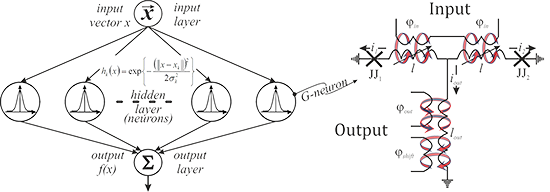
- to adjust the parameters of the studied Gauss-cell (with Gaussian-like activation function) is very important for in situ switching between operating modes. Using microscopic modeling, we have shown that the desired compact tunable passive element can be implemented in the form of a controllable


Electrostatic pull-in application in flexible devices: A review
Beilstein J. Nanotechnol. 2022, 13, 390–403, doi:10.3762/bjnano.13.32
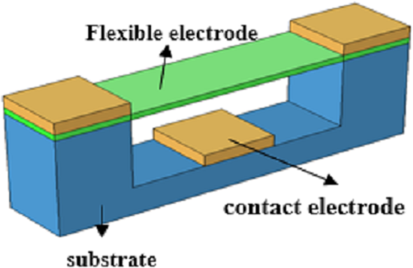
- pull-in as the working mechanism have attracted researcher’s attention because of the low cost and the simple structures. Extensive research has shown that modeling the bending of the flexible devices is only limited to the mechanical behavior of the flexible interconnect lines, and hardly involves the


Micro- and nanotechnology in biomedical engineering for cartilage tissue regeneration in osteoarthritis
Beilstein J. Nanotechnol. 2022, 13, 363–389, doi:10.3762/bjnano.13.31


Controllable two- and three-state magnetization switching in single-layer epitaxial Pd1−xFex films and an epitaxial Pd0.92Fe0.08/Ag/Pd0.96Fe0.04 heterostructure
Beilstein J. Nanotechnol. 2022, 13, 334–343, doi:10.3762/bjnano.13.28
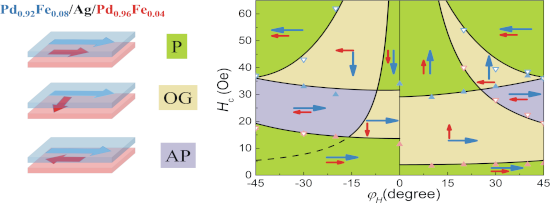
- . Such double jumps were observed in the ρxy(H) dependence for a wide range of angles φH of the applied magnetic field. The magnitude of the magnetic field, at which the jumps occur, depends on the direction of the field. Modeling of such a scenario (Figure 3a) brings us to the conclusion that these
- varied from its maximum value to zero. Circles indicate the experimental data, lines indicate the results of the modeling following Equation 2. (a) Dependence of the resistivity Δρz on the magnetic field strength at different temperatures. Inset: a variation of the (ρx(10 kOe) − ρx(0.5 kOe))/9.5 kOe


A broadband detector based on series YBCO grain boundary Josephson junctions
Beilstein J. Nanotechnol. 2022, 13, 325–333, doi:10.3762/bjnano.13.27
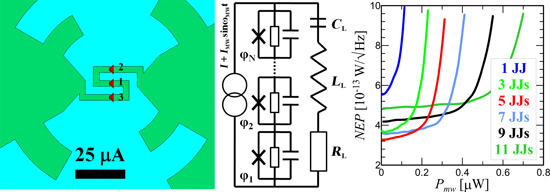
- Technology, SE-41296 Gothenburg, Sweden 10.3762/bjnano.13.27 Abstract Modeling of a broadband receiving system based on a meander series of Josephson YBaCuO grain boundary junctions integrated into a log-periodic antenna was carried out. The electromagnetic properties of the system, namely amplitude
- ; electromagnetic modeling; log-periodic antenna; RCSJ model; series Josephson junctions; YBaCuO Josephson junction; Introduction High-temperature superconducting (HTSC) Josephson junctions (JJs) have great potential as promising materials for creating high-frequency devices, such as microwave generators [1][2
- results with acceptable accuracy. Figure 1 shows a complete modeling system with lens (Figure 1d) and calculated beam pattern at 250 GHz (Figure 1e). The obtained values of 15.7 dBi main lobe magnitude with 15° angular width demonstrate good receiving characteristics. A port with an impedance of 5 Ω was



Irradiation-driven molecular dynamics simulation of the FEBID process for Pt(PF3)4
Beilstein J. Nanotechnol. 2021, 12, 1151–1172, doi:10.3762/bjnano.12.86
- understanding of the relationship between deposition parameters and physical characteristics of fabricated nanostructures (e.g., size, shape, purity, and crystallinity). Further advancement of the existing experimental techniques and molecular-level computational modeling can provide insights into the
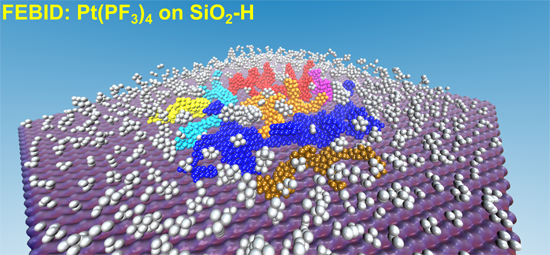
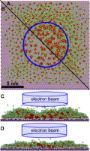
- . Therefore, it is essential to develop a comprehensive computational protocol for atomistic simulations of electron-induced nanostructure formation during the FEBID process. This paper outlines a detailed computational methodology for modeling the formation and growth of metal-containing nanostructures
- interactions among the constituents of the system. Interatomic potentials The precursor molecules are described via the reactive CHARMM (rCHARMM) force field [17][18]. rCHARMM permits simulations of systems with dynamically changing molecular topologies, which is essential for modeling the precursor








Self-assembly of amino acids toward functional biomaterials
Beilstein J. Nanotechnol. 2021, 12, 1140–1150, doi:10.3762/bjnano.12.85
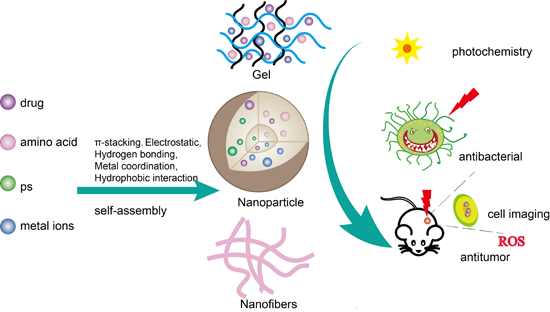
- , simple modeling, excellent biocompatibility and biodegradability in vivo. In addition, amino acids can be assembled with other components to meet multiple scientific needs. However, using these simple building blocks to design attractive materials remains a challenge due to the simplicity of the amino
- ordered nanostructures through noncovalent interactions, including electrostatic, π–π stacking, van der Waals, and hydrophobic interactions. The self-assembly of single amino acids has the advantages of low synthesis cost, relatively easy modeling [27], and excellent biocompatibility and biodegradability

Open-loop amplitude-modulation Kelvin probe force microscopy operated in single-pass PeakForce tapping mode
Beilstein J. Nanotechnol. 2021, 12, 1115–1126, doi:10.3762/bjnano.12.83
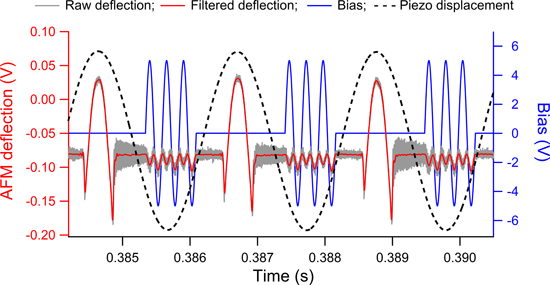
- -KPFM [27][28]. The benefit of a CL KPFM method is that the CPD is readily obtained in the form of a final product that is assembled in a map over the scanned area. However, the detailed response of the electrostatic tip–sample interaction is not available in CL KPFM, so post-processing and modeling of
- modeling [55] of the tip–sample system. While in CL AM-KPFM these deconvolutions apply to the CPD maps as inverse problems, it is conceivable that a simple model such as a multi-capacitances approximation can be run on OL AM-KPFM measurements to remove some of the stray capacitive couplings concomitantly
- pass is distributed over the topography line recorded in the first pass. Also, because the response to the applied bias modulation was fully acquired in the proposed OL KPFM implementation, the CPD was determined by modeling the electrostatic interaction between the AFM probe and the sample. This was





The role of convolutional neural networks in scanning probe microscopy: a review
Beilstein J. Nanotechnol. 2021, 12, 878–901, doi:10.3762/bjnano.12.66