Search results
Search for "nanofibers" in Full Text gives 136 result(s) in Beilstein Journal of Nanotechnology.
Biomimetic and biodegradable cellulose acetate scaffolds loaded with dexamethasone for bone implants
Beilstein J. Nanotechnol. 2018, 9, 1986–1994, doi:10.3762/bjnano.9.189
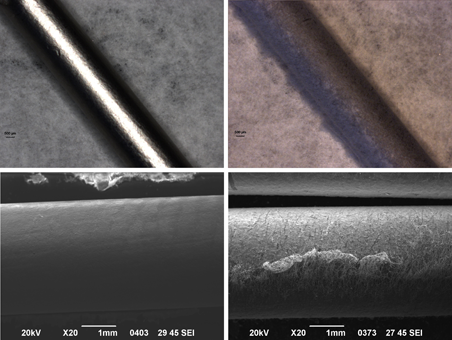
- are placed as coatings in medical devices in order to enhance the biocompatibility [2][3][4]. One technique to produce such coatings is electrospinning, which yields long micro- and nanofibers [5]. More specifically, physical and synthetic polymeric fibers of 30–20000 nm in length are produced by
- devices [15][16][17]. The use of micro- and nanofibers as carriers for drug release is more efficient because the drug is locally released to the target organ or tissue and as a result less amount of drug is required with fewer side effects [18][19]. Inflammation is the most common cause of aseptic


Sheet-on-belt branched TiO2(B)/rGO powders with enhanced photocatalytic activity
Beilstein J. Nanotechnol. 2018, 9, 1550–1557, doi:10.3762/bjnano.9.146
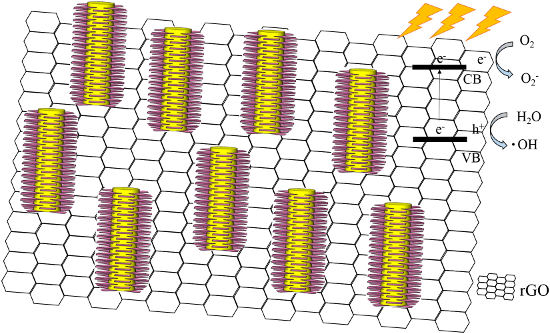
- common but still draws much attention. Many types of TiO2(B) nanostructures have been synthesized, such as nanowires [9][10], nanotubes [11], nanobelts [12][13][14], nanofibers [15] and nanosheets [16]. TiO2(B) is mostly used in lithium-ion batteries due to its relatively open crystal structure, superior
- nanocrystals on TiO2(B) single-crystal fibrils by a two-step process [23]. Li et al. prepared a biphase TiO2 core/shell nanofiber with anatase core and TiO2(B) shell [24]. Kandiel et al. used a hydrothermal technique to synthesize TiO2(B) nanofibers simultaneously decorated with anatase nanoparticles [25]. The


Review on nanoparticles and nanostructured materials: history, sources, toxicity and regulations
Beilstein J. Nanotechnol. 2018, 9, 1050–1074, doi:10.3762/bjnano.9.98

- external nanoscale dimension or having internal nanoscale surface structure” [4]. Nanofibers, nanoplates, nanowires, quantum dots and other related terms have been defined based on this ISO definition [5]. Likewise, the term nanomaterial is described as “a manufactured or natural material that possesses
- morphologies such as hollow tubes, ellipsoids or spheres. Fullerenes (C60), carbon nanotubes (CNTs), carbon nanofibers, carbon black, graphene (Gr), and carbon onions are included under the carbon-based NMs category. Laser ablation, arc discharge, and chemical vapor deposition (CVD) are the important
- nanofibers) or more complicated structures, such as a metal-organic frameworks. The composites may be any combinations of carbon-based, metal-based, or organic-based NMs with any form of metal, ceramic, or polymer bulk materials. NMs are synthesized in different morphologies as mentioned in Figure 1


Ultralight super-hydrophobic carbon aerogels based on cellulose nanofibers/poly(vinyl alcohol)/graphene oxide (CNFs/PVA/GO) for highly effective oil–water separation
Beilstein J. Nanotechnol. 2018, 9, 508–519, doi:10.3762/bjnano.9.49
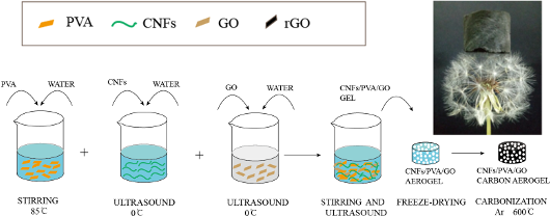
- 10.3762/bjnano.9.49 Abstract With the worsening of the oil-product pollution problem, oil–water separation has attracted increased attention in recent years. In this study, a porous three-dimensional (3D) carbon aerogel based on cellulose nanofibers (CNFs), poly(vinyl alcohol) (PVA) and graphene oxide (GO
- facile preparation process of carbon aerogels, these materials are viable candidates for use in oil–water separation and environmental protection. Keywords: 3D network structure; carbon aerogel; cellulose nanofibers; graphene oxide; oil absorption; poly(vinyl alcohol); Introduction In recent years, oil
- on the planet because of its biodegradability, sustainability, nontoxic nature, and biocompatibility [5]. Cellulose nanofibers (CNFs) derived from cellulose have gained wide attention due to their outstanding mechanical properties [6][7] such as an elastic modulus of 140 GPa [8]. In an aqueous


Engineering of oriented carbon nanotubes in composite materials
Beilstein J. Nanotechnol. 2018, 9, 415–435, doi:10.3762/bjnano.9.41
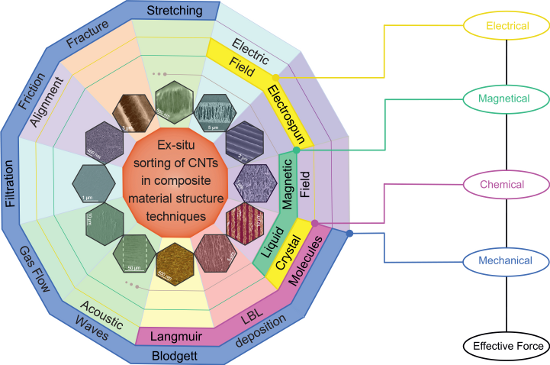
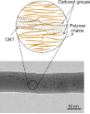
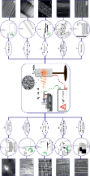
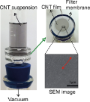
- ]. For example, Park et al. described how better alignment and mechanical and actuating performance of CNT/PVDF ES nanofibers was achieved by changing the drum collector parameters [51]. Their results indicated that the mechanical properties were improved up to 300% in the arranged direction. A standard
- arrangement of CNTs and sorting of nanofibers are done at the same time, as shown in Figure 9 [70]. Recently, direct spinning to a vertical chemical vapor deposition (CVD) synthesis zone has also been studied and is under development to produce CNT fibers and ribbons [44][71]. In a vertical CVD reactor, the
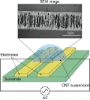
- nanofibers containing MWCNTs were successfully fabricated by a magnetic field [110]. Electric field The alignment and orientation of CNTs by an electric field is applied in two ways: as electrophoresis (EP) and dielectrophoresis (DEP). EP is the transport of charged particles through a medium enforced by a








Synthesis and characterization of electrospun molybdenum dioxide–carbon nanofibers as sulfur matrix additives for rechargeable lithium–sulfur battery applications
Beilstein J. Nanotechnol. 2018, 9, 262–270, doi:10.3762/bjnano.9.28
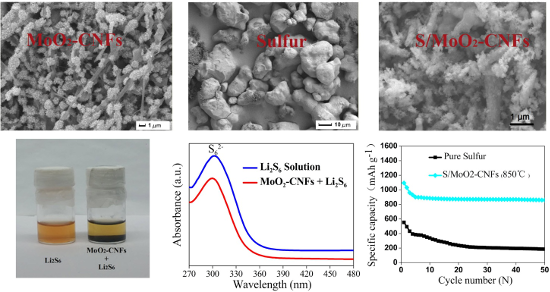
- , Changsha Research Institute of Mining and Metallurgy, Changsha, 412212, P. R. China School of Mathematics and Physics, Jiangsu University of Science and Technology, Zhenjiang, 212013, P. R. China 10.3762/bjnano.9.28 Abstract One-dimensional molybdenum dioxide–carbon nanofibers (MoO2–CNFs) were prepared
- nanofibers have extremely high specific surface area because of their small diameter and their porosity which exhibits excellent pore interconnectivity [25][26]. To the best of our knowledge, no articles related to using MoO2–CNFs as a sulfur matrix in Li–S batteries have been published so far. In the
- molecules on the nanofibers of KBr. A photo of the nonwoven PAN/PMA material is depicted in Figure 3a. The morphology of the as-prepared composite fibers and calcined fibers was further characterized by FE-SEM and TEM. The PAN/PMA composite fibers showed smooth surfaces due to their amorphous nature (Figure


Liquid-crystalline nanoarchitectures for tissue engineering
Beilstein J. Nanotechnol. 2018, 9, 205–215, doi:10.3762/bjnano.9.22
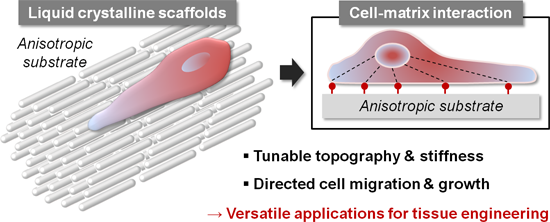
- electrostatically induced phase transitions from isotropic sol to nematic gel of synthetic nanofibers or filamentous bacteriophages can be adopted as a mild and efficient process for cell encapsulation in a highly anisotropic hydrogel scaffold [91][103]. These in situ cell inclusion techniques allow for the


Electrical properties of a liquid crystal dispersed in an electrospun cellulose acetate network
Beilstein J. Nanotechnol. 2018, 9, 155–163, doi:10.3762/bjnano.9.18
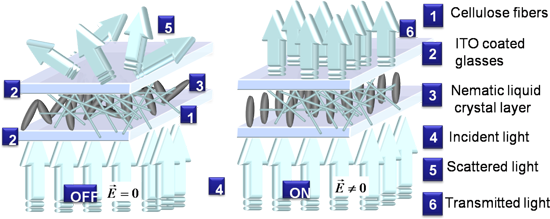
- switching cycles. Conclusion CA electrospun nanofibers were deposited onto ITO-coated glass and an electro-optic cell was formed by two such glass plates with fibers in between. By filling in the nematic liquid crystal E7 a light scattering device with a polymer-dispersed liquid crystal was obtained


Advances in nanocarbon composite materials
Beilstein J. Nanotechnol. 2018, 9, 20–21, doi:10.3762/bjnano.9.3

- , Moldova, Korea, China, Japan, Australia and New Zealand. This Thematic Series highlights virtually all subfields of advanced nanocarbon materials research, from the longer established fields of carbon nanofibers, graphene oxide (GO) and multiwalled carbon nanotubes (MWCNTs) in composite materials, to the
Dry adhesives from carbon nanofibers grown in an open ethanol flame
Beilstein J. Nanotechnol. 2017, 8, 2719–2728, doi:10.3762/bjnano.8.271
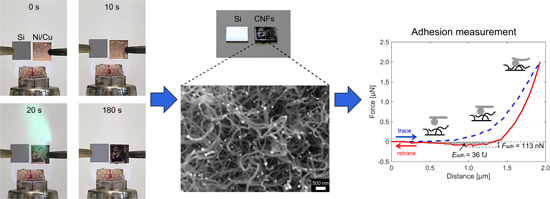
- , 76344 Eggenstein-Leopoldshafen, Germany Institute for Applied Materials, Karlsruhe Institute of Technology (KIT), Hermann-von-Helmholz-Platz 1, 76344 Eggenstein-Leopoldshafen, Germany 10.3762/bjnano.8.271 Abstract Based on magnetic-field-assisted growth of carbon nanofibers in an open ethanol flame we
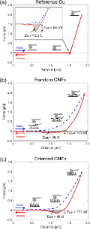
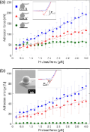
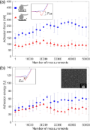
- fabricated arrays of carbon nanofibers with different degrees of orientation. Inspired by the dry adhesive system of geckos we investigated the adhesive properties of such carbon nanofiber arrays with ordered and random orientation. AFM-based force spectroscopy revealed that adhesion force and energy rise
- linear with preload force. Carbon nanofibers oriented by a magnetic field show a 68% higher adhesion (0.66 N/cm2) than the randomly oriented fibers. Endurance tests revealed that the carbon nanofiber arrays withstand 50.000 attachment/detachment cycles without observable wear. Keywords: adhesion; atomic


One-step chemical vapor deposition synthesis and supercapacitor performance of nitrogen-doped porous carbon–carbon nanotube hybrids
Beilstein J. Nanotechnol. 2017, 8, 2669–2679, doi:10.3762/bjnano.8.267
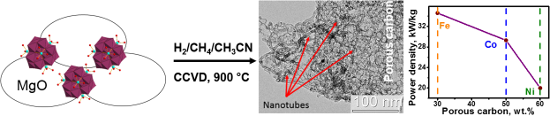
- the combustion of porous carbon (component 1), MWCNTs with many defects like the nanofibers shown in Figure 2d (component 2), and finally, more structurally perfect MWCNTs (component 3). The ratios of the components and their peak temperatures are collected in Table S1 in Supporting Information File 1


Systematic control of α-Fe2O3 crystal growth direction for improved electrochemical performance of lithium-ion battery anodes
Beilstein J. Nanotechnol. 2017, 8, 2032–2044, doi:10.3762/bjnano.8.204
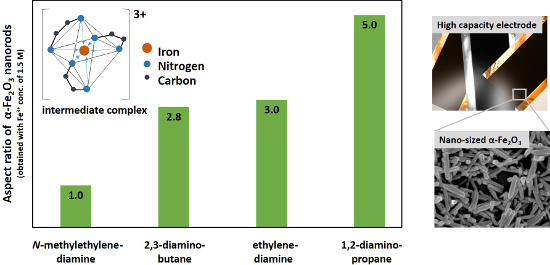
- reported for several iron-oxide-based electrodes, including porous α-Fe2O3 nanorods [13], macroporous α-Fe2O3 submicrometer spheres [54], and 1D hollow α-Fe2O3 electrospun nanofibers [55], however its origin remains speculative. Several hypotheses are stated in the literature, among others, such as an


Fabrication of carbon nanospheres by the pyrolysis of polyacrylonitrile–poly(methyl methacrylate) core–shell composite nanoparticles
Beilstein J. Nanotechnol. 2017, 8, 1897–1908, doi:10.3762/bjnano.8.190

- nitrogen were removed. Small molecule gases including H2O, NH3, HCN, CO2, N2 and alkyl fragments were produced, which caused the formation of many micropores in the PAN-based carbon nanofibers [28]. Here, the presence of an outer PMMA layer, which might be fully decomposed above 600 °C, may impede the



Oxidative stabilization of polyacrylonitrile nanofibers and carbon nanofibers containing graphene oxide (GO): a spectroscopic and electrochemical study
Beilstein J. Nanotechnol. 2017, 8, 1616–1628, doi:10.3762/bjnano.8.161
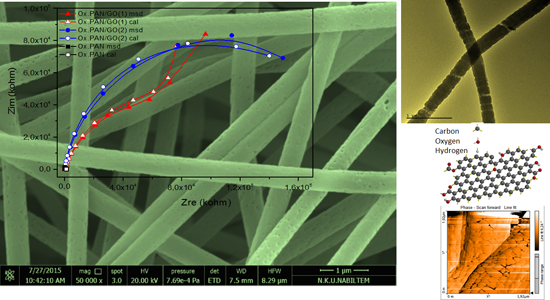
- Istanbul, Turkey 10.3762/bjnano.8.161 Abstract In this study, a precursor for carbon nanofibers (CNF) was fabricated via electrospinning and carbonized through a thermal process. Before carbonization, oxidative stabilization should be applied, and the oxidation mechanism also plays an important role
- interior pores filled with electrolyte. Keywords: carbon nanofiber; graphene oxide; oxidized polyacrylonitrile (PAN); Introduction Carbon nanofibers are of great interest because of their chemical similarity to fullerenes and carbon nanotubes. Carbon nanofibers (CNF) have promising electrochemical and
- mechanical properties and a potential for a variety of applications; such as supercapacitor applications, battery applications, and catalyst support materials. Polyacrylonitrile (PAN) is one of the well-known precursor for obtaining carbon nanofibers that have a diameter ranging between nanometers and


Carbon nanomaterials sensitize prostate cancer cells to docetaxel and mitomycin C via induction of apoptosis and inhibition of proliferation
Beilstein J. Nanotechnol. 2017, 8, 1307–1317, doi:10.3762/bjnano.8.132
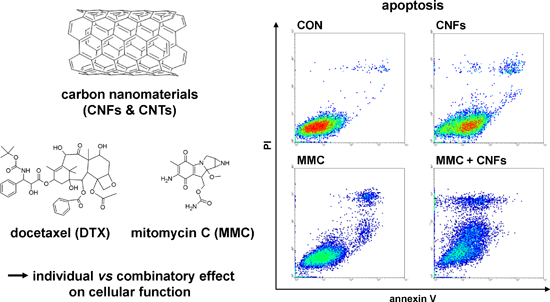
- , Dresden 01171, Germany 10.3762/bjnano.8.132 Abstract We have previously shown that carbon nanofibers (CNFs) and carbon nanotubes (CNTs) can sensitize prostate cancer (PCa) cells to platinum-based chemotherapeutics. In order to further verify this concept and to avoid a bias, the present study
- last decades, various nanoparticles such as carbon nanotubes (CNTs) and carbon nanofibers (CNFs) have been extensively investigated for their utilization as drug carriers and delivery vehicles. They possess great potential for such biomedical applications based on their ability to be loaded with



Fabrication of hierarchically porous TiO2 nanofibers by microemulsion electrospinning and their application as anode material for lithium-ion batteries
Beilstein J. Nanotechnol. 2017, 8, 1297–1306, doi:10.3762/bjnano.8.131
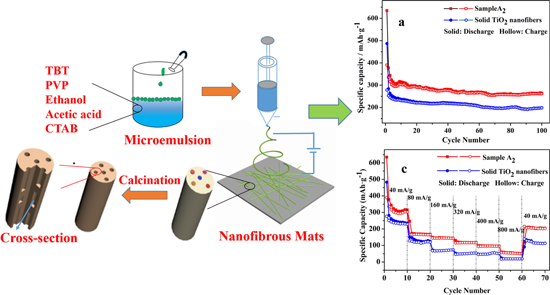
- China 10.3762/bjnano.8.131 Abstract Titanium dioxide (TiO2) nanofibers have been widely applied in various fields including photocatalysis, energy storage and solar cells due to the advantages of low cost, high abundance and nontoxicity. However, the low conductivity of ions and bulk electrons hinder
- its rapid development in lithium-ion batteries (LIB). In order to improve the electrochemical performances of TiO2 nanomaterials as anode for LIB, hierarchically porous TiO2 nanofibers with different tetrabutyl titanate (TBT)/paraffin oil ratios were prepared as anode for LIB via a versatile single
- -nozzle microemulsion electrospinning (ME-ES) method followed by calcining. The experimental results indicated that TiO2 nanofibers with the higher TBT/paraffin oil ratio demonstrated more axially aligned channels and a larger specific surface area. Furthermore, they presented superior lithium-ion storage




Needs and challenges for assessing the environmental impacts of engineered nanomaterials (ENMs)
Beilstein J. Nanotechnol. 2017, 8, 989–1014, doi:10.3762/bjnano.8.101


Synthesis of coaxial nanotubes of polyaniline and poly(hydroxyethyl methacrylate) by oxidative/initiated chemical vapor deposition
Beilstein J. Nanotechnol. 2017, 8, 872–882, doi:10.3762/bjnano.8.89
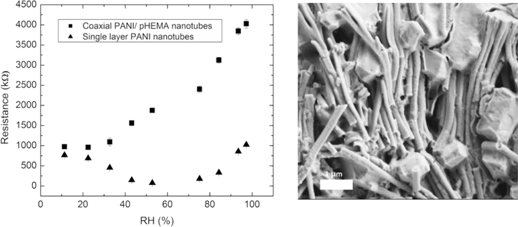
- sensors are very limited. Zeng et al. [33] studied the resistance change of PANI nanofibers depending on the humidity level. They observed that the resistance changed parabolically as the humidity of the environment increased, and a minimum value for the resistance at a certain humidity level existed. The
- humidity increased due to charge transfer between CeO2 and PANI. However, incorporating CeO2 in the polymer decreases flexibility and increases the overall electrical resistance, which may limit the range of applications. Lin et al. [35] fabricated electrospun PANI nanofibers and introduced hydrophilic


Investigation of growth dynamics of carbon nanotubes
Beilstein J. Nanotechnol. 2017, 8, 826–856, doi:10.3762/bjnano.8.85
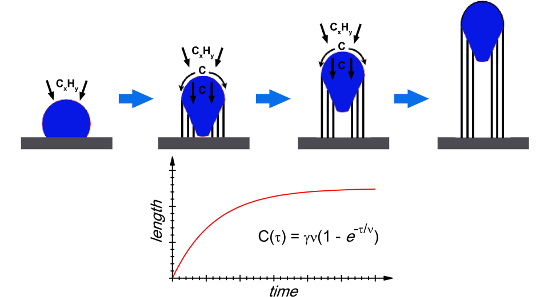
- [39]. It implied the carbon diffusion on the surface of the metallic catalytic particle and not in its bulk. Later on, this growth mechanism was used by other authors to explain the formation process of carbon nanofibers [40][41][42] and nanotubes [43]. In [42], Hofmann with co-authors provided the
- of carbon nanofibers on nickel nanoparticles and suggested the growth mechanism involving the surface diffusion. They observed the movement of atoms on the surface of the crystalline nickel cluster and change of its shape during the growth process. It was concluded that the surface transport of
- carbon atoms was the growth rate-limiting process. The surface diffusion mechanism of the growth of carbon nanofibers and nanotubes on metallic catalysts was also revealed by theoretical methods [41][42][44]. In [44], Raty with co-authors reported ab initio molecular dynamics simulations of the formation


Measuring adhesion on rough surfaces using atomic force microscopy with a liquid probe
Beilstein J. Nanotechnol. 2017, 8, 813–825, doi:10.3762/bjnano.8.84
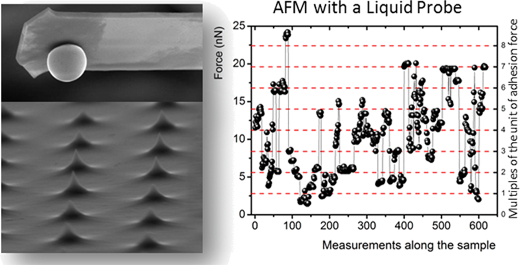
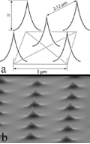
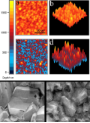
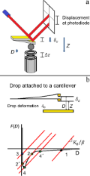
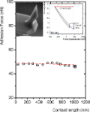
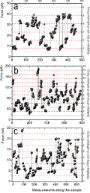
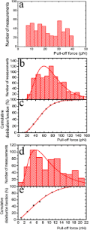
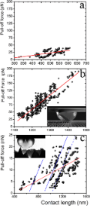
- experiments of cylindrical nanofibers dipped in liquids of different γ, where γ is the liquid–vapor surface tension [36]. For contact angles above 50–60°, the spring constants are almost insensible to the contact angle, and although these authors did not explore angles corresponding to hydrophobic surfaces


Synthesis of graphene–transition metal oxide hybrid nanoparticles and their application in various fields
Beilstein J. Nanotechnol. 2017, 8, 688–714, doi:10.3762/bjnano.8.74
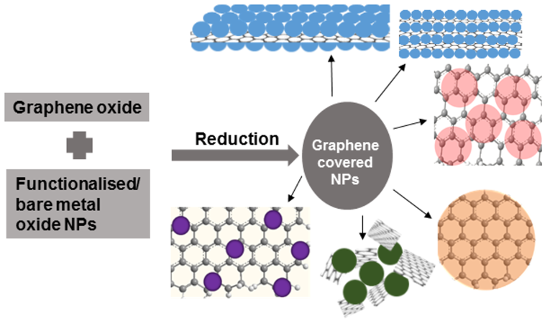
- thermochromic transition at 257 °C and this material is used as a catalyst for industrial processes, gas sensors and in LIBs [105]. Various nanostructures of V2O5 such as nanotubes, nanowires, nanofibers, nanobelts, and nanorods have been prepared by sol–gel processes, hydrothermal processes [106






Graphene functionalised by laser-ablated V2O5 for a highly sensitive NH3 sensor
Beilstein J. Nanotechnol. 2017, 8, 571–578, doi:10.3762/bjnano.8.61
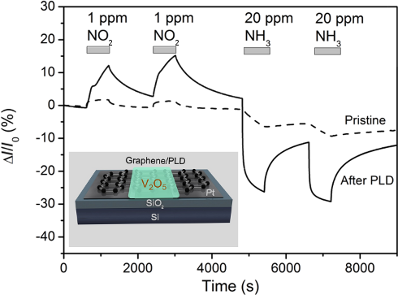
- distribution of the system [37]. V2O5 is known for its catalytic properties and as a good NH3 adsorber [7][8]. The good NH3 gas sensing properties of V2O5 thin films and nanofibers have been demonstrated by Huotari et al. [12] and Modafferi et al. [38]. Two strongly bound adsorption species are typically


Nanoscale isoindigo-carriers: self-assembly and tunable properties
Beilstein J. Nanotechnol. 2017, 8, 313–324, doi:10.3762/bjnano.8.34
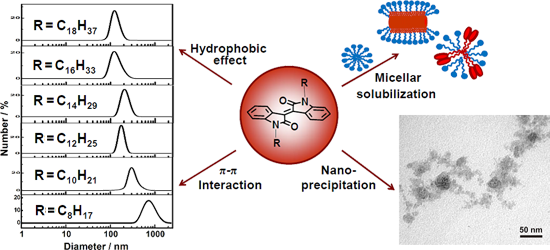
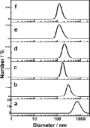
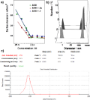
- , hyaluronic acid, and heparin, also amphiphilic prodrugs, and supramolecular hydrogels) [38][39][40]. One of the main strategies deals with the creation of self-assembled supramolecular structures with tunable morphologies (e.g., nanospheres, rods, nanofibers or nanotubes) adapted to the administration route




Phosphorus-doped silicon nanorod anodes for high power lithium-ion batteries
Beilstein J. Nanotechnol. 2017, 8, 222–228, doi:10.3762/bjnano.8.24
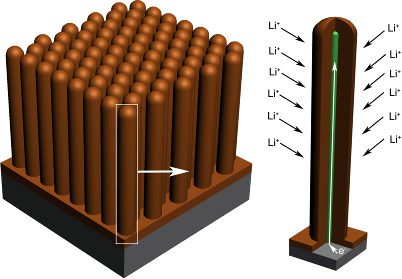
- and graphene embedded in carbon nanofibers with atomic-scale control of the expansion space as anodes for LIBs. Such an anode delivered an electrochemical performance of 2000 mAh/g at a current density of 700 mA/g [5]. Cui et al. designed a yolk–shell-structured Si anode that has void space between


Nanocrystalline TiO2/SnO2 heterostructures for gas sensing
Beilstein J. Nanotechnol. 2017, 8, 108–122, doi:10.3762/bjnano.8.12
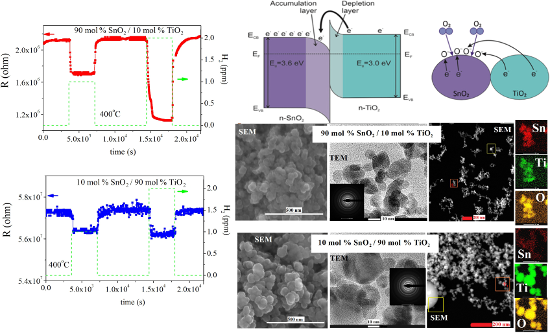
- preadsorption at the surface of SnO2 grains. In the publications about the TiO2–SnO2 system [1][2][3][4][5][6][7][8][9][10][11][12][15][16][17] for improved gas sensing, one can find different types of materials: thick and thin films, nanostructures such as nanofibers, nanorods, nanobelts, nanopowders as well