


Search results
Search for "nanorods" in Full Text gives 230 result(s) in Beilstein Journal of Nanotechnology. Showing first 200.
Preparation and in vivo evaluation of glyco-gold nanoparticles carrying synthetic mycobacterial hexaarabinofuranoside
Beilstein J. Nanotechnol. 2020, 11, 480–493, doi:10.3762/bjnano.11.39
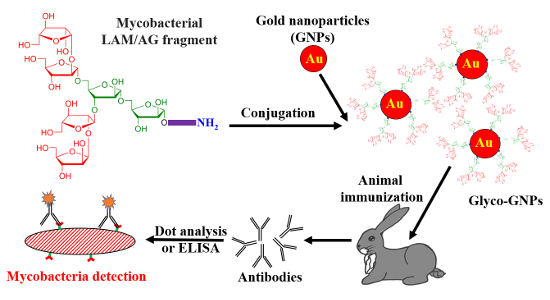
- of the GNPs as well as on the dielectric properties of the medium surrounding the GNPs. These features are useful in many (bio)analytical applications including monitoring their stability (as described below) [25][26][46]. Size and shape of the GNPs (spheres, nanorods, nanoshells and nanostars) were


Formation of nanoripples on ZnO flat substrates and nanorods by gas cluster ion bombardment
Beilstein J. Nanotechnol. 2020, 11, 383–390, doi:10.3762/bjnano.11.29
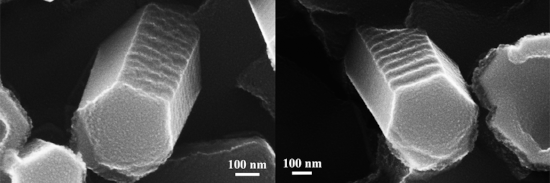
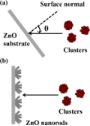
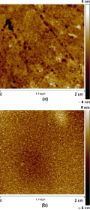
- used to irradiate single crystal ZnO substrates and nanorods to fabricate self-assembled surface nanoripple arrays. The ripple formation is observed when the incidence angle of the cluster beam is in the range of 30–70°. The influence of incidence angle, accelerating voltage, and fluence on the ripple
- parallel steps or ribs. The more ordered ripple formation on nanorods can be associated with the confinement of the nanorod facets in comparison with the quasi-infinite surface of the flat substrates. Keywords: cluster ion bombardment; gas cluster ion beam; surface ripples; ZnO nanorods; Introduction The
- ZnO nanorods irradiated by GCIB. The modification effects of the gas cluster ion beams on the nanostructured targets at different incidence angles, accelerating voltages, and ion fluences are studied. The differences between nanoripple formation on planar ZnO substrates and on nanorods are also



Facile biogenic fabrication of hydroxyapatite nanorods using cuttlefish bone and their bactericidal and biocompatibility study
Beilstein J. Nanotechnol. 2020, 11, 285–295, doi:10.3762/bjnano.11.21
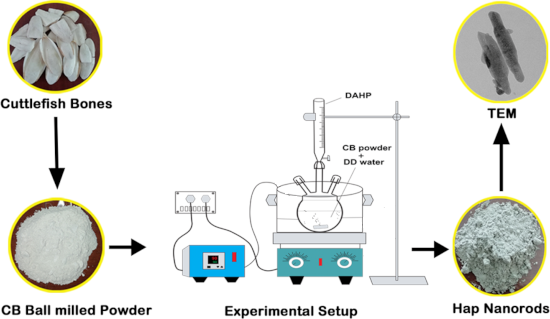
- ) nanorods using cuttlefish bone powder as a precursor (CB-Hap NRs). The obtained CB-Hap NRs were investigated using transmission electron microscopy (TEM), Fourier transform infrared spectroscopy (FTIR), X-ray diffraction (XRD) and thermogravimetric analysis (TGA) techniques to evaluate their
- ; cuttlefish bone; hard tissue treatment; hydroxyapatite; nanorods; Introduction Generally, the hard tissue of humans and animals, such as bone and teeth, are composed of natural hydroxyapatite (Hap), which is a bioactive ceramic material with high calcium phosphate concentration whereby the material can
- ), and analyzed their physical and biological properties [18][19][20]. However, the hydrothermal method requires expensive autoclaves to maintain high temperature and pressure and uses toxic chemicals to yield different morphologies of Hap, especially nanorods [21]. These Hap nanorods possess enhanced


Using gold nanoparticles to detect single-nucleotide polymorphisms: toward liquid biopsy
Beilstein J. Nanotechnol. 2020, 11, 263–284, doi:10.3762/bjnano.11.20
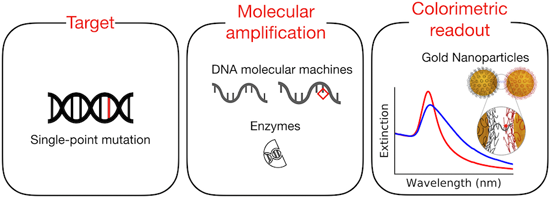
- nanorods as a signal transducers. Due to their intense longitudinal surface plasmon band, gold nanorods exhibit a higher sensitivity to changes of the colloidal stability as compared to spherical nanoparticles. Thus, by using gold nanorods one can lower the detection limit. The authors used unmodified gold
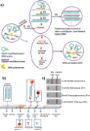
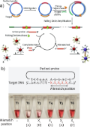
- nanorods for an HCR process as illustrated in Figure 6. The presence of a target DNA induced the hybridization of a hairpin DNA, producing a nicked double helix. Through electrostatic repulsion, this double helix prevented the aggregation of the gold nanorods at high salt concentrations. However, in the
- absence of a target DNA, the gold nanorods easily aggregated because of weak protection by hairpin DNA. Following this approach, the authors were able to detect target DNA in a range of 0–60 nM at a detection limit of 1.47 nM. The method is highly selective in distinguishing matching and single-base




High-performance asymmetric supercapacitor made of NiMoO4 nanorods@Co3O4 on a cellulose-based carbon aerogel
Beilstein J. Nanotechnol. 2020, 11, 240–251, doi:10.3762/bjnano.11.18
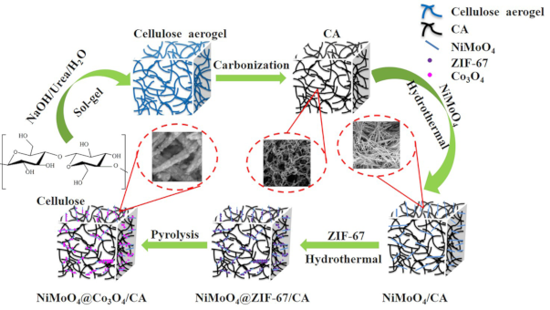
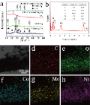
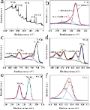
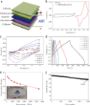
- new nanoporous material comprising NiMoO4 nanorods and Co3O4 nanoparticles derived from ZIF-67 supported by a cellulose-based carbon aerogel (CA) has been successfully synthesized using a two-step hydrothermal method. Due to its chemical composition, the large specific surface and the hierarchical
- electroactive materials, efficiently reducing the internal resistance and enhancing the rate capability. Therefore, novel hybrid nanorods and nanoparticles of the electroactive metal oxides incorporated into a porous, conductive 3D network of CA could be promising electrode materials for supercapacitors. Based
- on the above considerations, we present a simple scalable strategy to fabricate an integrated NiMoO4@Co3O4 hierarchical porous structure aligned on CA, which is derived from a cellulose precursor, to be applied in an advanced asymmetric supercapacitor (ASC). The NiMoO4 nanorods originated from ZIF-67




Nonclassical dynamic modeling of nano/microparticles during nanomanipulation processes
Beilstein J. Nanotechnol. 2020, 11, 147–166, doi:10.3762/bjnano.11.13
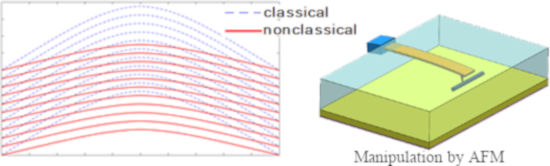
- of the classical method on polystyrene nanorods. The results for cylindrical gold nanoparticles indicate that the material length scale has a major effect on the exact positioning of cylindrical nanoparticles. Keywords: atomic force microscopy; modified couple stress theory; nanomanipulation
- dominant dynamic mode for microrods and nanorods are rolling and sliding, respectively [8]. In a further development in modeling the manipulation process, Babahosseini et al. presented a 2D model by considering the influential parameters in nanoscale modeling. They employed the modified Coulomb and Lund







Label-free highly sensitive probe detection with novel hierarchical SERS substrates fabricated by nanoindentation and chemical reaction methods
Beilstein J. Nanotechnol. 2019, 10, 2483–2496, doi:10.3762/bjnano.10.239
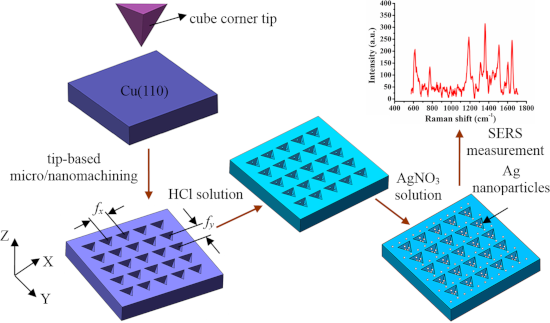
- thickness. However, nanoparticles fabricated by the chemical synthesis method have poor reproducibility and uneven density, and the hot spot position is difficult to accurately determine. Recently, many nanostructure shapes have been fabricated for use as SERS substrates including nanorods [14][15][16


Small protein sequences can induce cellular uptake of complex nanohybrids
Beilstein J. Nanotechnol. 2019, 10, 2477–2482, doi:10.3762/bjnano.10.238
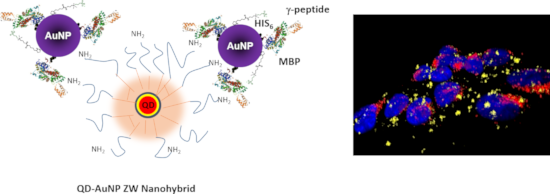
- . In one study, Jana and co-workers reported the design of fluorescent and plasmonic nanohybrids by covalent attachment of luminescent quantum dots (QDs) and Au nanorods. Further functionalization with glucose, using glutaraldehyde coupling chemistry, yielded nanohybrids that could subsequently be used

Ultrathin Ni1−xCoxS2 nanoflakes as high energy density electrode materials for asymmetric supercapacitors
Beilstein J. Nanotechnol. 2019, 10, 2207–2216, doi:10.3762/bjnano.10.213
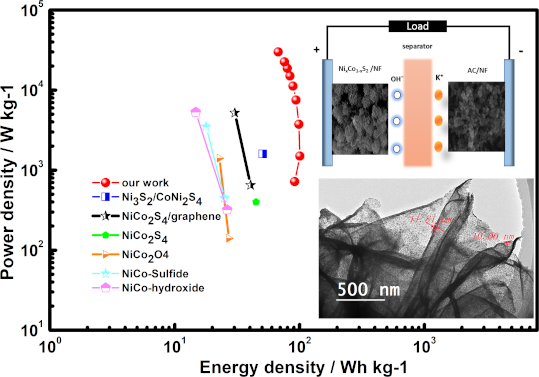
- NiCo2S4 nanotubes synthesised via sacrificial template method, which reached a capacitance of 930 F·g−1 at 1 A·g−1 [15]. Chen et al. reported on one-step electrodeposited nickel–cobalt sulfide nanosheet arrays that reached 1420 F·g−1 at 5 A·g−1 [16]. Similarly, NiCo2O4 nanorods with a capacitance of 905


Synthesis of highly active ETS-10-based titanosilicate for heterogeneously catalyzed transesterification of triglycerides
Beilstein J. Nanotechnol. 2019, 10, 2039–2061, doi:10.3762/bjnano.10.200
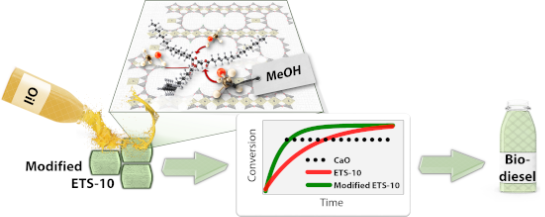
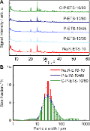
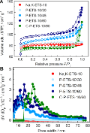
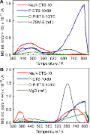
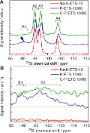
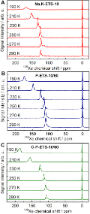
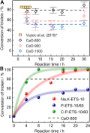
- and bearing uncompensated negative charge (O−), and the isolated hydroxyl groups forming the hydrogen carbonate species HO–CO2− [48]. It is worth noting that probably only those O− Brønsted sites are sensed by CO2 which are located between the 12-membered ring pore and the Ti–O–Ti nanorods. The








Review of advanced sensor devices employing nanoarchitectonics concepts
Beilstein J. Nanotechnol. 2019, 10, 2014–2030, doi:10.3762/bjnano.10.198
- function of zeolitic imidazolate framework structures on ZnO nanorods [132]. Core–shell structures of zeolitic imidazolate frameworks and ZnO nanorods were prepared by direct growth of the framework on the ZnO nanorods. Limitation effects by the framework aperture provided improved selectivity for





Gold-coated plant virus as computed tomography imaging contrast agent
Beilstein J. Nanotechnol. 2019, 10, 1983–1993, doi:10.3762/bjnano.10.195
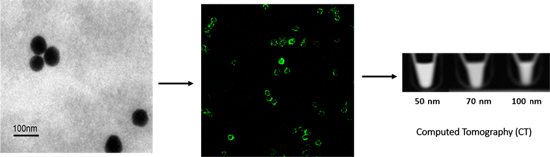
- with a mean circulation half-life of 14.6 h. Von Maltzahan et al. developed PEGylated gold nanorods (13 × 47 nm) as CT contrast agents and for photothermal tumor therapy. The study resulted in tumor elimination and mice survival over 50 days [23]. Further, van Schooneveld et al. reported micelle-based
- AuNPs by generating 66 nm AuNPs coated with an 11 nm layer of silica and showed that for mice injected with these particles a contrast signal was observed [13]. Popovtzer et al. reported successful CT imaging of squamous cell carcinoma using gold nanorods coated with anti-antigen A9 [24]. The low




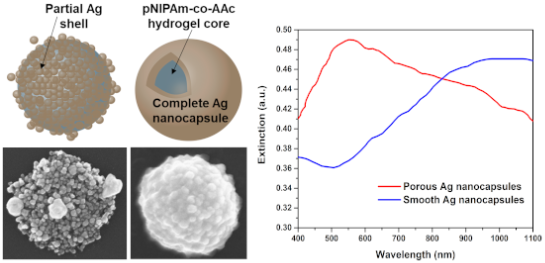
Porous silver-coated pNIPAM-co-AAc hydrogel nanocapsules
Beilstein J. Nanotechnol. 2019, 10, 1973–1982, doi:10.3762/bjnano.10.194
- , Zhao et al. created pH- and temperature-sensitive bioprobes by incorporating pNIPAM hydrogel cores with europium organic complexes [67]. In separate studies, Lee and co-workers utilized both biocompatible gold nanoshells, iron oxide nanoparticles, and gold nanorods with thermo-responsive hydrogel


Biocatalytic oligomerization-induced self-assembly of crystalline cellulose oligomers into nanoribbon networks assisted by organic solvents
Beilstein J. Nanotechnol. 2019, 10, 1778–1788, doi:10.3762/bjnano.10.173
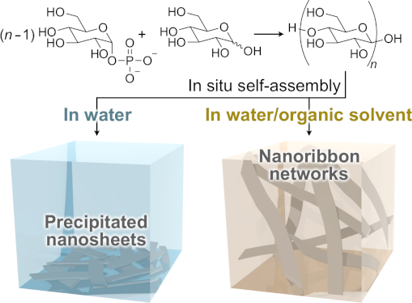
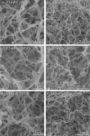
- ], distorted nanosheets with a bilayer structure [35], helical nanorods with a bilayer structure [35], and network structures composed of nanoribbon-shaped lamellar crystals [33][42][43][44][45][46] have been successfully constructed by changing the enzymatic reactions, tuning the self-assembly kinetics





Materials nanoarchitectonics at two-dimensional liquid interfaces
Beilstein J. Nanotechnol. 2019, 10, 1559–1587, doi:10.3762/bjnano.10.153
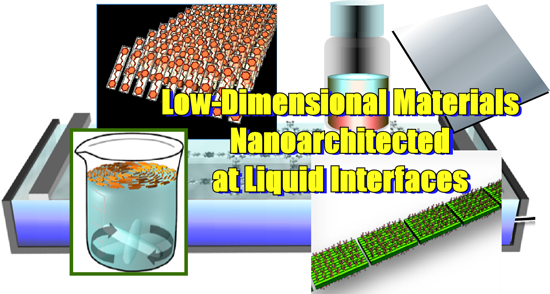
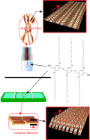
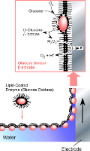
- environments of closely packed nanorods (when the inter-rod distance was less than ca. 70 nm), enhanced excitation transfer was observed, indicating that fluorescence would be efficiently enhanced within well-aligned nanorods prepared at the air–water interface. Inorganic low-dimensional nanomaterials often
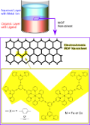
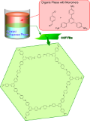
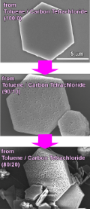
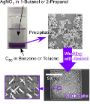
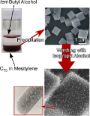
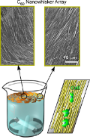
- conversion of one-dimensional fullerene crystalline assemblies at extremely high temperatures resulted in highly graphitic one-dimensional carbon materials as demonstrated by Shrestha and co-workers [242]. One-dimensional C60 nanorods and nanotubes precipitated at liquid–liquid interface were fully
- supercapacitors. Shrestha, Acharya, and co-workers investigated the optoelectronic properties of one-dimensional C60 nanorods prepared in ultra-rapid (5 s) processes of liquid–liquid interfacial precipitation at room temperature [244]. Dominant excitonic charge transfer transitions within the nanorods was













Selective gas detection using Mn3O4/WO3 composites as a sensing layer
Beilstein J. Nanotechnol. 2019, 10, 1423–1433, doi:10.3762/bjnano.10.140
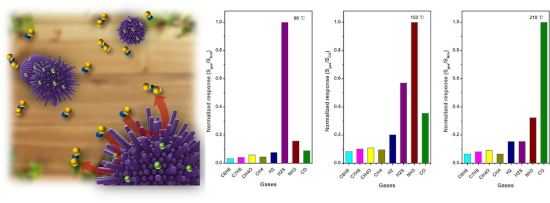
- -nanoparticle-decorated WO3 nanorods, where 1 wt % Pd-WO3 showed excellent selectivity to H2 (>1000 times) over other gases and WO3 shows almost no selectivity [10]. Choi et al. fabricated gas sensors based on pristine WO3 nanorods and Cr2O3-functionalized WO3 nanorods. The gas sensing results showed that the
- of W6+ (0.060 nm) [15]. Figure 2 presents the typical scanning electron microscopy (SEM) images of pure WO3 and Mn3O4/WO3 composites, where nanoparticles and nanorods with diameters in the range of 100–200 nm can be seen clearly. The samples present unconsolidated structures, which is favorable for
- gas sensing performance. Actually, the precursors before calcination are nanowire-like (Supporting Information File 1, Figure S1), but they present nanoparticles or nanorods after calcination treatment. The process could be explained by the re-crystallization of WO3 when annealing in air atmosphere


A highly efficient porous rod-like Ce-doped ZnO photocatalyst for the degradation of dye contaminants in water
Beilstein J. Nanotechnol. 2019, 10, 1157–1165, doi:10.3762/bjnano.10.115
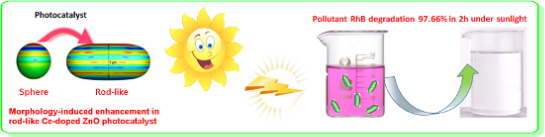
- ] synthesized pristine and Ce-doped ZnO with various doping concentrations via a chemical bath method. The morphology of the structures turned from flower-like to mixed morphology with pyramid shapes. Chouchene et al. [22] prepared Ce-doped ZnO nanorods by a solvothermal method. However, to the best of our


Photoactive nanoarchitectures based on clays incorporating TiO2 and ZnO nanoparticles
Beilstein J. Nanotechnol. 2019, 10, 1140–1156, doi:10.3762/bjnano.10.114
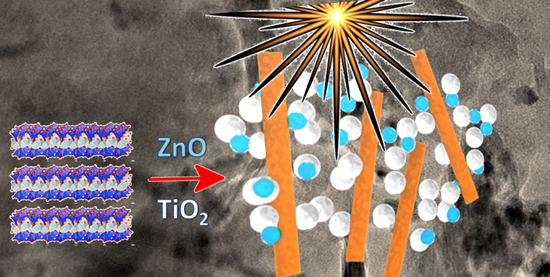
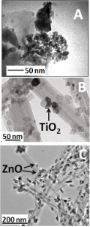
- reactivity can be modified [48][49]. TiO2 and ZnO NPs with different shapes, sizes and exposed crystal facets were assembled to yield hollow particles, fibers, nanosheets, nanowires, nanorods, nanoflowers and nanobelts through various synthesis routes including template synthesis [50][51][52][53



Revisiting semicontinuous silver films as surface-enhanced Raman spectroscopy substrates
Beilstein J. Nanotechnol. 2019, 10, 1048–1055, doi:10.3762/bjnano.10.105
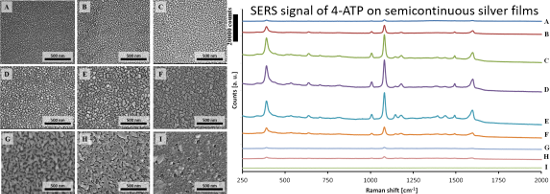
- glancing-angle deposition (GLAD) has been explored for the fabrication of vertical nanorods on planar substrates [38]. A special class of nanostructured surfaces are semicontinuous silver films (SSFs) [39][40] also known as metal island films [41], which are comprised of random fractal-type structures


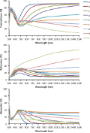


Tailoring the stability/aggregation of one-dimensional TiO2(B)/titanate nanowires using surfactants
Beilstein J. Nanotechnol. 2019, 10, 1024–1037, doi:10.3762/bjnano.10.103
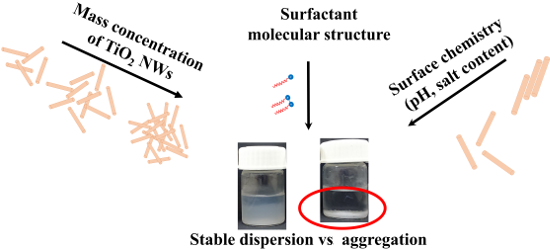
- and in the presence of different additives [12][20][21][22], much less is known about 1D TNMs, such as titanium oxide nanotubes (TNTs), titanium oxide nanowires (TNWs) and titanium oxide nanorods (TNRs). As shown previously, the morphology of TNMs is expected to play a significant role in their


Novel reversibly switchable wettability of superhydrophobic–superhydrophilic surfaces induced by charge injection and heating
Beilstein J. Nanotechnol. 2019, 10, 840–847, doi:10.3762/bjnano.10.84
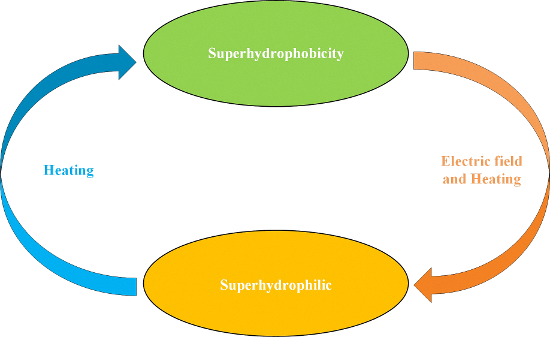
- ] deposited thin films of titanium dioxide nanorods on glass substrates by a low-temperature hydrothermal method. The films were stored in the dark for two weeks to yield films with a contact angle of 154 ± 1.3°. Film irradiation with ultraviolet light for 2 h rendered the films superhydrophilic with a


Polydopamine-coated Au nanorods for targeted fluorescent cell imaging and photothermal therapy
Beilstein J. Nanotechnol. 2019, 10, 794–803, doi:10.3762/bjnano.10.79
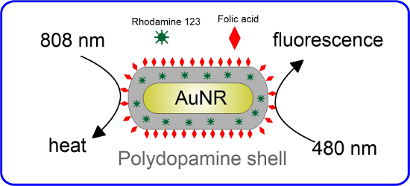
- 10.3762/bjnano.10.79 Abstract Au nanorods (AuNRs) have attracted a great interest as a platform for constructing various composite core/shell nanoparticles for theranostics applications. However, the development of robust methods for coating AuNRs with a biocompatible shell of high loading capacity and
- theranostics in the future. Keywords: Au nanorods; cancer theranostics; fluorescent bioimaging; folate; polydopamine; targeted phototherapy; Introduction Multifunctional imaging and combined multimodal therapy strategies are very promising in cancer theranostics [1][2]. Possible way for such purpose is to
- integrate various functionalities by incorporating different diagnostic and therapeutic agents into a single core/shell nanoparticle. Au nanorods (AuNRs) have attracted a great interest as a platform for theranostic applications because of tunable optical properties and simple protocols for synthesis with


Deposition of metal particles onto semiconductor nanorods using an ionic liquid
Beilstein J. Nanotechnol. 2019, 10, 718–724, doi:10.3762/bjnano.10.71
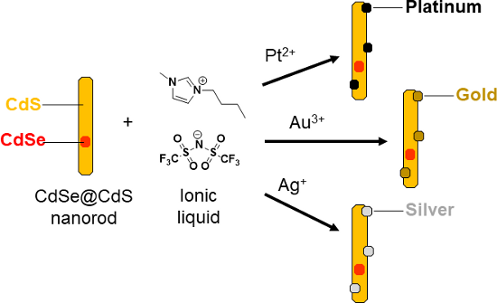
- an ionic liquid, and the effect this has on catalytic performance. Platinum, gold, and silver nanoparticles were deposited onto CdSe@CdS (core@shell) nanorods from metal salts in an ionic liquid (1-butyl-3-methylimidazolium bis(trifluoromethylsulfonyl)imide) without additional surfactants or reducing
- agents. Photocatalytic dye degradation experiments showed that catalysts with platinum particles deposited using the ionic liquid out-performed similar materials synthesized using organic solvents and ligands. We concluded that metal particles can be deposited onto well-defined semiconductor nanorods
- using the methods reported here. Keywords: catalyst; ionic liquid; methylene blue; platinum; semiconductor nanorod; Introduction Core@shell semiconductor nanorods with attached noble metal particles have been widely studied as photocatalysts, and any improvement on the synthesis of these materials has


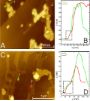
Self-assembly and wetting properties of gold nanorod–CTAB molecules on HOPG
Beilstein J. Nanotechnol. 2019, 10, 696–705, doi:10.3762/bjnano.10.69
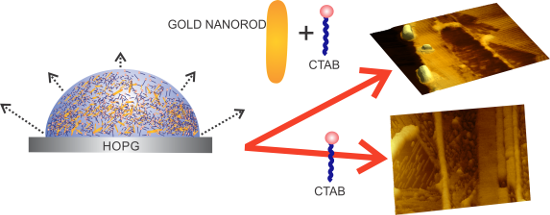
- surface. The self-assembled layers of CTAB molecules on the HOPG terraces prior to nanorod deposition were shown to change the wettability of the surface, and as a result, gold nanorod deposition takes place on nonwetting HOPG terraces. Keywords: CTAB; gold nanorods; micelles; self-assembly; wettability
- gold nanorods align with the step edges whereas side-by-side close packed arrays oriented in all possible directions were observed at the terraces on HOPG [51]. In their work, however, the notable role of CTAB on a HOPG surface is not highlighted. It has been reported [43][45] that on nonpolar surfaces
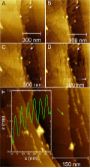
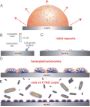
- assembled nanorods can disturb the desired properties between the associated gold nanorods and the HOPG surface. Furthermore, the study and understanding of various assembled morphologies of surfactant molecules is relevant in many other areas [13][14][32]. Results and Discussion In drying experiments on


Biomimetic synthesis of Ag-coated glasswing butterfly arrays as ultra-sensitive SERS substrates for efficient trace detection of pesticides
Beilstein J. Nanotechnol. 2019, 10, 578–588, doi:10.3762/bjnano.10.59
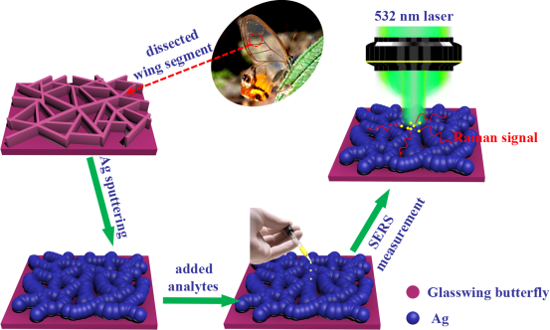
- develop SERS substrates. Metal plasmonic nanostructures with specific shapes such as Au nanorods [9], Au nanostars [10], Ag nanocubes [11], porous Au nanoparticles [12] and pyramidal Ag [13] have been successfully synthesized by wet-chemical approaches. These plasmonic nanostructures can be used as SERS





