Search results
Search for "polarity" in Full Text gives 156 result(s) in Beilstein Journal of Nanotechnology.
Fabrication and photoactivity of ionic liquid–TiO2 structures for efficient visible-light-induced photocatalytic decomposition of organic pollutants in aqueous phase
Beilstein J. Nanotechnol. 2018, 9, 580–590, doi:10.3762/bjnano.9.54
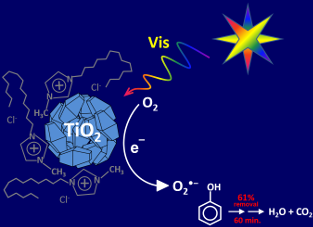
- - and microstructure preparation with novel properties [15]. Especially, their polarity and affinity towards particles and precursors, transport and surface properties seem to be crucial for formation of the protective layer at the particle surface, thus electrosteric, solvation and viscous




Kinetics of solvent supported tubule formation of Lotus (Nelumbo nucifera) wax on highly oriented pyrolytic graphite (HOPG) investigated by atomic force microscopy
Beilstein J. Nanotechnol. 2018, 9, 468–481, doi:10.3762/bjnano.9.45
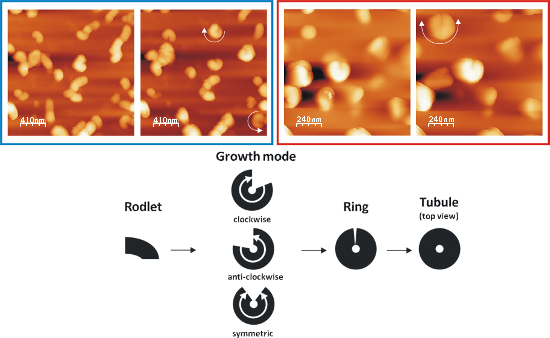
- angle from 88° to 129° after 14 days of wax recrystallization on HOPG. A more recent surface scientific approach by Koch et al. [22] demonstrated a spiral growth mechanism of tubule formation. The effect of substrate polarity on tubule growth was also demonstrated by showing upright oriented tubules on


Combined scanning probe electronic and thermal characterization of an indium arsenide nanowire
Beilstein J. Nanotechnol. 2018, 9, 129–136, doi:10.3762/bjnano.9.15
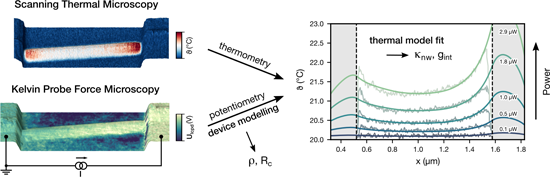
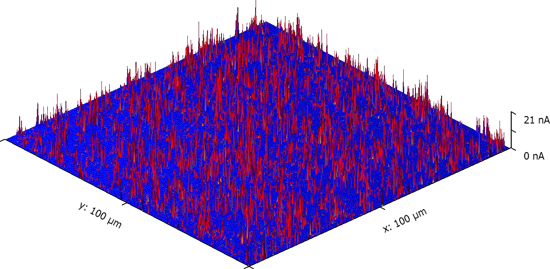
- measurements. Whereas the nanowire potential is symmetric around 0 μA near the left contact, we observe a pronounced asymmetry at the transition from the nanowire to the electrode on the right hand side. This indicates that the contact resistance here depends on polarity, hinting at the formation of a Schottky


Atomic layer deposition and properties of ZrO2/Fe2O3 thin films
Beilstein J. Nanotechnol. 2018, 9, 119–128, doi:10.3762/bjnano.9.14
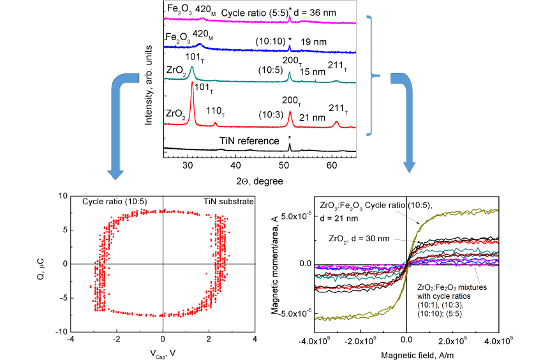
- level for polarization was actually not quite achieved at either polarity of the external field, as the polarized charge kept increasing with the voltage. Most probably, the charge (which is responsible for the polarization in the material deposited) was due to the electric field that drifted from an
- layer under certain polarity, and an opposite polarity with increasing, oppositely directed field is required to release the charge from the traps for the subsequent drift towards the counterelectrode. The current density to applied electric field curves are shown in Figure 7 to support the given


Beyond Moore’s technologies: operation principles of a superconductor alternative
Beilstein J. Nanotechnol. 2017, 8, 2689–2710, doi:10.3762/bjnano.8.269

- . RQL logic cells are state machines similar to RSFQ logic cells. The internal state of a logic cell can be changed by an SFQ propagating in front of the clock wave. Its paired SFQ with opposite polarity serves for the state resetting at the end of a clock period. A complete set of RQL logic cells


Synthesis of metal-fluoride nanoparticles supported on thermally reduced graphite oxide
Beilstein J. Nanotechnol. 2017, 8, 2474–2483, doi:10.3762/bjnano.8.247
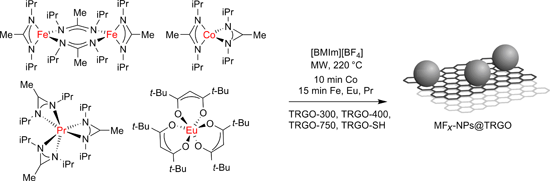
- important technical applications [15][16][17][18][19][20][21][22]. They can be used as composite materials [23][24], in chemical sensors [25], electrodes for fuel cells [26][27][28], for catalysis [29][30][31][32] or for hydrogen storage [33]. Because of their high ionic charge, polarity and dielectric


Magnetic properties of optimized cobalt nanospheres grown by focused electron beam induced deposition (FEBID) on cantilever tips
Beilstein J. Nanotechnol. 2017, 8, 2106–2115, doi:10.3762/bjnano.8.210
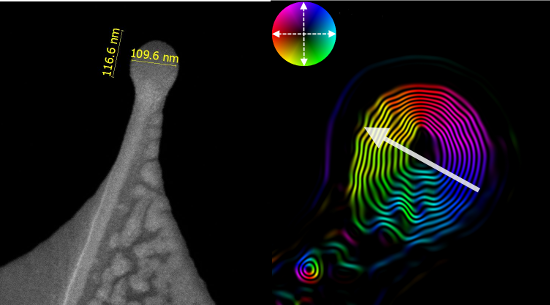
- corresponds to a counterclockwise vortex state of undetermined polarity (it is compatible with the magnetic flux leaking at the center of the sphere both into or out of the image plane). Quantitative values of the in-plane magnetic induction can be extracted by estimating the local thickness of the sample


High-stress study of bioinspired multifunctional PEDOT:PSS/nanoclay nanocomposites using AFM, SEM and numerical simulation
Beilstein J. Nanotechnol. 2017, 8, 2069–2082, doi:10.3762/bjnano.8.207
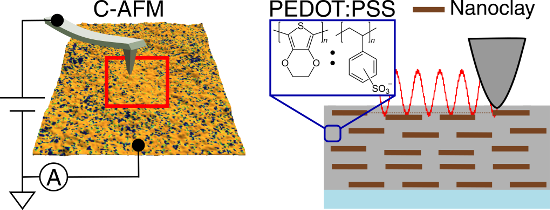
- behavior by acquiring C-AFM images in which the voltage bias polarity is changed in the middle of the image during scanning, as in Supporting Information File 1, Figure S2. The conductive spots switch from −5 nA (top of the image, blue spots) to +5 nA (bottom of the image, yellow spots) when the polarity


Advances and challenges in the field of plasma polymer nanoparticles
Beilstein J. Nanotechnol. 2017, 8, 2002–2014, doi:10.3762/bjnano.8.200
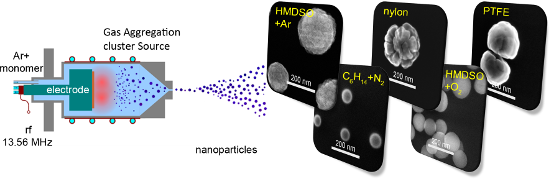
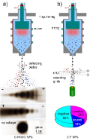
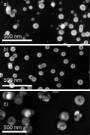
- to the deflection plates. In contrast, the deposit becomes spread towards the edges when 200 V voltage of different polarity is applied to the deflection plates. Remarkably, the presence of both negatively and positively charged NPs can be observed as the deposit is smeared in both directions from
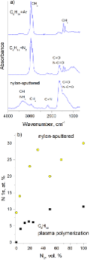
- for deflection of charged nylon-sputtered NPs [66] by applying 200 V voltage of different polarity across the NP beam; b) electrostatic grids used for retardation of charged PTFE-sputtered NPs by applying 1000 V voltage of different polarity along the NP beam (obtained in a similar manner as [55]). C






Identifying the nature of surface chemical modification for directed self-assembly of block copolymers
Beilstein J. Nanotechnol. 2017, 8, 1972–1981, doi:10.3762/bjnano.8.198
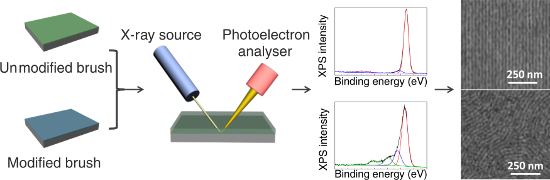
- that the use of brush layers thicker than 5 nm inhibits the interaction of the block copolymer with the substrate [27] and that for thinner layers, the surface neutralization provided by the brush layers is highly dependent on the polarity of the underlying substrate [28]. Conclusion We have


Self-assembly of chiral fluorescent nanoparticles based on water-soluble L-tryptophan derivatives of p-tert-butylthiacalix[4]arene
Beilstein J. Nanotechnol. 2017, 8, 1825–1835, doi:10.3762/bjnano.8.184
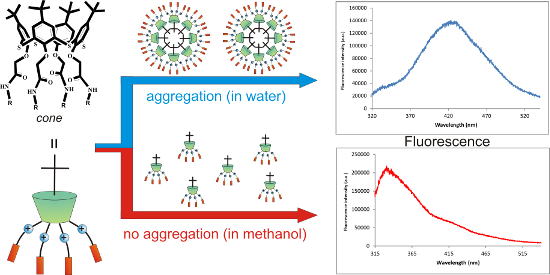
- feature of the compounds is the pronounced dependence of their spectral (emission and chiroptical) properties on the polarity of the solvent and the length of the linker between the macrocyclic and fluorophore parts of the molecule. Keywords: fluorescence; nanoparticles; self-assembly; thiacalixarene
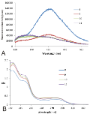
- biologically important substrates and for analyzing biological fluids. Tryptophan has a maximum emission in water at 348 nm. The position of the maximum strongly depends on the polarity of the solvent [43]. The emission maximum of the compounds 8 and 9 in water was observed at 415 nm. It was shifted to the red
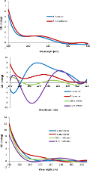
- was established by a number of optical methods that these aggregates were fluorescently active and chiral. The pronounced dependence of their spectral (emission and chiroptical) properties on the polarity of the solvent and the length of the linker between the macrocyclic and fluorophore parts of the



Parylene C as a versatile dielectric material for organic field-effect transistors
Beilstein J. Nanotechnol. 2017, 8, 1532–1545, doi:10.3762/bjnano.8.155
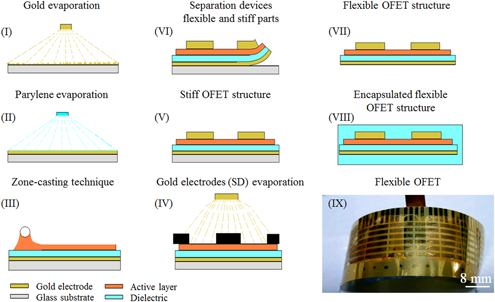
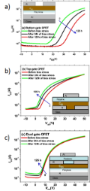
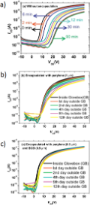
- trapping, depending on the bias stress polarity [55]. The top-gate configuration has also an additional advantage of the dielectric film working as a protective layer. In one example, a thin ordered layer of naphthalene bisimide was deposited via a zone-casting solution procedure with Parylene C used as




Development of polycationic amphiphilic cyclodextrin nanoparticles for anticancer drug delivery
Beilstein J. Nanotechnol. 2017, 8, 1457–1468, doi:10.3762/bjnano.8.145
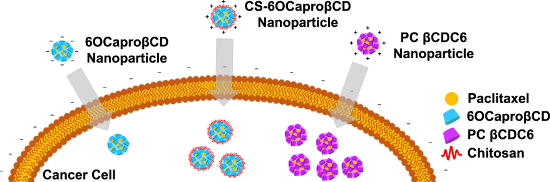
- component, and the hydrogen bonding component. It was reported that the smaller the difference between the solubility of solute and solvent, the higher the affinity and the smaller the particle size. They emphasized that the difference in polarity between ethanol/water is the smallest compared to the


Nanotopographical control of surfaces using chemical vapor deposition processes
Beilstein J. Nanotechnol. 2017, 8, 1250–1256, doi:10.3762/bjnano.8.126
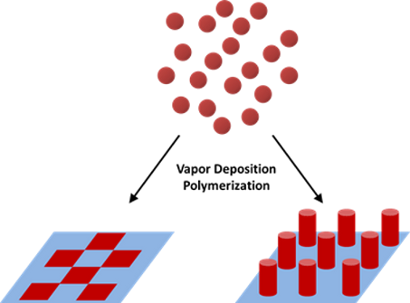
- , polarity or interaction with adsorbing monomers. Additionally, the introduction of porogens during the deposition process and the deposition at an oblique angle are methods that have been reported to lead to the formation of three-dimensional polymer structures. With these bottom-up approaches, structured


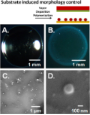


Ultrasmall magnetic field-effect and sign reversal in transistors based on donor/acceptor systems
Beilstein J. Nanotechnol. 2017, 8, 1104–1114, doi:10.3762/bjnano.8.112
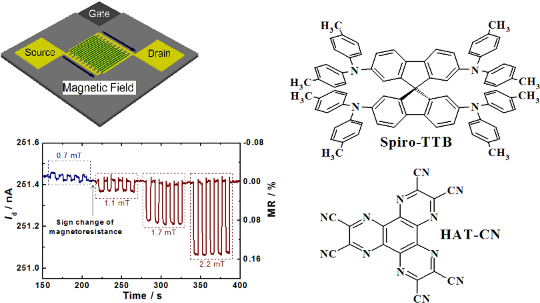
- fields. For stronger magnetic fields, the reduction of the spin mixing due to the Zeeman decoupling of the singlet and triplet levels dominates leading to the MR sign-change typical for USMFE. The polarity of the MR sign-change is controlled by the drain voltage, which can be explained with the

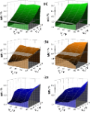


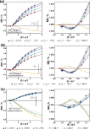

BTEX detection with composites of ethylenevinyl acetate and nanostructured carbon
Beilstein J. Nanotechnol. 2017, 8, 982–988, doi:10.3762/bjnano.8.100
- measurement depends on the polarity of the polymer and is different for polar and non-polar solvents. Sensors for VOC and various gases have been widely researched around the world [10][11][12][13][14][15][16][17][18]. Mondal et al. [19] in their study about VOC sensing materials used hybrid composites. The
- chosen because of its dual polarity. EVA has a polar part (vinyl acetate) and a non-polar part (ethylene). This allows one to detect polar as well as non-polar VOC vapours. Carbon nanoparticles (CB; PRINTEX XE-2) with average particle size of 30 nm were used as electroconductive filler. The composite EVA


Recombinant DNA technology and click chemistry: a powerful combination for generating a hybrid elastin-like-statherin hydrogel to control calcium phosphate mineralization
Beilstein J. Nanotechnol. 2017, 8, 772–783, doi:10.3762/bjnano.8.80
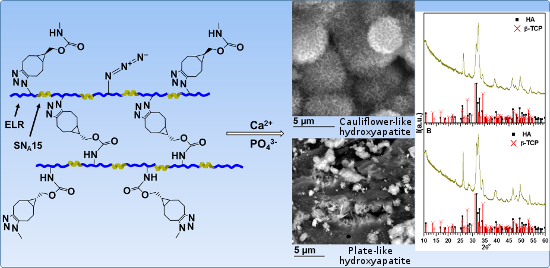
- polymers in a random coil conformation, whereas above Tt, the ELR chains self-assemble into β-turns, which are organized into a fibrillar morphology [27][30]. Changes to the guest residue X modulate Tt, with the key influence being the polarity of the amino acid side-chain in X. As such, ELRs can be



Multimodal cantilevers with novel piezoelectric layer topology for sensitivity enhancement
Beilstein J. Nanotechnol. 2017, 8, 358–371, doi:10.3762/bjnano.8.38
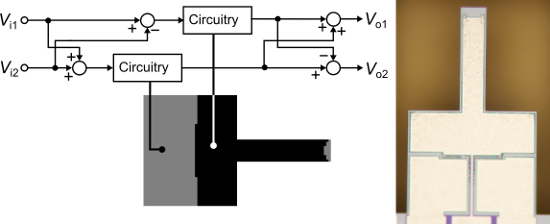
- polarity of the transducers response for a given mode shape. Using this result, the piezoelectric layer is split into isolated regions whose individual responses constructively combine in order to maximize the actuator gain/sensor output. The remainder of the paper is organized as follows. Section ’Modal
- as an optimization problem. For the i-th finite element in the cantilever mesh, the associated Be is denoted The piezoelectric material on each finite element is observed in either a positive polarity or negative polarity. A design parameter is introduced indicating this polarity. If χi = 1 the
- polarity to constructively combine the two responses. For displacement measurement, a vibrometer (Polytec MSA-400) is used to detect the motion of the cantilever. The actuator gains (Vi→d) are measured in two locations which are shown in Figure 2m. Measurements are made at location 1 for flexural modes M1


Tailoring bifunctional hybrid organic–inorganic nanoadsorbents by the choice of functional layer composition probed by adsorption of Cu2+ ions
Beilstein J. Nanotechnol. 2017, 8, 334–347, doi:10.3762/bjnano.8.36
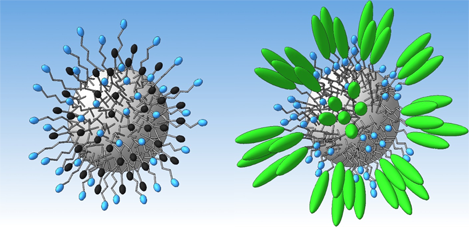
- structure and especially different polarity. The molecules of n-hexane are capable of adsorption interactions due to dispersion forces, whereas interaction of acetonitrile with the surface is dominated by the basic properties of the nitrogen atom. Obviously, acetonitrile (as well as n-hexane) interacts with


Nanoscale isoindigo-carriers: self-assembly and tunable properties
Beilstein J. Nanotechnol. 2017, 8, 313–324, doi:10.3762/bjnano.8.34
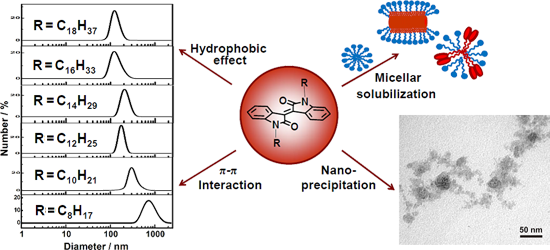
- ). The change in pyrene fluorescence intensity is likely due to the decrease in the polarity of the pyrene microenvironment. Based on these spectra, the CAC of amphiphilic compounds was calculated from the I1/I3 values in the pyrene fluorescence spectrum as a function of the concentration of amphiphilic




Functionalized TiO2 nanoparticles by single-step hydrothermal synthesis: the role of the silane coupling agents
Beilstein J. Nanotechnol. 2017, 8, 304–312, doi:10.3762/bjnano.8.33
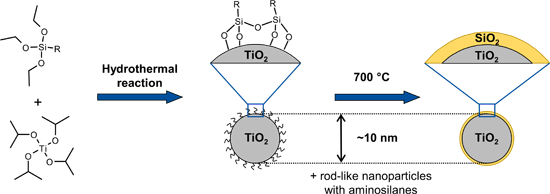
- functionalization agent (DTES). Ahmad et al. [33] reported that different crystallographic faces of anatase exhibit different polarity and Kassir et al. [18] demonstrated that aminosilanes do not react homogeneously on the different faces of TiO2 nanoparticles. Thus, we propose that as the nanoparticles growth and



Template-controlled piezoactivity of ZnO thin films grown via a bioinspired approach
Beilstein J. Nanotechnol. 2017, 8, 296–303, doi:10.3762/bjnano.8.32
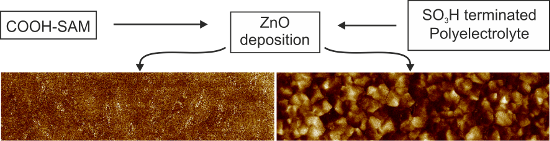
- depends on the conformation of the polyion molecules and the roughness increases with every polyion layer. WCA measurements on the PEL give a value of 29°, which is lower than the WCA of the COOH-SAM (35°). This can be attributed to a difference in polarity of the two templates. Shyue et al. measured the
- ions as can be seen from the pKa values reported by Rived et al. [43]. Therefore, it is probable that the surface charge of the used templates is lower in methanol than it could be expected from zeta potential measurements in water. Nevertheless, the polarity of the two templates is high enough to


Colorimetric gas detection by the varying thickness of a thin film of ultrasmall PTSA-coated TiO2 nanoparticles on a Si substrate
Beilstein J. Nanotechnol. 2017, 8, 229–236, doi:10.3762/bjnano.8.25
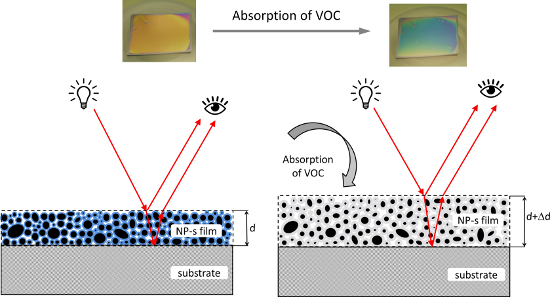
- 2p photoemission line in the overview spectrum (168.2 eV, Figure 3c) is consistent with the sulfonic acid group [30]. This demonstrates that the nanoparticles are covered with PTSA molecules, yielding specific surface properties such as polarity and affinity towards the specific compounds. The vapor


Structural and tribometric characterization of biomimetically inspired synthetic "insect adhesives"
Beilstein J. Nanotechnol. 2017, 8, 45–63, doi:10.3762/bjnano.8.6
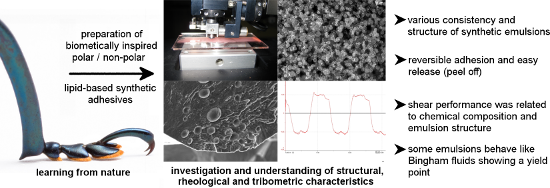
- increased flexibility towards substrates of different surface energy and polarity, (ii) their possible non-Newtonian viscosity shifts implying adjustable viscosities [24][25] and (iii) the formation of lipoid shields that prevent the aqueous fraction of an adhesive from desiccation and its sticking to the


Monolayer graphene/SiC Schottky barrier diodes with improved barrier height uniformity as a sensing platform for the detection of heavy metals
Beilstein J. Nanotechnol. 2016, 7, 1800–1814, doi:10.3762/bjnano.7.173
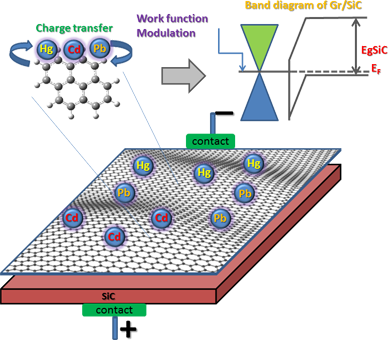
- ideality parameter for graphene/SiC structures are the homogeneity of the graphene thickness, the quality of the grown interface (defects, pits, dislocations, surface roughness), the type of the grown interface (SiC polytypism, face polarity) and the growth conditions. Indeed, we noticed that the Schottky