Search results
Search for "polarization" in Full Text gives 390 result(s) in Beilstein Journal of Nanotechnology. Showing first 200.
LED-light-activated photocatalytic performance of metal-free carbon-modified hexagonal boron nitride towards degradation of methylene blue and phenol
Beilstein J. Nanotechnol. 2022, 13, 1380–1392, doi:10.3762/bjnano.13.114
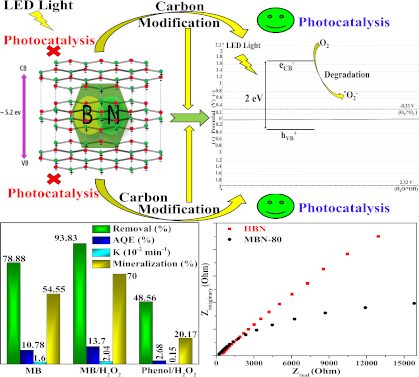
- boron (B) and nitrogen (N) atoms in equal stoichiometry in a honeycomb-like arrangement comparable to that of graphene [1][2][3]. Its interlayer stacking consists of a sandwich-type arrangement of B and N atoms. The N atom is more electronegative than the B atom, leading to polarization and localization



Supramolecular assembly of pentamidine and polymeric cyclodextrin bimetallic core–shell nanoarchitectures
Beilstein J. Nanotechnol. 2022, 13, 1361–1369, doi:10.3762/bjnano.13.112
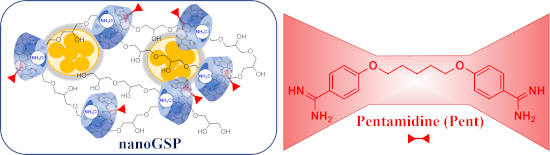
- distortionless enhancement by polarization transfer (DEPT)-edited heteronuclear single quantum correlation (HSQC) analyses. Moreover, taking advantage of the high ability of both CD cavities and silver layer to interact with small molecules to form nanoantibiotics [15], we decided to combine Au@Ag BMNPs (nanoGS


Enhanced electronic transport properties of Te roll-like nanostructures
Beilstein J. Nanotechnol. 2022, 13, 1284–1291, doi:10.3762/bjnano.13.106
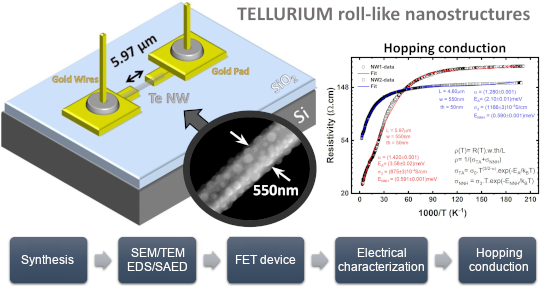
- a well-defined geometry with a uniform rectangular cross section along their entire length. This particular morphology makes them a strong candidate for providing a thorough understanding of dimensionally confined transport phenomena, as presented in SnO2 NBs. Moreover, strain-induced polarization




Laser-processed antiadhesive bionic combs for handling nanofibers inspired by nanostructures on the legs of cribellate spiders
Beilstein J. Nanotechnol. 2022, 13, 1268–1283, doi:10.3762/bjnano.13.105
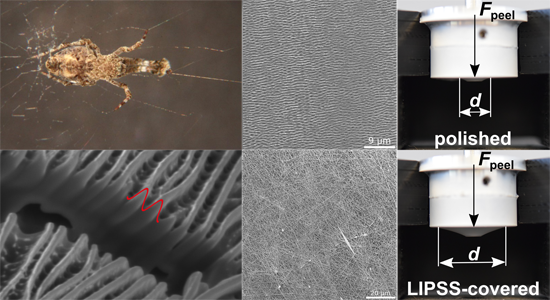
- inter-line separation of Δ = 5 µm. The linear laser beam polarization was kept parallel to the scan direction. Immediately after laser processing, the samples were cleaned for 5 min in acetone in an ultrasonic bath and stored in a desiccator. Figure 10 indicates the presence of the LIPSS at the entire







A super-oscillatory step-zoom metalens for visible light
Beilstein J. Nanotechnol. 2022, 13, 1220–1227, doi:10.3762/bjnano.13.101
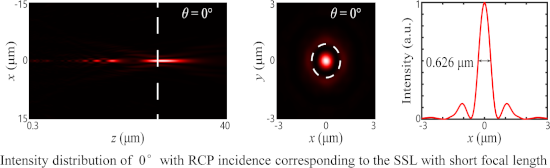
- the device’s ability to modulate the optical field effectively, which, in turn, limits the performance of super-oscillatory lenses (e.g., efficiency and large sidelobe). The development of metasurfaces has provided an effective approach to modulating amplitude, phase, and polarization of the optical
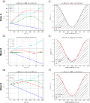
- metasurfaces can be switched by controlling the polarization state of the incident light. The metasurfaces in our SSL consist of high-aspect-ratio nanopillars with different orientations, which can generate the desired super-oscillation light field with high efficiency. The performance of the proposed SSL is
- analyzed by electromagnetic simulations to verify the super-resolution focusing capability corresponding to two different focal lengths. Additionally, with our method, the focal plane can be changed by switching the polarization of the incident light instead of moving the lens. We believe this unique


Design of surface nanostructures for chirality sensing based on quartz crystal microbalance
Beilstein J. Nanotechnol. 2022, 13, 1201–1219, doi:10.3762/bjnano.13.100
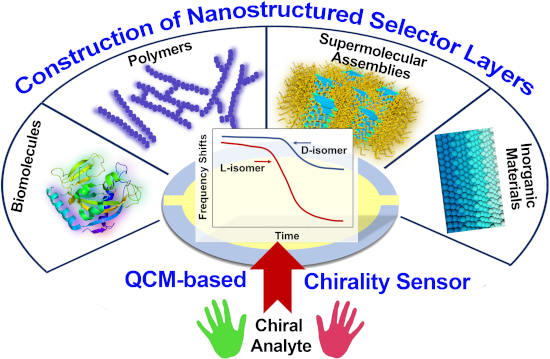
- that the induced spin polarization may affect enantiorecognition under an external field. They experimentally showed that the interaction of chiral molecules with a perpendicularly magnetized substrate was enantiospecific (Figure 12) [145]. The spin-specific interactions between magnetic metals and


Application of nanoarchitectonics in moist-electric generation
Beilstein J. Nanotechnol. 2022, 13, 1185–1200, doi:10.3762/bjnano.13.99
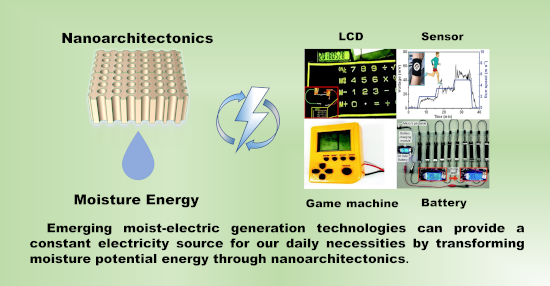
- voltage to two spiral electrodes, the material between the electrodes generated a gradient of hydroxy groups through polarization. The cathode was reduced to generate more hydroxy groups; the anode was oxidized to generate more o-quinone structures. This asymmetry was demonstrated by the stronger hydrogen
- bonding near the cathode, measured by infrared spectroscopy (Figure 8f,g). Under moist conditions, a voltage signal could be measured in the gradient structure device, while the PDA film without polarization treatment did not produce an obvious voltage or current signal. This lateral gradient


Electrocatalytic oxygen reduction activity of AgCoCu oxides on reduced graphene oxide in alkaline media
Beilstein J. Nanotechnol. 2022, 13, 1020–1029, doi:10.3762/bjnano.13.89
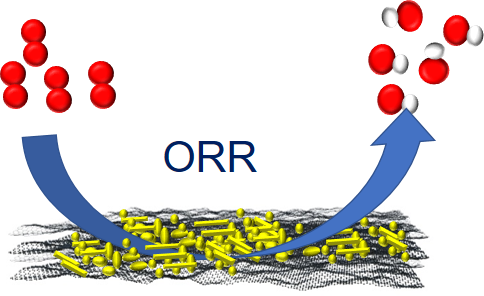
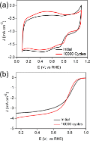
- ORR performance of the series of prepared catalysts was evaluated using LSV measurements in O2-saturated 0.1 M KOH solution (Figure 4a). The catalytic performance for oxygen electroreduction was evaluated via various parameters from the ORR polarization curves including onset potential, half-wave
- polarization curves of various catalysts in O2-saturated 0.1 M KOH electrolyte at 1600 rpm and a sweep rate of 10 mV·s−1. (b) Corresponding Tafel plots. (c) Mass activity obtained at 0.7 V for all active catalysts and (d) Nyquist plots (the inset shows high-frequency EIS curves). (a) TEM and (b) HRTEM images


Theoretical investigations of oxygen vacancy effects in nickel-doped zirconia from ab initio XANES spectroscopy at the oxygen K-edge
Beilstein J. Nanotechnol. 2022, 13, 975–985, doi:10.3762/bjnano.13.85
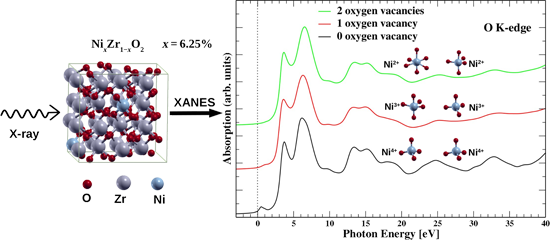
- phase of Ni-doped zirconia is cubic. For a general symmetry, the isotropic electric dipole cross section is obtained by a linear combination of three cross sections calculated along three perpendicular directions of polarization, namely σ(0,0) = 1/3(σxx + σyy + σzz) [44]. In practice, the cross section
- is calculated as follows: First, the charge density is obtained through a self-consistent DFT calculation with 1s core hole on the absorbing oxygen atom, and the cross section is then calculated for a given polarization direction using the Lanczos method and the continued fraction [45]. This approach
- contribution to the pre-edge peak is mainly due to its 3dxy, 3dzx, and 3dzy spin-down orbitals, as well as its 3dzy spin-up orbitals, as shown by the PDOS in Figure 4a. Ni1 with Ni4+ oxidation state and 3d6 orbital configuration has a tetrahedral coordination, which suggests that it is in low spin-polarization


Numerical modeling of a multi-frequency receiving system based on an array of dipole antennas for LSPE-SWIPE
Beilstein J. Nanotechnol. 2022, 13, 865–872, doi:10.3762/bjnano.13.77
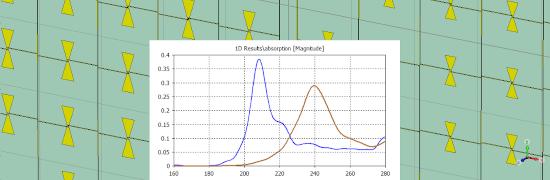
- Large Scale Polarization Explorer-Short-Wavelength Instrument for the Polarization Explorer (LSPE-SWIPE) back-to-back horn. These results are used for calculating the frequency response of arrays of planar dipole antennas with cold-electron bolometers for 145, 210, and 240 GHz frequencies. For the main
- ; Introduction The Large Scale Polarization Explorer (LSPE) [1] is an experiment of the Italian Space Agency for observing the polarization pattern of the B-mode of the cosmic microwave background (CMB). These observations can give an important information about primordial gravitational waves. The LSPE project
- consists of two instruments: Strip and Short-Wavelength Instrument for the Polarization Explorer (SWIPE). LSPE-SWIPE is a balloon-borne radio telescope, which will consist of a main and two auxiliary frequency channels. According to the latest requirements [2], the operating frequency of the LSPE-SWIPE


Self-assembly of C60 on a ZnTPP/Fe(001)–p(1 × 1)O substrate: observation of a quasi-freestanding C60 monolayer
Beilstein J. Nanotechnol. 2022, 13, 857–864, doi:10.3762/bjnano.13.76
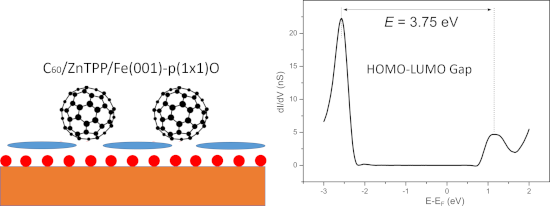
- the case of bulk C60, it is found ΔU = Ub − Us = −1.45 eV. Such a decrease of U can be ascribed to the polarization of the nine molecules surrounding each C60 located at the surface, six belonging to the topmost layer and three to the second layer. By considering an equal contribution for each


Ultrafast signatures of magnetic inhomogeneity in Pd1−xFex (x ≤ 0.08) epitaxial thin films
Beilstein J. Nanotechnol. 2022, 13, 836–844, doi:10.3762/bjnano.13.74
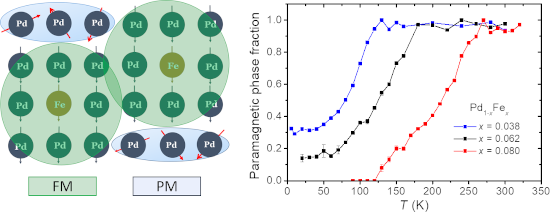
- are of interest. In our recent work, using the example of a thin epitaxial film of Pd0.94Fe0.06, it was demonstrated [37] that the dynamics of the reflection coefficient and the angle of rotation of the polarization plane in magneto-optical Kerr effect (MOKE) measurements after a photoexcitation with
- angles were ≈2° and ≈18°. The relaxation of the electronic subsystem was monitored by the relative change in the reflection coefficient (∆R/R). Ultrafast dynamics of the magnetization was analyzed by the deviation of the angle of rotation of the polarization plane of the probing light from the
- equilibrium in longitudinal MOKE measurements. MOKE reveals itself, in general, in a rotation of the polarization plane and an ellipticity of linearly polarized light on its reflection from a magnetized medium. Macroscopically, it originates from an occurrence of the finite non-diagonal components of the


Ideal Kerker scattering by homogeneous spheres: the role of gain or loss
Beilstein J. Nanotechnol. 2022, 13, 828–835, doi:10.3762/bjnano.13.73
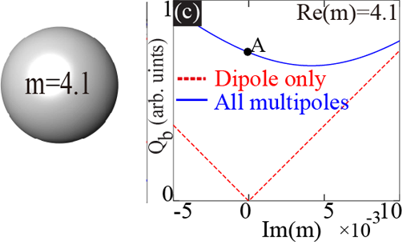
- , and in Figure 2d–f with xD ≈ 4.4123, and m = 2.83), respectively. In Figure 2, besides the scattering spectra (Figure 2a,d) and dependence of Qb on Im(m) (Figure 2b,e), we show also the two-dimensional (2D) scattering patterns (in the plane parallel to both the incident and polarization directions of
- scattering patterns (in the plane parallel to both polarization and incident directions) at xC with m = 5.14 and at xD with m = 2.83, respectively. In (b, c) and (e, f) two sets of results are shown, considering only dipoles or all multipoles, respectively. Scattering spectra are shown in (a) for m = 1.1875


Experimental and theoretical study of field-dependent spin splitting at ferromagnetic insulator–superconductor interfaces
Beilstein J. Nanotechnol. 2022, 13, 682–688, doi:10.3762/bjnano.13.60
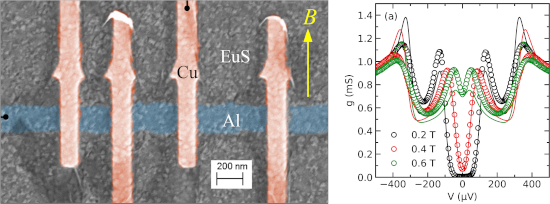
- on the internal spin-degrees of freedom (spin mixing angles [29]), since the conductance is zero, in contrast to a metallic ferromagnet. The absence of conductance-related parameters (transmission and polarization of each channel) strongly simplifies the boundary condition to a ferromagnetic



Revealing local structural properties of an atomically thin MoSe2 surface using optical microscopy
Beilstein J. Nanotechnol. 2022, 13, 572–581, doi:10.3762/bjnano.13.49
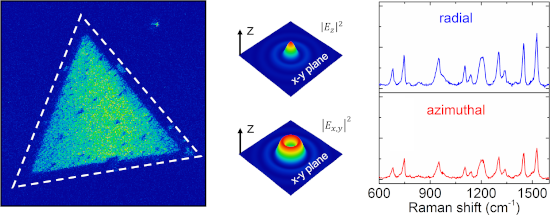
- molybdenum diselenide (MoSe2) flake as surface-enhanced Raman spectroscopy (SERS) platform, we demonstrate the dependency of the Raman enhancement on laser beam polarization and local structure using copper phthalocyanine (CuPc) as probe. Second harmonic generation (SHG) and photoluminescence spectroscopy
- investigated using custom-built confocal optical microscopy assisted by a parabolic mirror. Both azimuthally and radially polarized doughnut beams are used for evaluating the polarization-dependent Raman enhancement at the MoSe2 surface. With the combination of SHG and photoluminescence microscopy, structural
- properties of MoSe2 flakes, such as the structural irregularities, thickness, and crystal stacking, are revealed. The dependencies of Raman and photoluminescence signals of the MoSe2 flake on polarization and local structure are compared and discussed. These results contribute to understand the impact of


Electrostatic pull-in application in flexible devices: A review
Beilstein J. Nanotechnol. 2022, 13, 390–403, doi:10.3762/bjnano.13.32
- are transferred via a switch rectifier to a capacitor to load it. Pyroelectric power generation: Pyroelectric crystals can generate electricity with a change in temperature owing to the net change in polarization of the crystal units [100]. Therefore, it can be an ideal high-voltage source for MEMS


Relationship between corrosion and nanoscale friction on a metallic glass
Beilstein J. Nanotechnol. 2022, 13, 236–244, doi:10.3762/bjnano.13.18
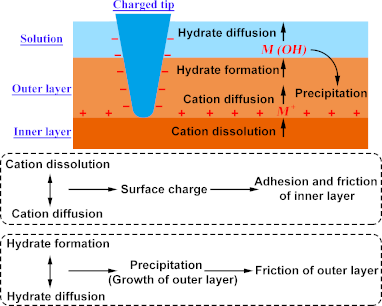
- corrosion conditions. Recently, we investigated nanoscale friction on a Zr63Ni22Ti15 (ZrNiTi) MG in phosphate buffer after electrochemical polarization [21]. Our results demonstrated a new method to investigate in situ the structure of surface oxide films grown upon polarization in aqueous solutions using
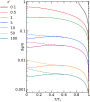
- polarization curves of ZrNiTi MGs in NaCl solution and phosphate buffer recorded in an electrochemical AFM cell. In NaCl solution, no passivity is observed during anodic polarization. The current density increases rapidly even at a low applied potential (approx. 0 V). In contrast, the ZrNiTi MG in phosphate
- buffer is passivated spontaneously with a wide passivation region (−0.05 to 1.2 V). These results indicate a significantly higher corrosion resistance of the MG in phosphate buffer compared to NaCl solution. After potentiodynamic polarization, the corroded surfaces of ZrNiTi MGs were investigated by


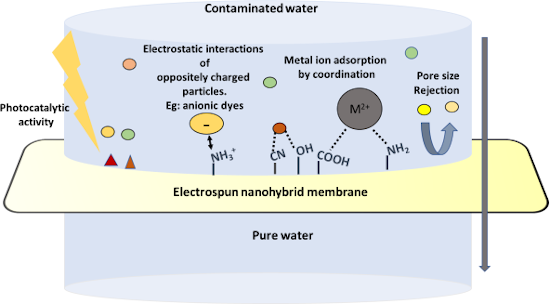
A comprehensive review on electrospun nanohybrid membranes for wastewater treatment
Beilstein J. Nanotechnol. 2022, 13, 137–159, doi:10.3762/bjnano.13.10
- occur for a variety of reasons. More water molecules are trapped between the needle and the collector when the water partial pressure is higher. Due to molecular polarization, the presence of these water molecules reduces the quantity of surplus charges in the electrospinning jet [45]. As a result, the




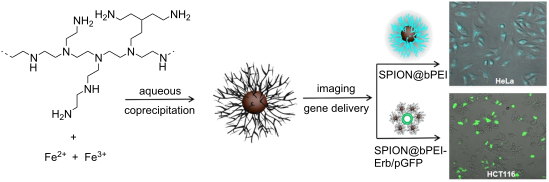
Theranostic potential of self-luminescent branched polyethyleneimine-coated superparamagnetic iron oxide nanoparticles
Beilstein J. Nanotechnol. 2022, 13, 82–95, doi:10.3762/bjnano.13.6
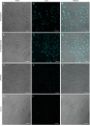
- MCF7 and HCT116 than to HeLa cells at the tested dose of 19.2 µg/mL. Such cell line-based differences are normal since the mechanism of nanoparticle internalization may vary depending on the cell type, cell cycle stage, and cell polarization state [62]. Free Erb did not cause any significant




Influence of magnetic domain walls on all-optical magnetic toggle switching in a ferrimagnetic GdFe film
Beilstein J. Nanotechnol. 2022, 13, 74–81, doi:10.3762/bjnano.13.5
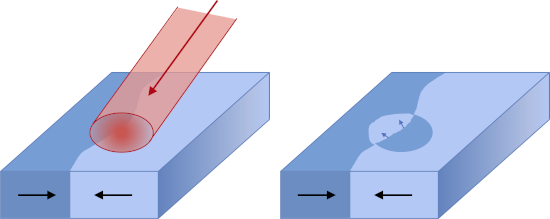
- polarization [4]. This all-optical toggle switching is explained by the different speeds of demagnetization of Gd and the 3d metal in the ferrimagnetic alloy or in bilayers upon exposure to the laser pulse, together with the conservation of angular momentum during the laser-induced demagnetization [16][17][18


Measurement of polarization effects in dual-phase ceria-based oxygen permeation membranes using Kelvin probe force microscopy
Beilstein J. Nanotechnol. 2021, 12, 1380–1391, doi:10.3762/bjnano.12.102
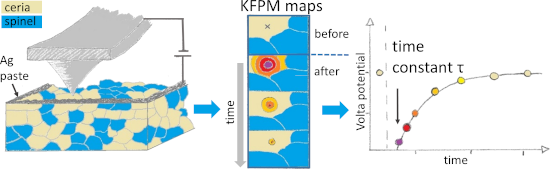
- was used as a model to demonstrate that a combination of polarization relaxation measurements and Kelvin probe force microscopy (KPFM)-based mapping of the Volta potential before and after the end of polarization can be used to determine the chemical diffusion coefficient of the ceria component of the
- temperatures above 400 °C. However, the implications of local oxidation and reduction for charge carrier mobility at lower temperatures are by far less well studied. Therefore, a combined polarization-KPFM experiment was performed on a dual-phase material consisting of 60 vol % Ce0.8Sm0.2O1.9 and 40 vol
- nanoscale electrode, a constant voltage pulse was applied to the sample in order to achieve a local polarization with distinctly changed redox state and defect concentrations. In a subsequent mapping experiment, the AFM tip was used as Kelvin probe to scan the locally changed surface potential distribution


Enhancement of the piezoelectric coefficient in PVDF-TrFe/CoFe2O4 nanocomposites through DC magnetic poling
Beilstein J. Nanotechnol. 2021, 12, 1262–1270, doi:10.3762/bjnano.12.93
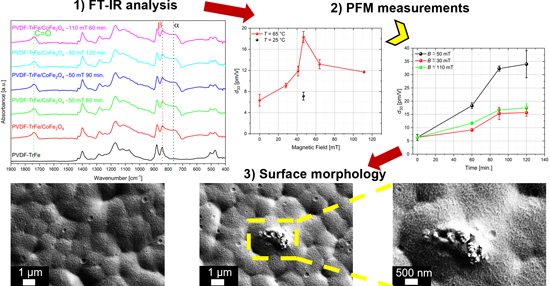
- piezoelectric and ferroelectric properties, high chemical resistance, high thermal stability, large polarization, short switching time, and mechanical flexibility. All these combined characteristics make it suitable for a wide range of advanced applications, from sensing to energy harvesting [8][9][10][11]. It
- shows the strongest ferro-, piezo-, and pyroelectric behavior [13], due to the largest spontaneous polarization (7 × 10⁻³⁰ C·m) [14]. In order to obtain a high content of the β phase, PVDF is generally polymerized with trifluoroethylene (TrFe), producing a copolymer of PVDF, namely poly(vinylidene


Electrical, electrochemical and structural studies of a chlorine-derived ionic liquid-based polymer gel electrolyte
Beilstein J. Nanotechnol. 2021, 12, 1252–1261, doi:10.3762/bjnano.12.92
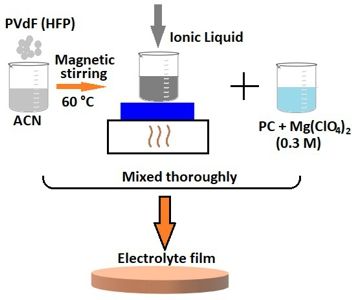
- dielectric constant with increasing frequency is the most expected phenomenon of dielectric materials which mostly arises due to the dielectric relaxation that causes an anomalous dispersion. The orientational polarization, which depends on the molecular arrangement of dielectric materials, is the major
- due to the dissociation of salts and ion aggregates at higher temperatures. The analysis of the modulus is very useful in distinguishing between electrode polarization with that of other interfacial effects. Figure 7a and Figure 7b show the real part Mr and the imaginary part Mi of the electrical
- observed that the height of the peak decreases by increasing the temperature, which suggests a plurality of relaxation mechanisms. At low frequencies, the values of both real and imaginary moduli decrease to almost zero, indicating a negligible contribution of the electrode polarization phenomenon. The



First-principles study of the structural, optoelectronic and thermophysical properties of the π-SnSe for thermoelectric applications
Beilstein J. Nanotechnol. 2021, 12, 1101–1114, doi:10.3762/bjnano.12.82
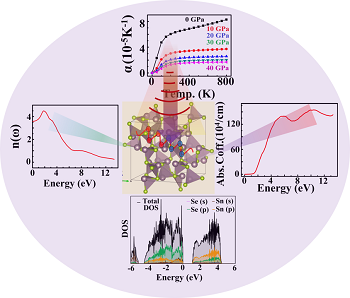
- from the dielectric function by using the following expressions [72]: The real part ε1(ω) of the dielectric tensor describes the polarization and the induced scattering of the incident light photons, while ε2(ω) refers to the magnitude of absorption of the incident radiations. The real part ε1(ω) of


Progress and innovation of nanostructured sulfur cathodes and metal-free anodes for room-temperature Na–S batteries
Beilstein J. Nanotechnol. 2021, 12, 995–1020, doi:10.3762/bjnano.12.75
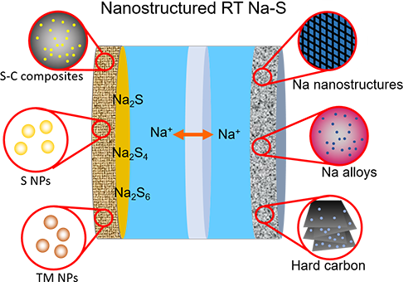
- ]. What is common to all these approaches is that finely dispersed Na, even in its metallic Na form, suppresses dendrite formation to a significant extent. The generally reported reason for this observation is the more even distribution of Na nuclei, the greatly reduced concentration polarization, and a