Search results
Search for "proliferation" in Full Text gives 176 result(s) in Beilstein Journal of Nanotechnology.
Comprehensive review on ultrasound-responsive theranostic nanomaterials: mechanisms, structures and medical applications
Beilstein J. Nanotechnol. 2021, 12, 808–862, doi:10.3762/bjnano.12.64
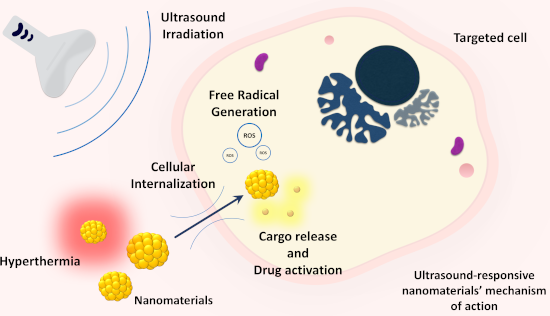
- . demonstrated enhanced proliferation and chondrogenic differentiation of human mesenchymal stem cells by applying lipid-coated MBs plus low-intensity pulsed US. After treatment, cell proliferation was increased by 40%, and the production of glycosaminoglycan and type II collagen was increased by 17% and 78


Silver nanoparticles nucleated in NaOH-treated halloysite: a potential antimicrobial material
Beilstein J. Nanotechnol. 2021, 12, 798–807, doi:10.3762/bjnano.12.63
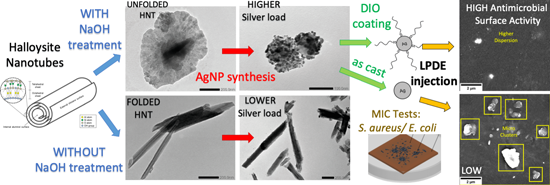
- test shows that 19.64% of E. coli colonies and 96.02% of S. aureus colonies were able to proliferate into LDPE doped with Ag/HNT-8. The LDPE doped with Ag/HNT-8/DIO showed no signs of proliferation at all, indicating a dramatic increase in antimicrobial activity. Figure 7 shows SEM images of both




Silver nanoparticles induce the cardiomyogenic differentiation of bone marrow derived mesenchymal stem cells via telomere length extension
Beilstein J. Nanotechnol. 2021, 12, 786–797, doi:10.3762/bjnano.12.62
- that Ag-NPs induced mESCs cell cycle arrest at the G1 and S phases through inhibition of the hyperphosphorylation of Retinoblastoma protein [12]. Kalishwaralal et al. reported that Ag-NPs could inhibit cell proliferation, cell viability, and cell migration through activating caspase-3 and suppressing
- ) [15]. Previous reports have shown that telomerase activity diminished when cells are exposed to stimuli that inhibit cell proliferation and promote differentiation [16]. Studies on the role of telomeres and telomerase in cardiac cells, cardiac differentiation, and treatment of cardiovascular diseases
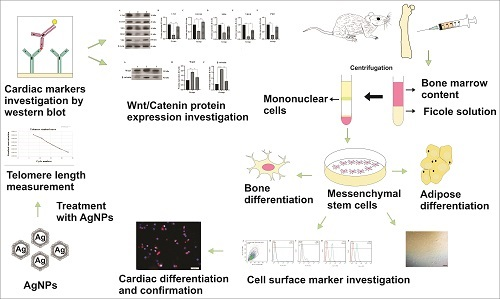
- cardiomyogenic differentiation was confirmed via immunocytochemistry (ICC). Briefly, as shown in Figure 3A–D, when the BM-MSCs were cultured in the cardiomyocyte differentiation medium for a period of 14 days, they exhibited the cardiac markers of α-actinin and desmin. Cell proliferation assay Cardiomyogenically


The impact of molecular tumor profiling on the design strategies for targeting myeloid leukemia and EGFR/CD44-positive solid tumors
Beilstein J. Nanotechnol. 2021, 12, 375–401, doi:10.3762/bjnano.12.31
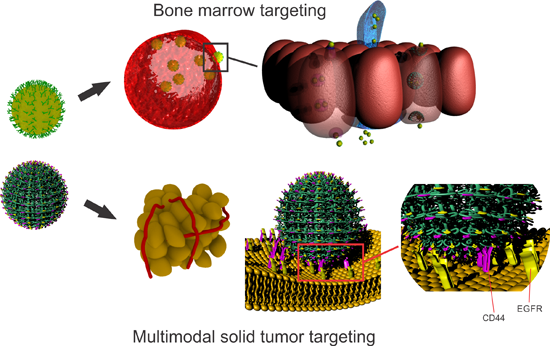
- tumor profiles and targeting strategies on the future chemotherapeutic protocols. Review Molecular profile and characteristics of myeloid leukemia Leukemia comprises a heterogeneous group of diseases characterized by abnormal proliferation and differentiation of a clonal population of blood progenitor
- cells. The proliferation of the self-renewing malignant clones develops and expands in the bone marrow from where the cells start to circulate to the peripheral hematopoietic tissues, leading to a severe and often fatal systemic malignancy that affects hematopoiesis, immune defense system, and many
- replication through downstream pathways such as RAS, RAF, JUN kinase, MYC, and STAT. This influences leukemogenesis by causing enhanced proliferation, differentiation arrest, and resistance to cell death. The use of the TKIs, the first of which was imatinib, has improved the three-year survival to over 95


Doxorubicin-loaded gold nanorods: a multifunctional chemo-photothermal nanoplatform for cancer management
Beilstein J. Nanotechnol. 2021, 12, 295–303, doi:10.3762/bjnano.12.24
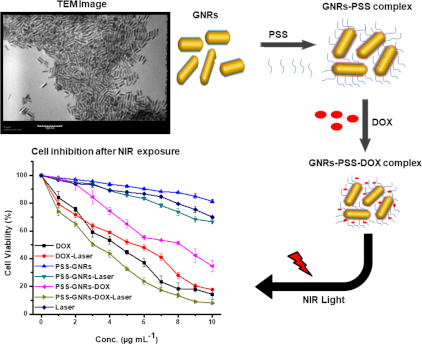
- light into heat and kill heat-sensitive cancer cells with minimal side effects on the surrounding healthy cells due to the low power density of the laser and the shorter time of exposure. At the same time, the DOX release stimulated by the temperature rise could inhibit the proliferation of residual


Differences in surface chemistry of iron oxide nanoparticles result in different routes of internalization
Beilstein J. Nanotechnol. 2021, 12, 270–281, doi:10.3762/bjnano.12.22
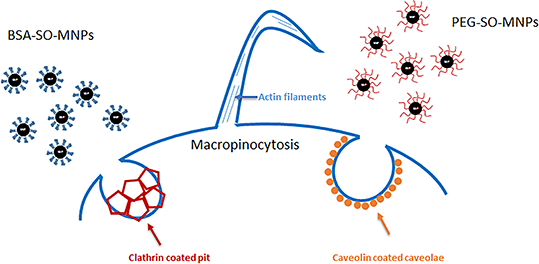
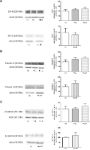
- , Figure S1A) and the mRNA level (Supporting Information File 1, Figure S1B). The expression of Dyn was analyzed only at the protein level. Our results demonstrated that A549 cells are proficient in both CME and CavME pathways. The effect of endocytic inhibitors on cell proliferation and morphology The
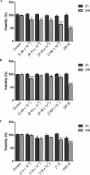
- experiments with the positive controls confirmed the ability of endocytic inhibitors to block the specific route of endocytosis. None of the endocytic inhibitors affected cell viability and proliferation activity with the exception of nocodazole (Noc) (Supporting Information File 1, Figure S2). Short-term
- exposure of cells to surface-modified MNPs and Noc affect substantially the cell proliferation and morphology. Noc affects microtubule formation, thus interfering with cytoskeleton structure and mitosis, leading to cell cycle arrest in G2/M [26]. As MNPs interfere with tubulin polymerization as well [27



Effect of different silica coatings on the toxicity of upconversion nanoparticles on RAW 264.7 macrophage cells
Beilstein J. Nanotechnol. 2021, 12, 35–48, doi:10.3762/bjnano.12.3
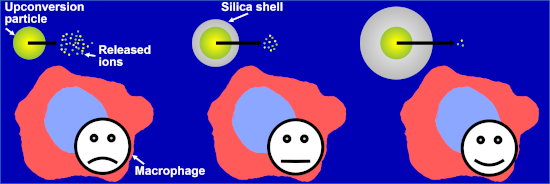
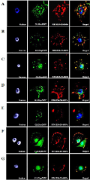
- nanoparticles in polymer shells decreases with incubation time due to the occurrence of proliferation and exocytosis [65]. Such effects can be related to the functionalization and size of the nanoparticles as well as to ion release, and modulate the toxicity of lanthanide-containing particles as a function of


Transient coating of γ-Fe2O3 nanoparticles with glutamate for its delivery to and removal from brain nerve terminals
Beilstein J. Nanotechnol. 2020, 11, 1381–1393, doi:10.3762/bjnano.11.122
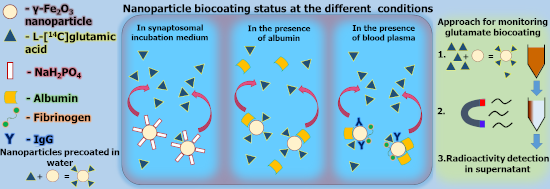
- extracellular glutamate concentrations in glioma cell lines in vitro was shown to be up to 500 µM, and glutamate stimulates glioma cell proliferation in vivo. Also, glial tumor cells ex vivo generate neurotoxic quantities of glutamate [3][4][5][6]. Excessive extracellular glutamate concentrations of 100 μM were


Photothermally active nanoparticles as a promising tool for eliminating bacteria and biofilms
Beilstein J. Nanotechnol. 2020, 11, 1134–1146, doi:10.3762/bjnano.11.98
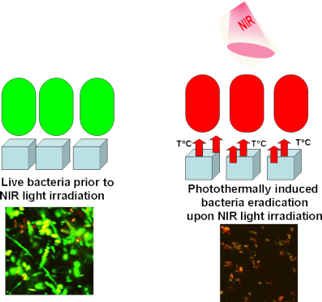
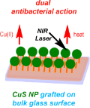
- of 0.25 W/cm2 at 808 nm, lower than the ANSI limits) and the intrinsic nanochemical Ag NP bactericidal effect was observed. In order to combat bacterial adhesion and proliferation, recent techniques have been developed to functionalize photothermally active monolayers of gold nanostars on glass with


Uniform Fe3O4/Gd2O3-DHCA nanocubes for dual-mode magnetic resonance imaging
Beilstein J. Nanotechnol. 2020, 11, 1000–1009, doi:10.3762/bjnano.11.84
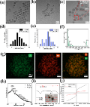
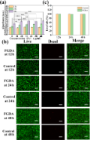
- concentrations of FGDA nanocubes. At that stage, the L929 cells were probably still adapting to the media containing FGDA nanocubes and therefore were not proliferating. At later time points (24 and 48 h), the L929 cells treated with the FGDA nanocubes were proliferating normally and their proliferation rate was
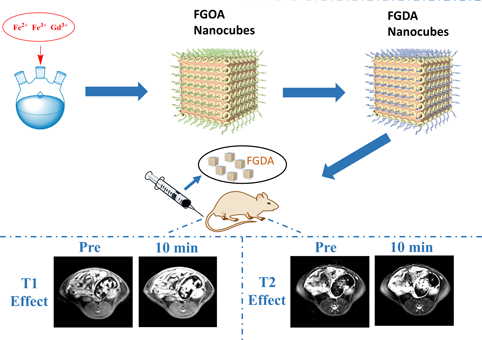
- conclusion, FGDA nanocubes have no negative impact on cell viability or proliferation, which suggests that these nanocubes can be used for in vivo applications. In vivo MRI with FGDA nanocubes as a contrast agent To visualize the contrast and image quality provided by the FGDA nanocubes in vivo, T1-weighted



Examination of the relationship between viscoelastic properties and the invasion of ovarian cancer cells by atomic force microscopy
Beilstein J. Nanotechnol. 2020, 11, 568–582, doi:10.3762/bjnano.11.45
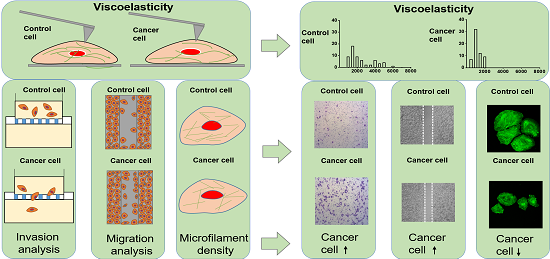
- and invasion [59]. Kinsella’s group showed that the main problem in the treatment of cancer may be the invasive behavior of cancer cells [60]. The present investigations indicate that chemotherapy drugs could alter the mechanical properties of malignant tumors cells to attenuate cell proliferation


Multilayer capsules made of weak polyelectrolytes: a review on the preparation, functionalization and applications in drug delivery
Beilstein J. Nanotechnol. 2020, 11, 508–532, doi:10.3762/bjnano.11.41
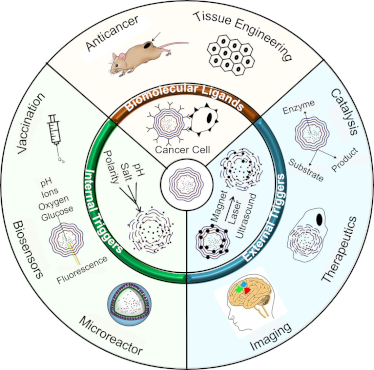
- application in implants or tissue engineering. Another strategy for biomolecular functionalization is covalently linking the receptor specific ligands to one of the layer components that are known to interact with cancer cell receptors. For instance, the improved cell adhesion and proliferation was observed



Brome mosaic virus-like particles as siRNA nanocarriers for biomedical purposes
Beilstein J. Nanotechnol. 2020, 11, 372–382, doi:10.3762/bjnano.11.28
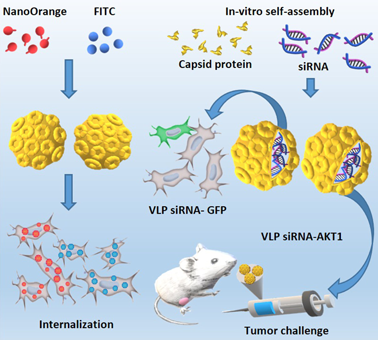
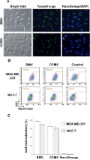
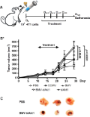
- (Figure 4C), corroborating the cargo release from BMV VLP inside tumor cells and gene silencing. BMV VLPs as siAkt1 nanocarriers The anti-cancer siRNA Akt1 (siAkt1) was also encapsidated in BVM-VLPs (Figure 4B). Akt1 is a kinase involved in the processes of cell proliferation, migration and transformation


Poly(1-vinylimidazole) polyplexes as novel therapeutic gene carriers for lung cancer therapy
Beilstein J. Nanotechnol. 2020, 11, 354–369, doi:10.3762/bjnano.11.26
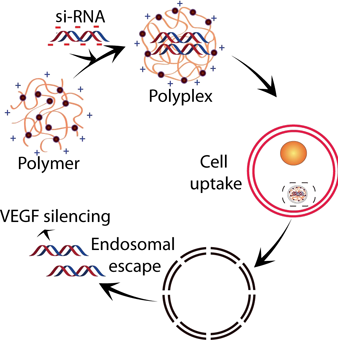
- that have been connected to the proliferation and invasion of lung cancer cells. These results indicate that the PVI complexes can be an effective agent to counter lung cancer. Keywords: anti-VEGF siRNA; gene silencing; lung cancer; microarray; poly(1-vinylimidazole); small interfering RNA (siRNA
- and blank polymer exhibited viabilities exceeding that of the untreated control cells while those cells treated with the polyplex exhibited a decreased viability. VEGF inhibition has been earlier reported to decrease the proliferation of cancer cells due to its ability to interfere with the MAPK and
- -regulated. The role of TFF1 in cancer remains controversial but many reports have demonstrated that TFF1 serves as a tumor suppressor gene that inhibits cancer cell proliferation and migration in epithelial cancers such as gastric, breast and pancreatic cancer [36]. Recent experimental evidence has revealed


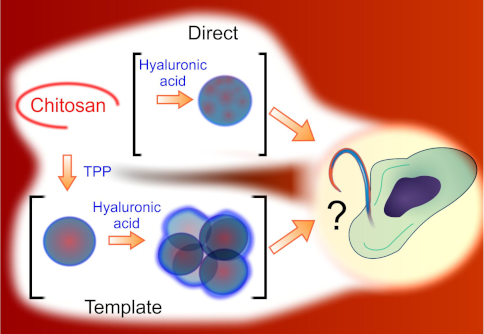
The different ways to chitosan/hyaluronic acid nanoparticles: templated vs direct complexation. Influence of particle preparation on morphology, cell uptake and silencing efficiency
Beilstein J. Nanotechnol. 2019, 10, 2594–2608, doi:10.3762/bjnano.10.250
- plates and left to adhere overnight (5% v/v CO2 in air, 37 °C). Cells were then exposed to 0.25 mL of nanoparticle suspensions in full medium (concentration: 0.01–0.5 mg/mL) for 24 h, then determining viability using the CellTiter 96® AQueous One Solution Cell Proliferation Assay (MTS assay). Briefly



Fully amino acid-based hydrogel as potential scaffold for cell culturing and drug delivery
Beilstein J. Nanotechnol. 2019, 10, 2579–2593, doi:10.3762/bjnano.10.249
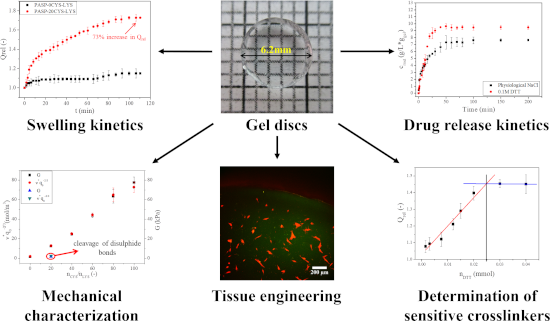
- established. Using metoprolol as a model drug, cell proliferation and drug release kinetics were studied at different LYS contents and in the presence of thiol groups. The optimal ratio of cross-linkers for the proliferation of periodontal ligament cells was found to be 60−80% LYS and 20−40% CYS. The
- is that it can partially decrease the anionic character of aspartic acid. In addition, LYS also facilitates the electrostatic interaction between anionic plasma membrane sites and cationic polymer sites. Therefore, it supports cell adhesion and proliferation [47]. The swelling, mechanical and
- proliferation reagent WST-1. The reagent was diluted (1:20) with αMEM containing no phenol red (Gibco, USA). Then, 200 μL solution was applied in each well. After incubation for 2 h at 37 °C, 150 μL of the supernatant solution was transferred from each well into an empty 96-well plate. The absorbance was


Bombesin receptor-targeted liposomes for enhanced delivery to lung cancer cells
Beilstein J. Nanotechnol. 2019, 10, 2553–2562, doi:10.3762/bjnano.10.246
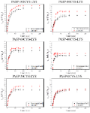
- (Figure 1c). In contrast, exposure to cystabn, reduced cell proliferation over a 5 day period (Figure 1d), thus confirming that the addition of an N terminal cysteine did not interfere with GRPR binding. Exposure of NCI-H82 cells to the Tyr4-Bn agonist (Figure 1e) and cystabn antagonist peptide (Figure 1f
- ) caused no change in cell growth. These cell proliferation studies were performed in serum-free conditions in line with previous studies [24][25] for two principle reasons. Firstly, the removal of serum from the culture medium depletes bovine bombesin-like peptides that could otherwise stimulate cell
- GRPR depleted NCI-H82 cells. In contrast to results from NCI-H345 cells, the addition of Tyr4-Bn to NCI-H82 caused no noticeable increase in cell proliferation and cystabn effected no reduction in proliferation. This demonstrated that cystabn functionally targeted GRPR expressing cells in a specific

pH-Controlled fluorescence switching in water-dispersed polymer brushes grafted to modified boron nitride nanotubes for cellular imaging
Beilstein J. Nanotechnol. 2019, 10, 2428–2439, doi:10.3762/bjnano.10.233
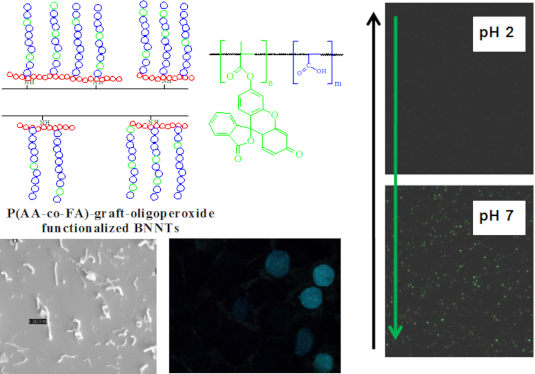
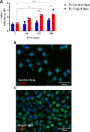
- . DU145 cells internalize more P(AA-co-FA)-functionalized BNNTs because of their higher nutrition requirement for their fast proliferation and growth. While only P(AA-co-FA)-functionalized BNNT labeled cell nuclei were detectable in PNT1A control cells, the cells incubated with P(AA-co-FA)-functionalized


Atomic force acoustic microscopy reveals the influence of substrate stiffness and topography on cell behavior
Beilstein J. Nanotechnol. 2019, 10, 2329–2337, doi:10.3762/bjnano.10.223
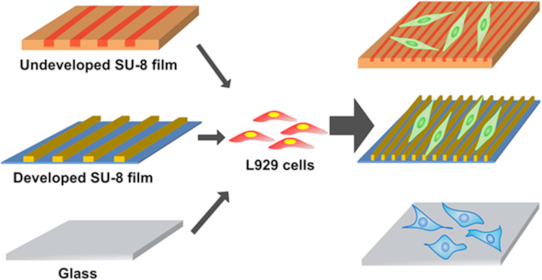
- engineering [1][2] as they affect many cell functions such as cell migration [3][4], attachment, proliferation [5][6] and differentiation [7][8]. Substrate stiffness and topography are two of the most important ECM physical parameters in regulating cell functions [9]. A previous study shows that cells


Design of a nanostructured mucoadhesive system containing curcumin for buccal application: from physicochemical to biological aspects
Beilstein J. Nanotechnol. 2019, 10, 2304–2328, doi:10.3762/bjnano.10.222
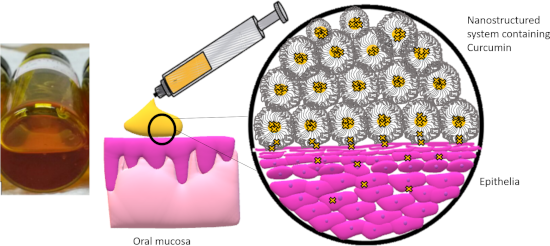
- drug has been evidenced and shown to act on a variety of molecular targets that regulate the proliferation and apoptosis, decrease the expression of NF-κB and increase insulin-like growth factor-binding protein 5 (IGFBP-5) and cytochrome P450, family 1, member A1 (CYP1A1) [32][33][34]. Moreover, CUR


Synthesis and potent cytotoxic activity of a novel diosgenin derivative and its phytosomes against lung cancer cells
Beilstein J. Nanotechnol. 2019, 10, 1933–1942, doi:10.3762/bjnano.10.189
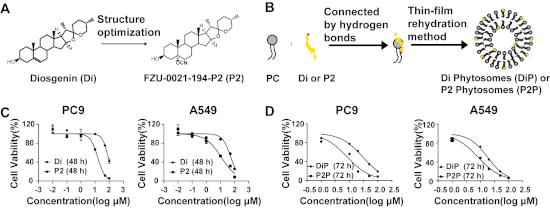
- sterol structure similarly to cholesterol, P2 phytosomes (P2Ps) were prepared to further improve the water solubility of P2. The P2Ps exhibited a particle size of 53.6 ± 0.3 nm with oval shape and a zeta potential of −4.0 ± 0.7 mV. P2Ps could inhibit the proliferation of lung cancer cells more
- or better antiproliferative effects after a 72 h incubation. The DiP and P2P were made up of drugs and phosphatidylcholine. The antiproliferative activities of DiP and P2P against A549 and PC9 cells originated from the drugs. Therefore, there is no huge difference in cell proliferation inhibition



Engineered superparamagnetic iron oxide nanoparticles (SPIONs) for dual-modality imaging of intracranial glioblastoma via EGFRvIII targeting
Beilstein J. Nanotechnol. 2019, 10, 1860–1872, doi:10.3762/bjnano.10.181
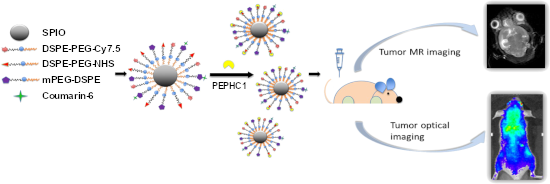
- Sigma (USA) and Cy7.5 NHS ester was purchased from Nanocs (USA). Fetal bovine serum (FBS), phosphate buffered saline (PBS), trypsin-EDTA (0.25%), high glucose Dulbecco’s modified Eagle’s medium (DMEM) and penicillin-streptomycin were purchased from Gibco (CA, USA). The MTT cell proliferation and




Nanoarchitectonics meets cell surface engineering: shape recognition of human cells by halloysite-doped silica cell imprints
Beilstein J. Nanotechnol. 2019, 10, 1818–1825, doi:10.3762/bjnano.10.176
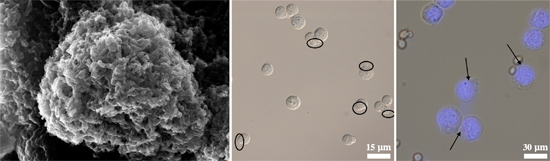
- occurs. However, flow cytometry-based cell proliferation monitoring performed with cells stained with 5(6)-carboxyfluorescein diacetate N-succinimidyl ester (CFSE) dye has confirmed that cells coated with pure silica or silica/halloysite display a similar cell proliferation pattern as intact HeLa cells
- the inhibition of proliferation by the silica shells. On day 3, however, the fluorescence intensity in silica-coated cells was even higher than in the control cells, apparently due to the partial destruction of the shells and the release of HeLa cells. Although non-compromised viability is an


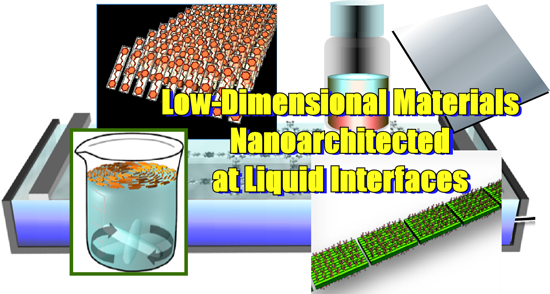
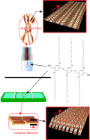
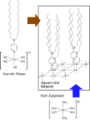
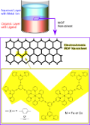
Materials nanoarchitectonics at two-dimensional liquid interfaces
Beilstein J. Nanotechnol. 2019, 10, 1559–1587, doi:10.3762/bjnano.10.153













Effects of gold and PCL- or PLLA-coated silica nanoparticles on brain endothelial cells and the blood–brain barrier
Beilstein J. Nanotechnol. 2019, 10, 941–954, doi:10.3762/bjnano.10.95
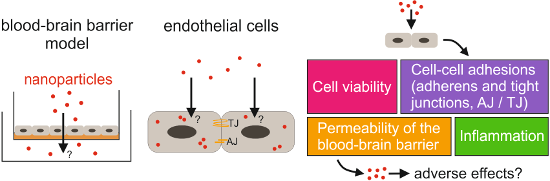
- –brain barrier using rat brain capillary endothelial cells (rBCEC4). All types of nanoparticles were taken up time-dependently by the rBCEC4 cells, albeit to a different extent, causing a time- and concentration-dependent decrease in cell viability. Nanoparticle exposure did not change cell proliferation
- cytotoxicity in HUVECs. Furthermore, Si-NPs were shown to induce oxidative stress and inflammation mediated by mitogen-activated protein kinase (MAPK) and nuclear factor kappa-light-chain-enhancer of activated B cells (NF-κB) [21] pathways that are related to cell proliferation and differentiation but also to
- , proliferation and inflammation in rBCEC4 cells Possible changes in protein expression representing inhibition or activation of several crucial proteins of different signaling pathways involved in regulatory processes including cell survival and proliferation were investigated with western blotting. The active