Search results
Search for "sensors" in Full Text gives 611 result(s) in Beilstein Journal of Nanotechnology. Showing first 200.
Ultrasensitive and ultrastretchable metal crack strain sensor based on helical polydimethylsiloxane
Beilstein J. Nanotechnol. 2024, 15, 270–278, doi:10.3762/bjnano.15.25
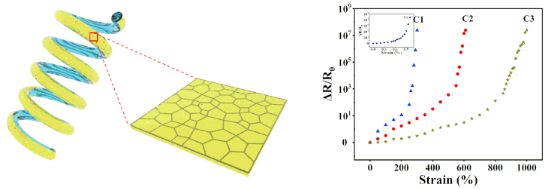
- , Shanghai Jiao Tong University School of Nursing, Shanghai, P.R. China 10.3762/bjnano.15.25 Abstract The majority of crack sensors do not offer simultaneously both a significant stretchability and an ultrahigh sensitivity. In this study, we present a straightforward and cost-effective approach to fabricate
- metal crack sensors that exhibit exceptional performance in terms of ultrahigh sensitivity and ultrahigh stretchability. This is achieved by incorporating a helical structure into the substrate through a modeling process and, subsequently, depositing a thin film of gold onto the polydimethylsiloxane
- durability. These impressive attributes are attributed to the deliberate design of geometric structures and careful selection of connection types for the sensing materials, thereby presenting a novel approach to fabricating stretchable and highly sensitive crack-strain sensors. This work offers a universal


Design, fabrication, and characterization of kinetic-inductive force sensors for scanning probe applications
Beilstein J. Nanotechnol. 2024, 15, 242–255, doi:10.3762/bjnano.15.23
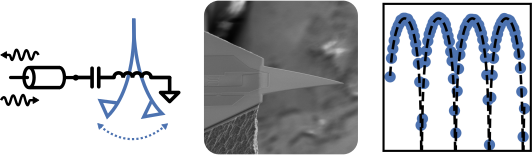
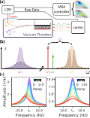
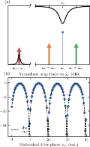
- point where motion detection becomes the limiting source of noise. In this context, the principles of cavity optomechanics may improve the sensitivity of AFM force sensors. Cryogenic AFM further enables the use of superconducting microwave resonators in a cavity optomechanical detection scheme [4][5][6
- (KIMEC) sensors. A force sensor designed specifically for scanning probe microscopy must have a sharp tip that is readily positioned and scanned over a surface. We operate the sensor near a mechanical resonance with a high quality factor Q for enhanced responsivity to force. The mechanical resonator is a
- more detail. Sensor design We view the sensors as composed of the cantilever, which transduces force to displacement (transducer), and the microwave resonator, which detects the displacement (detector). For this reason, we separately discuss the mechanical resonator, the microwave resonator, and their



Enhanced feedback performance in off-resonance AFM modes through pulse train sampling
Beilstein J. Nanotechnol. 2024, 15, 134–143, doi:10.3762/bjnano.15.13
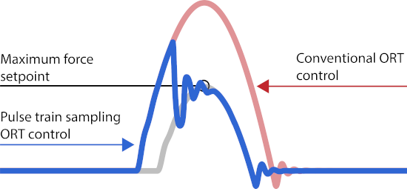
- imaging speed, since enough time must elapse between snap-off and subsequent contact with the sample so that the cantilever ringing diminishes. Many attempts have been made on the design of actuators and sensors to speed up ORT techniques. However, the utilized controllers still have the same core scheme


In situ optical sub-wavelength thickness control of porous anodic aluminum oxide
Beilstein J. Nanotechnol. 2024, 15, 126–133, doi:10.3762/bjnano.15.12
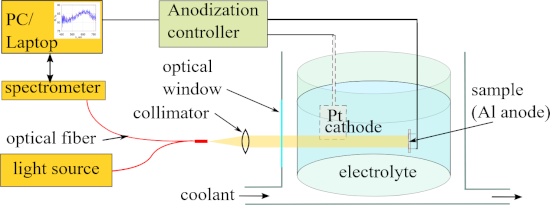
- ] and optical sensors [4][5], require precise control of PAAO layer thickness in the optical sub-wavelength range. Among other examples, by tuning the thickness of PAAO between 200 and 600 nm, it becomes possible to selectively enhance or suppress photoluminescence (PL) bands originating from defects in
- zinc oxide nanorods embedded within the PAAO template [13]. Recently, it was demonstrated that the PAAO thickness tuning can increase the signal intensity and refractometric sensitivity of localized surface plasmon resonance (LSPR) sensors constructed using gold nanoparticles, which are deposited on
- established in other works, for example [13]. Funding The work was performed within the Latvian Council of Science fundamental and applied research project LZP-2020/1-0200 “Nanostructured multilayer hybrid coatings for interferometric and optoelectronic sensors” and European Union’s Horizon 2020 Research and


New application of bimetallic Ag/Pt nanoplates in a colorimetric biosensor for specific detection of E. coli in water
Beilstein J. Nanotechnol. 2024, 15, 95–103, doi:10.3762/bjnano.15.9
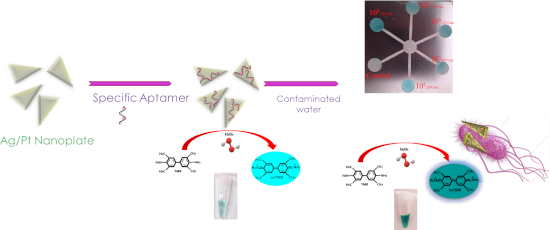
- ], photocatalytic degradation and bactericidal action [21], sensors and biosensors [22][23][24][25], and as electrocatalysts [26]. Aptamers are single-stranded DNA or RNA oligonucleotides that attach to their targets with great affinity and specificity. Aptamers have high stability in a variety of environments and


Study of the reusability and stability of nylon nanofibres as an antibody immobilisation surface
Beilstein J. Nanotechnol. 2024, 15, 83–94, doi:10.3762/bjnano.15.8
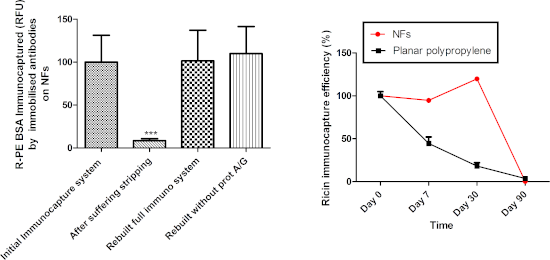
- the biosensor surface, in terms of density, orientation, and stability, will determine the diagnosis capability of the device [11]. Thus, the immobilisation surface of the device is one of the key points in the development of new sensors. Nylon has been used as immobilisation surface in numerous


Measurements of dichroic bow-tie antenna arrays with integrated cold-electron bolometers using YBCO oscillators
Beilstein J. Nanotechnol. 2024, 15, 26–36, doi:10.3762/bjnano.15.3
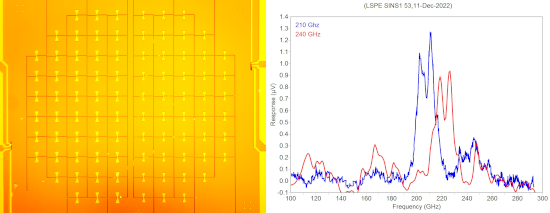
- microwave superconducting quantum interference device (SQUID) readout if transition-edge sensors (TESs) detectors are installed. Otherwise, on-wafer RF multiplexing may be used with thermal kinetic inductance detectors [2]. The LSPE mission [3] is a project of the Italian Space Agency aimed at studying the


TEM sample preparation of lithographically patterned permalloy nanostructures on silicon nitride membranes
Beilstein J. Nanotechnol. 2024, 15, 1–12, doi:10.3762/bjnano.15.1
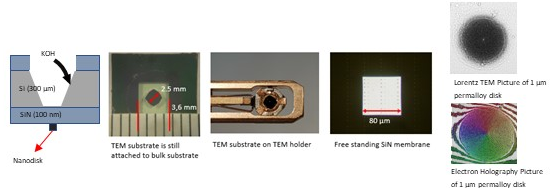
- ], transmission electron microscopy (TEM) [1][8][9][10][11], scanning transmission X-ray microscopy [12][13], and magneto-optical Kerr effect microscopy [14][15]. Possible applications of Py nanodisks were proposed for zero-hysteresis magnet sensors, magnetic logic devices, and data storage [16]. Py is a nickel


A multi-resistance wide-range calibration sample for conductive probe atomic force microscopy measurements
Beilstein J. Nanotechnol. 2023, 14, 1141–1148, doi:10.3762/bjnano.14.94
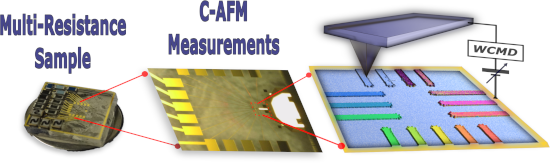
- electronics [24][25][26][27][28][29], organic and biological systems [30][31][32][33][34], and quantum devices [35][36][37]. Various technical methods have been developed in C-AFM to cope with the diversity of its applications, including advanced sensors and low-noise preamplifiers [2][38][39][40


Properties of tin oxide films grown by atomic layer deposition from tin tetraiodide and ozone
Beilstein J. Nanotechnol. 2023, 14, 1085–1092, doi:10.3762/bjnano.14.89
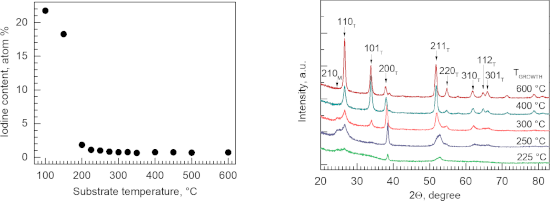
- have been studied from many perspectives. For example, one can mention anodes for Li-ion batteries [1], gas sensors [2], catalytic activities [3], and stable buffer [4] or base [5] layers in solar cells. More applications can be found, when SnO2 is considered as constituent of a nanostructure or a


Experimental investigation of usage of POE lubricants with Al2O3, graphene or CNT nanoparticles in a refrigeration compressor
Beilstein J. Nanotechnol. 2023, 14, 1041–1058, doi:10.3762/bjnano.14.86
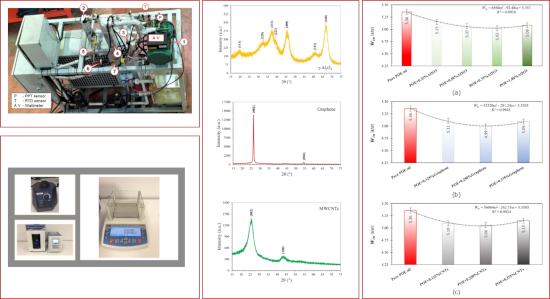
- detector (RTD) sensors were used for pressure and temperature measurements, respectively. Besides, required electrical power of the compressor was measured using a digital wattmeter. During the tests, the pressure and temperatures at the compressor inlet and outlet were kept approximately constant. The





A visible-light photodetector based on heterojunctions between CuO nanoparticles and ZnO nanorods
Beilstein J. Nanotechnol. 2023, 14, 1018–1027, doi:10.3762/bjnano.14.84
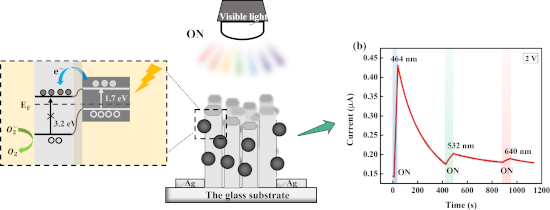
- 70000, Vietnam Center for Innovative Materials and Architectures (INOMAR), Ho Chi Minh City 70000, Vietnam 10.3762/bjnano.14.84 Abstract Optoelectronic devices have various applications in medical equipment, sensors, and communication systems. Photodetectors, which convert light into electrical signals
- development of many technologies in the future, such as solar cells [1][2], light-emitting diodes (LEDs) [3][4], laser diodes [5], and optical fibers [6]. Optoelectronics devices contribute to meeting requirements in telecommunications, medical equipment, sensors, and military services. Among those
- photodetectors (PDs) to “Industry 4.0”, which may include image sensors, biomedical imaging, manufacturing process control, environmental sensing, and optical sensors [8]. Various materials for photodetectors have been developed. Photodetectors can be classified into two main categories, namely PDs that work at


A wearable nanoscale heart sound sensor based on P(VDF-TrFE)/ZnO/GR and its application in cardiac disease detection
Beilstein J. Nanotechnol. 2023, 14, 819–833, doi:10.3762/bjnano.14.67
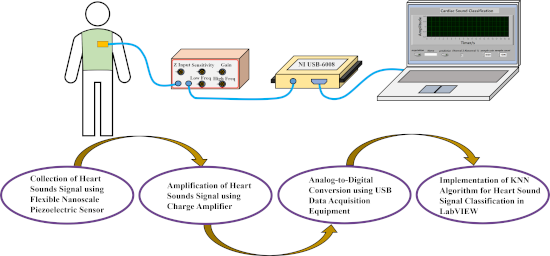
- mechanical vibration signals into voltage signals, have become one of the primary materials for creating heart sound sensors [9]. Piezoelectric materials are essential components in heart sound auscultation equipment. When pressure is applied to piezoelectric materials, they generate a voltage, a phenomenon
- a series of processing steps, the heart sound signal is obtained. However, PZT has a brittle texture, does not fit the skin well, and lacks comfort when worn, making it unsuitable for wearable sensors [10]. Moreover, the lead in PZT is harmful to humans. In recent years, there has been a significant
- polymer material with a wide frequency bandwidth, good biocompatibility, and softness. It is one of the preferred materials for flexible piezoelectric sensors [12]. However, compared to rigid piezoelectric materials such as PZT, pure P(VDF-TrFE) has inferior piezoelectric properties [13]. Researchers have


Control of morphology and crystallinity of CNTs in flame synthesis with one-dimensional reaction zone
Beilstein J. Nanotechnol. 2023, 14, 741–750, doi:10.3762/bjnano.14.61
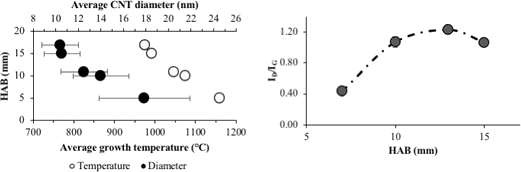
- 99.995% methane at a fixed rate of 0.4 slpm, controlled by an OmronTM flow sensor. The outer tube supplies the oxidizer gases, a mixture of 99.9% oxygen at a fixed rate of 0.7 slpm and 99.9% nitrogen at a fixed rate of 3.0 slpm, controlled by metering valves equipped with HoneywellTM sensors. The flame


Nanoarchitectonics for advanced applications in energy, environment and biology: Method for everything in materials science
Beilstein J. Nanotechnol. 2023, 14, 738–740, doi:10.3762/bjnano.14.60

- ], but also from applied fields such as catalysis [20][21], sensors [22][23], devices [24][25], environmental research [26][27], energy [28][29], and biomedical [30][31] fields. In this thematic issue entitled “Nanoarchitectonics for advanced applications in energy, environment and biology”, the authors

A graphene quantum dots–glassy carbon electrode-based electrochemical sensor for monitoring malathion
Beilstein J. Nanotechnol. 2023, 14, 701–710, doi:10.3762/bjnano.14.56
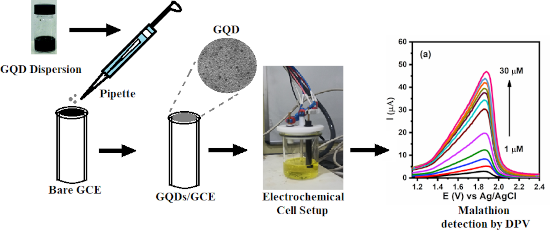
- between 1 to 30 µM using differential pulse voltammetry, which resulted in a limit of detection of 0.62 nM. GQDs can thus be used to develop electrochemical sensors for the detection of pesticides in water. Keywords: cyclic voltammetry; differential pulse voltammetry; electrochemical impedance


Humidity-dependent electrical performance of CuO nanowire networks studied by electrochemical impedance spectroscopy
Beilstein J. Nanotechnol. 2023, 14, 683–691, doi:10.3762/bjnano.14.54
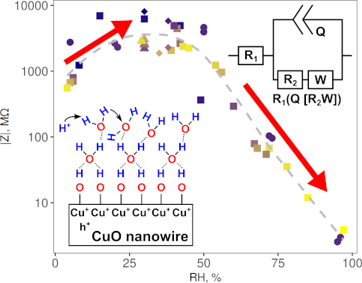
- ; electrochemical impedance spectroscopy; humidity; nanowire; sensor; Introduction Semiconductor metal oxide nanomaterials have demonstrated a great potential for integration in a variety of devices, such as gas and humidity sensors, nanoelectronics, and low-power thermoelectrical generators [1][2][3][4][5][6
- sensitive and fast responding nanowire-based gas sensors for the detection of CO, C2H5OH, H2S, and NO2 [10][11][12][13][14]. Unusually strong space-charge-limited currents observed in individual CuO nanowires [15] in combination with the mechanical strength [9][16] motivate their application as durable
- effect of humidity on dielectrophoretically assembled CuO nanowire network systems with multiple interconnects, which may become very advantageous for the scalable assembly of CuO nanowire-based devices as NEMS [5], sensors [2], and thermoelectric modules [4], is yet to be reported. In this work, CuO


Metal-organic framework-based nanomaterials as opto-electrochemical sensors for the detection of antibiotics and hormones: A review
Beilstein J. Nanotechnol. 2023, 14, 631–673, doi:10.3762/bjnano.14.52
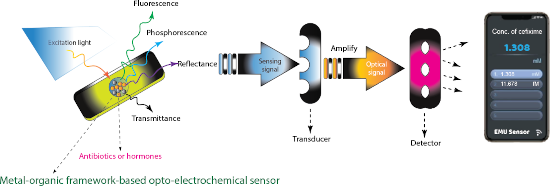
- antibiotics and hormones in the environment and food samples are concerning and pose a threat. Opto-electrochemical sensors have received attention due to their low cost, portability, sensitivity, analytical performance, and ease of deployment in the field as compared to conventional expensive technologies
- that are time-consuming and require experienced professionals. Metal-organic frameworks (MOFs) with variable porosity, active functional sites, and fluorescence capacity are attractive materials for developing opto-electrochemical sensors. Herein, the insights into the capabilities of electrochemical
- and luminescent MOF sensors for detection and monitoring of antibiotics and hormones from various samples are critically reviewed. The detailed sensing mechanisms and detection limits of MOF sensors are addressed. The challenges, recent advances, and future directions for the development of stable


Observation of multiple bulk bound states in the continuum modes in a photonic crystal cavity
Beilstein J. Nanotechnol. 2023, 14, 544–551, doi:10.3762/bjnano.14.45
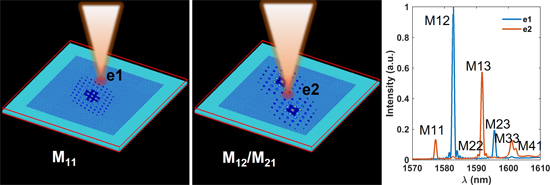
- [3][4] systems, can support BICs, which play a critical role in sensors [11][12][13], filters [14], lasers [15][16][17], nonlinear optics [18][19][20][21][22][23][24], and quantum devices [25][26]. An ideal BIC could be viewed as a cavity that suppresses radiation in all directions. For planar BIC


Carbon nanotube-cellulose ink for rapid solvent identification
Beilstein J. Nanotechnol. 2023, 14, 535–543, doi:10.3762/bjnano.14.44
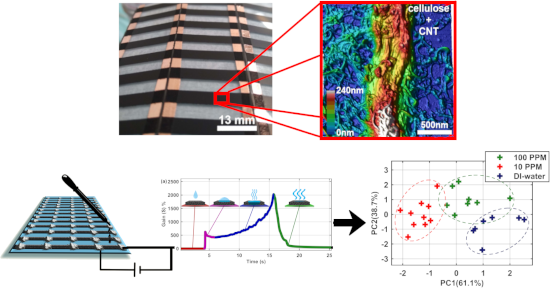
- two important properties of the liquids, namely dielectric constant and vapor pressure, on the transduction of the MFC-MWCNT sensors. These results were corroborated by independent heat flow measurements (thermogravimetric analysis). The proposed MFC-MWCNT sensor platform may help paving the way to
- rapid, inexpensive, and robust liquid analysis and identification. Keywords: carbon nanotube; electronic tongue; fibrillated cellulose; liquid sensor; Introduction The development of a new generation of smart sensors that allow for the monitoring of industrial processes in real time and for wearable
- and flexible devices are paradigms of the current “Industry 4.0”. One can envision applications such as multicomponent liquid and gas sensors, wearables for healthcare, paper-based sensors, and electronic solutions for smart city applications [1][2][3][4][5]. Another area of increasing demand is the


A mid-infrared focusing grating coupler with a single circular arc element based on germanium on silicon
Beilstein J. Nanotechnol. 2023, 14, 478–484, doi:10.3762/bjnano.14.38
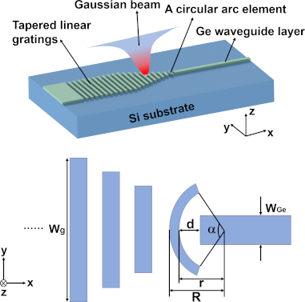
- (GOSI) [7], germanium on insulating substrate (GOI) [8][9], and germanium on silicon nitride substrate (GOSN) [10]. Among them, Ge-on-Si platforms have been widely applied in on-chip sensors, nonlinear optics, free space communication, and thermal imaging [1][6] because portable, cost-effective, and
- proposed MIR grating coupler [14]. Finally, the transmission characteristics of the output fiber can be detected using an optical spectrum analyzer. There is a wide range of sensors for applications in, for example, biosensing, healthcare, disease detection, and gas detection. Therefore, research on those
- sensors is of great significance. In 2015, Bai et al. reported a flexible healable transparent chemical gas sensing device that exhibited robust flexibility, good transparency, and reliable water-enabled healability of the gas sensing performance at room temperature [15]. Wang proposed a flexible


Molecular nanoarchitectonics: unification of nanotechnology and molecular/materials science
Beilstein J. Nanotechnol. 2023, 14, 434–453, doi:10.3762/bjnano.14.35
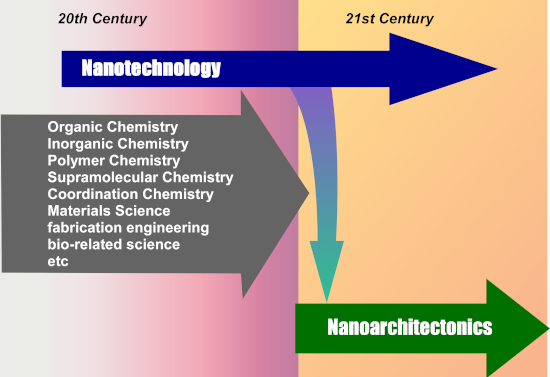
- nanoarchitectonics show that it is widely applied in academic fields such as materials synthesis [57][58][59], structural control [60][61][62][63], physical phenomena [64][65][66], and basic biochemistry [67][68][69], as well as in applied fields such as catalysis [70][71][72], sensors [73][74][75], devices [76][77






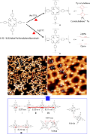
Plasmonic nanotechnology for photothermal applications – an evaluation
Beilstein J. Nanotechnol. 2023, 14, 380–419, doi:10.3762/bjnano.14.33
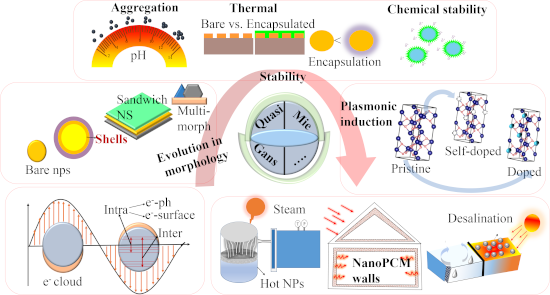
- tunability of optothermal properties and enhanced stability, these nanostructures show a wide range of applications in optical sensors, steam generation, water desalination, thermal energy storage, and biomedical applications such as photothermal (PT) therapy. The PT effect, that is, the conversion of


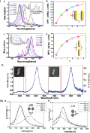


Quercetin- and caffeic acid-functionalized chitosan-capped colloidal silver nanoparticles: one-pot synthesis, characterization, and anticancer and antibacterial activities
Beilstein J. Nanotechnol. 2023, 14, 362–376, doi:10.3762/bjnano.14.31
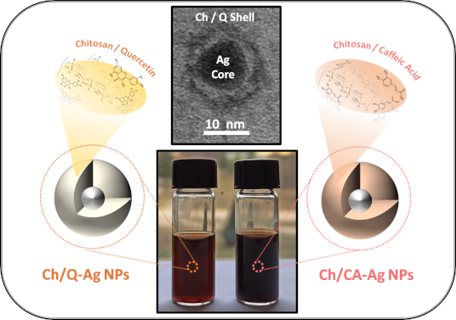
- range of uses such as antibacterial and antimicrobial agents, healthcare-related products, medical device coatings, anticancer agents, optical sensors, anti-inflammatory agents, biocatalysts, cosmetics, and biosensors [41][42][43][44][45]. The combination of polymer-coated metal nanoparticles


Intermodal coupling spectroscopy of mechanical modes in microcantilevers
Beilstein J. Nanotechnol. 2023, 14, 123–132, doi:10.3762/bjnano.14.13
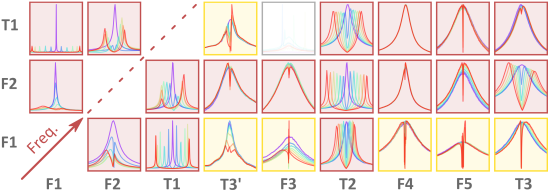
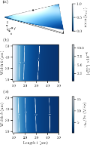
- electrical modes together, opening up the possibility of creating transducers mediated by a moving capacitor. Such thoughts open the doors to sensors with qualities overshadowing their predecessors. (a) Schematic drawing of the experimental setup. The cantilever is glued to the macrosized piezo driver. The