Search results
Search for "size distribution" in Full Text gives 598 result(s) in Beilstein Journal of Nanotechnology. Showing first 200.
Nanoarchitectonics with cetrimonium bromide on metal nanoparticles for linker-free detection of toxic metal ions and catalytic degradation of 4-nitrophenol
Beilstein J. Nanotechnol. 2024, 15, 1312–1332, doi:10.3762/bjnano.15.106
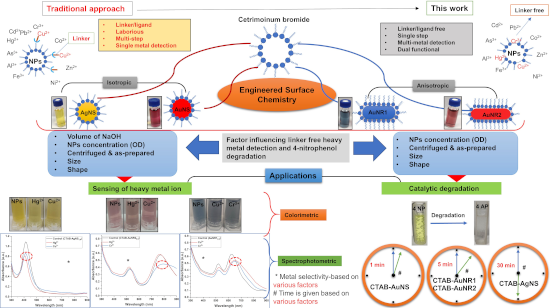
- showed good PDI values of 0.123 and 0.249 for silver and gold nanospheres, respectively (Figure 2c). The very low PDIs prove that the nanospheres are monodisperse and non-aggregated. A PDI of less than 0.3 typically indicates a relatively narrow and well-controlled size distribution [40]. CTAB forms a
- monolayer around the nanoparticles, providing a consistent and uniform surface coverage. This uniformity in surface passivation contributes to the narrow size distribution of the particles. The long hydrocarbon tails of the CTAB molecules extending from the nanoparticle surface create steric repulsive




Interaction of graphene oxide with tannic acid: computational modeling and toxicity mitigation in C. elegans
Beilstein J. Nanotechnol. 2024, 15, 1297–1311, doi:10.3762/bjnano.15.105

- less than 1.5 nm thickness and a flake size distribution from 18 to 308 nm. The calculated ratio between the intensity of the D (ID) and G (IG) bands of Raman is ID/IG = 0.85, indicating that the material has a high number of defects, an indirect indication of oxidation. The surface chemical


Mn-doped ZnO nanopowders prepared by sol–gel and microwave-assisted sol–gel methods and their photocatalytic properties
Beilstein J. Nanotechnol. 2024, 15, 1283–1296, doi:10.3762/bjnano.15.104
- parallel in Figure 7. The insets show a wide pore size distribution reaching 120 nm and pore width maxima located in the mesoporosity area for both samples (40 nm for SG and 35–45 nm for MW). Similar textural features for SG and MW samples are presented in Table 3. UV–vis spectroscopy The recorded UV–vis
- vacuum before analysis. Specific surface areas (S-BET) were calculated according to the Brunauer–Emmett–Teller (BET) equation, using adsorption data in the relative pressure range between 0.05 and 0.30. The pore size distribution curves were obtained from the desorption data using the BJH (Barrett–Joyner
- (SG) has gained increasing prominence in materials science because of its versatility and its capacity to produce homogeneous products with high purity. Additionally, it facilitates the incorporation of dopants in significant quantities, which enables precise control over the shape and size


Dual-functionalized architecture enables stable and tumor cell-specific SiO2NPs in complex biological fluids
Beilstein J. Nanotechnol. 2024, 15, 1238–1252, doi:10.3762/bjnano.15.100
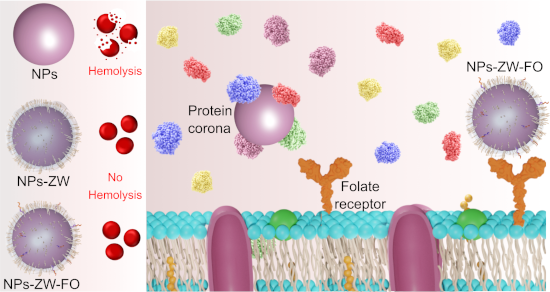
- stability of SiO2NPs in a biological medium and exposing the groups for cellular recognition. Before assessing targeting ability, the colloidal stability of functionalized SiO2NPs was evaluated both in a cell culture medium supplemented with FBS and in human plasma. According to the size distribution curves
- NPs with kinetic stabilizer and tumor driver. SiO2NPs: NPs without functionalization; SiO2NPs-ZW: NPs with zwitterionic; SiO2NPs-ZW-NH2: NPs with zwitterionic + APTES and SiO2NPs-ZW-FO: NPs with zwitterionic + APTES + folate. b,c) SEM image and size distribution for SiO2NPs and SiO2NPs-ZW-FO (n ≈ 1000
- , which can lead to particle aggregation as well as impair their targeting efficiency. Size distribution curves for (b) SiO2NPs, (c) SiO2NPs-ZW, and (d) SiO2NPs-ZW-FO in DMEM (10% FBS). For this analysis, a particle concentration of 0.5 mg·mL–1 was used, and different incubation times were evaluated. The


Enhanced catalytic reduction through in situ synthesized gold nanoparticles embedded in glucosamine/alginate nanocomposites
Beilstein J. Nanotechnol. 2024, 15, 1227–1237, doi:10.3762/bjnano.15.99
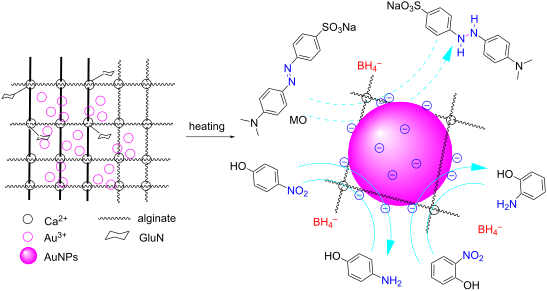
- that the AuNPs are uniform spherical particles with a size below 30 nm (Figure 4A,B). TEM images of AuNPs@GluN/Alg indicate an even geometry of the spherical particles (Figure 4C,D). A narrow size distribution of AuNPs was observed in the range of 3–27 nm with the highest frequency at 10 nm. The



Unveiling the potential of alginate-based nanomaterials in sensing technology and smart delivery applications
Beilstein J. Nanotechnol. 2024, 15, 1077–1104, doi:10.3762/bjnano.15.88



Effect of wavelength and liquid on formation of Ag, Au, Ag/Au nanoparticles via picosecond laser ablation and SERS-based detection of DMMP
Beilstein J. Nanotechnol. 2024, 15, 1054–1069, doi:10.3762/bjnano.15.86

- parameter on NP productivity, shape, and size distribution remains an area of ongoing research [11][12][13][14][15]. Pulsed laser irradiation of liquids (PLIL) can affect the size and shape of NPs. Various approaches are described in the literature, such as (i) laser fragmentation in liquid (LFL), (ii
- wavelengths (1064 nm). This broadening could be ascribed to the size/shape of the NPs, their aggregation, and variations in size distribution under different laser wavelengths. The NP productivity in the LASiS approach is mainly influenced by laser wavelength irradiation based on the interaction of the
- shape of NPs is spherical, and the size distribution of the Ag NPs is strongly dependent on laser wavelength in LASiS. The average size of the NPs was estimated as 12.4 ± 0.3 nm at 355 nm, 23.9 ± 1.0 nm at 532 nm, and 36.3 ± 3.7 nm at 1064 nm, with the size distributions being provided in Supporting


Therapeutic effect of F127-folate@PLGA/CHL/IR780 nanoparticles on folate receptor-expressing cancer cells
Beilstein J. Nanotechnol. 2024, 15, 954–964, doi:10.3762/bjnano.15.78
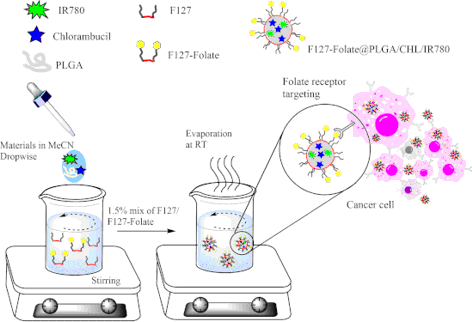
- scattering (DLS) and zeta potential spectra measurements were carried out in three replicates on a nanoPartica Horiba SZ-100 (Japan) with a scattering angle of 90° at 25 °C to determine the size distribution and stability of the nanocomposites. Scanning electron microscopy (SEM) The F127-folate@PLGA/CHL



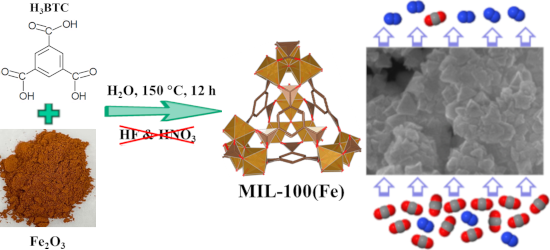
Facile synthesis of Fe-based metal–organic frameworks from Fe2O3 nanoparticles and their application for CO2/N2 separation
Beilstein J. Nanotechnol. 2024, 15, 897–908, doi:10.3762/bjnano.15.74
- , using the Brunauer–Emmett–Teller (BET) model, and the total pore volume and pore size distribution, using the Horvath–Kawazoe (HK) model. The samples were activated under vacuum at 150 °C for 12 h before being introduced into the porosity analyzer. CO2 and N2 adsorption test The characteristic
- /desorption isotherms characteristic of type I. Additionally, a pore size distribution was observed with three prominent peaks at approximately 0.62, 1.30, and 1.75 nm within the micropore region defined by IUPAC (less than 2.0 nm), as depicted in Figure 5b. These observations confirm that the reference
- . FTIR spectra of Fe2O3, MIL-100(Fe), and M-100Fe@Fe2O3 samples. (a) N2 adsorption and desorption isotherms over Fe2O3, MIL-100(Fe), and M-100Fe@Fe2O3 samples obtained at 77 K. (b) Pore size distribution of M-100Fe@Fe2O3 and reference MIL-100(Fe) samples calculated using the HK model. TGA curves of Fe2O3





Synthesis of silver–palladium Janus nanoparticles using co-sputtering of independent sources: experimental and theorical study
Beilstein J. Nanotechnol. 2024, 15, 808–816, doi:10.3762/bjnano.15.67
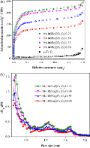
- sputtering Ag nanoparticles, only the second magnetron section working to confirm the sputtering of Pd nanoparticles, and both magnetrons working to obtain BNPs of the desired size. Figure 1 shows the nanoparticle size distribution for each experimental condition. The green color profile corresponds to the
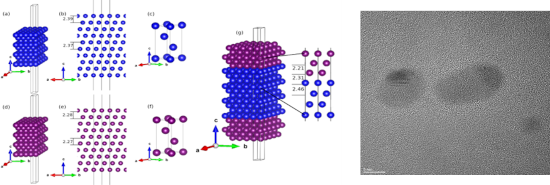
- connected by a Ag3Pd interface (Ag/AgPd/Pd model). Size distribution profiles determined using a quadrupole mass filter. HRTEM micrographs of AgPd nanoparticles. (a) Janus-type structure. (b) Janus-type structure. Calculation of interplanar distances in silver–palladium nanoparticles. (a) HRTEM micrograph




Green synthesis of biomass-derived carbon quantum dots for photocatalytic degradation of methylene blue
Beilstein J. Nanotechnol. 2024, 15, 755–766, doi:10.3762/bjnano.15.63
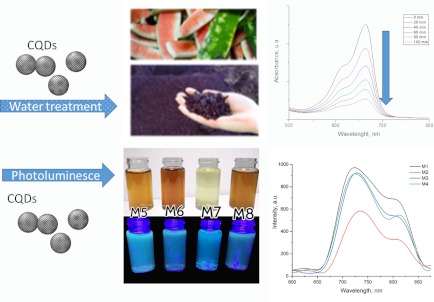
- from 450 to 4000 cm−1. The size distribution of the synthesized CQDs was determined via DLS, which relies on the measurement of the hydrodynamic radius of the particles. The CQDs were analyzed via a Malvern NanoSizer ZP instrument. The samples were diluted in deionized water to prevent signal
- only using water, have sizes close to 100 nm. It is important to note that the samples prepared using grape pomace peel as the biomass source produced smaller particle sizes compared to those prepared with watermelon peel under identical synthesis conditions. The size distribution determined by DLS
- –vis absorbance spectra of CQD samples synthesized with a) urea (M1 grape and M5 watermelon); b) urea and nitric acid (M2 grape and M6 watermelon); c) nitric acid (M3 grape and M7 watermelon); and d) deionized water (M4 grape and M8 watermelon). Size distribution of CQDs by dynamic light scattering


Laser synthesis of nanoparticles in organic solvents – products, reactions, and perspectives
Beilstein J. Nanotechnol. 2024, 15, 638–663, doi:10.3762/bjnano.15.54
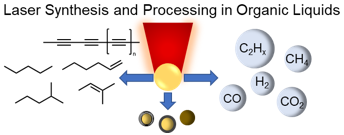
- presence of carbon shells and found none for Au nanoparticles synthesized in methanol and water. The nanoparticles generated in n-hexane and acetonitrile, however, were found to possess graphitic carbon shells on the surface up to a particle diameter of 50 nm as the size distribution after the acid





Photocatalytic degradation of methylene blue under visible light by cobalt ferrite nanoparticles/graphene quantum dots
Beilstein J. Nanotechnol. 2024, 15, 475–489, doi:10.3762/bjnano.15.43
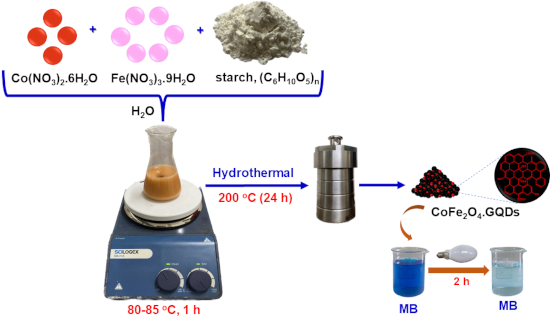
- of CF and CF/GQDs-200, respectively, and the corresponding particle size distribution. CF has very fine particles of around 15–20 nm. The intimate interfacial contact between GQDs sheets and the CF nanoparticle is further depicted in the TEM image (Figure 4e). In this image, the deposited
- curves of CF/GQDs-200. SEM images of (a) CF/GQD-140, (b) CF/GQD-180, and (c) CF/GQD-200; TEM observations and corresponding particle size distribution of (d) CF and (e) CF/GQDs-200. EDX-mapping of CF/GQDs-200. (a) Electron microscopy image, (b) EDX spectrum, (c) carbon mapping, (d) oxygen mapping, (e




Insect attachment on waxy plant surfaces: the effect of pad contamination by different waxes
Beilstein J. Nanotechnol. 2024, 15, 385–395, doi:10.3762/bjnano.15.35
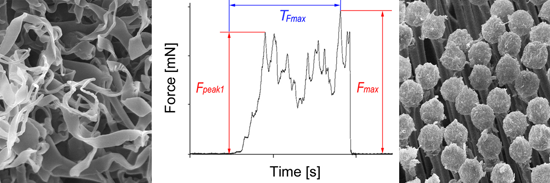
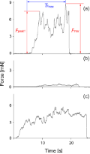
- [8] tests up to precise measurements of attachment forces with different experimental techniques, such as pulling [9] and centrifugal [10] setups. It has been demonstrated that not only the presence of wax projections on the plant cuticle surface, but also their size, distribution, and density




Comparative electron microscopy particle sizing of TiO2 pigments: sample preparation and measurement
Beilstein J. Nanotechnol. 2024, 15, 317–332, doi:10.3762/bjnano.15.29
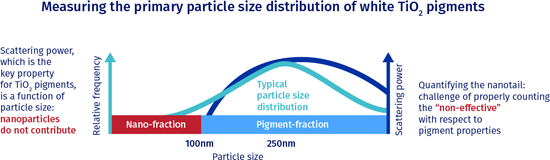
- nanomaterials [10][11]. In 2018, KRONOS INT. Inc., Precheza a.s and Venator supported EFSA in responding to the questions raised by the EFSA Scientific Panel on the particle size distribution of E171. The results were reported by EFSA in 2019 [11]. The same samples as measured in [8] and [11] were used in a
- log-normal assumption. The probability p that the particle size distribution is not log-normal is given in Table 2 together with the results of the fits. Indirect particle size measurements and optical properties Single-particle inductively coupled plasma mass spectrometry (spICP-MS) measurements are
- because aggregates and primary particles start to be destroyed above 250 J/mL, but only at low rates [18][19]. However, dispersion energies of approximately 600 J/mL or higher may significantly break aggregates into primary particles, causing a shift in the particle size distribution towards a smaller


Vinorelbine-loaded multifunctional magnetic nanoparticles as anticancer drug delivery systems: synthesis, characterization, and in vitro release study
Beilstein J. Nanotechnol. 2024, 15, 256–269, doi:10.3762/bjnano.15.24
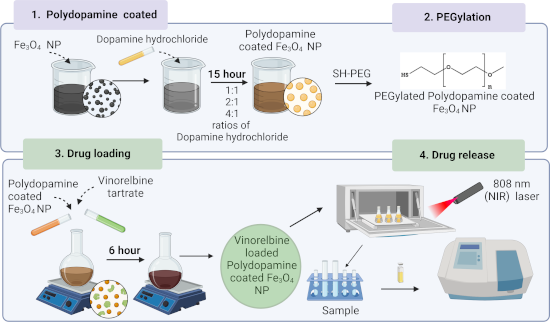
- a solvothermal technique in a stainless steel reactor at 200 °C for 6 h. According to the results of FE-SEM and STEM examinations, the Fe3O4 NPs are spherical, as depicted in Figure 1a–c. When examining the STEM size distribution, it was observed that Fe3O4 NPs were efficiently synthesized with an


Nanocarrier systems loaded with IR780, iron oxide nanoparticles and chlorambucil for cancer theragnostics
Beilstein J. Nanotechnol. 2024, 15, 180–189, doi:10.3762/bjnano.15.17
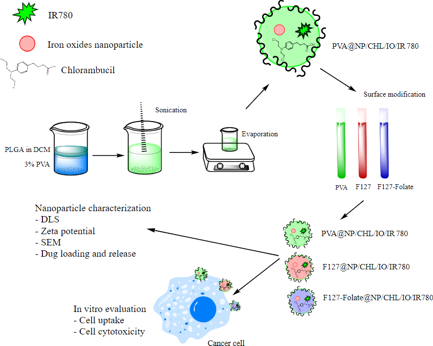
- cells. Hydrodynamic size and zeta potential Dynamic light scattering (DLS) and zeta potential spectra were obtained for three replicates on a nanoPartical Horiba SZ-100 (Japan) with the scattering angle of 90° to determine the size distribution and stability of the nanoparticles. The DLS measurements


Ferromagnetic resonance spectra of linear magnetosome chains
Beilstein J. Nanotechnol. 2024, 15, 157–167, doi:10.3762/bjnano.15.15
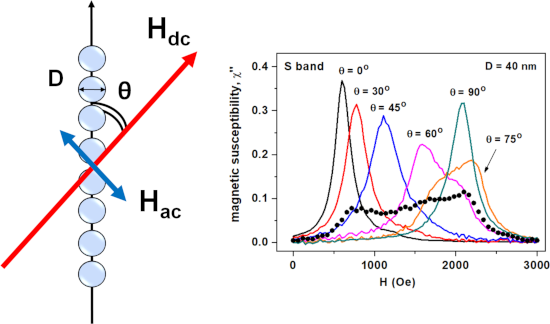
- nanoparticles; numerical simulation; Introduction Magnetotactic bacteria are living organisms that grow within themselves magnetite nanoparticles called magnetosomes [1][2][3][4]. In contrast to chemically synthesized magnetite nanoparticles [5][6], magnetosomes have a perfect crystal structure, a narrow size
- distribution, and a high saturation magnetization close to that of bulk magnetite. In particular, magnetotactic bacteria M. gryphiswaldense produce linear chains of quasi-spherical magnetite nanoparticles with sizes ranging from 30 to 50 nm [1][2][7][8][9]. However, there are also magnetotactic bacteria that


Assessing phytotoxicity and tolerance levels of ZnO nanoparticles on Raphanus sativus: implications for widespread adoptions
Beilstein J. Nanotechnol. 2024, 15, 115–125, doi:10.3762/bjnano.15.11
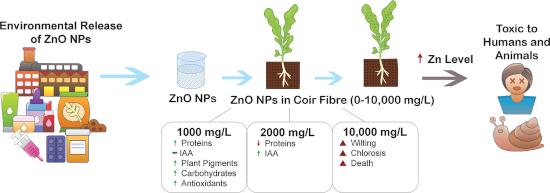
- –4000 cm−1 using attenuated total reflection mode. The characteristic absorption band of the ZnO NPs sample was measured by LAMBDA 365 UV Spectrometer at a wavelength range of 200–800 nm. The particle size distribution of ZnO NPs was evaluated by a Malvern Zetasizer at 25 °C with a count rate of 171.1


Development and characterization of potential larvicidal nanoemulsions against Aedes aegypti
Beilstein J. Nanotechnol. 2024, 15, 104–114, doi:10.3762/bjnano.15.10
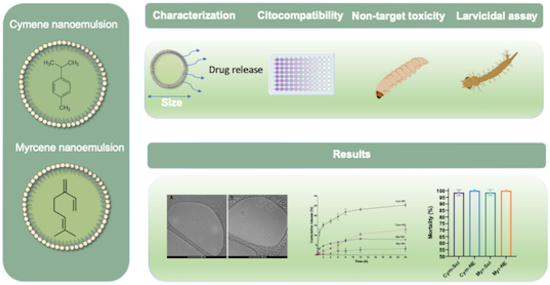
- indication of kinetic stability with an almost monomodal distribution [36]. Thus, considering that in this study the stable formulations had similar size distribution profiles and low polydispersity index, the present study on cymene and myrcene nanoemulsions may be considered promising. Nanoparticle


Fluorescent bioinspired albumin/polydopamine nanoparticles and their interactions with Escherichia coli cells
Beilstein J. Nanotechnol. 2023, 14, 1208–1224, doi:10.3762/bjnano.14.100
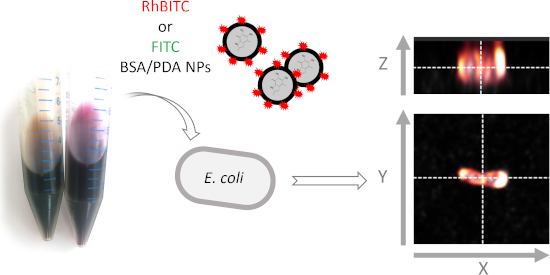
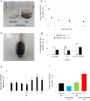
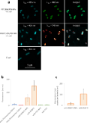
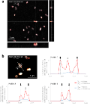
- , close to the wavelength of the laser used in the device (633 nm). Samples were diluted to get an absorption below 0.1. Size distribution results are given in intensity and can be expressed also in volume or number. Standard deviations of the sample’s mean hydrodynamic diameters as well as the



A combined gas-phase dissociative ionization, dissociative electron attachment and deposition study on the potential FEBID precursor [Au(CH3)2Cl]2
Beilstein J. Nanotechnol. 2023, 14, 1178–1199, doi:10.3762/bjnano.14.98



Curcumin-loaded albumin submicron particles with potential as a cancer therapy: an in vitro study
Beilstein J. Nanotechnol. 2023, 14, 1127–1140, doi:10.3762/bjnano.14.93
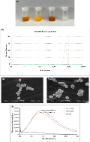
- -MPs loaded with 0.6 mg of CUR in distilled water (0.6 mg/mL), and 1 mL of HSA-MPs (control with an equivalent concentration to CUR-HSA-MPs) in distilled water; (B) the particle size distribution of HSA-MPs (red line) and CUR-HSA-MPs (green line) determined by DLS; SEM images of (C) HSA-MPs and (D) CUR




Sulfur nanocomposites with insecticidal effect for the control of Bactericera cockerelli
Beilstein J. Nanotechnol. 2023, 14, 1106–1115, doi:10.3762/bjnano.14.91
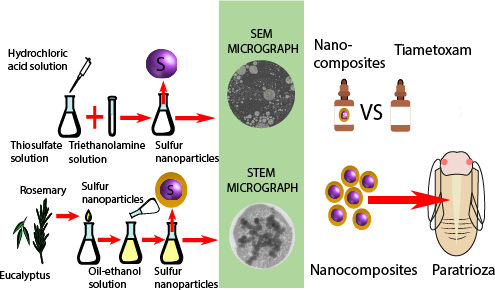
- as size, distribution, and the nature of the particles [37]. Furthermore, the observed diameters align with other research in which sizes in the range of 10–80 nm were obtained using the same method for SNP synthesis, that is, chemical precipitation from sodium thiosulfate as a sulfur source [31][32


Recognition mechanisms of hemoglobin particles by monocytes – CD163 may just be one
Beilstein J. Nanotechnol. 2023, 14, 1028–1040, doi:10.3762/bjnano.14.85
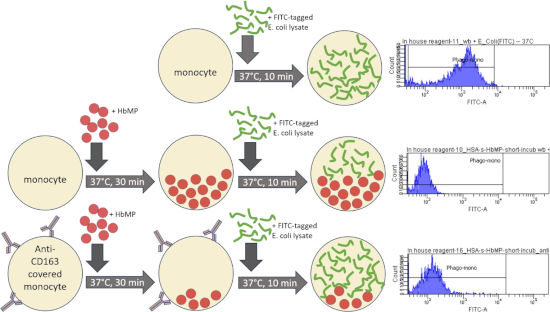
- coprecipitation–crosslinking–dissolution (CCD) are promising as HBOCs. CCD provides particles that are malleable and show a consistent morphology and narrow size distribution, as well as a negative zeta potential [19][31][32][33]. It could be shown that neither NO scavenging nor vasoconstriction can be detected