


Search results
Search for "spring constant" in Full Text gives 184 result(s) in Beilstein Journal of Nanotechnology.
Artifacts in time-resolved Kelvin probe force microscopy
Beilstein J. Nanotechnol. 2018, 9, 1272–1281, doi:10.3762/bjnano.9.119
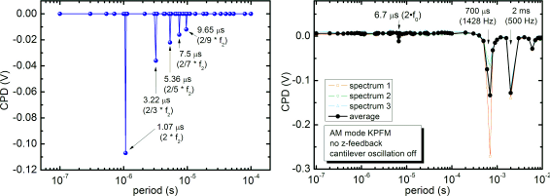
- a C code. The cantilever tip dynamics are governed by the equation of motion: where m is the effective mass, z the vertical tip position above the sample surface (z = 0), t is the time, k the effective spring constant of the cantilever, ω the natural angular frequency of the cantilever, and Q the


Electrostatic force spectroscopy revealing the degree of reduction of individual graphene oxide sheets
Beilstein J. Nanotechnol. 2018, 9, 1146–1155, doi:10.3762/bjnano.9.106
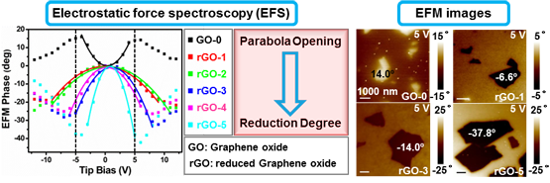
- force gradients cause shifts of Δf0 in the resonance frequency with a proportional relationship [30]: where k is the stiffness (or spring constant) of the cantilever. Resonance shifts also give rise to phase shifts, ∆φ, used to generate an image of the electric force gradients. In EFM imaging, the
- cantilever coating with a 10 nm Pt layer on a 20 nm Ti sublayer with a nominal spring constant of ≈3.5 Nm−1 and oscillating frequencies of 60–90 kHz. The lift start height and lift scan height in EFM imaging were 20 nm and 15 nm, respectively. Characterizing the degree of reduction of GO sheets reduced using


A simple extension of the commonly used fitting equation for oscillatory structural forces in case of silica nanoparticle suspensions
Beilstein J. Nanotechnol. 2018, 9, 1095–1107, doi:10.3762/bjnano.9.101
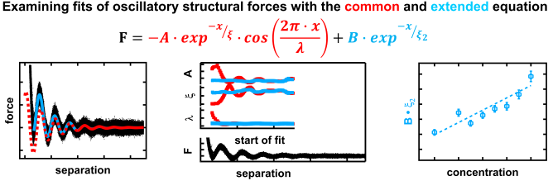
- ) serving as colloidal probe. The spring constant of the cantilever was determined via the thermal noise method [62]. The surface of the colloidal probe and the silicon wafer form the two confining walls for the experiment. As the colloidal probe is orders of magnitude larger than their distance, the forces
- % and the decay length by 2.6%. The differences are related to changes in the contact area of the colloidal probe and/or errors in the determination of the cantilever spring constant. Hence, the wavelength is unaffected by this. For this reason all experiments were conducted with a single cantilever
- movement of the z-piezo in nanometers. The data were analyzed as follows: 1) Force and separation were calculated using the sensitivity slope of the linear contact region and the spring constant of the cantilever, which is determined from the thermal spectrum. 2) All force curves were aligned in relation


Electro-optical interfacial effects on a graphene/π-conjugated organic semiconductor hybrid system
Beilstein J. Nanotechnol. 2018, 9, 963–974, doi:10.3762/bjnano.9.90
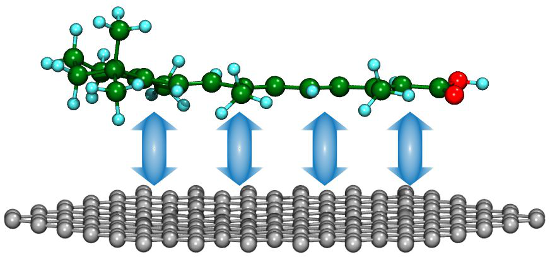
- modeled by where, ω0 and k are the cantilever’s resonant frequency and spring constant, respectively, C´´(z) is the second derivative of the tip–sample capacitance C(z), Vtip is the applied bias, Φ is the tip–sample surface potential difference, and f´(z) is the first derivative of the electric force
- used for morphological (bare tip) and electrical characterization (Au-coated tips), respectively. The ScanAsyst-Air probes have typical resonant frequency ω0 = 70 kHz and a spring constant k = 0.4 N/m. During operation in peak force mode, they are oscillated at a frequency f = 2 kHz with a typical
- amplitude A = 2 nm [64]. The HQ:NSC18/Cr-Au and HQ:CSC37-CrAu probes have typical resonant frequencies ω0 = 75 kHz and ω0 = 20 kHz; and a spring constant k = 2.8 N/m and k = 0.3 N/m, respectively. For tapping and EFM imaging, these probes are oscillated near their resonant frequency with amplitude A ≈ 20 nm


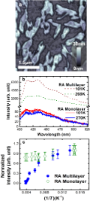


Scanning speed phenomenon in contact-resonance atomic force microscopy
Beilstein J. Nanotechnol. 2018, 9, 945–952, doi:10.3762/bjnano.9.87
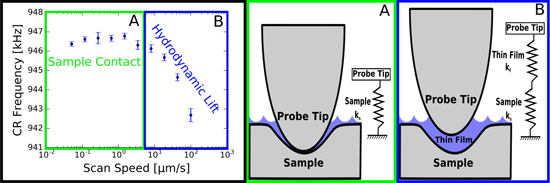
- cyanoacrylate. A razor blade was then used to cleave the sample, leaving behind a pristine sample surface. The sample was placed in a closed AFM flow-cell with an integrated relative humidity sensor. A cantilever with spring constant kL = 1.7 ± 0.2 N/m and first free resonance = 61.85 ± 0.1 kHz was mounted to


Nanoscale mapping of dielectric properties based on surface adhesion force measurements
Beilstein J. Nanotechnol. 2018, 9, 900–906, doi:10.3762/bjnano.9.84
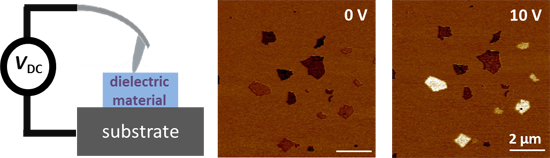
- deposited. Characterization The samples were characterized by using a MultiMode 8 AFM (Bruker) equipped with a J scanner. Silicon cantilevers coated with a 30 nm Pt layer with a nominal spring constant of 2.8 N·m−1 and oscillating frequencies of 60–90 kHz (NSC18/ Pt, MikroMasch Co.) were used. Height and


Graphene composites with dental and biomedical applicability
Beilstein J. Nanotechnol. 2018, 9, 801–808, doi:10.3762/bjnano.9.73
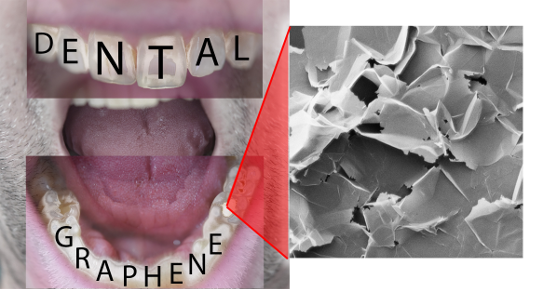
- ). Characterization The MLG and FLG material was characterized by Raman spectroscopy (Renishaw at 514 nm) and the AFM measurements were performed on a MultiMode V AFM (Veeco) in tapping mode under ambient conditions. RTESP silicon probes (Veeco) were used with a nominal tip radius of 10 nm and nominal spring constant


Combined pulsed laser deposition and non-contact atomic force microscopy system for studies of insulator metal oxide thin films
Beilstein J. Nanotechnol. 2018, 9, 686–692, doi:10.3762/bjnano.9.63
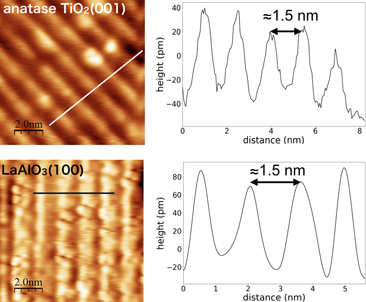
- water before performing PLD. AFM images are processed using the WSxM software [57]. NC-AFM topographic images and line profiles of insulator thin films of (a, b) anatase TiO2(001) and (c, d) LaAlO3(100). Values of the cantilever resonance frequency, spring constant, oscillation amplitude and frequency


Tuning adhesion forces between functionalized gold colloidal nanoparticles and silicon AFM tips: role of ligands and capillary forces
Beilstein J. Nanotechnol. 2018, 9, 660–670, doi:10.3762/bjnano.9.61
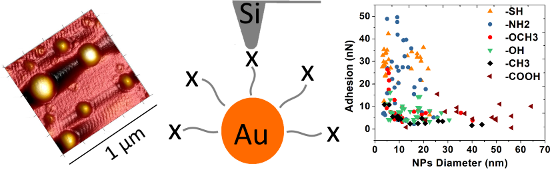
- between tip and sample surface, Young’s modulus (according to either DMT or Sneddon model), deformation and energy dissipation along with the surface topography (Supporting Information File 1). Etched silicon probes RTESPA-300 with a nominal spring constant k ≈ 40 N/m for QNM were provided by Bruker. All


Wafer-scale bioactive substrate patterning by chemical lift-off lithography
Beilstein J. Nanotechnol. 2018, 9, 311–320, doi:10.3762/bjnano.9.31
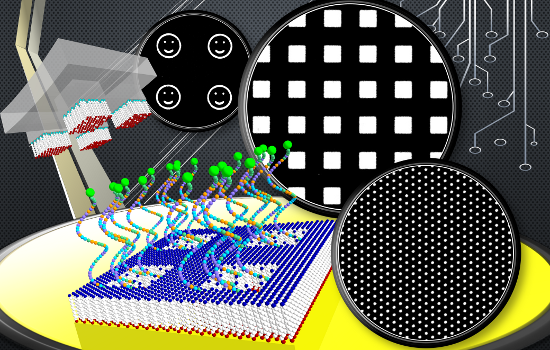
- tapping mode atomic force microscopy (AFM, Dimension Fastscan, Bruker Nano Surfaces, Hsinchu, Taiwan). Topographic AFM images were collected using a silicon cantilever with a spring constant of 48 N/m and a resonance frequency of 190 kHz (Nanosensors, Neuchatel, Switzerland). The substrates were gently


Review: Electrostatically actuated nanobeam-based nanoelectromechanical switches – materials solutions and operational conditions
Beilstein J. Nanotechnol. 2018, 9, 271–300, doi:10.3762/bjnano.9.29
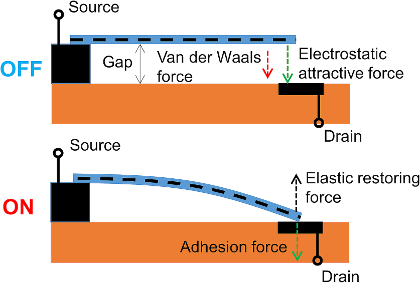
- , inset) [32]. When the gradient of total attractive force exceeds the spring constant of the switching element approaching the electrode surface, the switching element starts accelerating. This is followed by establishment of mechanical and electrical contact between them (jump-in), and consequently
- , initiation of a current flow in the circuit (Figure 1b,d; Figure 2b) [13][15][32][40][68]. The jump-in voltage depends on the geometry of the device and the stiffness of the switching element. Switching from the on to off state (jump-off) occurs when the spring constant of the switching element exceeds the


Growth model and structure evolution of Ag layers deposited on Ge films
Beilstein J. Nanotechnol. 2018, 9, 66–76, doi:10.3762/bjnano.9.9
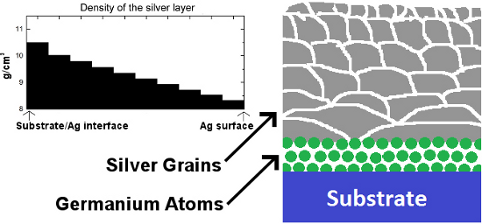
- microscope working in the scan-assist mode at the solid–air interface. Cantilevers with spring constant k = 0.4 Nm−1 were used, the resonant frequency was in the range of 70–80 kHz. A typical image scan frequency was 1 Hz with a resolution of 512 × 512 px. The X-ray reflectometry measurements were performed




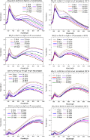


A robust AFM-based method for locally measuring the elasticity of samples
Beilstein J. Nanotechnol. 2018, 9, 1–10, doi:10.3762/bjnano.9.1
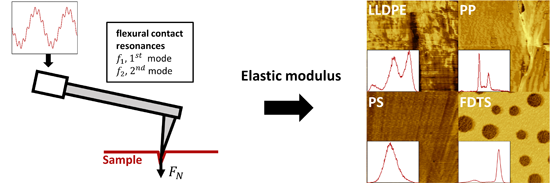
- dividing the cantilever spring constant by the cantilever optical sensitivity Sz. The optical sensitivity of value 229 nm·V−1 was determined by measuring a vertical deflection–distance curve on an n-type silicon(111) sample of electrical resistivity = 10 Ω·m and by taking the inverse of the slope. The two
- . Analysis of the force–displacement curve evidences the same relations with, however, a linear relation in the nonlinear domain of the frequency shift–displacement curves. This is explained by the low spring constant of the cantilever in comparison to the normal sample stiffness, beginning at a certain Z
- -displacement value. A good model of the cantilever in contact with the sample surface is two springs in series, k1 and ksample,norm, representing the spring constant of the cantilever and the normal sample stiffness (of constant value in the elastic phase), respectively (Figure 4a). As shown in Figure 4b, the
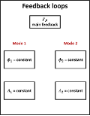
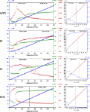


Material discrimination and mixture ratio estimation in nanocomposites via harmonic atomic force microscopy
Beilstein J. Nanotechnol. 2017, 8, 2771–2780, doi:10.3762/bjnano.8.276
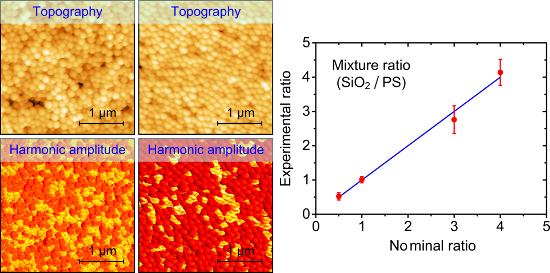
- effect of amplitude set-point in harmonic AFM imaging remains unclear. In experiments, the sample was a PS/LDPE blend with a nominal elastic moduli of EPS ≈ 2 GPa and ELDPE ≈ 100 MPa. The calibrated cantilever free amplitude and spring constant were 167 nm and 0.32 N/m, respectively. The first two free
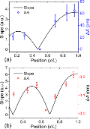
- error or environmental fluctuation during the resonance spectrum sweeping. For the experiments, ContAl-G cantilevers (BudgetSensors, Innovative Solutions Bulgaria Ltd., Bulgaria) were used. Prior to the measurements, the spring constant of the cantilevers was determined (typically 0.24 N/m) by using the




Dry adhesives from carbon nanofibers grown in an open ethanol flame
Beilstein J. Nanotechnol. 2017, 8, 2719–2728, doi:10.3762/bjnano.8.271
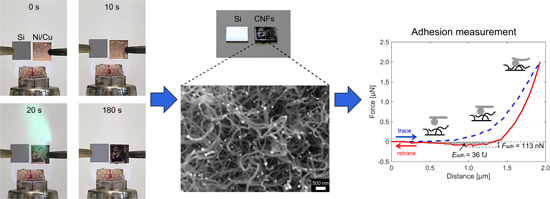
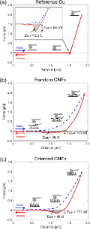
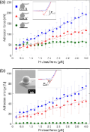
- left on the top of the SiO2 sphere (see the insert in Figure 7 below). For the adhesion measurements a constant ramp rate of 1.5 μm/s was applied (adhesion measurement with ramp rates between 0.2 and 8 μm/s showed similar results). The spring constant of the cantilever was determined to 7.74 N/m with


Patterning of supported gold monolayers via chemical lift-off lithography
Beilstein J. Nanotechnol. 2017, 8, 2648–2661, doi:10.3762/bjnano.8.265
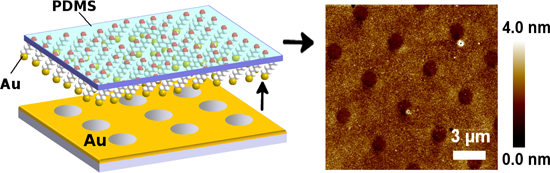
- –alkanethiolate monolayers. The AFM images of the PDMS stamps (flat and patterned) were measured using the peak force quantitative nanomechanical property mapping mode. ScanAsyst-Air cantilevers (Bruker, spring constant = 0.4 ± 0.1 N/m) were calibrated with a clean piece of silicon before each measurement. A peak


Tailoring the nanoscale morphology of HKUST-1 thin films via codeposition and seeded growth
Beilstein J. Nanotechnol. 2017, 8, 2307–2314, doi:10.3762/bjnano.8.230
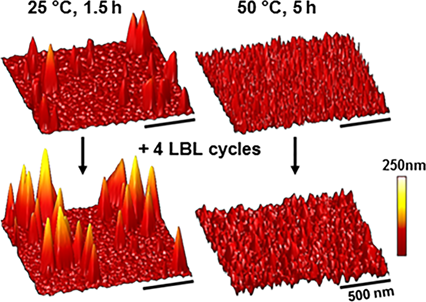
- × 500 nm and used a Dimension Icon atomic force microscope (Bruker, Santa Barbara, CA, USA), which was operated in peak force tapping mode. Etched silicon tips, SCANASYST-AIR (Bruker, Santa Barbara, CA, USA), with a spring constant range of 0.2–0.8 N/m and a resonant frequency range of 45–95 kHz were


Magnetic properties of optimized cobalt nanospheres grown by focused electron beam induced deposition (FEBID) on cantilever tips
Beilstein J. Nanotechnol. 2017, 8, 2106–2115, doi:10.3762/bjnano.8.210
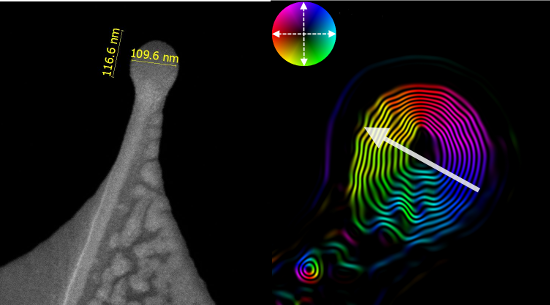
- cylindrical magnetic microwire [11] (see inset of Figure 6a and the Experimental section for details on the setup). Due to the low stiffness (spring constant k = 6 mN/m) and high quality factor (2000 < Q < 4000 under vacuum) of the cantilever, its frequency accurately probes the magnetic force produced by the
- nanosphere [11]. From the maximal relative variation of the cantilever frequency (1.2% in Figure 6a) and knowing the cantilever spring constant and the second spatial derivative of the magnetic field ((1.5 ± 0.3) × 109 T/m2) in which the measurements are operated, one can estimate the magnetic moment of the
- cobalt particle is: where k is the cantilever spring constant, Bz the vertical component of the magnetic field from the cylinder, and z0 is the equilibrium position of the particle in the field gradient. STEM-EELS chemical mapping and quantification was carried out at an acceleration voltage of 300 kV in


Application of visible-light photosensitization to form alkyl-radical-derived thin films on gold
Beilstein J. Nanotechnol. 2017, 8, 1863–1877, doi:10.3762/bjnano.8.187
- spring constant of 40 N/m (Budget Sensors, Innovative Solutions Bulgaria Ltd.) were used to acquire topography and corresponding phase images with tapping mode. Nanoshaving experiments were conducted using a liquid cell containing ethanolic solution. Contact mode in liquid was used for nanoshaving using
- tips with an average spring constant of 0.6 N/m (Bruker Instruments, Camarillo, CA, USA). Digital images were processed with Gwyddion (v 2.30) software [53]. Grazing angle infrared reflectance absorbance spectroscopy (IRRAS): IRRAS spectra were recorded using a Bruker Tensor 27 instrument equipped with



Air–water interface of submerged superhydrophobic surfaces imaged by atomic force microscopy
Beilstein J. Nanotechnol. 2017, 8, 1671–1679, doi:10.3762/bjnano.8.167
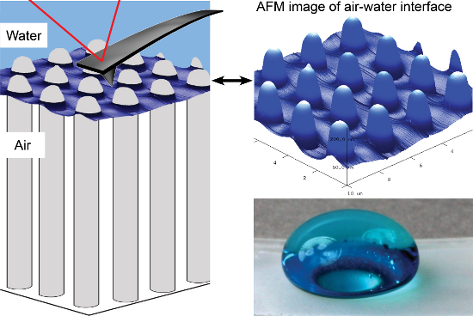
- a nominal resonance frequency of 325 kHz. Submerged samples were measured using a commercial liquid cell (Bruker) filled with demineralized water. Images were taken in contact mode with Pt-coated CSC 37 cantilevers (MikroMasch) with force constants between 0.3 N/m and 0.8 N/m. The spring constant of



High-speed dynamic-mode atomic force microscopy imaging of polymers: an adaptive multiloop-mode approach
Beilstein J. Nanotechnol. 2017, 8, 1563–1570, doi:10.3762/bjnano.8.158
- tapping amplitude is close to the free vibration amplitude). Finally, the mean tip–sample interaction force (per tapping period T), , can be quantified as [1][10][11], where kc and m are the spring constant and the mass of the cantilever, respectively, Q is the quality factor of the cantilever, dtot(t
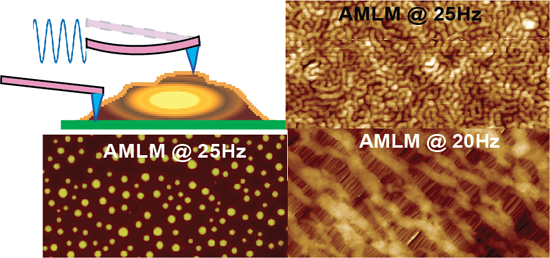
- , and a Celgard sample) were imaged using the AMLM approach on an AFM system (Dimension Icon, Bruker Nano Inc.) along with a tapping-mode cantilever (MPP-21120-10, Bruker Inc., nominal spring constant: 3 N/m, resonant frequency: 75 kHz). Both the conventional TM imaging and AMLM imaging were designed




Scaling law to determine peak forces in tapping-mode AFM experiments on finite elastic soft matter systems
Beilstein J. Nanotechnol. 2017, 8, 968–974, doi:10.3762/bjnano.8.98
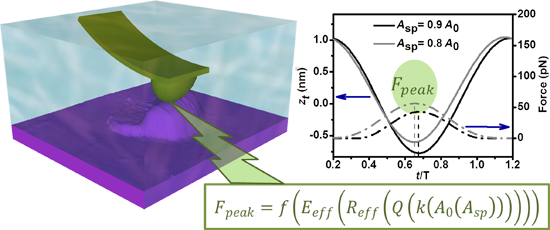
- mass of the fluid [39], and ω0, Q, k and Fts are the angular resonant frequency, quality factor, spring constant and tip–sample interaction forces, respectively. The latter has been modelled according to the Tatara contact mechanics [35][36][37] which is given by with the constitutive material
- numerical simulations for Tatara’s contact mechanics model. The comparisons cover Young’s moduli in the range of 30 to 300 MPa, and two fixed set-point amplitudes, namely 0.9A0 and 0.7A0. In addition, the spring constant is fixed to k = 0.1 N/m and the free oscillation amplitudes are 1 nm (Figure 1b) and 4
- surface [28][29], in particular when the quantitative imaging process involves only elastic mechanical modeling. The dependence of the peak forces with the microcantilever spring constant follows a power-law dependence that monotonically increases by increasing the value of k as shown in previous


Relationships between chemical structure, mechanical properties and materials processing in nanopatterned organosilicate fins
Beilstein J. Nanotechnol. 2017, 8, 863–871, doi:10.3762/bjnano.8.88
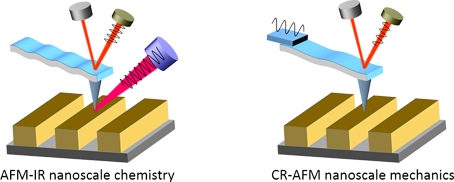
- , respectively. The spring constant of the cantilever was determined to be 7.35 ± 0.05 N/m by a laser Doppler vibrometer. A lock-in amplifier with an internal signal generator (Signal Recovery AMETEK, Oak Ridge, TN) was used to vibrate the AFM cantilever and to detect the AFM photodiode signal (MultiMode 8



Measuring adhesion on rough surfaces using atomic force microscopy with a liquid probe
Beilstein J. Nanotechnol. 2017, 8, 813–825, doi:10.3762/bjnano.8.84
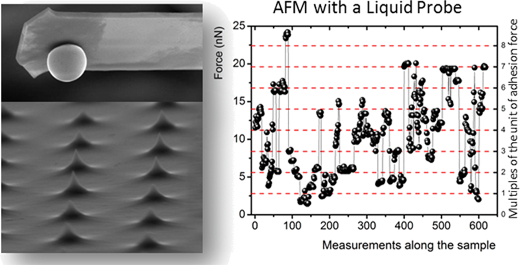
- cantilever is obtained by multiplying its deflection by the spring constant of the cantilever. In the standard AFM technique, the tip apex typically has a radius of 5–50 nm, whereas the radii of colloidal probes are in the range of 1–100 μm, resulting in much higher adhesion forces. Mercury: Double distilled
- modeled as an ideal spring with a spring constant kc. The thermal noise of the mean square displacement, , allows us to determine the constant using [31][32]. With a spectral analyzer (Stanford Research Systems, 760 FFT, USA), we identify the peak corresponding to the first fundamental resonant mode of
- contact part of the force curve; the inverse slope is the deflection calibration factor, s. We obtain a raw spring constant kraw using the calibration factor s. This kraw has to be corrected, because when the optical beam deflection technique is used, the inclination at the end of the cantilever is

Optimizing qPlus sensor assemblies for simultaneous scanning tunneling and noncontact atomic force microscopy operation based on finite element method analysis
Beilstein J. Nanotechnol. 2017, 8, 657–666, doi:10.3762/bjnano.8.70
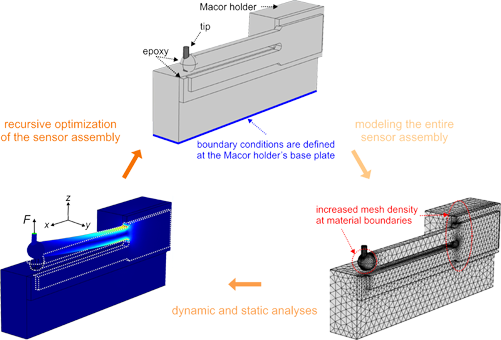
- enable the simultaneous collection of local forces and tunneling currents, the exact realization of this wire connection has a major effect on sensor properties such as spring constant, quality factor, resonance frequency, and its deviation from an ideal vertical oscillation. Keywords: force sensor
- considerable experience. As a result, personal skills have often a major impact on the sensing characteristics of the completed device. To help minimizing the related problems, this work investigates the influence of different tip mounting options on the spring constant, Q-factor, resonance frequency, and
- , we find that spring constant, Q-factor, and eigenfrequency are attenuated for tip-holder setups that feature an increasing degree of asymmetry. This effect is, however, modest if compared to the effect of an asymmetric wire connection, as they are frequently added to collect a tunneling current for





