Search results
Search for "titanium dioxide" in Full Text gives 139 result(s) in Beilstein Journal of Nanotechnology.
Sugarcane juice derived carbon dot–graphitic carbon nitride composites for bisphenol A degradation under sunlight irradiation
Beilstein J. Nanotechnol. 2018, 9, 353–363, doi:10.3762/bjnano.9.35
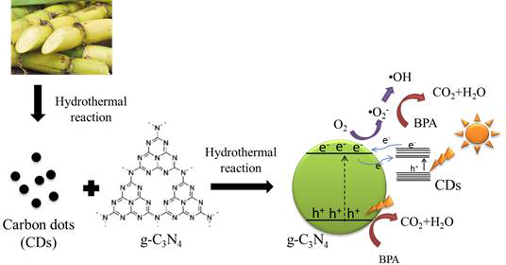
- absorption spectra after titanium dioxide (TiO2) loading [28] and acid treatment [29], the incorporation of CDs into g-C3N4 consistently red-shifted the absorption spectra towards the visible and NIR region. However, the photocatalytic performance of the composites is possibly limited under NIR light


Impact of titanium dioxide nanoparticles on purification and contamination of nematic liquid crystals
Beilstein J. Nanotechnol. 2017, 8, 2766–2770, doi:10.3762/bjnano.8.275
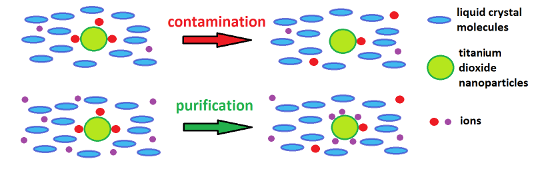
- Dmitrii Pavlovich Shcherbinin Elena A. Konshina Department of Optical Physics and Modern Natural Science, ITMO University, Kronverkskiy pr. 49, Saint Petersburg 197101, Russia 10.3762/bjnano.8.275 Abstract We have investigated the impact of titanium dioxide nanoparticles on the ionic
- contamination of liquid crystals. Nematic liquid crystals with high and low initial ionic contamination have been examined. It has been shown that titanium dioxide nanoparticles reduced the ion density of liquid crystals with high initial ionic contamination from 134.5 × 1012 cm−3 to 63.2 × 1012 cm−3. In the
- case of liquid crystals with low initial ionic contamination, the nanoparticles led to an insignificant increase of ion density from 19.8 × 1012 cm−3 to 25.7 × 1012 cm−3. Keywords: ionic impurities; liquid crystals; nanoparticles; titanium dioxide; Findings Nowadays, liquid crystals (LCs) are widely
CdSe nanorod/TiO2 nanoparticle heterojunctions with enhanced solar- and visible-light photocatalytic activity
Beilstein J. Nanotechnol. 2017, 8, 2741–2752, doi:10.3762/bjnano.8.273
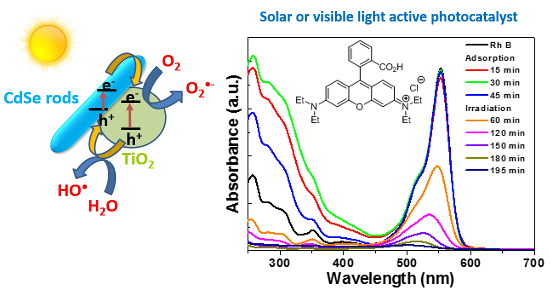
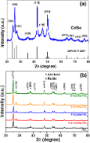
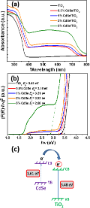
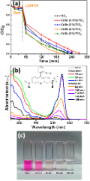
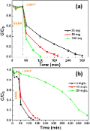
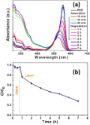
- conversion of solar energy to chemical energy, for example, via water splitting to produce hydrogen, is the topic of numerous current research projects. Titanium dioxide (TiO2) has been widely investigated over the last three decades and has been demonstrated to be of high potential [1][2]. However, TiO2






Refractive index sensing and surface-enhanced Raman spectroscopy using silver–gold layered bimetallic plasmonic crystals
Beilstein J. Nanotechnol. 2017, 8, 2492–2503, doi:10.3762/bjnano.8.249
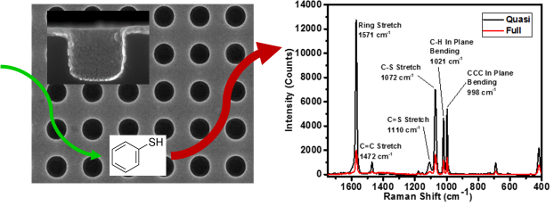
- frequencies. A ≈5 nm titanium dioxide adhesion layer was deposited using atomic layer deposition (Cambridge nanotech) on the embossed SOG nanostructure followed by deposition of a ≈50 nm metallic film (Au, Ag or both) via one of the various methods. Sputter deposition in a 5 mTorr argon atmosphere (AJA


Involvement of two uptake mechanisms of gold and iron oxide nanoparticles in a co-exposure scenario using mouse macrophages
Beilstein J. Nanotechnol. 2017, 8, 2396–2409, doi:10.3762/bjnano.8.239
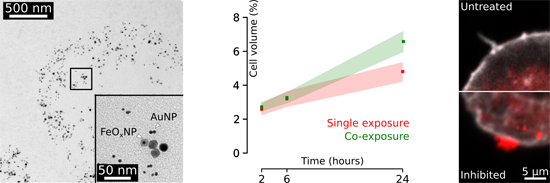
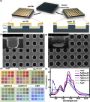
- ], potentially reflecting different agglomeration states. The uptake mechanism for one and the same NP into different cell types may even vary [10]. For instance, the uptake of fetal bovine serum-treated titanium dioxide NPs (TiO2NP) into A549 and H1299 cells, two human lung cell lines, is different, and it was



Hydrothermal synthesis of ZnO quantum dot/KNb3O8 nanosheet photocatalysts for reducing carbon dioxide to methanol
Beilstein J. Nanotechnol. 2017, 8, 2264–2270, doi:10.3762/bjnano.8.226
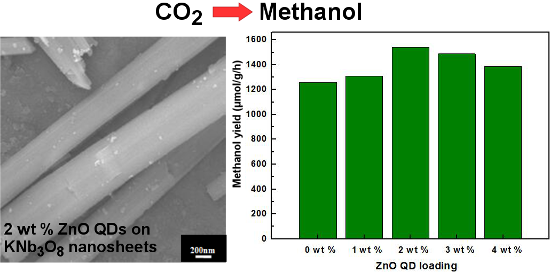
- much higher than that of the commercial Degussa P25 [10]. Zhou et al. synthesized porous K4Nb6O17 microspheres with large surface area via a homogeneous precipitation method, which showed not only two times higher photocatalytic activity than that of the commercial Degussa P25 (the titanium dioxide




Synthesis and characterization of noble metal–titania core–shell nanostructures with tunable shell thickness
Beilstein J. Nanotechnol. 2017, 8, 2083–2093, doi:10.3762/bjnano.8.208
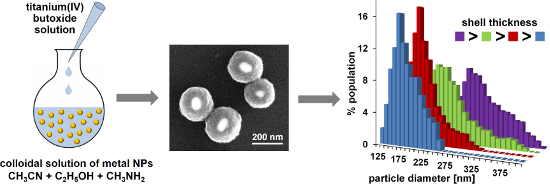
- characterization of metal–metal oxide core–shell nanostructures. Keywords: Ag@TiO2; Au@TiO2; core–shell nanostructures; titania coating; titanium dioxide; tunable resistive pulse sensing; Introduction In recent years, core–shell nanostructures (CSNs) have become one of the most widely studied hybrid structures
- ][5][6][7][8][9][10][11]. For many applications, however, the use of titanium dioxide in CSNs would be of much greater interest. Useful physicochemical properties of titanium dioxide in its crystalline forms, rutile and anatase, such as high refractive index and photocatalytic activity have led to its


Fabrication of hierarchically porous TiO2 nanofibers by microemulsion electrospinning and their application as anode material for lithium-ion batteries
Beilstein J. Nanotechnol. 2017, 8, 1297–1306, doi:10.3762/bjnano.8.131
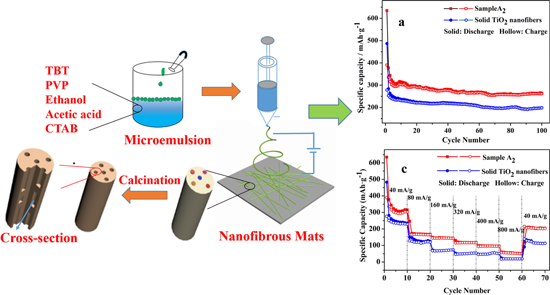
- China 10.3762/bjnano.8.131 Abstract Titanium dioxide (TiO2) nanofibers have been widely applied in various fields including photocatalysis, energy storage and solar cells due to the advantages of low cost, high abundance and nontoxicity. However, the low conductivity of ions and bulk electrons hinder
- density [5][6][7][8]. So far, among all the commercial lithium-ion batteries, graphite plays an extremely important role in anode materials; nevertheless, structural deformation, electrical disconnection and the initial loss of capacity hinder its further development [9][10]. Titanium dioxide (TiO2) is
- considered to be an alternative anode material to graphite, which can be attributed to the superior advantages of titanium dioxide such as low-cost, eco-friendliness, nontoxicity and high abundance [10]. Furthermore, safety and stability of titanium dioxide are higher than those of graphite, because since Li




High photocatalytic activity of Fe2O3/TiO2 nanocomposites prepared by photodeposition for degradation of 2,4-dichlorophenoxyacetic acid
Beilstein J. Nanotechnol. 2017, 8, 915–926, doi:10.3762/bjnano.8.93
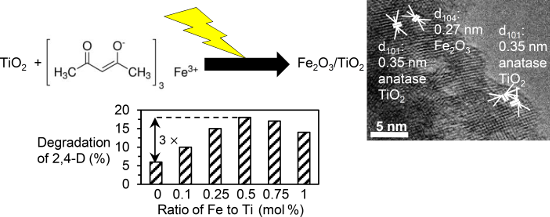
- , titanium dioxide (TiO2) has been the foremost established material for degradation of organic pollutants [1][2]. In addition to its nontoxicity, abundance and relatively low cost, TiO2 also shows excellent photocatalytic activity in many degradation reactions. Unfortunately, the photocatalytic performance


Synthesis of graphene–transition metal oxide hybrid nanoparticles and their application in various fields
Beilstein J. Nanotechnol. 2017, 8, 688–714, doi:10.3762/bjnano.8.74
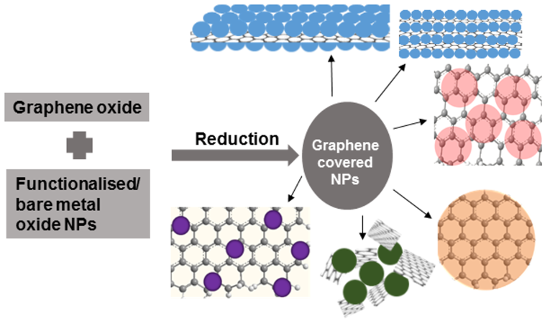
- scalable and relatively cost effective [14][15][16]. In particular, among all the TMO NPs, titanium dioxide [17], manganese oxide [18], iron oxide [19] and zinc oxide [20] have attracted the most attention due to their particular interesting and advantageous properties. By changing the reaction conditions
- precise, in the following, we categorise the graphene–TMO semiconductor NP hybrids on the basis of their counterpart material oxide (from titanium to zinc) following the periodic table. Titanium dioxide (TiO2)–graphene hybrids Nanocrystalline TiO2 is an interesting material because of its unique optical






Functionalized TiO2 nanoparticles by single-step hydrothermal synthesis: the role of the silane coupling agents
Beilstein J. Nanotechnol. 2017, 8, 304–312, doi:10.3762/bjnano.8.33
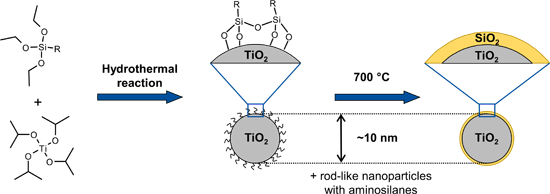
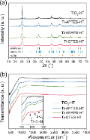
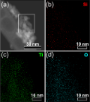
- Because of the high surface-to-volume ratio, the intrinsic properties of titanium dioxide (TiO2) nanoparticles have led to exploitation in many fields such as in photocatalysis [1], solar cells [2], and in biomedical applications [3]. The naturally occurring phases of TiO2 are rutile (thermodynamically



Performance of natural-dye-sensitized solar cells by ZnO nanorod and nanowall enhanced photoelectrodes
Beilstein J. Nanotechnol. 2017, 8, 287–295, doi:10.3762/bjnano.8.31
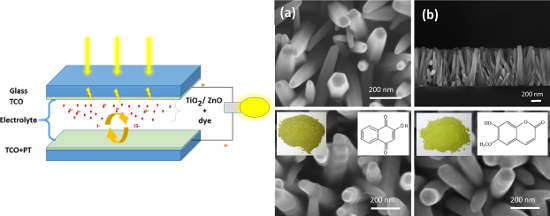
- represents the photoelectrode, composed of a wide band gap semiconductor thin layer coated on transparent conducting oxide (TCO) films. A mesoporous film layer is used as a semiconductor in the photoelectrode. Because of its stability and easy synthesis, titanium dioxide (TiO2) is mostly used as the


Photocatalysis applications of some hybrid polymeric composites incorporating TiO2 nanoparticles and their combinations with SiO2/Fe2O3
Beilstein J. Nanotechnol. 2017, 8, 272–286, doi:10.3762/bjnano.8.30
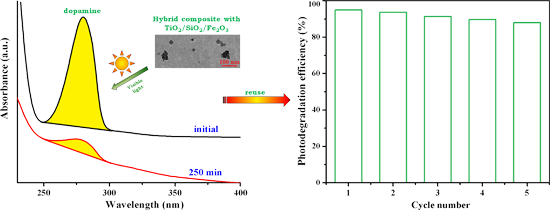
- , Li-ion batteries, sensors, photodynamic cancer therapy or in biomaterials [1][2][3][4][5][6][7]. Since 1972, when Fujishima and Honda published their seminal work [8], much work has been focused on investigating the photocatalytic properties of TiO2 [9]. Titanium dioxide catalysts proved to be better
- maximization of the photocatalytic efficiency. An interesting route to reach this goal is the use of iron(III) added to titanium dioxide photocatalysts, which improves the photocatalytic activity under visible light reducing the recombination rates of the photo-excited carriers [38]. Also, the immobilization
- NPs (Figure 2c) is quite similar to that of pristine TiO2 NPs, and the maghemite Fe–O absorption bands at about 570 cm−1 are overlapped by those of titanium dioxide. Likewise, in the FTIR spectrum of TiO2/SiO2/Fe2O3 nanopowder (Figure 2d) the absorption bands are analogous to those already discussed


Flexible photonic crystal membranes with nanoparticle high refractive index layers
Beilstein J. Nanotechnol. 2017, 8, 203–209, doi:10.3762/bjnano.8.22
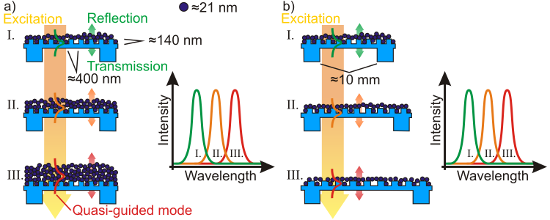
- replication of a 400 nm period linear grating nanostructure into a ≈60 µm thick polydimethylsiloxane membrane and subsequent spin coating of a high refractive index titanium dioxide nanoparticle layer. Samples are prepared with different nanoparticle concentrations. Guided-mode resonances with a quality
- highly flexible photonic crystal slabs by utilizing nanoreplication of a linear grating nanostructure with a period of 400 nm into a polydimethylsiloxane (PDMS) membrane and subsequent spin coating of titanium dioxide (TiO2) nanoparticles. Investigations with 300 nm and 500 nm gratings lead to similar
- nm period and 140 nm deep linear grating nanostructure is coated with a high-refractive index layer of titanium dioxide (TiO2) nanoparticles. Resonances are observed in the normal-incidence transmission spectrum between crossed-polarization filters. The resonance shift is investigated as a function


Laser irradiation in water for the novel, scalable synthesis of black TiOx photocatalyst for environmental remediation
Beilstein J. Nanotechnol. 2017, 8, 196–202, doi:10.3762/bjnano.8.21
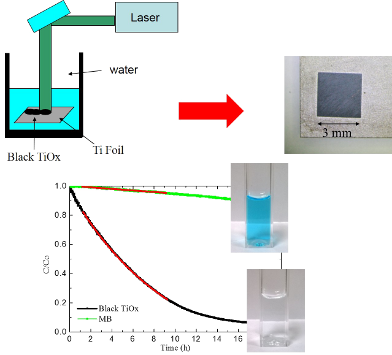
- trap surface states for holes in an amorphous hydrogenated TiOx layer. Keywords: black titania; laser irradiation in water; photocatalysis; TiOx; water treatment; Introduction The interest in titanium dioxide dates back in 1972, thanks to the pioneering work of Honda and Fujishima [1]. TiO2 has been


Optical and photocatalytic properties of TiO2 nanoplumes
Beilstein J. Nanotechnol. 2017, 8, 190–195, doi:10.3762/bjnano.8.20
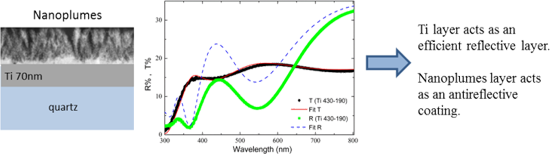
- ; photocatalysis; titanium dioxide (TiO2); Introduction Today water, energy, and food are the most urgent problems of humanity. Since the seminal work of Honda and Fujishima in 1972 where photo-induced decomposition of water was discovered [1], semiconductor photocatalysis has shown great potential not only for


Nanocrystalline TiO2/SnO2 heterostructures for gas sensing
Beilstein J. Nanotechnol. 2017, 8, 108–122, doi:10.3762/bjnano.8.12
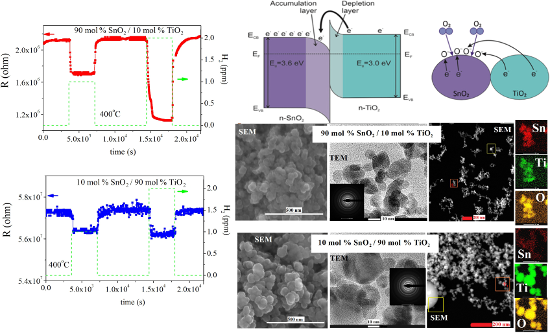
- ). The larger sensor response, R0/R (by about 20 times) for SnO2-rich heterostructures compared to TiO2-rich ones is typical as titanium dioxide requires higher temperatures for improved sensing characteristics. In Figure 5c and Figure 5d one can also analyze the influence of the formation of
- this data one can conclude that in the case of 90 mol % SnO2/10 mol % TiO2, O2− and O− are adsorbed and the ratio of O−/O2− increases with temperature. Considering the 10 mol % SnO2/90 mol % TiO2 nanomaterial, n is in the range of 0.25–0.40. The reduction of titanium dioxide leads to the formation of




Ordering of Zn-centered porphyrin and phthalocyanine on TiO2(011): STM studies
Beilstein J. Nanotechnol. 2017, 8, 99–107, doi:10.3762/bjnano.8.11
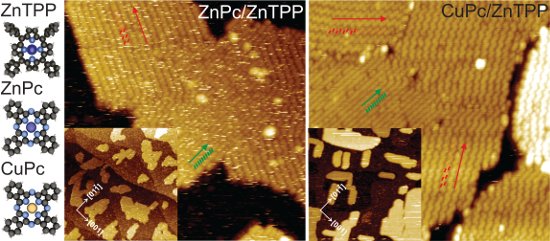
- investigation of molecular adsorption is titanium dioxide [11][12]. The most stable and the most studied face of TiO2 is the rutile (110) surface. In the context of adsorption studies, it is important to note that the (110) face of rutile usually contains numerous oxygen vacancies, often filled with hydroxy


Diffusion of dilute gas in arrays of randomly distributed, vertically aligned, high-aspect-ratio cylinders
Beilstein J. Nanotechnol. 2017, 8, 64–73, doi:10.3762/bjnano.8.7
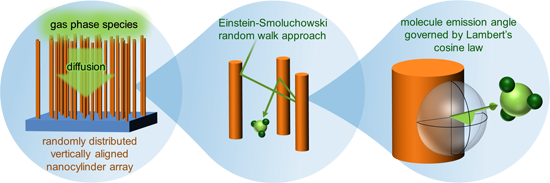
- reflection from nanocylinder walls assuming the molecular regime of gas transport. The example calculation of a diffusion coefficient is delivered for a system of titanium isopropoxide molecules diffusing between vertically aligned carbon nanotubes coated with titanium dioxide, which is especially relevant


The cleaner, the greener? Product sustainability assessment of the biomimetic façade paint Lotusan® in comparison to the conventional façade paint Jumbosil®
Beilstein J. Nanotechnol. 2016, 7, 2100–2115, doi:10.3762/bjnano.7.200

- manufacturers (VdL), Lotusan® consists of an emulsion of polyoxysiloxane, polymer dispersion, titanium dioxide, silicon dioxide, water and additives [31]. According to the technical bulletin [32], Lotusan® is characterized by a density of 1.4–1.6 g/mL, and is highly permeable to carbon dioxide and water vapour
- , dispersion-based façade paint. In accordance with the reporting guideline [31], Jumbosil® consists of polymer dispersion, titanium dioxide, calcium carbonate, silicate fillers, talcum, water, glycol ether, aliphatic compounds, additives and preserving agents [33]. Jumbosil® is characterized by a density of
- mainly because of Lotusan®’s higher content of titanium dioxide (TiO2). Regarding the remaining impact indicators both façade paints are equal within the calculation inaccuracy. Contributions by life-cycle stages: The key issue of the contribution analysis is a clarification of the composition of the


Nanostructured TiO2-based gas sensors with enhanced sensitivity to reducing gases
Beilstein J. Nanotechnol. 2016, 7, 1718–1726, doi:10.3762/bjnano.7.164
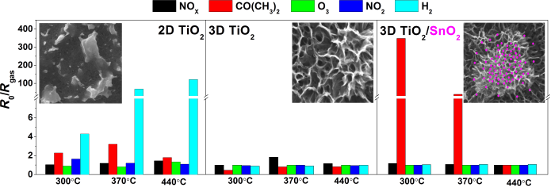
- material for application as an acetone sensor. Keywords: acetone; flower-like 3D nanostructures; gas sensors; selectivity; titanium dioxide; Introduction The market for resistive-type gas sensors is dominated by materials developed on the base of thin or thick layers composed of polycrystalline metal
- to display better gas selectivity and sensitivity [1][2]. Additionally, open nanostructures facilitate the penetration of gas, and as a consequence, reduces the response time. Titanium dioxide (TiO2) is effectively used in environmental and energy production applications such as dye-sensitized solar
- electronic structure by improving electron migration from titanium dioxide to tin dioxide and promotes oxygen molecule adsorption at the surface [34]. The as-formed heterojunction (n–n type) affects the response due to the formation of the accumulation/depletion layer and increases the potential barrier at


Scanning probe microscopy studies on the adsorption of selected molecular dyes on titania
Beilstein J. Nanotechnol. 2016, 7, 1642–1653, doi:10.3762/bjnano.7.156
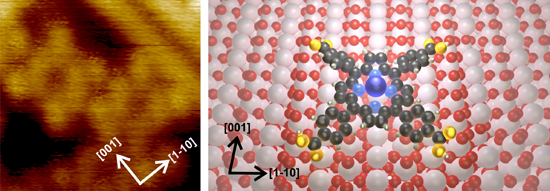
- , Jagiellonian University, Łojasiewicza 11, 30-348 Krakow, Poland Department of Physics, University of Basel, Klingelbergstr. 82, 4056 Basel, Switzerland 10.3762/bjnano.7.156 Abstract Titanium dioxide, or titania, sensitized with organic dyes is a very attractive platform for photovoltaic applications. In this
- dianhydride (PTCDA); phtalocyanines; porphyrins; rutile; scanning probe microscopy; scanning tunneling microscopy (STM); titanium dioxide (TiO2); Introduction Today it comes as no surprise that photovoltaic devices can be made of materials other than silicon. Nanocrystalline materials accompanied by organic
- stability against photocorrosion at the expense of decreased sensitivity to the visible spectrum. A good example of this type of material is titanium dioxide, which has a band gap of 3.0–3.2 eV and absorbs only the ultraviolet part of the solar spectrum. Thus, bare TiO2 used in photovoltaic applications has


Electric field induced structural colour tuning of a silver/titanium dioxide nanoparticle one-dimensional photonic crystal
Beilstein J. Nanotechnol. 2016, 7, 1404–1410, doi:10.3762/bjnano.7.131
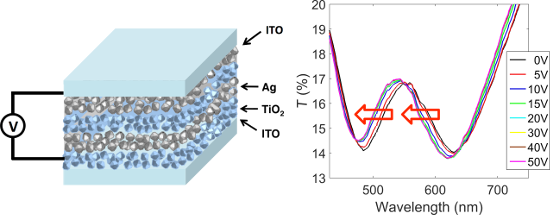
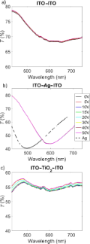
- . In this work, we demonstrate structural colour in a photonic crystal device comprised of alternating layers of silver nanoparticles and titanium dioxide nanoparticles, exhibiting spectral shifts of around 10 nm for an applied voltage of only 10 V. The accumulation of charge at the metal/dielectric
- (i.e. decrease of the effective refractive index). These results are the first demonstration of active colour tuning in silver/titanium dioxide nanoparticle-based photonic crystals and open the route to metal/dielectric-based photonic crystals as electro-optic switches. Keywords: electro-optic
- evidence of structural colour tuning with an electric field in a one-dimensional photonic crystal made of alternating layers of silver nanoparticles and titanium dioxide nanoparticles. We have observed a blue shift of about 10 nm with an applied voltage of 10 V. We give an interpretation of the phenomenon




High antiviral effect of TiO2·PL–DNA nanocomposites targeted to conservative regions of (−)RNA and (+)RNA of influenza A virus in cell culture
Beilstein J. Nanotechnol. 2016, 7, 1166–1173, doi:10.3762/bjnano.7.108
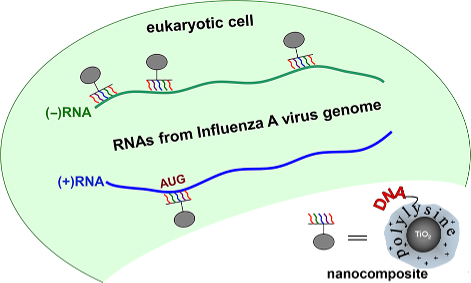
- TiO2·PL–DNA nanocomposite consisting of titanium dioxide nanoparticles and polylysine (PL)-containing oligonucleotides. Results: The TiO2·PL–DNA nanocomposites bearing the DNA fragments targeted to different conservative regions of (−)RNA and (+)RNA of segment 5 of influenza A virus (IAV) were studied


Manufacturing and investigation of physical properties of polyacrylonitrile nanofibre composites with SiO2, TiO2 and Bi2O3 nanoparticles
Beilstein J. Nanotechnol. 2016, 7, 1141–1155, doi:10.3762/bjnano.7.106
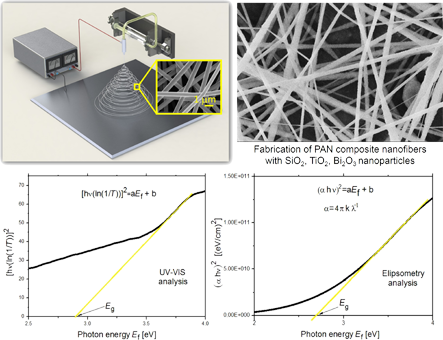
- of the strengthening phase. When using nanoparticles of Bi2O3 as the reinforcing phase, the increase in the diameter of the nanofibres is approximately linear (Figure 8), with an increase of approx. 10 nm for every 4 wt % of Bi2O3, comparable to the titanium dioxide case. For a shorter distance
- titanium dioxide nanoparticles led to a significant increase in the dielectric constant to 2.64 (8 wt %) and 2.81 (12 wt %). The maximum value of the dielectric transmittance of the studied fibrous layers was obtained for composite nanofibres reinforced with nanoparticles of Bi2O3. Adding them to the
- nanoparticles at the maximum mass concentration. In this case, the dielectric constant was 1.94. Fibrous layers reinforced with 8 wt % Bi2O3 exhibited a dielectric transmittance similar to that obtained for fibres reinforced with 4 wt % titanium dioxide, namely 2.19. The analysis of the relative dielectric