Search results
Search for "valence" in Full Text gives 349 result(s) in Beilstein Journal of Nanotechnology. Showing first 200.
Molecular assemblies on surfaces: towards physical and electronic decoupling of organic molecules
Beilstein J. Nanotechnol. 2021, 12, 950–956, doi:10.3762/bjnano.12.71

- bandgap. Hence, Yousofnejad et al. [85] found using MoS2 on Ag(111) as substrate that the HOMO of tetracyanoquinodimethane (TNCQ) is not decoupled because it is located in the MoS2 valence band, while the lowest unoccupied molecular orbital narrows but still suffers from lifetime broadening because it is
Prediction of Co and Ru nanocluster morphology on 2D MoS2 from interaction energies
Beilstein J. Nanotechnol. 2021, 12, 704–724, doi:10.3762/bjnano.12.56
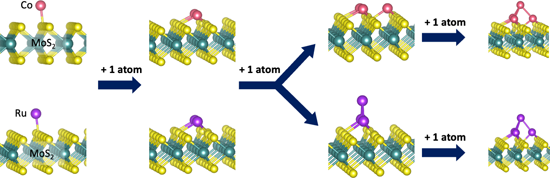
- ]. Valence electrons were described explicitly using a plane-wave basis set with an energy cutoff of 450 eV. The valence electron configurations are as follows: Co = 4s2 3d7, Ru = 5s1 4d7, Mo = 5s1 4d5, and S = 3s2 3p4. The core electrons were treated with the projector-augmented wave potential (PAW) [51]. A
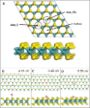
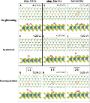
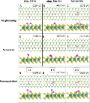
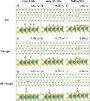
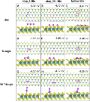
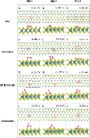
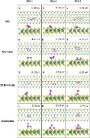
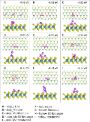
- variation arises only from the structure. Further details on addition energy are given in section S1.2 of Supporting Information File 1. We now discuss the electronic properties of Co and Ru clusters adsorbed on MoS2. From the computed Bader charges, a metallic Co atom has 9.0 valence electrons, while a Co
- atom is considered oxidised when it has a Bader charge of less than 9.0 electrons. Similarly, metallic Ru has 8.0 valence electrons, and oxidised Ru will have a Bader charge of less than 8.0 electrons. Analysis of the Bader charges for Co adsorption shows that, in general, atoms bound to the MoS2 ML



Electromigration-induced formation of percolating adsorbate islands during condensation from the gaseous phase: a computational study
Beilstein J. Nanotechnol. 2021, 12, 694–703, doi:10.3762/bjnano.12.55
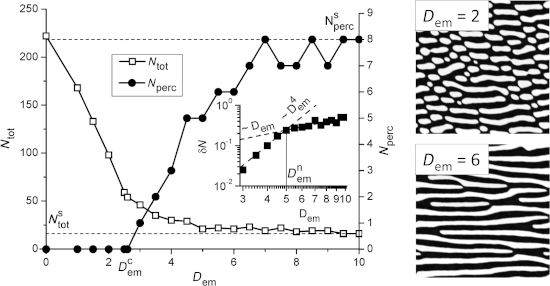
- between anode and cathode); e is the electron charge. The direction of the force Fel is defined by the effective valence Z, which is negative for most metals. Thus, the adsorbed atoms move in the opposite direction to the electric field. In the general case if the electric field is applied across the




![[Graphic 29]](/bjnano/content/inline/2190-4286-12-55-i36.svg?max-width=637&scale=1.18182) on the adsorption coefficient α ...
on the adsorption coefficient α ...

Nanoporous and nonporous conjugated donor–acceptor polymer semiconductors for photocatalytic hydrogen production
Beilstein J. Nanotechnol. 2021, 12, 607–623, doi:10.3762/bjnano.12.50
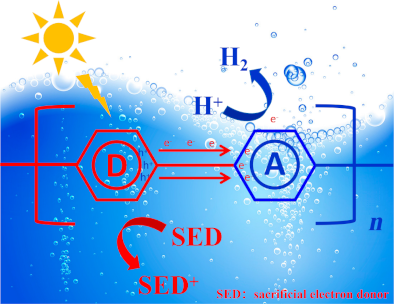
- unoccupied molecular orbital (LUMO) or conduction band (CB), while holes remain in the highest occupied molecular orbital (HOMO) or valence band (VB). Second, the electron–hole pairs are transferred to the surface through thermodynamic driving forces and are captured by H+ and a sacrificial electron donor
- , studies regarding the long-term stability of CPs are still needed. (Left) Schematic diagram of the mechanism of semiconducting catalyst-mediated photocatalytic hydrogen production (CB: conduction band, VB: valence band, SED: sacrificial electron donors). (Right) Charge separation in a CP-based




Impact of GaAs(100) surface preparation on EQE of AZO/Al2O3/p-GaAs photovoltaic structures
Beilstein J. Nanotechnol. 2021, 12, 578–592, doi:10.3762/bjnano.12.48
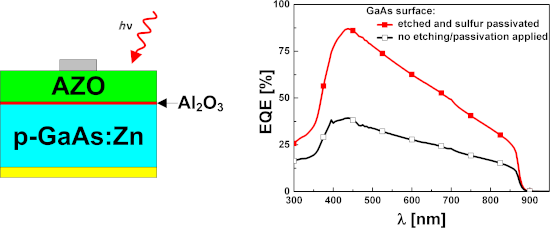
- = 4.50 eV [48] and effective density of states in the conduction band Nc = 2.2 × 1018 cm−3 [49], while for GaAs we used χGaAs = 4.07 eV, effective density of states in the valence band Nv = 7 × 1018 cm−3 as well as bandgap size of Eg(GaAs) = 1.42 eV [50]. The bandgap offset values were determined




The preparation temperature influences the physicochemical nature and activity of nanoceria
Beilstein J. Nanotechnol. 2021, 12, 525–540, doi:10.3762/bjnano.12.43
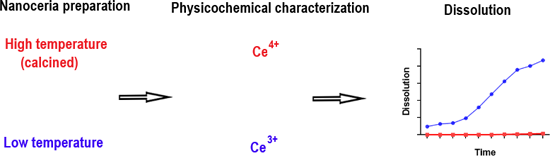
- treatment of nanoceria can produce significant differences in solubility and surface cerium valence, which affect the biological and catalytic properties of nanoceria. Keywords: cerium; dissolution; nanoparticles; physicochemical properties; valence state; Introduction The long-term fate of engineered
- solvothermally synthesized nanoceria cerium surface valence was predominantly Ce3+ (Supporting Information File 1, Table S1), consistent with the increase in Ce3+ as the size of nanoceria decreases [53]. The calcined solvothermally synthesized nanoceria cerium had a predominance of Ce4+ (Figure 6). NM-212 was
- valence state difference on the nanoceria surface may contribute to the dissolution rate difference. As the nanoceria size decreases, the Ce3+/Ce4+ ratio increases (Figure 13). The edge and core of NM-212 had about 90% Ce4+ whereas the 4 nm solvothermally synthesized ceria exhibited predominantly Ce3




Boosting of photocatalytic hydrogen evolution via chlorine doping of polymeric carbon nitride
Beilstein J. Nanotechnol. 2021, 12, 473–484, doi:10.3762/bjnano.12.38
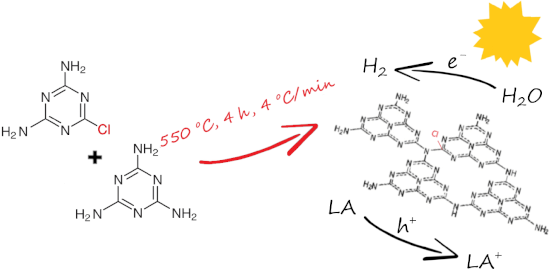
- harvesting with PCN and promotes visible-light photocatalytic activity [55]. To estimate the valence band position of PCN and Cl-PCN, VB XPS spectra were measured and are presented in Figure 8c. Furthermore, the conduction band (CB) position of the samples was calculated from the formula ECB = Eg − EVB, and
- ) valence band (VB) XPS spectra, and (d) band diagram of PCN and Cl-PCN. (a) Photocurrent response and (b) EIS spectra of PCN and Cl-PCN. C, N, O, and Cl atomic concentration in PCN and Cl-PCN. Chemical composition of PCN and Cl-PCN calculated from the peak-fitting procedure applied to the N 1s and C 1s


Structural and optical characteristics determined by the sputtering deposition conditions of oxide thin films
Beilstein J. Nanotechnol. 2021, 12, 354–365, doi:10.3762/bjnano.12.29
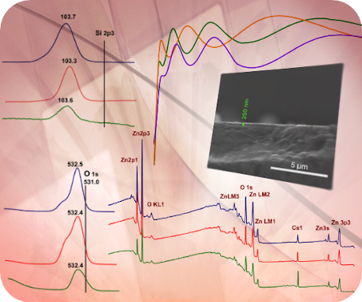
- . The obtained values were between 3.92–4.0 eV for the SiO2 samples and between 3.2–3.3 eV for ZnO films. The band difference of the ZnO films indicated a direct band-to-band transition between the valence and conduction band, while the film stress determined the improvement of the bandgap. The obtained


Nickel nanoparticle-decorated reduced graphene oxide/WO3 nanocomposite – a promising candidate for gas sensing
Beilstein J. Nanotechnol. 2021, 12, 343–353, doi:10.3762/bjnano.12.28
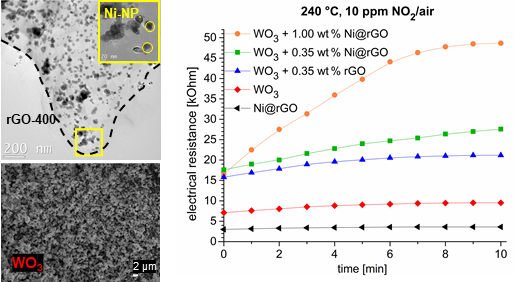
- the conduction band toward the valence band. Processes on the WO3 surface make it possible for the work function of WO3 to lower to a point close to that of rGO [37]. The latter facilitates transfer of electrons at the rGO/WO3 interface. The continuous capture of electrons by chemisorption of NO2


TiOx/Pt3Ti(111) surface-directed formation of electronically responsive supramolecular assemblies of tungsten oxide clusters
Beilstein J. Nanotechnol. 2021, 12, 203–212, doi:10.3762/bjnano.12.16

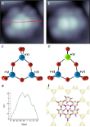
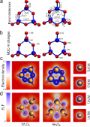
- electronic properties were obtained by employing PBE exchange–correlation functional [32] with the D3(BJ) dispersion correction [33][34][35], the valence triple-zeta polarized (TZP) basis sets composed of Slater-type and numerical orbitals, and scalar zero-order regular approximation (ZORA) [36]. STM images



ZnO and MXenes as electrode materials for supercapacitor devices
Beilstein J. Nanotechnol. 2021, 12, 49–57, doi:10.3762/bjnano.12.4
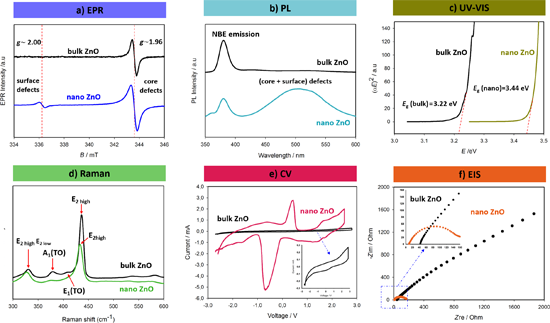
- in semiconductors is fundamentally the same, regardless of composition. Defects generate bandgap states that either generate electrons in the conduction band or holes in the valence band. Therefore, we believe that the discussion, based on experimental results, of the magnitude of this effect for 2D
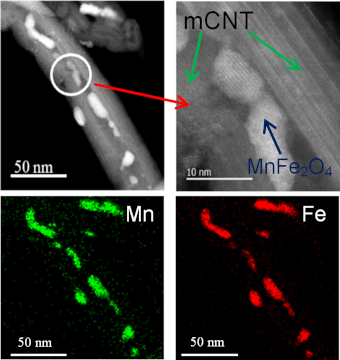
Free and partially encapsulated manganese ferrite nanoparticles in multiwall carbon nanotubes
Beilstein J. Nanotechnol. 2020, 11, 1891–1904, doi:10.3762/bjnano.11.170
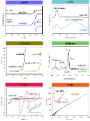
- are the first UPS measurements carried out for this system. Figure 1e provides the structure of the valence band of free MnFe2O4 nanoparticles. Experimental results indicate that the density of states (DOS) at the Fermi level, EF (i.e., at a zero binding energy in the UPS spectrum) is consistent with
- that of half-metallic behavior (Figure 1e, inset). Ideally, stoichiometric MnFe2O4 is predicted to be a half metal with a low carrier density [17]. A valence band maximum of 0.85 eV, derived from the spectrum, is in line with its predicted half-metallic behavior. However, it is to be noted that
- semiconducting structures [31][32]. The valence edge of the CNTs correspond to the work function [33]. The well-known features of three-fold coordination of C atoms are the deep-lying σ band, corresponding to a strong in-plane bonding located at 8.1 eV, and delocalized π bands, representing the weak bonding




Kondo effects in small-bandgap carbon nanotube quantum dots
Beilstein J. Nanotechnol. 2020, 11, 1873–1890, doi:10.3762/bjnano.11.169
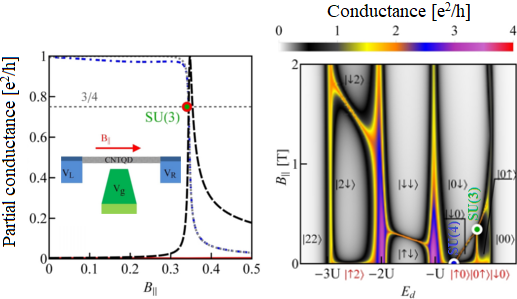
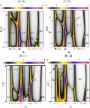
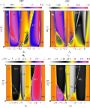
- dots (CNTQDs) is an extended two-orbital Anderson model: where the dot Hamilonian reads: with site dot energies: depending on the magnetic field B∥ and the gate voltage Vg. The upper and lower signs, ±, refer to conduction or valence states, μo is orbital magnetic moment μo = evFD/4, where vF is the



![[Graphic 37]](/bjnano/content/inline/2190-4286-11-169-i52.svg?max-width=637&scale=1.18182) as a functio...
as a functio...


Unravelling the interfacial interaction in mesoporous SiO2@nickel phyllosilicate/TiO2 core–shell nanostructures for photocatalytic activity
Beilstein J. Nanotechnol. 2020, 11, 1834–1846, doi:10.3762/bjnano.11.165
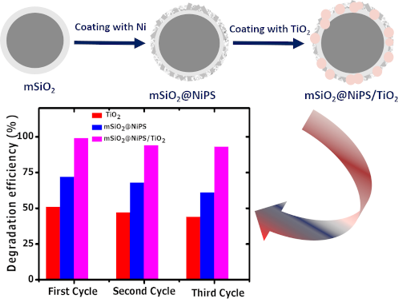
- brookite phases, the anatase phase has been extensively used for photocatalysis owing to its enhanced surface properties [7][8][9][10]. In a typical photocatalytic process, photons of energy greater than the bandgap energy of TiO2 excite electrons to the conduction band leaving holes in the valence band
- displayed good stability and reusability for the degradation of dye molecules and wastewater treatment. Figure 6 shows a possible mechanism for the photoactivity of mSiO2@NiPS and mSiO2@NiPS/TiO2. Upon light irradiation, electrons are excited from the valence band of both materials to the conduction band
- while holes are created in the valence band allowing for the separation of electrons and holes (Figure 6a). The electrons in the conduction band can react with oxygen to form reactive superoxide radicals, which oxidize the MV dye molecules [70]. Also, the holes in the valence band react with H2O to


Absorption and photoconductivity spectra of amorphous multilayer structures
Beilstein J. Nanotechnol. 2020, 11, 1757–1763, doi:10.3762/bjnano.11.158
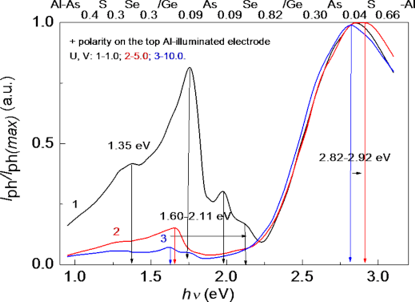
- with m = 2 is explained by the existence of an exponential distribution of the localized sates in the bandgap of the amorphous material. In this case the I–V characteristics are described by the expression [15]: where j is the current density, Nv is the effective density of states in the valence band


The influence of an interfacial hBN layer on the fluorescence of an organic molecule
Beilstein J. Nanotechnol. 2020, 11, 1663–1684, doi:10.3762/bjnano.11.149
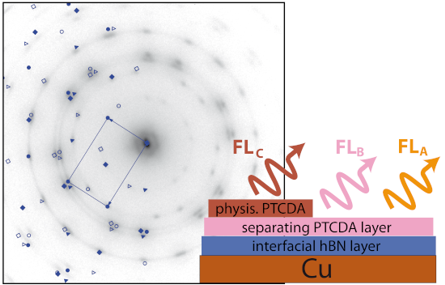
- states and the dynamical CT in the excited state can be probed by photoemission spectroscopy (PES). In particular, core hole clock spectroscopy has been used to measure the time constant of dynamical CT in the valence band states as a function of the lifetime of the core hole, which is typically of the
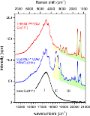
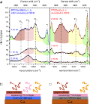
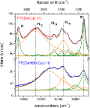
- a disordered phase, while the RT state forms highly ordered domains [44]. This is accompanied by a change in the valence band structure as seen, for example, in UPS [44]. Thus, instead of a multilayer/monolayer effect, the above described differences in the Raman shifts may also be caused by the





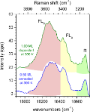
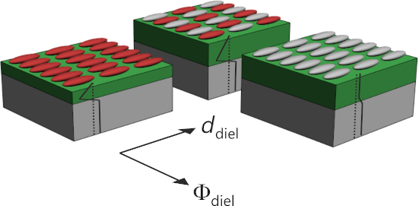
Controlling the electronic and physical coupling on dielectric thin films
Beilstein J. Nanotechnol. 2020, 11, 1492–1503, doi:10.3762/bjnano.11.132
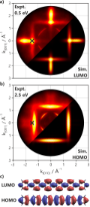
- molecules on the surface. The images of orbitals of molecules adsorbed on surfaces can also be obtained from the angular intensity distribution in valence band photoemission experiments via PT [27]. When the photoelectron emission angle is converted to momentum, the resulting momentum maps approximately
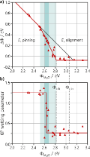
- to the same saturation exposure on the same 2 ML MgO(100) film. The initial work function, ΦMgO, was tuned to different values. Figure 4a shows wide scans in normal emission, where the MgO valence band dominates at an energy between 9 and 4 eV below EF. For ΦMgO greater than 2.8 eV, there is only a
- ][34] produces a scatter of the ΦMgO values on either side of the critical work function (Φcrit = 2.8 eV). Figure 5 shows the evolution of the ARUPS spectra with an increasing 6P dose on an MgO(100) film with ΦMgO = 2.58 eV (i.e., below Φcrit). In the MgO valence band region (Figure 5a), gradual




Antimicrobial metal-based nanoparticles: a review on their synthesis, types and antimicrobial action
Beilstein J. Nanotechnol. 2020, 11, 1450–1469, doi:10.3762/bjnano.11.129

- from light irradiation to excite and mobilize an electron from the valence band to the conduction band, leaving a highly reactive gap (H+). This zone becomes a ROS source as it interacts with H2O or OH− that surrounds the nanoparticles [152]. In addition to molecules such as ascorbic acid, carotene


Impact of fluorination on interface energetics and growth of pentacene on Ag(111)
Beilstein J. Nanotechnol. 2020, 11, 1361–1370, doi:10.3762/bjnano.11.120
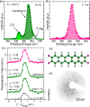
- of chemisorption [74][75][76][77], pointed to a weak interfacial coupling. Figure 2a shows the UPS data for the valence band region of stepwise deposited F4PEN on Ag(111). For a nominal thickness of 1 Å, two peaks that could be assigned to the HOMO and HOMO−1 levels of F4PEN were visible. The low BE
- 2a). However, the HOMO-derived peak broadened, and for a nominal thickness of 48 Å, its onset was at 1.51 eV BE. The HOMO−1-derived peak also broadened, but its maximum showed a shift to higher BE with increasing coverage. This shift was essentially parallel to that of a deeper-lying valence electron
- , the valence band spectra were almost identical for the monolayer coverages. In all cases, the HOMO-derived peak was centered at 1.85 eV, while the peak centered at a higher BE (≈3.00 eV) was identified as the HOMO−1-derived peak. In addition, the vertical adsorption geometries were rather similar


Structural and electronic properties of SnO2 doped with non-metal elements
Beilstein J. Nanotechnol. 2020, 11, 1321–1328, doi:10.3762/bjnano.11.116
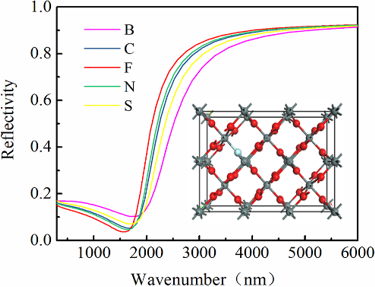
- CASTEP program based on DFT. The Perdew–Burke–Ernzerhof (PBE) generalized gradient approximation (GGA) was selected as the exchange–correlation functional. The interaction between inner electrons and valence electrons was described by the OTFG ultra-soft pseudopotential. The valence electronic
- conduction band. The electronic structure including the energy band structure, total density of states and partial wave state density of the doped system are shown in Figure 2. For SnO2, the Fermi energy level is at the top of the valence band, indicating that the conductivity of SnO2 is low. The conduction
- band minimum (CBM) and the valence band maximum (VBM) are located at the same G point, which is consistent with the calculation results [14][15] indicating that SnO2 is a direct bandgap semiconductor. In this work, the calculated bandgap is 1.28 eV, which is consistent with previous calculation results



Influence of the magnetic nanoparticle coating on the magnetic relaxation time
Beilstein J. Nanotechnol. 2020, 11, 1207–1216, doi:10.3762/bjnano.11.105
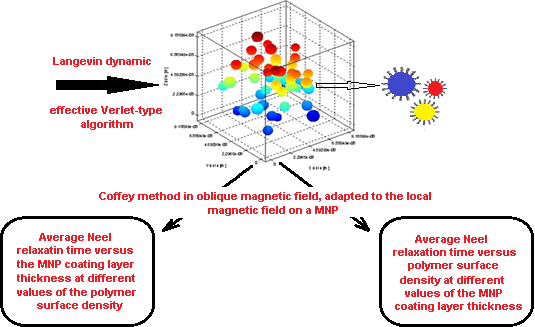
- surface potential of the i-th nanoparticle at infinite separation, z is the ion valence, e = 1.6 × 10⁻¹⁹ C and k is the thickness of the screening ionic layer “κ”, estimated by the inverse of Debye constant. Polymers and surfactants are usually used for steric stabilization. The model uses the following


Hybridization vs decoupling: influence of an h-BN interlayer on the physical properties of a lander-type molecule on Ni(111)
Beilstein J. Nanotechnol. 2020, 11, 1168–1177, doi:10.3762/bjnano.11.101
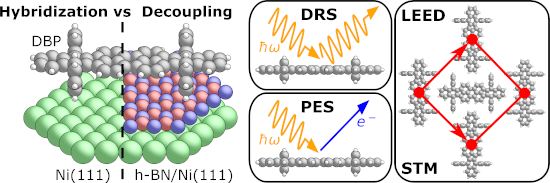
- -temperature scanning tunneling microscopy. Finally, the investigation of the valence band structure by ultraviolet photoelectron spectroscopy shows that the low work function of h-BN/Ni(111) further decreases after the DBP deposition. For this reason, the h-BN-passivated Ni(111) surface may serve as potential
- as clusters of molecules on top of the first DBP layer. The fast Fourier transform (FFT) of that STM image resembles the LEED simulation of the molecular lattice (considering eight symmetry equivalent domains only), which supports our structural model. Valence band structure and work function change
- is consistent with vacuum level alignment (see section “Valence band structure and work function change” above). The origin of the more pronounced broadening as well as the asymmetric line shape [45] of the C 1s level in the case of DBP on bare Ni(111) may stem from a variety of different adsorption


Monolayers of MoS2 on Ag(111) as decoupling layers for organic molecules: resolution of electronic and vibronic states of TCNQ
Beilstein J. Nanotechnol. 2020, 11, 1062–1071, doi:10.3762/bjnano.11.91
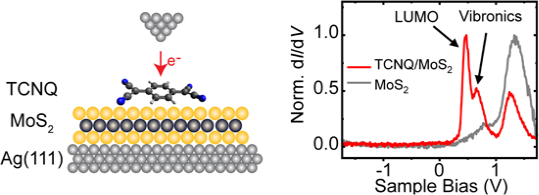
- due to the rapid decay of the tunneling constant with k∥[38][45]. The same applies to the valence band maximum, such that the strongest feature in the tunneling spectra at −2 V arises from bands close to the point [38]. Comparison of spectra on the moiré hollow sites suggest a rigid shift of the
- . The reduced spatial resolution is most probably caused by the overlap with density of states of the substrate as we are approaching the onset of the valence band of MoS2. One may suggest that the stronger localization of dI/dV intensity toward the quinone center is in agreement with the large
- considerations may help when searching for appropriate decoupling layers for specific molecules. We have challenged the decoupling properties of MoS2/Ag(111) for TCNQ molecules. These exhibit their LUMO resonance just at the conduction band onset of MoS2, whereas the HOMO lies within the valence band. Hence, the


Excitonic and electronic transitions in Me–Sb2Se3 structures
Beilstein J. Nanotechnol. 2020, 11, 1045–1053, doi:10.3762/bjnano.11.89
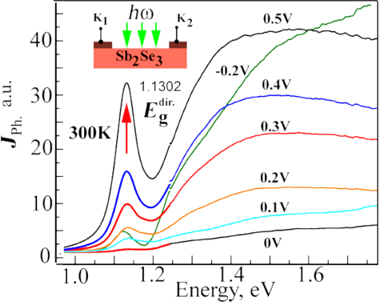
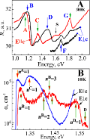
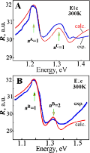
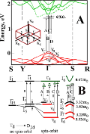
- the electrons at the bottom of the conduction band (mc* = 0.67m0) as well as the holes at the four top valence bands (mv1* = 3.32m0, mv2* = 3.83m0, mv3* = 3.23m0 and mv4* = 3.23m0) were calculated in the Г-point of the Brillouin zone. The magnitude of the valence band splitting V1–V2 due to the spin
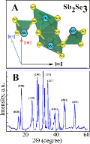
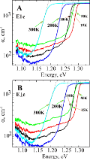
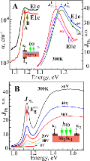
- absorption, reflection and excitonic spectra were obtained. The Sb2Se3 crystalline anisotropy of the ground and excited states of four excitonic series were determined at 300 and 11 K. Due to the crystal field (Δcf) and spin–orbit (Δso) interactions, the high valence band splittings were estimated in the
- single crystals was carried out by our group [24]. Since Sb2S3 and Sb2Se3 have a similar band structure, the four excitonic states (A, B, C and D) were also obtained for the Sb2S3 single crystals. Based in our previous work [24], the exciton binding energies, valence band parameters, valence band


Electrochemical nanostructuring of (111) oriented GaAs crystals: from porous structures to nanowires
Beilstein J. Nanotechnol. 2020, 11, 966–975, doi:10.3762/bjnano.11.81
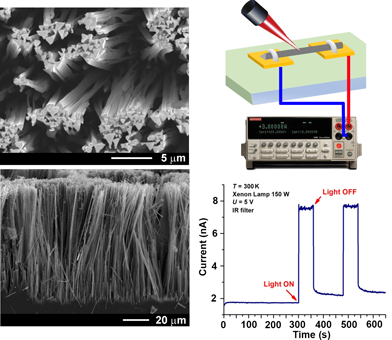
- band at 1.485 eV is related to the recombination of electrons from the conduction band with holes trapped by the SiAs state the energy level of which is situated 35 meV above the valence band [31]. The higher intensity of the emission from the anodized GaAs sample is indicative of an effective