


Search results
Search for "Au" in Full Text gives 746 result(s) in Beilstein Journal of Nanotechnology. Showing first 200.
Spatial variations of conductivity of self-assembled monolayers of dodecanethiol on Au/mica and Au/Si substrates
Beilstein J. Nanotechnol. 2023, 14, 1169–1177, doi:10.3762/bjnano.14.97
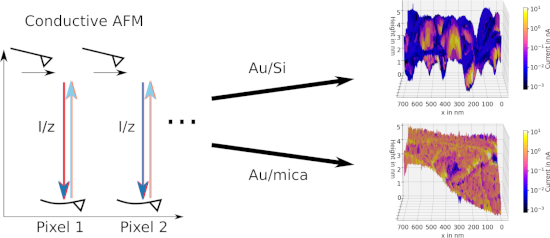
- rougher and a flatter gold substrate on the lateral variation of the conductivity. We find that the roughness of the substrate crucially defines this variation. We conclude that it is paramount to adequately choose a gold substrate for investigations on molecular layer conductivity. Keywords: Au/mica; Au
- of current characteristics strongly depends on the substrate chosen to deposit the SAM onto. For this study, we employ alkane thiols, which are allowed to form a SAM on different types of Au substrates. We have chosen dodecanethiol (DDT) molecules and study them on commercially available Au
- substrates consisting of thin Au layers of different surface roughness. We compare granular Au films deposited on Si wafers with epitaxial (flat) Au films on mica. Experimental Before the experimental results are presented, this section focuses on the preparation of the samples under study and the setup used


Density functional theory study of Au-fcc/Ge and Au-hcp/Ge interfaces
Beilstein J. Nanotechnol. 2023, 14, 1093–1105, doi:10.3762/bjnano.14.90
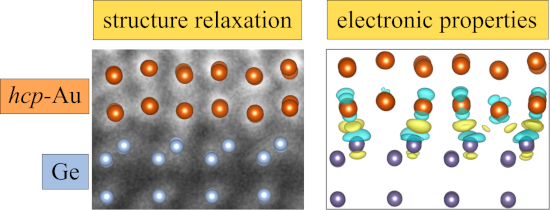
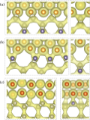
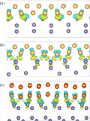
- . Our DFT calculations for the Au-fcc(011)/Ge(001) junction show how the presence of defects in the interface layer can help to stabilize the atomic pattern, consistent with microscopic images. Although the Au-hcp/Ge interface is characterized by a similar interface energy, it reveals large atomic
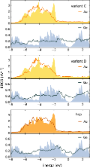
- displacements due to significant mismatch. Finally, analyzing the electronic properties, we demonstrate that Au/Ge systems have metallic character, but covalent-like bonding states between interfacial Ge and Au atoms are also present. Keywords: Au/Ge heterostructures; density functional theory; electronic
- several other metals. It is worth mentioning that also stable hexagonal silver dhcp nanostructures have been synthesized [20][21]. Nanostructures of hcp gold were found after growing Ge nanowires with Au as catalyst [22]. A possible mechanism responsible for the formation of hcp gold has been suggested





A visible-light photodetector based on heterojunctions between CuO nanoparticles and ZnO nanorods
Beilstein J. Nanotechnol. 2023, 14, 1018–1027, doi:10.3762/bjnano.14.84
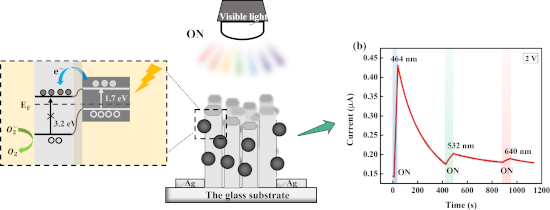
- properties of ZnO nanostructures, such as bandgap or conductivity [26]. Decorating ZnO with metals such as Ag, Au, Pd, Pt, and Al [27][28] can provide surface plasmonic effects that assist the electron transfer process in materials and extend the light absorption range of a photodetector [29][30]. However


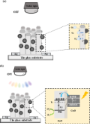
Nanoarchitectonics of photothermal materials to enhance the sensitivity of lateral flow assays
Beilstein J. Nanotechnol. 2023, 14, 988–1003, doi:10.3762/bjnano.14.82
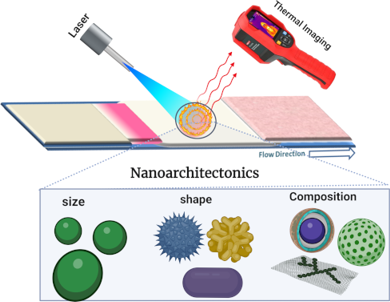
- properties, that is, plasmonic materials (e.g., Au, Ag, and Pt), semiconductor materials (e.g., transition metal oxides, transition metal chalcogenides, and transition metal dichalcogenides), carbon-based nanomaterials (such as graphene oxide and carbon nanotubes), and polymer nanomaterials [33][34] (Figure
- LSPR effect highly depends on size, shape, composition, interparticle distance, dielectric constant, and surrounding medium of the particles [36][37]. While Pt, Ag, and Au particles all exhibit photothermal properties, Au nanoparticles are commonly used for photothermal applications. By changing the
- material [75]. For example, nanocomposite materials have been developed by combining noble metal nanoparticles (Au–Ag, Au–Pt, and Au–Ag–Pt) or hybrids of noble metals, metals, and/or carbon materials (Au–Fe, Au–carbon, and Au–Fe–carbon). The resultant nanocomposites exhibit properties of all constituents


Upscaling the urea method synthesis of CoAl layered double hydroxides
Beilstein J. Nanotechnol. 2023, 14, 927–938, doi:10.3762/bjnano.14.76
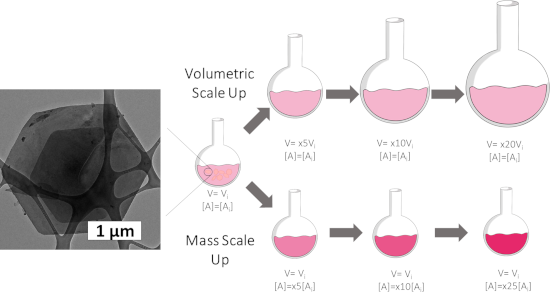
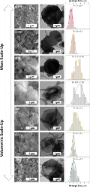
- corresponding structure. Microscopy Sample preparation The dried solids were suspended in ethanol and drop cast onto Au TEM grids covered with a lacy carbon film, and the solvent was left to evaporate. SEM samples were prepared from the same solution after 5 min of ultrasonication. The sonicated suspension was


Ni, Co, Zn, and Cu metal-organic framework-based nanomaterials for electrochemical reduction of CO2: A review
Beilstein J. Nanotechnol. 2023, 14, 904–911, doi:10.3762/bjnano.14.74
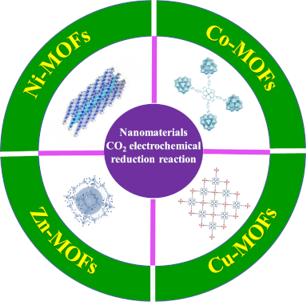
- exhibited considerable variation depending on the elemental composition of pure metal catalysts [19]. Notably, Au, Ag, and Zn catalysts exhibit preferential CO generation, while Sn, In, and Pb catalysts prove effective in producing formate ions (HCOO−) [20]. Metal-organic frameworks (MOFs) are established


Two-dimensional molecular networks at the solid/liquid interface and the role of alkyl chains in their building blocks
Beilstein J. Nanotechnol. 2023, 14, 872–892, doi:10.3762/bjnano.14.72
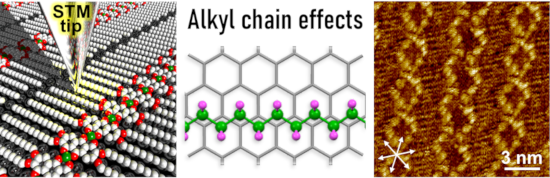
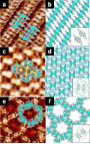
- structures on metallic surfaces, such as Au(111), are different from those on a HOPG surface, even if the molecular building blocks are the same [62][63][64]. This is because of the different molecule–substrate interactions on Au(111) and HOPG. The adsorption energy of alkyl chains on Au(111) has been
- reported as −1.48 kcal/mol per CH2 unit [65], whereas that on HOPG is approximately −1.9 kcal/mol per CH2 unit [47][56], as noted above. The periodicity of alkyl chains almost matches HOPG lattice, but does not Au(111) lattice, on which the alkyl chains favor to align along the nearest neighbor direction
- [66]. These differences in the dispersion interaction may be one of the causes of 2D structural changes between Au(111) and HOPG surfaces [67]. In the following sections, the effect of alkyl chains on 2D structure formations are summarized only for the HOPG surface. 2 Missing alkyl chains Although the









N-Heterocyclic carbene-based gold etchants
Beilstein J. Nanotechnol. 2023, 14, 865–871, doi:10.3762/bjnano.14.71
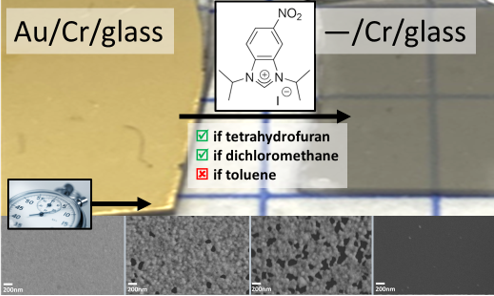
- without the need for Au/Ag alloys. Porous gold, itself, provides a gold film with high surface area that can be advantageous for energy conversion, catalysis, and electrochemical sensing [9][31]. Experimental Compounds 1 and 3 were prepared based on previously reported work [15][19], with 3 prepared by



Humidity-dependent electrical performance of CuO nanowire networks studied by electrochemical impedance spectroscopy
Beilstein J. Nanotechnol. 2023, 14, 683–691, doi:10.3762/bjnano.14.54
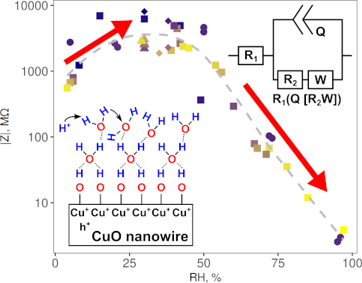
- of nanostructured CuO, and indicate directions for further applications in humidity sensors and other systems with nanowire interconnects. Results and Discussion The synthesized CuO nanowires (Figure 1a) were assembled between arrays of lithographically defined Au microelectrodes on a Si/SiO2 chip
- naturally. The substrates were submerged in pure isopropanol (IPA) and ultrasonicated for 3 s to release the CuO nanowires. These nanowires were assembled on arrays of Cr/Au (3/60 nm) microelectrodes lithographically pre-patterned on a commercially available Si/SiO2 wafer substrate (MTI Corporation) diced
- cell geometry and a parallel circuit scheme. Scanning electron microscopy: (a) CuO nanowires grown on Cu substrate by thermal oxidation; (b) system of Cr/Au microelectrodes with teeth-like shape; (c–f) pairs of microelectrodes (c, e) without and (d, f) with dielectrophoretically aligned nanowires


SERS performance of GaN/Ag substrates fabricated by Ag coating of GaN platforms
Beilstein J. Nanotechnol. 2023, 14, 552–564, doi:10.3762/bjnano.14.46
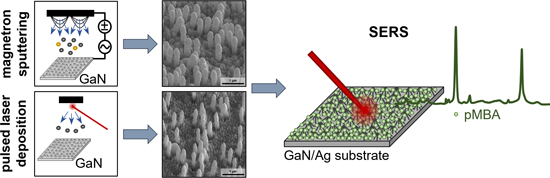
- GaN platforms can then be coated with Au [26][28], Ag [25], AuCu, or AuAg alloys [24][29][30][31][32] to produce highly reproducible and efficient SERS substrates. GaN-based SERS substrates have been used so far for trace detection of explosive materials [33], fentanyl and bacterial spores’ analysis


Nanoarchitectonics to entrap living cells in silica-based systems: encapsulations with yolk–shell and sepiolite nanomaterials
Beilstein J. Nanotechnol. 2023, 14, 522–534, doi:10.3762/bjnano.14.43
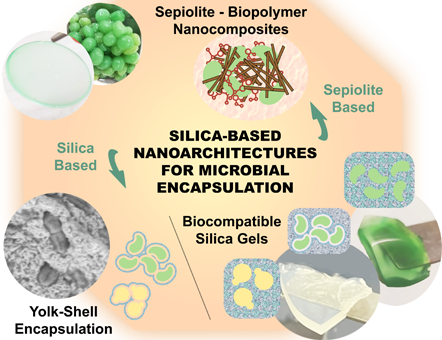
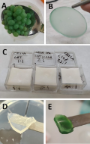
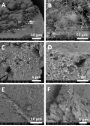
- spectroscopy (EDS) detector. In certain studies, samples were cut after immersing the beads, films, or foams in liquid N2 to obtain clean cuts and then sputtered with a thin layer of Au using a Leica EM ACE200 sputterer to assure good conductivity. Using a Zeiss LSM 800 microscope, transmitted-light images in


The origin of black and white coloration of the Asian tiger mosquito Aedes albopictus (Diptera: Culicidae)
Beilstein J. Nanotechnol. 2023, 14, 496–508, doi:10.3762/bjnano.14.41
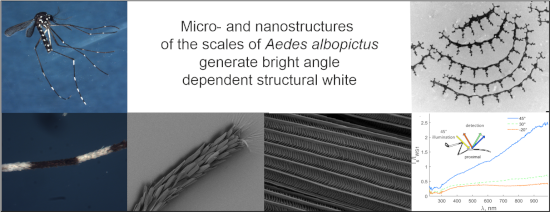
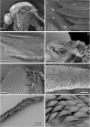
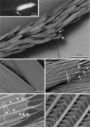
- on the single scales structure is responsible for the reduced visible and UV (compared to near-IR) reflection. Sputter coating with Au/Pd (10 nm thickness) of the tarsal scales of Ae. albopictus (Figure 7) almost eliminates the visual difference between white and black scales. Since the scale surface
- is optically smooth, the metal-coated scales demonstrated specular reflection. A thin Au/Pd film on the scale surface effectively screens the pigment presented inside the scales and traps the light so that the white as well as the black appearance of the scales disappears. Observations of the legs of
- refraction and reflection on the ridges and microribs, as well as reflection from the upper surface of the scales between ridges (and the corresponding herringbone surface pattern) are mainly responsible for the white appearance of the scales. Coating of scales with a thin Au/Pd layer eliminates the white



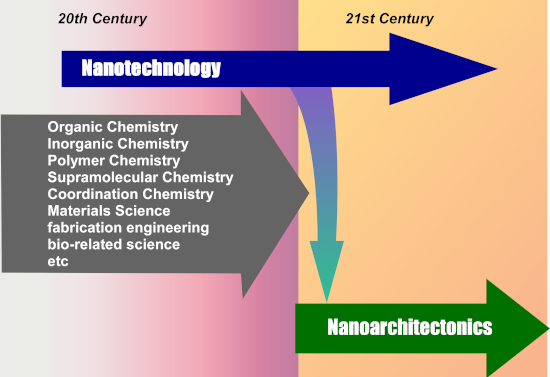
Molecular nanoarchitectonics: unification of nanotechnology and molecular/materials science
Beilstein J. Nanotechnol. 2023, 14, 434–453, doi:10.3762/bjnano.14.35
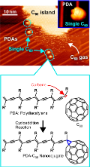
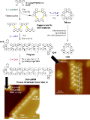
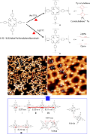
- multistep electrochemical epitaxial polymerization technique [113]. This technique consists of combining two electrochemical polymerization processes using different monomer solutions. First, a voltage pulse was applied to an iodine-covered Au(111) substrate in an electrolyte solution containing the first
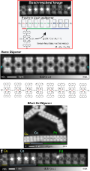
- reversibly terminated by C60 fullerene molecules (Figure 4). First, the Au probe was positioned at the target Br atom site. Then, when the bias voltage was swept, an abrupt change in the tunneling current was detected. As a result, the bromine atoms disappeared from the molecule and the C–Br bonds in the
- scanned region were easily broken. Next, when a C60 molecule was picked up from the surface with an Au tip and brought close to the radical at a low bias voltage, a large protrusion became clearly visible at the radical site. This indicated that the C60 molecule had been added to the radical site. In







Plasmonic nanotechnology for photothermal applications – an evaluation
Beilstein J. Nanotechnol. 2023, 14, 380–419, doi:10.3762/bjnano.14.33
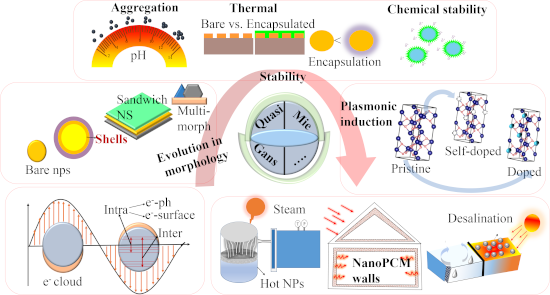
- materials [7][8], such as Au nanoparticles (AuNPs), in photodynamic therapy [9][10][11]. Metal nanoparticles in general have been extensively explored in PPT applications due to their high free electron density and the possibility of intricate tuning of light absorption [12]. Noble metal nanoparticles with
- . When the energy of the photons is greater than the bandgap, interband transitions are observed. As an example of the energies at which interband transitions [28] occur, Cu, Au, Ag exhibit them at 2.25, 2.4, and 4 eV, respectively, and threshold energy levels of interband transitions are 1.6–1.8 eV for
- Cu, Au, and Al, as well as 3.5 eV for Ag [29]. Concerning PT applications, radiative transitions such as luminescence and scattering imply inefficiency, as this scattered energy is not converted to heat. Hot electron generation and subsequent thermalization are consequences of SPR absorption that can




Overview of mechanism and consequences of endothelial leakiness caused by metal and polymeric nanoparticles
Beilstein J. Nanotechnol. 2023, 14, 329–338, doi:10.3762/bjnano.14.28
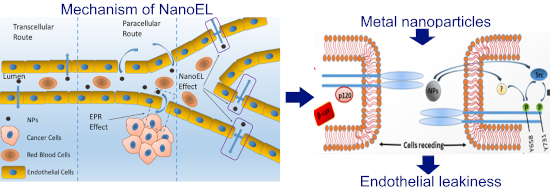
- whose therapeutic success depends on the effective drug delivery to the target sites through highly selective vascular barriers. A relatively new method that overcomes the endothelial barrier is the use of nanoparticles (NPs), especially different metal nanoparticles, for example, Au or Ti nanoparticles
- transcellular transport. They supported their observations using PEGylated Au NPs of various sizes (15, 50, and 100 nm) in various tumor models. In addition, they characterized the morphology of blood vessels and demonstrated that the vessels with NP-transporting cells were longer and had a greater volume and
- mechanism based on the transcellular pathway as the dominant mechanism of NP transport through the endothelium. They supported their observations by quantitatively measuring the uptake of 15, 50, and 100 nm PEGylated Au NPs in various mouse tumor models using ICP-MS. Similarly, in a Zombie mouse model, they


Bismuth-based nanostructured photocatalysts for the remediation of antibiotics and organic dyes
Beilstein J. Nanotechnol. 2023, 14, 291–321, doi:10.3762/bjnano.14.26
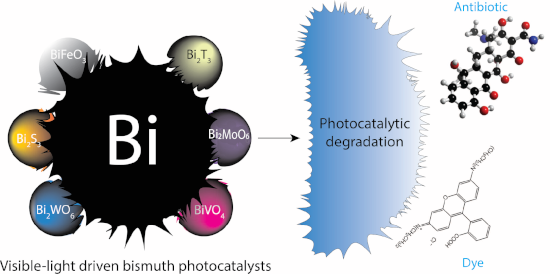
- charges and, hence, increase photocatalytic activity, metallic bismuth can function as a direct plasmonic photocatalyst (similar to Au and Ag) or a co-catalyst [77]. Also, the unique layered crystal structure of Aurivillius-type bismuth oxide-based semiconductors allows for the induction of an internal
- turn improves the photocatalytic activity of the nanocomposites. Additionally, to maximise the effectiveness of the transfer/separation of photogenerated carriers, noble metals (such as Pt, Ag, and Au) are typically used to induce surface plasmon resonance effects in photocatalysts [146]. However


Formation of nanoflowers: Au and Ni silicide cores surrounded by SiOx branches
Beilstein J. Nanotechnol. 2023, 14, 133–140, doi:10.3762/bjnano.14.14
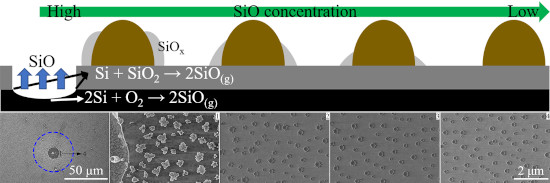
- This work reports the formation of nanoflowers after annealing of Au/Ni bilayers deposited on SiO2/Si substrates. The cores of the nanoflowers consist of segregated Ni silicide and Au parts and are surrounded by SiOx branches. The SiO2 decomposition is activated at 1050 °C in a reducing atmosphere, and
- it can be enhanced more by Au compared to Ni. SiO gas from the decomposition of SiO2 and the active oxidation of Si is the source of Si for the growth of the SiOx branches of the nanoflowers. The concentration of SiO gas around the decomposition cavities is inhomogeneously distributed. Closer to the
- cavity border, the concentration of the Si sources is higher, and SiOx branches grow faster. Hence, nanoflowers present shorter and shorter branches as they are getting away from the border. However, such inhomogeneous SiO gas concentration is weakened in the sample with the highest Au concentration due


Combining physical vapor deposition structuration with dealloying for the creation of a highly efficient SERS platform
Beilstein J. Nanotechnol. 2023, 14, 83–94, doi:10.3762/bjnano.14.10
- efficiency compared to that of Au, Ag nanoparticles (NPs) are prone to oxidation. Moreover, they are less thermodynamically stable leading to morphology variation and ultimately to deterioration of their SERS efficiency [13][14]. Besides that, most studies report on the high SERS properties for NPs in




Gap-directed chemical lift-off lithographic nanoarchitectonics for arbitrary sub-micrometer patterning
Beilstein J. Nanotechnol. 2023, 14, 34–44, doi:10.3762/bjnano.14.4
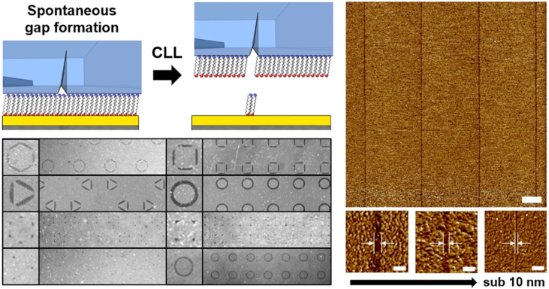
- alkanethiol self-assembled monolayer (SAM) on Au to generate surface patterns that are orders of magnitude smaller than structures on the original elastomer stamp. The smallest achieved feature dimension is 5 nm using a micrometer-scale structured stamp in a chemical lift-off lithography (CLL) process
- biorecognition arrays or be transferred to the underneath Au layer for metallic structure creation. By combining CLL process with this gap phenomenon, soft material properties that are previously thought as demerits can be used to achieve sub-10 nm features in a straightforward sketch. Keywords: chemical lift
- through reusable economic hardware and straightforward processes [5]. For instance, microcontact printing, which transfers ink molecules (e.g., alkanethiols) onto a surface (e.g., Au) using a soft material stamp (e.g., polydimethylsiloxane), is a strong contender in this field as the technique is easy to


Utilizing the surface potential of a solid electrolyte region as the potential reference in Kelvin probe force microscopy
Beilstein J. Nanotechnol. 2022, 13, 1558–1563, doi:10.3762/bjnano.13.129
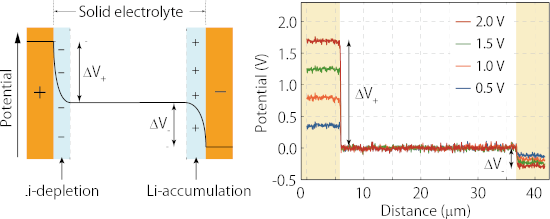
- has not yet been directly confirmed. This study explored the possibility of obtaining a stable reference for KPFM measurements performed on electrochemical devices without a reference electrode. To this end, we prepared an electrochemical cell consisting of two Au electrodes and one Li reference
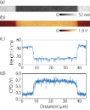
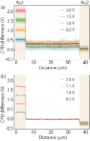
- electrode placed on a solid electrolyte (Li-ion conductor) substrate. The surface-potential distribution in the region across the solid electrolyte was measured with a DC voltage applied between the Au electrodes. During the KPFM measurements, the potential of each Au electrodes relative to the Li electrode
- was monitored using a voltmeter. Our analysis showed that the changes in the surface potential at each Au electrode, measured relative to the surface potential in the solid electrolyte region, agreed well with the changes in the Au electrode potential monitored by the voltmeter. This finding




Photoelectrochemical water oxidation over TiO2 nanotubes modified with MoS2 and g-C3N4
Beilstein J. Nanotechnol. 2022, 13, 1541–1550, doi:10.3762/bjnano.13.127
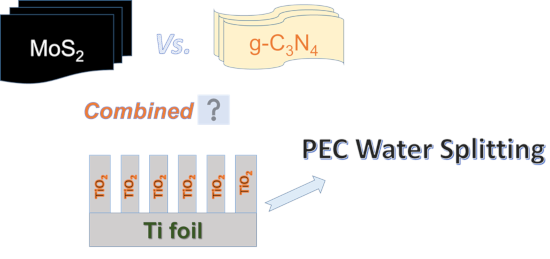
- , the electrode material must be extremely durable and nearly chemically inert to be able to withstand highly acidic or basic environments. Therefore, noble metals such as Pt, Pd, Au and Ag with suitable chemical properties, such as inertness, good resistance against corrosion and good electrical


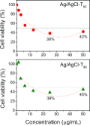
In search of cytotoxic selectivity on cancer cells with biogenically synthesized Ag/AgCl nanoparticles
Beilstein J. Nanotechnol. 2022, 13, 1505–1519, doi:10.3762/bjnano.13.124
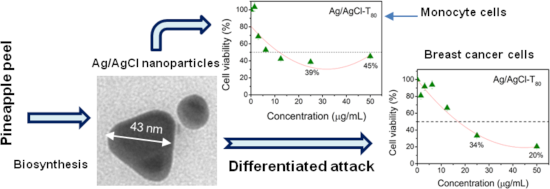
- ° in 2θ. Quantitative chemical analysis was performed on a JEOL JSM-7401F field-emission scanning electron microscope (FE-SEM) using EDX. An acceleration voltage of 15 kV and a working distance of 8 mm were used. The samples were precoated with Au/Pd for 10 seconds. Ultraviolet–visible spectroscopy was





Rapid and sensitive detection of box turtles using an electrochemical DNA biosensor based on a gold/graphene nanocomposite
Beilstein J. Nanotechnol. 2022, 13, 1458–1472, doi:10.3762/bjnano.13.120
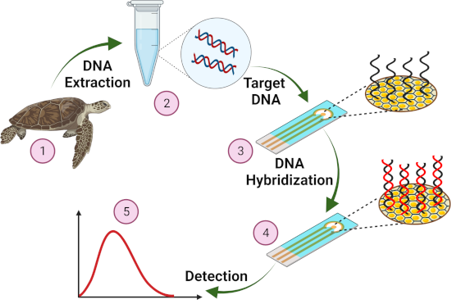
- surface-to-volume ratio [37][38][43][44][45][46]. Biomolecules such as DNA may readily modify AuNPs by adding thiol and amine groups via Au–S or Au–N links without losing their activity [38][47]. In electrocatalytic applications, the combination of carbon-based materials with metal nanoparticles has been



Facile preparation of Au- and BODIPY-grafted lipid nanoparticles for synergized photothermal therapy
Beilstein J. Nanotechnol. 2022, 13, 1432–1444, doi:10.3762/bjnano.13.118
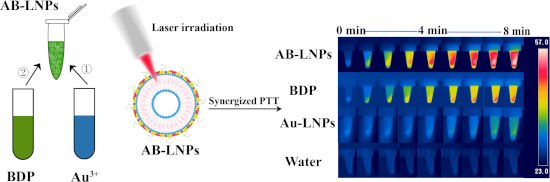
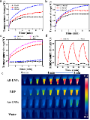
- nanoparticles limit their therapeutic applications. Previously, gold nanoclusters carrying lipid nanoparticles (Au-LNPs) have been reported after simply mixing Au3+ with preformed diethylenetriaminepentaacetic acid lipid nanoparticles to solve this contradiction. Au-LNPs demonstrated enhanced photothermal
- effects in comparison to neat gold nanoparticles. To further improve the photothermal activity, we introduced the organic photothermal agent boron dipyrromethene (BODIPY) to Au-LNPs for synergistic PTT. Au- and BODIPY-grafted LNPs (AB-LNPs) were formed by simply mixing Au-LNPs with BODIPY. The BODIPY
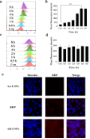
- could be associated stably to Au-LNPs, and the release of BODIPY from AB-LNPs could be accelerated by laser irradiation. AB-LNPs are scalable and showed excellent photothermal effects. AB-LNPs showed enhanced cellular uptake efficiency compared to free BODIPY in 4T1 breast cancer cells. Under laser




Supramolecular assembly of pentamidine and polymeric cyclodextrin bimetallic core–shell nanoarchitectures
Beilstein J. Nanotechnol. 2022, 13, 1361–1369, doi:10.3762/bjnano.13.112
- public health threat of antimicrobial resistance [11]. Au/Ag BMNPs with different structural motifs and biological properties have been produced via eco-friendly synthesis using natural extracts or natural compounds which act as both reducing and capping agents [2]. When these green methods are used to
- obtain metallic NPs, particle growth, colloidal stability, as well as the biological profile of the resulting products are generally attributed to the phenolic and/or the carbohydrate components of the capping natural source [12]. Particularly interesting are Au/Ag bimetallic systems with a core–shell
- structure. In this case, the inner Au component favors cellular entry (typically via endocytosis) and slow release of the Ag+ ions, to which the overall biological activity of the system is ascribed. It all comes down to greater system biocompatibility [2]. Au/Ag BMNPs with a core–shell architecture can be





