Search results
Search for "activity" in Full Text gives 813 result(s) in Beilstein Journal of Nanotechnology. Showing first 200.
Nanocarriers and macrophage interaction: from a potential hurdle to an alternative therapeutic strategy
Beilstein J. Nanotechnol. 2025, 16, 97–118, doi:10.3762/bjnano.16.10
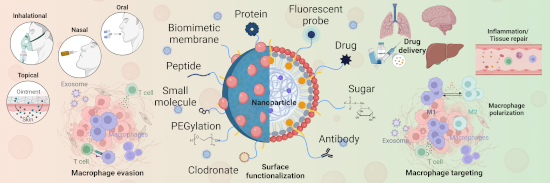
- characteristics [13][14]. This dynamic and complex spectrum of macrophage activity features nuanced challenges and opportunities in leveraging macrophage responses to enhance the therapeutic potential of NCs. Recent research has highlighted the dual role of macrophages in the context of nanomedicine. While their
- tissue damage and chronic inflammation. This prolonged M1 activity is a hallmark of diseases like rheumatoid arthritis (RA) and inflammatory bowel disease (IBD). The activation of M1 macrophages is primarily mediated by the nuclear factor-κB (NF-κB), which is triggered by microbial ligands binding to
- immunity and enhancing cancer immunotherapy outcomes. Additionally, natural compounds such as berberine and quercetin can modulate macrophage polarization by inhibiting M1 pathways or promoting M2 activity, highlighting the therapeutic potential of targeting macrophage states in inflammatory and


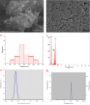
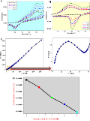
Characterization of ZnO nanoparticles synthesized using probiotic Lactiplantibacillus plantarum GP258
Beilstein J. Nanotechnol. 2025, 16, 78–89, doi:10.3762/bjnano.16.8
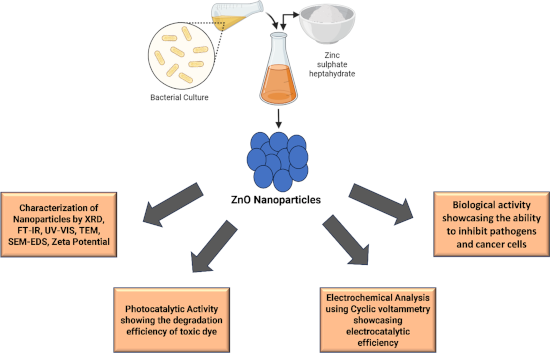
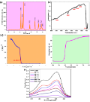
- potential of −60 mV. Furthermore, the synthesized nanoparticles displayed significant antibacterial activity against selected human pathogens, with the biggest inhibition zone observed against Staphylococcus aureus (22 ± 0.57 mm) and the smallest inhibition zone observed against Salmonella enterica serovar
- . When ingested in sufficient quantities, they provide health advantages as they colonize the gut, and their metabolites generally show antimicrobial and health promotion activity to the host [6][7][8]. The thick peptidoglycan layers with crosslinks and the complex cell wall structures of Gram-positive
- semiconductors. Also, ZnO NPs exhibit antimicrobial activity, targeted drug delivery, catalytic activity, and antidiabetic, larvicidal, acaricidal and anticancer activity in addition to their usage in different medical devices and pharmaceuticals [11][12][13]. We report the ecologically safe production of ZnO



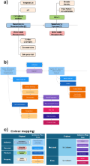
Instance maps as an organising concept for complex experimental workflows as demonstrated for (nano)material safety research
Beilstein J. Nanotechnol. 2025, 16, 57–77, doi:10.3762/bjnano.16.7



A nanocarrier containing carboxylic and histamine groups with dual action: acetylcholine hydrolysis and antidote atropine delivery
Beilstein J. Nanotechnol. 2025, 16, 11–24, doi:10.3762/bjnano.16.2

- of acetylcholine lead to serious disturbances in the functioning of the nervous system, including death. The need for rapid administration of an antidote to restore esterase activity is critical, but practical implementation of this is often difficult. One promising solution may be the development of
- CA-RA were 0.57 mM and 0.48 mM for WI38 and Chang liver, respectively. For these cell lines, p(Hist-CA) had an IC50 higher than 1.4 mg/mL (Table 2). The agglutination activity results are shown in Figure 3. Control plate wells with erythrocytes in saline exhibited a dense layer at the bottom
- was approved by the ethical committee of the FRC Kazan Scientific Center of RAS according to Russian national ethical guidelines (protocol No. 9–2013). No organs/tissues were procured from prisoners. Hemolysis of human red blood cells The hemolytic activity of Hist-RA, CA-RA, and p(Hist-CA) were


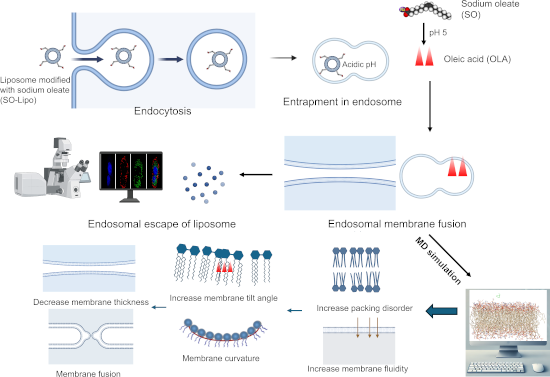
Mechanistic insights into endosomal escape by sodium oleate-modified liposomes
Beilstein J. Nanotechnol. 2024, 15, 1667–1685, doi:10.3762/bjnano.15.131
- cell viability assay To evaluate the cytotoxicity of the liposomal formulations, we employe the resazurin-based cell viability assay, a method widely employed and deemed reliable for assessing cell metabolic activity, which serves as an indicator of cell viability. The process involves the




Biomimetic nanocarriers: integrating natural functions for advanced therapeutic applications
Beilstein J. Nanotechnol. 2024, 15, 1619–1626, doi:10.3762/bjnano.15.127

- application of organic and inorganic compounds with activity against various diseases [10][11][12]. Faced with a physiological stimulus, the carrier decouples from the transported product and releases it at a specific interaction site (Figure 1-1). However, some challenges are encountered by these compounds
- (Figure 1-2C), which mask the nanocarriers and enhance biological activity (Figure 1-2D) [20]. This mimetic surface helps the device to mask epitopes potentially recognized by the immune system, thereby enhancing their biocompatibility. Additionally, the selectivity for targets and the circulation time of
- activity of polylactic glycolic acid (PLGA) nanoparticles coated with membranes, Zhang et al. (2021) tested nanoparticles loaded with gambogic acid and coated with red-blood-cell-derived membranes in colorectal cancer cells. They demonstrated a reduction in phagocytosis, increasing the circulation time of


Natural nanofibers embedded in the seed mucilage envelope: composite hydrogels with specific adhesive and frictional properties
Beilstein J. Nanotechnol. 2024, 15, 1603–1618, doi:10.3762/bjnano.15.126
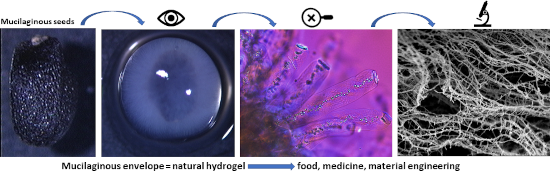
- friction better fulfil their biological role than mucilaginous seeds with just low friction, which was demonstrated in our experiment with pigeons (see below). Friction after chemical and thermal treatments The antimicrobial activity of seed mucilage was previously described for Linum usitatissimum [105
- as food, agriculture, and medicine [20][114][115]. Diverse other substances and systems with antimicrobial activity (antibiotics, essential oils, phenolics, and metal nanoparticles) can be incorporated into the mucilage hydrogels, which after some additional modifications can be used for the


Liver-targeting iron oxide nanoparticles and their complexes with plant extracts for biocompatibility
Beilstein J. Nanotechnol. 2024, 15, 1593–1602, doi:10.3762/bjnano.15.125
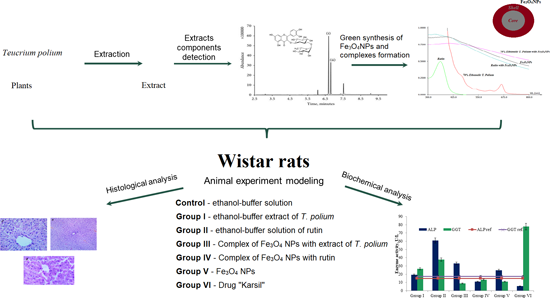
- , unlike their complexes. All agents exert a hypolipidemic effect by lowering LDL, despite maintaining the synthetic functions of the liver. Fe3O4 NPs increase the activity of GPO, which is associated with their peroxidase-like properties. A multifaceted and diverse mechanism of action of all studied
- evaluation of hepatotoxicity based on alanine aminotransferase (ALT) activity values revealed no direct hepatotoxicity from the agents tested in groups I (3.54 ± 0.7 U/L), II (7.07 ± 0.7 U/L), V (3.54 ± 0.7 U/L), and VI (3.54 ± 0.7 U/L) compared to the control (for details on the compounds administered to
- each group, see Experimental section, “Animal experiment model”). However, co-administration of T. polium extract and Fe3O4 NPs (group III), as well as of rutin and Fe3O4 NPs (group IV), resulted in increased ALT activity relative to normal values (up to 10.6 ± 0.7 U/L) by 2.1 and 3.3 times


Facile synthesis of size-tunable L-carnosine-capped silver nanoparticles and their role in metal ion sensing and catalytic degradation of p-nitrophenol
Beilstein J. Nanotechnol. 2024, 15, 1576–1592, doi:10.3762/bjnano.15.124
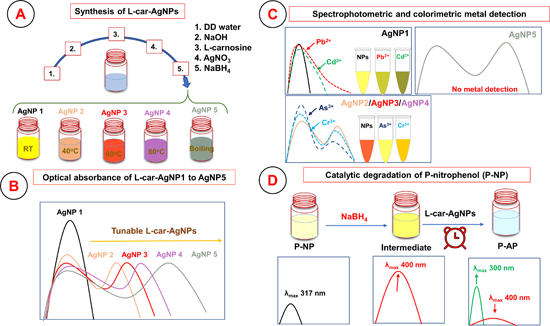
- (2.8 μM) for As3+, and 245.49 ppb (4.7 μM) for Cr3+. Additionally, these nanoparticles demonstrated catalytic activity regarding the degradation of p-nitrophenol (P-NP), achieving complete degradation of 0.25 and 1 mM solutions within 5 and 10 min, respectively. This study reveals the potential of ʟ
- conductivity, and potent catalytic activity, make them ideal candidates for environmental monitoring and remediation [3]. Modifying silver nanoparticles with various biological molecules, peptides, proteins, and enzymes has further enhanced their functionality, stability, and selectivity towards specific
- through surface chemistry and other parameters such as size and shape [13]. Kästner and Thünemann described the catalytic degradation of P-NP using silver nanoparticles with the activity depending on the capping agents [14]. To design a dual-functional system for environmental applications, a potential




Green synthesis of silver nanoparticles derived from algae and their larvicidal properties to control Aedes aegypti
Beilstein J. Nanotechnol. 2024, 15, 1566–1575, doi:10.3762/bjnano.15.123
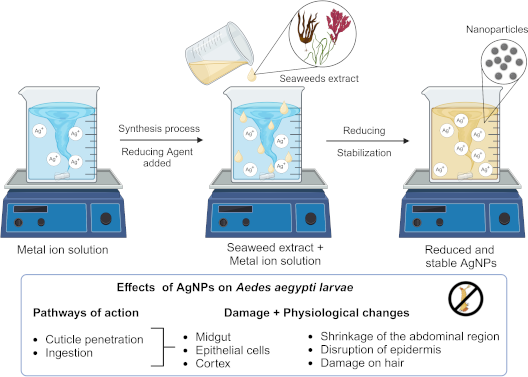
- as phenols, ascorbic acid, flavonoids, polyphenolics, alkaloids, and terpenes, which could act as reducing agents [21]. This review focuses on AgNPs produced in a green and sustainable way through the use of natural products as reducing agents, namely seaweed extracts. The activity of AgNPs upon A
- . These compounds act by reducing Ag+ ions to Ag0 and stabilize nanoparticles by capping [58] (Figure 2). Larvicidal activity of AgNPs against Aedes aegypti Aedes aegypti, also known as the dengue mosquito, is a vector of important arboviruses, including Dengue, Zika, Chikungunya and Yellow Fever [6][59
- lead to oxidation and degradation of enzymes and organelles in the intracellular space of cells, affecting cellular physiological processes, leading to large-scale apoptosis and, consequently, larval death. Vinoth, et al. [51] evaluated the larvicidal activity of AgNPs from S. polycystum seaweed


Ultrablack color in velvet ant cuticle
Beilstein J. Nanotechnol. 2024, 15, 1554–1565, doi:10.3762/bjnano.15.122

- occurs in forested habitats adjoining open landscapes. Demonstrating remarkable mobility, it covers significant distances in pursuit of hosts on the ground. While sightings may occur throughout the day, peak activity typically coincides with the early morning and late afternoon, during periods of subdued
- defenses against predators. Given their characteristics and life habits, such as diurnal activity, striking colors, and inability to fly, it is expected that they would be frequent targets for predators. However, there is limited observational and experimental evidence documenting interactions between



The round-robin approach applied to nanoinformatics: consensus prediction of nanomaterials zeta potential
Beilstein J. Nanotechnol. 2024, 15, 1536–1553, doi:10.3762/bjnano.15.121
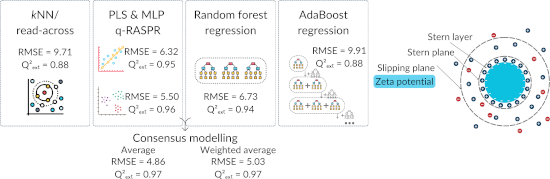
- a broad range of computational and data-driven methodologies for the exposure, hazard, and risk assessment of NMs, such as quantitative structure–activity relationship models adapted to the specificities of NMs (nanoQSAR) and grouping/read-across models, specifically developed to accurately predict
- [48]. Both the QSPR and read-across approaches are extensively used for data gap filling (predicting activity/property/toxicity values of compounds devoid of experimentally derived endpoint values). Recently, Luechtefeld et al. [49] introduced the concept of classification-based read-across structure
- –activity relationship (RASAR) by combining the concepts of read-across and QSAR using ML algorithms. Banerjee and Roy [50] merged chemical read-across and regression-based QSAR into quantitative RASAR (q-RASAR). Several ML models can be applied including partial least squares (PLS), linear support vector


Electrochemical nanostructured CuBTC/FeBTC MOF composite sensor for enrofloxacin detection
Beilstein J. Nanotechnol. 2024, 15, 1522–1535, doi:10.3762/bjnano.15.120
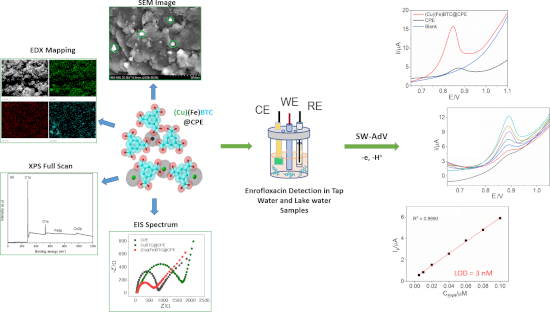
- extensively used in livestock and aquaculture as an antibacterial agent, showing high activity against both Gram-negative and Gram-positive bacteria [1][2]. ENR, like other fluoroquinolones, is used to treat susceptible bacteria responsible for infections of the skin and soft tissue. The overuse of ENR causes
- peak position shifted to more negative values compared to the CPE. This phenomenon highlights the significantly enhanced catalytic activity of the modified electrode. Additionally, the (Cu)(Fe)BTC@CPE electrode exhibited a significantly sharper, more symmetric, and higher peak than both the CuBTC@CPE
- and FeBTC@CPE electrodes. These observations support the conclusion regarding the synergistic effects of the catalytic activity of CuBTC and the good conductivity of FeBTC, which together contribute to the enhanced performance of the electrode. Effect of MOF content on the enrofloxacin signal The





Integrating high-performance computing, machine learning, data management workflows, and infrastructures for multiscale simulations and nanomaterials technologies
Beilstein J. Nanotechnol. 2024, 15, 1498–1521, doi:10.3762/bjnano.15.119


Polymer lipid hybrid nanoparticles for phytochemical delivery: challenges, progress, and future prospects
Beilstein J. Nanotechnol. 2024, 15, 1473–1497, doi:10.3762/bjnano.15.118
- physiological conditions, such as varying pH levels, temperature, and enzymatic activity. Degradation reduces the effective concentration of the phytochemical, diminishing its therapeutic potential [28][29]. Rapid metabolism and clearance further complicate phytochemical delivery. Phytochemicals are often
- PLHNPs can also involve the incorporation of stimuli-responsive moieties onto the nanoparticle surface. These moieties enable the nanoparticles to respond to specific stimuli, such as pH changes, temperature shifts, or enzyme activity, thereby triggering controlled drug release at the target site [70][71
- short half-life. Additionally, CUR is photosensitive and has limited chemical stability during manufacturing and storage [80][81]. To overcome these limitations, Kumar et al. developed CUR-encapsulated PLHNPs and evaluated their anticancer activity against MCF-7 cells [82]. The developed CUR-PLHNPs


Nanotechnological approaches for efficient N2B delivery: from small-molecule drugs to biopharmaceuticals
Beilstein J. Nanotechnol. 2024, 15, 1400–1414, doi:10.3762/bjnano.15.113
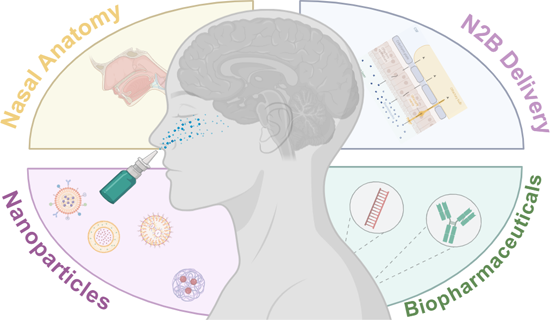
- administration also suffers from enzymatic degradation including peptidase and protease activity, making it challenging to deliver peptides and proteins [29][30]. Yet, the intranasal route still yields lower enzymatic degradation and higher bioavailability in the brain [31]. While the challenges of the
- activity in the whole brain after the administration. Moreover, compared to the mRNA administration without liposomal formulation, the encapsulated mRNA showed higher mRNA expression than the control group, indicating successful delivery of mRNA through intranasal delivery [96]. While the results are


Hymenoptera and biomimetic surfaces: insights and innovations
Beilstein J. Nanotechnol. 2024, 15, 1333–1352, doi:10.3762/bjnano.15.107
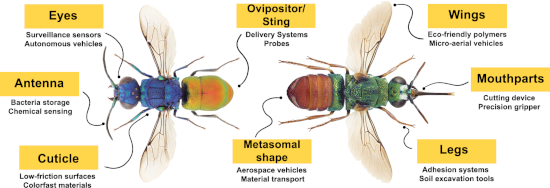
- ]. Although the functional basis of this morphology is not fully understood, these bristle-based wings may enable microwasps to sustain prolonged flight without the energetic costs typically associated with muscle activity [112][113][114]. Similar results are observed in the tiny beetle Paratuposa placentis
- more below the surface [145]. This activity is possible through the use of legs and mouthparts with morphologies highly adapted to this task, including, for example, robust spurs (legs) and large mandibles [146][147][148]. Hence, these structures and their movements while digging may be used as bionic




Nanoarchitectonics with cetrimonium bromide on metal nanoparticles for linker-free detection of toxic metal ions and catalytic degradation of 4-nitrophenol
Beilstein J. Nanotechnol. 2024, 15, 1312–1332, doi:10.3762/bjnano.15.106
- such as Hg2+ are poisonous environmental pollutants that cause damage at the DNA level by inhibiting DNA replication and DNA polymerase activity, ultimately affecting normal cell synthesis [13]. The less toxic Fe3+ is an essential nutrient for human health in a lower dose, while increasing the dose
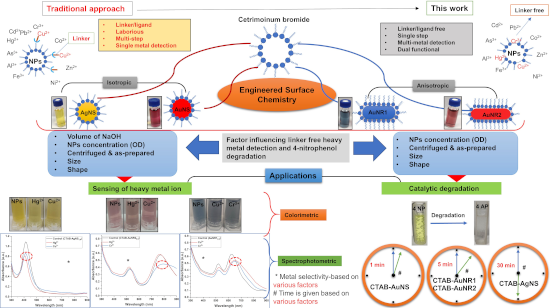
- of 5 μL NaOH already yielded pH 12. Consequently, we chose the volume of NaOH as a parameter instead of the pH value. Catalytic degradation of 4-nitrophenol The catalytic activity of CTAB-AgNS, CTAB-AuNS, CTAB-AuNR1, and CTAB-AuNR2 was determined by reducing 4-nitrophenol (4-NP) to 4-aminophenol (4
- ). Nanoparticles dispersed in DD water were chosen as control (represented as NPs in Figure 1c). Additionally, CTAB-capped gold and silver nanoparticles have been reported for their enhanced catalytic activity. The simplest and fastest method for degradation or catalytic conversion of 4-nitrophenol is using a




Mn-doped ZnO nanopowders prepared by sol–gel and microwave-assisted sol–gel methods and their photocatalytic properties
Beilstein J. Nanotechnol. 2024, 15, 1283–1296, doi:10.3762/bjnano.15.104
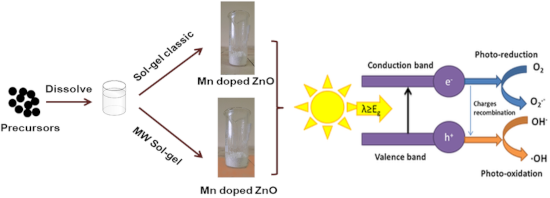
- catalyst is generally associated with low photocatalytic activity. Accordingly, various modifiers of semiconductor nanomaterials are used to enhance separation of the photogenerated charges, causing a corresponding decrease of PL emission. The correlation between photoluminescence and photocatalytic
- activity of the modified nanomaterials can be modulated by the dopant concentration. Figure 9 shows for both investigated samples a main emission peak at 420 nm and a smaller one at 480 nm. According to the literature data, both maxima correspond to the excitonic PL related to surface oxygen vacancies and
- indicate a small difference of catalyst activity in the reaction medium (exposure to solar irradiation and presence of oxalic acid/degradative products), indicating structural differences that are worthy to be deeply investigated in a future dedicated study. Generation of reactive oxygen species ROS are


Functional morphology of cleaning devices in the damselfly Ischnura elegans (Odonata, Coenagrionidae)
Beilstein J. Nanotechnol. 2024, 15, 1260–1272, doi:10.3762/bjnano.15.102

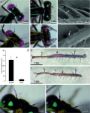
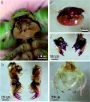
- efficiency of the grooming activity have been largely investigated in old and recent papers [26][27]. The antenna cleaner is usually formed from a modified fore tibia, tibial spurs, and/or fore basitarsus, but its morphology varies greatly among groups [20]. In Hemiptera, antennal grooming involves scraping


Dual-functionalized architecture enables stable and tumor cell-specific SiO2NPs in complex biological fluids
Beilstein J. Nanotechnol. 2024, 15, 1238–1252, doi:10.3762/bjnano.15.100
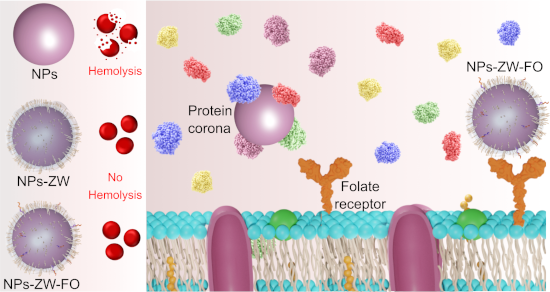
- -depth studies in complex environments to evaluate nanoparticle stability, protein corona formation, hemolytic activity, and targeting capabilities. To address this issue, fluorescent silica nanoparticles (SiO2NPs) are here functionalized with zwitterionic (kinetic stabilizer) and folate groups
- a lack of more in-depth studies in complex media to assess the stability of NPs, along with the possible protein corona formation, eventual hemolytic activity, and targeting ability. Parameters such as the length of stabilizing and directing groups and their absolute concentrations and proportions
- dilution rate of 1:500 for 12 h at 4 °C. The membranes were rewashed with TBS-T buffer and incubated with a secondary antibody (Goat anti-Mouse IgG (H + L) HRP, ThermoFisher) at a ratio of 1:20000 for 2 h (room temperature). After a new series of washes with TBS-T, the peroxidase activity was revealed with


Enhanced catalytic reduction through in situ synthesized gold nanoparticles embedded in glucosamine/alginate nanocomposites
Beilstein J. Nanotechnol. 2024, 15, 1227–1237, doi:10.3762/bjnano.15.99
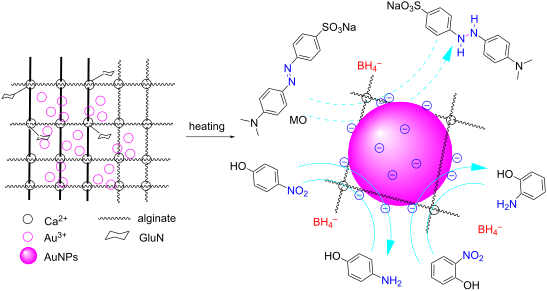
- °C at a rate of 10 °C·min−1 in an airflow of 20 mL·min−1 for TGA analysis. Catalytic activity in the reduction of organic dyes To evaluate the catalytic effectiveness of the synthesized AuNPs@GluN/Alg, we examined their ability to reduce the organic dyes 2-nitrophenol (2-NiP), 4-NiP, and MO using an
- for synthesizing AuNPs@GluN/Alg were determined to be a Au3+ ions-to-gel ratio of 7% and heating at 70 °C for 100 min. These optimal samples were further characterized and evaluated regarding their catalytic activity. Characterization of AuNPs@GluN/Alg Zeta potential analysis was employed to assess
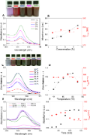
- @GluN/Alg catalyst. UV–vis spectra during the reduction of 2-NiP (A, B), 4-NiP (E, F), and MO (I, J) without and with nanocatalyst and plots of kinetic data and recyclability regarding 2-NiP (C, D), 4-NiP (G, H), and MO (K, L). Comparison of the catalytic activity of alginate-based nanocomposites in the



Realizing active targeting in cancer nanomedicine with ultrasmall nanoparticles
Beilstein J. Nanotechnol. 2024, 15, 1208–1226, doi:10.3762/bjnano.15.98
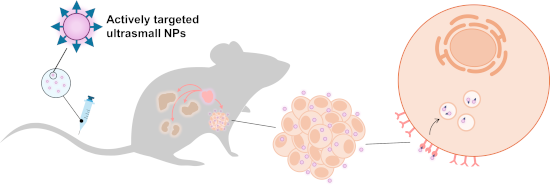
- , usNPs are therefore more biocompatible than larger NPs. However, it is important to emphasize that the physicochemical and biological properties of usNPs are highly sensitive to NP size and surface chemistry [64][67][68], and usNPs can still impact protein activity, biochemical pathways, and cellular
- significant uptake observed in the RES or other major organs. Although variations in ligand number did not affect the magnitude of accumulated radioiodine activity in tumors, tumor-to-blood ratios reached a peak value of ≈10 for the C’ dots with 18 ligands. To further validate tumor-specific targeting, the 18


AI-assisted models to predict chemotherapy drugs modified with C60 fullerene derivatives
Beilstein J. Nanotechnol. 2024, 15, 1170–1188, doi:10.3762/bjnano.15.95
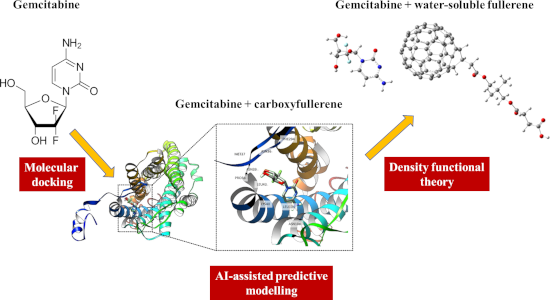
- for Sustainable Manufacturing, Monterrey 64849, Mexico Instituto de Investigaciones en Materiales, Universidad Nacional Autónoma de México, Circuito exterior s/n, Ciudad Universitaria, Coyoacán, 04510, Ciudad de México, Mexico 10.3762/bjnano.15.95 Abstract Employing quantitative structure–activity
- is also possible to modify pristine fullerenes by adding polar functional groups (e.g., –COOH, –OH, or –NH2), to improve water solubility, antioxidant properties, and even biological activity [25]. For instance, polyhydroxy fullerenes (PHFs) exhibit properties suitable for biomedical applications
- high biological activity in plants [28] and within mitochondrial dynamics [29]. Since the evaluation of novel drugs is a task that requires significant human and material resources, innovative strategies have been formulated as alternatives. Quantitative structure–activity and quantitative structure


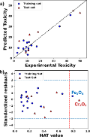
Introducing third-generation periodic table descriptors for nano-qRASTR modeling of zebrafish toxicity of metal oxide nanoparticles
Beilstein J. Nanotechnol. 2024, 15, 1142–1152, doi:10.3762/bjnano.15.93
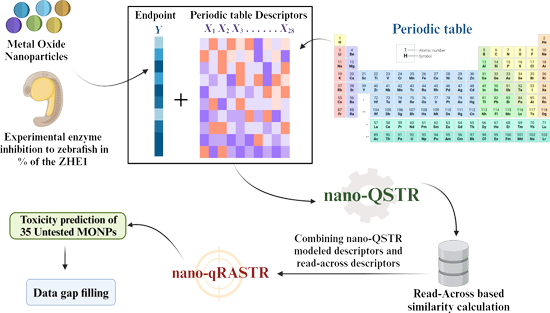
- principles of nano-quantitative structure–toxicity relationship (nano-QSTR) models. These models integrate read-across techniques with traditional quantitative structure–activity relationship (QSAR) methods to enhance the predictive capabilities, particularly in datasets with limited data points [19]. Using
- inhibition of the zebrafish hatching enzyme ZHE1 with the nano-qRASTR approach to improve the model quality, predictability, and reliability significantly. Materials and Methods Dataset The percentage decrease in enzymatic activity expressed in the form of enzyme inhibition to zebrafish in % (%EIzebrafish
- , namely, SD_Activity, SE, CVact, MaxPos, MaxNeg, Abs Diff, Avg. Sim, SD_Similarity, CVsim, gm (Banerjee-Roy coefficient), gmAvg. Sim, gmSD_Similarity, Pos.Avg.Sim, and Neg.Avg.Sim. These descriptors are essential for identifying structural similarities and predicting biological activity. The tool’s