Search results
Search for "catalysis" in Full Text gives 326 result(s) in Beilstein Journal of Nanotechnology. Showing first 200.
Effect of Ag loading position on the photocatalytic performance of TiO2 nanocolumn arrays
Beilstein J. Nanotechnol. 2020, 11, 717–728, doi:10.3762/bjnano.11.59
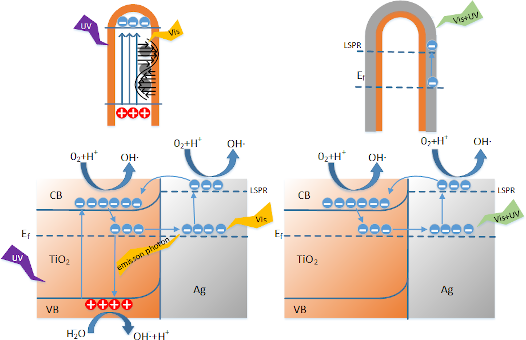
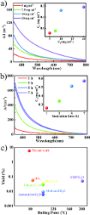
- photolithography and the template method by Sung et al. [30]. In this case, Ag particles were loaded on the outside of the nanocolumns by magnetron sputtering, and the catalysis was carried out at a sputtering time of 30 min. Besides, Jani et al. [31] studied the preparation of TiO2 nanotube arrays by anodization
- , and Ag particles were loaded on the inside and the outside of the nanotubes by chemical deposition. The catalysis of this composite was carried out at a concentration of 1100 mM in AgNO3 solution. It was found that the loading position of precious metal particles in the TiO2 structure could not be


Exfoliation in a low boiling point solvent and electrochemical applications of MoO3
Beilstein J. Nanotechnol. 2020, 11, 662–670, doi:10.3762/bjnano.11.52
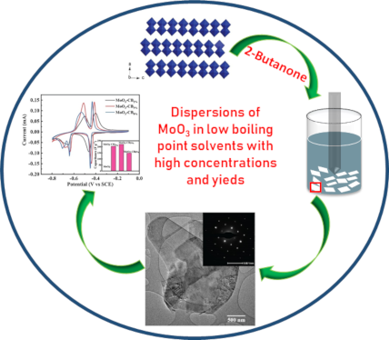
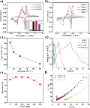
- in areas such as energy storage devices, electronic devices and catalysis. To efficiently utilize the properties of MoO3 arising from its two-dimensional nature exfoliation is necessary. In this work, the exfoliation of MoO3 is carried out in 2-butanone for the first time. The achieved concentration
- layered materials, molybdenum oxide (MoO3) has gained special attention because of its numerous applications in electronics, catalysis, electrochemistry, solar cells and gas sensors [6]. Monolayered and few-layered MoO3 has been reported to have better properties than the bulk material [7]. Thus, it is

Silver-decorated gel-shell nanobeads: physicochemical characterization and evaluation of antibacterial properties
Beilstein J. Nanotechnol. 2020, 11, 620–630, doi:10.3762/bjnano.11.49
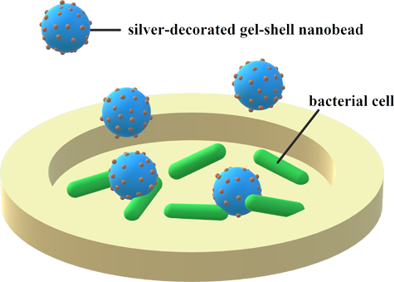
- [3][4], catalysis [5][6][7] and drug delivery [8][9]. The main advantages of such particles are large surface area and low density. The particles can be further modified to provide new properties to these materials. One modification is the incorporation of metal nanoparticles into the polymer beads


Adsorptive removal of bulky dye molecules from water with mesoporous polyaniline-derived carbon
Beilstein J. Nanotechnol. 2020, 11, 597–605, doi:10.3762/bjnano.11.47
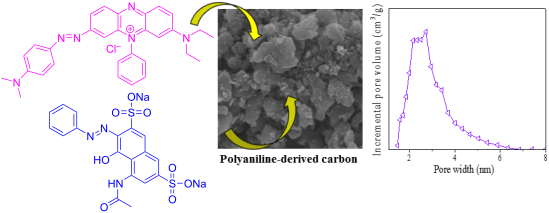
- membrane separation [2][6][7]. However, these techniques are not very satisfactory for applications on a large scale. For example, dyes are very resistant against degradation by catalysis, with a common example given by the stable characteristics of dyes under even sunlight. Recently, adsorption has been


Luminescent gold nanoclusters for bioimaging applications
Beilstein J. Nanotechnol. 2020, 11, 533–546, doi:10.3762/bjnano.11.42
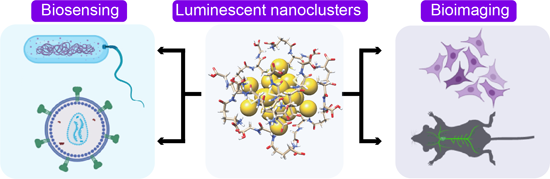
- emerged as attractive candidates for sensing, catalysis and bioimaging applications in recent years. For practical use in bioimaging, nanomaterials with high photoluminescence, quantum yield, photostability and large Stokes shifts are needed. While offering high photoluminescence and quantum yield


Multilayer capsules made of weak polyelectrolytes: a review on the preparation, functionalization and applications in drug delivery
Beilstein J. Nanotechnol. 2020, 11, 508–532, doi:10.3762/bjnano.11.41



Nanoarchitectonics: bottom-up creation of functional materials and systems
Beilstein J. Nanotechnol. 2020, 11, 450–452, doi:10.3762/bjnano.11.36

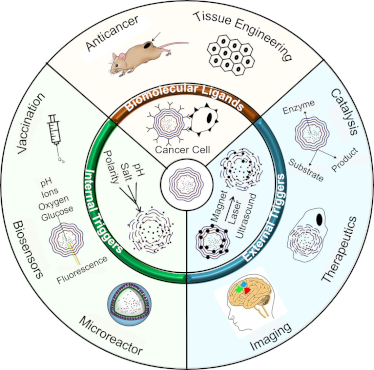
- [14][15], sensing [16][17], catalysis [18], energy [19], environmental [20], devices [21][22], and bio-related [23][24] applications. Accordingly, the goal of the thematic issue “Nanoarchitectonics: bottom-up creation of functional materials and systems” was to collect leading research examples that

DFT calculations of the structure and stability of copper clusters on MoS2
Beilstein J. Nanotechnol. 2020, 11, 391–406, doi:10.3762/bjnano.11.30
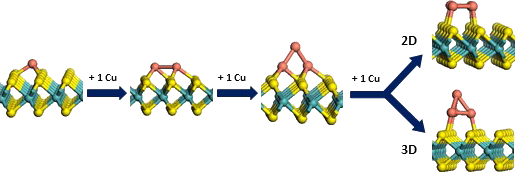
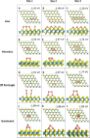
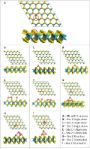
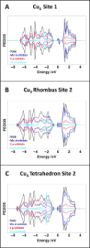
- applications. These materials are also interesting as supports for low-dimensional metals for catalysis, while recent work has shown increased interest in using 2D materials in the electronics industry as a Cu diffusion barrier in semiconductor device interconnects. The interaction between different metal
- variety of research areas [1]. These include catalysis [2][3], photonics [4][5], batteries [6], sensors [7][8] and semiconductors and electronics [9][10][11]. More recently, 2D materials have been explored as copper diffusion barriers in CMOS interconnect structures [12][13][14][15]. Furthermore, to
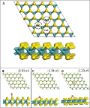
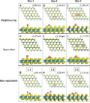
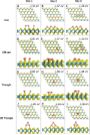
- of adsorbed copper can be seen for all configurations. Conclusion The adsorption of metal species on semiconducting supports such as 2D monolayers of MoS2 is a subject of significant interest in a range of applications, particularly in catalysis and, more recently, in semiconductor nanodevices where

Using gold nanoparticles to detect single-nucleotide polymorphisms: toward liquid biopsy
Beilstein J. Nanotechnol. 2020, 11, 263–284, doi:10.3762/bjnano.11.20
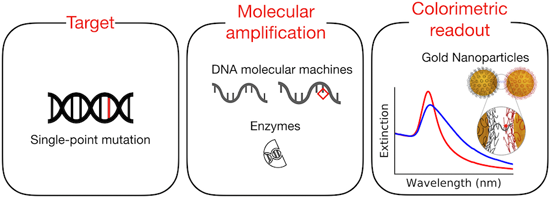
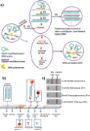
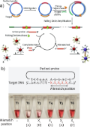
- formation of DNA circuits and include hybridization chain reaction (HCR), catalytic hairpin assembly (CHA) and entropy-driven catalysis [64]. These mechanisms have shown a great potential for developing biosensors of high sensitivity and high selectivity since the target DNA itself is used as a catalyst to




Fabrication of Ag-modified hollow titania spheres via controlled silver diffusion in Ag–TiO2 core–shell nanostructures
Beilstein J. Nanotechnol. 2020, 11, 141–146, doi:10.3762/bjnano.11.12
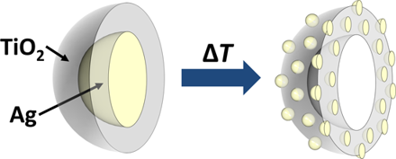
- growing number of applications in many fields, including catalysis and solar cells. Hence, a simple fabrication method with a low number of simple steps is desired, which would allow for good control over the structural features and physicochemical properties of titania hollow spheres modified with noble



The effect of heat treatment on the morphology and mobility of Au nanoparticles
Beilstein J. Nanotechnol. 2020, 11, 61–67, doi:10.3762/bjnano.11.6
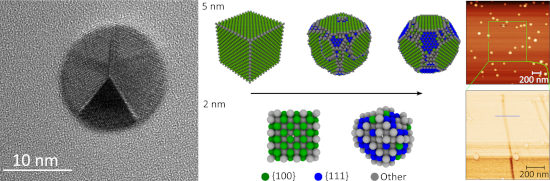
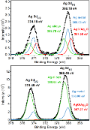
- materials used in studies related to nanostructures. The small size and the enhanced properties of Au nanoparticles (NPs) compared to bulk gold make them important for the development of novel applications, for example, in the field of drug delivery [1], sensor technology [2], printing [3] and catalysis [4


Synthesis of amorphous and graphitized porous nitrogen-doped carbon spheres as oxygen reduction reaction catalysts
Beilstein J. Nanotechnol. 2020, 11, 1–15, doi:10.3762/bjnano.11.1
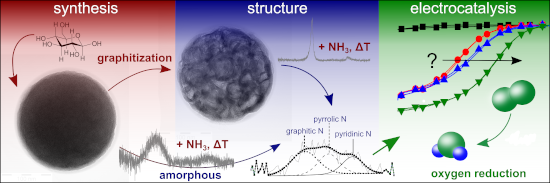
- Maximilian Wassner Markus Eckardt Andreas Reyer Thomas Diemant Michael S. Elsaesser R. Jurgen Behm Nicola Husing Chemistry and Physics of Materials, Salzburg University, A-5020 Salzburg, Austria Institute of Surface Chemistry and Catalysis, Ulm University, D-89069 Ulm, Germany 10.3762/bjnano.11.1





Fully amino acid-based hydrogel as potential scaffold for cell culturing and drug delivery
Beilstein J. Nanotechnol. 2019, 10, 2579–2593, doi:10.3762/bjnano.10.249
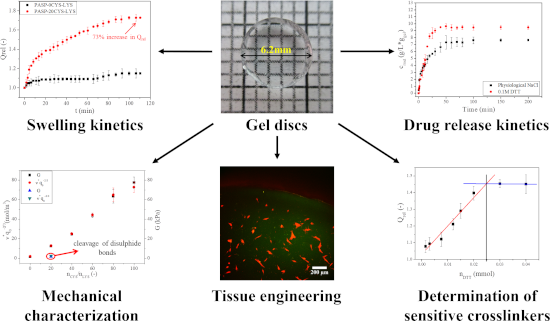
- of LYS can be improved by phosphoric acid catalysis as was shown by Gyenes and co-workers [22]. However, this method cannot be used in our case because phosphoric acid precipitates CYS immediately. Upon hydrolysis, the ν* values increase only very slightly, while the G values decrease (Figure 5a and


Advanced hybrid nanomaterials
Beilstein J. Nanotechnol. 2019, 10, 2563–2567, doi:10.3762/bjnano.10.247
- devices, catalysis and environment, smart coatings, energy, and electronics [10][11][12][13][14][15][16][17]. By essence, the hybrid approach consists of building new materials and devices by assembling elementary functional organic/inorganic, molecular or extended bricks to obtain materials with greatly
- immobilized, has been studied in “Removal of toxic heavy metals from river water samples using a porous silica surface modified with a new β-ketoenolic host” [38]. The metal adsorption speciation is relevant for some divalent cations in aqueous medium, and the hybrid system is recyclable. Finally, catalysis
Air oxidation of sulfur mustard gas simulants using a pyrene-based metal–organic framework photocatalyst
Beilstein J. Nanotechnol. 2019, 10, 2422–2427, doi:10.3762/bjnano.10.232
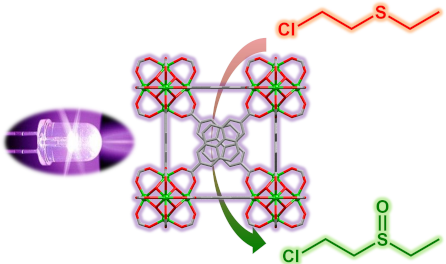
- catalysis due to their structural and chemical tunability [26][27][28][29][30][31][32][33][34][35][36]. In that context, zirconium-based MOFs have demonstrated particularly high stability under a range of conditions, enabling their application for efficient, rapid hydrolytic or oxidative degradation of
- topology NU-400 and HDTRA1-18-1-0003 for catalysis study). T. F. acknowledges financial support of the National Science and Engineering Research Council (NSERC) Discovery Grant (RGPIN-2017-06467), NSERC E.W.R. Steacie Memorial Fellowship (SMFSU 507347-17) and McGill University Graduate Student Mobility




Microfluidics as tool to prepare size-tunable PLGA nanoparticles with high curcumin encapsulation for efficient mucus penetration
Beilstein J. Nanotechnol. 2019, 10, 2280–2293, doi:10.3762/bjnano.10.220
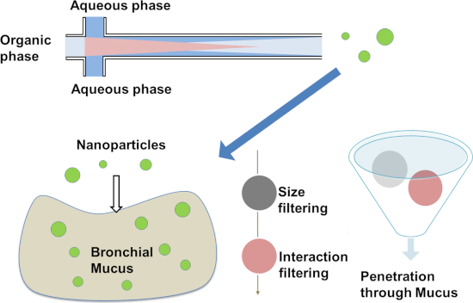
- fluorescence dye (2) is activated with DCC in water-free DCM and reacts with the terminal alcohol group of PLGA (1) under DMAP catalysis to the functionalized polymer (3). Properties and miscibility of organic solvents with water according to the Hildebrand solubility parameter. Overview of the concentration


Review of advanced sensor devices employing nanoarchitectonics concepts
Beilstein J. Nanotechnol. 2019, 10, 2014–2030, doi:10.3762/bjnano.10.198
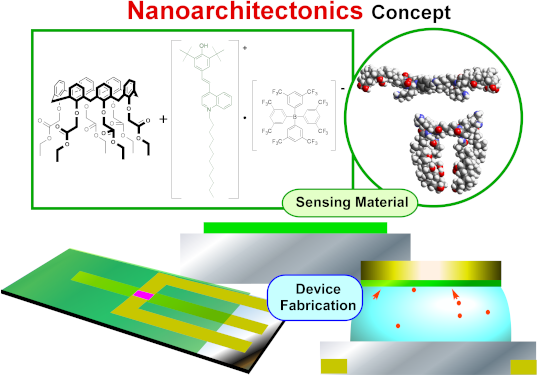
- , depending on their necessity [56][57]. The high generality of the nanoarchitectonics concept can be applied to a wide range of research concepts, such as materials production [58][59][60], structure facilitation [61][62][63][64][65], catalysis [66][67], energy technology [68][69], environmental problems [70





Gold-coated plant virus as computed tomography imaging contrast agent
Beilstein J. Nanotechnol. 2019, 10, 1983–1993, doi:10.3762/bjnano.10.195
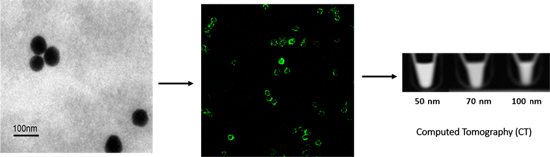
- contrast agents achieve their effect by increasing the relaxation rates (longitudinal relaxation rate (R1), transverse relaxation rate (R2), and pseudo-transverse relaxation rate (R2*)) of water protons in tissues through the catalysis of alignment of nuclear spins [1], thus manipulating the MR image




Porous silver-coated pNIPAM-co-AAc hydrogel nanocapsules
Beilstein J. Nanotechnol. 2019, 10, 1973–1982, doi:10.3762/bjnano.10.194
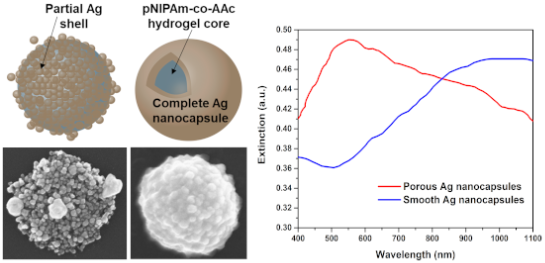
- Interest in the preparation and utilization of uniquely structured nanocomposites continues to expand due to their potential use in electronics, optics, magnetism, medicine, catalysis, and energy applications [1][2][3][4][5][6]. The physical and chemical properties of these materials provide significant
- delivery, biosensing, chemical separation, nanoscale reactors, and catalysis [31][32][33][34][35][36][37][38][39][40]. While these examples represent a vast array of potential applications using nanocapsules, one particularly interesting application involves the use of NIR-responsive metal nanoparticles to
- , chemical separation, and catalysis [52][53][54][55][56]. These materials owe their technological importance to thermally induced structural changes [55]; for example, aqueous hydrogel solutions undergo volume transitions dependent upon their chemical or physical environments. This activity can be defined


Pulsed laser synthesis of highly active Ag–Rh and Ag–Pt antenna–reactor-type plasmonic catalysts
Beilstein J. Nanotechnol. 2019, 10, 1958–1963, doi:10.3762/bjnano.10.192
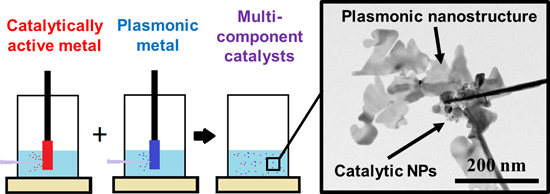
- –reactor; catalysis; heterostructures; laser ablation; multicomponent; nanoparticles; 4-nitrophenol; plasmonic; Pt; Rh; Introduction Metal nanoparticles can interact with visible light through an excitation of the localized surface plasmon resonance (LSPR). The LSPR is a resonant, collective oscillation


The influence of porosity on nanoparticle formation in hierarchical aluminophosphates
Beilstein J. Nanotechnol. 2019, 10, 1952–1957, doi:10.3762/bjnano.10.191
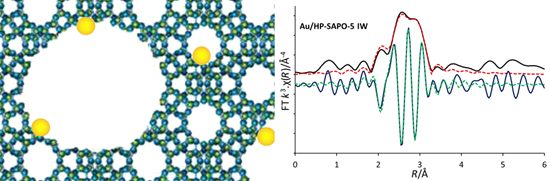
- Matthew E. Potter Lauren N. Riley Alice E. Oakley Panashe M. Mhembere June Callison Robert Raja Department of Chemistry, University of Southampton, Highfield Campus, Highfield, Southampton, SO17 1BJ, UK UK Catalysis Hub, Research Complex at Harwell, Rutherford Appleton Labs, Harwell Campus, OX11
- : aluminophosphate; catalysis; hierarchical catalysts; nanoparticles; porosity; Findings The controlled synthetic design of metallic nanoparticles has generated significant interest in recent decades due to their implementation in a range of fields, including medicine [1], optics [2] and catalysis [3]. Given the
- wide range of controllable properties, such as size, shape and charge, nanoparticle design is non-trivial, as specific procedures are constantly being developed to promote targeted features and behaviours [4]. Commonly, in catalysis nanoparticles are immobilised onto a solid support, preventing
Charge-transfer interactions between fullerenes and a mesoporous tetrathiafulvalene-based metal–organic framework
Beilstein J. Nanotechnol. 2019, 10, 1883–1893, doi:10.3762/bjnano.10.183
- catalysis [3][4][5]. In addition, electroactive MOFs combining porosity and electrical conductivity [6][7][8] have also attracted much attention during the last years in view of their potential application, for example as chemiresistive sensors [9], field-effect transistors [10] or supercapacitors [11




Processing nanoporous organic polymers in liquid amines
Beilstein J. Nanotechnol. 2019, 10, 1844–1850, doi:10.3762/bjnano.10.179
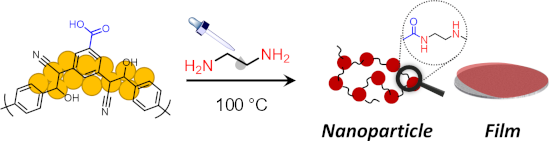
- high porosity, which is beneficial for applications such as gas sorption, gas separation, heterogeneous (photo)catalysis, sensing, and (opto)electronics. However, the network structures are practically insoluble. Thus, the processing of nanoporous polymers into nanoparticles or films remains
- such as gas adsorption and storage [2], water purification [3], energy storage [4], and catalysis [5], where the large and permanent voids in nanoporous polymers provide room to accommodate target substrates and guest molecules. A series of nanoporous polymers have been reported, namely covalent
- focused on the in-depth characterization of porosity and chemical functionalities of the processed polymers. Nanosized porous polymers would yield a better surface area, and size control would be of interest for applications in which size matters such as heterogeneous catalysis [30]. The films and



Synthesis of nickel/gallium nanoalloys using a dual-source approach in 1-alkyl-3-methylimidazole ionic liquids
Beilstein J. Nanotechnol. 2019, 10, 1754–1767, doi:10.3762/bjnano.10.171
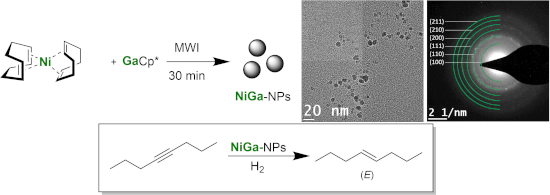
- conversion values. IL-free, precipitated NiGa nanoparticles achieve conversion values of over 90% and selectivity of 100% towards alkene over three runs. Keywords: ionic liquids; microwave decomposition; nickel/gallium nanoparticles; semihydrogenation catalysis; soft wet-chemical synthesis; Introduction
- (CN)3] no nanoparticle formation was observed. Catalysis Previously reported NiGa nanoparticles synthesized in [BMIm][BF4] with a size distribution of 14 ± 5 nm were used successfully in the semihydrogenation reaction of the terminal alkyne 1-octyne and the internal alkyne diphenylacetylene, with
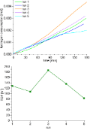
- ]. For comparison, the catalysis with NiGa@[BMIm][NTf2] was carried out under analogous reaction conditions in the semihydrogenation reaction of the internal alkyne 4-octyne (see below Scheme in Table 2). A linear increase of hydrogen consumption is seen in Figure 10. After three hours no plateau value




Layered double hydroxide/sepiolite hybrid nanoarchitectures for the controlled release of herbicides
Beilstein J. Nanotechnol. 2019, 10, 1679–1690, doi:10.3762/bjnano.10.163
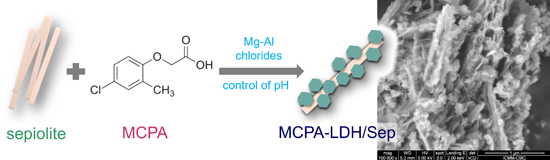
- palygorskite has increased, yielding nanoplatforms useful in a large number of applications from catalysis, environmental remediation, energy production and storage to biomedicine [14][18]. The co-assembly of particles can be reached through several methods, from the direct assembly of the clay to diverse
- removal of pollutants from water, for instance dyes [31] and, As(III) and As(V) species [34]. Moreover, they could be used as precursors for supported metal-oxide nanoparticles that could be of interest in catalysis [31]. MgAl-LDH/sepiolite nanoarchitectures have been also satisfactorily tested as