Search results
Search for "contamination" in Full Text gives 325 result(s) in Beilstein Journal of Nanotechnology. Showing first 200.
Reconstruction of a 2D layer of KBr on Ir(111) and electromechanical alteration by graphene
Beilstein J. Nanotechnol. 2021, 12, 432–439, doi:10.3762/bjnano.12.35
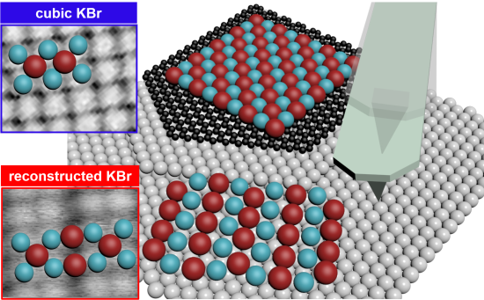
- contamination and averaging effects in KPFM [51]. Conclusion In conclusion, a novel corrugated reconstruction of KBr was observed on Ir(111) by nc-AFM and confirmed by DFT simulations. It is attributed to the lattice symmetry of KBr with respect to the iridium substrate in one direction and a self-adjustment in


Spontaneous shape transition of MnxGe1−x islands to long nanowires
Beilstein J. Nanotechnol. 2021, 12, 366–374, doi:10.3762/bjnano.12.30
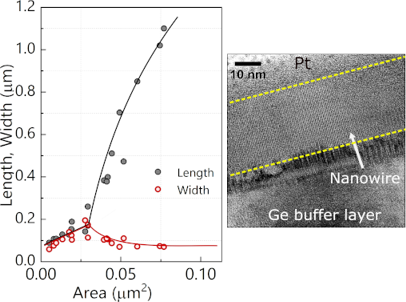
- using these techniques, NWs are grown away from the substrate, usually in a tilted direction, and size distribution and geometry strongly depend on the growth dynamics [32][33]. Furthermore, it is known that the catalyst introduces uncontrolled and unwanted contamination inside the crystal lattice of


Structural and optical characteristics determined by the sputtering deposition conditions of oxide thin films
Beilstein J. Nanotechnol. 2021, 12, 354–365, doi:10.3762/bjnano.12.29
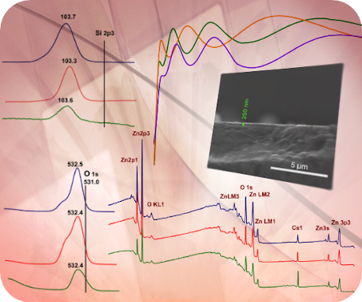
- XPS measurements of the analyzed samples were performed with photons that cause no major disturbances on the bombarded surface. To keep the contamination layer from the surface of the films, they were not sputtered using the ion gun. This is because sometimes the sputtering affects the stoichiometry
- good stoichiometry for this film. The general spectra of ZnO samples are shown in Figure 4, where peaks corresponding to C 1s, O 1s, and Zn 2p were identified for all investigated samples. The presence of photoelectron signals, ZnO electrons, and carbon contamination at the binding energy value of
- . This is a possible explanation for the decrease in carbon peaks as the thickness of the oxide films increases. It must be said that no metallic elements are identified; however, they are in oxide bonds just like in oxide compounds. This carbon contamination obviously decreases as the film thickness


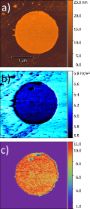
Exploring the fabrication and transfer mechanism of metallic nanostructures on carbon nanomembranes via focused electron beam induced processing
Beilstein J. Nanotechnol. 2021, 12, 319–329, doi:10.3762/bjnano.12.26
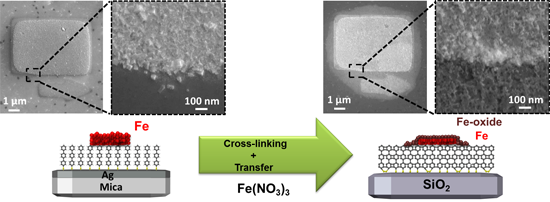
- immersing the sample in a 1 M Fe(NO3)3 solution (ACROS Organics). The PMMA/CNM is then transferred into pure water in order to remove iron contamination. In the next step the PMMA/CNM is transferred onto a bulk SiO2 substrate. After drying the sample overnight, the PMMA layer is dissolved by soaking the


The patterning toolbox FIB-o-mat: Exploiting the full potential of focused helium ions for nanofabrication
Beilstein J. Nanotechnol. 2021, 12, 304–318, doi:10.3762/bjnano.12.25
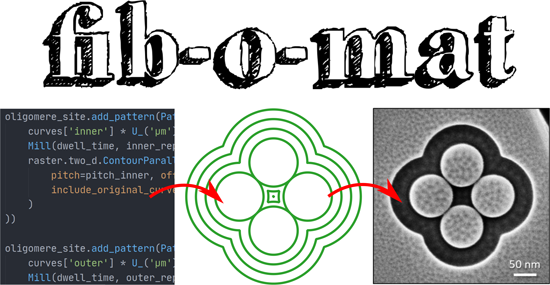
- , residues from wet-chemical processing. The locally introduced energy can mobilize these contaminants such that they diffuse towards the beam center where they are polymerized [24]. In the worst case, this results in material build-up instead of sputtering. Already minor surface contamination can lead to


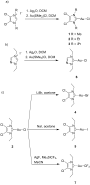
Gold(I) N-heterocyclic carbene precursors for focused electron beam-induced deposition
Beilstein J. Nanotechnol. 2021, 12, 257–269, doi:10.3762/bjnano.12.21
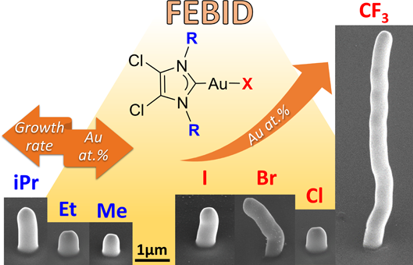
- yielded only traces of gold (2–3 atom % [19]). Within the series of gold acetonate complexes, the highest gold content has been achieved with Au(tfac)Me2 when water was co-injected as an oxidizing agent during the deposition (91 atom % gold) [26]. To circumvent carbon contamination, a series of inorganic
- experiments. The silicon substrates were cleaned by ultrasonication in acetone for 15 min, followed by ultrasonication in isopropanol for 15 min and blow drying with N2, and were kept in a dust free environment. For each precursor a different substrate was used to avoid cross contamination. The substrate was
- substrate, leaving a central circular area free for deposition. The precursor material was contained in a recessed hole in the bottom of the plate, connected by a small channel to the deposition area. For each precursor to be tested a new plate was taken to avoid cross contamination. Precursors were tested






A review on the biological effects of nanomaterials on silkworm (Bombyx mori)
Beilstein J. Nanotechnol. 2021, 12, 190–202, doi:10.3762/bjnano.12.15
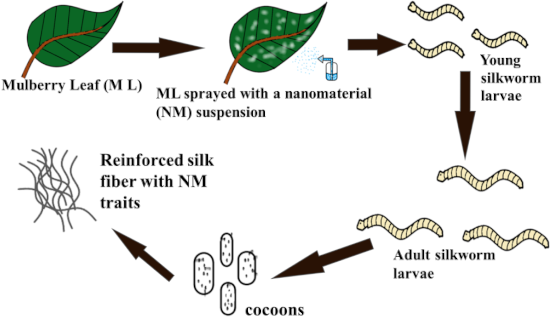
- contributions, the addition of nanomaterials to packaging materials and films in the food industry is reported to have curbed issues regarding food spoilage and contamination [16], pests, and disease management due to the usage of a nanomaterial-based formulation in agriculture [17]. The inclusion of
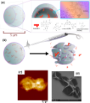
- contact with nanomaterial waste; (D) damage in the membrane and in the lumen of silkworm silk glands; (E) dead zebrafish embryos; (F) NM; (G) contamination of water bodies; (H) silkworm feeding on mulberry leaves containing chemical residues. An illustration of how nanomaterials are directly fed to the


Paper-based triboelectric nanogenerators and their applications: a review
Beilstein J. Nanotechnol. 2021, 12, 151–171, doi:10.3762/bjnano.12.12
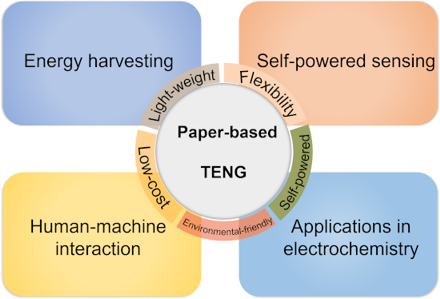
- smaller value, which indicated that the TENG-powered cathodic protection system has obvious anticorrosion properties. Marine fouling, caused by metal contamination and accumulation of biological organisms, is a major challenge for the oceanic ecosystem. With the growing threat to the environment caused by






Mapping the local dielectric constant of a biological nanostructured system
Beilstein J. Nanotechnol. 2021, 12, 139–150, doi:10.3762/bjnano.12.11
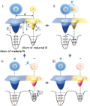
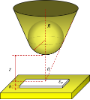
- EFM measurements of the sample and the substrate with the same height reference. EFM measurements with both substrate and sample in the same image solve this issue. The conical angle is θ = 0.261 rad, as informed by the tip producer. To avoid the side effects of natural wear and contamination





Fusion of purple membranes triggered by immobilization on carbon nanomembranes
Beilstein J. Nanotechnol. 2021, 12, 93–101, doi:10.3762/bjnano.12.8
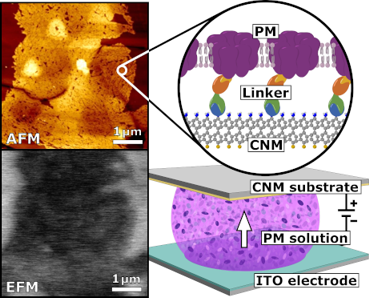
- to 399.2 eV, by the broadening of the oxygen and carbon peak, and by additional sulfur species belonging to thiol groups no longer bound to gold after cross-linking. The presence of oxygen in the CNM spectrum is due to atmospheric contamination and can theoretically be avoided by preparation in high


Electron beam-induced deposition of platinum from Pt(CO)2Cl2 and Pt(CO)2Br2
Beilstein J. Nanotechnol. 2020, 11, 1789–1800, doi:10.3762/bjnano.11.161
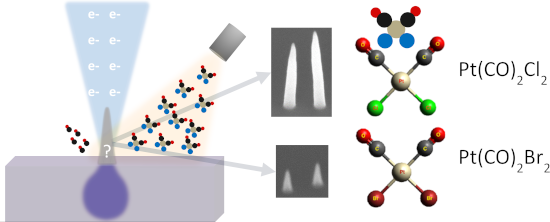
- current during EDX was 5 nA and the sample was mounted at a working distance of 7.5 mm and tilted by 35° to maximise the EDX signal. The system was plasma cleaned before the EDX measurements were taken to minimize carbon contamination. UHV deposition The UHV deposition experiments were performed by
- , which did not contain any carbon and instead consisted of 35 atom % Pt and 65 atom % Cl, as determined from EDX [21]. Deposits from Pt(CO)2Br2 performed under UHV were similarly composed primarily of platinum and bromine (36 atom % Pt and 55 atom % Br), with minimal carbon and oxygen contamination. For
- play a crucial role here. The two potential sources of carbon in the SEM deposits are the precursor molecules themselves or hydrocarbon contamination in the SEM chamber. The latter is clearly absent in the UHV system. To endeavour to reduce the contribution of carbon contamination from the SEM chamber


Direct observation of the Si(110)-(16×2) surface reconstruction by atomic force microscopy
Beilstein J. Nanotechnol. 2020, 11, 1750–1756, doi:10.3762/bjnano.11.157
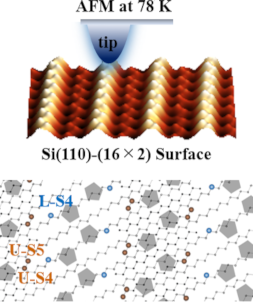
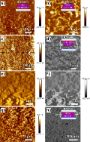
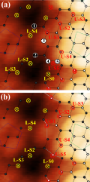
- cantilever was used, which was cleaned by Ar+ sputtering to remove the oxide and contamination on the tip. The deflection of the cantilever was measured by the optical beam deflection method. The topography of the surface was imaged while feedback electronics were used to adjust the tip–sample distance to



Application of contact-resonance AFM methods to polymer samples
Beilstein J. Nanotechnol. 2020, 11, 1714–1727, doi:10.3762/bjnano.11.154
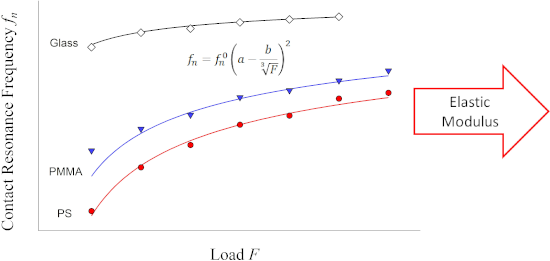
- cavities. Even without supposing changes in the mechanical properties of the samples, the changes in the sample geometry and, hence, in the contact area affect their measurement. Since CR frequencies are particularly sensitive to tip contamination, a further problem is that debris or wear particles, but


Antimicrobial metal-based nanoparticles: a review on their synthesis, types and antimicrobial action
Beilstein J. Nanotechnol. 2020, 11, 1450–1469, doi:10.3762/bjnano.11.129

- of nosocomial infections occurring during hospitalization and food poisoning derived from foodborne pathogens. Antimicrobial agents are necessary in various fields in which biological contamination occurs. For example, in food packaging they are used to control food contamination by microbes, in the
- medical field the microbial agents are important for reducing the risk of contamination in invasive and routine interventions, and in the textile industry, they can limit the growth of microorganisms due to sweat. The combination of nanotechnology with materials that have an intrinsic antimicrobial
- . Keywords: antimicrobial mechanism; antimicrobial nanoparticles; metallic nanoparticles; nanoparticle synthesis; nosocomial infections; Review Introduction In the last decades, the search for new antimicrobial substances against microbial contamination has been the focus of many research fields, in public


Wafer-level integration of self-aligned high aspect ratio silicon 3D structures using the MACE method with Au, Pd, Pt, Cu, and Ir
Beilstein J. Nanotechnol. 2020, 11, 1439–1449, doi:10.3762/bjnano.11.128
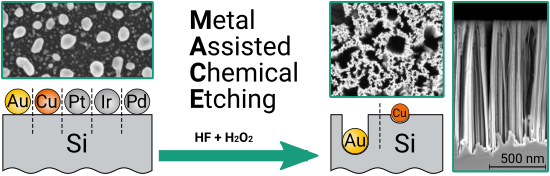
- structures, while etching with platinum-group metals (Pt, Pd, or Ir) yields predominantly nanoporous sponge-like structures. We demonstrated the MACE process with the noble metals Au, Pt, Pd, Cu, and, as a novelty, with Ir. Depending on the contamination budget of the integrated system one can select an


Atomic defect classification of the H–Si(100) surface through multi-mode scanning probe microscopy
Beilstein J. Nanotechnol. 2020, 11, 1346–1360, doi:10.3762/bjnano.11.119
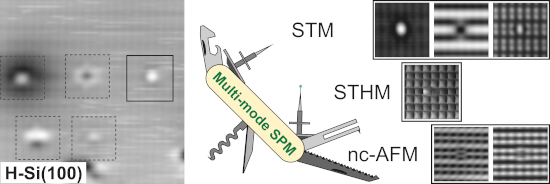
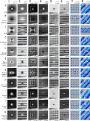
- ” (Figure 2h-6). A defect of similar appearance was reported in a prior work exploring chlorine-terminated silicon [80] which was linked to water contamination in the vacuum chamber (observed as H and OH bonded to the unterminated surface [15][16][17]). A mild annealing followed by halogen-termination



An atomic force microscope integrated with a helium ion microscope for correlative nanoscale characterization
Beilstein J. Nanotechnol. 2020, 11, 1272–1279, doi:10.3762/bjnano.11.111
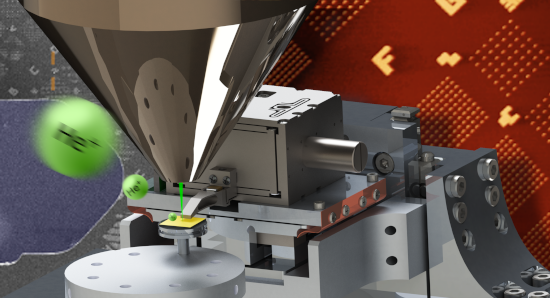
- performed without contamination of the sample and environmental changes between processing steps. The practicality of the resulting tool lies in the complementarity of the two techniques. The AFM offers not only true 3D topography maps, something the HIM can only provide in an indirect way, but also allows


Ultrasensitive detection of cadmium ions using a microcantilever-based piezoresistive sensor for groundwater
Beilstein J. Nanotechnol. 2020, 11, 1242–1253, doi:10.3762/bjnano.11.108
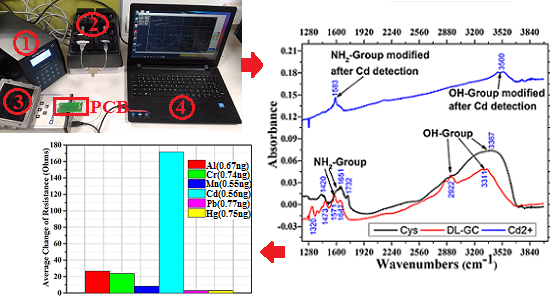
- to this may have a significant effect on maintaining the safety and security of human beings [2][3]. One common water contamination is caused by cadmium ions. There are numerous sources of Cd ions in groundwater, including industrial wastewater, mining industry, fossil fuels, iron and steel industry
- degeneration, diarrhea, osteoporosis, renal dysfunction, cancer, anemia, and neurological disorders such as Parkinson's disease or Alzheimer's disease [4][5]. The WHO has set a water contamination limit of 3 μg/L Cd(II) [6]. We conclude from the WHO limit that cadmium is hazardous, and smaller Cd




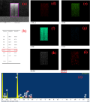
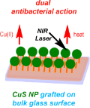
Photothermally active nanoparticles as a promising tool for eliminating bacteria and biofilms
Beilstein J. Nanotechnol. 2020, 11, 1134–1146, doi:10.3762/bjnano.11.98
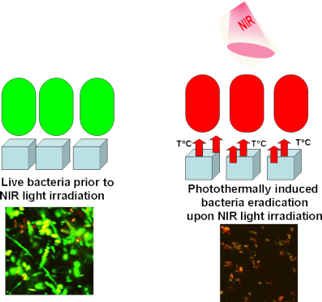
- Taramelli 12, 27100, Pavia, Italy Department of Physics, University of Milano-Bicocca, piazza dell’Ateneo Nuovo, 20126, Milan, Italy 10.3762/bjnano.11.98 Abstract Bacterial contamination is a severe issue that affects medical devices, hospital tools and surfaces. When microorganisms adhere to a surface
- biofilm forms at the surface of prostheses, catheters or other implantable devices, surgical removal is the only possible solution to prevent the infection from spreading [6]. Aside from the hospital environment, the bacterial contamination and the biofilm formation also affect the food packaging, textile


Plant growth regulation by seed coating with films of alginate and auxin-intercalated layered double hydroxides
Beilstein J. Nanotechnol. 2020, 11, 1082–1091, doi:10.3762/bjnano.11.93
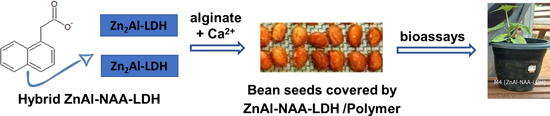
- applied to plantations in higher doses than recommended. These high doses can cause environmental problems such as contamination of soil, water, plants, and animals. The intercalation of agrochemicals in LDHs can generate a sustained release of the organic compounds, reducing the number of applications



Templating effect of single-layer graphene supported by an insulating substrate on the molecular orientation of lead phthalocyanine
Beilstein J. Nanotechnol. 2020, 11, 814–820, doi:10.3762/bjnano.11.66
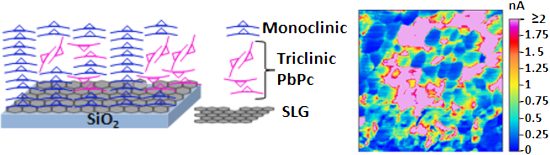
- . Single-layer graphene was synthesized by chemical vapor deposition (CVD) on a copper substrate and transferred by a standard technique using poly(methyl methacrylate) (PMMA) onto a SiO2 (300 nm)/Si substrate as reported elsewhere [30]. This process is optimized with regard to minimal PMMA contamination


Effect of Ag loading position on the photocatalytic performance of TiO2 nanocolumn arrays
Beilstein J. Nanotechnol. 2020, 11, 717–728, doi:10.3762/bjnano.11.59
- -TNC film, and the result is shown in Figure 5. According to Figure 5a, all the peaks can be attributed to Ti, O, C, and Ag, which indicates that the sample consists of TiO2 and Ag. The appearance of the C element is attributable to contamination from the cavity of the XPS device and/or from the


Electromigration-induced directional steps towards the formation of single atomic Ag contacts
Beilstein J. Nanotechnol. 2020, 11, 680–687, doi:10.3762/bjnano.11.55
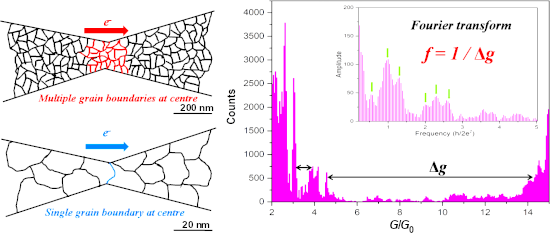
- Ag structures as they are quite susceptible to sulfur contamination under ambient conditions. UHV also provided an ultra-clean environment for point contact measurements. Two out of the four available tips were used for the EM measurements. The tips were pre-cooled by making electrical (and


Adsorptive removal of bulky dye molecules from water with mesoporous polyaniline-derived carbon
Beilstein J. Nanotechnol. 2020, 11, 597–605, doi:10.3762/bjnano.11.47
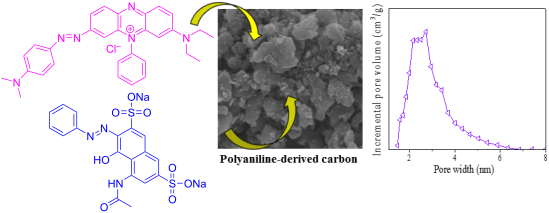
- ; polyaniline-derived carbon; water purification; Introduction Dyes have been widely used in a wide range of industries including textile, leather and paper, causing serious concern worldwide mainly because of the contamination of water resources. For example, around 700,000 tons of textile dyes are produced


Multilayer capsules made of weak polyelectrolytes: a review on the preparation, functionalization and applications in drug delivery
Beilstein J. Nanotechnol. 2020, 11, 508–532, doi:10.3762/bjnano.11.41

- of the capsules and contamination issues during the core dissolution processes. Thus, despite the lower EE and drug absorption in the capsule wall rather than in the interior, pH and salt based approaches are the most widely used in weak PE systems. Functionalization The surface properties of the