


Search results
Search for "crystallinity" in Full Text gives 347 result(s) in Beilstein Journal of Nanotechnology. Showing first 200.
Nanoporous and nonporous conjugated donor–acceptor polymer semiconductors for photocatalytic hydrogen production
Beilstein J. Nanotechnol. 2021, 12, 607–623, doi:10.3762/bjnano.12.50
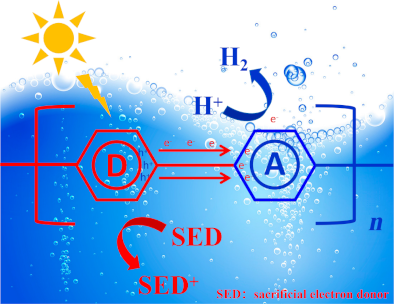
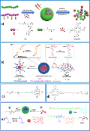
- . However, HER is affected by the interplay of several factors, including surface area, light absorption range, crystallinity, charge transfer, and separation. Two azine-linked COFs with three pyridine segments neighboring the central benzene or triazine fragment were prepared to make comparisons, that is
- , the 1,3,5-tri(pyridin-2-yl)benzene based COF P13 and the benzene-triazine-based P14 (Figure 4). Both of them showed a similar AA eclipsed stacking in the crystal structures, but the lower symmetry of P13 resulted in worse crystallinity. Particularly, the D–A interactions between the pyridine and the
- benzene rings gave rise to disorder and reduced crystallinity even further. As a result, the HER of P13 (0.42 μmol·h−1, 5 mg) was one order of magnitude lower than that of P14 (8.52 μmol·h−1, 5 mg) [53]. Cai et al. [54] reported a series of perylene diimide (PDI)-based n-type porous CPs (Figure 4). The




Spontaneous shape transition of MnxGe1−x islands to long nanowires
Beilstein J. Nanotechnol. 2021, 12, 366–374, doi:10.3762/bjnano.12.30
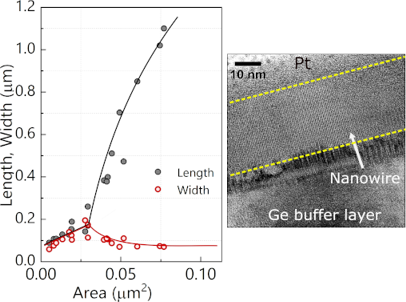
- less than 1% of the intensity of the Ge(111) peaks, they can be clearly discerned. Although the NPs are small, the full width at half maximum (FWHM) of the diffraction peaks is as low as 0.05°, which is indicative of a good crystallinity of the grown MnxGe1−x NPs. The absence of the other


Structural and optical characteristics determined by the sputtering deposition conditions of oxide thin films
Beilstein J. Nanotechnol. 2021, 12, 354–365, doi:10.3762/bjnano.12.29
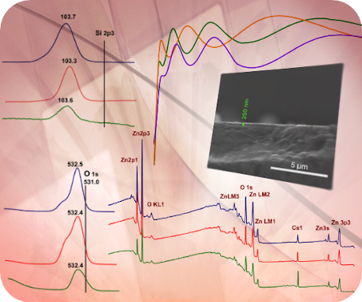
- the SiO2–ZnO mixture in different proportions of weight [60]. Thus, by increasing the thickness of ZnO and SiO2 films by 100 nm (from 200 to 300 nm) the quality of the samples is improved by 12–15%, resulting in good stoichiometry, increased crystallinity, and improved optical and dielectric
- indicate that ZnO thin films are crystalline with a hexagonal structure. By increasing film thickness, the crystallinity of the films as well as the size of the crystallites for the (002) plane increase. The transmission spectra of the studied oxide films are strongly influenced by the deposition


Nickel nanoparticle-decorated reduced graphene oxide/WO3 nanocomposite – a promising candidate for gas sensing
Beilstein J. Nanotechnol. 2021, 12, 343–353, doi:10.3762/bjnano.12.28
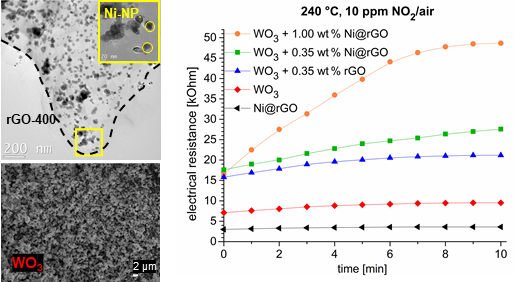
- Curie temperature is associated with an increase in the size of the nickel particles as a result of their sintering in agglomerates with an increase in the degree of crystallinity. The maximum temperature during cycling reached 450 °C. It can also be assumed that a sintering of nickel nanoparticles


A review on the green and sustainable synthesis of silver nanoparticles and one-dimensional silver nanostructures
Beilstein J. Nanotechnol. 2021, 12, 102–136, doi:10.3762/bjnano.12.9
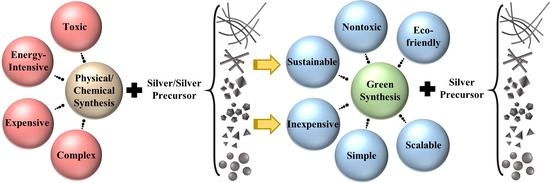
- agglomeration, higher purity, and higher crystallinity compared to those produced by chemical methods [230]. The method is simple and reproducible [230]; however, the process runs using high operating temperatures, and more specifically, the center of the reaction tube may not reach the setpoint temperature due


Fusion of purple membranes triggered by immobilization on carbon nanomembranes
Beilstein J. Nanotechnol. 2021, 12, 93–101, doi:10.3762/bjnano.12.8
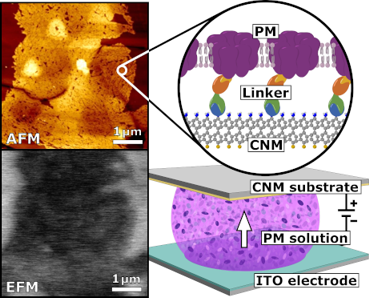
- straightened at the substrate. Since no fusion could be observed without DPR time, merging seems to start when the solution drop is removed. PM crystallinity is preserved upon fusion as it is known that noncrystalline PM has a height of 4 nm only [45]. As the fusion process continues, pile stacks build from


Unravelling the interfacial interaction in mesoporous SiO2@nickel phyllosilicate/TiO2 core–shell nanostructures for photocatalytic activity
Beilstein J. Nanotechnol. 2020, 11, 1834–1846, doi:10.3762/bjnano.11.165
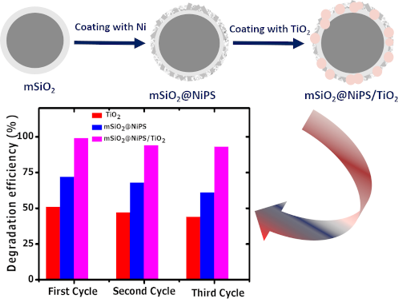
- , interfacial interactions, material crystallinity, and the presence of dopants can readily tune the bandgap energy of core–shell nanomaterials [30][51]. The presence of TiO2 on the shell of the mSiO2@NiPS surface played a role in increasing the bandgap energy of the core–shell nanostructure. A similar shift in


High-responsivity hybrid α-Ag2S/Si photodetector prepared by pulsed laser ablation in liquid
Beilstein J. Nanotechnol. 2020, 11, 1596–1607, doi:10.3762/bjnano.11.142
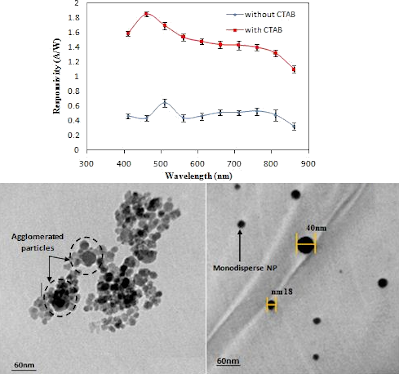
- with a monoclinic structure and that crystallinity of the nanoparticles was improved after adding CTAB. Raman studies revealed the presence of peaks related to Ag–S bonds (Ag modes) and the longitudinal optical phonon 2LO mode. Scanning electron microscopy investigations confirmed the production of
- detected after adding the CTAB surfactant. However, a preferred orientation along the (−121) plane was found when the CTAB surfactant was used. The significantly increased intensity of the (−121) plane and other peaks could be attributed to the increase in the degree of crystallinity of Ag2S caused by the




Structure and electrochemical performance of electrospun-ordered porous carbon/graphene composite nanofibers
Beilstein J. Nanotechnol. 2020, 11, 1280–1290, doi:10.3762/bjnano.11.112
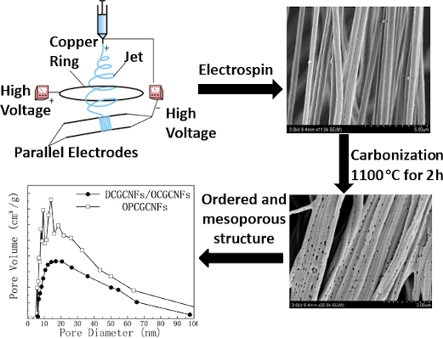
- ° disappeared after carbonization due to the decomposition of PAN during the process. Moreover, the diffraction peak intensity of the (002) crystal plane of the carbonized graphite structure was significantly enhanced, indicating that the carbonization process enhanced the crystallinity of the graphite


High permittivity, breakdown strength, and energy storage density of polythiophene-encapsulated BaTiO3 nanoparticles
Beilstein J. Nanotechnol. 2020, 11, 1190–1197, doi:10.3762/bjnano.11.103
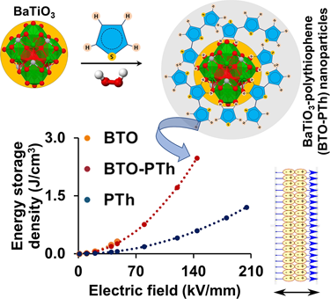
- common impurities such as BaCO3 [22]. XRD pattern of core–shell BTO-PTh nanoparticles shows the characteristic diffractions of tetragonal BTO along with the additional peaks corresponding to certain impurities or by-products formed during the oxidative polymerization of Th. Albeit the crystallinity of




Revealing the local crystallinity of single silicon core–shell nanowires using tip-enhanced Raman spectroscopy
Beilstein J. Nanotechnol. 2020, 11, 1147–1156, doi:10.3762/bjnano.11.99
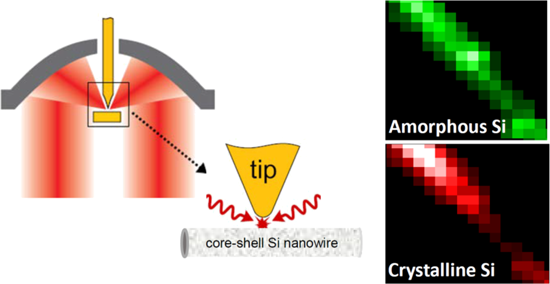
- -catalyzed vapor–liquid–solid growth and silicon overcoating by thermal chemical vapor deposition. Local changes in the fraction of crystallinity in these silicon nanowires are characterized at an optical resolution of about 300 nm. Furthermore, we are able to resolve the variations in the intensity ratios
- of the Raman peaks of crystalline Si and amorphous Si by applying tip-enhanced Raman spectroscopy, at sample positions being 8 nm apart. The local crystallinity revealed using confocal Raman spectroscopy and tip-enhanced Raman spectroscopy agrees well with the high-resolution transmission electron
- local structural properties of Si nanomaterials at the sub-10 nanometer scale using tip-enhanced Raman techniques. Keywords: core–shell nanowires; local crystallinity; polarization angle-resolved spectroscopy; silicon; tip-enhanced Raman spectroscopy; Introduction The properties of silicon are long


Gram-scale synthesis of splat-shaped Ag–TiO2 nanocomposites for enhanced antimicrobial properties
Beilstein J. Nanotechnol. 2020, 11, 1119–1125, doi:10.3762/bjnano.11.96
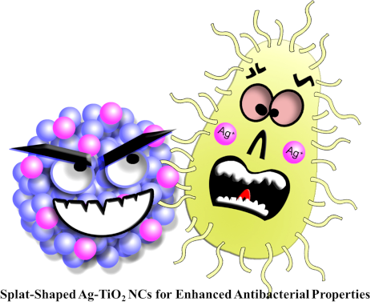
- decrease in the crystallinity and the appearance of new peaks were observed when the Ag nanoparticles were added. The additional peaks corresponded to Ag at 2θ values of 36.78(103), which is perfectly indexed with the silver lattice planes (JCPDS 04-0783). Importantly, no impurity peaks were observed in


Plant growth regulation by seed coating with films of alginate and auxin-intercalated layered double hydroxides
Beilstein J. Nanotechnol. 2020, 11, 1082–1091, doi:10.3762/bjnano.11.93
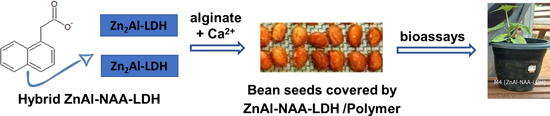
- new technology to sowing might lead to better a quality of seeds. Conclusion The synthesis of a NAA-intercalated layered double hydroxide with a molar ratio Zn/Al = 2 by co-precipitation at constant pH value yielded a material with good crystallinity and phase purity. The basal spacing value observed



Epitaxial growth and superconducting properties of thin-film PdFe/VN and VN/PdFe bilayers on MgO(001) substrates
Beilstein J. Nanotechnol. 2020, 11, 807–813, doi:10.3762/bjnano.11.65
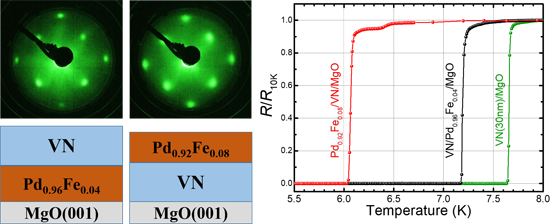
- matches that of the palladium-rich Pd1−xFex alloys (face-centered cubic with a0 = 389 pm). Therefore, a good crystallinity of the layer stack can hardly be expected. In the resulting polycrystalline films, crystallite boundaries and crystal lattice imperfections can lead to the segregation of iron
- back to the MBE chamber, and a 12 nm thick Pd0.92Fe0.08 layer was deposited to a half of both samples using the second shutter. The thicknesses of the Pd1−xFex layers were adjusted to possess identical magnetic moments. In situ tests of crystallinity, VN stoichiometry and resulting composition of Pd1
- VN/Pd0.92Fe0.08 (the first component in a stack being directly deposited to MgO) have been obtained with the identical properties of the VN layer in each sample. Crystallinity and epitaxial growth The crystallinity and the epitaxial growth of the thin films were examined in situ by using LEED (SPECS


Light–matter interactions in two-dimensional layered WSe2 for gauging evolution of phonon dynamics
Beilstein J. Nanotechnol. 2020, 11, 782–797, doi:10.3762/bjnano.11.63
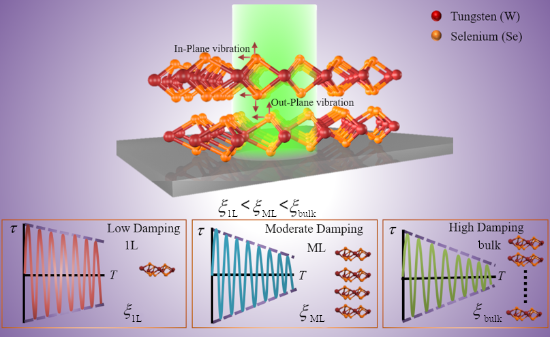
- a function of P at T = 298 K. In order to minimize the laser-induced effects on the crystallinity and structural changes in the WSe2, a laser P ≤ 3.35 mW was used. It was also found that the minimum P required to get a good signal-to-noise ratio for the Raman and PL data was when P ≥ 0.31 mW
Structural optical and electrical properties of a transparent conductive ITO/Al–Ag/ITO multilayer contact
Beilstein J. Nanotechnol. 2020, 11, 695–702, doi:10.3762/bjnano.11.57
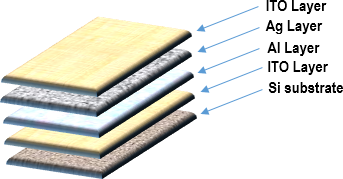
- led to the crystallization of an Ag interlayer even at the as-deposited stage. Peaks attributed to ITO(222), Ag(111) and Al(200) were observed after annealing, indicating an enhancement in crystallinity of the multilayer films. The annealed IAAI film exhibited a remarkable improvement in optical
- becomes polycrystalline upon annealing at 400 °C. Strong diffraction peaks of ITO(222), Ag(111) and ITO(440) were observed after annealing. The appearance of diffraction peaks of ITO(222), Ag(111) and Al(200) in the annealed film indicate an enhanced crystallinity of the film. Diffraction peaks of In2O3
- films show a significant increase in optical transmittance. The annealed IAAI film has a transmittance of ca. 86.1% in the visible range. The increase in transmittance is attributed to the improvement of the crystallinity of both the ITO film and the metal interlayer after annealing, which resulted in


Exfoliation in a low boiling point solvent and electrochemical applications of MoO3
Beilstein J. Nanotechnol. 2020, 11, 662–670, doi:10.3762/bjnano.11.52
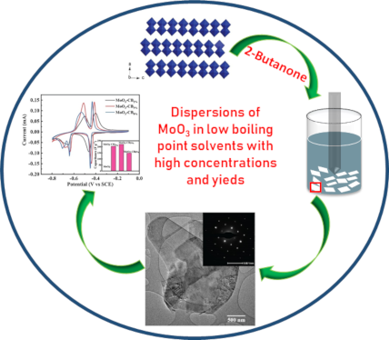
- 2a. Supporting Information File 1, Figure S3c,d, also shows ultrathin nanosheets of MoO3 suggesting a successful exfoliation. The selected-area electron diffraction (SAED) pattern shown in the inset of Figure 2a indicates that the MoO3 nanosheets are crystalline after exfoliation. Crystallinity and

Preparation, characterization and photocatalytic performance of heterostructured CuO–ZnO-loaded composite nanofiber membranes
Beilstein J. Nanotechnol. 2020, 11, 631–650, doi:10.3762/bjnano.11.50
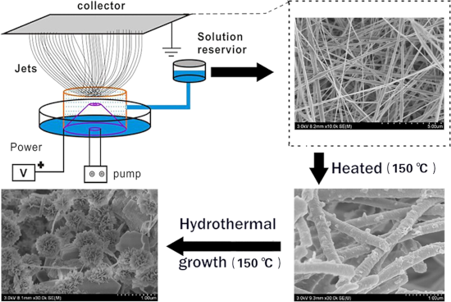
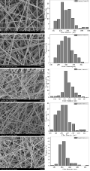
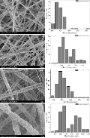
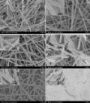
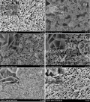
- influence of the [Cu(Ac)2/Zn(Ac)2]/[PVDF/PAN] weight ratio on the crystallinity of the CNFMs, XRD analyses were performed and the XRD patterns are shown in Figure 8 and Figure 9. Pure PVDF/PAN CNFMs show the characteristic diffraction peaks at 17° and 21° (Figure 8a). The pure Cu(Ac)2 and Zn(Ac)2 powders
- indicates that Cu(Ac)2 and Zn(Ac)2 reacted during the heat treatment process, and it is likely that CuO and ZnO nanoparticles formed. XRD analyses were performed to determine the effect of the heat treatment on the crystallinity of the CNFMs. The XRD patterns with distinctive crystalline peaks are given in









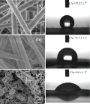


Soybean-derived blue photoluminescent carbon dots
Beilstein J. Nanotechnol. 2020, 11, 606–619, doi:10.3762/bjnano.11.48
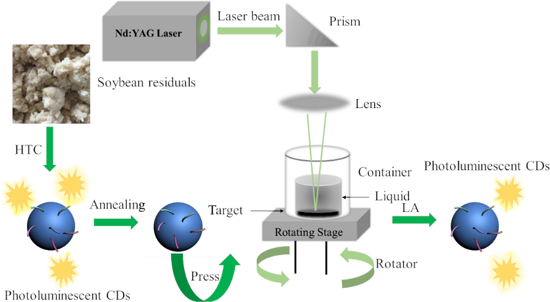
- likely attributed to the fluctuations of the bandgap associated with the functional groups and the disorder of crystallinity introduced by the LAL processing. According to Yu et al. [42], the emission peak of CDs can be fitted with a two-Gaussian function, associated with the “core” state and “surface


Comparison of fresh and aged lithium iron phosphate cathodes using a tailored electrochemical strain microscopy technique
Beilstein J. Nanotechnol. 2020, 11, 583–596, doi:10.3762/bjnano.11.46
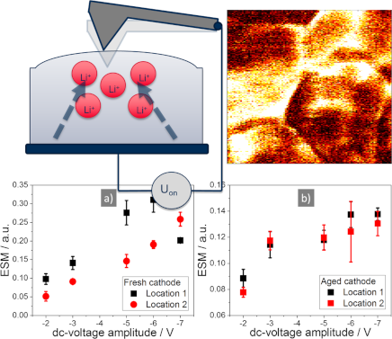
- content in the cross-section (Fe mass content fresh: 32.1 ± 0.3% and aged: 27.8 ± 0.8%), indicating iron dissolution from the bulk material [71]. Another factor influencing the ESM signal is the structure of the material. Chen et al. observed a dependency of the crystallinity of LFP on the ESM signal and



Correction: Photocatalytic antibacterial performance of TiO2 and Ag-doped TiO2 against S. aureus. P. aeruginosa and E. coli
Beilstein J. Nanotechnol. 2020, 11, 547–549, doi:10.3762/bjnano.11.43

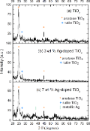
- nanoparticles could increase the crystallinity of TiO2, which leads to a decrease in the photo-excited e− –h+ recombination, and thus, to an increase in the photocatalytic activity of TiO2 [9]. XRD patterns of (a) TiO2 nanoparticles, (b) 3 wt % Ag-doped TiO2 nanoparticles and (c) 7 wt % Ag-doped TiO2
Facile biogenic fabrication of hydroxyapatite nanorods using cuttlefish bone and their bactericidal and biocompatibility study
Beilstein J. Nanotechnol. 2020, 11, 285–295, doi:10.3762/bjnano.11.21
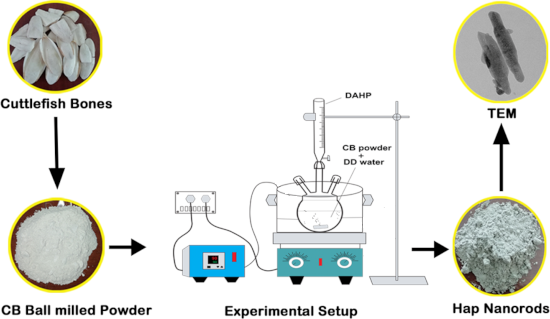
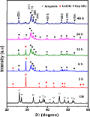
- antibacterial and biocompatible efficacy of the cuttlefish bone powder derived Hap nanorods. Results and Discussion Crystallinity and phase formation analysis The products obtained at various reaction times and the raw cuttlefish bone (CB) powders were characterized using powder XRD, revealing that a prolonged
- that a hexagonal structure of Hap was formed. Even though the XRD peaks of Hap were formed at 24 h of reaction time stable crystallinity was observed. There also exists a certain minor impurity peak at 30°, 35°, 43° and 57°, which affects the purity. Thus, the reaction time was increased further to 48
- lattice strain was 0.0055 nm. Evaluation of functional groups The FTIR spectra of CB and CB-Hap (48 h) with high crystallinity are shown in Figure 2, which is essential to analyze their functional groups. The FTIR spectral bands were recorded at 710, 860, 1486, 2522, and 2924 cm−1 for CB which indicates


Rational design of block copolymer self-assemblies in photodynamic therapy
Beilstein J. Nanotechnol. 2020, 11, 180–212, doi:10.3762/bjnano.11.15
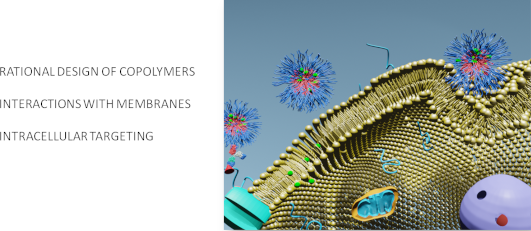
- , part 1 of this review showed the large variety of polymers used for PDT, going from aliphatic polyesters, polyacrylates to peptides or polysaccharides. The chemical structure will influence the crystallinity of the vector, its morphology (micelles, vesicles, or worm-like micelles), its stability ((bio
- )degradation or dissociation), the affinity to the PS and its loading and positioning inside the vector, and the possibility to introduce stimuli-responsive groups (enabling appropriate release). Similarly, the molecular weight of the polymer will have an impact on the crystallinity, the vector morphology, its






Size effects of graphene nanoplatelets on the properties of high-density polyethylene nanocomposites: morphological, thermal, electrical, and mechanical characterization
Beilstein J. Nanotechnol. 2020, 11, 167–179, doi:10.3762/bjnano.11.14
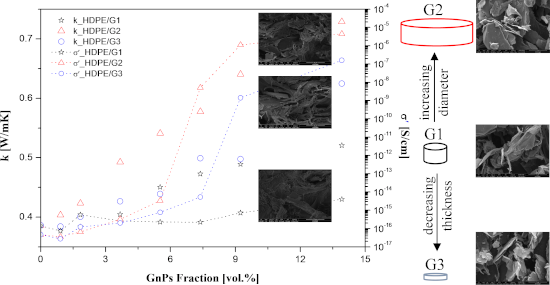
- /GnP nanocomposites decreased by approximately 25% to a minimum value with 13.92 vol % GnP loading. The crystallinity degree of the pure HDPE was ≈70% and increased up to ≈71% with 13.92 vol % G1 and G2, respectively, and up to ≈72% with 13.92 vol % G3. This increase was relatively inconsiderable
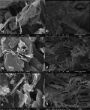
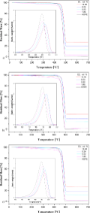
- degree of crystallinity (Xc) of the samples was determined through Equation 1: where ΔH was the heat of fusion of the sample, ΔH0 = 293 J/g was the heat of fusion for 100% crystalline HDPE [50], and φ referred to the weight fraction of the filler in each sample. SEM images of a) G1, b) G2, c) G3, d) HDPE


Recent progress in perovskite solar cells: the perovskite layer
Beilstein J. Nanotechnol. 2020, 11, 51–60, doi:10.3762/bjnano.11.5

- remarkable milestones have been achieved concerning the preparation of the precursor solution. Ding et al. [37] incorporated an NH4Cl additive into the precursor solution accompanied by a mild substrate temperature and an air-blowing system to improve the crystallinity and the morphology of the perovskite
- adjusting the number of 2D inorganic layers. Chen et al. [59] studied the effect of the treatment with solvents of different polarities and boiling points on the crystallinity, crystal orientation, grain size and film quality of 2DRP perovskites. Dimethylacetamide (DMAC), which has a low polarity and a
- the mobility, the lifetime and the vertical diffusion length of the charge carriers in the 2/3D perovskite. Figure 4h–k indicates that the 2D/3D perovskite (x = 0.03) has a better crystallinity than the pure 3D material because of its clearer crystal lattice phonon features. These factors greatly





