Search results
Search for "electric field" in Full Text gives 398 result(s) in Beilstein Journal of Nanotechnology. Showing first 200.
On the stability of microwave-fabricated SERS substrates – chemical and morphological considerations
Beilstein J. Nanotechnol. 2021, 12, 541–551, doi:10.3762/bjnano.12.44
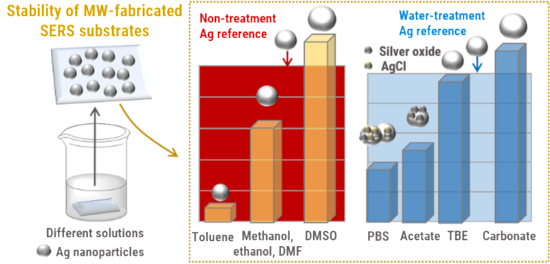
- . Van Duyne and others elaborated the fundamental concept of the enhancement process, which was found to be mainly based on the amplification of the electric field component when the illuminating laser irradiation interacts with metal nanoparticles [6]. Suitable nanoparticles consist preferentially of


Simulation of gas sensing with a triboelectric nanogenerator
Beilstein J. Nanotechnol. 2021, 12, 507–516, doi:10.3762/bjnano.12.41
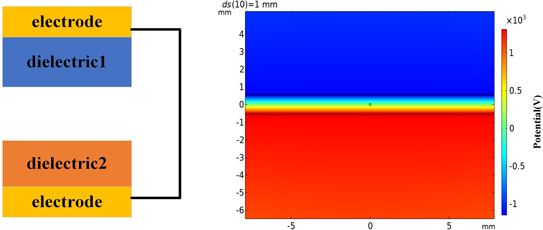
- electrification and electrostatic induction. Contact electrification refers to the electron transfer between two different materials in contact because the atoms are so close together. An electric field is generated after friction electrification, and electrostatic induction is caused by the electric field. The



Surface-enhanced Raman scattering of water in aqueous dispersions of silver nanoparticles
Beilstein J. Nanotechnol. 2021, 12, 497–506, doi:10.3762/bjnano.12.40
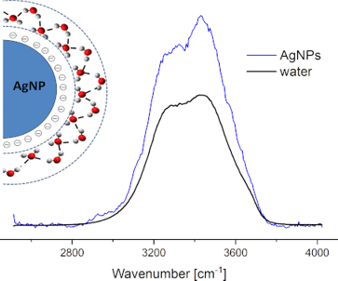
- selective enhancement of Raman signals from the samples. Previous studies showed that the RRE in liquid water directly corresponds to its supramolecular structure. It was also reported that the electric-field-induced orientation of water molecules on the electrode surface results in the surface-enhanced
- the water molecules could not be specifically organised onto the metal surface. Therefore, the shape and size of AgNPs may be the crucial point – more precisely, the optical plasmons responsible for the colour of the AgNPs. The location of the enhancement of the electric field around the nanoparticle
- is also an important issue. It is shown that a strong electric field enhancement takes place on the edges and on the tips of a triangular nanoscale prism (in this case, the AgNPs blue sample) in comparison to a low enhancement on a spherical surface (AgNPs yellow sample) [40]. To verify the influence


Rapid controlled synthesis of gold–platinum nanorods with excellent photothermal properties under 808 nm excitation
Beilstein J. Nanotechnol. 2021, 12, 462–472, doi:10.3762/bjnano.12.37
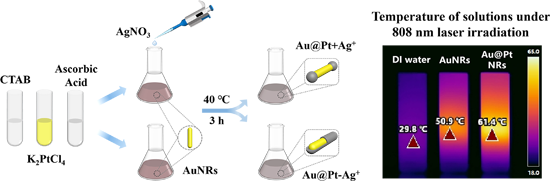
- Figure 1d and Table 1. Grzelczak et al. proposed an electric field-directed mechanism to explain this phenomenon [27]. The concentration of CTAB in the reaction solution was 8.8 mM. This is much higher than the critical micelle constant (1.04–1.41 mM) of CTAB at this temperature [29][30][31], thus CTAB


A review on nanostructured silver as a basic ingredient in medicine: physicochemical parameters and characterization
Beilstein J. Nanotechnol. 2021, 12, 440–461, doi:10.3762/bjnano.12.36
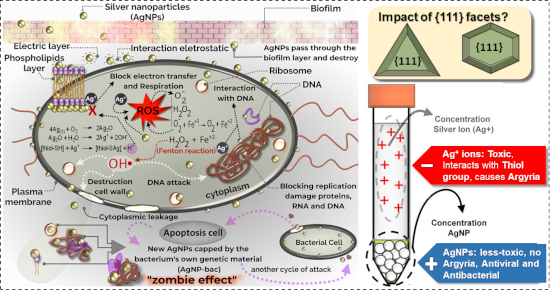
- of a particle that moves under an electric field. The ZP reflects the potential difference between the double electric layer of electrophoretically mobile particles and the dispersant layer around them in the sliding plane [153]. AgNPs with ZP between −30 and −125 mV are considered to be strongly


TiOx/Pt3Ti(111) surface-directed formation of electronically responsive supramolecular assemblies of tungsten oxide clusters
Beilstein J. Nanotechnol. 2021, 12, 203–212, doi:10.3762/bjnano.12.16
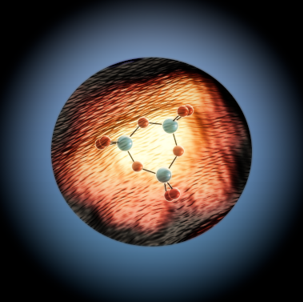
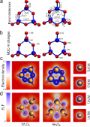
- Dresden-Rossendorf, Department of Reactive Transport, Institute of Resource Ecology, Permoserstraße 15, 04318 Leipzig, Germany 10.3762/bjnano.12.16 Abstract Highly ordered titanium oxide films grown on a Pt3Ti(111) alloy surface were utilized for the controlled immobilization and tip-induced electric
- field-triggered electronic manipulation of nanoscopic W3O9 clusters. Depending on the operating conditions, two different stable oxide phases, z’-TiOx and w’-TiOx, were produced. These phases show a strong effect on the adsorption characteristics and reactivity of W3O9 clusters, which are formed as a



Toward graphene textiles in wearable eye tracking systems for human–machine interaction
Beilstein J. Nanotechnol. 2021, 12, 180–189, doi:10.3762/bjnano.12.14
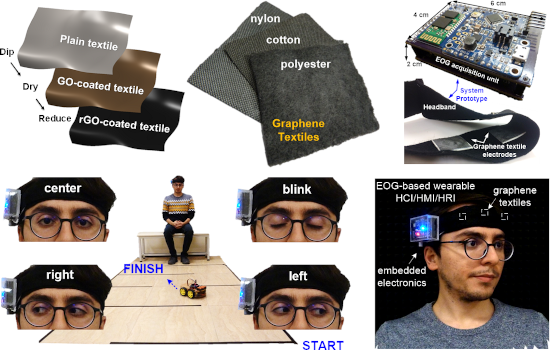
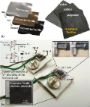
- facing spots (i.e., the cornea-retinal potential of 0.4–1.0 mV where the cornea is positive) [6]. This potential difference sets up an electrical field in the tissues surrounding the eye, which generates an electric field [7]. Two electrodes around the eyes can locate the field vector rotation, which


Paper-based triboelectric nanogenerators and their applications: a review
Beilstein J. Nanotechnol. 2021, 12, 151–171, doi:10.3762/bjnano.12.12
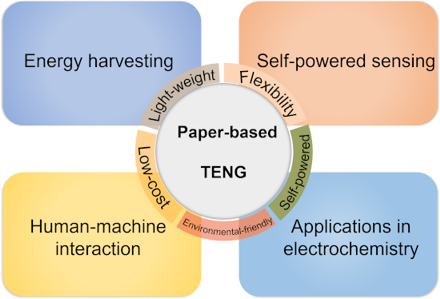
- ground and taken as the reference electrode. The direction of the induced electric field can be reversely changed during the approximation or separation between the bottom electrode and the upper dielectric materials. The charge exchange will occur between the bottom electrode and ground to balance the
- pollution, the search for innovative, highly efficient and cost-effective approaches to curb pollution has attracted much attention [158]. Previous research works have proven that a pulsed electric field can prevent biofouling from adhering to material surfaces [159][160][161]. Two types of marine algae






Fusion of purple membranes triggered by immobilization on carbon nanomembranes
Beilstein J. Nanotechnol. 2021, 12, 93–101, doi:10.3762/bjnano.12.8
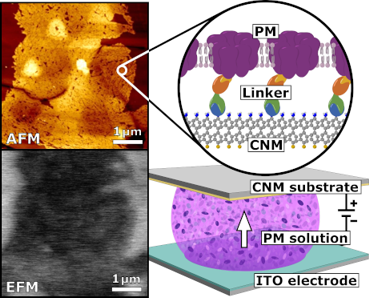
- substrate into a closed container along with a small vessel filled with distilled water. After incubation, the substrate was gently rinsed with 200 µL distilled water and then dried in a mild nitrogen stream. Electric field sedimentation: Electric field sedimentation experiments were done using a capacitor
- Figure 1c–f, an electrical field was applied to the drop. The substrate itself served as a positively charged capacitor plate whereas the negatively charged plate consisted of indium tin oxide. As the electric field is attenuated in areas that have already been covered by PM patches, subsequently
- deposited patches primarily prefer uncovered areas. In addition, the PM gets well oriented in an electric field according to its surface charge. Initially, a drop of 5 µL WT PM suspension was attached to the substrate only and was not in contact with the opposite electrode. While the plate distance was kept


Bulk chemical composition contrast from attractive forces in AFM force spectroscopy
Beilstein J. Nanotechnol. 2021, 12, 58–71, doi:10.3762/bjnano.12.5
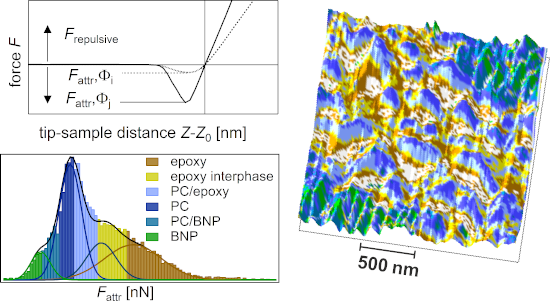
- methods. TERS and cAFM require a rather fragile modification of the AFM tip, which is usually not optimized for mechanical measurements. The methods that come closest to the requirements set in this study are KPM and ncAFM. KPM makes use of the interactions between the tip and the sample when an electric
- field is applied. Khorasani and coworkers identified nanoparticles (exposed and subsurface) in an epoxy/boehmite nanocomposite by measuring the surface potential by means of KPM [9]. A disadvantage of KPM is that, in addition to the apex of the tip, the sides of the tip are also interacting. This leads


Piezotronic effect in AlGaN/AlN/GaN heterojunction nanowires used as a flexible strain sensor
Beilstein J. Nanotechnol. 2020, 11, 1847–1853, doi:10.3762/bjnano.11.166
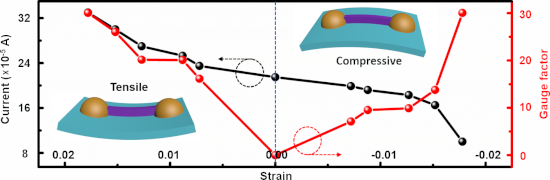
- suitable applied electric field, the mechanism of EC etching can be described by: The corresponding SEM images are shown in Figure 2d–f. After ICP dry etching, a regular stripe array was formed (Figure 2d) and the shape of the NWs was controlled in advance during stepper lithography. Because of its high
- conductivity, the heavily doped GaN preferentially reacts with the oxalic acid solution in an applied electric field. The lateral etching rates on both sides of N+-GaN were approximately the same during EC wet etching (Figure 2e). Finally, a single NW was obtained to prepare the strain sensor (Figure 2f). The


Absorption and photoconductivity spectra of amorphous multilayer structures
Beilstein J. Nanotechnol. 2020, 11, 1757–1763, doi:10.3762/bjnano.11.158
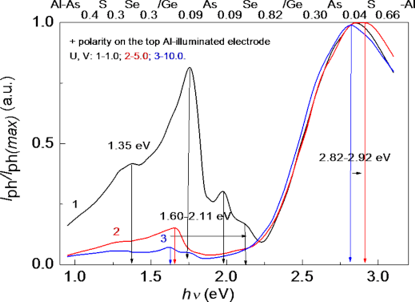
- external electric field reaches high values. When a negative voltage is applied, this sharp increase of the current occurs in dark and under illumination. This effect was observed for amorphous thin-film structures with different electrodes (As2S3, As2S3Gex) and amorphous HS (As2S3/Sb2S3, Si/As2S3) [14]. I
- temperatures are needed for the estimation of the parameters of localized states. The steady-state photoconductivity spectra of all amorphous thin-film structures were measured with an applied external electric field of E = 5 × 10⁴ V/cm, that is, in the region were the I–V characteristics exhibit linear


Imaging and milling resolution of light ion beams from helium ion microscopy and FIBs driven by liquid metal alloy ion sources
Beilstein J. Nanotechnol. 2020, 11, 1742–1749, doi:10.3762/bjnano.11.156
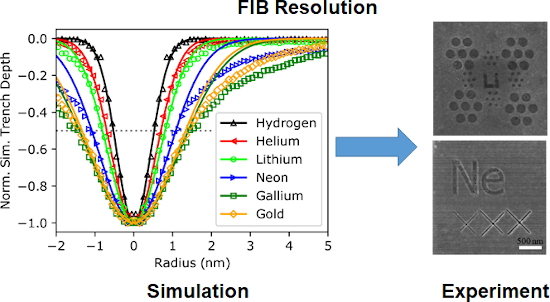
- the electric field strength of the filter perpendicular to the optical axis of the ion column. l is the filter length, D is the distance between the filter and the separation aperture at the exit of the filter, and d is the diameter of this aperture. As an example for a LMAIS mass spectrum, we show


Selective detection of complex gas mixtures using point contacts: concept, method and tools
Beilstein J. Nanotechnol. 2020, 11, 1631–1643, doi:10.3762/bjnano.11.146
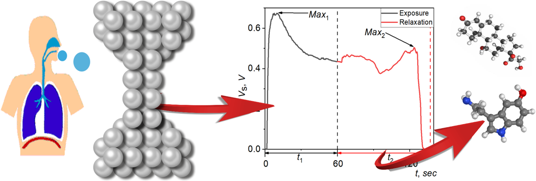
- the electric field of the contact. The electric field is concentrated in the Yanson point contact area due to a specific electric drop in the potential in that area as the current flows through the electrode/point contact/electrode system. Upon crossing the area of the Yanson point contact, electrons
- electric current mode, in which this system is usually studied, the decrease in the voltage applied to the system occurs exclusively in the area of the point contact [30]. This allows for the concentration of the electric field in a small region, which serves as an additional energy source for the
- electric field in the Yanson point contact. Here e is the electron charge and Vpc is the voltage applied to the contact. Thus, each section of the curve reflects the energy parameters of a certain group of phonons. This fact allows, for example, the determination of phonon groups with energy values that


![[Graphic 4]](/bjnano/content/inline/2190-4286-11-146-i8.svg?max-width=637&scale=1.18182) in th...
in th...

![[Graphic 7]](/bjnano/content/inline/2190-4286-11-146-i11.svg?max-width=637&scale=1.18182) in the...
in the...
A self-powered, flexible ultra-thin Si/ZnO nanowire photodetector as full-spectrum optical sensor and pyroelectric nanogenerator
Beilstein J. Nanotechnol. 2020, 11, 1623–1630, doi:10.3762/bjnano.11.145
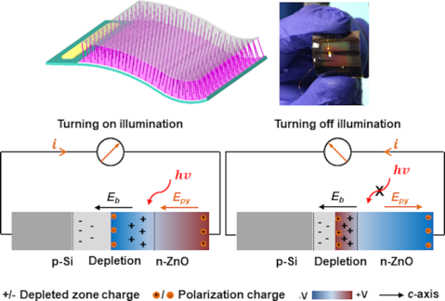
- wide bandgap (3.2 eV), which absorbs UV light and can be easily prepared [11][12]. A pyroelectric potential will be generated in ZnO when the temperature changes upon illumination. The internal electric field can effectively drive the flow of electrons through an external circuit, yielding a short
- carrier diffusion, and a corresponding intrinsic electric field (Eb) is formed in the depletion zone (Figure 2, left). Under this circumstance, the electron diffusion current and drift current are equal in magnitude and opposite in direction in the heterojunction. Therefore, the net current flowing
- -axis of the ZnO NWs (Figure 2, middle). Because the direction of the pyroelectric electric field (Epy) is the same as Eb and the barrier height decreases at the heterojunction interface due to the generation of a negative polarization potential, the total electric field in the depletion zone increases


Fabrication of nano/microstructures for SERS substrates using an electrochemical method
Beilstein J. Nanotechnol. 2020, 11, 1568–1576, doi:10.3762/bjnano.11.139
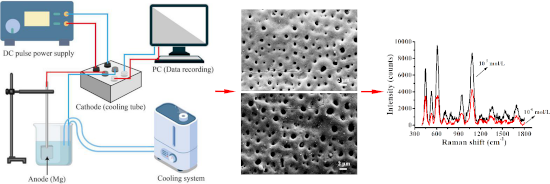
- intensity of the R6G signal derived from substrates coated with a 30 nm thick Au film was very low, as shown in Figure 4. Overall, the results show that the Raman intensity of R6G is affected by the thickness of the Au film. The effect of Au thickness on the electric field intensity has previously been
- studied [45][46][47]. Zhang et al. [45] used a self-assembled method to fabricate PS nanosphere array substrates with Ag films of different thickness. The strongest electric field intensity enhancement was generated with a 10 nm thick Ag film. Using the AFM-based scratching method, Wang et al. [46


Electrokinetic characterization of synthetic protein nanoparticles
Beilstein J. Nanotechnol. 2020, 11, 1556–1567, doi:10.3762/bjnano.11.138
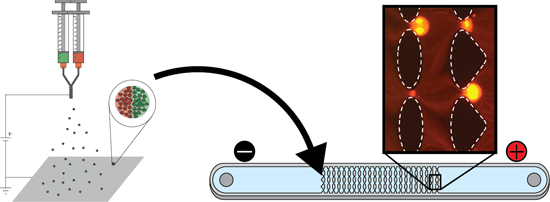
- developed. In the last decade, the area of microfluidics, which is the field of science that studies the manipulation of minute volumes of fluids (i.e., from microliters to picoliters) [17], has experienced a significant growth in bioanalytical applications [17][18]. Electrokinetics (EK) and electric-field
- use insulator-based EK devices, in which insulating structures distort the electric field distribution generating regions of higher electric field strength within the device [25]. These are simple devices usually made from a single substrate, which makes EK methods at the microscale promising for high
- voltage necessary to trap each type of SPNP was obtained, it was then possible to derive the electric field magnitude at which each SPNP type would have zero velocity (i.e., EEEC). The previously developed technique [25] to calculate the eEEEC of particles relies on the fact that trapped particles (Figure



Helium ion microscope – secondary ion mass spectrometry for geological materials
Beilstein J. Nanotechnol. 2020, 11, 1504–1515, doi:10.3762/bjnano.11.133
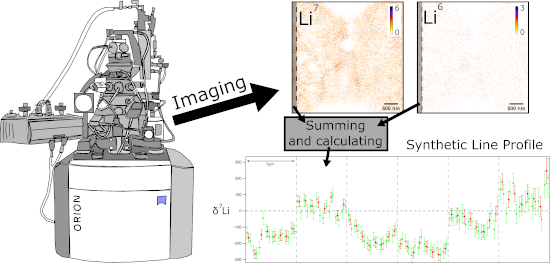
- removed material [15]. This method is effective only when the surrounding area remains able to compensate the charge and the electric field is not so distorted as to prevent the removal of the generated secondary ions. Geological applications Light elements Some of the most important elements in the



Triboelectric nanogenerator based on Teflon/vitamin B1 powder for self-powered humidity sensing
Beilstein J. Nanotechnol. 2020, 11, 1394–1401, doi:10.3762/bjnano.11.123
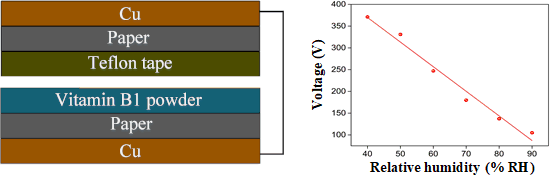
- the Teflon membrane is separated in the absence of an external force. There is a positive charge transfer from the conductive copper foil tape at the bottom of the TVB-TENG, to the conductive copper foil tape at the top, leading to an electric field equilibrium due to electrostatic induction. As a




Analysis of catalyst surface wetting: the early stage of epitaxial germanium nanowire growth
Beilstein J. Nanotechnol. 2020, 11, 1371–1380, doi:10.3762/bjnano.11.121
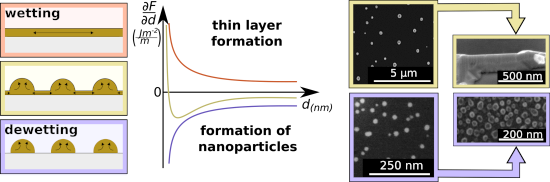
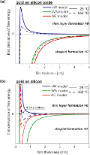
- calculations. Hamaker constants correspond to the susceptibility of particles to an electric field of very small length scales generated by the particles themselves [28]. For this reason, these constants are used to determine energy and force values in van der Waals interactions. A more detailed description of


High permittivity, breakdown strength, and energy storage density of polythiophene-encapsulated BaTiO3 nanoparticles
Beilstein J. Nanotechnol. 2020, 11, 1190–1197, doi:10.3762/bjnano.11.103
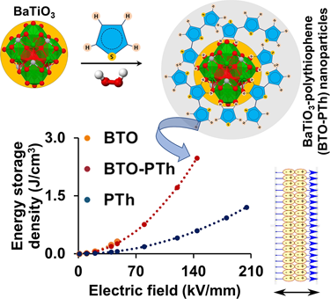
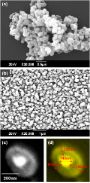
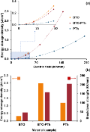
- , and BTO-PTh nanoparticles. Permittivity or dielectric constant (a), loss tangent (b), dielectric loss (c), and ac conductivity (d) are plotted as a function of the frequency. A plot of energy storage density as a function of the electric field strength (a), and the calculated maximum energy storage




Scanning tunneling microscopy and spectroscopy of rubrene on clean and graphene-covered metal surfaces
Beilstein J. Nanotechnol. 2020, 11, 1157–1167, doi:10.3762/bjnano.11.100
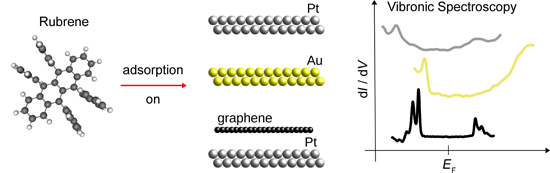
- molecular environments are unlikely to cause the LUMO energy variation because the molecular superstructure in the present case is regular. Moreover, a shift of the LUMO peak due to the electric field between tip and surface [50][51] can likewise be excluded due to the magnitude of the effect and the


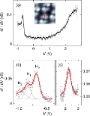

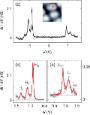
Revealing the local crystallinity of single silicon core–shell nanowires using tip-enhanced Raman spectroscopy
Beilstein J. Nanotechnol. 2020, 11, 1147–1156, doi:10.3762/bjnano.11.99
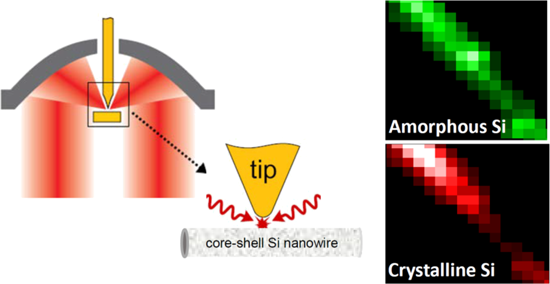
- can be obtained by rotating the prism while collecting optical spectra. The circle pattern is originating from the emission of the plasmonic oscillation along the tip shaft. This is in good agreement with the electric field distribution in the focus of a radially polarized laser beam, where the


Thermophoretic tweezers for single nanoparticle manipulation
Beilstein J. Nanotechnol. 2020, 11, 1126–1133, doi:10.3762/bjnano.11.97
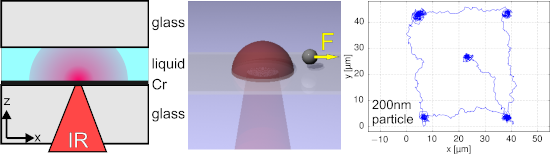
- electrokinetic (ABEL) trap [10][11][12] was invented. In the ABEL trap, the Brownian motion of a particle is optically monitored, and then a feedback electric field is applied so that the resulting electrokinetic forces induce a drift that exactly cancels the Brownian motion. This can also be achieved by moving
- the surrounding fluid via electroosmosis where an applied feedback electric field moves a layer of surface ions, which subsequently pulls the fluid, along with any suspended objects, by viscous drag. In such a manner, quantum dots in a liquid have been manipulated with nanometer precision [13]. Real


Highly sensitive detection of estradiol by a SERS sensor based on TiO2 covered with gold nanoparticles
Beilstein J. Nanotechnol. 2020, 11, 1026–1035, doi:10.3762/bjnano.11.87
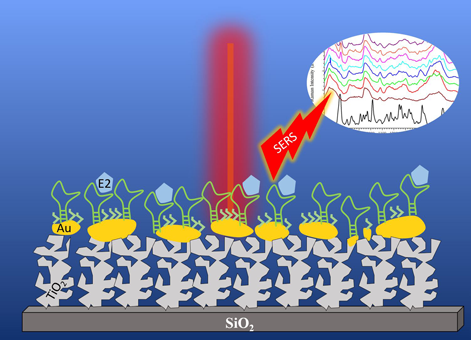
- proximity of the NPs, which is higher for higher Au coverages (Table 1). The electric field between two nanoparticles is extraordinarily enhanced when the NPs are close to each other [7][40] and form so-called hot spots. To compare the enhancement capacity of the TiO2/Au samples, the enhancement factor (EF