


Search results
Search for "electrode" in Full Text gives 612 result(s) in Beilstein Journal of Nanotechnology. Showing first 200.
Efficiency of electron cooling in cold-electron bolometers with traps
Beilstein J. Nanotechnol. 2022, 13, 896–901, doi:10.3762/bjnano.13.80
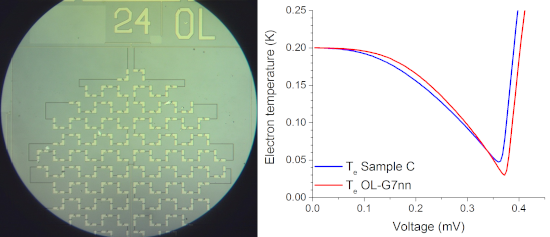
- experiments (in our previous calculations we have used the fifth power). Σ is the electron–phonon coupling constant; it has different values, depending on the electron temperature [17]. VN is the absorber volume, Pcool is the direct electron cooling power, PS is the net power transferred to the S-electrode


DNA aptamer selection and construction of an aptasensor based on graphene FETs for Zika virus NS1 protein detection
Beilstein J. Nanotechnol. 2022, 13, 873–881, doi:10.3762/bjnano.13.78
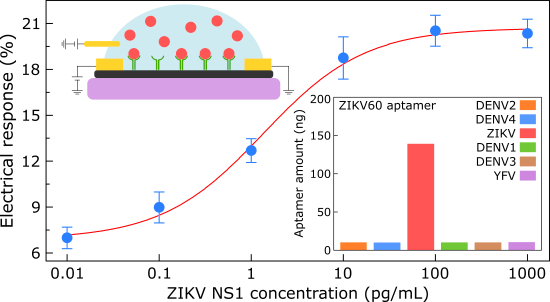
- B2902A Precision Source/Measure Unit, immediately after the functionalization process. The source–drain bias was fixed at 1 mV, and we applied the gate voltage via a gold electrode in contact with 100 mM PBS or human serum. PBS was used as electrolyte for validation of the graphene functionalization with



Self-assembly of C60 on a ZnTPP/Fe(001)–p(1 × 1)O substrate: observation of a quasi-freestanding C60 monolayer
Beilstein J. Nanotechnol. 2022, 13, 857–864, doi:10.3762/bjnano.13.76
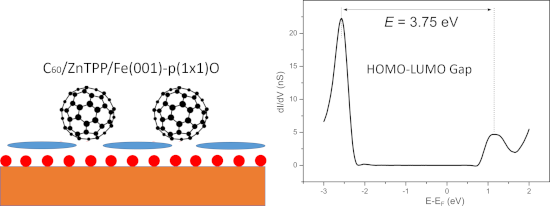
- fullerene films stabilized directly on metal surfaces. Our results unveil a model system that could be useful in applications in which a quasi-freestanding monolayer of C60 interfaced with a metallic electrode is required. Keywords: fullerene; scanning tunneling microscopy; ultraviolet photoemission


Hierarchical Bi2WO6/TiO2-nanotube composites derived from natural cellulose for visible-light photocatalytic treatment of pollutants
Beilstein J. Nanotechnol. 2022, 13, 745–762, doi:10.3762/bjnano.13.66
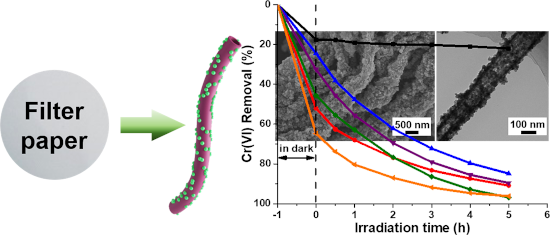
- , respectively. The transient photocurrent responses and electrochemical impedance spectroscopy (EIS) Nyquist plots (frequency: 0.01 Hz−100 kHz, alternate current: 5 mV) of a given sample were obtained on a CHI 760D (Shanghai, China) electrochemical workstation using a three-electrode system. The Pt plate (1.0
- × 1.0 cm2) and saturated calomel electrode (SCE) were used as the reference and counter electrodes, respectively. The Na2SO4 aqueous solution (0.5 M) was employed as the electrolyte and a xenon lamp with a 420 nm cutoff filter was used as the light source. The corresponding sample (5.0 mg) was
- electrode. Photocatalytic experiments The photocatalytic experiments were conducted on the XPA-1 photoreactor (Nanjing Xujiang, China) under a constant temperature (20 °C), and a 350 W xenon lamp with a 420 nm cutoff filter was employed as the visible-light source, which was kept in a horizontal distance of


A nonenzymatic reduced graphene oxide-based nanosensor for parathion
Beilstein J. Nanotechnol. 2022, 13, 730–744, doi:10.3762/bjnano.13.65
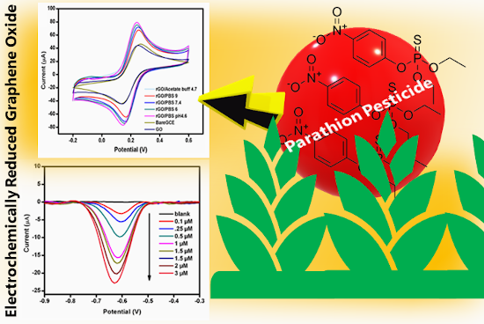
- the fabrication of a robust, nonenzymatic electrochemical-sensing electrode modified with electrochemically reduced graphene oxide (ERGO) to detect PT residues in environmental samples (e.g., soil, water) as well as in vegetables and cereals. The ERGO sensor shows a significantly affected
- electrocatalytic reduction peak at −0.58 V (vs Ag/AgCl) for rapid quantification of PT due to the amplified electroactive surface area of the modified electrode. At optimized experimental conditions, square-wave voltammetric analysis exhibits higher sensitivity (50.5 μA·μM−1·cm−2), excellent selectivity, excellent
- and straightforward responsive nature, high sensitivity, and selectivity leading to real-time detection [7]. A combination of a receptor, an analyte, and a transducer is made up to obtain an electrochemical sensor, in which the surface of the electrode induces redox characteristics via selective


Modeling a multiple-chain emeraldine gas sensor for NH3 and NO2 detection
Beilstein J. Nanotechnol. 2022, 13, 721–729, doi:10.3762/bjnano.13.64
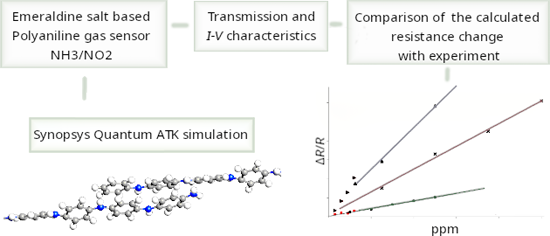
- right side is calculated accordingly. In the equation, f is the Fermi–Dirac function for the electron distribution in the left or right electrode and depends on the electron temperature TL; ρ(ε) stands for the spectral density matrix, defined by the broadening function Γ and the retarded Green’s
- function G. The spectral density matrix has the form [16]: for Green’s function and broadening function and In this equation, δ+ is an infinitesimal positive number, Σ is the self-energy of the left or right electrode, S stands for the overlap matrix and H is the Hamiltonian matrix. These are defined for


Experimental and theoretical study of field-dependent spin splitting at ferromagnetic insulator–superconductor interfaces
Beilstein J. Nanotechnol. 2022, 13, 682–688, doi:10.3762/bjnano.13.60
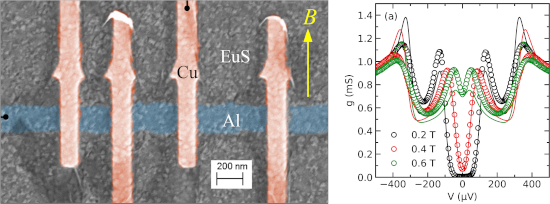
- an oxide layer. The normal layer acts as the tunnel probe to measure the differential conductance of the superconductor and is assumed not to influence the system properties. Since the size of the detector electrode is not small (unlike the tip of a scanning tunneling microscope) and the FI affects



Reliable fabrication of transparent conducting films by cascade centrifugation and Langmuir–Blodgett deposition of electrochemically exfoliated graphene
Beilstein J. Nanotechnol. 2022, 13, 666–674, doi:10.3762/bjnano.13.58
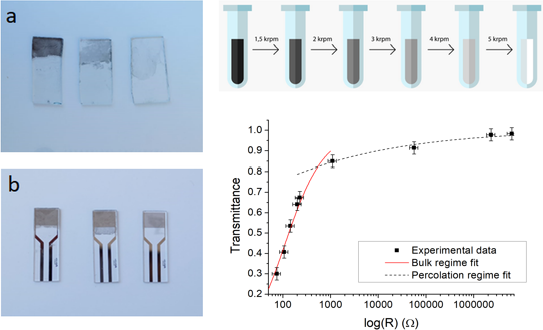
- electrochemical exfoliation, whereby graphene is exfoliated in an electrolyte from an electrode made of graphite [19]. In electrochemical exfoliation, ions from the electrolyte flow towards the graphite electrode and intercalate between the graphene layers. The electrochemical reaction provides a driving force to
- light path. Graphene film resistance was measured by inserting the substrates with electrodes into an electrode connector (DRP-CACIDE, Metrohm, Oviedo, Spain) and the acquiring resistance with a handheld digital multimeter. Optical dark-field microscopy of the films was performed with a magnification of


Approaching microwave photon sensitivity with Al Josephson junctions
Beilstein J. Nanotechnol. 2022, 13, 582–589, doi:10.3762/bjnano.13.50
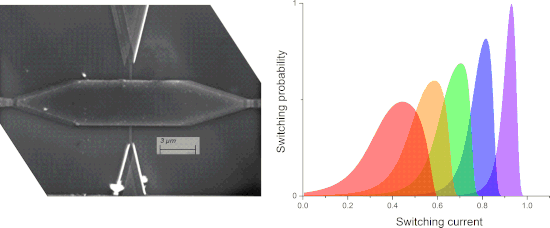
- stages. (b) SEM image of the SIS junction. The top electrode is highlighted in magenta color, the bottom electrode (blue color) has the same shape as the top one in the area of the tunnel barrier. (c) Time diagram of the channels: current through the JJ, initial pulse modulation of the microwave signal


Influence of thickness and morphology of MoS2 on the performance of counter electrodes in dye-sensitized solar cells
Beilstein J. Nanotechnol. 2022, 13, 528–537, doi:10.3762/bjnano.13.44
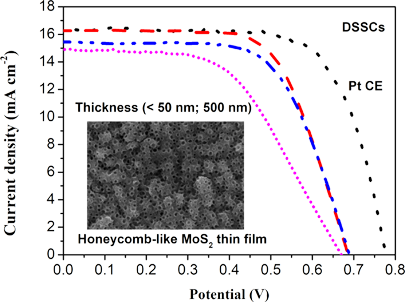
- disulfide (MoS2) was prepared on substrates coated with fluorine-doped tin oxide (FTO) to substitute the platinum counter electrode (CE) for dye-sensitized solar cells (DSSCs). Herein, we synthesized layered and honeycomb-like MoS2 thin films via the cyclic voltammetry (CV) route. Thickness and morphology
- and respectable efficiency [1]. This promising third generation of solar cells contains a dye-adsorbed TiO2 photoanode, an iodide/triiodide electrolyte, and a platinum-based cathode, also known as the counter electrode (CE). However, the high cost of platinum has prevented the real-world application of
- precursor solutions show redox peaks associated with the oxidation/reduction of the precursor ions on the surface of the FTO electrode. In detail, the CV recorded in Na2S solution shows a broad anodic peak around −0.50 V due to the oxidation of S2− ions [25][26]. The CV curve of (NH4)6Mo7O24 solution


Tubular glassy carbon microneedles with fullerene-like tips for biomedical applications
Beilstein J. Nanotechnol. 2022, 13, 455–461, doi:10.3762/bjnano.13.38
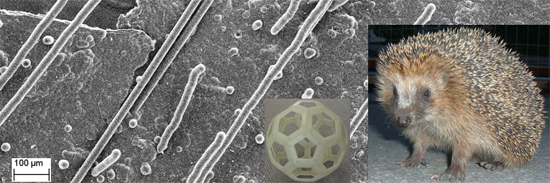
- led to many advanced technological applications [1]. The use of glassy carbon as an electrode material in electrochemistry is probably its best-known application. However, understanding the microstructure of glassy carbon is far from straightforward, therefore, this continues to be an area of active


A non-enzymatic electrochemical hydrogen peroxide sensor based on copper oxide nanostructures
Beilstein J. Nanotechnol. 2022, 13, 424–436, doi:10.3762/bjnano.13.35
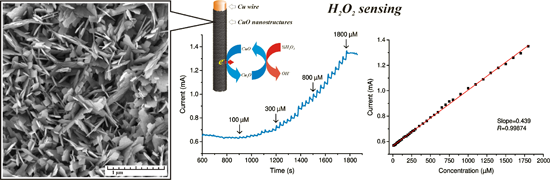
- concentration of H2O2 in the range from 10 to 1800 μM was obtained. The sensitivity of the obtained CuO electrode is 439.19 μA·mM−1. The calculated limit of detection is 1.34 μM, assuming a signal-to-noise ratio of 3. The investigation of the system for sensitivity to interference showed that the most common
- focused on the development of non-enzymatic electrochemical sensors for the detection of H2O2 [37][38][39]. In this type of sensor, H2O2 interacts with the electrode material directly. Certain catalytic processes occurring between H2O2 and the electrode material provide an unambiguous electrochemical
- ]. Nanostructured materials are widely used as the working surface of the electrode [47][48][49]. The most common are transition metal nanoparticles [33][37][50][51][52][53][54], carbon nanotubes [8], metal oxides [55][56][57][58][59][60][61][62][63][64], graphene [32][33], and ordered mesoporous carbon [38][65][66





A chemiresistive sensor array based on polyaniline nanocomposites and machine learning classification
Beilstein J. Nanotechnol. 2022, 13, 411–423, doi:10.3762/bjnano.13.34
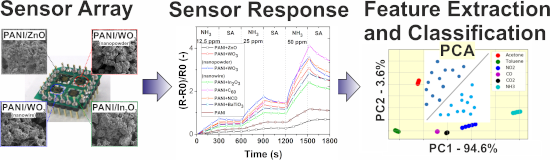
- electrode systems was manufactured as a flexible printed circuit board (DuPont Pyralux AP8535 with 75 µm thickness, double-sided, copper-clad laminate in an all-polyimide composite of polyimide film bonded to copper foil). It contains the heating elements and the temperature sensors for the temperature
- dispersion solutions were deposited by a micropipette on the interdigitated electrode arrays. After that, the deposited sensor layers were dried using the integrated heating elements at 60 °C for 2 h and whole sensor array was subsequently dried in a desiccator over silica gel for 24 h. Before the deposition




Electrostatic pull-in application in flexible devices: A review
Beilstein J. Nanotechnol. 2022, 13, 390–403, doi:10.3762/bjnano.13.32
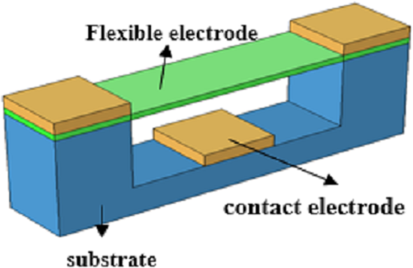
- , phase shifts, and relays. In this paper, the state of the art of electrostatic pull-in phenomena in flexible devices is discussed, and the influence of different electrode structures in NEM switches is classified and discussed. In addition, the applications of NEM switches in radio frequency (RF
- functionality of nanostructures to process external stimuli applied to the device controlling the electrical current [12]. The lower pull-in voltage and the improved durability of the NEM switches require electrode materials with high Young’s modulus, conductivity, and Poisson's ratio. The flexible suspension
- electrode materials include CNTs, GR, and silicon/germanium nanowires. CNT-NEM switches CNTs are an ideal flexible material for NEM electrodes because of the high aspect ratio, current density, and excellent tensile strength. In 2000, Rueckes et al. [13] observed the electromechanical conversion in CNTs for


The effect of metal surface nanomorphology on the output performance of a TENG
Beilstein J. Nanotechnol. 2022, 13, 298–312, doi:10.3762/bjnano.13.25
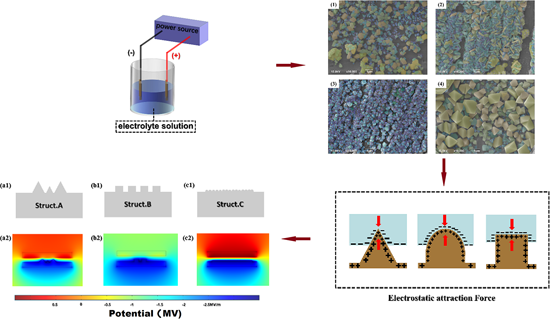
- . Hence, electric charges can move from one electrode to the other through an electrostatic field. When the materials are brought in contact again, the electrostatic field will disappear. Finally, the electrons flow in the opposite direction. An alternating current will be generated through the repetition
- positive, and that on PTFE is negative (Figure 3a). A separation is caused by the removal of the external force, and electrons flow from the PTFE electrode to the Cu electrode (Figure 3b). Then, charge exchange is carried out at the contacts. Electrical equilibrium is formed when the Cu and the PTFE are
- separated by a greater distance (Figure 3c). When the external force is applied again to bring Cu and PTFE into contact, electrons will flow from the Cu electrode through an external load to the PTFE electrode (Figure 3d). According to the observation of the diameter of the nanoscale blocks grown in the




Relationship between corrosion and nanoscale friction on a metallic glass
Beilstein J. Nanotechnol. 2022, 13, 236–244, doi:10.3762/bjnano.13.18
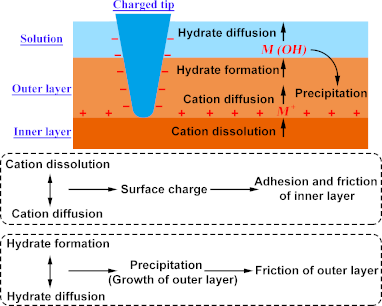
- measurements. In order to establish differences in corrosion of ZrNiTi MGs between the solutions using a standard procedure, potentiodynamic polarization experiments were performed in the range of −0.5 to 1.5 V at a potential sweep rate of 1.0 mV·s−1, in a custom-made cell with a three-electrode setup. The MG
- ribbon, a miniature Ag/AgCl electrode, and a Au wire served as working, reference, and counter electrode, respectively. The polarization test was a separate experiment and subsequent friction experiments were performed using new samples, which were immersed without applying a potential. (a


Impact of device design on the electronic and optoelectronic properties of integrated Ru-terpyridine complexes
Beilstein J. Nanotechnol. 2022, 13, 219–229, doi:10.3762/bjnano.13.16
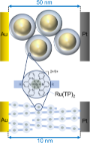
- rinsed three times in either ethanol or chloroform. Nanodevice fabrication The fabrication of nanoelectrode samples, each equipped with twelve nanoelectrode pairs (consisting of an AuPd and a Pt electrode with a nanometer-sized gap in between), was performed according to a recently described process
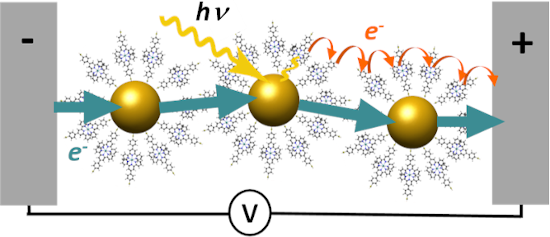
- gaps almost unaffected. Thus, only a part of the orbitals relevant for a continuous conductive path from one electrode to the other is shifted into the respective voltage window defined by the measurement conditions. This kind of voltage divider, determined by the few-Ru(MPTP)2–AuNP device geometry, in
- ratio. Since it will be difficult to increase ΔIL_D, a straightforward way to improve the on/off ratio of Ru(MPTP)2–AuNP devices would be to increase the distance between adjacent AuNPs in the electrode gap, for example by employing longer ligand molecules. This will cause a decrease of the tunneling


Design aspects of Bi2Sr2CaCu2O8+δ THz sources: optimization of thermal and radiative properties
Beilstein J. Nanotechnol. 2021, 12, 1392–1403, doi:10.3762/bjnano.12.103
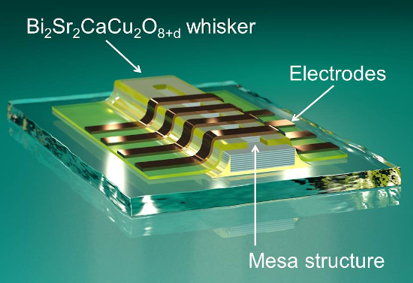
- crystal and the electrode leads to appearance of a large parasitic capacitance, which shunts terahertz emission and prevents impedance matching with open space. The overlap is avoided in whisker-based devices. Furthermore, the whisker and the electrodes form a turnstile (crossed-dipole) antenna
- are made for the base temperature T0 = 10 K and for sizes similar to the actual devices, shown in Figure 1: substrate 5 × 5 × 0.3 mm3, crystal 1 × 1 × 0.3 mm3, whisker 300 × 30 × 3 μm3 and mesa 30 × 30 × 0.3 μm3. The thickness of gold electrode is 200 nm. The thickness of epoxy layer, de, depends on
- the mesa volume with a total power of 1 mW and uniform density. Figure 3 represents heat transfer simulations for a whisker without an electrode. Figure 3a,b shows sketches of the device and the x–z cross-section through the mesa (not to scale), respectively. Figure 3c–e shows the temperature


Measurement of polarization effects in dual-phase ceria-based oxygen permeation membranes using Kelvin probe force microscopy
Beilstein J. Nanotechnol. 2021, 12, 1380–1391, doi:10.3762/bjnano.12.102
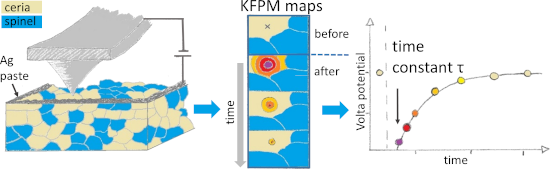
- nanoscale electrode, a constant voltage pulse was applied to the sample in order to achieve a local polarization with distinctly changed redox state and defect concentrations. In a subsequent mapping experiment, the AFM tip was used as Kelvin probe to scan the locally changed surface potential distribution


Enhancement of the piezoelectric coefficient in PVDF-TrFe/CoFe2O4 nanocomposites through DC magnetic poling
Beilstein J. Nanotechnol. 2021, 12, 1262–1270, doi:10.3762/bjnano.12.93
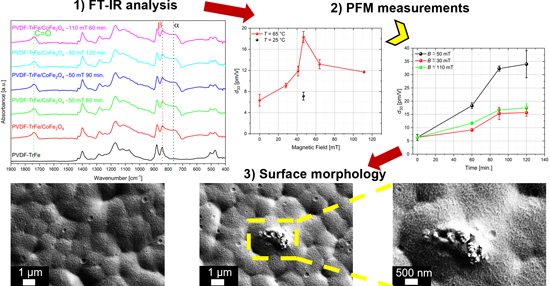
- the use of a top electrode or of high magnetic fields (the maximum value of d33 was obtained at 50 mT, using a current of 0.4 A) making the PVDF-TrFE/CoFe2O4 nanocomposite suitable for the fabrication of highly efficient devices for energy harvesting and wearable sensors. Keywords: CoFe2O4; magnetic


Electrical, electrochemical and structural studies of a chlorine-derived ionic liquid-based polymer gel electrolyte
Beilstein J. Nanotechnol. 2021, 12, 1252–1261, doi:10.3762/bjnano.12.92
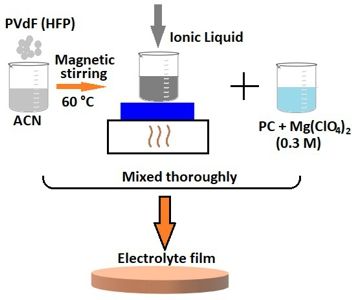
- availability in the Earth’s crust, low atomic weight, low price, high electrochemical reduction potential of −2.3 V versus the standard hydrogen electrode. Moreover, most of the Mg compounds are usually nontoxic and also Mg is chemically stable as compared to lithium and sodium [31]. In the present study, the
- due to the dissociation of salts and ion aggregates at higher temperatures. The analysis of the modulus is very useful in distinguishing between electrode polarization with that of other interfacial effects. Figure 7a and Figure 7b show the real part Mr and the imaginary part Mi of the electrical
- observed that the height of the peak decreases by increasing the temperature, which suggests a plurality of relaxation mechanisms. At low frequencies, the values of both real and imaginary moduli decrease to almost zero, indicating a negligible contribution of the electrode polarization phenomenon. The



Impact of electron–phonon coupling on electron transport through T-shaped arrangements of quantum dots in the Kondo regime
Beilstein J. Nanotechnol. 2021, 12, 1209–1225, doi:10.3762/bjnano.12.89
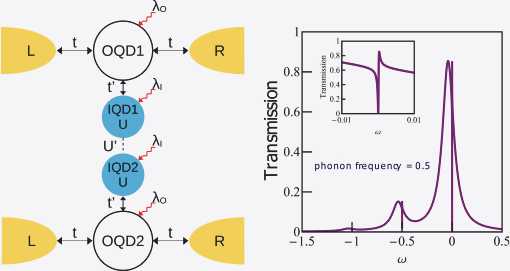
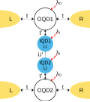
- the upper (j = 1) and the lower (j = 2) TQD subsystems visualized on Figure 1 and α numbers left or right electrode. The terms parametrized by U and U’ describe intra- and interdot Coulomb interactions, respectively, with denoting the occupation operators of IQDs. The last two terms stand for


Morphology-driven gas sensing by fabricated fractals: A review
Beilstein J. Nanotechnol. 2021, 12, 1187–1208, doi:10.3762/bjnano.12.88
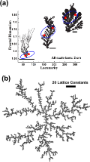
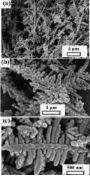
- by applying it to the random movement of a metallic ion in a low concentration of electrolyte near a negatively charged electrode [52]. The process resulted in a tree-like scale-invariant structure [52][53]. Figure 2b demonstrates the growth mechanism of a fractal proposed by DLA. Theories of non
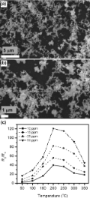
- electrode resulting in a sensor prototype and were later used for UV-assisted acetone sensing. Figure 12a and Figure 12b show SEM images of top-view morphology and thickness of the sample at low and high magnifications, respectively. Figure 12c shows an energy-dispersive X-ray spectroscopy (EDS) mapping of
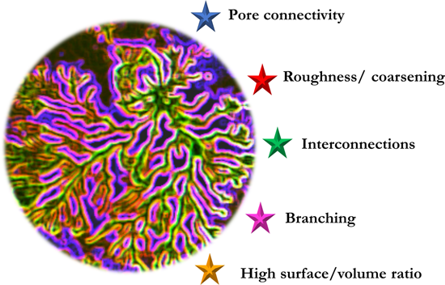
- fractals, can aid in better sensing. Connectivity, exposure to gaseous environment, nanoscale 3D coarsening, and roughness generate many secondary and tertiary adsorption sites that result in better sensitivity. If somehow the interconnectivity can be improved with the help of an artificial electrode








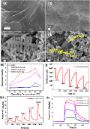

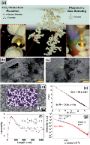
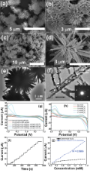

The effect of cobalt on morphology, structure, and ORR activity of electrospun carbon fibre mats in aqueous alkaline environments
Beilstein J. Nanotechnol. 2021, 12, 1173–1186, doi:10.3762/bjnano.12.87
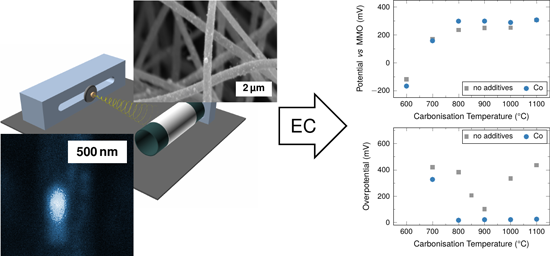
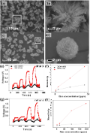
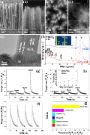
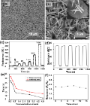
- . Many researchers focus on the active material, that is, the catalyst, which enhances the ORR, and many promising systems have been reported and extensively reviewed [5]. The electrode scaffold receives far less attention. Only few reports elaborate on the importance of the electrode architecture for
- , especially the lithium and silicon systems, on account of their different mechanism involving the cathode as an explicit reaction site of the metal redox chemistry [7][8][9]. From a scientific point of view, in aqueous systems, an air electrode needs to allow gas to diffuse in appropriate amounts towards the
- active sites, that is, triple-phase contact points. These contact points of air, solid catalyst, and liquid electrolyte, need to be high in number or area. This entails a partial wetting of the electrode to ensure accessibility of the sites for gaseous oxygen. From a more industrial perspective


Assessment of the optical and electrical properties of light-emitting diodes containing carbon-based nanostructures and plasmonic nanoparticles: a review
Beilstein J. Nanotechnol. 2021, 12, 1078–1092, doi:10.3762/bjnano.12.80
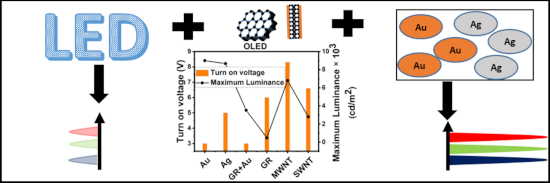
- combining them with other polymers. Nevertheless, this work demonstrates that SWNT can be used as cathode materials in LED, if improved. The successful implementation of such an electrode would open new possibilities to fabricate fully transparent OLED. Conclusion This article has provided an overview of





