


Search results
Search for "flexible" in Full Text gives 362 result(s) in Beilstein Journal of Nanotechnology. Showing first 200.
Assessment of the optical and electrical properties of light-emitting diodes containing carbon-based nanostructures and plasmonic nanoparticles: a review
Beilstein J. Nanotechnol. 2021, 12, 1078–1092, doi:10.3762/bjnano.12.80
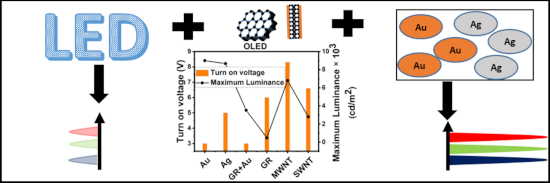
- quantum efficiencies, and luminance. De facto, plasmonic nanoparticles, such as Au and Ag have boosted the luminance of red, green, and blue emissions. When combined with carbon nanostructures they additionally offer new possibilities towards lightweight and flexible devices with better thermal management
- . The optoelectronic properties of SWNT thin films make them ideal for transparent conducting flexible electrodes in LED. In Figure 2, Aguirre et al. pre-fabricated vertical sheets of SWNT and then transferred them onto a glass substrate [21]. The maximum brightness and efficiency achieved in these SWNT
- graphene oxide is required based on the device configuration. Shi et al. obtained similar results with an excellent luminance of 53000 cd/m2, demonstrating its explicit applicability in flexible OLED [64]. Combinations of graphene oxide with polymers and metal oxides have also been evaluated. Lin et al


Use of nanosystems to improve the anticancer effects of curcumin
Beilstein J. Nanotechnol. 2021, 12, 1047–1062, doi:10.3762/bjnano.12.78
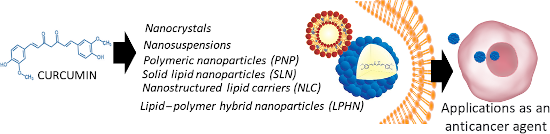
- nanosystems. According to previous evidence, the use of nanosystems is highly flexible since it can be tailored for numerous applications with highly specific goals. Polymeric micelles and theranostics (a strategy that combines treatment and diagnostics) are two examples of such applications that are based on


An overview of microneedle applications, materials, and fabrication methods
Beilstein J. Nanotechnol. 2021, 12, 1034–1046, doi:10.3762/bjnano.12.77
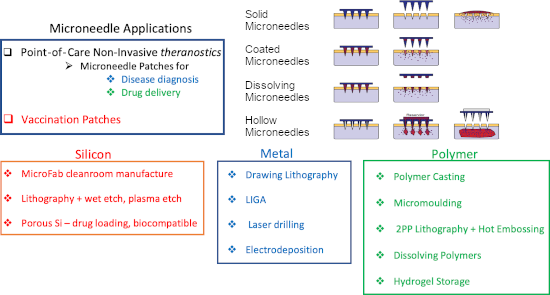
- microfluidic elements for point-of-care diagnostics or drug delivery. Recent commercialization of TPP microtechnology by companies such as Nanoscribe GmbH (Germany) has enabled precise and flexible fabrication with submicron resolution [5]. Other manufacturing processes for microneedle fabrication include


Progress and innovation of nanostructured sulfur cathodes and metal-free anodes for room-temperature Na–S batteries
Beilstein J. Nanotechnol. 2021, 12, 995–1020, doi:10.3762/bjnano.12.75
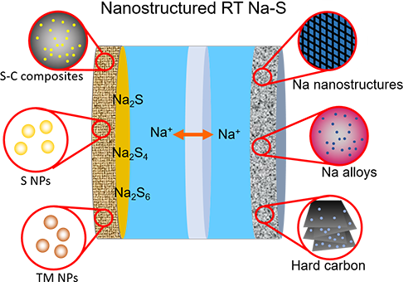
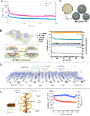
- result of the nanoporosity of the carbon matrix and the high nitrogen-doping content (ca. 18 atom %). Among all sulfur–carbon composite cathodes, flexible carbon-based skeletons are one of the most promising cathode materials given their ability to accommodate the fast volume changes of sulfur during the
- discharge process. Ma et al. [34] reported a conductive and flexible graphene aerogel cathode that effectively tolerated the volume changes under stabilization of the structure and led to an outstanding performance, showing an initial discharge capacity of 572.8 mAh·g−1 at 5C and an extremely low average
- ]. For instance, Hwang et al. [39] reported a cathode material based on one-dimensional sulfurized PAN nanofibers, and Kim et al. [40] reported the design of a flexible cathode that consists of a sulfurized PAN nanofiber web. The sulfurized PAN web was prepared by pyrolysis of PAN nanofibers and




The role of deep eutectic solvents and carrageenan in synthesizing biocompatible anisotropic metal nanoparticles
Beilstein J. Nanotechnol. 2021, 12, 924–938, doi:10.3762/bjnano.12.69
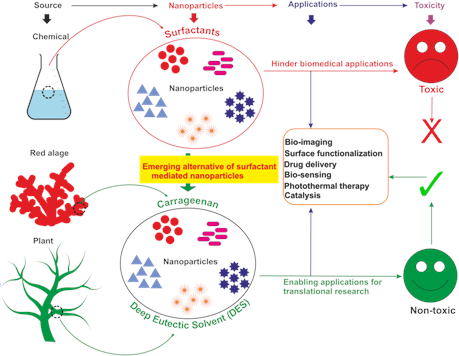
- (one sulfate group per disaccharide), iota carrageenan (two sulfate groups per disaccharide) and lambda carrageenan (three sulfate groups per disaccharide). Carrageenan forms highly flexible curly helical structures, which are responsible for their gelation property at room temperature. The number of


Recent progress in actuation technologies of micro/nanorobots
Beilstein J. Nanotechnol. 2021, 12, 756–765, doi:10.3762/bjnano.12.59
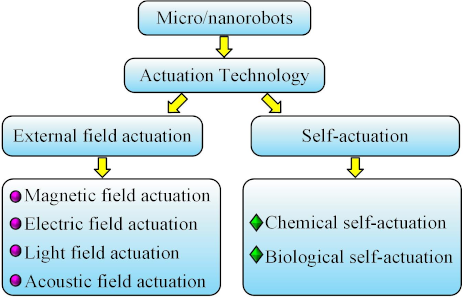
- targeted drug delivery. Li et al. [19] designed a fish-like magnetic actuation micro/nanorobot with a passive gold segment as the head, two active nickel segments as the body, and one passive gold segment as the caudal fin, all connected by a flexible structure of porous silver. The swimming mode of the
- and two nickel arm segments connected by flexible porous silver hinges. The flexible porous silver segment makes the robot swing symmetrically. By magnetizing the nickel segment, the two arms of the robot can swing in different directions under the action of the oscillating magnetic field, realizing a
- an electric eel, called nanoeel. It has a smart flexible tail, made of polyvinylidene fluoride copolymer, connected to the head of a polypyrrole nanowire. The head is decorated with a nickel ring for magnetic actuation. When an alternating magnetic field is applied, the magnetic head module (nickel


Recent progress in magnetic applications for micro- and nanorobots
Beilstein J. Nanotechnol. 2021, 12, 744–755, doi:10.3762/bjnano.12.58
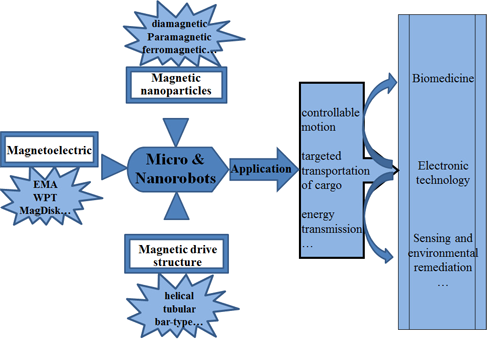
- tubular spermbots reported here were guided by external magnets and sperm cells, and used sperm cells to push microtubules. The flagellum of this flexible artificial MNRs was basically a magnetic microhelix that was actuated via an external rotating magnetic field. These magnetic microspirals could move
- analyte. The magnetic bead (MaB) architecture is composed of a 15 nm iron oxide (Fe3O4) superparamagnetic core encased in a silica shell. The DNA strands are conjugated to the polymeric brush using a flexible linker. The brush permits passage of the nanoparticles through cell membranes, and prevents
- sperm cells; magnetic helical enzyme carriers for the cumulus cell removal by enzymes (e.g., hyaluronidase); artificial flagella with multiple windings and a claw-shaped sperm carrier for the delivery of immotile sperm cells; artificial flexible flagella for transport of immotile spermatozoa; stimuli


Physical constraints lead to parallel evolution of micro- and nanostructures of animal adhesive pads: a review
Beilstein J. Nanotechnol. 2021, 12, 725–743, doi:10.3762/bjnano.12.57
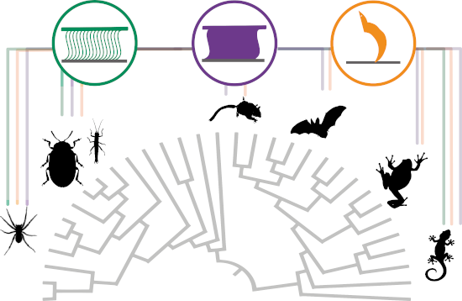
- , and to suggest a rapid response and versatile adaptability of the AMS in a relatively short evolutionary time [163]. The Turing model indicates a fast response when animals face changes in surface composition, contributing to a flexible adaptability of the functionalized attachment surfaces. Similar
- , which makes the pad material even more flexible. The structural anisotropy of the pad material is also responsible for the frictional anisotropy [129]. The friction is higher while the pad is sliding in a proximal direction because the fibres of smooth pads or hairs of hairy pads can be more easily


Nanogenerator-based self-powered sensors for data collection
Beilstein J. Nanotechnol. 2021, 12, 680–693, doi:10.3762/bjnano.12.54
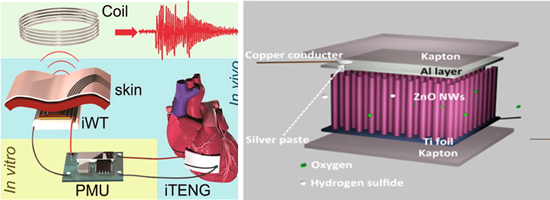
- for the design of sterilization and algae removal [72], wastewater treatment [73][74], and electrochemical corrosion protection of metal surfaces and battery cathodes [56][75][76]. TENG-based special flexible pressure sensors can be placed on the surface of human skin to monitor the physiological
- recognition. The stretchable sensor is installed on a glove by using a flexible material. When the fingers move, each finger generates an electrical signal. These signals are classified by using ML algorithms to obtain the text, and finally the text is converted into speech output. The method of ML processing
- throat. Voice print recognition and speech recognition can be realized by employing back-end data processing technology [88]. PENG/TENG-based self-powered sensors are flexible and highly sensitive, which can reduce inconveniences of a sensor system during physical training [41]. Back-end intelligent



High-yield synthesis of silver nanowires for transparent conducting PET films
Beilstein J. Nanotechnol. 2021, 12, 624–632, doi:10.3762/bjnano.12.51
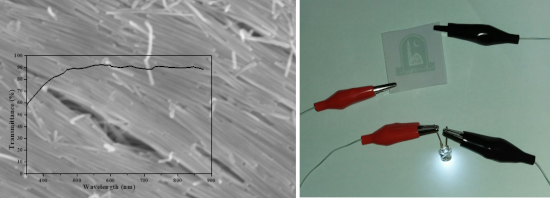
- flexibility after the ink coating. The maximum transmittance value of as-prepared PET films in the visible region was estimated to be about 92.5% with a sheet resistance value of ca. 20 Ω/sq. This makes the films a potential substitute to commonly used expensive indium tin oxide (ITO) in the field of flexible
- toxic composition. Moreover, the sputtering process is time-consuming and sputtering make the films brittle, which limits the application in flexible applications [5]. Numerous materials are under consideration to overcome these challenges. In the past few years, certain materials, such as graphene
- , carbon nanotubes (CNT), conductive polymers, and metallic nanowires, have been tested commercially as alternative to ITO films for flexible optoelectronic devices [6][7][8][9]. Amongst them, graphene and carbon materials, particularly CNTs, display low optical transparency and high sheet resistance owing


A stretchable triboelectric nanogenerator made of silver-coated glass microspheres for human motion energy harvesting and self-powered sensing applications
Beilstein J. Nanotechnol. 2021, 12, 402–412, doi:10.3762/bjnano.12.32
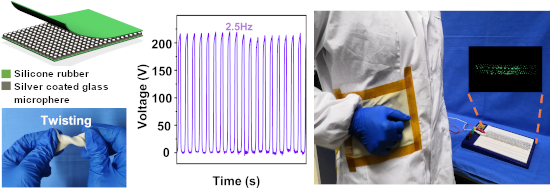
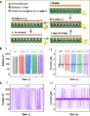
- -coated glass microspheres (S-TENG). The S-TENG exhibits a remarkable performance in harvesting human motion energy and as flexible tactile sensor. By optimizing the device parameters and operating conditions, the maximum open-circuit voltage and short-circuit current of the S-TENG can reach up to 370 V
- satisfies the needs of reliability for flexible tactile sensors in realizing human–machine interfaces. This work expands the potential application of S-TENGs from wearable electronics and smart sensing systems to real-time robotics control and virtual reality/augmented reality interactions. Keywords: human
- source for electronic devices. Another potential application for the S-TENG is as flexible tactile sensor that can serve as electronic skin for a more comfortable interactive experience between humans and external objects by sensing all kinds of information, such as size, shape, and texture [26][27]. The



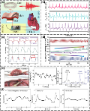
Intracranial recording in patients with aphasia using nanomaterial-based flexible electronics: promises and challenges
Beilstein J. Nanotechnol. 2021, 12, 330–342, doi:10.3762/bjnano.12.27
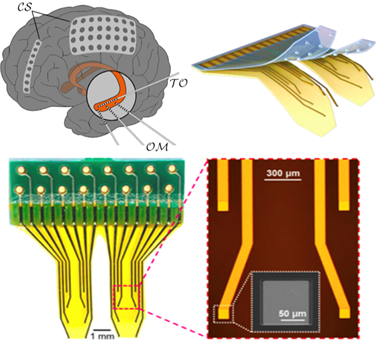
- Qingchun Wang Wai Ting Siok Department of Linguistics, The University of Hong Kong, Hong Kong, China 10.3762/bjnano.12.27 Abstract In recent years, researchers have studied how nanotechnology could enhance neuroimaging techniques. The application of nanomaterial-based flexible electronics has the
- reading processing. We then outline the strengths and weaknesses of iEEG in studying human cognition and the development of intracranial recordings that use brain-compatible flexible electrodes. We close by discussing the potential advantages and challenges of future investigations adopting nanomaterial
- -based flexible electronics for intracranial recording in patients with aphasia. Keywords: aphasia; flexible electronics; intracranial electroencephalography (iEEG); language processing; neuroimaging techniques; Introduction Aphasia is an impairment in language and communication, which results from


The patterning toolbox FIB-o-mat: Exploiting the full potential of focused helium ions for nanofabrication
Beilstein J. Nanotechnol. 2021, 12, 304–318, doi:10.3762/bjnano.12.25
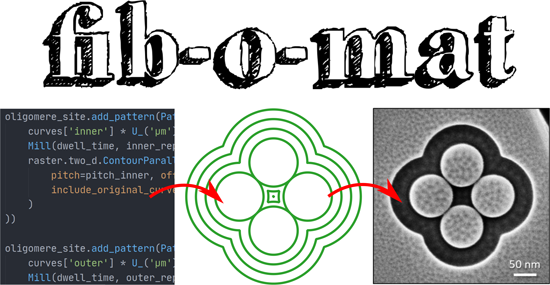
- . This includes all raster styles that are available in the high-level approach but also user-defined styles, such as the back-stitching depicted in Figure 3b,c. The provided tools allow for flexible pattern generation and mitigate typical problems in ion beam-based machining. As the local material


Gold(I) N-heterocyclic carbene precursors for focused electron beam-induced deposition
Beilstein J. Nanotechnol. 2021, 12, 257–269, doi:10.3762/bjnano.12.21
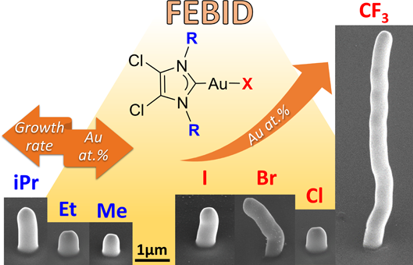
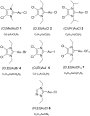
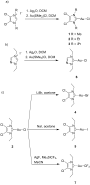
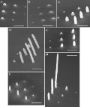
- ][15] and biomedical applications [16]. FEBID provides a flexible direct-write technique to fabricate complex 3D structures, which are hard to realize using resist-based planar lithography processes. However, when using organometallic precursors, usually, undesired dissociation fragments also end up in
- influence on the FEBID process. Testing apparatus A more flexible setup than a traditional GIS was required for the exploration and testing of a large series of precursors. Commercially available GIS have a limited temperature range. For example, the maximum allowable temperature of the Thermo Fisher





The nanomorphology of cell surfaces of adhered osteoblasts
Beilstein J. Nanotechnol. 2021, 12, 242–256, doi:10.3762/bjnano.12.20
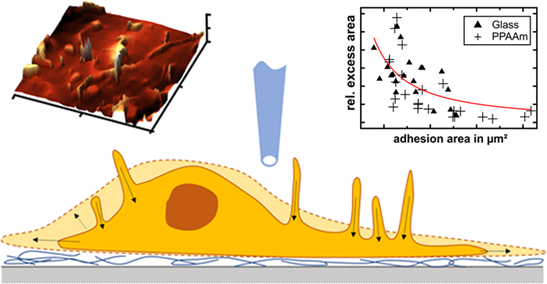
- flexible. Figure 2a shows an example of a typical SICM topography of the border region in the live state (see Figure 2b for the corresponding bright-field microscopy image). Features with lateral dimensions of approximately 1 µm × 0.8 µm protruding 100–300 nm from the surrounding (Figure 2c), at a density
- current error appears counterintuitive regarding the material properties. However, considering the fin or springboard morphology of ruffles, the elasticity may not result from changes of material properties only but also from the flexible shape. Thus, the extremely low error probably points towards lower


Toward graphene textiles in wearable eye tracking systems for human–machine interaction
Beilstein J. Nanotechnol. 2021, 12, 180–189, doi:10.3762/bjnano.12.14
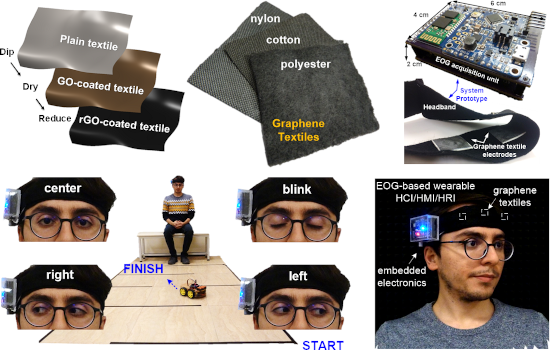
- with perfect pattern detection accuracies of 100% and 98%, respectively. Keywords: electrooculography (EOG); flexible electronics; graphene; human–computer interaction (HCI); human–machine interface (HMI); personal assistive device (PAD); wearable smart textile; Introduction Eye tracking technologies
- stable graphene coating on the textiles. The prepared graphene textiles were then cut into pieces (ca. 3 × 3 cm) and mounted on flexible, polyethylene-based foam paddings, which were sandwiched between metallic snap fasteners in order to establish an electrical connection with the front-end circuitry. In
- ” electrodes, the functionality of which degrades over time [23]. However, one common issue in dry electrodes is the relatively high skin-electrode contact impedance, which causes susceptibility to physical movements and power line interferences resulting in signal distortions. While the flexible, foldable


Paper-based triboelectric nanogenerators and their applications: a review
Beilstein J. Nanotechnol. 2021, 12, 151–171, doi:10.3762/bjnano.12.12
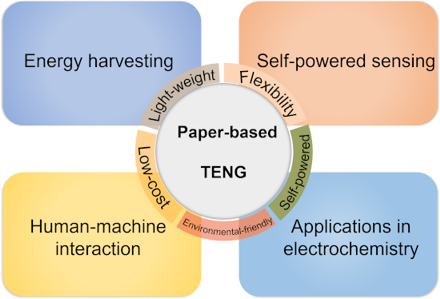
- [39][40][41][42][43][44], high-voltage sources [45], self-powered systems [46][47][48][49][50], and blue energy harvesting devices [51][52][53][54][55][56]. Paper, by far one of the most inexpensive and flexible materials widely used in daily life, was developed more than 2000 years ago in China
- , and has tremendous advantages over the majority of other materials (e.g., it is lightweight, renewable, and air-permeable). Besides, paper is flexible and can be easily folded or bent into 3D structures without causing structural damage. In the last decades, paper-based electronic devices, such as
- process or to rotary screen printing, which enables a facile and high-throughput printing on curved surfaces. The deposition process assisted with soft stencils is another “bottom-up” method for the preparation of functional materials on flexible and irregular surfaces. Even though P-TENGs require






A review on the green and sustainable synthesis of silver nanoparticles and one-dimensional silver nanostructures
Beilstein J. Nanotechnol. 2021, 12, 102–136, doi:10.3762/bjnano.12.9
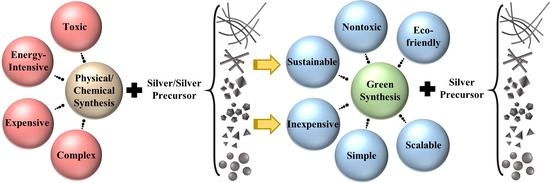
- devices [94], organic light emitting diodes (OLED) [95], transparent conductive electrodes [96][97], artificial skin [98], liquid crystal display (LCD) [99][100], and smart windows [101][102]. AgNWs can be embedded in flexible touch-screen substrates and electronic displays to provide an enhanced decrease


ZnO and MXenes as electrode materials for supercapacitor devices
Beilstein J. Nanotechnol. 2021, 12, 49–57, doi:10.3762/bjnano.12.4
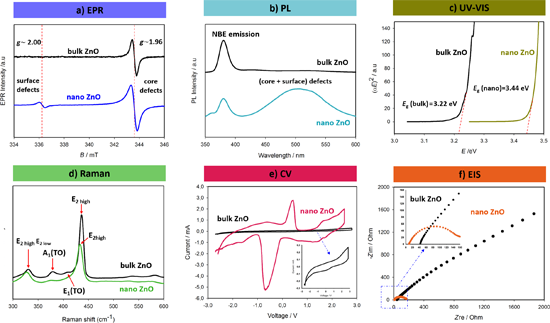
- maximum specific capacitance of 481 F·g−1 was achieved at 5 mV·s−1. The results indicate that tantalum carbide MXenes are appropriate for the use in supercapacitor applications [15]. Zhao et al. used an alternative fabrication technique and developed highly flexible sandwich-like MXene/CNT papers. The
- 1445 F·cm−3 with enhanced rate capability and high mass loading [34]. Huang et al. reported a comparatively simple spray coating approach to manufacture paper-based solid-state flexible micro-supercapacitors (FMSCs) with a sprayable MXenes as conductive ink. FMSCs are innovative candidates for portable
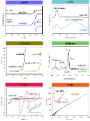
Bio-imaging with the helium-ion microscope: A review
Beilstein J. Nanotechnol. 2021, 12, 1–23, doi:10.3762/bjnano.12.1
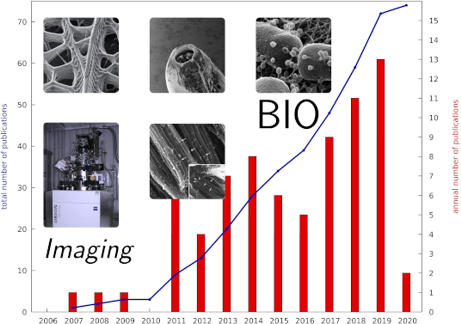
- opportunity for further developments. On the one hand, it is as flexible and straightforward to use as a scanning electron microscope (SEM) but with a five times larger depth of field [1] and a lateral resolution of about 0.5 nm [4] (demonstrated record: 0.24 nm [5]), which is between high-end field-emission


Piezotronic effect in AlGaN/AlN/GaN heterojunction nanowires used as a flexible strain sensor
Beilstein J. Nanotechnol. 2020, 11, 1847–1853, doi:10.3762/bjnano.11.166
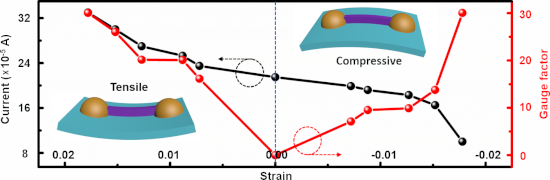
- synthesize AlGaN/AlN/GaN heterojunction NWs with controllable size. A single NW is transferred to a flexible poly(ethylene terephthalate) substrate and fixed by indium tin oxide electrodes to form an ohmic contact for the strain sensor. An external mechanical stress is introduced to study the performance of
- investigated and systematically analyzed under compressive and tensile strain. Here, we describe a strain sensor that shows a great application potential in wearable integrated circuits, in health-monitoring devices, and in artificial intelligence. Keywords: AlGaN/AlN/GaN nanowires; flexible; piezotronic
- , AlGaN/AlN/GaN NWs with high electron mobility, carrier density, and mechanical flexibility have become good candidates for highly sensitive and flexible strain sensors. In this work, we use a top-down two-step process, including inductively coupled plasma (ICP) dry etching and selective electrochemical


Nanomechanics of few-layer materials: do individual layers slide upon folding?
Beilstein J. Nanotechnol. 2020, 11, 1801–1808, doi:10.3762/bjnano.11.162
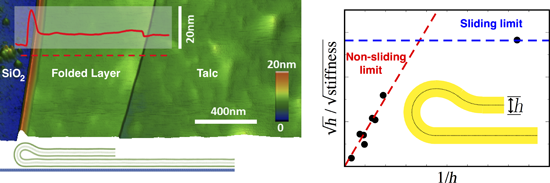
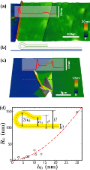
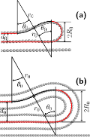
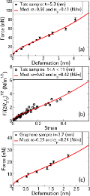
- understanding of the structural/dynamic response of multilayered 2D materials upon bending is also an essential issue regarding technological applications, such as deformable electronics, flexible reinforcements for brittle biomedical implants [15], and ultralight resonators suited as transducers of extremely

![[Graphic 5]](/bjnano/content/inline/2190-4286-11-162-i8.svg?max-width=637&scale=1.18182) =
= ![[Graphic 6]](/bjnano/content/inline/2190-4286-11-162-i9.svg?max-width=637&scale=1.18182) as a function of 1/h for the nine measured talc samples. h is a directly measured ...
as a function of 1/h for the nine measured talc samples. h is a directly measured ...
PEG/PEI-functionalized single-walled carbon nanotubes as delivery carriers for doxorubicin: synthesis, characterization, and in vitro evaluation
Beilstein J. Nanotechnol. 2020, 11, 1728–1741, doi:10.3762/bjnano.11.155
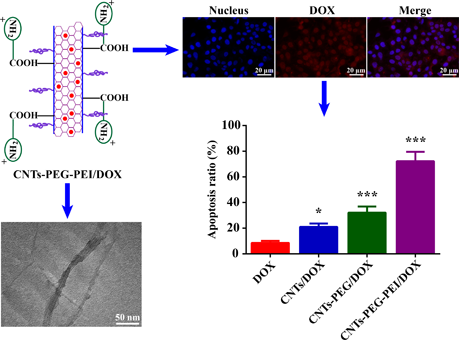
- limitation. Among them, conjugation with poly(ethylene glycol) (PEG) is one of the most effective methods because PEG is highly hydrophilic and flexible [28][29]. Functionalization using a hydrophilic polymer with positively charged groups is another effective way to reduce opsonization by the RES and

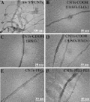
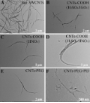

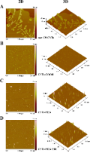
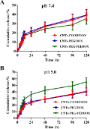


Piezoelectric sensor based on graphene-doped PVDF nanofibers for sign language translation
Beilstein J. Nanotechnol. 2020, 11, 1655–1662, doi:10.3762/bjnano.11.148
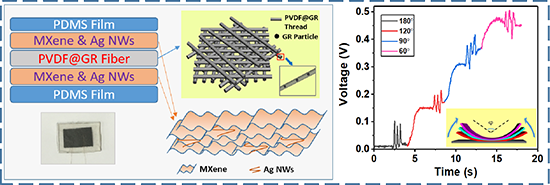
- /bjnano.11.148 Abstract The tracking of body motion, such as bending or twisting, plays an important role in modern sign language translation. Here, a subtle flexible self-powered piezoelectric sensor (PES) made of graphene (GR)-doped polyvinylidene fluoride (PVDF) nanofibers is reported. The PES exhibits
- ][45][46][47][48]. In the era of smart sensing, there is an increasing need for self-powered pressure and bending sensing systems [49][50][51][52][53][54][55][56][57][58][59][60][61][62][63][64]. In this study, we propose a flexible self-powered piezoelectric sensor (PES) based on graphene (GR)-doped


A self-powered, flexible ultra-thin Si/ZnO nanowire photodetector as full-spectrum optical sensor and pyroelectric nanogenerator
Beilstein J. Nanotechnol. 2020, 11, 1623–1630, doi:10.3762/bjnano.11.145
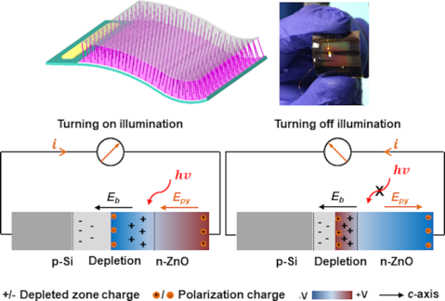
- work, a new type of self-powered, high-performance ultra-thin p-Si/n-ZnO nanowire (NW) flexible photodetector (PD) and its application as full-spectrum optical sensor and pyroelectric nanogenerator (PENG) are demonstrated. The working mechanism of PDs for PENGs is carefully investigated and
- fabrication of the PENG utilizing a simple and low-cost method shows its potential applications in self-powered flexible electronic devices. Keywords: flexible; full-spectrum; photodetector; pyroelectric nanogenerator (PENG); self-powered; Introduction Full-spectrum photodetectors (PDs) that can detect
- applied in flexible wearable electronic devices have been extensively researched [5]. The majority of the reported full-spectrum PDs, which are based on perovskites, quantum dots, or organic materials are costly, complicated to prepare, and difficult to integrate into flexible electronic devices. This





