


Search results
Search for "gas phase" in Full Text gives 228 result(s) in Beilstein Journal of Nanotechnology. Showing first 200.
Bombyx mori silk/titania/gold hybrid materials for photocatalytic water splitting: combining renewable raw materials with clean fuels
Beilstein J. Nanotechnol. 2018, 9, 187–204, doi:10.3762/bjnano.9.21
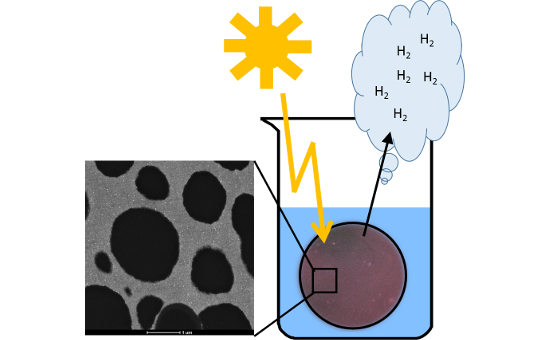
- distance of 10 cm. After reaction (usually 24 h), a sample of the gas phase was analyzed in a gas chromatograph equipped with a Carboxen column (Agilent Technologies 7890A GC System with a jasUNIS Injector System) to determine the amount of H2. Results Two types of materials were made. The first group only


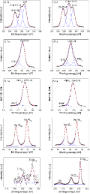
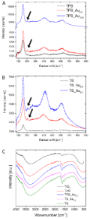


Electron-driven and thermal chemistry during water-assisted purification of platinum nanomaterials generated by electron beam induced deposition
Beilstein J. Nanotechnol. 2018, 9, 77–90, doi:10.3762/bjnano.9.10
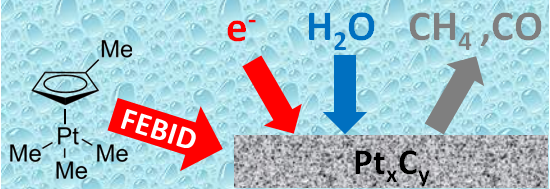
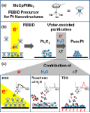
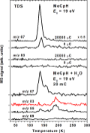
- from the precursor is not a relevant reaction in the electron-induced degradation of MeCpPtMe3 layers. In addition, the m/z 39 trace gives evidence that ESD of the precursor is negligible. According to previous gas phase experiments [21], the dominant fragmentation proceeding via dissociative electron
- present and previous [10] surface studies, precursor fragmentation is driven by electron impact ionization (EI). In this regime, loss of CH4 from the precursors has in fact been observed in gas phase mass spectrometry [11][20]. Nonetheless, the abundances of specific fragment ions observed in the positive
- the precursor layer may provide a more convincing explanation for the lack of CH3 in ESD. Such an effect was observed previously in the case of acetylacetone where gas-phase experiments demonstrated that electron-induced loss of CH3 is significant in the monomers but is completely suppressed in the



Response under low-energy electron irradiation of a thin film of a potential copper precursor for focused electron beam induced deposition (FEBID)
Beilstein J. Nanotechnol. 2018, 9, 57–65, doi:10.3762/bjnano.9.8
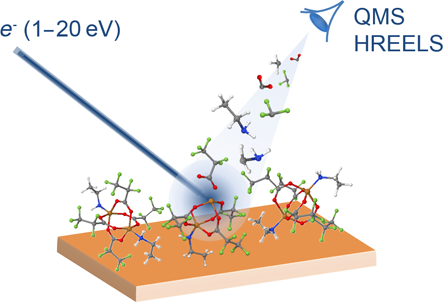
- should be not only in the gas phase, but also it needs to be deposited on the surface where the electron beam is focused. The main motivation of the present study is to get insights on the response of this precursor under FEBID conditions, i.e., under electron irradiation in vacuum. We separate here the
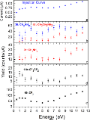
- difficult to determine from the data. To our knowledge, no measurement of amine metal cation complex dissociation is described in literature for comparison, and the resonances for dissociative electron attachment in amine compounds, known from gas-phase studies [23][24][25][26], are expected to be shifted
- in energy and to have enlarged widths in condensed phase [27]. One cannot go further in the attribution based only on our measurements and the results of gas-phase studies. Nevertheless, the release of the ethylamine compound is favourable to the use of the compound as a precursor for FEBID. It



The rational design of a Au(I) precursor for focused electron beam induced deposition
Beilstein J. Nanotechnol. 2017, 8, 2753–2765, doi:10.3762/bjnano.8.274
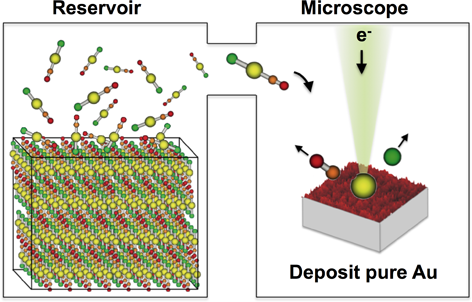
- hand, solid crystalline ClAuCO decomposes so rapidly that we only detect AuCl in the electron microscope. This instability is inconsistent with a ΔG value of +25.5 kcal/mol. On the other hand, Mulders et al. have shown that, once ClAuCO molecules reach the gas phase, they are stable enough to travel
- CF3AuCO as only stable at low temperatures and quickly darkening at room temperature, preventing elemental analysis [77]. To our knowledge there is no literature data on the stability of CF3AuCO in vacuum (for the solid phase nor for the gas phase). ClAuPMe3 is the most stable compound in Table 2, the
- solid state (+10.5 kcal/mol) compared to the gas phase value of ΔG of +36.75 kcal/mol at atmospheric pressure indicates a stabilization of AuCl (or destabilization of ClAuCO) due to interactions in the solid state. The further decrease in ΔG upon going from atmospheric pressure to vacuum is indicative


Synthesis of [{AgO2CCH2OMe(PPh3)}n] and theoretical study of its use in focused electron beam induced deposition
Beilstein J. Nanotechnol. 2017, 8, 2615–2624, doi:10.3762/bjnano.8.262
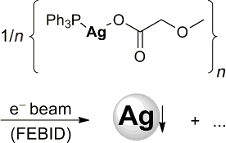
- was shown that coordination compounds, for example, silver(I) carboxylates can successfully be applied as single-source species for silver nanoparticle formation [6] and as gas-phase precursors in the deposition of pure, dense and conformal thin silver films [7][8][9]. This study aims for showing if
- (Experimental; Supporting Information File 1, Figures S6 and S7). These results suggest the processing of 2 in nanoelectrospray liquid precursor injection as well as standard gas-phase FEBID [14]. Suitable single crystals of [{AgO2CCH2OMe(PPh3)}n] were obtained by layering a concentrated solution of
- mass spectrometric studies and sublimation experiments were carried out with 2, indicating its usability in nanoelectrospray liquid precursor injection [14] as well as in standard gas-phase FEBID processes for silver deposition. Based on the chemical and physical properties of 2 and on the appearance


Interactions of low-energy electrons with the FEBID precursor chromium hexacarbonyl (Cr(CO)6)
Beilstein J. Nanotechnol. 2017, 8, 2583–2590, doi:10.3762/bjnano.8.258
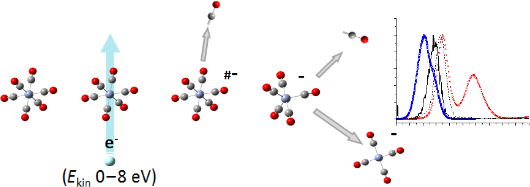
- deposition (FEBID) can be considered an assisted chemical vapour deposition (CVD) technique. However, in the former case the organometallic precursor is not fragmented by thermal energy but instead by a high-energy electron beam. The precursor molecules are delivered to the substrate in the gas phase and
- to electron attachment under isolated conditions were observed. The ion yield curves (ion yield plotted as a function of the initial electron energy) for the formation of cluster anions containing two or more iron atoms turned out to be different from those of Fe(CO)5 in the gas phase. The dimer



Amplified cross-linking efficiency of self-assembled monolayers through targeted dissociative electron attachment for the production of carbon nanomembranes
Beilstein J. Nanotechnol. 2017, 8, 2562–2571, doi:10.3762/bjnano.8.256
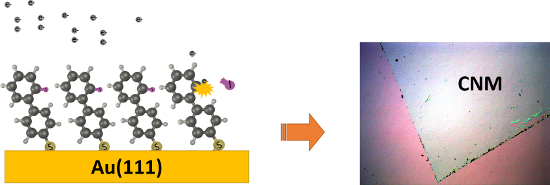
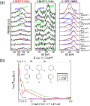
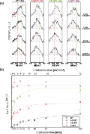
- process in the gas phase (Figure 1) shows that the relative difference between 2-Cl-BPT and 2-Br-BPT is less clear in the SAMs. This is to be expected due to the different conditions in the condensed phase as compared to the gas phase, for example, different temperatures and additional energy dissipation
- channels introduced at the surface as compared to single collision conditions in the gas phase. Furthermore, the gas phase studies shown in Figure 1 show only the halogen loss through DEA. The XPS data on the other hand show the total dehalogenation, independent of the underlying process, that is, DI, ND
- irradiation as compared to gas-phase molecules under single collision conditions. However, though qualitative in nature, our experiments show that the electron-induced dehalogenation process is substantially more efficient in the 2-I-BPT SAMs than the 2-Cl-BPT and 2-Br-BPT SAMs. It is reasonable to assume


Comparing postdeposition reactions of electrons and radicals with Pt nanostructures created by focused electron beam induced deposition
Beilstein J. Nanotechnol. 2017, 8, 2410–2424, doi:10.3762/bjnano.8.240
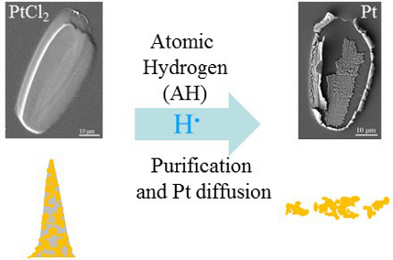
- studies, the removal of carbon is often emphasized due to its prevalence as an impurity in the deposited nanostructures. One of the most widely studied non-thermal purification strategies is electron beam induced purification, typically performed in the presence of a gas-phase species, usually either
- oxygen or water. In these techniques, the electron beam dissociates gas phase reactants to yield reactive oxygen species, which then convert deposited carbon into volatile compounds such as CO and CO2 [16][17][18][19]. Villamor et al. [20] observed that either by post deposition electron beam processing
- ], where purification is ascribed at least in part to a laser-induced oxidation process. In this technique, the reactive oxygen species are produced from gas phase reactants, such as oxygen, that are deliberately introduced. Sequential cycles of electron-induced deposition are followed by laser-induced




Electron beam induced deposition of silacyclohexane and dichlorosilacyclohexane: the role of dissociative ionization and dissociative electron attachment in the deposition process
Beilstein J. Nanotechnol. 2017, 8, 2376–2388, doi:10.3762/bjnano.8.237
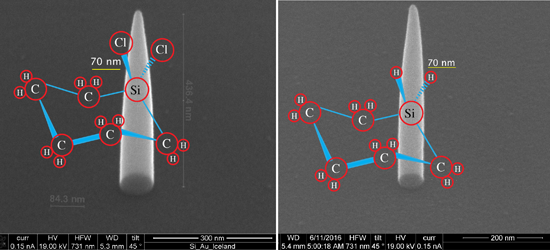
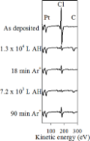
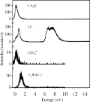
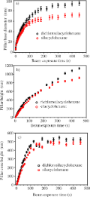
- and we compare the proximity effect observed for these compounds. The two precursors show similar behaviour with regards to fragmentation through dissociative ionization in the gas phase under single-collision conditions. However, while DCSCH shows appreciable cross sections with regards to
- into applicable design criteria for superior FEBID precursors. In this context a considerable number of gas-phase studies have been conducted, mainly on DEA and DI of different organometallic FEBID precursors. Complementary surface science studies have been carried out to better relate the gas-phase
- current experiments are thus largely confined to DEA and DI of FEBID precursors. Despite this, significant insight has been provided by the gas-phase and surface-science studies and in individual cases a distinction between the role of DEA and DI in the deposition process has been achieved





Dissociative electron attachment to coordination complexes of chromium: chromium(0) hexacarbonyl and benzene-chromium(0) tricarbonyl
Beilstein J. Nanotechnol. 2017, 8, 2257–2263, doi:10.3762/bjnano.8.225
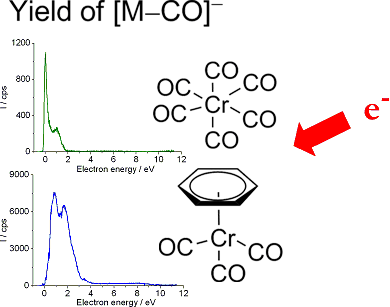
- we report the results of dissociative electron attachment (DEA) to gas-phase chromium(0) hexacarbonyl (Cr(CO)6) and benzene-chromium(0) tricarbonyl ((η6-C6H6)Cr(CO)3) in the energy range of 0–12 eV. Measurements have been performed utilizing an electron-molecular crossed beam setup. It was found that
- ; dissociative electron attachment; gas phase reactions; mass spectrometry; Introduction Organometallic compounds are a large class of compounds with numerous applications such as homogeneous catalysts for the synthesis of fine chemicals or even enantiomerically pure products used in the pharmaceutical industry
- primary beam. To date there have been several papers devoted to the studies of the interaction of low energy electrons with gas-phase organometallic complexes. Particular attention has been paid to the compounds containing monodentate (e.g., carbonyl [12][13][14], trifluorophosphine [11][15], chloride [16
Comprehensive investigation of the electronic excitation of W(CO)6 by photoabsorption and theoretical analysis in the energy region from 3.9 to 10.8 eV
Beilstein J. Nanotechnol. 2017, 8, 2208–2218, doi:10.3762/bjnano.8.220
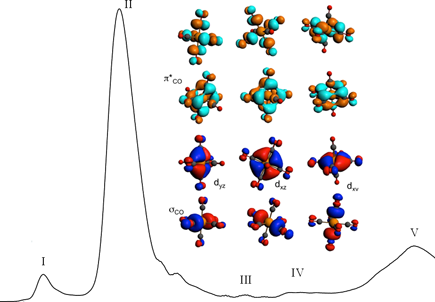
- beam impinging on the surface where dissociative electron attachment (DEA) processes are relevant, although at those energies electron impact excitations yielding neutral dissociation are prevalent in detriment to DEA [25]. Gas-phase DEA studies in the electron energy range from 0 to 14 eV reported by


Suppression of low-energy dissociative electron attachment in Fe(CO)5 upon clustering
Beilstein J. Nanotechnol. 2017, 8, 2200–2207, doi:10.3762/bjnano.8.219
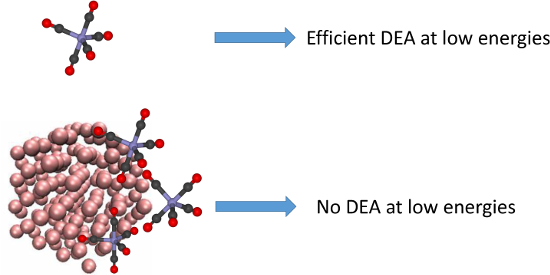
- electron attachment in isolated Fe(CO)5. Keywords: aggregation effects; dissociative electron attachment; FEBID; iron pentacarbonyl; long-range interactions; Introduction In recent years a number of gas-phase studies on molecules that are commonly used as precursors in electron-induced nanofabrication
- [12][13]. The environment can thus both enhance and suppress the low-energy DEA reactions and it is difficult to assess its effect a priori. Clusters represent an ideal tool for studying the effect of an environment since they allow for using the same experimental approach as the gas phase studies
- (crossed electron – target beam with product mass analysis) and enable direct comparisons for various aggregation degrees (gas phase – small clusters – large clusters). When compared to the surface-based ion desorption approach, cluster-beam experiments do not suffer from desorption probability problem


Angstrom-scale flatness using selective nanoscale etching
Beilstein J. Nanotechnol. 2017, 8, 2181–2185, doi:10.3762/bjnano.8.217
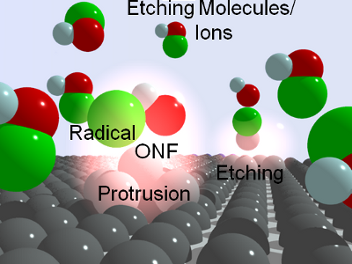
- . To understand the differences of the etching properties, we estimated the mean free paths (MFPs) of Cl2 and ClO−. The MFP of Cl2 in the gas phase is on the order of 10 μm (≈RT/√2NAπd2P [15], where R = 8.31 J K−1mol−1, T = 300 K, NA = 6.02 × 10²³ mol−1, d = 200 × 10−12 m (the diameter of a Cl2
- -field dry etching, because of a greater MFP value of the gas phase that exceeds the scanning area, the dissociated atoms can react only when they are located at the protrusions where the ONF generated. Conclusion Using two-dimensional Fourier analysis, we found that near-field etching is effective for



Ester formation at the liquid–solid interface
Beilstein J. Nanotechnol. 2017, 8, 2139–2150, doi:10.3762/bjnano.8.213
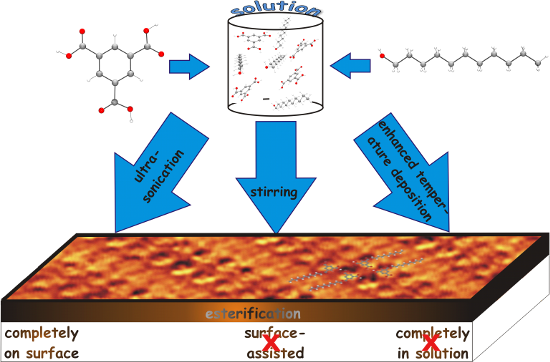
- products. Scheme 1 shows a proposed reversible esterification route with a dimer intermediate of TMA and undecanol to TMA–monoundecyl ester. The possible formation of TMA–monoundecyl ester and water from a TMA–undecanol dimer in the gas phase (see energy diagram in Figure 8) was simulated. To simulate the
- should be almost parallel to the A axis. Energy diagram of the reaction path of TMA and undecanol to form TMA–undecyl ester and water for isolated molecules (gas phase) calculated using DFT (PBE). The corresponding geometry of the molecules in the simulation is shown for each energy point marked in the


Advances and challenges in the field of plasma polymer nanoparticles
Beilstein J. Nanotechnol. 2017, 8, 2002–2014, doi:10.3762/bjnano.8.200
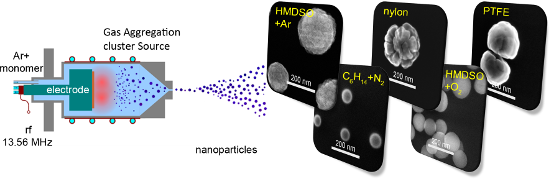
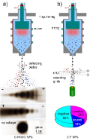
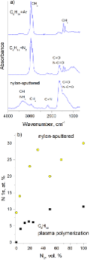
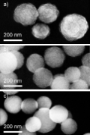
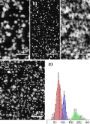
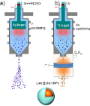
- used as precursors for plasma polymerization [43][44][45][46][47][48][49][50][51][52]. Depending on the experimental conditions, plasma polymerization can be forced to proceed in a gas phase which results in the formation of NPs of different chemical and physical properties and with different size
- coagulation is therefore suppressed by Coulomb repulsion, and further NP growth proceeds by accretion via the accumulation of polymer-forming neutral species (radicals) and positive ions from the gas phase. The resultant plasma polymer NPs have a spherical symmetry but can exhibit different morphology
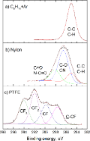
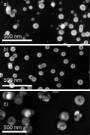
- addition of oxygen. FTIR and XPS (Figure 8a,b) analyses demonstrate the organosilicon character of the NPs produced without O2 and its gradual transfer to the inorganic state with the addition of O2. The gas phase composition can be optimized to produce nearly stoichiometric SiO2 NPs (Figure 7c), which are






Bi-layer sandwich film for antibacterial catheters
Beilstein J. Nanotechnol. 2017, 8, 1982–2001, doi:10.3762/bjnano.8.199
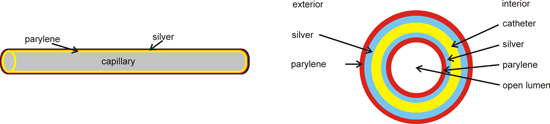
- of the depositing molecules decreases exponentially with penetration depth not only by diffusion but also by deposition losses, which causes a steeply dropping layer thickness. The reaction can occur in the gas phase as well as during or after the process of condensation (physisorption). By diluting
- gases. Vapor enters through a heated pipe and reacts either in the volume (gas-phase reaction) or on cold surfaces (solid-state reaction) to a polymer by chain-building. To prevent evaporation during the heating ramp (approx. 45 min), which would cause an irreproducible layer thickness, a flow of argon
- lead to unwanted reactions are reduced. These unwanted reactions lead to polymerization and grain formation in the gas phase. Eventually, these grains arrive at the surface, which is clearly revealed by SEM inspection (Figure 17a). Properties of sub-micrometer layers As our interest is focused on very


Enhancement of mechanical and electrical properties of continuous-fiber-reinforced epoxy composites with stacked graphene
Beilstein J. Nanotechnol. 2017, 8, 1909–1918, doi:10.3762/bjnano.8.191
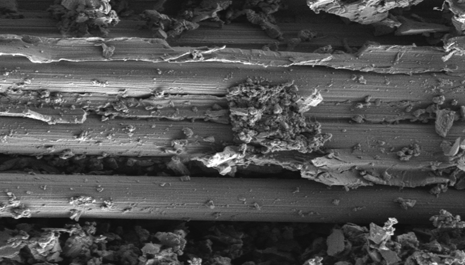
- -cost conductive alternative [7]. GNPs can be produced by intercalation of the graphitic layers with an appropriate agent followed by exfoliation of the graphite flakes. Exfoliation is obtained by rapid heating resulting in conversion of the intercalant to a gas phase forcing the adjacent graphene


Non-intuitive clustering of 9,10-phenanthrenequinone on Au(111)
Beilstein J. Nanotechnol. 2017, 8, 1801–1807, doi:10.3762/bjnano.8.181
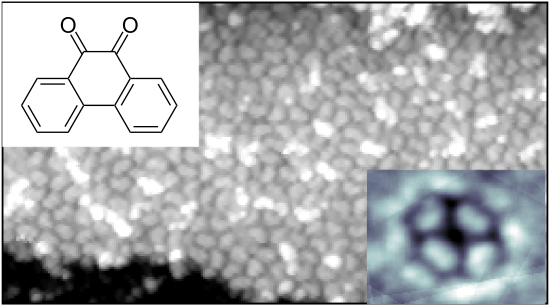
- other. It is apparent from the original image and the tetramer composite image that within this cluster the molecules orient with the carbonyl groups projecting into the center of this cluster. If considered as a gas-phase species, the observed tetramer conformation positions the net dipole of each


Evaluation of preparation methods for suspended nano-objects on substrates for dimensional measurements by atomic force microscopy
Beilstein J. Nanotechnol. 2017, 8, 1774–1785, doi:10.3762/bjnano.8.179
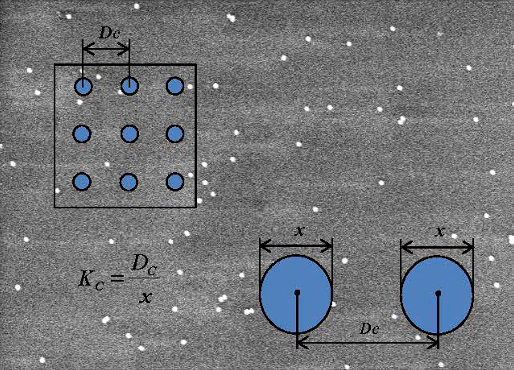
- procedure (Plasma Prep II, SPI Supplies) was chosen. A study of cleaning methods for silicon has been undertaken in [15]. The application of conditioned samples on the conditioned substrates were performed by four liquid phase preparation methods and two gas phase preparation methods as summarised in Table
- be deposited individually in case of a corresponding initial concentration. The deposition rate can be set effectively and reproducibly via the residence time in the suspension. Gas phase preparation Over the last few decades several devices for the deposition of airborne particles on substrates have
- -conditioned, gas phase preparation methods require two additional steps, i.e., aerosol generation (e.g., atomization) and aerosol conditioning (e.g., classifying, dilution, neutralisation). The most common method for this is the atomization of suspensions with subsequent aerosol drying (e.g., diffusion drying


Fluorination of vertically aligned carbon nanotubes: from CF4 plasma chemistry to surface functionalization
Beilstein J. Nanotechnol. 2017, 8, 1723–1733, doi:10.3762/bjnano.8.173
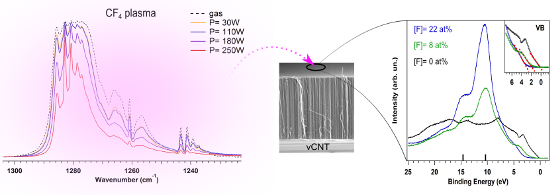
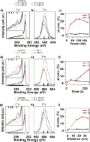
- normalized to the total ion signal of all masses detected during each experiment. The point relative to power P = 0 W is representative for the CF4 gas phase, the plasma is not ignited and the CF4 flows in the chamber. The mass spectrum is dominated by the intense signal corresponding to the ionized CF3 (m/z
- different plasma power (the working pressure is set to 10 mTorr). The masses under study are relative to the following ionized species: CF (m/z = 31 amu), CF2 (m/z = 50 amu), CF3 (m/z = 69 amu), and HF (m/z = 20 amu), COF (m/z = 47 amu), COF2 (m/z = 66 amu). b) FTIR spectra acquired during pure CF4 gas
- phase (dotted line) and during CF4 plasma ignited at different power (from 10 to 250 W). The two frames in the figure detail the peaks located at 1286 and 1261 cm−1 for better visualization of the intensity variation. c) Intensities of the FTIR peaks related to CF4 (at 1539 cm−1), CF2 (at 667.4 cm−1




Parylene C as a versatile dielectric material for organic field-effect transistors
Beilstein J. Nanotechnol. 2017, 8, 1532–1545, doi:10.3762/bjnano.8.155
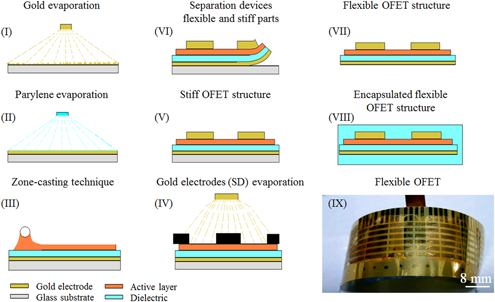
- with the accompanying chemical reactions, is presented in Figure 1. There is a number of advantages of the parylene technology. First of all, being a gas-phase diffusion-controlled process, it yields smooth pinhole-free conformal coatings with excellent penetration abilities. Second, there are several




Spin-chemistry concepts for spintronics scientists
Beilstein J. Nanotechnol. 2017, 8, 1427–1445, doi:10.3762/bjnano.8.143
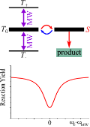
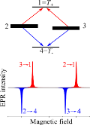
- chemical reactions and from singlet–triplet interconversion in radical pairs, which is sensitive to external magnetic fields and local hyperfine fields of magnetic nuclei. Although experiments have been done in gas phase (see Sections IV.A and V.A of [2] and the references therein) and in solid state (e.g



Adsorption and electronic properties of pentacene on thin dielectric decoupling layers
Beilstein J. Nanotechnol. 2017, 8, 1388–1395, doi:10.3762/bjnano.8.140
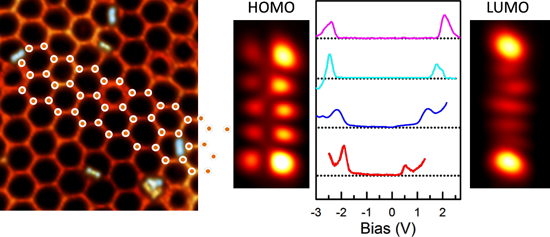
- demonstrated by the observation of the unperturbed gas-phase-like frontier orbitals of pentacene on this substrate [3]. A weak interaction is nevertheless suggested by the observed shift of the orbital energies of the admolecule [4][7][8]. In scanning tunneling spectroscopy (STS) experiments on pentacene, two
- −2.16 V can be attributed to a bound state with an energy of 6.31 eV and, respectively, the LUMO at 1.2 V to a bound state with an energy of 2.95 eV. These energies can be related to the electron affinity of 1.35 eV [14] and the ionization energy of gas-phase pentacene at 6.58 eV [15]. The deviation of
- the gas-phase energies from the energies found on the surface can be explained by the screening of the underlying substrate during the temporary charging of the molecule [1][17][18]. In our measurements we observe a decrease of the HOMO–LUMO gap by 1.7 eV (i.e., an average shift of 0.85 eV for HOMO


Deposition of exchange-coupled dinickel complexes on gold substrates utilizing ambidentate mercapto-carboxylato ligands
Beilstein J. Nanotechnol. 2017, 8, 1375–1387, doi:10.3762/bjnano.8.139
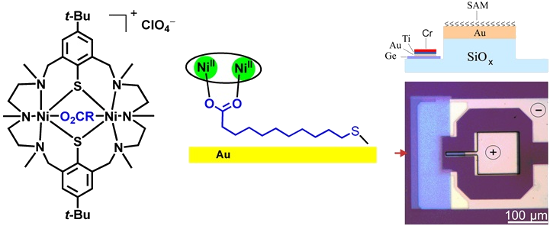
- according to a protocol developed for the preparation of self-assembled thiol monolayers [59] as the complexes cannot be deposited via the gas phase. They decompose without melting. Thus, clean gold-coated Si wafers were immersed in a 1 × 10⁻³ M solution of the respective complex in MeCN or CH2Cl2 for 24 h


Metal oxide nanostructures: preparation, characterization and functional applications as chemical sensors
Beilstein J. Nanotechnol. 2017, 8, 1205–1217, doi:10.3762/bjnano.8.122
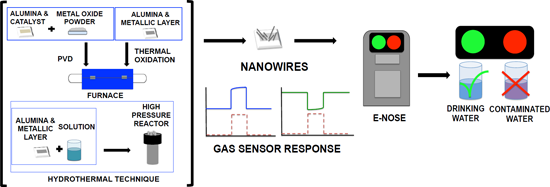
- the oxide surface leads to an increase of the number of adsorbed species from the gas phase. This results in an increase of electrical conductance for for p-type materials and, correspondingly, a decrease for n-type materials. This behaviour can be better explained through the following reactions in





