Search results
Search for "heat treatment" in Full Text gives 136 result(s) in Beilstein Journal of Nanotechnology.
Improved lithium-ion battery anode capacity with a network of easily fabricated spindle-like carbon nanofibers
Beilstein J. Nanotechnol. 2016, 7, 1289–1295, doi:10.3762/bjnano.7.120
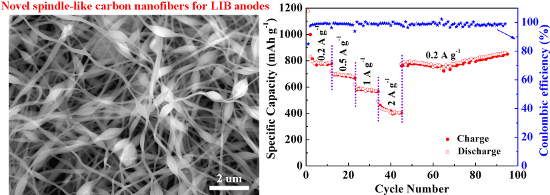
- the reaction parameters and difficult to repeat. At the same time, the route of electrospinning followed by heat treatment has received significant attention because of its simplicity, high efficiency and versatility for preparation of diverse one-dimensional structures [5][13][22][23]. In this work


Reasons and remedies for the agglomeration of multilayered graphene and carbon nanotubes in polymers
Beilstein J. Nanotechnol. 2016, 7, 1174–1196, doi:10.3762/bjnano.7.109
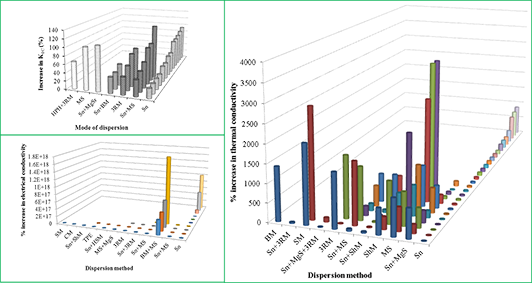
- nanocomposites [2]. Oxidation of SWNTs: The oxidation of CNTs surface is possible by, for instance, heat treatment in oxygen and air, plasma treatment, chemical treatment and ozone treatment. Oxidation can also be carried out in lithium aluminum hydride solution [41]. Table 3 shows different oxidation methods


Fast diffusion of silver in TiO2 nanotube arrays
Beilstein J. Nanotechnol. 2016, 7, 1129–1140, doi:10.3762/bjnano.7.105
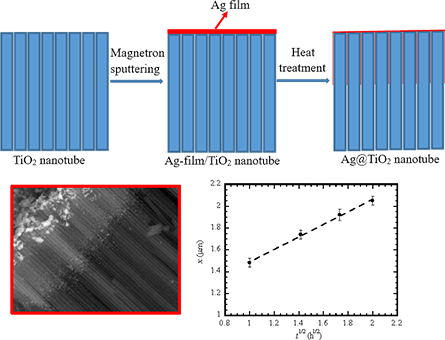
- Education, Taiyuan Shanxi 030024, China Department of Chemical and Materials Engineering, University of Kentucky, Lexington, KY 40506, USA 10.3762/bjnano.7.105 Abstract Using magnetron sputtering and heat treatment, Ag@TiO2 nanotubes are prepared. The effects of heat-treatment temperature and heating time
- schematically illustrated in Figure 1. The pure TiO2 nanotubes are prepared by a simple two-step anodization process, and then a layer of Ag film is deposited on the top of the TiO2 nanotubes via sputtering magnetron. The heat treatment of the TiO2 nanotubes with Ag nanofilm leads to the formation of Ag@TiO2
- nanotubes. Figure 2 shows typical SEM images of the pure TiO2 nanotube arrays prepared by a two-step anodization process without heat treatment. It is evident that the prepared pure TiO2 nanotube arrays consist of regular tubes with a diameter of 75 ± 5 nm, a wall thickness of 7 ± 2 nm and an average length


Orientation of FePt nanoparticles on top of a-SiO2/Si(001), MgO(001) and sapphire(0001): effect of thermal treatments and influence of substrate and particle size
Beilstein J. Nanotechnol. 2016, 7, 591–604, doi:10.3762/bjnano.7.52
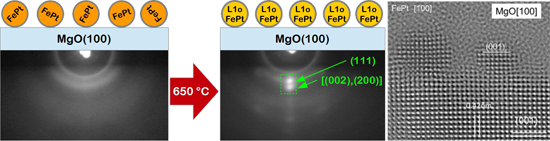
- their position. In order to analyze the morphology of the smaller FePt NPs after the above heat treatment at 650 °C, subsequent AFM measurements were performed delivering the data presented in Figure 10. The AFM image clearly proves the high degree of hexagonal order of the particle arrangement as well


Determination of the compositions of the DIGM zone in nanocrystalline Ag/Au and Ag/Pd thin films by secondary neutral mass spectrometry
Beilstein J. Nanotechnol. 2016, 7, 474–483, doi:10.3762/bjnano.7.41
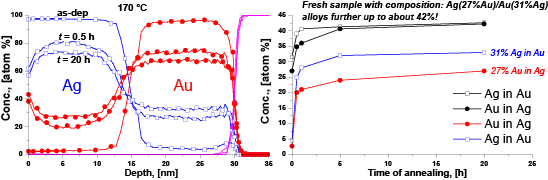
- profile of a Ag(15 nm)/Pd(15 nm) bilayer; as deposited and annealed at 150 °C. Comparison of depth profiles obtained after 8 h of heat treatment 150 °C. (a) Ag(15 nm)/Pd(15 nm)/substrate, (b) Pd(15 nm)/Ag(15 nm)/substrate. It can be seen that the reversal of the film sequence leads to the reversal of the
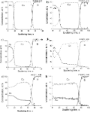
- ) and 280 °C (d). Depth profiles of Ag(15 nm)/Au(15 nm) (a) and Au(15 nm)/Ag(15 nm) (b) film systems after 20 h at 175 °C. XRD results (a) obtained by using Cu Kα radiation in θ–2θ mode on Ag(15 nm)/Pd(15 nm) after heat treatment at 150 °C for 4 h. The grain sizes were determined from the half line


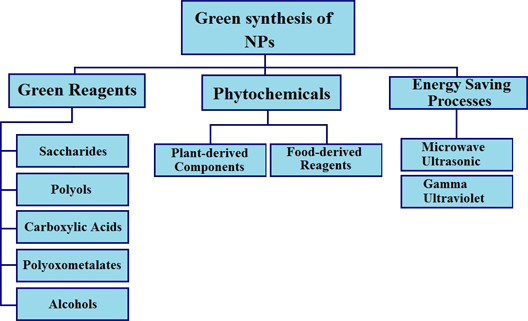
Green and energy-efficient methods for the production of metallic nanoparticles
Beilstein J. Nanotechnol. 2015, 6, 2354–2376, doi:10.3762/bjnano.6.243


Plasma fluorination of vertically aligned carbon nanotubes: functionalization and thermal stability
Beilstein J. Nanotechnol. 2015, 6, 2263–2271, doi:10.3762/bjnano.6.232
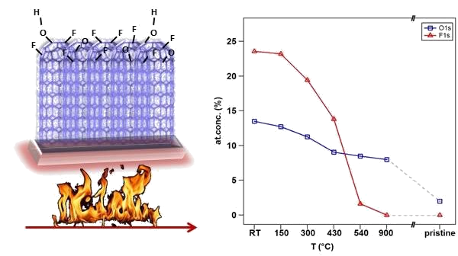
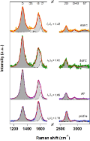
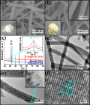
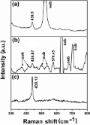
- tune the density of electronic states near the Fermi level by heat treatment in UHV [6]. However, if oxygen atoms are simultaneously grafted during the plasma fluorination, it is not possible to obtain a perfect defunctionalization due to the presence of strong C–O bonds. The Raman spectroscopy results


Influence of wide band gap oxide substrates on the photoelectrochemical properties and structural disorder of CdS nanoparticles grown by the successive ionic layer adsorption and reaction (SILAR) method
Beilstein J. Nanotechnol. 2015, 6, 2252–2262, doi:10.3762/bjnano.6.231
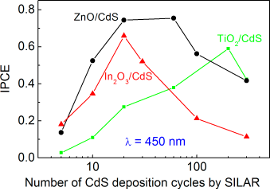
- 105 ± 12 m2/g for ZnO. The specific surface area estimated from SEM images for the TiO2 nanotube array is about 20 m2/g. X-ray diffraction (XRD) analysis demonstrates that In2O3, ZnO, and TiO2 crystallize in the cubic, hexagonal, and anatase modifications, respectively, after the heat treatment
- titanium, respectively. Mesoporous In2O3 films were prepared by spin coating of an indium hydroxide colloidal solution with subsequent heat treatment [36]. A stable indium hydroxide sol was prepared by hydrolysis of a 0.25 mol/L In(NO3)3 solution with aqueous ammonia (12%) under vigorous stirring at 0 °C
- (with average molecular mass of 12500 g/mol) in a ratio of 5 g of polymer per 50 mL of sol. ITO substrates were degreased and thoroughly washed in the boiling mixture of H2O2 and NH3 followed by spin coating with the obtained In(OH)3 sol at 3000 rpm for 30 s and heat treatment for 1 h at 400 °C in air


Effect of SiNx diffusion barrier thickness on the structural properties and photocatalytic activity of TiO2 films obtained by sol–gel dip coating and reactive magnetron sputtering
Beilstein J. Nanotechnol. 2015, 6, 2039–2045, doi:10.3762/bjnano.6.207
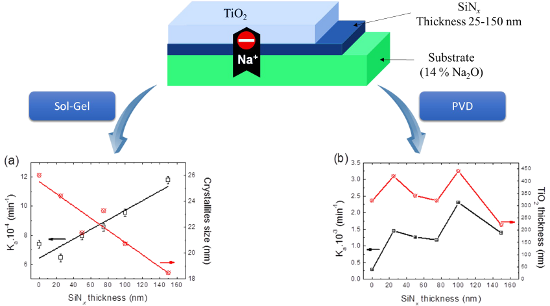
- titanium dioxide grown on soda lime glass (SLG) occurs during the calcination step and is due to the diffusion of alkali elements (especially sodium ions, Na+) [3][4]. Usually, TiO2 is amorphous when deposited at low temperature [5][6]. Heat treatment at a higher temperature (around 450 °C) is usually
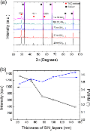
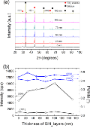
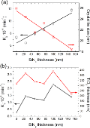
- , which suggested that the SiNx layer does not affect the crystallite growth of the TiO2 during the heat treatment. However, the crystallite size of SG-TiO2 films decreases gradually as the thickness of the SiNx diffusion barrier increases. TiO2 thin films grown on SLG were obtained and discussed in our
- various substrates. Nam et al. reported that the Na+ ions in the TiO2 films induce an increase in their crystallite size [4]. The diffusion of the ions at the grain boundary during the heat treatment is in competition with the nucleation/growth of the anatase crystallite, which induces an increase in the
In situ SU-8 silver nanocomposites
Beilstein J. Nanotechnol. 2015, 6, 1661–1665, doi:10.3762/bjnano.6.168
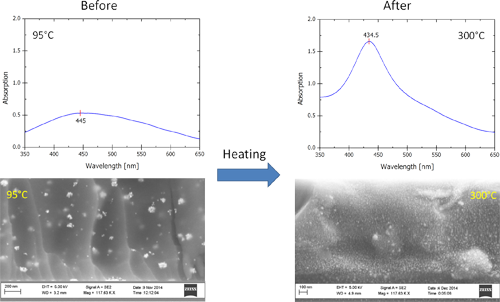
- , although the randomly distributed NP clusters of roughly 80–100 nm are easy to spot when looking at the composite treated at 95 °C. The SEM image further confirms that the additional heat treatment of 300 °C results in the generation of more 25 nm sized nanoparticles. It is important to note that further
- growth of already formed agglomerated NPs does not happen during this last heat treatment. Structuring of the nanocomposite is important if to be used in micro- and nanofabrication. Although not fully optimized a resolution of 5 µm is obtained using UV-lithography as shown in Figure 5. The UV exposure


Using natural language processing techniques to inform research on nanotechnology
Beilstein J. Nanotechnol. 2015, 6, 1439–1449, doi:10.3762/bjnano.6.149

- -based synthesis of single-walled carbon nanotubes [27]. Analyzing hot spots revealed changes in the type of synthesis method patented over time, with synthesis methods evolving from arc discharging in 1999–2000 to metal-catalyzed heat-treatment syntheses and CVD in 2003–2004, to arc discharge with
Thermal treatment of magnetite nanoparticles
Beilstein J. Nanotechnol. 2015, 6, 1385–1396, doi:10.3762/bjnano.6.143
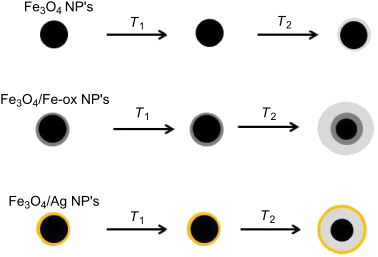
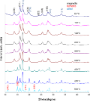
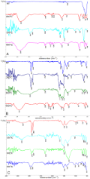
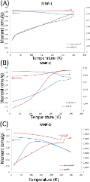
- thermal stability of the nanoparticles was tested. Before and after heat treatment, the nanoparticles were examined using transmission electron microscopy, IR spectroscopy, differential scanning calorimetry, X-ray diffraction and Mössbauer spectroscopy. Based on the obtained results, it was observed that
- ] for short temperature cycles. However, these changes were not very specific. To observe possible particle phase transformations, heat treatment was performed for 24 h. Experimental Materials and apparatus To obtain the various magnetite nanoparticles, the following chemicals were purchased from
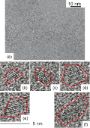
- nanoparticles are depicted. Figure 2A shows MNP-1 before heating and Figure 2D after heat treatment at 500 °C for 24 h. The comparison of these images leads to the conclusion that there is not much difference in shape between the particles before and after heating. The crystalline structure, the shape and the




Heterometal nanoparticles from Ru-based molecular clusters covalently anchored onto functionalized carbon nanotubes and nanofibers
Beilstein J. Nanotechnol. 2015, 6, 1287–1297, doi:10.3762/bjnano.6.133
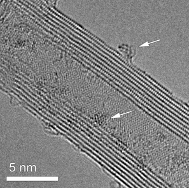
- nanocarbons. It is generally believed that the clusters first lose their ligands, accompanied by an increased interaction with the surface, and then agglomerate with prolonged heat treatment [39][40][41]. This study is dedicated to the first stage of activation, i.e., denuded cluster cores before




High photocatalytic activity of V-doped SrTiO3 porous nanofibers produced from a combined electrospinning and thermal diffusion process
Beilstein J. Nanotechnol. 2015, 6, 1281–1286, doi:10.3762/bjnano.6.132
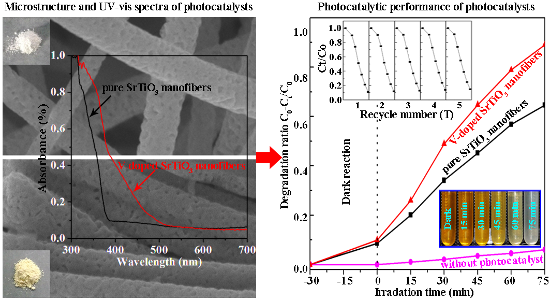
- properties of doped samples appear similar to that of pure SrTiO3 nanofibers. From the insets in Figure 1a,b, the resulting doped SrTiO3 powders appear to be light yellow after immersing the white pure SrTiO3 powders in a NH4VO3 solution and further heat treatment in air. Figure 1c shows the typical XRD
- typical preparation procedure as follows. Firstly, pure SrTiO3 nanofibers were prepared via electrospinning followed by heat treatment. 0.25 g of poly(vinylpyrrolidone) (PVP, Mw = 1,300,000) and 0.34 g of Ti(C4H9O)4 were completely dissolved in a mixed solvent comprised of 0.6 g N,N-dimethylformamide (DMF


Characterization of nanostructured ZnO thin films deposited through vacuum evaporation
Beilstein J. Nanotechnol. 2015, 6, 971–975, doi:10.3762/bjnano.6.100
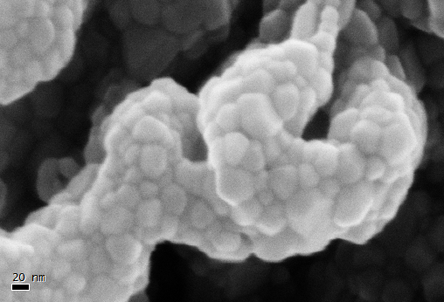
- physical change, and this is correlated to the reorganization of the particles in a preferential way, activating the boundaries of the nanoparticles. As shown in Figure 2d inset, the heat treatment provokes coalescence and the rapid formation of worm-shaped nanostructured thin films. According to Figure 3
- reorganization and coarsening, which permit the formation of the worm-shaped nanostructured thin films at 600 °C. This organization could be the cause of the increasing transparency of the thin films. Optical properties Optical characterization helps to trace the evolution and allow determining how the heat
- treatment affects the transmittance of the thin films. As it is shown in the transmittance spectra that the un-annealed films have a poor transmittance (less than 10%). However, the transmittance of the heat-treated films increases up to 80% (Figure 4). This difference is assumed to be due to the


Pt- and Pd-decorated MWCNTs for vapour and gas detection at room temperature
Beilstein J. Nanotechnol. 2015, 6, 919–927, doi:10.3762/bjnano.6.95
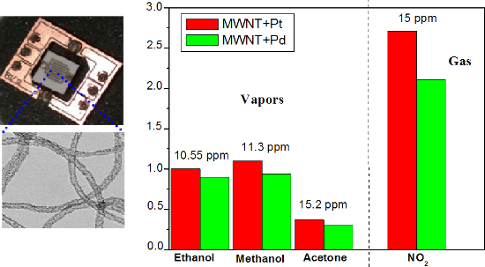
- , recovering the sensor baseline required heating at 150 °C. This heat treatment to regain the sensor baseline was also observed by Mudimela and co-workers when they used vertically aligned carbon nanotubes decorated with sputtered Au nanoparticles to detect nitrogen dioxide [37]. Finally, Clément and co



Transformation of hydrogen titanate nanoribbons to TiO2 nanoribbons and the influence of the transformation strategies on the photocatalytic performance
Beilstein J. Nanotechnol. 2015, 6, 831–844, doi:10.3762/bjnano.6.86
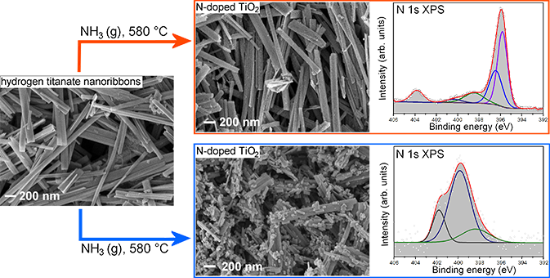
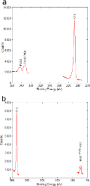
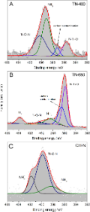
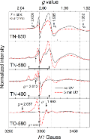
- investigated. The transformations were performed (i) through a heat treatment in oxidative and reductive atmospheres in the temperature range of 400–650 °C, (ii) through a hydrothermal treatment in neutral and basic environments at 160 °C, and (iii) through a microwave-assisted hydrothermal treatment in a
- significantly suppressed the photocatalytic performance of the TiO2 NRs, i.e., by 3 to almost 10 times, in comparison with the TiO2 NRs derived by calcination in air. On the other hand, the photocatalytic performance of the hydrothermally derived TiO2 NRs was additionally improved by a subsequent heat treatment
- (Figure S3, Supporting Information File 1) shows that the dehydration process of more tightly bound water (100–250 °C) is accompanied by the first structural changes (180–230 °C). In our case, the transformation from H2Ti3O7 to TiO2 was carried out (i) through a heat treatment in static air and a dynamic




Mapping of elasticity and damping in an α + β titanium alloy through atomic force acoustic microscopy
Beilstein J. Nanotechnol. 2015, 6, 767–776, doi:10.3762/bjnano.6.79
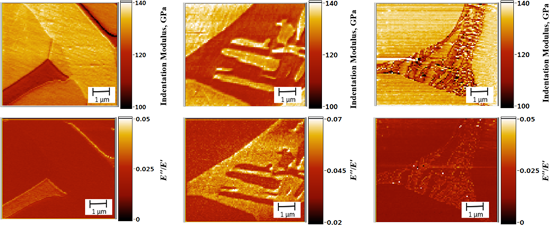
- α, β and α′ in Ti-6Al-4V alloy heat-treated at different temperatures. The modulus of individual phases measured by AFAM has been used to calculate the average modulus of the alloy in different heat treatment conditions, which is correlated with the modulus obtained by the bulk ultrasonic velocity
- of 178 mm. An indexing algorithm based on eight detected bands was utilized. Results and Discussion The amount of the α- and β-phases present at different heat-treatment temperatures for Ti-6Al-4V alloy, as obtained by the JMatPro® simulation, is shown in Figure 2. The volume fraction of the β-phase
- -treated at different temperatures. The Young’s modulus of the individual phases can be approximated by using M values for the respective phases and Equation 6. Poisson’s ratio values as a function of heat-treatment temperature for Ti-6Al-4V samples are discussed in detail elsewhere [31]. The Poisson’s


Morphological and structural characterization of single-crystal ZnO nanorod arrays on flexible and non-flexible substrates
Beilstein J. Nanotechnol. 2015, 6, 720–725, doi:10.3762/bjnano.6.73
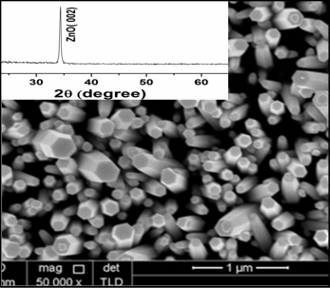
- , and nanoneedles, among many other forms [3][4][5]. However, the majority of the resulting structures are amorphous and require high-temperature heat treatment to induce crystallinity. The need for heat treatment limits their use with temperature-sensitive materials, such polymeric photocatalytic


Filling of carbon nanotubes and nanofibres
Beilstein J. Nanotechnol. 2015, 6, 508–516, doi:10.3762/bjnano.6.53
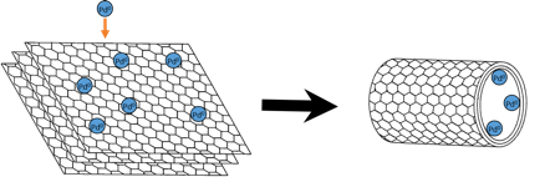
- heat treated [27]. Typical dimensions of CNFs are: outside diameters of up to 200 nm, inside diameters of 12.5 nm (single layer) or 22 nm (double layer), and lengths of up to 20 µm [24][26]. The SSA depends on the degree of heat treatment. For example, a SSA of 37 m2/g results from heat treatment at
- 1200 °C and is reduced to 15 m2/g after heat treatment at 2800 °C. Pyrolitic stripping can also be performed on as-grown nanofibres to remove unreacted polyaromatic hydrocarbons that may have fused onto the surface of the VGCNFs. This has been shown to increase the SSA from 20 m2/g to 62 m2/g [28
- caps for both SWCNTs and MWCNTs) [56], heat treatment in carbon dioxide/air [57], sonication-induced shearing [58][59], partial opening due to purification [60], precision cutting [61] and water-assisted etching [62]. The main issue with these methods is that etching the CNTs in this way damages their


Size-dependent density of zirconia nanoparticles
Beilstein J. Nanotechnol. 2015, 6, 27–35, doi:10.3762/bjnano.6.4
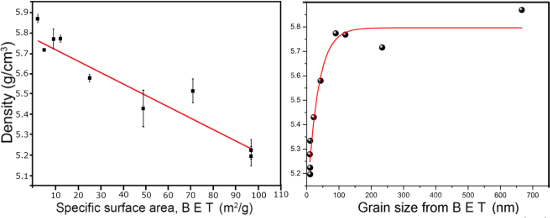
- elimination of surface hydroxy (–OH) groups by heat treatment [24]. The influence of –OH groups on various properties of nano-oxides has been extensively examined [25][26][27][28]. Takeda reported that –OH groups on a SiO2 surface can function as effective reactive sites [23]. The surface reactivity of oxide


Carbon nano-onions (multi-layer fullerenes): chemistry and applications
Beilstein J. Nanotechnol. 2014, 5, 1980–1998, doi:10.3762/bjnano.5.207
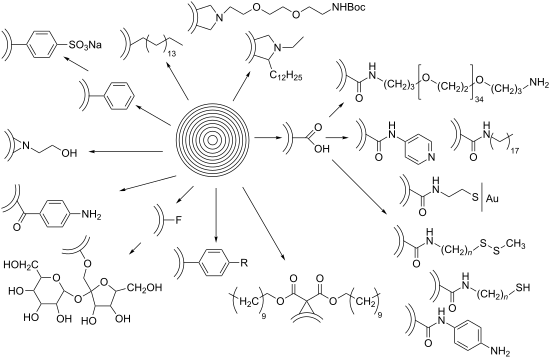
- common method, for the preparation of small CNOs consisting of approx. 5–8 carbon shells, uses nanodiamonds as starting material. Nanodiamonds can be converted to graphitic CNOs by heat treatment (Figure 1) [11][12] or by electron radiation [13]. Another method is the formation of CNOs by arc discharge


Controlling the optical and structural properties of ZnS–AgInS2 nanocrystals by using a photo-induced process
Beilstein J. Nanotechnol. 2014, 5, 1767–1773, doi:10.3762/bjnano.5.187
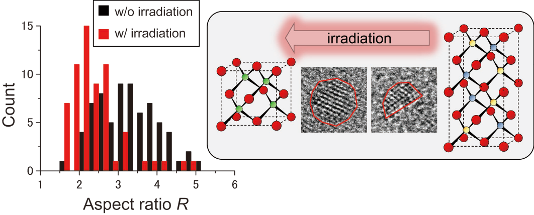
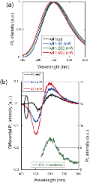
- so that the ZAIS nanocrystals would absorb the light (see Figure 1b). Selective reduction of defect levels To realize selective etching of the defect levels, ZAIS nanocrystals were synthesized with 593 nm light (λ1) illumination (10 mW) during the heat treatment in step (2). Figure 3a shows the
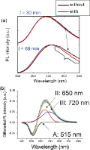
- heat treatment in step (2). Figure 4a shows the PL spectra with different excitation power levels during the synthesis. From these spectra, the differential PL spectra (= PLwithout − PLwith) were obtained, as shown in Figure 4b. The positive value of the differential PL intensity at 600 nm indicates a
- growth times of t = 5 and 60 min, after using 532 nm light (400 mW) during the heat treatment. Although the actual shape of ZAIS nanocrystals was non-circular, the diameter was determined as the equivalent diameter of circles that would occupy the same amount of space as the ZAIS nanocrystals. Figure 7c




Nanocrystalline ceria coatings on solid oxide fuel cell anodes: the role of organic surfactant pretreatments on coating microstructures and sulfur tolerance
Beilstein J. Nanotechnol. 2014, 5, 1712–1724, doi:10.3762/bjnano.5.181

- were treated with surfactants prior to immersion in an aqueous precursor solution [27]. By this approach, a nanocrystalline ceria film was formed without further heat treatment. The thickness of the film and its morphology and distribution within the microstructure of the porous SOFC anode depended
- established that nanocrystalline ceria coatings could be deposited throughout porous cermet anodes of SOFCs 6 µm thick by using an aqueous infiltration technique at 50 °C in 48 h without subsequent heat treatment. The morphology of the coatings – specifically, their thickness and their continuity – could be


Formation of CuxAu1−x phases by cold homogenization of Au/Cu nanocrystalline thin films
Beilstein J. Nanotechnol. 2014, 5, 1491–1500, doi:10.3762/bjnano.5.162
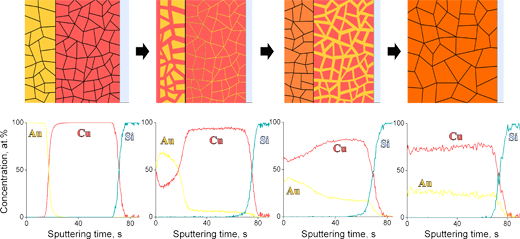
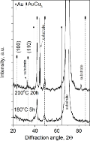
- . After annealing at 180 °C for 5 h they decrease to d = 9 nm and d = 2 nm for Au and Cu, respectively (Figure 2b). The grain size of the newly formed AuCu3 phase (after 10 h of heat treatment at 180 °C) was estimated from the (111) peaks and 6 nm was obtained (Figure 2c). Regarding the reliability of the
- monocrystalline sodium chloride substrates at room temperature. After the heat treatment the substrate was dissolved and the self-supporting film was used in TEM investigations. It can be seen that there is no detectable change in the grain size after the heat treatment, which is about 10 nm. The diffraction
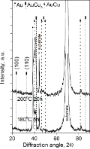
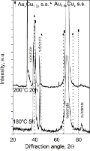
- ) system a) as deposited sample and b) annealed samples. XRD θ–2θ patterns of Au(25nm)/Cu(12nm) annealed samples. Bright field (top view) TEM images of Au(10nm)/Cu(15nm) bilayer a) as deposited and c) after 1 h of heat treatment at 160 °C. The arrow indicates the area of formation of a new phase. Selected