Search results
Search for "high temperature" in Full Text gives 348 result(s) in Beilstein Journal of Nanotechnology. Showing first 200.
Thermophoretic tweezers for single nanoparticle manipulation
Beilstein J. Nanotechnol. 2020, 11, 1126–1133, doi:10.3762/bjnano.11.97
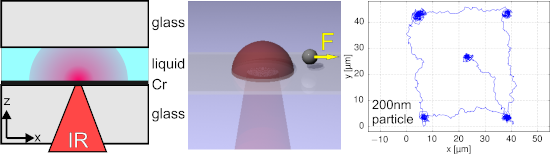
- , diffusion coefficient D = kBT/6πηa, and thermodiffusion coefficient DT = STD (here ST is the Soret coefficient) in a solvent of viscosity η we dynamically created high-temperature gradients. To limit diffusion of the particle, one has to create an appropriate temperature gradient ∇T to produce a


Straightforward synthesis of gold nanoparticles by adding water to an engineered small dendrimer
Beilstein J. Nanotechnol. 2020, 11, 1110–1118, doi:10.3762/bjnano.11.95
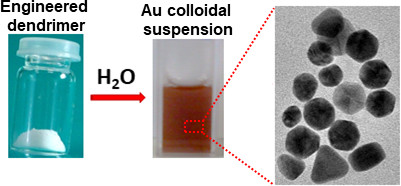
- NPs were recently studied [66] and it was shown that heating the gold NPs at a very high temperature (800 °C) yielded NPs with a pentagonal symmetry [67]. In this work a very similar structure was obtained, as shown in Figure 3D; however, due to the presence of the dendrimers the NPs were obtained


Wet-spinning of magneto-responsive helical chitosan microfibers
Beilstein J. Nanotechnol. 2020, 11, 991–999, doi:10.3762/bjnano.11.83
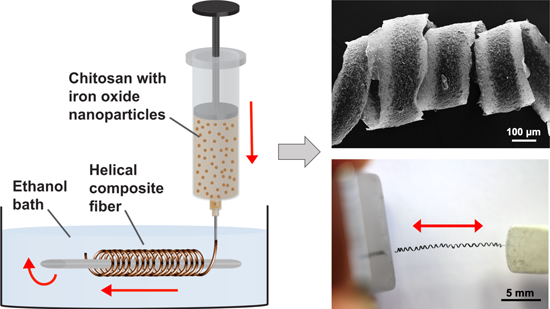
- in which freshly-spun alginate fibers containing magnetic nanoparticles were fixed with a magnetized conical tip and rotated around micropillars, acquiring a helical shape with three to four windings [47]. Non-scalable procedures, such as high-temperature synthesis, photolithography or the use of


Microwave photon detection by an Al Josephson junction
Beilstein J. Nanotechnol. 2020, 11, 960–965, doi:10.3762/bjnano.11.80
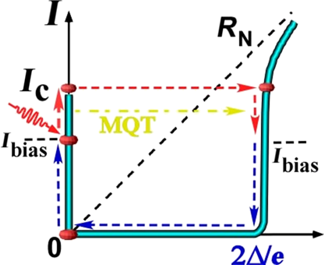
- layered high-temperature superconductors [27]. The significance of this effect depends on the ratio of thermal fluctuations kBT, the damping parameter α and the Josephson energy EJ. Here we will consider a small tunnel junction with the thermal noise intensity of γ = kBT/EJ ≥ 2 × 10⁻² and α > 0.1, and


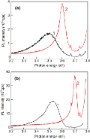
Band tail state related photoluminescence and photoresponse of ZnMgO solid solution nanostructured films
Beilstein J. Nanotechnol. 2020, 11, 899–910, doi:10.3762/bjnano.11.75
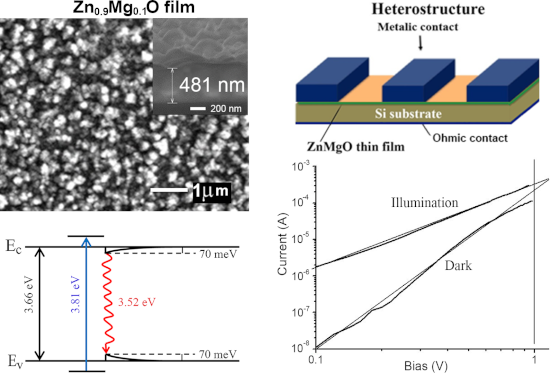
- of films by spray pyrolysis occurs in a single technological step, while ten cycles are applied in spin coating, and the deposited film is annealed in the eleventh step. Apart from that, the deposition of films with spray pyrolysis is performed at a relatively high temperature of the substrate (400

Epitaxial growth and superconducting properties of thin-film PdFe/VN and VN/PdFe bilayers on MgO(001) substrates
Beilstein J. Nanotechnol. 2020, 11, 807–813, doi:10.3762/bjnano.11.65
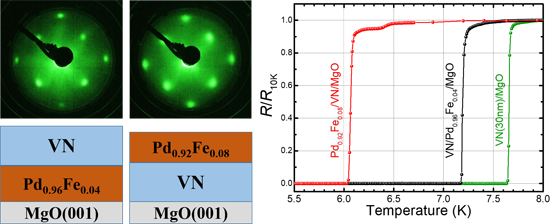
- ) and Fe (99.97% purity, ChemPur GmbH, Germany) were co-evaporated from the pre-calibrated high-temperature effusion cells to obtain the desired Pd1−xFex composition. Vanadium nitride layers were synthesized by using reactive DC magnetron sputtering (MS) in the UHV chamber with a base pressure of p ≤ 5


Light–matter interactions in two-dimensional layered WSe2 for gauging evolution of phonon dynamics
Beilstein J. Nanotechnol. 2020, 11, 782–797, doi:10.3762/bjnano.11.63
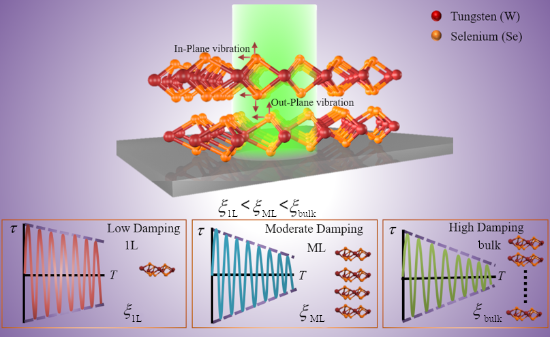
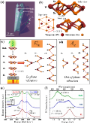
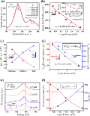
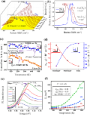
- , obtained from temperature-dependent Raman measurements in the mode, was found to decrease at high temperature due to increased phonon-induced scattering events which eventually also reduces the exciton density in WSe2 [30]. In this present work, we studied the phonon lifetime, τ, and phonon concentration
- constrained by the substrate. However, the three-phonon anharmonic effect still presides in the low-T range for the A1g mode [26]. As a result of this the nonlinear perturbations were found to be persistent in the A1g mode even at high temperature. Additionally, the laser absorbance efficiency in WSe2 will
- bulk WSe2 samples. The effect of temperature on the broadening and red-shift of the direct-band excitonic A-peak in 1L WSe2 is shown in Figure 3e. At high temperature, the phonon concentration increases, and the phonon scattering results in the broadening of exciton radiation [56]. This increased
Nickel nanoparticles supported on a covalent triazine framework as electrocatalyst for oxygen evolution reaction and oxygen reduction reactions
Beilstein J. Nanotechnol. 2020, 11, 770–781, doi:10.3762/bjnano.11.62
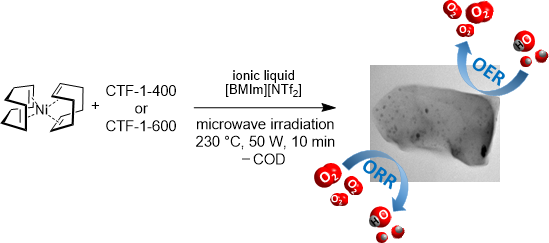
- organic frameworks (MOF) with or without a nitrogen source [13][43][44]. An important step in these syntheses is high-temperature pyrolysis under inert atmosphere for a few hours. However, these methods often cannot control the nitrogen microstructure and composition. In contrast, Ni/CTF-1 is obtained in


Hexagonal boron nitride: a review of the emerging material platform for single-photon sources and the spin–photon interface
Beilstein J. Nanotechnol. 2020, 11, 740–769, doi:10.3762/bjnano.11.61
- considered for non-classical SPE mostly in the 2 eV spectral region using intra-bandgap excitation [96]. These luminescent centers, which were extremely robust at high temperature, exhibit linearly polarized ultra-bright sources of anti-bunched light [44][45][48][97][98][99][100]. However, the standing of h
- to strain, and strain alone is not required to activate the emission. Additionally, not all defects were found at the edges of the flakes, as previously found. While high-temperature operation indicates very robust emitters, the emission wavelength of the fluorescent defects in h-BN is uncontrolled
- density of emitters. Such methods based on high-temperature annealing in air and ultraviolet ozone processing are effectively used to improve SP purity (g(2)(0) ≤ 0.1) and the linewidth (FWHM room temperature of ≈3 nm) of the ZPL of CVD-grown h-BN [108]. By control of the boron diffusion through copper




Soybean-derived blue photoluminescent carbon dots
Beilstein J. Nanotechnol. 2020, 11, 606–619, doi:10.3762/bjnano.11.48
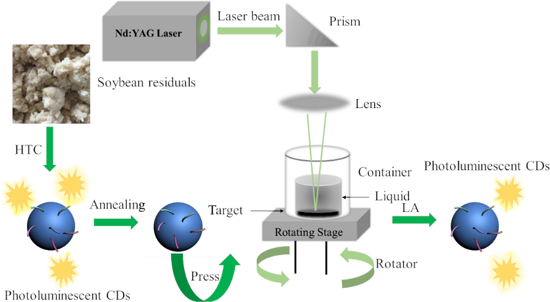
- residuals to synthesize carbon nanoparticles by hydrothermal carbonization (HTC), annealing at high temperature, and laser ablation (LA) in a NH4OH solution. The carbon nanoparticles synthesized with the HTC process (HTC-CDs) exhibit photoluminescent characteristics with strong blue emission. The annealing
- , which involves the HTC treatment, high-temperature annealing, and LAL processing, sequentially. The purpose of the LAL processing is to introduce N-containing functional groups onto the surface of carbon nanoparticles and to recover the PL of carbon nanoparticles/CDs that was quenched by the high
- high-temperature annealing in nitrogen. In contrast to the analysis of the electrochemical performance of large carbon particles of micrometer size [33], this work is focused on the optical characteristics of nanometer-sized CDs, which are synthesized by two different approaches. One is similar to the


Adsorptive removal of bulky dye molecules from water with mesoporous polyaniline-derived carbon
Beilstein J. Nanotechnol. 2020, 11, 597–605, doi:10.3762/bjnano.11.47
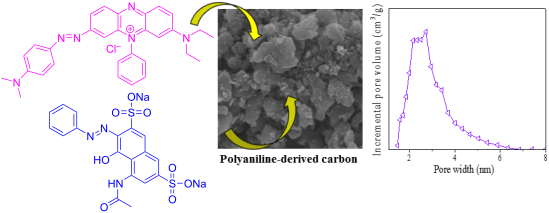
- synthesis, high conductivity and nitrogen content. Porous carbon materials, with high porosity and nitrogen content, have also been obtained from PANI. In other words, functional carbon, for catalysts and supercapacitors can be derived from high temperature carbonization of PANI, especially in the co
- containing dibenzothiophene or dimethyldibenzothiophene [42][43]. However, further research is required to utilize the highly porous PDC materials for the purification of water contaminated with organics such as dyes. Herein, we utilized PDC, prepared especially at high temperature, for the purification of


An advanced structural characterization of templated meso-macroporous carbon monoliths by small- and wide-angle scattering techniques
Beilstein J. Nanotechnol. 2020, 11, 310–322, doi:10.3762/bjnano.11.23
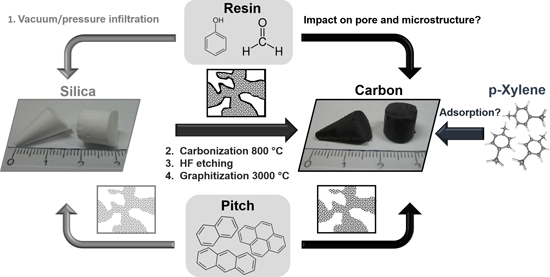
- as the pitch (red) and the resin (green) graphitized at 3000 °C. The sponge-like monolithic structure is retained even at high temperature. The resin-derived carbon monolith displays thicker macropore walls and a less homogenous macropore space, while the macroporosity of the pitch-based carbon
- of 0.2 mL/g. This quite high porosity is probably due to the fact that resin yields non-graphitizable carbon, i.e., cannot be converted into graphite, even at high temperature. The pores are formed due to the rigid network-like connection of the aromatic groups and the more isotropic arrangement of




Facile biogenic fabrication of hydroxyapatite nanorods using cuttlefish bone and their bactericidal and biocompatibility study
Beilstein J. Nanotechnol. 2020, 11, 285–295, doi:10.3762/bjnano.11.21
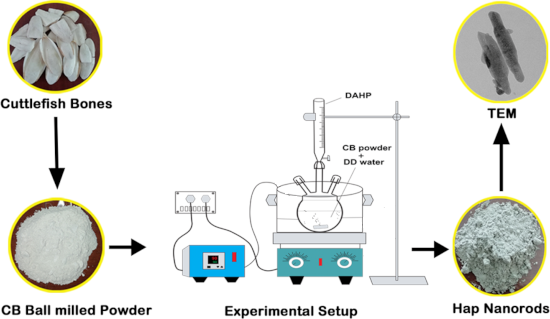
- ), and analyzed their physical and biological properties [18][19][20]. However, the hydrothermal method requires expensive autoclaves to maintain high temperature and pressure and uses toxic chemicals to yield different morphologies of Hap, especially nanorods [21]. These Hap nanorods possess enhanced
- 750 °C to 1000 °C [34]. Likewise, Venkatesan and Kim (2010) isolated Hap from Thunnus obesus fish and their study revealed that a high temperature facilitates aggregation and increases the crystal size of the nanoparticles [35]. On the other hand, it was proven by Hung et al. (2012) that an increase


Nonequilibrium Kondo effect in a graphene-coupled quantum dot in the presence of a magnetic field
Beilstein J. Nanotechnol. 2020, 11, 225–239, doi:10.3762/bjnano.11.17
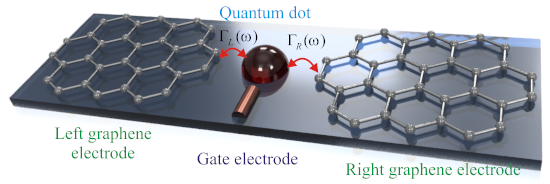
- different values of the additional parameters are shown in Figure 3. At low temperature, the Kondo resonances appear at the values of the chemical potentials (ω ≈ μL and ω ≈ μR), and their amplitudes decrease with increasing temperature, completely vanishing at high temperature. These findings are in
- are shown in Figure 9. At low temperature, similar to the case of U → ∞ (see Figure 2 and Figure 3), the Kondo resonances appear at the chemical potentials, and their amplitudes decrease with increasing temperature and disappear at high temperature. Besides the temperature-dependent narrow and sharp
- . In analogy to the case of U → ∞ (see Figure 5), the zero-bias peak appears in the plot of the differential conductance when the bias voltage equals the Zeeman energy (eV = Δεd = 0). Its shape strongly depends on the temperature. At high temperature, the zero-bias peak is not observed. With decreasing


Synthesis and acetone sensing properties of ZnFe2O4/rGO gas sensors
Beilstein J. Nanotechnol. 2019, 10, 2516–2526, doi:10.3762/bjnano.10.242
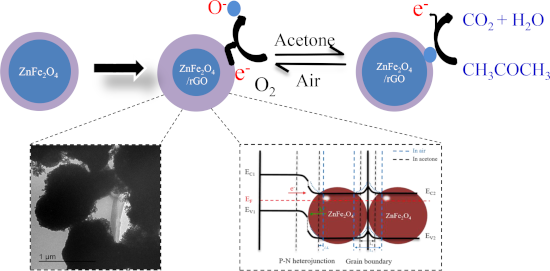
- of ZnFe2O4 and reduced graphene oxide (rGO) with different rGO content were prepared via a simple solvothermal method followed by a high-temperature annealing process in an inert atmosphere. The X-ray diffraction analysis confirmed that the introduction of rGO had no effect on the spinel structure of
- acetone at low temperature, even at room temperature [32]. Hence, with the aim to fabricate a high-performance acetone gas sensor, we prepared hollow spheres of ZnFe2O4 and ZnFe2O4/rGO composites using a one-pot solvothermal method followed by a high-temperature heat treatment process in an inert
- Functional Chemistry Co., Ltd (Suzhou, China). All other reagents (analytical degree) were purchased from Sinopharm Chemical Reagent Co., Ltd (Shanghai, China). Samples synthesis Hollow spheres of pure ZnFe2O4 and ZnFe2O4/rGO composites were prepared via a simple solvothermal method followed by a high


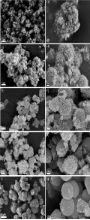


Formation of metal/semiconductor Cu–Si composite nanostructures
Beilstein J. Nanotechnol. 2019, 10, 2497–2504, doi:10.3762/bjnano.10.240
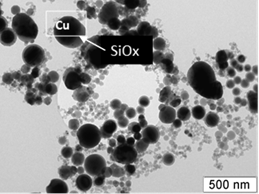
- copper was the same. Therefore, direct comparison of the data in Figure 8a,b and in Figure 8d is possible. Based on these data, it can be assumed that the cooling rate in the experiment can be estimated at 1.25 K/ps. A direct measurement of the cooling rate in the experiment is impossible due to the high
- temperature of the sample in the evaporation chamber under irradiation by a relativistic electron beam. A rough estimate of the cooling rate based on the experimental parameters is 105 K/s, which is significantly less than the modelled value of 1012 K/s. This is most likely due to the strong nonequilibrium of


Nitrogen-vacancy centers in diamond for nanoscale magnetic resonance imaging applications
Beilstein J. Nanotechnol. 2019, 10, 2128–2151, doi:10.3762/bjnano.10.207
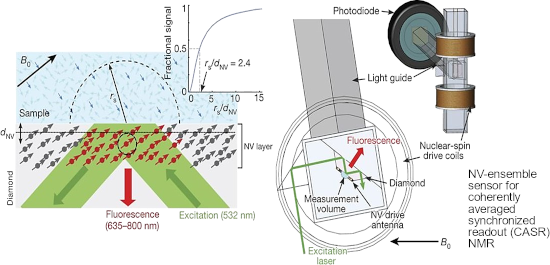
- surprising as spin impurities reduce spin relaxation times. Furthermore, high-pressure high-temperature (HPHT) NDs provide a good enhancement while natural diamonds are not useful with this technique due to the low concentration of spin impurities. Vials with deionized water and NDs in solution were imaged


Improved adsorption and degradation performance by S-doping of (001)-TiO2
Beilstein J. Nanotechnol. 2019, 10, 2116–2127, doi:10.3762/bjnano.10.206
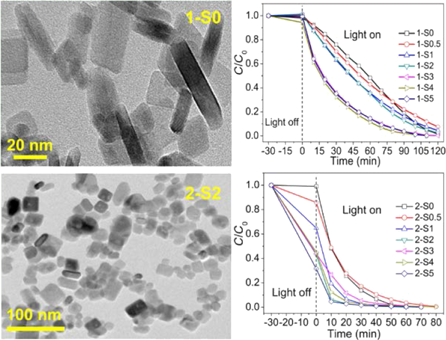
- autoclave, and 150 mL of deionized water was added to the autoclave. The autoclave was then heated to 180 °C or 250 °C and maintained at this temperature for 12 h. The reaction occurred in the quartz crucible under the environment of high-temperature vapor of deionized water. The thermal chemical vapor
- + [21][46]. The substitution of O2− by S2− in the TiO2 lattice is responsible for the formation of the Ti–S bond [21]. The occurrence of neutral S (S0) results from the hydrolysis of thiourea at high temperature [47]. Neutral S (S0) is believed to adsorb on the TiO2 surface or partially enter the




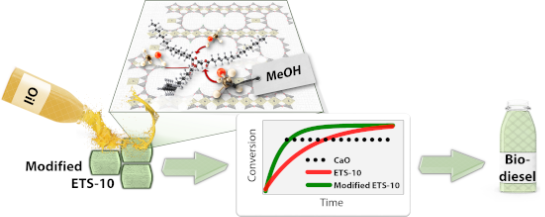
Synthesis of highly active ETS-10-based titanosilicate for heterogeneously catalyzed transesterification of triglycerides
Beilstein J. Nanotechnol. 2019, 10, 2039–2061, doi:10.3762/bjnano.10.200
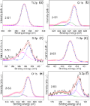
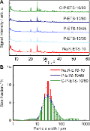
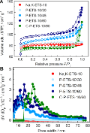
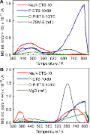
- (DRIFT) study in [31]. After calcination, the peak below 600 K slightly increases and becomes broad. The high-temperature range for all three titanosilicates is characterized by notable desorption from the strong Brønsted basic sites. For Na,K-ETS-10, these are the oxygen atoms shared between Si and Ti
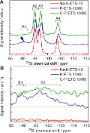
- to the expected surface dehydroxylation resulting from the high-temperature treatment. The obtained surface basic site density and corresponding intrinsic adsorption capacity are presented in Table 2. Surface characterization of the ETS-10-based titanosilicates by 29Si MAS NMR For quantitative
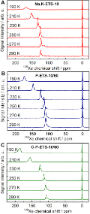
- -synthetic treatment to titanosilicates can change the state of titanium atoms from Ti(IV) to catalytically active Ti(III) [50]. Such a reduction to paramagnetic Ti in ETS-10 titanosilicates can occur as a result of high-temperature treatment under vacuum [51], treatment with H2 or CO at moderate to high








Nanostructured and oriented metal–organic framework films enabling extreme surface wetting properties
Beilstein J. Nanotechnol. 2019, 10, 1994–2003, doi:10.3762/bjnano.10.196
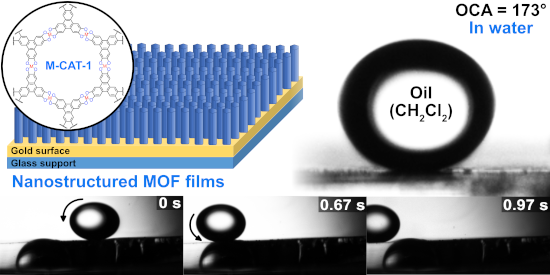
- Information File 1). This confirms that the observed superhydrophilic and superoleophobic behavior arises from the MOF film. To illustrate the stability of the MOF under harsh conditions, the films were subjected to an acidic environment (pH 5, 12 h), a basic environment (pH 9, 12 h), high temperature (150 °C
- properties while maintaining transparency (see Figure S5.9, Supporting Information File 1). In addition, we found that these MOF films are stable in acidic (pH 5, 12 h) and basic conditions and at high temperature (150 °C, 12 h) (see Figure S8.3, Supporting Information File 1). To test the antifog properties


Processing nanoporous organic polymers in liquid amines
Beilstein J. Nanotechnol. 2019, 10, 1844–1850, doi:10.3762/bjnano.10.179
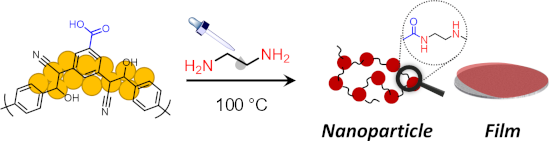
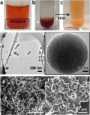
- granules were covered with organic layers, presumably excess EDA. The solution was transferred on a silicon wafer to analyze the morphology changes by SEM as function of the heating time. When treated at high temperature for a short period of time (ca. 1 min), the granules were combined in a heap to form a
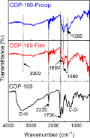
- no drastic change in the nitrile region (2200 cm−1). Moreover, the addition of an amine on a nitrile group cannot be achieved in a few seconds without catalyst despite the high temperature. The existence of carbonyl units at around 1700 cm−1 in COP-100 drew our attention. The carbonyl groups could
- the hydrophobic nanoporous polymer at high temperature [27]. The COP-100-Film was formed much slower when the temperature was below 80 °C, supporting that the amide formation by the condensation reaction was crucial for processing the nanoporous polymer. The quick amide formation made the COP-100



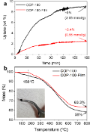
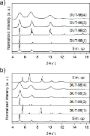
The impact of crystal size and temperature on the adsorption-induced flexibility of the Zr-based metal–organic framework DUT-98
Beilstein J. Nanotechnol. 2019, 10, 1737–1744, doi:10.3762/bjnano.10.169
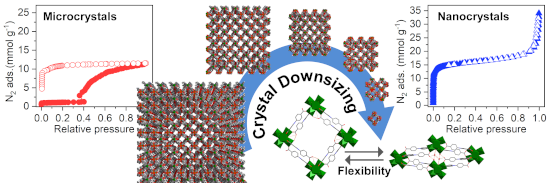
- of a high-temperature (DUT-98ht) phase was proposed. Although the structure of this phase could not be refined from PXRD and single crystal diffraction data, the obtained PXRD patterns were found to be very similar to the cp phase. In addition, DRIFT analysis indicates that the transition is



Upcycling of polyurethane waste by mechanochemistry: synthesis of N-doped porous carbon materials for supercapacitor applications
Beilstein J. Nanotechnol. 2019, 10, 1618–1627, doi:10.3762/bjnano.10.157
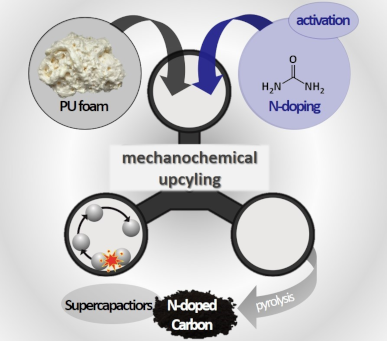
- to 670 m2·g−1 and to 0.27 cm3·g−1, while the nitrogen content increases to 6.3 wt % (Table 1). This observation is related to an intensified chemical activation process due to the high amount of urea and the formation of ammonia during the high-temperature treatment, leading to a higher consumption


Kelvin probe force microscopy work function characterization of transition metal oxide crystals under ongoing reduction and oxidation
Beilstein J. Nanotechnol. 2019, 10, 1596–1607, doi:10.3762/bjnano.10.155
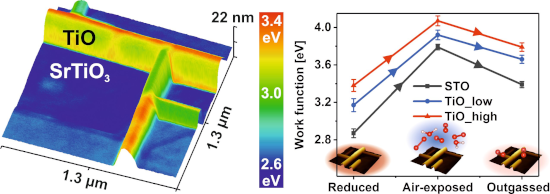
- show the properties of a bulk-like crystalline rock-salt TiO phase, unlike previous studies on the crystallography and electronic structure of TiO, which were based on defective thin films formed on various surfaces, e.g., TiC(100) [23] or TiO2(110) [24]. γ-TiO is the high-temperature phase with a NaCl
- reached on the STO surface (below 10−20 mbar). As a result of the high-temperature reduction (1150 °C, 1 h) under such conditions, a macroscopic network of nanowires was formed. After slow cooling down to room temperature, the samples were transferred in situ to the microscope chamber of an Omicron RT STM


Materials nanoarchitectonics at two-dimensional liquid interfaces
Beilstein J. Nanotechnol. 2019, 10, 1559–1587, doi:10.3762/bjnano.10.153
- molecules. The one-dimensional carbon materials prepared through high-temperature carbonization of C70 crystalline assemblies showed high specific capacitances at a high current density and scan rate [243]. These nano-engineered one-dimensional carbon materials might be useful as electrode materials for