


Search results
Search for "light source" in Full Text gives 208 result(s) in Beilstein Journal of Nanotechnology. Showing first 200.
A novel copper precursor for electron beam induced deposition
Beilstein J. Nanotechnol. 2018, 9, 1220–1227, doi:10.3762/bjnano.9.113
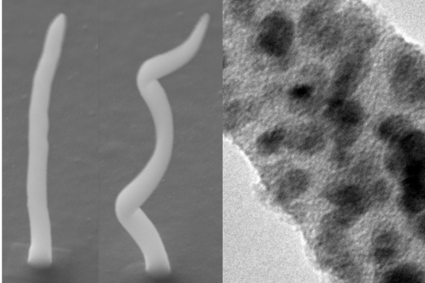
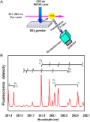
- light source is a linearly polarized laser, emitting at a wavelength of 457 nm. A 100× objective lens (numerical aperture 0.9) is used to focus the laser beam onto the sample, resulting in a spot size of about 700 nm. The spectra were taken with an Horiba iHR 320 spectrometer. Transmission electron


Valley-selective directional emission from a transition-metal dichalcogenide monolayer mediated by a plasmonic nanoantenna
Beilstein J. Nanotechnol. 2018, 9, 780–788, doi:10.3762/bjnano.9.71
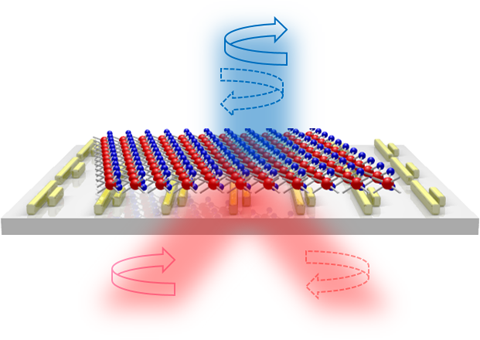
- only inside the gap between the bars could in principle serve as efficient light source with tunable emission directions. To further understand our system and seek for possible ways to improve the average directionality, we compare the total radiation power for the emitters at different positions


Surface-plasmon-enhanced ultraviolet emission of Au-decorated ZnO structures for gas sensing and photocatalytic devices
Beilstein J. Nanotechnol. 2018, 9, 771–779, doi:10.3762/bjnano.9.70
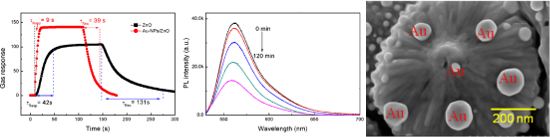
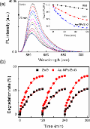
- counting (TCSPC) technique was used. We used 350 nm frequency doubled femtosecond pulses from a 76 MHz mode locked Ti:sapphire laser system as a light source. The PL was collected by using lenses, and then dispersed by a 15 cm monochromater, and finally detected by a UV enhanced multichannel plate




Heavy-metal detectors based on modified ferrite nanoparticles
Beilstein J. Nanotechnol. 2018, 9, 762–770, doi:10.3762/bjnano.9.69
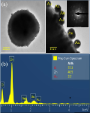
- using a high-resolution continuum-source atomic absorption spectrometer ContrAA 700 (Analytik Jena AG, Jena, Germany) equipped with a flame atomizer (burner length: 100 mm). The optical system comprises a continuum light source 300 W high-pressure xenon short-arc lamp XBO 301 (GLE, Berlin, Germany


Perovskite-structured CaTiO3 coupled with g-C3N4 as a heterojunction photocatalyst for organic pollutant degradation
Beilstein J. Nanotechnol. 2018, 9, 671–685, doi:10.3762/bjnano.9.62
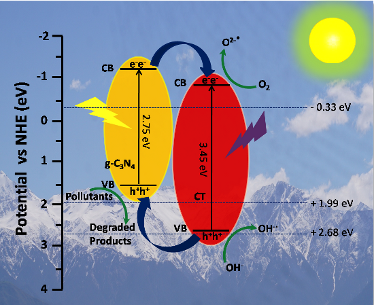
- provided in Figure S5, Supporting Information File 1. It can be seen from the absorption plots presented in Figure 9a–c and Figure S5a–c, Supporting Information File 1, that a shift in the absorption maximum of RhB along with the decrease in intensity is observed upon irradiation under any light source [52


Mechanistic insights into plasmonic photocatalysts in utilizing visible light
Beilstein J. Nanotechnol. 2018, 9, 628–648, doi:10.3762/bjnano.9.59
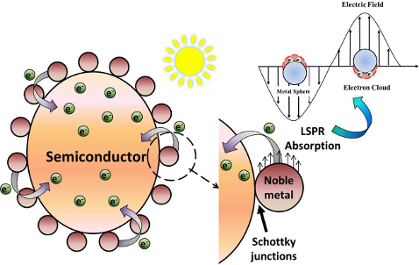
- nanoparticles takes place on the semiconductor surface. The most common light source used is a UV lamp producing a high-energy spectrum. Since most contemporary research promotes sustainable and green synthesis routes, replacing the UV lamp as the source of photons with renewable energy could be an alternative
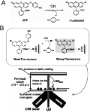
- localized surface plasmon resonance (LSPR) evolution in a noble metal particle irradiated by a light source. Reprinted with permission from [15], copyright 2003 American Chemical Society. (b) LSPR decay processes. Reprinted with permission from [16], copyright 2014 Nature Publishing Group. The metallic





Facile phase transfer of gold nanorods and nanospheres stabilized with block copolymers
Beilstein J. Nanotechnol. 2018, 9, 616–627, doi:10.3762/bjnano.9.58
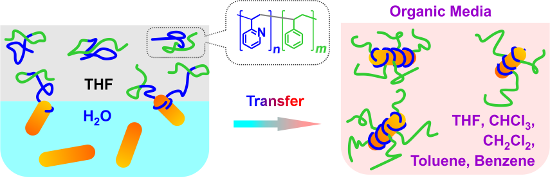
- (JEOL, Japan). Optical analysis Absorption spectra of nanoparticle sols in the visible light range were recorded on an optical absorbance USB 2000 spectrometer (Ocean Optics, USA) equipped with a LS-1 halogen light source and a cuvette holder. The spectral data were processed using a SpectraSuite


Facile synthesis of ZnFe2O4 photocatalysts for decolourization of organic dyes under solar irradiation
Beilstein J. Nanotechnol. 2018, 9, 436–446, doi:10.3762/bjnano.9.42
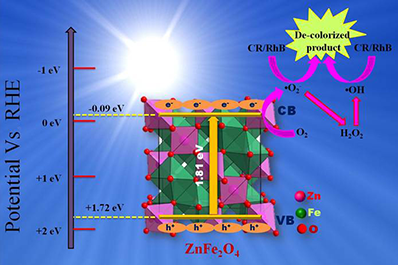
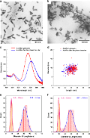
- ) under solar irradiation was determined. To know the self-degradation of the dye, a control experiment was carried out by exposing Congo red solution to the light source for 30 min. The results showed that the Congo red solution could not be photo-degraded in the absence of the photocatalyst. In the next


Engineering of oriented carbon nanotubes in composite materials
Beilstein J. Nanotechnol. 2018, 9, 415–435, doi:10.3762/bjnano.9.41
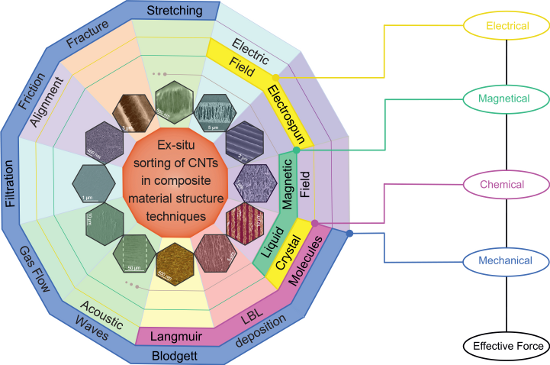
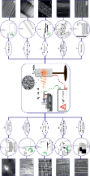
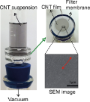
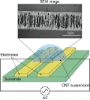
- samples. This method gives significant information about molecular vibrations. The technique involves the excitation of a sample with a monochromatic light source (i.e., laser) and collecting the scattered light. The Raman spectra of CNTs can be identified with the radial breathing mode (RBM), tangential








Bombyx mori silk/titania/gold hybrid materials for photocatalytic water splitting: combining renewable raw materials with clean fuels
Beilstein J. Nanotechnol. 2018, 9, 187–204, doi:10.3762/bjnano.9.21
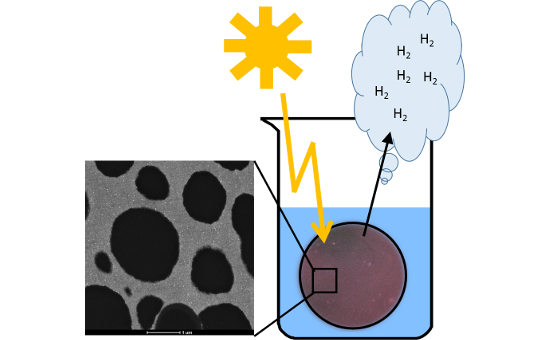
- at an intensity of about 1000 W/m2 as light source. For comparison a 300 W Xe-lamp without the AM1.5G filter was also used. In a typical experiment, the catalyst and a stirring bar were placed in the reactor. Then the setup was evacuated three times and filled with argon (Ar) to remove residual
- oxygen. Thereafter, 53 mL of a 2:1 mixture of water and ethanol were added under an Ar stream, and the thermostat was set to 25 °C. Both water and ethanol were treated with Ar for at least 10 min to remove dissolved oxygen before injection into to the reaction chamber. The light source was placed at a
- activity and experimental setups show large variations in terms of, e.g., reactor design, feed design, light source, irradiation window, and water/organic solvent mixtures in the reactors [9]. Regardless of this, Silva et al. [24] reported that a higher amount of AuNPs results in a lower H2 yield, similar




Thermo- and electro-optical properties of photonic liquid crystal fibers doped with gold nanoparticles
Beilstein J. Nanotechnol. 2017, 8, 2790–2801, doi:10.3762/bjnano.8.278
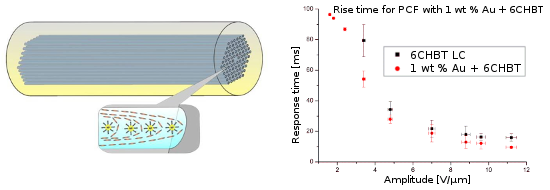
- experiment was focused on the comparison of the propagation spectra of the PLCFs with different infusions at room temperature. The experimental setup is shown in Figure 2b, in which we used a halogen lamp (Mikropak HL-2000) as a light source and the output spectra were recorded by a fiber optic spectrometer
- (Ocean Optics, USB4000). Setup for experiments in an electric field The experimental setup is shown in Figure 3. We used a green laser operating at a wavelength of 532 nm as a light source in this experiment due to the fact that at this wavelength all the samples (observed in the first part of the


CdSe nanorod/TiO2 nanoparticle heterojunctions with enhanced solar- and visible-light photocatalytic activity
Beilstein J. Nanotechnol. 2017, 8, 2741–2752, doi:10.3762/bjnano.8.273
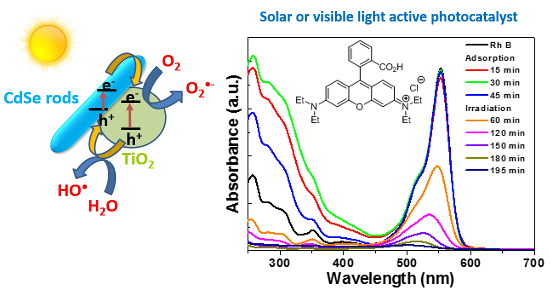
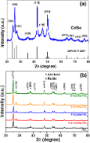
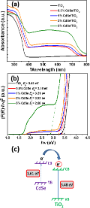
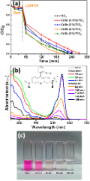
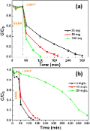
- simulated solar light source (light intensity = 5 mW/cm2). A polycarbonate filter was added for experiments conducted under visible light irradiation (light intensity = 10 mW/cm2). In a typical experiment, 50 mg of the CdSe/TiO2 composite were dispersed in 50 mL of aqueous solution of RhB (10 mg/L) in a 70






Patterning of supported gold monolayers via chemical lift-off lithography
Beilstein J. Nanotechnol. 2017, 8, 2648–2661, doi:10.3762/bjnano.8.265
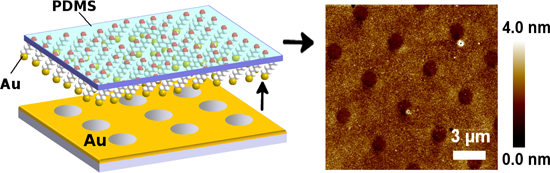
- followed by incubation of 1 µM AlexaFluor® 488-labeled complementary DNA. Each substrate was positioned on the microscope sample holder such that the PDMS side was facing away from the light source and the rear side (glass side) of the substrate was facing toward the light source. The images were collected


Enhanced photoelectrochemical water splitting performance using morphology-controlled BiVO4 with W doping
Beilstein J. Nanotechnol. 2017, 8, 2640–2647, doi:10.3762/bjnano.8.264
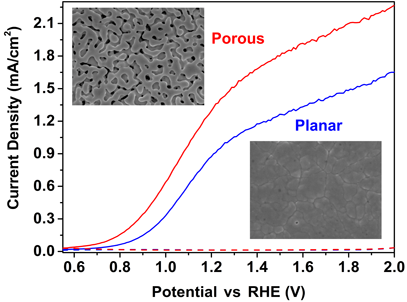
- electrode as a reference electrode. The light source for photoelectrochemical water splitting measurement is a solar simulator (HAL-320, Asahi Spectra Co., Ltd.) with a power intensity of 100 mW·cm−2. The photocurrent was measured in a 0.5 M Na2SO4 aqueous solution with a scan rate of 30 mV·s−1. The


Angstrom-scale flatness using selective nanoscale etching
Beilstein J. Nanotechnol. 2017, 8, 2181–2185, doi:10.3762/bjnano.8.217
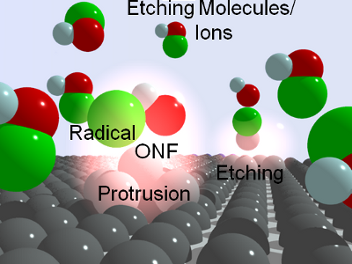
- protrusions only. In the solution, a light source with a photon energy of 4.66 eV (higher than the dissociation energy) dissociated the hypochlorous acid and consequently produced Cl radicals [13]. This process is expected to be similar to the etching of glass when Cl2 gas is used. The laser light was


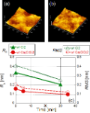

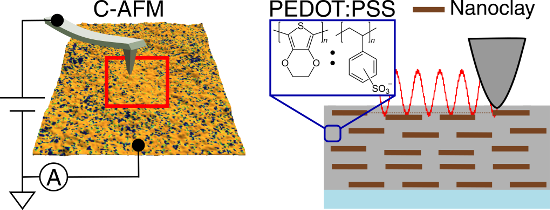
High-stress study of bioinspired multifunctional PEDOT:PSS/nanoclay nanocomposites using AFM, SEM and numerical simulation
Beilstein J. Nanotechnol. 2017, 8, 2069–2082, doi:10.3762/bjnano.8.207
- cross section. Optical transmittance spectroscopy was performed by using a CCS200 spectrometer connected to a SLS201 light source and a 2-inch integrating sphere (model IS200-4) procured from Thor Labs. (a) Summary of optical characterization. The transmittance for the different samples is plotted


Optical techniques for cervical neoplasia detection
Beilstein J. Nanotechnol. 2017, 8, 1844–1862, doi:10.3762/bjnano.8.186

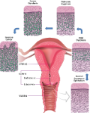
- a low-power broadband light source produce different backscattering spectra compared to normal cervical tissue in the visible wavelength range. Such difference in spectra detected by an optical sensor can be used in order to identify neoplastic lesions of the cervical epithelium. DRS is an indirect
- tissue. This technique makes use of low-coherence interferometry with a near-infrared light source to create two-dimensional images of tissue cross-sections by exploring elastic light scattering from internal tissue microstructures [117]. OCT provides depth-resolved images, where the contrast results



Surface-enhanced Raman spectroscopy of cell lysates mixed with silver nanoparticles for tumor classification
Beilstein J. Nanotechnol. 2017, 8, 1183–1190, doi:10.3762/bjnano.8.120
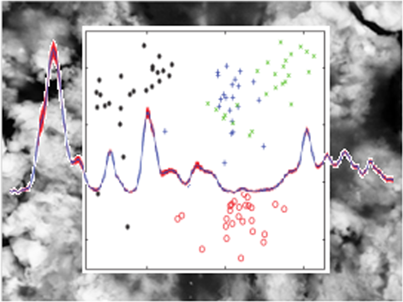
- white light source. The laser power was fixed at 50 mW with an acquisition time of 5 s. Each batch was lysed and divided into eight to ten samples. 100 µL of the silver nanoparticles were mixed with 100 µL KCl as aggregating agent, and then 100 µL of cell lysate were added to the mixture with a final


Enhanced catalytic activity without the use of an external light source using microwave-synthesized CuO nanopetals
Beilstein J. Nanotechnol. 2017, 8, 1167–1173, doi:10.3762/bjnano.8.118
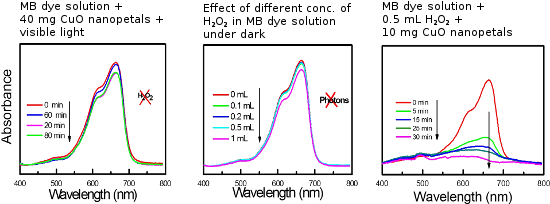
- , University of Twente, 7500 AE, Enschede, Netherlands 10.3762/bjnano.8.118 Abstract We report enhanced catalytic activity of CuO nanopetals synthesized by microwave-assisted wet chemical synthesis. The catalytic reaction of CuO nanopetals and H2O2 was studied with the application of external light source and
- also under dark conditions for the degradation of the hazardous dye methylene blue. The CuO nanopetals showed significant catalytic activity for the fast degradation of methylene blue and rhodamine B (RhB) under dark conditions, without the application of an external light source. This increased
- application of an external light source and also under dark conditions for the degradation of hazardous dyes such as methylene blue and rhodamine B. We report enhanced catalytic activity of the synthesized CuO nanopetals, even without the use of an external light source (UV/visible light) for the degradation


ZnO nanoparticles sensitized by CuInZnxS2+x quantum dots as highly efficient solar light driven photocatalysts
Beilstein J. Nanotechnol. 2017, 8, 1080–1093, doi:10.3762/bjnano.8.110
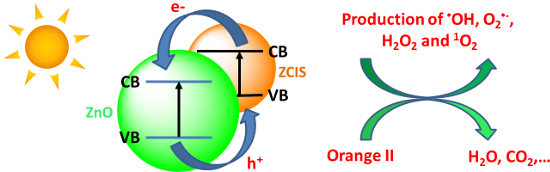
- composites prepared for the photocatalytic degradation of pollutants require a relatively large quantity of CIS nanocrystals to be complete (20 wt % CIS QDs relative to ZnO) [34][37]. When the ZCIS/ZnO weight ratio was decreased to ≈7%, the photodegradation never exceeded 80% even using a light source
- simulated solar light irradiation of the ZnO/ZCIS catalyst, electrons are promoted from the VB to the CB of both ZCIS and ZnO materials (although ZCIS QDs are more easily excited by the light source used in this study). Because the CB of ZnO is more positive than that of the ZCIS QDs (−0.335 eV and −0.59 eV




CVD transfer-free graphene for sensing applications
Beilstein J. Nanotechnol. 2017, 8, 1015–1022, doi:10.3762/bjnano.8.102
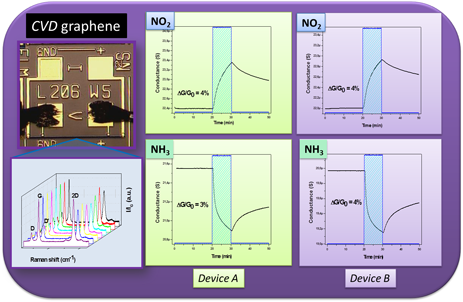
- different strategies, such as the introduction of a heater or a UV light source on board, able to restore the basic device conditions at the end of exposure to analyte [9][10][11][12][13]. Another possibility is to record the signal derivative of conductance [8] with a differentiator operational amplifier


Near-field surface plasmon field enhancement induced by rippled surfaces
Beilstein J. Nanotechnol. 2017, 8, 956–967, doi:10.3762/bjnano.8.97
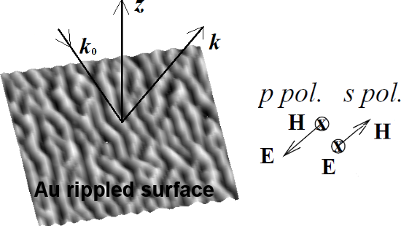
- by illuminating the sample with an external light source at frequency ω. The scattering geometry is illustrated in Figure 1A where a rough metal surface with z = h(x,y) denotes the substrate, and where the semi-infinite metal occupies the lower half-space z ≤ h(x,y) which is characterized by an


High photocatalytic activity of Fe2O3/TiO2 nanocomposites prepared by photodeposition for degradation of 2,4-dichlorophenoxyacetic acid
Beilstein J. Nanotechnol. 2017, 8, 915–926, doi:10.3762/bjnano.8.93
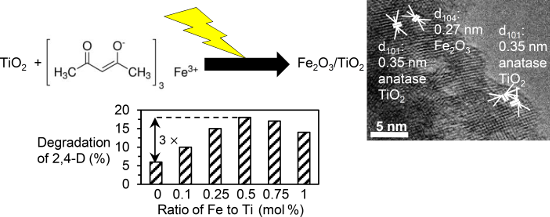
- have been widely suggested for environmental remediation under mild conditions. In the presence of only a photocatalyst and a light source of appropriate energy, the process can mineralize organic pollutants to harmless products such as carbon dioxide and water. Among the semiconductor photocatalysts


Fiber optic sensors based on hybrid phenyl-silica xerogel films to detect n-hexane: determination of the isosteric enthalpy of adsorption
Beilstein J. Nanotechnol. 2017, 8, 475–484, doi:10.3762/bjnano.8.51
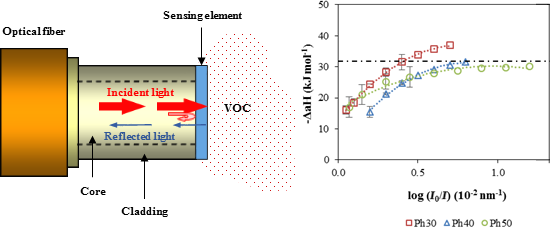
- vacuum and dosing system, controllers for temperature and pressure inside the measuring cell, and software for programing the response cycles and storing experimental data. The optical system included a 50/50 coupler with a 62.5 µm core diameter connected to a white light source (DH-2000, Mikropack), a
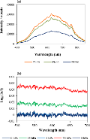
- , Ph40 and Ph50 at 298 K is plotted as a function of the wavelength. The features of the spectra are those of the radiation of the white light source. Figure 4b shows the response of the sensing element Ph40 as a function of wavelength at 298 K under vacuum, and after dosing n-hexane to reach 35 and 70






Photocatalysis applications of some hybrid polymeric composites incorporating TiO2 nanoparticles and their combinations with SiO2/Fe2O3
Beilstein J. Nanotechnol. 2017, 8, 272–286, doi:10.3762/bjnano.8.30
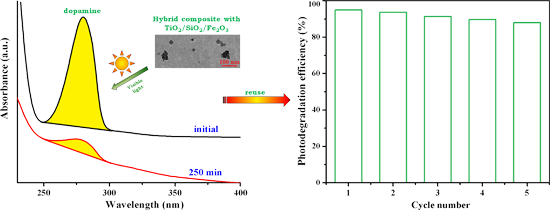
- phenol (1.06 × 10⁻³ M) or hydroquinone/dopamine (0.5 × 10⁻³ M) aqueous solutions. The mixture was then constantly irradiated with UV light (Hg–Xe lamp, λ = 365 nm, light intensity ca. 8 mW·cm−2) or visible light source (Xe lamp, λ = 400–800 nm). 1.5 mL of the irradiated solution was collected at given





