Search results
Search for "mechanisms" in Full Text gives 880 result(s) in Beilstein Journal of Nanotechnology. Showing first 200.
Insights into the electronic and atomic structures of cerium oxide-based ultrathin films and nanostructures using high-brilliance light sources
Beilstein J. Nanotechnol. 2025, 16, 860–871, doi:10.3762/bjnano.16.65

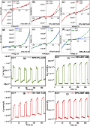
- pump–probe X-ray diffraction, to more complex systems like highly doped and ternary oxides, or to systems with variable and well-controlled defect densities and architecture, also under operando conditions. Optimizing the lifetime of photoexcited charges, but also understanding the mechanisms and the


Synthesis and magnetic transitions of rare-earth-free Fe–Mn–Ni–Si-based compositionally complex alloys at bulk and nanoscale
Beilstein J. Nanotechnol. 2025, 16, 823–836, doi:10.3762/bjnano.16.62
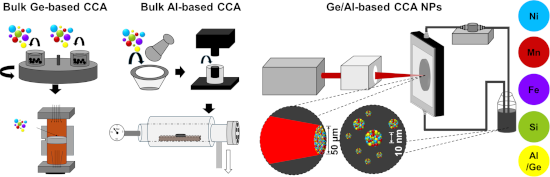
- components affect the balance between phase explosion and spallation mechanisms, ultimately leading to differences in particle size distribution. Composition analysis The EDX mapping of Ge-based CCA NPs shows that the particles contain all constituent elements of the target (Figure 4a). As shown in Table 2
- , the percentage variation of each element in the CCA NPs is higher than in the bulk alloy when compared to the expected composition, and the standard deviation between NPs is also greater than that of the bulk alloys. This discrepancy is due to the different synthesis mechanisms of NPs and bulk alloys


Morphology and properties of pyrite nanoparticles obtained by pulsed laser ablation in liquid and thin films for photodetection
Beilstein J. Nanotechnol. 2025, 16, 785–805, doi:10.3762/bjnano.16.60
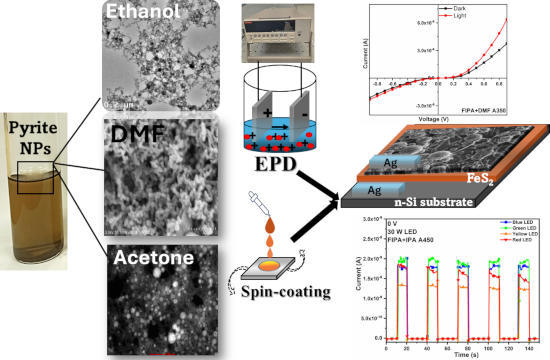
- observed in the TEM images. The rod-shaped particles, being fewer in number, are not captured in the selected TEM region. Also, in the TEM images of FIPA (Figure 2a), some hollow NPs are present. Hollow-structured NPs are typically formed through mechanisms such as the Kirkendall effect [36]. This effect
- transformations, are given in Figure 13. The results observed are contrary to those reported for generation of Ag NPs in different solvents [42]. They reported that acetone and water restricted the growth mechanisms and small narrow NPs of Ag were observed. In our study, though the average size of ≈17 nm for FeS2






Serum heat inactivation diminishes ApoE-mediated uptake of D-Lin-MC3-DMA lipid nanoparticles
Beilstein J. Nanotechnol. 2025, 16, 740–748, doi:10.3762/bjnano.16.57
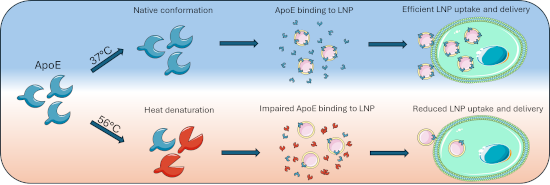
- subsequent cell-nanoparticle interactions remains unclear. Here, the effect of FCS heat inactivation on the in vitro behavior of the clinically applied and most studied D-Lin-MC3-DMA (MC3) LNPs was investigated and compared to LNPs containing a different ionizable lipid, C12-200 (C12). Moreover, mechanisms


Synthesis of a multicomponent cellulose-based adsorbent for tetracycline removal from aquaculture water
Beilstein J. Nanotechnol. 2025, 16, 728–739, doi:10.3762/bjnano.16.56
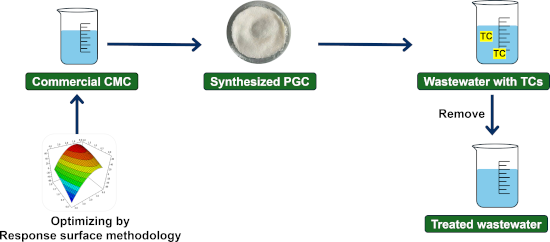
- were characterized, and the TC adsorption efficiency of PGC was assessed using high-performance liquid chromatography–mass spectroscopy (HPLC-MS). Elemental analysis of PGC identified four key mechanisms governing its endothermic TC adsorption mechanism: surface complexation, electrostatic interactions


Efficiency of single-pulse laser fragmentation of organic nutraceutical dispersions in a circular jet flow-through reactor
Beilstein J. Nanotechnol. 2025, 16, 711–727, doi:10.3762/bjnano.16.55
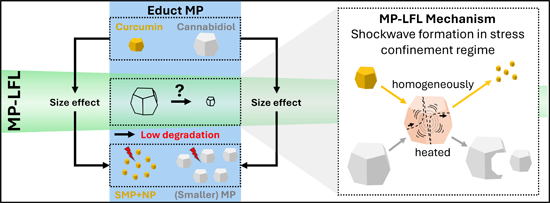
- nutraceuticals aiming at solubility enhancements. However, current discontinuously operated fragmentation setups suffer from chemical degradation by multipulse laser excitation at high fluence and do not allow for systematic studies of the fragmentation mechanisms. In this work, continuous-flow microparticle
- extraction methods, exemplified by extraction from coffee powders [10] and alkaloid drug extraction from ground root powder [11]. Initially, LSPC research focused on inorganic materials such as metals [12][13], semiconductors [1], and oxides [14][15], where the particle formation mechanisms are well
- that curcumin is not only susceptible to photodegradation but is also a known radical scavenger [61][62]. These two opposing mechanisms, which most likely have a different concentration dependency, may also be responsible for the higher chemical degradation at low concentrations. It has been reported


The impact of tris(pentafluorophenyl)borane hole transport layer doping on interfacial charge extraction and recombination
Beilstein J. Nanotechnol. 2025, 16, 678–689, doi:10.3762/bjnano.16.52
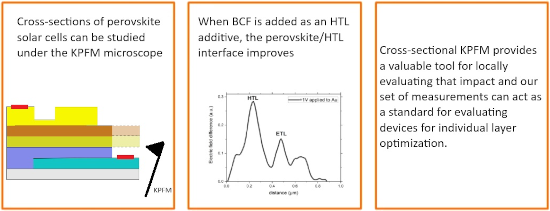
- , which implies dissimilarities in the underlying doping mechanisms (See Supporting Information File 1, Section 3). Nevertheless, we decided that for our BCF batches the best approach was to dope both spiro-OMeTAD and PTAA solely with BCF and forgoing using further additives LiTFSI and tBP. This was in


Colloidal few layered graphene–tannic acid preserves the biocompatibility of periodontal ligament cells
Beilstein J. Nanotechnol. 2025, 16, 664–677, doi:10.3762/bjnano.16.51
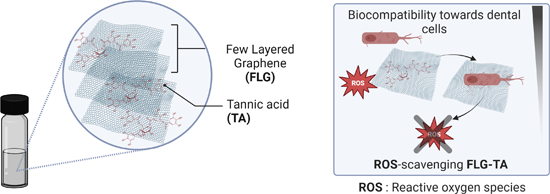
- focused on the adsorption mechanisms [15][16]. To date, no studies have explored how FLG–TA affects the biocompatibility of dental cells. The current research provides new insights into the biocompatibility of FLG–TA with PDL cells. We make the assumption that the cytotoxicity of TA present on the surface
- capabilities through multiple mechanisms, namely, electron transfer, where hydroxy groups donate electrons to neutralize free radicals, and hydrogen atom transfer, where hydrogen atoms from hydroxy groups are donated to stabilize ROS [17][34]. This retained antioxidant activity could play a crucial role in
- research indicating that TA coatings markedly enhanced the adhesion and proliferation of human liver cancer cells, specifically HepG2, on the PDMS substrate when compared to pristine PDMS [37]. TA may possibly play a role in cellular adhesion mechanisms, potentially through surface protein interactions




Nanoscale capacitance spectroscopy based on multifrequency electrostatic force microscopy
Beilstein J. Nanotechnol. 2025, 16, 637–651, doi:10.3762/bjnano.16.49

- way for the design of materials with tailored functionalities [1][2][3][4][5][6]. Dielectric properties are fundamental for understanding the behavior and performance of various material systems, as they directly influence charge storage, polarization, and energy dissipation mechanisms. For instance




A formulation containing Cymbopogon flexuosus essential oil: improvement of biochemical parameters and oxidative stress in diabetic rats
Beilstein J. Nanotechnol. 2025, 16, 617–636, doi:10.3762/bjnano.16.48
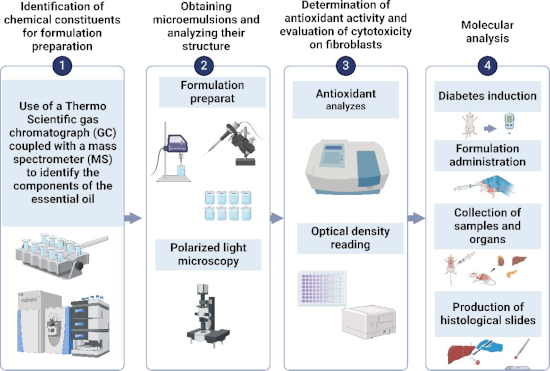
- difference between the DPPH method and the others can be explained by the different antioxidant mechanisms. DPPH is more useful in apolar surroundings and mainly involves hydrogen donation. ABTS is a method that includes electron and hydrogen donation, in addition to being useful for both nonpolar and polar
- the molecular mechanisms involved. Conclusion The selected microemulsion containing the essential oil of Cymbopogon flexuosus (M7-EOCF) was obtained using Eumulgin® CO40 and Tween® 80 as the surfactant phase; it presented itself as a transparent, liquid, and isotropic system, with nanometric droplet




Focused ion and electron beams for synthesis and characterization of nanomaterials
Beilstein J. Nanotechnol. 2025, 16, 613–616, doi:10.3762/bjnano.16.47

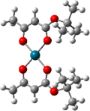
- the fundamental mechanisms underlying precursor fragmentation by low-energy electrons, which remains an ongoing focus of study in the field, see Figure 1. Within the widely studied group of acetylacetonate complexes, which also play a crucial role in chemical vapor deposition and atomic layer
- unrivaled spatial resolution and 3D capabilities, focused ion and electron beams technologies face challenges in reproducibility and scalability, hindering their commercial applications. Hence, these techniques require better understanding of the atomistic mechanisms involving ions, electrons, adsorbates

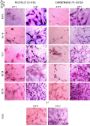
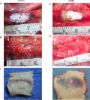
Polyurethane/silk fibroin-based electrospun membranes for wound healing and skin substitute applications
Beilstein J. Nanotechnol. 2025, 16, 591–612, doi:10.3762/bjnano.16.46
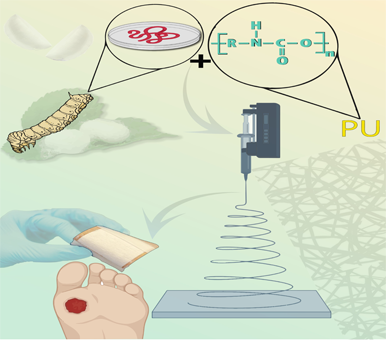
- [143]. Three mechanisms, namely, hydrolysis, enzymatic degradation, and oxidation, are primarily responsible for the extracellular breakdown of synthetic biodegradable polymeric materials in living organisms. Certain aliphatic polyesters are undeniably biodegradable and biocompatible polymers. It is



Nanomaterials in targeting amyloid-β oligomers: current advances and future directions for Alzheimer's disease diagnosis and therapy
Beilstein J. Nanotechnol. 2025, 16, 561–580, doi:10.3762/bjnano.16.44
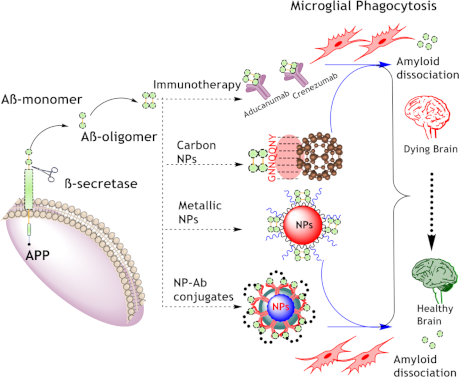
- formation. This review provides an in-depth analysis of various nanochaperones developed to target AβOs, detailing their mechanisms of action and therapeutic potential via focusing on two main strategies, namely, disruption of AβOs through direct interaction and the inhibition of AβO nucleation by binding
- to intermediates of the oligomerization process. Evidence from in vivo studies indicate that NMs hold promise for ameliorating AD symptoms. Additionally, the review explores the different interaction mechanisms through which nanoparticles exhibit their inhibitory effects on AβOs, providing insights
- interactions between n-mers (oligomers formed from a defined number of monomers), or from non-specific interactions, akin to micelles. The precise mechanisms underlying the formation of AβOs during the growth of AβFs remain elusive. However, researchers have identified three main pathways to explain this


Retrieval of B1 phase from high-pressure B2 phase for CdO nanoparticles by electronic excitations in CdxZn1−xO composite thin films
Beilstein J. Nanotechnol. 2025, 16, 551–560, doi:10.3762/bjnano.16.43

- supported in the literature. Upon penetration in a solid, energetic ions lose energy through two mechanisms: direct energy transfer to target nuclei via elastic collisions (nuclear energy loss (Sn)) and ionization of the target atoms through inelastic collisions (electronic energy loss (Se)). In the present


Electron beam-based direct writing of nanostructures using a palladium β-ketoesterate complex
Beilstein J. Nanotechnol. 2025, 16, 530–539, doi:10.3762/bjnano.16.41
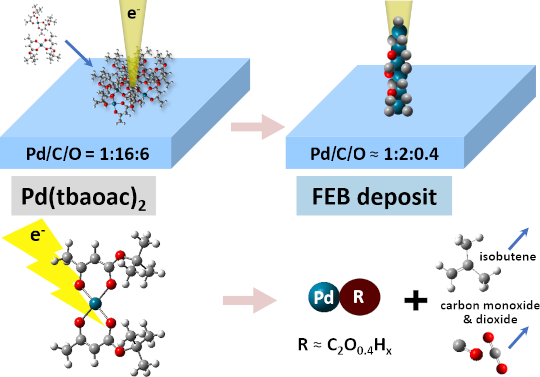
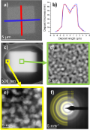
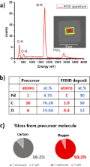
- and desorption mechanisms. Comparison with other precursors confirms that the β-ketoesterate family has the highest ligand removal percentage and constitutes thus an interesting model chemistry for further high-metal-content FEBID studies. The possibility of growing nanopillars makes this complex a
- under electron impact or getting trapped by newly adsorbing precursor molecules or diffusing molecules. The deposition process is governed by dissociation, desorption, adsorption, and diffusion mechanisms, all of which are influenced by experimental parameters [31] such as substrate temperature
- , molecular and electron flux, beam scanning strategies, and the choice of substrate and precursor. Altering any of these parameters can affect multiple deposition mechanisms simultaneously. The dissociation of precursors under electron impact is particularly complex because of the involvement of a broad


N2+-implantation-induced tailoring of structural, morphological, optical, and electrical characteristics of sputtered molybdenum thin films
Beilstein J. Nanotechnol. 2025, 16, 495–509, doi:10.3762/bjnano.16.38
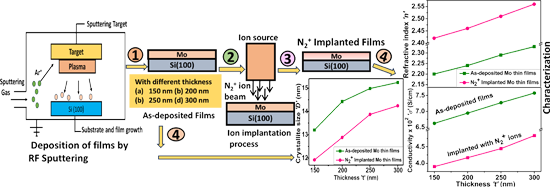
- create damage within the target material, as demonstrated in Figure 1C. These findings highlight the significant interactions between the nitrogen ions and the molybdenum target material during the implantation process, providing valuable insights into the mechanisms that govern ion implantation and the
- microstructure and the interplay of intrinsic and extrinsic stress mechanisms. Figure 4 shows that the tensile stress in as-deposited Mo thin films decreases from 1.25 to 0.31 GPa as the film thickness increases from 150 to 300 nm, attributed to the relaxation of intrinsic stress induced during deposition. At


Performance optimization of a microwave-coupled plasma-based ultralow-energy ECR ion source for silicon nanostructuring
Beilstein J. Nanotechnol. 2025, 16, 484–494, doi:10.3762/bjnano.16.37

- sources generate enormous possibilities for material modifications both physically and chemically. Further, there are diverse ion production mechanisms. The fundamental process of producing ions is the collision of atoms with ions or electrons, which may be either elastic or inelastic. In elastic


Impact of adsorbate–substrate interaction on nanostructured thin films growth during low-pressure condensation
Beilstein J. Nanotechnol. 2025, 16, 473–483, doi:10.3762/bjnano.16.36

- essential for tailoring thin film properties to meet specific application requirements. Further research efforts focusing on elucidating the underlying mechanisms of adsorbate–substrate interactions and their impact on thin film growth dynamics will continue to drive advancements in materials science and


Effect of additives on the synthesis efficiency of nanoparticles by laser-induced reduction
Beilstein J. Nanotechnol. 2025, 16, 464–472, doi:10.3762/bjnano.16.35
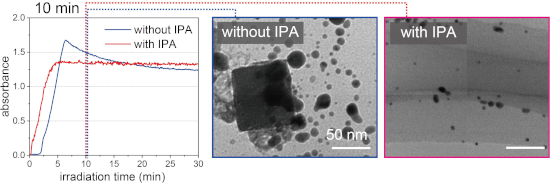
- of various materials [18][19][20][21][22][23][24] using different mechanisms [25][26][27][28] have been conducted via LRL. High-energy ultrashort pulses focused and irradiated into a solution cause the breakdown of solvent molecules. Then, produced solvated electrons among reactive species reduce the


Synthetic-polymer-assisted antisense oligonucleotide delivery: targeted approaches for precision disease treatment
Beilstein J. Nanotechnol. 2025, 16, 435–463, doi:10.3762/bjnano.16.34


Quantification of lead through rod-shaped silver-doped zinc oxide nanoparticles using an electrochemical approach
Beilstein J. Nanotechnol. 2025, 16, 422–434, doi:10.3762/bjnano.16.33
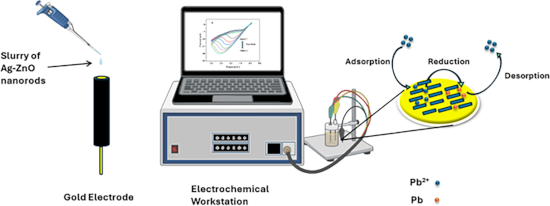
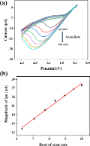
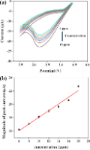
- electrode can provide additional details about the electrochemical process. It can help to understand the kinetics of electron transfer reactions, analyte diffusion, and electrode surface contact mechanisms. A modified Ag@ZnO NRs electrode with greater impedance is more stable and durable. This provides





Biomimetics and bioinspired surfaces: from nature to theory and applications
Beilstein J. Nanotechnol. 2025, 16, 418–421, doi:10.3762/bjnano.16.32
- influence their performance and at drawing inspiration for modern technology from the vast array of solutions found in nature [1]. By examining the multiscale structures and mechanisms in biological systems, innovative and technologically advanced solutions can be developed for practical applications
- and examples for engineers and scientists) [13] or Bionik als Wissenschaft (Biomimetics as a scientific discipline) [14] which remain influential for the scientific community. His book on biological attachment mechanisms and their use in bioengineering has been influential for scientists working on

Size control of nanoparticles synthesized by pulsed laser ablation in liquids using donut-shaped beams
Beilstein J. Nanotechnol. 2025, 16, 407–417, doi:10.3762/bjnano.16.31
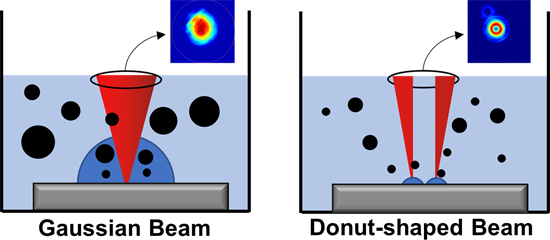
- increase in the radiation absorption efficiency inside transparent materials because of the implosion of the absorbed energy during propagation [39]. It is crucial to understand the early-stage mechanisms of PLAL to correlate them to NP size control. Plasma plume formation and expansion is a critical step
- approach for more precise control over nanoparticle size and shape uniformity, though further studies are needed to fully elucidate the mechanisms involved. (a) Schematic of the experimental setup for beam shaping and PLAL. (b, c) Intensity profiles of the Gaussian and donut-shaped beams, respectively


ReactorAFM/STM – dynamic reactions on surfaces at elevated temperature and atmospheric pressure
Beilstein J. Nanotechnol. 2025, 16, 397–406, doi:10.3762/bjnano.16.30
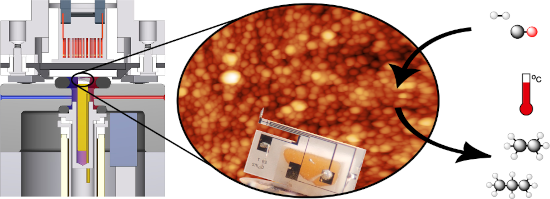
- , a high-pressure ReactorSTM has been developed [10][11]. The pressures in the scanning tunneling microscopy (STM) reactor are orders of magnitude above UHV (up to several bar), rendering gas–catalyst interactions very significant and leading to differences in reaction mechanisms [12][13][14][15


Pulsed laser in liquid grafting of gold nanoparticle–carbon support composites
Beilstein J. Nanotechnol. 2025, 16, 349–361, doi:10.3762/bjnano.16.26
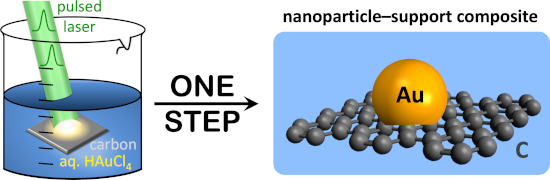
- ]. Alkaline electrolytes can decrease acid-based side reactions but alter Nafion [11][14], impeding ion conductivity and overall performance [5]. Adding binders additionally complicates reaction mechanisms and introduces competing pathways or by-products [5]. Further challenges in traditional nanoparticle