Search results
Search for "metals" in Full Text gives 652 result(s) in Beilstein Journal of Nanotechnology. Showing first 200.
Prediction of cytotoxicity of heavy metals adsorbed on nano-TiO2 with periodic table descriptors using machine learning approaches
Beilstein J. Nanotechnol. 2023, 14, 939–950, doi:10.3762/bjnano.14.77
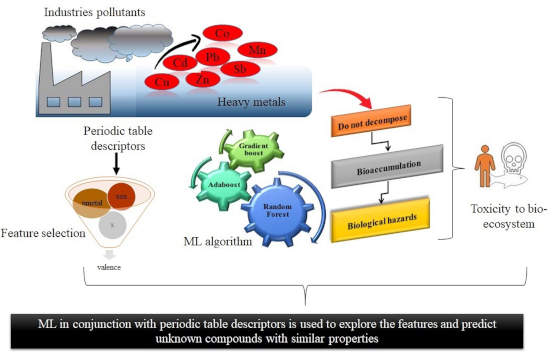
- metals, upon release and emission, may interact with different environmental components, which may lead to co-exposure to living organisms. Nanoscale titanium dioxide (nano-TiO2) can adsorb heavy metals. The current idea is that nanoparticles (NPs) may act as carriers and facilitate the entry of heavy
- metals into organisms. Thus, the present study reports nanoscale quantitative structure–activity relationship (nano-QSAR) models, which are based on an ensemble learning approach, for predicting the cytotoxicity of heavy metals adsorbed on nano-TiO2 to human renal cortex proximal tubule epithelial (HK-2
- present work manifests that ML in conjunction with periodic table descriptors can be used to explore the features and predict unknown compounds with similar properties. Keywords: heavy metals; HK-2 cell; ML algorithm; periodic table descriptors; QSAR; Introduction Nanoparticles (NPs) have gained much


Biomimetics on the micro- and nanoscale – The 25th anniversary of the lotus effect
Beilstein J. Nanotechnol. 2023, 14, 850–856, doi:10.3762/bjnano.14.69

- nanofibres do not stick. The authors use the geometry of the spider system to develop an elegant mathematical model of the interaction between the fibres and the surface. They then test their predictions using a structured metal mimic of the spider legs. They find that for some metals, in which they were


Carboxylic acids and light interact to affect nanoceria stability and dissolution in acidic aqueous environments
Beilstein J. Nanotechnol. 2023, 14, 762–780, doi:10.3762/bjnano.14.63
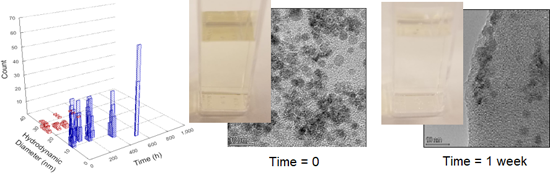
- stress within biological systems [11]. Nanoceria in plant systems Nanoceria acts as colloids in aqueous environments, in the soil near plant root systems, and within bodily fluids. Acetic, citric, lactic, succinic, and tartaric acid secreted from plant roots are known to complex with metals/metal oxides
Investigations on the optical forces from three mainstream optical resonances in all-dielectric nanostructure arrays
Beilstein J. Nanotechnol. 2023, 14, 674–682, doi:10.3762/bjnano.14.53
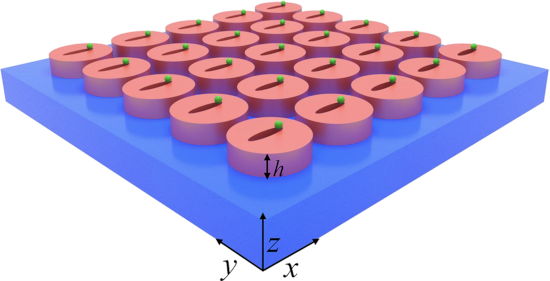
- to effectively capture subwavelength nanoparticles by overcoming the diffraction limit [4], which has aroused broad research interest. However, due to the high loss of metals, the Joule heating effect caused by the absorption of light leads to increasing temperatures of plasmonic nanotweezers, and


Metal-organic framework-based nanomaterials as opto-electrochemical sensors for the detection of antibiotics and hormones: A review
Beilstein J. Nanotechnol. 2023, 14, 631–673, doi:10.3762/bjnano.14.52
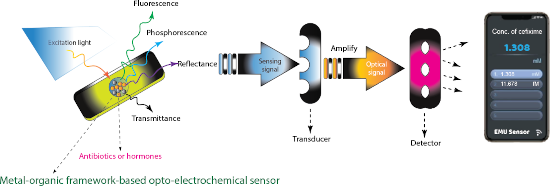
- levels of stability due to the rapid degradation of the biomolecules. Extensive research has been focused on the development of different high-performance electrode materials via modification of the materials’ surface with functional groups or doping with various metals or via the formation of
- behaviour [86]. The metal ion can have different levels of impact on the emission depending on the electronic structure of the metal and the relative energy of the metal and linker orbitals. To develop luminescent MOFs, a variety of transition metals have also been combined with different ligands. Note that
- transition metals with unpaired electrons is often not strong. But MOFs containing transition-metal ions devoid of unpaired electrons, particularly those with d10 configurations, can produce remarkable linker-based luminescence [85][86][87]. Linker-based luminescence: In MOF chemistry, a variety of organic


SERS performance of GaN/Ag substrates fabricated by Ag coating of GaN platforms
Beilstein J. Nanotechnol. 2023, 14, 552–564, doi:10.3762/bjnano.14.46
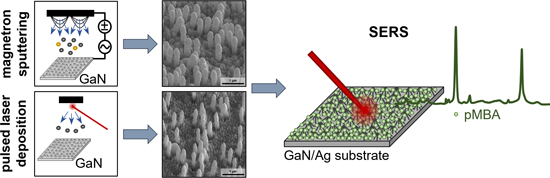
- plasmonic metals or their alloys [23][24][25][26][27][28][29][30][31][32]. The chemical and electrochemical etching of GaN heteroepitaxial layers leads to various nanostructures formed on line defects (dislocations), such as straight nanopillars, bunches of nanopillars, and pits [31][32]. The nanostructured
- [31], gene mutation identification [34][35], and investigations of the reactivity of organic monoradicals [36]. In our previous studies, nanostructured GaN platforms were coated with pure metals or alloys using magnetron sputtering (MS) in an argon atmosphere [28][29][30][31][32]. Until now, no other
- physical vapor deposition (PVD) methods have been tested to replace MS in coating GaN platforms with plasmonic metals. Pulsed laser deposition (PLD) is an interesting and still not fully explored alternative for the fabrication of SERS substrates [37][38]. Hence, our studies reported herein aimed to


Mixed oxides with corundum-type structure obtained from recycling can seals as paint pigments: color stability
Beilstein J. Nanotechnol. 2023, 14, 467–477, doi:10.3762/bjnano.14.37
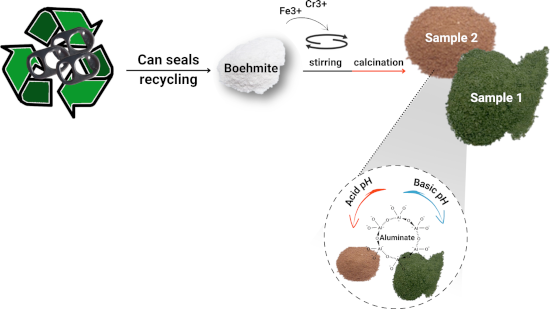
- assignment is based on the intrinsic light absorption characteristics of the pigment due to the presence of a chromophore ion [8]. Different transition metals such as V, Cr, Mn, Fe, Co, Ni, and Cu have been used for this purpose [9]. Using inorganic compounds in the synthesis tends to increase the chemical
- and color can be adjusted by the calcination temperature or the combination with other metals as coloring ions [11]. In this context, applying both Cr and Fe ions as coloring ions in a white matrix such as aluminium oxide is interesting. We report on the synthesis of synthetic inorganic pigments using




Conjugated photothermal materials and structure design for solar steam generation
Beilstein J. Nanotechnol. 2023, 14, 454–466, doi:10.3762/bjnano.14.36
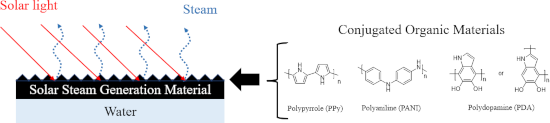
- nonradiative relaxation of excited electrons to the ground state. Depending on the interaction mechanism, photothermal phenomena are classified into three categories, namely plasmonic local heating of metals, nonradiative relaxation of semiconductors, and thermal vibration relaxation of conjugated molecules


Evaluation of electrosynthesized reduced graphene oxide–Ni/Fe/Co-based (oxy)hydroxide catalysts towards the oxygen evolution reaction
Beilstein J. Nanotechnol. 2023, 14, 420–433, doi:10.3762/bjnano.14.34
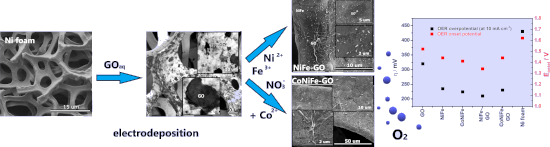
- and expensive metals [5], studies on other catalyst materials are being conducted. Recently, transition-metal-based materials including nickel, iron, and/or cobalt have become promising catalysts for OER [6][7][8][9][10]. The materials are characterized by relatively low cost and environmentally
- the electrodeposition of conductive films on active metals [26]. The morphology of the deposits was analyzed by scanning electron microscopy (SEM) and is presented in Figure 1b–f. Typical GO flakes regularly distributed over the surface of the nickel foam were successfully obtained after the one-step
- role in influencing the OER process. The increase of ECSA after combining metals with GO was only valid in the case of NiFe and GO. The addition of cobalt into NiFe caused a significant increase in ECSA, which resulted in a lower OER overpotential of CoNiFe, compared to NiFe. The latter was related to





Plasmonic nanotechnology for photothermal applications – an evaluation
Beilstein J. Nanotechnol. 2023, 14, 380–419, doi:10.3762/bjnano.14.33
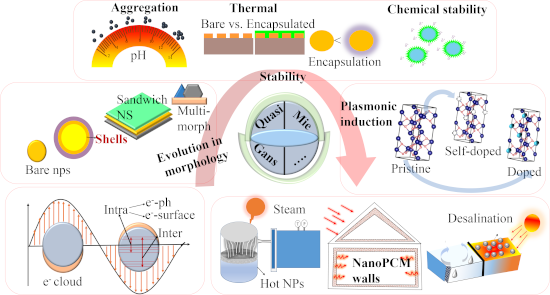
- theory, Gans theory, generic simulations on common plasmonic material morphologies, and the evaluation processes of PT performance. Further, a variety of nanomaterials and material classes that have potential for PPT conversion are elucidated, such as plasmonic metals, bimetals, and metal–metal oxide
- ], catalysis [19], clean water production [15], and wearable heaters [20][21], to name a few. This review is on PPT nanoparticle research spanning the conventional options (metals and alloys) as well as materials with induced plasmonic properties, with a special emphasis on their stability in terms of
- lead to heat generation, depending on whether the decay of the SPR is through radiative or non-radiative processes. Many metals show plasmonic properties, but for PT applications there is a specific set of requirements including, but not limited to, broadband absorption of electromagnetic radiation


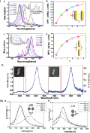


Quercetin- and caffeic acid-functionalized chitosan-capped colloidal silver nanoparticles: one-pot synthesis, characterization, and anticancer and antibacterial activities
Beilstein J. Nanotechnol. 2023, 14, 362–376, doi:10.3762/bjnano.14.31
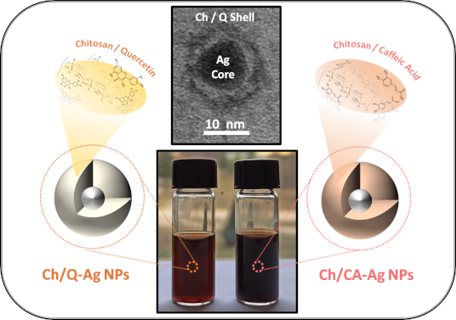
- has raised great interest in the preparation of nanoparticles owing to its biodegradable, biocompatible, and non-toxic properties, as well as the free amino groups, which are very suitable to produce strong complexes with metals [15][16]. Quercetin (3,3',4',5,7-pentahydroxyflavone) is a flavonoid


Bismuth-based nanostructured photocatalysts for the remediation of antibiotics and organic dyes
Beilstein J. Nanotechnol. 2023, 14, 291–321, doi:10.3762/bjnano.14.26
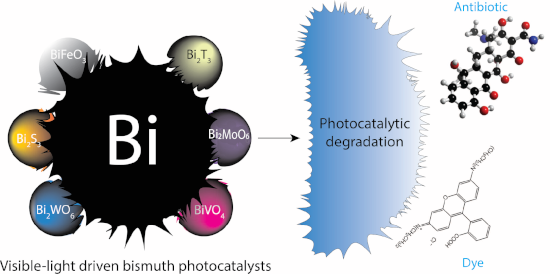
- isolates from pond sediments in the northwest of the United Kingdom exhibited resistance to heavy metals and antibiotics (trimethoprim, oxacillin, and cefotaxime) where the intI1 gene was involved. A growing body of research indicates that parent antibiotics and their metabolites, which are released into
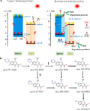
- turn improves the photocatalytic activity of the nanocomposites. Additionally, to maximise the effectiveness of the transfer/separation of photogenerated carriers, noble metals (such as Pt, Ag, and Au) are typically used to induce surface plasmon resonance effects in photocatalysts [146]. However
- , using noble metals in small or medium-sized industrial water treatment plants will be rather expensive. Recently, bismuth demonstrated a clear surface plasmon resonance effect, indicating the possibility of substituting it for noble metals. Because of the intrinsic photocatalytic characteristics of


Spin dynamics in superconductor/ferromagnetic insulator hybrid structures with precessing magnetization
Beilstein J. Nanotechnol. 2023, 14, 233–239, doi:10.3762/bjnano.14.22
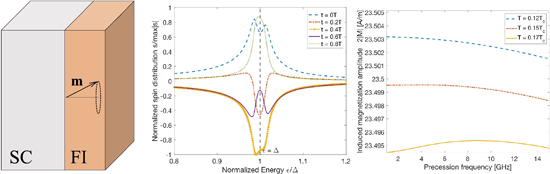
- boundary conditions can successfully describe the interfaces between, among other things, a superconductor and weak or strong ferromagnets [22][23][24], normal metals [25][26][27], and half-metals [28]. The first attempts to implement nonstationary, adiabatic, quasiclassical boundary conditions were made
- spin relaxation processes, but we do not take into account any spin relaxation mechanisms within our model for a superconductor. We should mention that both spin pumping mechanisms in superconductors and normal metals are determined by the penetration of nonequillibrium spin density from the interface
- . In metals, such a penetration is limited by the spin flip scattering, while inside the superconductor, the spin relaxation time is usually much longer. Thus, induced magnetization and spin current in our problem are determined mainly by the competition between spin singlet and spin triplet orders [34


A novel approach to pulsed laser deposition of platinum catalyst on carbon particles for use in polymer electrolyte membrane fuel cells
Beilstein J. Nanotechnol. 2023, 14, 190–204, doi:10.3762/bjnano.14.19
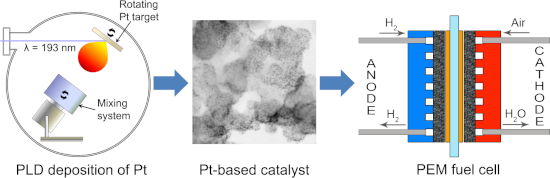
- dedicated to reducing the Pt loading at the cathode without performance loss of PEMFCs or to finding an alternative catalyst material [4][6][21]. The reduction of Pt loading on various carbon supports can be achieved by combining Pt with other metals [21] as well as by modifications of the various chemical




High–low Kelvin probe force spectroscopy for measuring the interface state density
Beilstein J. Nanotechnol. 2023, 14, 175–189, doi:10.3762/bjnano.14.18
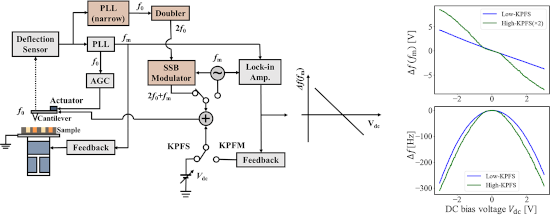
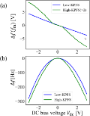
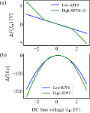
- have been performed on a variety of sample surfaces, including metals [9][10], semiconductors [11][12][13][14], and insulators [15][16][17]. When a semiconductor sample is measured by KPFM, the measured CPD is related to information about the semiconductor properties such as dopant density, surface



Characterisation of a micrometer-scale active plasmonic element by means of complementary computational and experimental methods
Beilstein J. Nanotechnol. 2023, 14, 110–122, doi:10.3762/bjnano.14.12
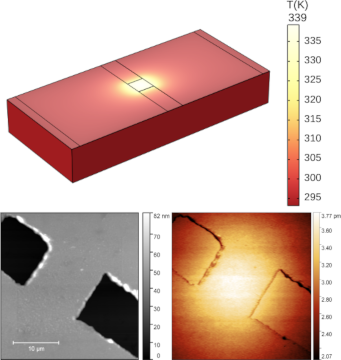
- understood that heating affects the electrical permittivity of metals [25][26][27][28] and dielectrics [29][30]. This, in conjunction with Joule heating, is used to generate the desired effects. The active plasmonic element proposed (Figure 1) consists of a nano- or mesoscale constriction in a 48 nm thick




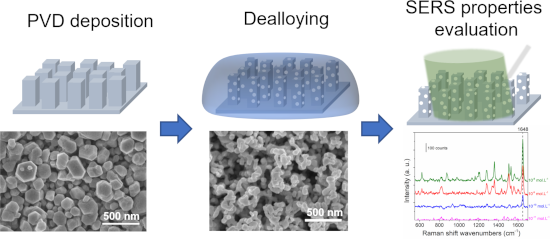
Combining physical vapor deposition structuration with dealloying for the creation of a highly efficient SERS platform
Beilstein J. Nanotechnol. 2023, 14, 83–94, doi:10.3762/bjnano.14.10
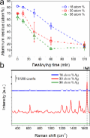
- content. However, this observation is not consistent with the previously reported studies on dealloying, revealing that the dealloying kinetics should be faster for samples with a lower amount of noble metals [24]. As previously shown for the case of the Ag–Al alloy dealloyed in HCl, the dealloying leads




Cooper pair splitting controlled by a temperature gradient
Beilstein J. Nanotechnol. 2023, 14, 61–67, doi:10.3762/bjnano.14.7
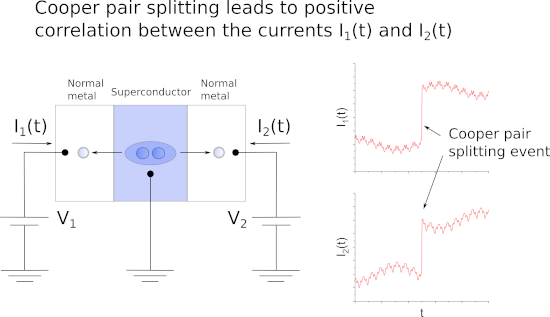
- ; Introduction Normal metals connected to a superconductor exhibit a variety of non-trivial phenomena associated with the existence of proximity-induced superconducting correlations spreading over long distances at sufficiently low temperatures [1]. One of these phenomena is the so-called crossed Andreev


The influence of structure and local structural defects on the magnetic properties of cobalt nanofilms
Beilstein J. Nanotechnol. 2023, 14, 23–33, doi:10.3762/bjnano.14.3
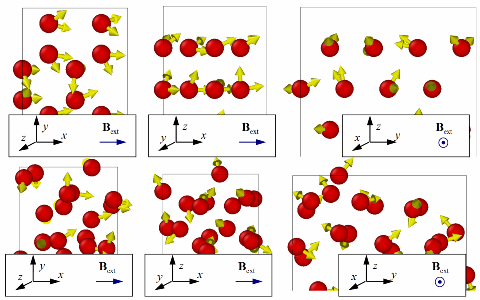
- internal energy and by the symmetry or asymmetry of the crystal structure of ferromagnets. The dipole–dipole interaction does not make a significant contribution to the anisotropy energy and its value is insignificant. Only in a number of rare-earth metals the contribution of the dipole–dipole interaction


Electrical and optical enhancement of ITO/Mo bilayer thin films via laser annealing
Beilstein J. Nanotechnol. 2022, 13, 1589–1595, doi:10.3762/bjnano.13.133
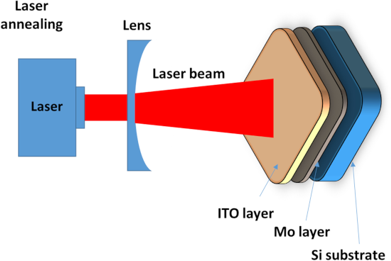
- significantly improve the electrical properties without affecting the optical transmission [9]. Several metals have been used for such thin layers, including silver [10], aluminium [11], copper [12], and gold [13]. Molybdenum thin films are another choice for the application in solar cells because of good


Photoelectrochemical water oxidation over TiO2 nanotubes modified with MoS2 and g-C3N4
Beilstein J. Nanotechnol. 2022, 13, 1541–1550, doi:10.3762/bjnano.13.127
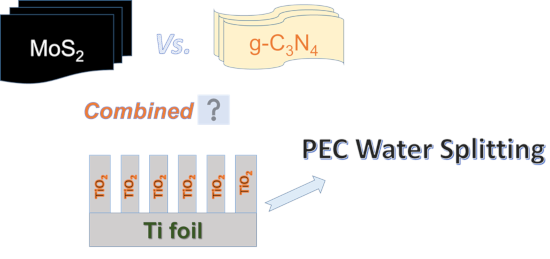
- , the electrode material must be extremely durable and nearly chemically inert to be able to withstand highly acidic or basic environments. Therefore, noble metals such as Pt, Pd, Au and Ag with suitable chemical properties, such as inertness, good resistance against corrosion and good electrical
- conductivity have been widely used in water splitting reactions [10][11]. However, noble metals are still rare and expensive materials, and their application as electrode materials is considered to be not optimal [10]. Therefore, the study of a materials with high-performance in PEC water splitting, which
- could replace noble metals are a research interest. Photocatalytic technology uses semiconductors for effective approaches to the degradation of dyes and antibiotics, the removal of pollutant gases, and water splitting to produce hydrogen using solar energy [12][13][14][15][16][17]. Among such


Non-stoichiometric magnetite as catalyst for the photocatalytic degradation of phenol and 2,6-dibromo-4-methylphenol – a new approach in water treatment
Beilstein J. Nanotechnol. 2022, 13, 1531–1540, doi:10.3762/bjnano.13.126
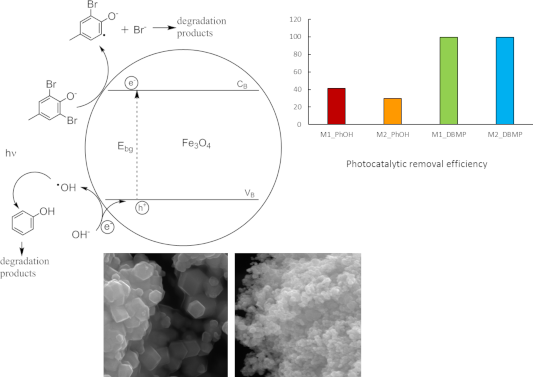
- igneous and metamorphic rocks [12]. It is also found in sediments and soils. Magnetite has the smallest energy gap, the highest conductivity, and one of the lowest reduction potentials among natural minerals. It is an important reducer of heavy metals and organic pollutants in aquatic environments. Due to


In search of cytotoxic selectivity on cancer cells with biogenically synthesized Ag/AgCl nanoparticles
Beilstein J. Nanotechnol. 2022, 13, 1505–1519, doi:10.3762/bjnano.13.124
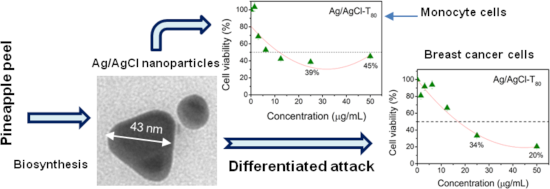
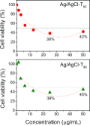
- synthesized by green methods and, in some cases, are combined with other metals [2]. AgNPs have potential uses in biomedicine. Several authors have reported the ability of AgNPs to act as antibacterial [3][4] or as cytotoxic agents in certain cancer cell lines [5][6]. This type of application has attracted a


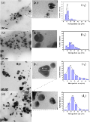
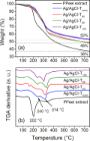



Frequency-dependent nanomechanical profiling for medical diagnosis
Beilstein J. Nanotechnol. 2022, 13, 1483–1489, doi:10.3762/bjnano.13.122
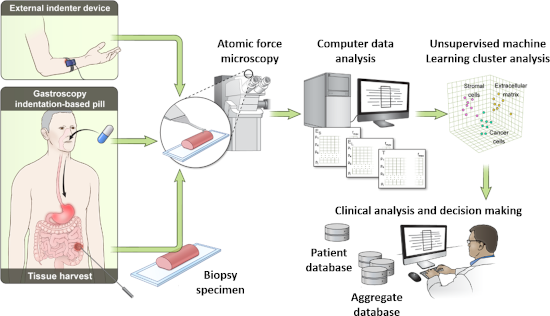
- chemical characterization of surfaces ranging from semiconductors and metals to polymers and biological materials [1][2][3][4][5]. In particular, a variety of mechanical property measurement methods have been developed, although most of them are restricted to relatively simple physical descriptions, such


Structural studies and selected physical investigations of LiCoO2 obtained by combustion synthesis
Beilstein J. Nanotechnol. 2022, 13, 1473–1482, doi:10.3762/bjnano.13.121
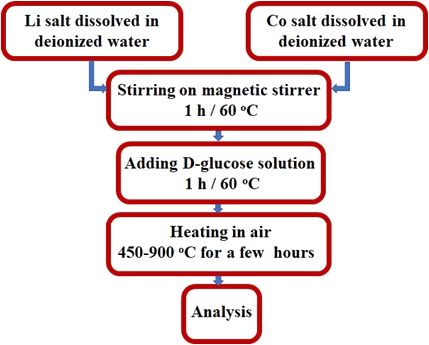
- analysis, (ii) morphology (size and distribution of grains) by using SEM, (iii) specific surface area (SSA) by carrying out Brunauer–Emmett–Teller (BET) measurements, (iv) oxidation states of metals by measuring electron paramagnetic resonance (EPR), and (v) electrical parameters (thermal dependencies of