Search results
Search for "modelling" in Full Text gives 187 result(s) in Beilstein Journal of Nanotechnology.
Laser processing of thin-film multilayer structures: comparison between a 3D thermal model and experimental results
Beilstein J. Nanotechnol. 2017, 8, 1749–1759, doi:10.3762/bjnano.8.176
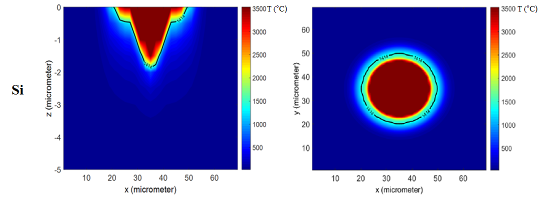
- can have many potential applications including patterning the cell growth for biomedical applications and controlling the grain size in fabrication of polycrystalline silicon (poly-Si) thin-film transistors (TFTs). Keywords: 3D transient modelling; heat transfer; laser materials processing
- the surface for biosensor fabrication is one of the applications that has not been fully explored yet. Modelling this process can be helpful in many ways. For instance, controlling the grain size of the resulting poly-Si layer is vital in the process of fabricating poly-Si TFTs [6][7]. This can be
- application is finding the best laser parameters and layer thickness for controlling the size of heat affected zone and ablated zone for patterning the cell, as mentioned in the previous paragraph. Despite the necessity for thermal modelling of this process, there have been very few efforts in this area so





Effect of the fluorination technique on the surface-fluorination patterning of double-walled carbon nanotubes
Beilstein J. Nanotechnol. 2017, 8, 1688–1698, doi:10.3762/bjnano.8.169
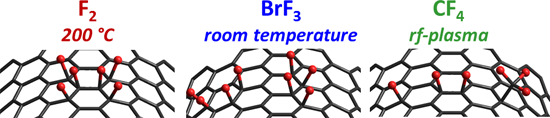
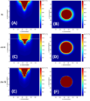
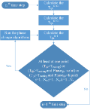
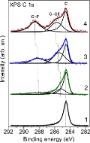
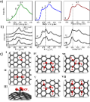
- show here that the C–F bond strength is sensitive to surroundings in the addition pattern, which can be controlled through the fluorination method. The preferable fluorine distributions on the DWCNT surface are proposed from quantum-chemical modelling of the fluorine near-edge X-ray absorption fine
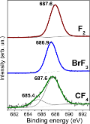
- distance between the components in the F 1s spectrum of plasma-fluorinated DWCNTs and two fluorination patterns chosen from the modelling of NEXAFS F K-edge. Despite difference of almost 100% in fluorine content between the DWCNT samples fluorinated with CF4 plasma and F2 (Table 1), the main peaks in their



Oxidative stabilization of polyacrylonitrile nanofibers and carbon nanofibers containing graphene oxide (GO): a spectroscopic and electrochemical study
Beilstein J. Nanotechnol. 2017, 8, 1616–1628, doi:10.3762/bjnano.8.161
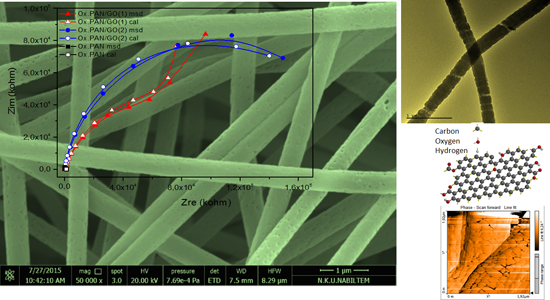
- calculated measurements were fitted by equivalent circuit modelling. EIS plots with measured and calculated data are shown in Figure 6. An excellent agreement between experimental results and simulation was found with χ2 ≈ 5·10−4 (χ2 is function defined as the sum of the squares of the residuals). Rs is the
- . The inclined line corresponding to diffusion processes at low frequencies region appears only in PAN/GO(1). The charge-transfer resistances (Rct) were evaluated by using equivalent circuit modelling. Rct is attributed to the pore size of the electrodes. The values of Rct of Ox.PAN, Ox.PAN/GO(1) and
- electrode surfaces at low frequencies [24]. The parameters of the simulated equivalent circuit models obtained from the Nyquist and Bode phase plots are given in Table 1. Fitting with equivalent circuit modelling exhibited a good correlation between the calculated and experimental values with χ2 values


Deposition of exchange-coupled dinickel complexes on gold substrates utilizing ambidentate mercapto-carboxylato ligands
Beilstein J. Nanotechnol. 2017, 8, 1375–1387, doi:10.3762/bjnano.8.139
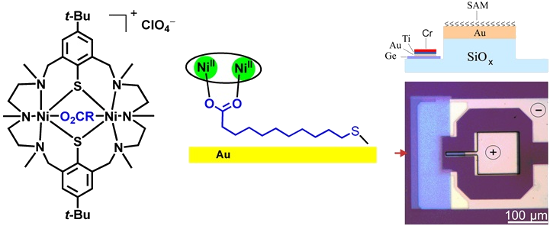
- with absolute ethanol and dried in a stream of ultrahigh purity nitrogen. The modelling environments CompleteEASE and WVASE32 (both J. A. Woollam Co., Inc.) were used for data evaluation. The dielectric function of a pristine gold substrate, measured and modelled in agreement with database values, was


A top-down approach for fabricating three-dimensional closed hollow nanostructures with permeable thin metal walls
Beilstein J. Nanotechnol. 2017, 8, 1231–1237, doi:10.3762/bjnano.8.124
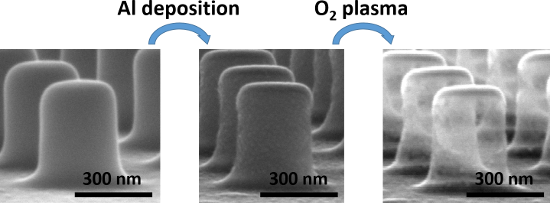
- maximum at λ ≈ 700 nm. This supports the fact that no SU-8 material remains inside the nanocages and confirms the appropriateness of numerical modelling to analyze the measured optical response of the structure. Cross-sectional distributions (at y = 0) of the RCWA-calculated x-component of the electric
- nanostructure array. The aperture angle was 5.7°, which restricts light detection to zero-order diffraction. The reflectance spectrum from a bare Al film was used as a reference [9]. Hollow nanocage array modelling The zero-order reflection diffraction efficiency and field distributions of a 600 nm period


Atomic structure of Mg-based metallic glass investigated with neutron diffraction, reverse Monte Carlo modeling and electron microscopy
Beilstein J. Nanotechnol. 2017, 8, 1174–1182, doi:10.3762/bjnano.8.119
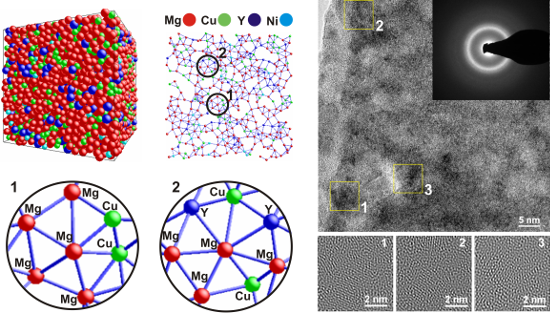
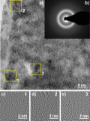
- the short-range order. Keywords: electron microscopy; metallic glasses; neutron diffraction; reverse Monte Carlo modelling; short-range order; Introduction Magnesium-based metallic glasses are often described as the most sought after alloys given the increasing demand for light weight and low cost




Structural properties and thermal stability of cobalt- and chromium-doped α-MnO2 nanorods
Beilstein J. Nanotechnol. 2017, 8, 1032–1042, doi:10.3762/bjnano.8.104
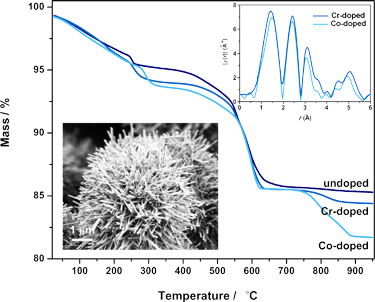
- was replaced with the corresponding dopant ion. Due to the low dopant concentration (Figure 4a) all neighboring metal ions are expected to be manganese, the contribution of dopant neighbors is below the detection limit of the analysis. In the first modelling cycle, each model comprised the strongest
- , respectively (a); TG-MS curve of Co-90 (b) and TG-MS curve of ND-90 (c). Reaction conditions, chemical composition, and structural parameters for the undoped and doped α-MnO2 samples. Best fit parameters obtained by modelling the EXAFS spectra. The uncertainty intervals in units of the last decimal place are


Scaling law to determine peak forces in tapping-mode AFM experiments on finite elastic soft matter systems
Beilstein J. Nanotechnol. 2017, 8, 968–974, doi:10.3762/bjnano.8.98
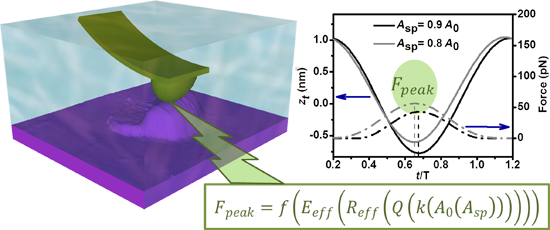
- ). One strategy to reduce the order of the cascade function (Equation 5) is to base our modelling on top of one available analytical approach to determine Fts in dynamic AFM [21][42][43]. We have applied the virial–dissipation method [19] to determine an initial equation for the peak force as a function


Functional dependence of resonant harmonics on nanomechanical parameters in dynamic mode atomic force microscopy
Beilstein J. Nanotechnol. 2017, 8, 883–891, doi:10.3762/bjnano.8.90
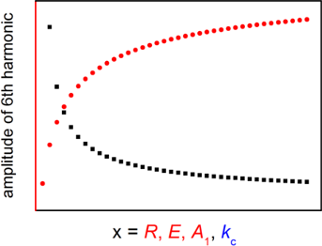
- = 14.2 nm). The same argument applies for the case of increasing E values. It means that the previous modelling of the system is necessary in order to select the appropriate experimental conditions. Let us now explore in detail the dependence of A6 as a function of R, E and A1. The corresponding curves
- derived results to validate the modelling and simulations described in previous sections. Dependence of the amplitude of the 6th harmonic on tip radius Let us first explore the shape of the experimental approach curves and compare to the calculations shown in Figure 1. Figure 4 shows simultaneously
- , this will be more effective when sharp (new) tips are imaging stiff samples. Instead, in order to measure the surface Young modulus the modelling shows that the best results will be obtained using larger tip radius (10–15 nm) in order to have an almost constant radius-dependent contribution. So far the


Modeling adsorption of brominated, chlorinated and mixed bromo/chloro-dibenzo-p-dioxins on C60 fullerene using Nano-QSPR
Beilstein J. Nanotechnol. 2017, 8, 752–761, doi:10.3762/bjnano.8.78
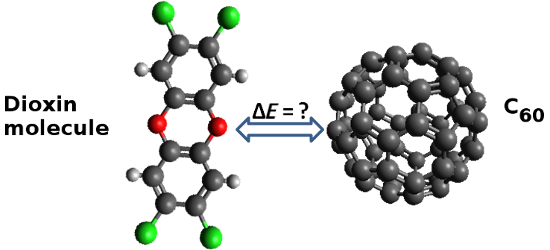
- number and type of substitution. The investigations have been performed with quantitative structure–property relationship modelling for nanomaterials (Nano-QSPR) – a method of defining a mathematical function that connects the structure of the investigated nanomaterial (fullerene) and the POPs (dioxin



Calculating free energies of organic molecules on insulating substrates
Beilstein J. Nanotechnol. 2017, 8, 667–674, doi:10.3762/bjnano.8.71
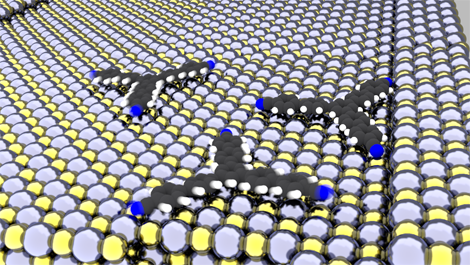
- status of NC-AFM studies of self-assembled films on insulating surfaces has recently been reviewed in [22]. However, theoretical modelling of the film growth processes still proves challenging. Most experiments are performed at room temperature, where entropic contributions can be significant [23][24
- ]. Previous theoretical studies focussed on modelling adsorption [21][25][26], diffusion [27][28] and simple processes such as the flipping of a molecule [29]. The probability assigned to each of these processes is governed by the change in free energy ΔG, which can be derived from statistical mechanics [30
- is larger than the dimer-formation enthalpy. These results highlight the importance of accurate predictions of entropy changes and free energy in modelling the early stages of self-assembly and in determining film morphologies. In many cases the interaction between molecules and between molecules and


Dispersion of single-wall carbon nanotubes with supramolecular Congo red – properties of the complexes and mechanism of the interaction
Beilstein J. Nanotechnol. 2017, 8, 636–648, doi:10.3762/bjnano.8.68
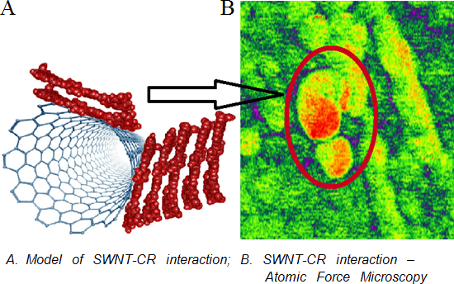
- between CR and a carbon nanotube) and to the ones indirectly bound as elements of the supramolecular assembly. Since carbon nanotubes are conductors, they can serve as donors of electrons to CR, which switches to the quinoid form (Figure 2) and changes colour. Molecular modelling analysis [39] showed how


Graphene functionalised by laser-ablated V2O5 for a highly sensitive NH3 sensor
Beilstein J. Nanotechnol. 2017, 8, 571–578, doi:10.3762/bjnano.8.61
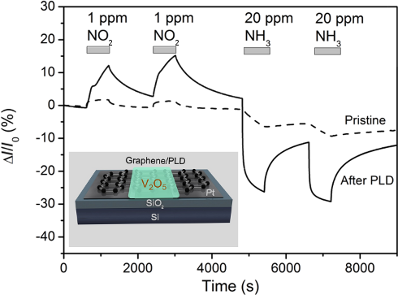
- physical aspect of modelling the graphene sensor response is discussed more exhaustively by Jaaniso et al. [29]. In the case of pristine graphene, the response and recovery could be fitted with a single exponential function (Equation 1), which yielded characteristic times 578 s and 738 s for the response


Biological and biomimetic materials and surfaces
Beilstein J. Nanotechnol. 2017, 8, 403–407, doi:10.3762/bjnano.8.42

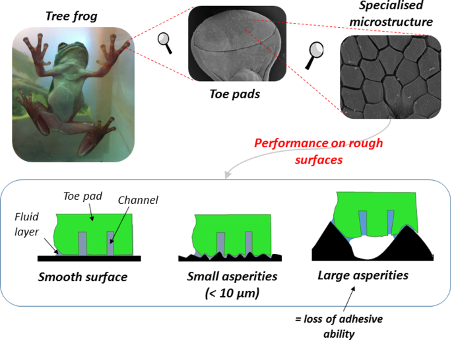
- adhesion may even surpass that measured on smooth substrates, whereas at large scale roughness, the adhesion was reduced. Presumably, on the latter substrates, the pads secrete an insufficient amount of fluid to fill the gaps between the asperities [20]. Modelling and biomimetic systems Antony et al. [21
Colorimetric gas detection by the varying thickness of a thin film of ultrasmall PTSA-coated TiO2 nanoparticles on a Si substrate
Beilstein J. Nanotechnol. 2017, 8, 229–236, doi:10.3762/bjnano.8.25
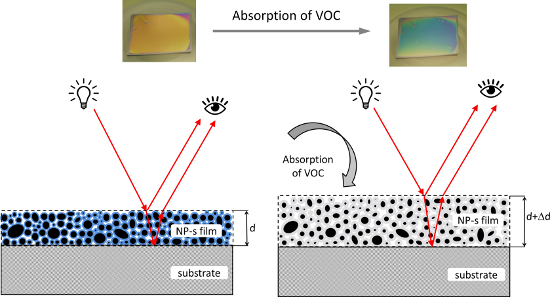
- /mixture of TiO2 and voids) was used for modelling and fitting both thickness and refractive index using the standard three-angle data sets. X-ray photoelectron spectroscopy (XPS) was used for investigating the chemical state and elemental composition of the NP-based films after different treatments. XPS


Studying friction while playing the violin: exploring the stick–slip phenomenon
Beilstein J. Nanotechnol. 2017, 8, 159–166, doi:10.3762/bjnano.8.16
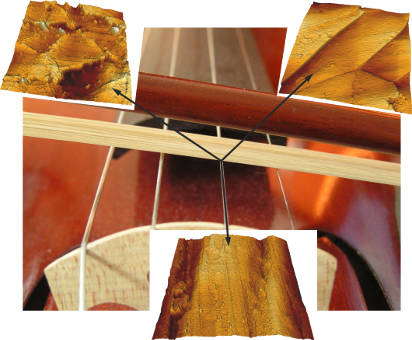
- on the string, can provide valuable information regarding friction dependence on the roughness at the mesoscale. These experiments will have the advantage of testing minimized interfaces checking clear macroscale sound effects, and comparing them with results obtained from modelling. Understanding


Diffusion of dilute gas in arrays of randomly distributed, vertically aligned, high-aspect-ratio cylinders
Beilstein J. Nanotechnol. 2017, 8, 64–73, doi:10.3762/bjnano.8.7
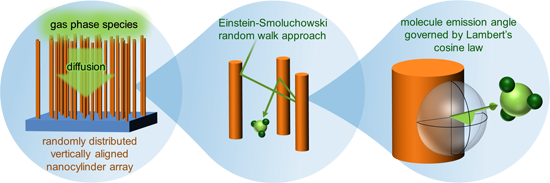
- molecules diffusing between vertically aligned carbon nanotubes. Our findings are important for the correct modelling and optimisation of gas-based deposition techniques, such as atomic layer deposition or chemical vapour deposition, frequently used for surface functionalisation of high-aspect-ratio
- nanocylinder arrays in solar cells and energy storage applications. Furthermore, gas sensing devices with high-aspect-ratio nanocylinder arrays and the growth of vertically aligned carbon nanotubes need the fundamental understanding and precise modelling of gas transport to optimise such processes. Keywords
- precise modelling of gas-transport specifics required in the optimisation of the aforementioned processes [17]. Furthermore, root growth of VACNTs with a CVD method has been reported to be limited by gas diffusion, which additionally emphasizes the need for a reliable method of gas-transport modelling [18


Grazing-incidence optical magnetic recording with super-resolution
Beilstein J. Nanotechnol. 2017, 8, 28–37, doi:10.3762/bjnano.8.4
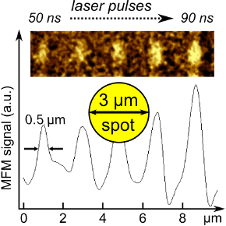
- . Two different laser wavelengths were used (532 and 785 nm) to demonstrate the generality of the approach and the experimental results are corroborated by extensive numerical modelling of the heating process and the super-resolution thermal profile. The first researchers to employ a similar grazing
- -fields antiparallel to the DC field, and thus created a more manageable background. Transmission electron microscopy (TEM) cross-sectional imaging was done on a sample lamella prepared via focused ion beam (FIB) of one of the Seagate platters to identify the thin-film layer structure used for modelling
- as depicted in Figure 2a. It is important to notice the low roughness of the diamond-like carbon (DLC) surface, which is an important prerequisite for high-resolution MFM plane scans. For the electric field and thermal modelling the layer structure was simplified in a sensible manner as indicated in


When the going gets rough – studying the effect of surface roughness on the adhesive abilities of tree frogs
Beilstein J. Nanotechnol. 2016, 7, 2116–2131, doi:10.3762/bjnano.7.201




The cleaner, the greener? Product sustainability assessment of the biomimetic façade paint Lotusan® in comparison to the conventional façade paint Jumbosil®
Beilstein J. Nanotechnol. 2016, 7, 2100–2115, doi:10.3762/bjnano.7.200
- fractions, has been used for the modelling of the façade paint production. Where necessary, simplifications were employed and components reassigned. A first modelling setup has been checked in cooperation with chemical experts from Sto SE & Co. KGaA. In parallel, the case study by Kougoulis et al. [30] has
- been analysed to provide further evidence that the assumptions on the modelling of the formulation of the two paints are justified. Related to their mass, the most relevant formulation components of both paints are water, pigment, fillers and polymer dispersion. The mass of TiO2 is about 2 times higher
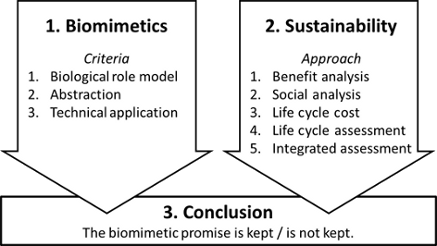
- concrete terms, this means a comparison between the possible environmental impacts associated with painting a façade with Lotusan® and Jumbosil®. The LCA was prepared “from cradle to grave” (Figure 2). Goal- and scope definition and modelling of the two alternative façade paintings: The goal- and scope


Nanostructured SnO2–ZnO composite gas sensors for selective detection of carbon monoxide
Beilstein J. Nanotechnol. 2016, 7, 2045–2056, doi:10.3762/bjnano.7.195
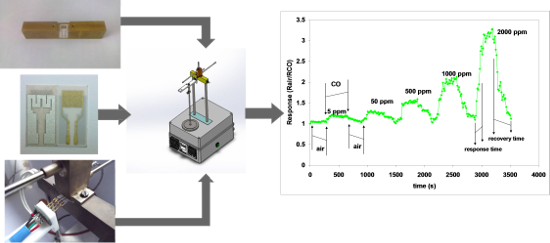
- . Simulation The Pt heater was simulated in order to optimize the design for uniform heating of the sensor active area and minimizing the power consumption. The COMSOL Multiphysics® finite element analysis (FEA) tool was used for effective modelling/simulation of the heater components for the transducer. The




The difference in the thermal conductivity of nanofluids measured by different methods and its rationalization
Beilstein J. Nanotechnol. 2016, 7, 2037–2044, doi:10.3762/bjnano.7.194
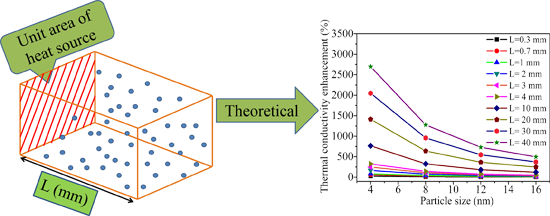
- . The continuum modelling to estimate the heat exchange between nanoparticles and heat-source wall will be hereafter referred to as meso-continuum modelling. In the next section a stochastic model for estimating the heat transfer from the heat-source wall to the nanoparticles via the collision-mediated


Ferromagnetic behaviour of ZnO: the role of grain boundaries
Beilstein J. Nanotechnol. 2016, 7, 1936–1947, doi:10.3762/bjnano.7.185
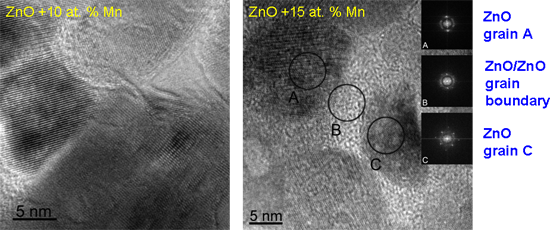
- ferromagnetism of undoped ZnO. A certain texture and structure of amorphous intercrystalline layers is necessary. Nevertheless, the key role of GBs in the ferromagnetic behaviour of ZnO is proven by LE-µSR. Modelling with molecular dynamics combined with density functional theory calculations permitted to find


Noise in NC-AFM measurements with significant tip–sample interaction
Beilstein J. Nanotechnol. 2016, 7, 1885–1904, doi:10.3762/bjnano.7.181
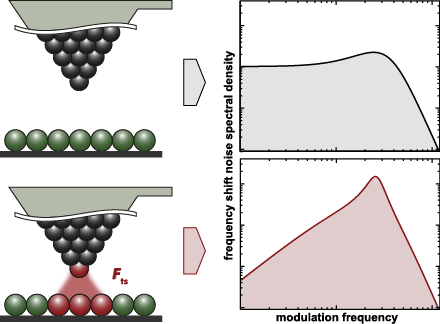
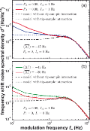
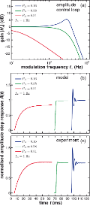
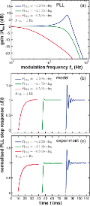
- measurement and network modelling. This analysis especially provides experimental evidence for strong noise amplification by coupling of control loops due to the tip–sample interaction. In regular NC-AFM operation with state-of-the-art hardware, signal generation and noise amplification is governed by the tip



![[Graphic 32]](/bjnano/content/inline/2190-4286-7-181-i73.png?max-width=637&scale=1.18182) wit...
wit...

![[Graphic 34]](/bjnano/content/inline/2190-4286-7-181-i75.png?max-width=637&scale=1.18182) wit...
wit...



Biomechanics of selected arborescent and shrubby monocotyledons
Beilstein J. Nanotechnol. 2016, 7, 1602–1619, doi:10.3762/bjnano.7.154
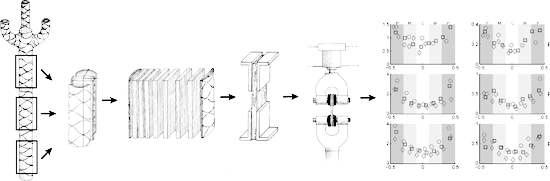
- consisting of stiff fibres embedded in a more flexible matrix. Finally, the technical implementation of the functional principles of such plants can be aided by finite element modelling [7]. Further studies using in vivo magnetic resonance imaging allow for revealing the internal stress–strain relationships