Search results
Search for "monodisperse" in Full Text gives 143 result(s) in Beilstein Journal of Nanotechnology.
Caveolin-1 and CDC42 mediated endocytosis of silica-coated iron oxide nanoparticles in HeLa cells
Beilstein J. Nanotechnol. 2015, 6, 167–176, doi:10.3762/bjnano.6.16
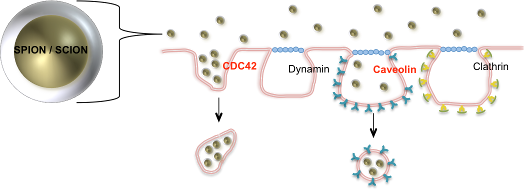
- . Fluorescent silica coated iron oxide nanoparticles (SCIONs) SCIONs were provided and characterized by the National Institute of Health (Maryland, USA). They were monodisperse at pH 7 and had a hydrodynamic diameter of 17 nm with a surface charge of 50 ± 5 mV. For detection in confocal fluorescence microscopy
- nanoparticle suspensions, involvement of more than one specific pathway is not surprising. Endocytosis through Caveolin-1 and CDC42 is characterized by vesicles of 30 to 80 nm [27][28], which excludes bigger agglomerates from uptake. For future experiments monodisperse and well-defined particle species would


The distribution and degradation of radiolabeled superparamagnetic iron oxide nanoparticles and quantum dots in mice
Beilstein J. Nanotechnol. 2015, 6, 111–123, doi:10.3762/bjnano.6.11
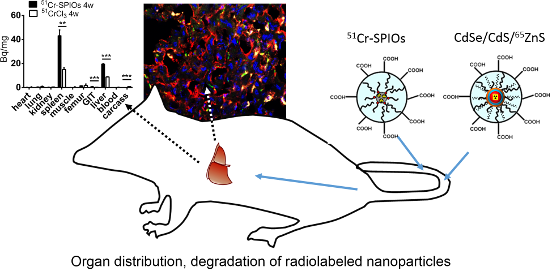
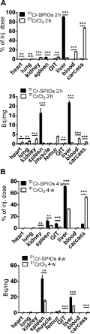
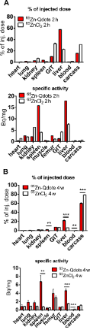
- isotopes and basic parameters regarding their biodistribution and degradation were studied. It was previously shown that oleic acid-stabilized, hydrophobic, monodisperse, iron oxide cores can easily incorporate water-free 59FeCl3 [24]. This results in the stable labeling of the core and allows a quasi “on
- appropriate radionuclide into the core or an inner shell during chemical synthesis in order to guarantee the full stability of the label. Experimental Nanoparticle synthesis Monodisperse, oleic acid-stabilized SPIOs were synthesized according to Yu et al. [43]. Briefly, a mixture of 2 mmol FeOOH, 8.0 mmol
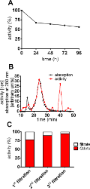
- remove water and traces of hydrochloric acid. Next, previously synthesized, monodisperse, oleic acid-stabilized SPIOs were added (1 mg dry weight in 400 µL CHCl3). The solution was stirred at room temperature for at least 24 h before using the SPIOs for further experiments (i.e., embedding in lipid





Chemoselective silicification of synthetic peptides and polyamines
Beilstein J. Nanotechnol. 2015, 6, 103–110, doi:10.3762/bjnano.6.10
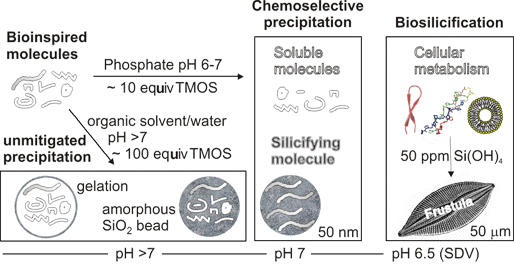
- ] are in use today for the synthesis of largely monodisperse silica particles with entrapped enzymes for NMR studies [2] or numerous other applications [3]. Generally, one or more molecular species are exposed to orthosilicic acid at pH 7 or higher. Slow or inefficient precipitation is accompanied by




The fate of a designed protein corona on nanoparticles in vitro and in vivo
Beilstein J. Nanotechnol. 2015, 6, 36–46, doi:10.3762/bjnano.6.5
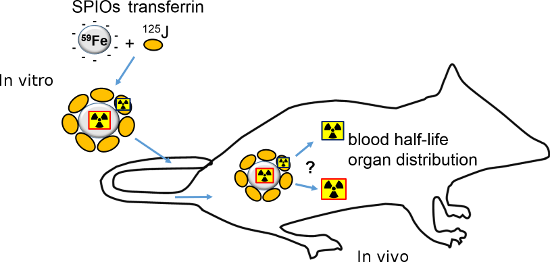
- Chemistry, University Hamburg, Grindelallee 117, 20146 Hamburg, Germany Molecular and Cellular Oncology, ENT/University Medical Center Mainz, Langenbeckstr. 1, 55101 Mainz, Germany 10.3762/bjnano.6.5 Abstract A variety of monodisperse superparamagnetic iron oxide particles (SPIOs) was designed in which the
- used as model hydrophobic monodisperse iron oxide nanoparticles, obtained from a high-temperature synthesis, which were transferred into aqueous medium by encapsulation with the well-characterized amphiphilic polymer, poly(maleic anhydride-alt-1-octadecene) [24][25]. These particles are negatively
- ” [10]. In the present study we used polymer-coated monodisperse SPIOs (11 nm core, total hydrodynamic diameter about 25 nm), as well as PEGylated variants as model nanoparticles. The iron oxide cores were labelled with 59Fe and we used an iodination kit to label also transferrin or albumin with 125I to


Proinflammatory and cytotoxic response to nanoparticles in precision-cut lung slices
Beilstein J. Nanotechnol. 2014, 5, 2440–2449, doi:10.3762/bjnano.5.253
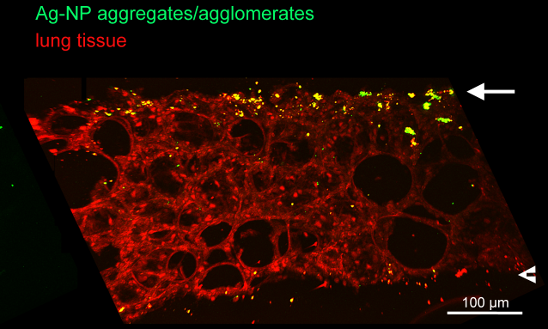
- zinc oxide (ZnO-NPs) nanoparticles as well as quartz particles were used because these materials have been previously shown in several in vitro and in vivo studies to induce a dose-dependent cytotoxic and inflammatory response. PCLS were exposed to three concentrations of 70 nm monodisperse


Synthesis and characterization of fluorescence-labelled silica core-shell and noble metal-decorated ceria nanoparticles
Beilstein J. Nanotechnol. 2014, 5, 2413–2423, doi:10.3762/bjnano.5.251
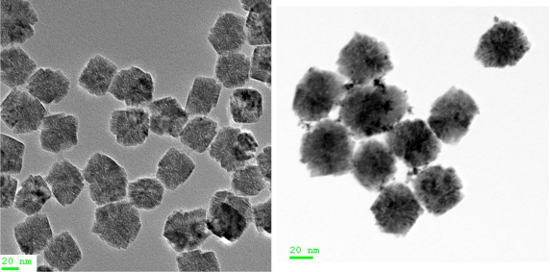
- which appear in the exhaust gases and finally interact with biological systems including humans. The control of the degree of agglomeration of small ceria nanoparticles is the basis for their synthesis. Almost monodisperse agglomerates (40 ± 4–260 ± 40 nm diameter) can be prepared and decorated with
- other reaction conditions), and then starts to decrease slowly. Higher ethanol/water ratios lead to smaller final agglomerates. Below 2:1 the size distribution starts to broaden, and in pure water, the agglomerates are no longer monodisperse but a mixture of the expected large (>200 nm) and rather small
- the two components is less important; as long as PVP is still soluble in the solvent mixture, there is no appreciable change in size provided that the PVP/Ce(III) nitrate ratio remains constant. The monodisperse agglomerates are ideal starting materials for the synthesis of metal-decorated models for


Inorganic Janus particles for biomedical applications
Beilstein J. Nanotechnol. 2014, 5, 2346–2362, doi:10.3762/bjnano.5.244
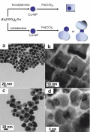
- choice of the organometallic precursor. In a subsequent step to the formation of gold particles, the hydrophobic oleate-capped metal oxide domains were heteroepitaxially grown on the preformed seeds by adapting the synthetic parameters for the formation of monodisperse, isotropic metal oxide
- synthesis of monodisperse, well-defined hetero-nanostructures requires non-hydrolytic reaction conditions, as established for the isotropic analogues. Therefore, it is necessary to exchange the hydrophobic surface functionalization of the nanoparticles by hydrophilic ligands to secure colloidal stability in
- highly monodisperse with sizes of Rh(Au) = 6.5 nm, Rh(Au@Fe3O4) = 12.8 nm, and Rh(Au@Fe3O4@SiO2) = 19.5 nm. The progressive increase of the hydrodynamic radii is in good accordance with the increase in particle diameter. The thickness of the silica shell was determined by TEM, and matches the expected






Effect of silver nanoparticles on human mesenchymal stem cell differentiation
Beilstein J. Nanotechnol. 2014, 5, 2058–2069, doi:10.3762/bjnano.5.214
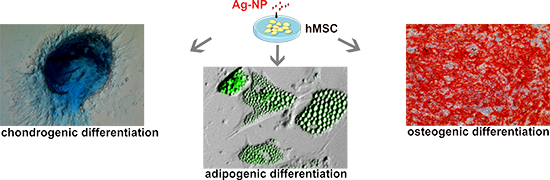
- comparing studies on the biological effects of nano-silver is the difference in the nature of the respective particle. In addition to the size, shape, or surface charge, the surface coating or functionalization used to stabilize the monodisperse nature is of critical importance. An important requirement is


PVP-coated, negatively charged silver nanoparticles: A multi-center study of their physicochemical characteristics, cell culture and in vivo experiments
Beilstein J. Nanotechnol. 2014, 5, 1944–1965, doi:10.3762/bjnano.5.205

- , which is indicative for a monodisperse system. The particles were negatively charged with a zetapotential of −20 mV. These particles were used in all described experiments after thorough chemical and colloid-chemical characterization. Dissolution of dispersed silver nanoparticles Silver nanoparticles


The surface properties of nanoparticles determine the agglomeration state and the size of the particles under physiological conditions
Beilstein J. Nanotechnol. 2014, 5, 1774–1786, doi:10.3762/bjnano.5.188
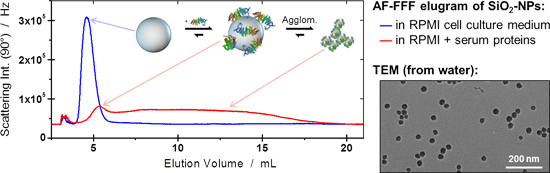
- fact that several challenging issues can occur [27]. First, in the case of samples being not truly monodisperse, one must extrapolate q2 → 0 to reveal the true value of the inverse z-average of the sphere-equivalent hydrodynamic radius, . As the scattering vector, q, mainly depends on the scattering
- of 90° are usually given. Roughly estimated, samples with μ2 values smaller than 0.05 are considered to be monodisperse, whereas samples with μ2 values greater than 0.2 are considered to be polydisperse [29]. Calculations of size distributions and polydispersity values from μ2 should be treated with
- particles are typically relatively monodisperse. Standard deviations are found in the range of 15 to 30% for silica sols and in the range of 5 to 15% for Stöber particles. For both methods, this depends on the synthesis conditions and on the particle size. In contrast, pyrogenic silica particles exhibit


In vitro and in vivo interactions of selected nanoparticles with rodent serum proteins and their consequences in biokinetics
Beilstein J. Nanotechnol. 2014, 5, 1699–1711, doi:10.3762/bjnano.5.180
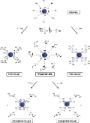
- ; details are given in [5]. We chose nano-sized and submicrometer-sized carbon black versus 50 nm monodisperse polystyrene NP with surface modifications of either carboxyl groups (negative charge), or amino groups (positive charge) or plain surface (neutral charge) as measured by their zeta potential and
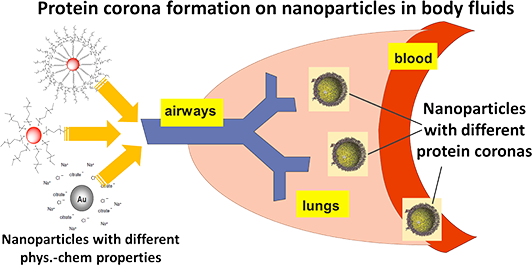
- binding of the proteins after an in vitro 24-hour incubation of monodisperse, negatively charged gold spheres (AuNP) of 5, 15 and 80 nm core diameter and surface modified with bis(p-sulfonatophenyl)phenylphosphine in diluted mouse serum in PBS (1:50 v/v) by a two-step analysis: proteomic protein
- concentrations of AuNP suspensions were used representing different available AuNP surface areas (Figure 3). Based on the total surface area of all AuNP expressed as the sum of the individual surface areas of all monodisperse AuNP, the three AuNP showed size-dependent protein-binding capacities for given total


Different endocytotic uptake mechanisms for nanoparticles in epithelial cells and macrophages
Beilstein J. Nanotechnol. 2014, 5, 1625–1636, doi:10.3762/bjnano.5.174
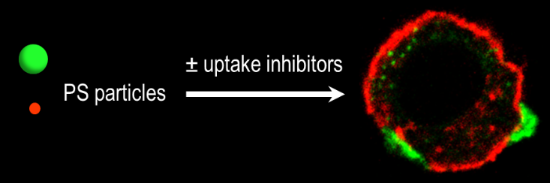
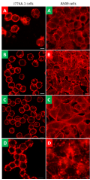
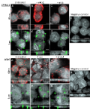
- larger polydispersity (Figure 1). Both methods confirm the experimentally obtained values. Measurements were carried out in water and unsupplemented RPMI medium and showed that all analyzed particles remained stable and monodisperse in biological medium. The zeta potential indicated a negative charge for



Silica nanoparticles are less toxic to human lung cells when deposited at the air–liquid interface compared to conventional submerged exposure
Beilstein J. Nanotechnol. 2014, 5, 1590–1602, doi:10.3762/bjnano.5.171
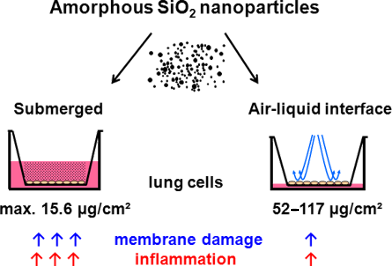
- concentrations were generated by using a commercial electrospray generator or an atomizer. Only the electrospray method allowed for the generation of an aerosol containing monodisperse NPs. However, the deposited mass and surface dose of the particles was too low to induce cellular responses. Therefore, we
- from exposure studies with animals or even humans. Experimental Materials Aerosil®200 powder was kindly provided by Evonik (Essen, Germany). The SiO2-50 nm NPs without or with labelling with fluorescein isothiocyanate (FITC) supplied as a monodisperse solution of 25 mg/mL in water were from Postnova
- microscopy (TEM) were from Plano GmbH (Wetzlar, Germany). Aerosol generation and characterisation For cell exposure to nanoparticle monomers the monodisperse SiO2-50 nm NP suspensions were dispersed into synthetic air (Air Liquide, 20% O2 in N2, less than 3 ppm impurities) by using an electrospray aerosol


Growth evolution and phase transition from chalcocite to digenite in nanocrystalline copper sulfide: Morphological, optical and electrical properties
Beilstein J. Nanotechnol. 2014, 5, 1542–1552, doi:10.3762/bjnano.5.166
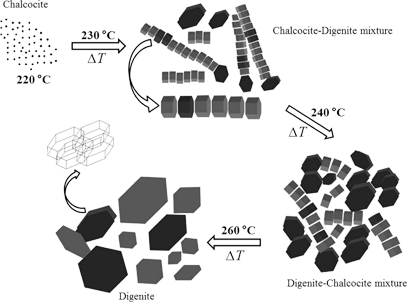
- example, the reaction temperature modified the shape, size and optical properties of monodisperse Cu2S obtained from a simple one-pot route [15]. In fact, there exists wide research about the synthesis of copper sulfide nanostructures obtaining different Cu/S ratios [9][11][16][20][23][24][25][26




In vitro interaction of colloidal nanoparticles with mammalian cells: What have we learned thus far?
Beilstein J. Nanotechnol. 2014, 5, 1477–1490, doi:10.3762/bjnano.5.161
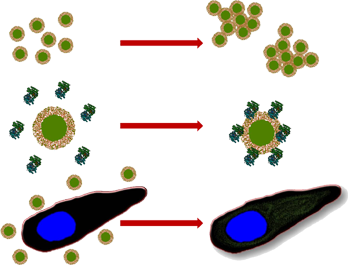
- on physicochemically defined NPs, i.e., solutions of monodisperse NPs with a defined ligand shell attached, and without residual “left-over” impurities of the NP synthesis [13][18]. Review How do particles enter cells and where do they go? Virtually all cell lines internalize NPs, which are dispersed
- currently possible. Concerning the NPs, this is, unfortunately, hampered by our incapability to synthesize “defined” NPs. For quantitative studies NPs and their bioconjugates should be as monodisperse as possible with regard to all relevant parameters, such as charge and size, well-defined and well
- fact that specific targeting still is possible [84], enough ligands still are biologically active. For highly defined NPs, such as nearly monodisperse NPs overcoated with a shell of an amphiphilic polymer [135], the corona formed by special model proteins can be surprisingly well organized. By using


The protein corona protects against size- and dose-dependent toxicity of amorphous silica nanoparticles
Beilstein J. Nanotechnol. 2014, 5, 1380–1392, doi:10.3762/bjnano.5.151
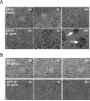
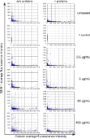
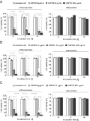
- measurements with a goniometer setup by ALV. The values of µ2 as a measure for the size polydispersity are derived directly from the cumulant analysis of DLS autocorrelation data. As a rough estimation, µ2 values smaller than 0.05 indicate a strict monodisperse size distribution, whereas µ2 values above 0.1




Template-directed synthesis and characterization of microstructured ceramic Ce/ZrO2@SiO2 composite tubes
Beilstein J. Nanotechnol. 2014, 5, 1152–1159, doi:10.3762/bjnano.5.126
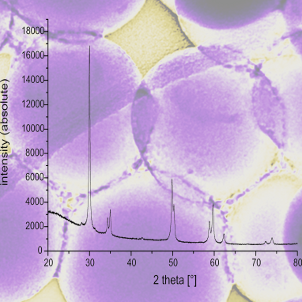
- combination of electrospinning and exotemplating leading to hollow CeO2/ZrO2@SiO2 composite tubes. Firstly, after electrospinning of polystyrene fibers, the fibers were covered by an exotemplating step with a sol solution containing monodisperse silica particles obtained from a Stoeber process. This is



Optical and structural characterization of oleic acid-stabilized CdTe nanocrystals for solution thin film processing
Beilstein J. Nanotechnol. 2014, 5, 881–886, doi:10.3762/bjnano.5.100
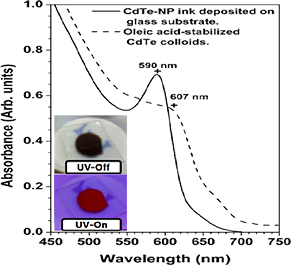
- its capability to process nearly-monodisperse nanocrystals of a variety of semiconductor materials at low temperatures and using non sophisticated equipments [1][2]. It has been extensively used to prepare binary [3][4][5], ternary [6][7][8] and quaternary [9][10] semiconductors for applications in


Injection of ligand-free gold and silver nanoparticles into murine embryos does not impact pre-implantation development
Beilstein J. Nanotechnol. 2014, 5, 677–688, doi:10.3762/bjnano.5.80
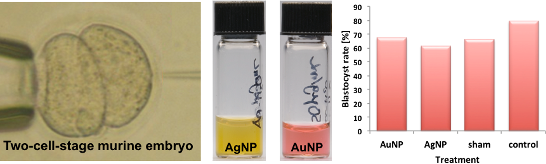
- in water, which generates colloidal particles of maximal purity [43][44][45]. Without compromising this purity, monomodal and monodisperse gold colloids can easily be fabricated in micromolar saline water with defined AuNP sizes [46]. Alternatively, this method also provides particles displaying a




Mesoporous cerium oxide nanospheres for the visible-light driven photocatalytic degradation of dyes
Beilstein J. Nanotechnol. 2014, 5, 517–523, doi:10.3762/bjnano.5.60
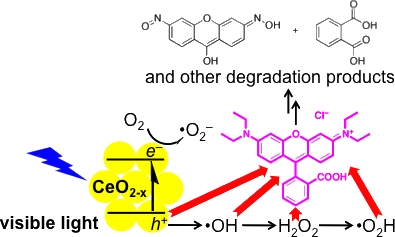
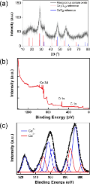
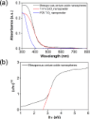
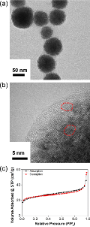
- material has fairly monodisperse nanospheres with diameters of 50–70 nm. Each nanosphere consists of an irregular mesoporous structure that is an aggregate of small nanocrystalline domains. The high-resolution TEM images confirm that the cerium oxide consists of crystalline domains, 4–5 nm in size (red

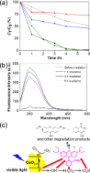
One-step synthesis of high quality kesterite Cu2ZnSnS4 nanocrystals – a hydrothermal approach
Beilstein J. Nanotechnol. 2014, 5, 438–446, doi:10.3762/bjnano.5.51
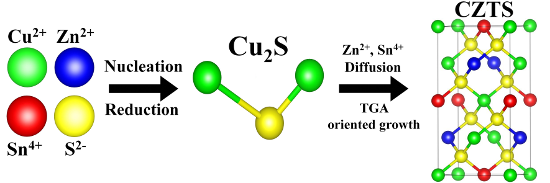
- the best of our knowledge, the formation mechanism of CZTS in the hydrothermal reaction has rarely been reported due to the complex reactions involved in the system. Herein we report the synthesis of high quality, pure kesterite phase, monodisperse CZTS nanocrystals by a one-step hydrothermal
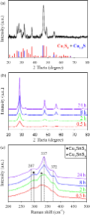
- observed, suggesting the highly purity of the synthesized CZTS material [19][20]. The morphology and particle size of the CZTS nanocrystals are shown in Figure 1c, which suggests the CZTS nanocrystals are monodisperse with crystal sizes around 10 ± 3 nm. High-resolution TEM (HRTEM) image in Figure 1d
- obtained. When 18 μL TGA is used in the reaction system, uniform and monodisperse CZTS nanocrystals with an average size of 10 nm are obtained. With increasing the TGA concentration to 180 μL, the size distribution of the CZTS nanocrystals becomes less uniform and some triangular-like shape nanocrystals




Design criteria for stable Pt/C fuel cell catalysts
Beilstein J. Nanotechnol. 2014, 5, 44–67, doi:10.3762/bjnano.5.5
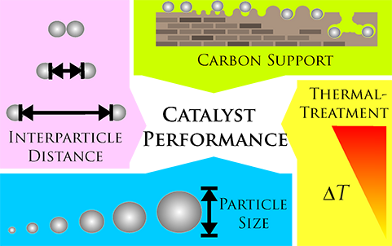
- gives a monodisperse distribution of the particle sizes after the sintering (Pt@HGS 3–4 nm). A first investigation of the electrochemical properties of the Pt@HGS 3–4 nm material has been described before [71]. The synthesis of the Pt/Vulcan 3–4 nm material was also described previously [16]. Contrary
- size distribution is very monodisperse compared to what is known for other Pt/C materials that have undergone a comparable treatment. This well-defined particle growth is attributed to the defined pore size distribution within the mesoporous network. The comparison between the DF-STEM images before and




Cytotoxic and proinflammatory effects of PVP-coated silver nanoparticles after intratracheal instillation in rats
Beilstein J. Nanotechnol. 2013, 4, 933–940, doi:10.3762/bjnano.4.105
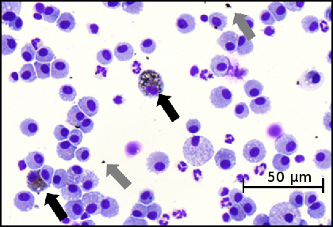
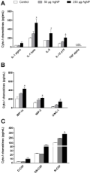
- rats. Monodisperse, PVP-coated AgNP (70 nm) showing little agglomeration in aqueous suspension were instilled intratracheally. After 24 hours, the lungs were lavaged, and lactate dehydrogenase (LDH), total protein, and cytokine levels as well as total and differential cell counts were measured in the
- aim of the current study was to assess the adverse health effects of AgNP in vivo, more specifically, after the intratracheal instillation in rats, with a focus on cytotoxicity and cytokine induction. Therefore, monodisperse polyvinylpyrrolidone (PVP)-coated AgNP (70 nm mean diameter) were instilled
- , with a focus on cytotoxicity and cytokine induction. Here, we demonstrate that the intratracheal instillation of 250 µg, but not of 50 µg, of monodisperse PVP-coated 70 nm AgNP in rats caused cytotoxic and inflammatory responses of the lungs, as shown by elevated BALF LDH, protein, and cytokine levels




Optimization of solution-processed oligothiophene:fullerene based organic solar cells by using solvent additives
Beilstein J. Nanotechnol. 2013, 4, 680–689, doi:10.3762/bjnano.4.77
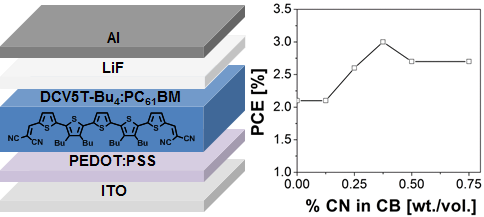
- , “small” molecules, have the advantage of possessing a defined molecular structure that is monodisperse in nature and allows for purification and characterization, which leads to the derivation of valuable structure–property relationships. Problems with respect to reproducibility of solar cell results due


Hydrogen-plasma-induced magnetocrystalline anisotropy ordering in self-assembled magnetic nanoparticle monolayers
Beilstein J. Nanotechnol. 2013, 4, 164–172, doi:10.3762/bjnano.4.16
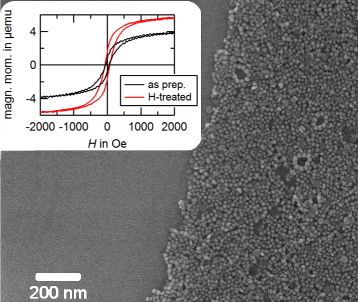
- of monodisperse Co particles, which will be referred to as sample I and sample II in the following. Sample I consists of particles with an average diameter dI = 13.80 nm and a standard deviation of σI = 2.60 nm, while nanoparticles in sample II have a size of dII = 6.09 nm at a standard deviation of