


Search results
Search for "nanofabrication" in Full Text gives 127 result(s) in Beilstein Journal of Nanotechnology.
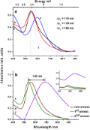
Synthesis, characterization, monolayer assembly and 2D lanthanide coordination of a linear terphenyl-di(propiolonitrile) linker on Ag(111)
Beilstein J. Nanotechnol. 2015, 6, 327–335, doi:10.3762/bjnano.6.31
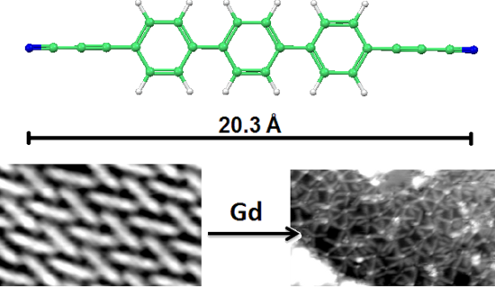
- years, significant strides have been made in the understanding and the application of nanofabrication from the "bottom-up" perspective [13][14][15][16][17]. The tailored design, controlled formation, and in-depth characterization of self-assembled, molecular and periodic heterostructures (ranging over


Boosting the local anodic oxidation of silicon through carbon nanofiber atomic force microscopy probes
Beilstein J. Nanotechnol. 2015, 6, 215–222, doi:10.3762/bjnano.6.20
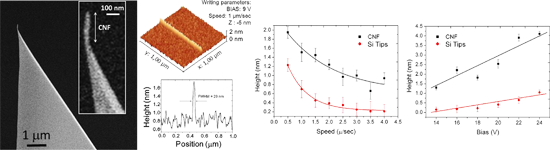
- nanofabrication methods based on scanning probe microscopy have been developed during the last decades. Local anodic oxidation (LAO) is one of such methods: Upon application of an electric field between tip and surface under ambient conditions, oxide patterning with nanometer-scale resolution can be performed
- scale. Interest of developing SPL-based nanofabrication methods relies on its extraordinary performance in terms of resolution and flexibility, as well as its potential for applications, e.g., in materials/surface science, quantum devices and nanoelectronics [1]. Moreover, SPL has the additional


Properties of plasmonic arrays produced by pulsed-laser nanostructuring of thin Au films
Beilstein J. Nanotechnol. 2014, 5, 2102–2112, doi:10.3762/bjnano.5.219
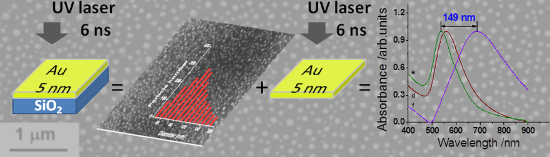
- mechanisms and final effect. Mechanisms relevant to the laser nanostructuring (LNS) of thin metal films are often discussed in the broader context of the non-equilibrium processes due to pulsed-laser interaction at time scales from micro- to femto-seconds and with nanofabrication by material ablation and
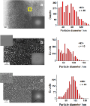


Review of nanostructured devices for thermoelectric applications
Beilstein J. Nanotechnol. 2014, 5, 1268–1284, doi:10.3762/bjnano.5.141
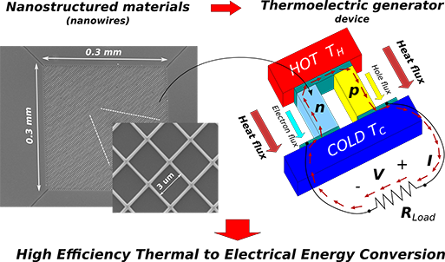
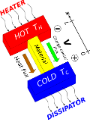
- properties on one side and material availability, sustainability, technological feasibility on the other side. The most important bottom-up and top-down nanofabrication techniques for large area silicon nanowire arrays, to be used for high efficiency thermoelectric devices, will be presented and discussed
- . Keywords: nanofabrication; nanostructures; silicon nanowires; thermoelectricity; Introduction The thermoelectric (TE) effect, known since the 19th century, offers an interesting perspective for the direct conversion of heat in electrical power, and vice versa. Given a thermal gradient, a thermoelectric


Electron-beam induced deposition and autocatalytic decomposition of Co(CO)3NO
Beilstein J. Nanotechnol. 2014, 5, 1175–1185, doi:10.3762/bjnano.5.129
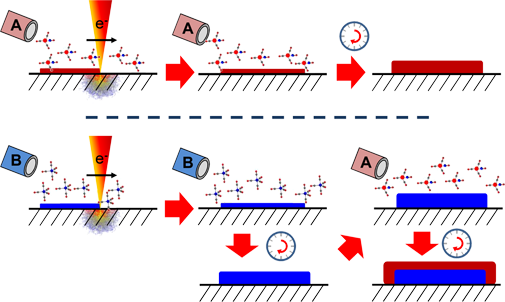
- deposition; nanofabrication; scanning transmission X-ray microscopy; Introduction The fabrication of nanostructures by using focused electron-beam induced processing (FEBIP) techniques, especially electron-beam induced deposition (EBID), has progressed considerably over the last decade [1][2][3][4][5]. In
- (CO)8 [15] makes that precursor an obvious candidate for the fabrication of layered Co/Fe nanostructures with arbitrary shapes. Thus, the presented results considerably expand the possibilities of FEBIP-based nanofabrication techniques. We also show that the potential for (auto-)catalytic




Hole-mask colloidal nanolithography combined with tilted-angle-rotation evaporation: A versatile method for fabrication of low-cost and large-area complex plasmonic nanostructures and metamaterials
Beilstein J. Nanotechnol. 2014, 5, 577–586, doi:10.3762/bjnano.5.68
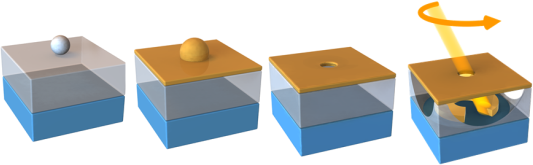
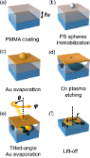
- MSEB, MC-246, 1304 W. Green Street, Urbana, Illinois 61801, United States 10.3762/bjnano.5.68 Abstract Many nano-optical applications require a suitable nanofabrication technology. Hole-mask colloidal nanolithography has proven to be a low-cost and large-area alternative for the fabrication of complex
- over large areas, stacked nanostructures, or multiple materials aligned with respect to each other require a major effort. Also the creation of 3D chiral materials is extremely difficult with this method [15]. An alternative method for nanofabrication includes nano-imprint lithography, which requires a


Fabrication of carbon nanomembranes by helium ion beam lithography
Beilstein J. Nanotechnol. 2014, 5, 188–194, doi:10.3762/bjnano.5.20
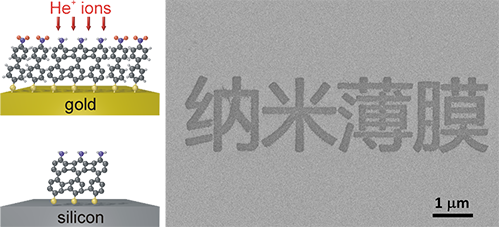
- a higher resolution and the small convergence angle of the ion beam leads to a larger depth of field. As an imaging tool, this instrument has a high surface sensitivity and is particularly advantageous to distinguish monolayers from the supporting substrate [18][19]. As a tool for nanofabrication
- employed HIM both as a nanofabrication tool to cross-link SAMs and as an imaging tool for the ex situ observation of the crosslinking process. As regards the nanofabrication, both supported and freestanding CNMs were fabricated by transferring them onto a silicon substrate and a transmission electron


Surface assembly and nanofabrication of 1,1,1-tris(mercaptomethyl)heptadecane on Au(111) studied with time-lapse atomic force microscopy
Beilstein J. Nanotechnol. 2014, 5, 26–35, doi:10.3762/bjnano.5.3
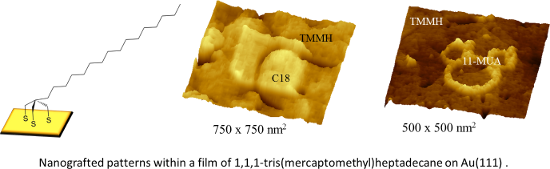
- changes at different time intervals were captured by successive AFM images. Scanning probe based nanofabrication was accomplished using protocols of nanografting and nanoshaving with n-alkanethiols and a tridentate molecule, 1,1,1-tris(mercaptomethyl)heptadecane (TMMH). Nanografted patterns of TMMH could
- before and after nanofabrication steps. Side-by-side comparisons of the surface structures of multidentate adsorbates versus n-alkanethiol SAMs were accomplished using nanografting to give a local measurement of film thickness, referencing the well-known dimensions of n-alkanethiols as a baseline
- different liquids can be investigated using time-lapse AFM imaging. Investigations of surfaces throughout the course of chemical self-assembly reactions have been monitored with AFM in liquid media [27]. Further, by injecting new molecules into the sample cell, AFM-based nanofabrication can be accomplished


In situ growth optimization in focused electron-beam induced deposition
Beilstein J. Nanotechnol. 2013, 4, 919–926, doi:10.3762/bjnano.4.103
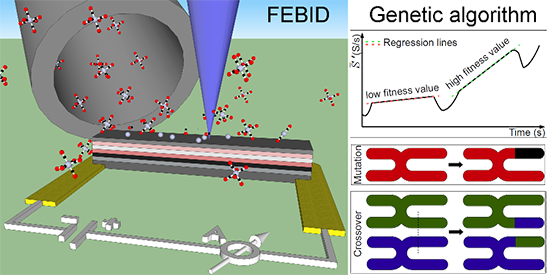
- microscope (TEM). During the last decade FEBID has developed from a highly specialized nanofabrication method with a limited selection of application fields to one of the most flexible approaches for functional nanostructure fabrication with true 3D patterning capabilities. By now FEBID-based nanostructures


Digging gold: keV He+ ion interaction with Au
Beilstein J. Nanotechnol. 2013, 4, 453–460, doi:10.3762/bjnano.4.53
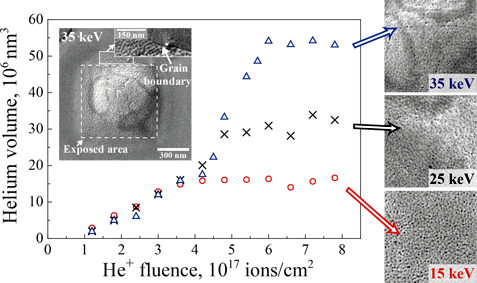
- nanofabrication [2][3][4][5][6]. In addition to ultrahigh-resolution imaging, HIM can be utilized for the compositional analysis and crystallographic characterization of samples [7][8]. Since it is a relatively new technique, many questions concerning the interaction of the focused He+ beam with matter remain


Controlled deposition and combing of DNA across lithographically defined patterns on silicon
Beilstein J. Nanotechnol. 2013, 4, 72–76, doi:10.3762/bjnano.4.8
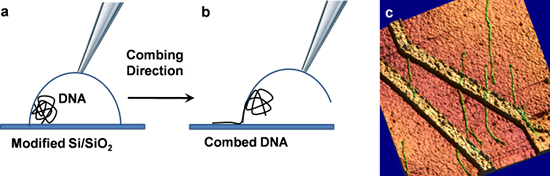
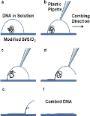
- substrates such as mica, glass, plastic, etc., which are more convenient for DNA deposition and DNA studies, whereas only a few have attempted to adapt the technique to silicon surfaces [11]. However, since silicon is the most common material in micro- and nanofabrication, the dream of DNA-based chips [15


Sub-10 nm colloidal lithography for circuit-integrated spin-photo-electronic devices
Beilstein J. Nanotechnol. 2012, 3, 884–892, doi:10.3762/bjnano.3.98
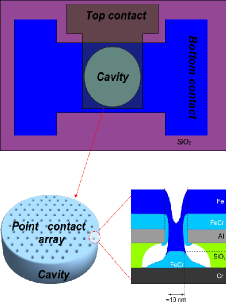
- colloidal lithography to producing large-area sub-10 nm point-contact arrays and demonstrate their circuit integration into spin-photo-electronic devices. The reported nanofabrication method should have broad application areas in nanotechnology as it allows ballistic-injection devices, even for metallic
- various materials including metals, which enables a wide range of new applications in nanotechnology. Large-area, near-ballistic-injection point-contact arrays are used to demonstrate integration of the developed nanofabrication technique into new types of spintronic and photonic devices. Experimental


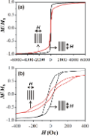
Highly ordered ultralong magnetic nanowires wrapped in stacked graphene layers
Beilstein J. Nanotechnol. 2012, 3, 846–851, doi:10.3762/bjnano.3.95
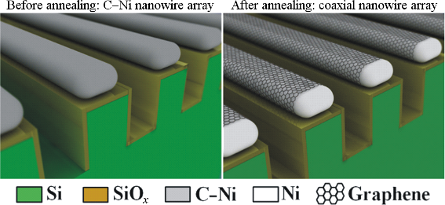
- : carbon; ferromagnetic; graphene; nanofabrication; nanowires; nickel; phase separation; Introduction Magnetic nanowires have been widely investigated during the last two decades for fundamental physics [1][2][3][4][5][6][7], and nano-engineering [7][8][9][10]. The various properties of these


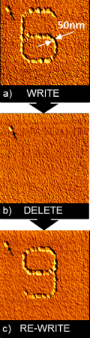
Reversible mechano-electrochemical writing of metallic nanostructures with the tip of an atomic force microscope
Beilstein J. Nanotechnol. 2012, 3, 824–830, doi:10.3762/bjnano.3.92
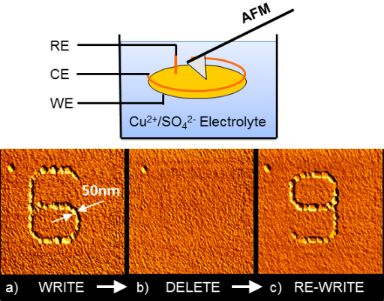
- successfully demonstrated on the nanometer scale. Keywords: atomic force microscopy; electrochemical deposition; electrochemistry; nanoelectronics; nanofabrication; nanolithography; nanotechnology; MEMS and NEMS; reversible processes; scanning probe microscopy and lithography; Introduction The


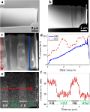
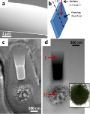
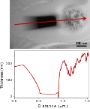
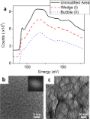
Nano-structuring, surface and bulk modification with a focused helium ion beam
Beilstein J. Nanotechnol. 2012, 3, 579–585, doi:10.3762/bjnano.3.67
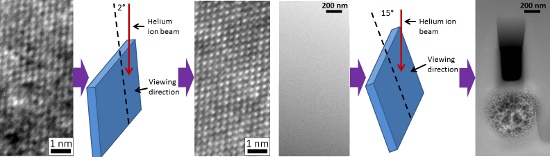
- ion microscopy; nanofabrication; TEM; Introduction Ion beams are widely used to modify the physical and chemical properties of the surface of materials with a high degree of control. Ion beam irradiation can be used to modify and control a material’s optical [1], electrical [2], magnetic [3] and


The oriented and patterned growth of fluorescent metal–organic frameworks onto functionalized surfaces
Beilstein J. Nanotechnol. 2012, 3, 570–578, doi:10.3762/bjnano.3.66
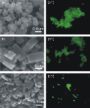
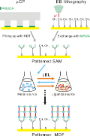
- demonstrated above, but in combination with micro/nanofabrication techniques also the lateral control of SURMOF growth is possible, opening valuable opportunities, e.g., for MOF sensor development. Here, we wish to present two different approaches to pattern SAMs, which have been used for the localized growth





Colloidal lithography for fabricating patterned polymer-brush microstructures
Beilstein J. Nanotechnol. 2012, 3, 397–403, doi:10.3762/bjnano.3.46
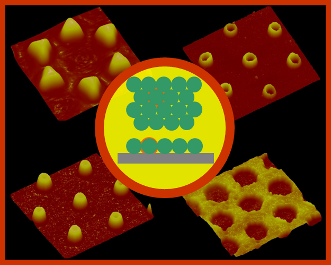
- technique for a large number of researchers in the field of micro/nanofabrication [2][3][4][6]. A variety of lithographic methods have since been developed, in which colloid microsphere arrays are used as masks for depositing nanomaterials and as scaffolds for templating 2-D or 3-D functional patterns [2][3


Nano-FTIR chemical mapping of minerals in biological materials
Beilstein J. Nanotechnol. 2012, 3, 312–323, doi:10.3762/bjnano.3.35
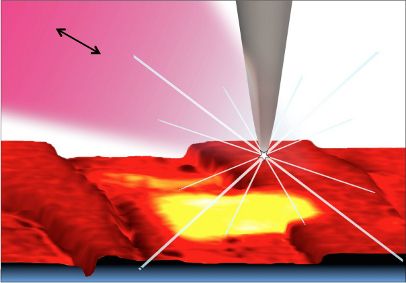
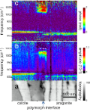
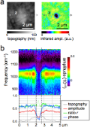
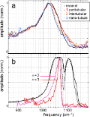
- -FTIR sensitively responds to structural disorder it is well suited for the study of biomineral formation and aging. Generally, nano-FTIR is suitable for the analysis and identification of composite materials in any discipline, from testing during nanofabrication to even the clinical investigation of





Noncontact atomic force microscopy
Beilstein J. Nanotechnol. 2012, 3, 172–173, doi:10.3762/bjnano.3.17

- microscopy (AFM), on the other hand, was quickly developed into a versatile tool with applications ranging from materials characterization in ultrahigh vacuum and nanofabrication under ambient conditions, to biological studies in liquids, but its resolution was limited to the nanometer scale. The reason for
Substrate-mediated effects in photothermal patterning of alkanethiol self-assembled monolayers with microfocused continuous-wave lasers
Beilstein J. Nanotechnol. 2012, 3, 65–74, doi:10.3762/bjnano.3.8
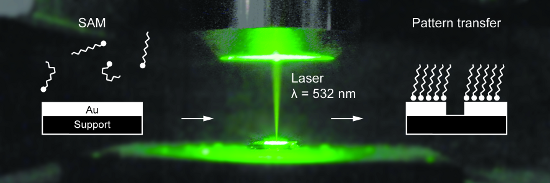
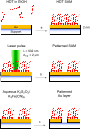
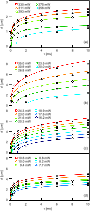
- ensured [4]. Varying the chemical structure of the precursor molecules, in turn, allows one to alter the chemical reactivity and resistance of these coatings [5]. These characteristics of SAMs have been widely exploited in numerous micro- and nanofabrication schemes [1][2][3]. A prominent example
- optical diffraction limit, laser nanofabrication encounters significant challenges. Typically, minimum structure sizes are not much smaller than the wavelength of the laser source [13]. A means to extend the lateral resolution of laser patterning techniques into the subwavelength range is to take




Transport through molecular junctions
Beilstein J. Nanotechnol. 2011, 2, 691–692, doi:10.3762/bjnano.2.74
- junctions. These properties can be designed and controlled by chemists. Studying them experimentally requires creating an interface between the molecules and at least two metallic leads. Standard nanofabrication techniques fall short by more than an order of magnitude in the distance and precision required
STM visualisation of counterions and the effect of charges on self-assembled monolayers of macrocycles
Beilstein J. Nanotechnol. 2011, 2, 674–680, doi:10.3762/bjnano.2.72
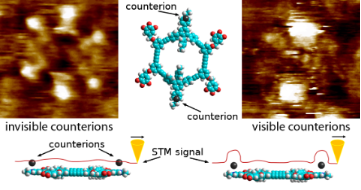
- Tibor Kudernac Natalia Shabelina Wael Mamdouh Sigurd Hoger Steven De Feyter Department of Chemistry, Division of Molecular Imaging and Photonics, Laboratory of Photochemistry and Spectroscopy, Katholieke Universiteit Leuven, Celestijnenlaan 200 F, B-3001 Leuven, Belgium Molecular Nanofabrication


The atomic force microscope as a mechano–electrochemical pen
Beilstein J. Nanotechnol. 2011, 2, 659–664, doi:10.3762/bjnano.2.70
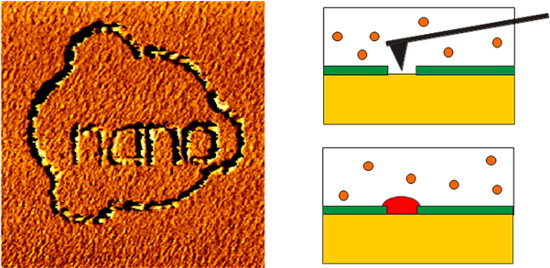
- microscopy; deposition; electrochemistry; nanoelectronics; nanofabrication; nanolithography; nanotechnology; NEMS and MEMS; scanning probe lithography; Introduction The controlled, patterned, electrochemical deposition of metals at predefined positions on the nanometer scale is of great interest for


Fabrication of multi-parametric platforms based on nanocone arrays for determination of cellular response
Beilstein J. Nanotechnol. 2011, 2, 545–551, doi:10.3762/bjnano.2.58
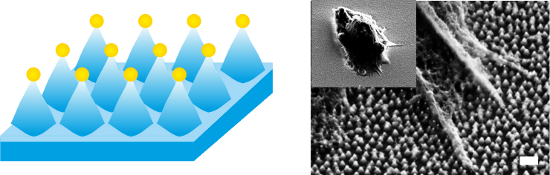
- lack of nanofabrication techniques to generate functional structures. Recent advances in nanofabrication techniques such as nanoimprint lithography (NIL) [9], nanosphere/colloidal lithography [10], dip pen lithography [11], e-beam lithography [12] have enabled and motivated biomaterial development


Plasmonic nanostructures fabricated using nanosphere-lithography, soft-lithography and plasma etching
Beilstein J. Nanotechnol. 2011, 2, 448–458, doi:10.3762/bjnano.2.49

- this kind require large area nanostructured surfaces. Thus only methods allowing large scale lithography/patterning are appropriate for this purpose. E-beam lithography and FIB based nanofabrication would be prohibitively expensive. The most common fabrication technique using arrays of polystyrene (PS
- route, involving RIE of quartz, constitutes an alternative nanofabrication method for plasmonic structures based on arrays of quartz mesas and arrays of holes in metal films. In this case the experimental aim is the preparation of large nanostructures for light confinement and, eventually, enhanced





