


Search results
Search for "optical absorption" in Full Text gives 137 result(s) in Beilstein Journal of Nanotechnology.
Optical absorption signature of a self-assembled dye monolayer on graphene
Beilstein J. Nanotechnol. 2016, 7, 862–868, doi:10.3762/bjnano.7.78
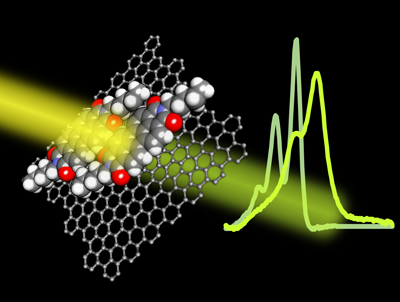
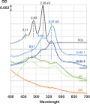
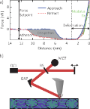
- combining two successive images with downward and upward slow-scan directions. Optical absorption spectra at normal incidence were obtained with a Perkin-Elmer Lambda 650 spectrometer. Optical microspectroscopy was adapted on an Olympus IX71 microscope equipped with an Ocean Optics spectrometer QE-Pro



Selective photocatalytic reduction of CO2 to methanol in CuO-loaded NaTaO3 nanocubes in isopropanol
Beilstein J. Nanotechnol. 2016, 7, 776–783, doi:10.3762/bjnano.7.69
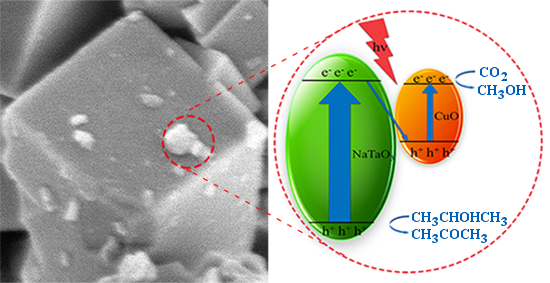
- –precipitation mechanism, where the concentration of the NaOH solution played a crucial role on the morphology of the crystal. This was confirmed in our work. Figure 3 shows UV–vis diffuse reflectance spectra and optical absorption edges of NaTaO3 nanocubes prepared with different concentrations of NaOH. From
- isopropanol to methanol was also proposed and explained by band theory. XRD patterns of NaTaO3 nanocubes. SEM images of NaTaO3 nanocubes: (a) 1M-NaTaO3, (b) 2M-NaTaO3, (c) 3M-NaTaO3, and (d) 4M-NaTaO3. UV–vis diffuse reflectance spectra (a) and optical absorption band edges (b) of NaTaO3 nanocubes. XRD


Correlative infrared nanospectroscopic and nanomechanical imaging of block copolymer microdomains
Beilstein J. Nanotechnol. 2016, 7, 605–612, doi:10.3762/bjnano.7.53
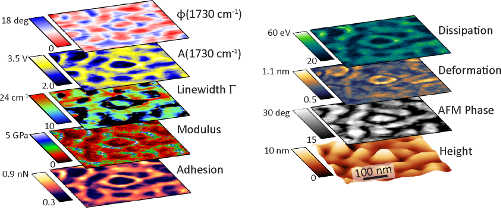
- the s-SNOM spectral phase in our analysis, which for weak molecular oscillators provides a good approximation of the spectral shape of the optical absorption or extinction coefficient [1]. Gaussian resonance curves are computationally fit to the spectra in order to extract peak position and
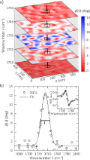
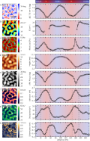


![[Graphic 9]](/bjnano/content/inline/2190-4286-7-53-i10.png?max-width=637&scale=1.18182) (1730 ...
(1730 ...
Bacteriorhodopsin–ZnO hybrid as a potential sensing element for low-temperature detection of ethanol vapour
Beilstein J. Nanotechnol. 2016, 7, 501–510, doi:10.3762/bjnano.7.44
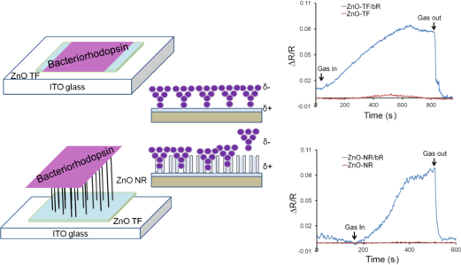
- scanning electron microscope (SEM, Hitachi) with an accelerating voltage of 5–15 kV. The film thickness was measured using a surface profilometer in contact mode (Taly-surf PGI 120). Raman and optical spectral analysis The optical absorption spectra of all the nanostructures were recorded using a UV–vis


Efficiency improvement in the cantilever photothermal excitation method using a photothermal conversion layer
Beilstein J. Nanotechnol. 2016, 7, 409–417, doi:10.3762/bjnano.7.36
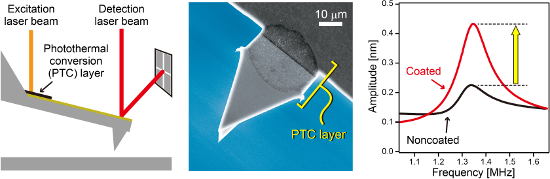
- cantilever geometry. As an alternative approach, the improvement of excitation efficiency using a short wavelength laser beam has been reported [27]. The high efficiency when using a short wavelength laser beam compared to a long wavelength laser beam is explained by the optical absorption characteristics of



Chemiresistive/SERS dual sensor based on densely packed gold nanoparticles
Beilstein J. Nanotechnol. 2015, 6, 2498–2503, doi:10.3762/bjnano.6.259
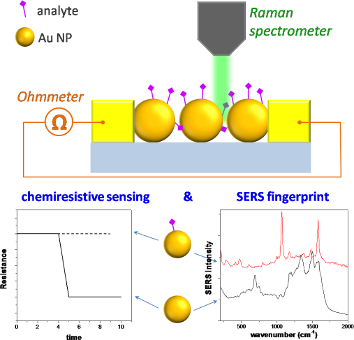
- biological molecules. Optical absorption spectra of the colloidal suspension recorded before and after incubation with folic acid confirmed the capping of AuNPs (redshift of the dipolar plasmon band) (Figure S1, Supporting Information File 1). DLS measurements correlate with the optical absorption results


Influence of wide band gap oxide substrates on the photoelectrochemical properties and structural disorder of CdS nanoparticles grown by the successive ionic layer adsorption and reaction (SILAR) method
Beilstein J. Nanotechnol. 2015, 6, 2252–2262, doi:10.3762/bjnano.6.231
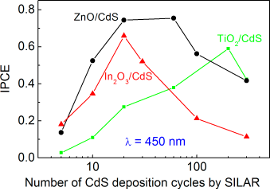
- optical absorption and photocarrier recombination. The maximal IPCE values for the In2O3/CdS and ZnO/CdS heterostructures are attained at N ≈ 20, whereas for TiO2/CdS, the appropriate N value is an order of magnitude higher. The photocurrent and Raman spectroscopy studies of CdS nanoparticles revealed the
- , is non-monotonic and influenced by the competition of two processes: the increase in the optical absorption with N (i.e., with the amount of CdS) and the simultaneous enhancement of the recombination role due to the increased distance the photogenerated charge carriers must overcome. The number of N
- substrate, ensuring improved electron transfer from the NPs to the oxide matrix. For all types of WBGO substrates the dependence of IPCE (Y) on the number of SILAR cycles passes through a maximum (Figure 2d). The increase in IPCE in the range of small N is naturally related to the increase in optical


Nonlinear optical properties of near-infrared region Ag2S quantum dots pumped by nanosecond laser pulses
Beilstein J. Nanotechnol. 2015, 6, 1781–1787, doi:10.3762/bjnano.6.182
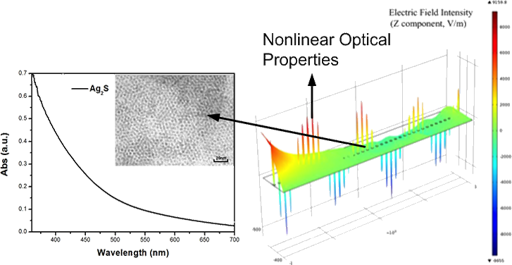
- ionic currents contribute to the absorption of the Ag2S QDs, which is affected by the pulse width waveforms. It could also be explained by an effect of nonlinear optical absorption that depends othe pump energy. This may reflect the dynamic behavior of gain or feedback mechanisms in the nonlinear




Current–voltage characteristics of manganite–titanite perovskite junctions
Beilstein J. Nanotechnol. 2015, 6, 1467–1484, doi:10.3762/bjnano.6.152
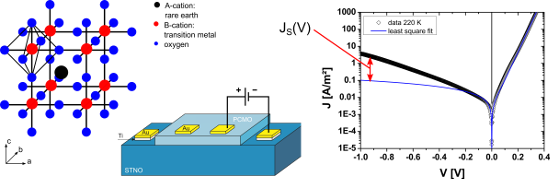
- , mixed halides. The constituents for manganite oxide are: A = rare earth, alkali metal, mixed composition, B = Mn, and X = O. The organic/inorganic halide perovskites exhibit good optical absorption and favorable electrical properties, thus offering the possibility for use in high efficiency solar cells





Electronic interaction in composites of a conjugated polymer and carbon nanotubes: first-principles calculation and photophysical approaches
Beilstein J. Nanotechnol. 2015, 6, 1138–1144, doi:10.3762/bjnano.6.115
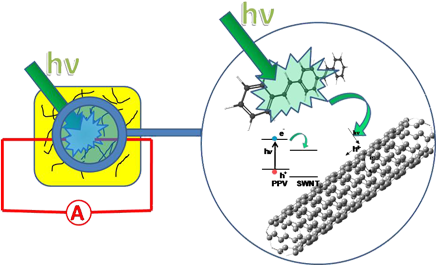
- transfer between the polymer and the nanotubes is supported by examining steady-state PL energies of a series of composites films containing both metallic and SC nanotubes with x increasing from 0% to 64% compared to the optical absorption of SWNTs (Figure 5). We have substracted the absorption background
- of SWNTs which is due to the π plasmons. In this way, only the contribution of SC and metallic tubes is clearly displayed. These experiments show that there is substantial spectral overlap of PL and optical absorption of SWNTs which could, in principle, favor the occurrence of Förster energy transfer


Experimental determination of the light-trapping-induced absorption enhancement factor in DSSC photoanodes
Beilstein J. Nanotechnol. 2015, 6, 886–892, doi:10.3762/bjnano.6.91
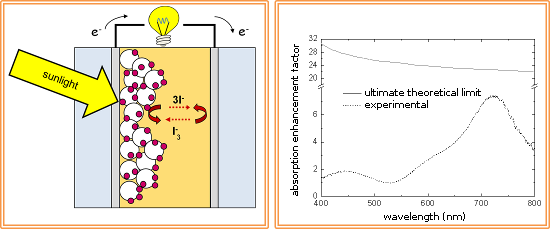
- , which therefore enhances the optical absorption. This approach describes a useful, functional characterization for the study of new morphologies of DSSC photoanodes. In fact, it can be applied both to simple structures and layered structures because it considers the photoanode as an effective layer and


Transformation of hydrogen titanate nanoribbons to TiO2 nanoribbons and the influence of the transformation strategies on the photocatalytic performance
Beilstein J. Nanotechnol. 2015, 6, 831–844, doi:10.3762/bjnano.6.86
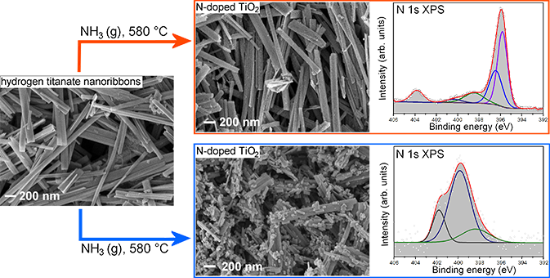
- light [23], compared with the undoped TiO2. The optical absorption spectrum of TN-580 (Figure S7, see Supporting Information File 1) shows that the sample absorbs light up to 500 nm, whereas TO-580 and CH-W do not. A comparison of the diffuse reflectance spectra of the N-doped TiO2 (not shown) reveals



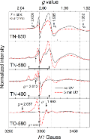

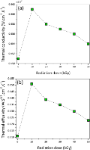
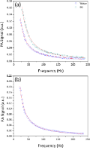
Structural, optical, opto-thermal and thermal properties of ZnS–PVA nanofluids synthesized through a radiolytic approach
Beilstein J. Nanotechnol. 2015, 6, 529–536, doi:10.3762/bjnano.6.55
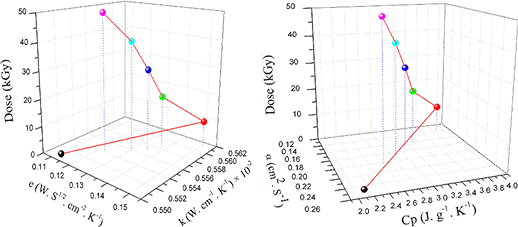
- confirmed by powder X-ray diffraction in the 2θ range of 4 to 60° by using Philips X-ray diffractometer (7602 EA Almelo) with Cu Kα radiation (λ = 0.1542 nm). Optical absorption spectra were recorded by using a UV–vis spectrometer (Shimadzu-UV1650PC) in the wavelength range of 250 to 400 nm. The thermal


Palladium nanoparticles anchored to anatase TiO2 for enhanced surface plasmon resonance-stimulated, visible-light-driven photocatalytic activity
Beilstein J. Nanotechnol. 2015, 6, 428–437, doi:10.3762/bjnano.6.43
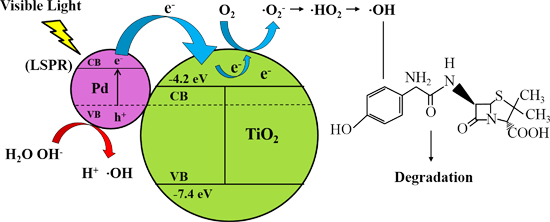
- NPs can be distinguished by two peaks centered at binding energies of 334.3 eV and 340.0 eV, which are assigned to Pd 3d5/2, and Pd 3d3/2, respectively (Figure 6b) [48] and confirm the predominantly metallic form of the deposited noble metal. Optical absorption and photoluminescence The optical


Nanoporous Ge thin film production combining Ge sputtering and dopant implantation
Beilstein J. Nanotechnol. 2015, 6, 336–342, doi:10.3762/bjnano.6.32
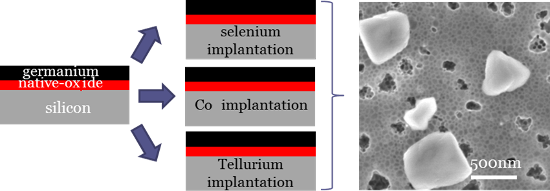
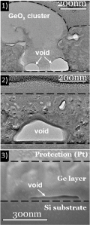
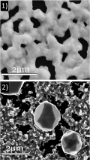
- wavelengths (red–green). Si and Ge are indirect gap materials, requiring phonon scattering for optical absorption/emission to take place. However, Q-size effects present in porous semiconductors can promote optical transitions without the need of phonons by breaking the momentum conservation rules and/or by


Low-cost plasmonic solar cells prepared by chemical spray pyrolysis
Beilstein J. Nanotechnol. 2014, 5, 2398–2402, doi:10.3762/bjnano.5.249
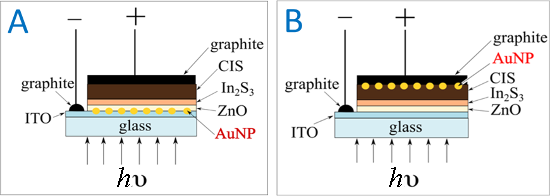
- depth. However, longer wavelengths penetrate deeper into the absorber (or are transmitted) and hence can fully utilize the presence the Au-NPs on the rear side of the absorber. In addition, Au is also an excellent reflector for wavelengths greater than 600 nm. Furthermore, an increase in the optical
- absorption can be expected in the red/infrared region for the sprayed CIS/Au-NP composite layers, as previously shown [9][17]. The increase in the EQE is attributed to the increased CuInS2 coverage with Au-NPs when using a larger volume of the Au precursor solution [9]. The mean diameter of the individual


Inorganic Janus particles for biomedical applications
Beilstein J. Nanotechnol. 2014, 5, 2346–2362, doi:10.3762/bjnano.5.244

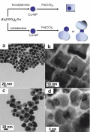
- to the optical transitions in amorphous TiO2 leading to enhanced optical absorption and, thus, generation of electron–hole pairs for photocatalysis (Figure 6a,b) [50]. Furthermore, plasmonic dye-sensitized solar cells based on Au@TiO2 nanostructures show remarkably enhanced power conversion






Hybrid spin-crossover nanostructures
Beilstein J. Nanotechnol. 2014, 5, 2230–2239, doi:10.3762/bjnano.5.232
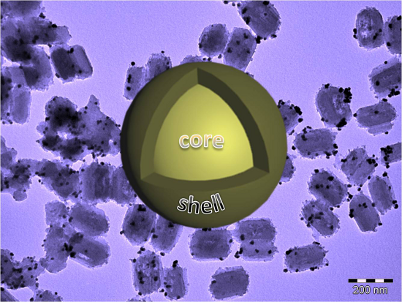
- field around the metallic nanostructures can be successfully coupled to the molecular spin state changes brought on by the Fe centers of the SCO film. The LSPR technique was sensitive enough to detect the thermal spin transitions in thin films of up to 60 nm with a conventional optical absorption setup



Silicon and germanium nanocrystals: properties and characterization
Beilstein J. Nanotechnol. 2014, 5, 1787–1794, doi:10.3762/bjnano.5.189
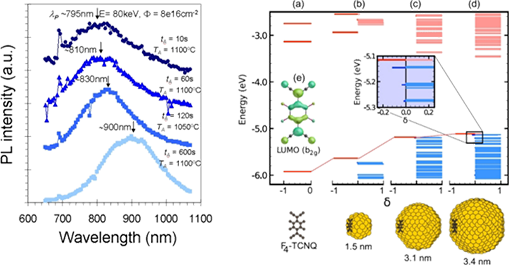
- surface groups was found to increase the electron binding energy of P, As and Sb, and to decrease the hole binding energy of B, Al, Ga and In [67]. Chlorine-covered Si NCs were found to have higher electron affinity, higher ionization energy and a lower optical absorption energy threshold than hydrogen


Growth evolution and phase transition from chalcocite to digenite in nanocrystalline copper sulfide: Morphological, optical and electrical properties
Beilstein J. Nanotechnol. 2014, 5, 1542–1552, doi:10.3762/bjnano.5.166
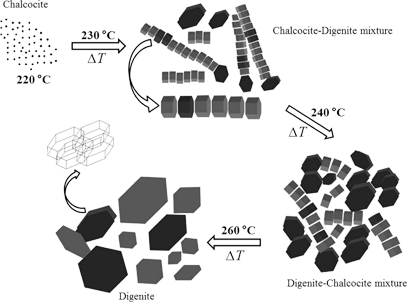
- is clear, that the deficiencies of copper generate a displacement or shift of the optical absorption, which is consistent to the transition of the phases. The energy band gaps of the samples were computed by the Tauc plot for direct transition (Figure 5). The indirect plot (inset) did not present a
- thin films from an aqueous solution [25][37]. On the other hand, the direct Eg values of the CuxS samples prepared in the organic solvent are in the range of 1.57–1.87 eV. These values are adequate for an optical absorption in the visible region, which makes the samples very promising materials for




DFT study of binding and electron transfer from colorless aromatic pollutants to a TiO2 nanocluster: Application to photocatalytic degradation under visible light irradiation
Beilstein J. Nanotechnol. 2014, 5, 1016–1030, doi:10.3762/bjnano.5.115
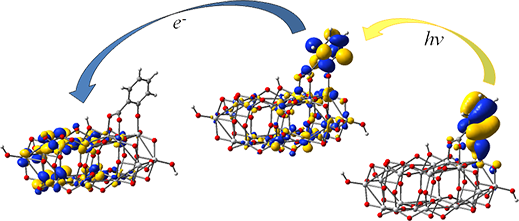
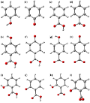
- , Ph has strongest optical absorption but it is outperformed by SA likely due to a more efficient electron transfer. We have to state that our approach cannot quantify the four different criteria discussed. Although the comparison with the experimental data is only qualitative, the present approach can




Biomolecule-assisted synthesis of carbon nitride and sulfur-doped carbon nitride heterojunction nanosheets: An efficient heterojunction photocatalyst for photoelectrochemical applications
Beilstein J. Nanotechnol. 2014, 5, 770–777, doi:10.3762/bjnano.5.89
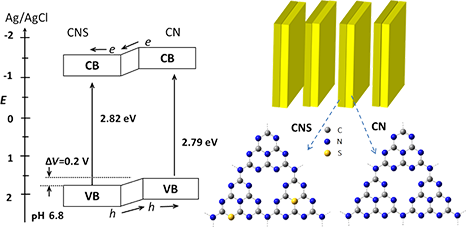
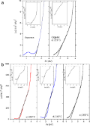
- intersects of the Mott–Schottky plots, the flatband potential and thus the conduction band edge of CN and CNS are estimated to be about −1.22 and −1.01 eV vs Ag/AgCl, respectively. Together with the bandgap energy obtained from optical absorption measurements, the valence band position for CN and CNS are
- spectra of CN and CNS samples. (a) Optical absorption spectra of CN and CNS. Inset shows the Tauc plots for bandgap determination, (b) Mott–Schottky plots for CN and CNS. Schematic illustration of (a) electron–hole separation at the CN/CNS heterojunction interface, (b) the structure of CN/CNS


Resonance of graphene nanoribbons doped with nitrogen and boron: a molecular dynamics study
Beilstein J. Nanotechnol. 2014, 5, 717–725, doi:10.3762/bjnano.5.84
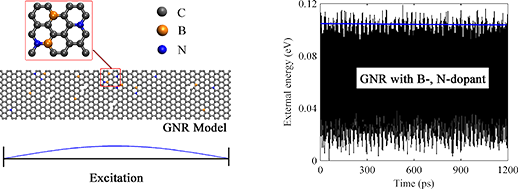
- been reported to have supreme stiffness (Young’s modulus ≈ 1 TPa), very high electron mobility, electrical and thermal conductivity, optical absorption as well as many other excellent properties [2][3]. These properties of graphene open up huge potential applications in the area of electronics


Nanostructure sensitization of transition metal oxides for visible-light photocatalysis
Beilstein J. Nanotechnol. 2014, 5, 696–710, doi:10.3762/bjnano.5.82
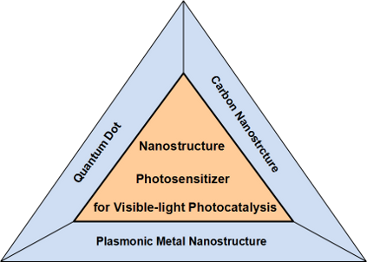
- electrons oscillation on certain metallic nanostructures (e.g., Cu, Ag and Au). This radiation generates strong localized electromagnetic fields around the metallic nanostructures and leads to greatly enhanced optical absorption and scattering occurring at specific wavelengths, which depends not only on the




A visible-light-driven composite photocatalyst of TiO2 nanotube arrays and graphene quantum dots
Beilstein J. Nanotechnol. 2014, 5, 689–695, doi:10.3762/bjnano.5.81
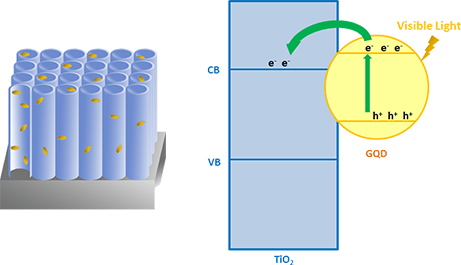
- TNAs with GQDs not only extended the optical absorption spectrum of TNAs over the visible range, but also enhanced the photocatalytic and photoelectrochemical performances of TNAs under visible light. Results and Discussion Figure 1a shows a TEM image of GQDs with diameters of about 10 nm. The AFM





