Search results
Search for "quartz" in Full Text gives 415 result(s) in Beilstein Journal of Nanotechnology. Showing first 200.
Numerical analysis of vibration modes of a qPlus sensor with a long tip
Beilstein J. Nanotechnol. 2021, 12, 82–92, doi:10.3762/bjnano.12.7
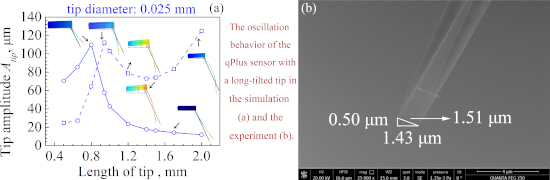
- the optimal diameter was found to be 0.1 mm. Keywords: finite element method; long tilted tip; noncontact atomic force microscopy; qPlus sensor; quartz tuning fork; simulations; Introduction Quartz tuning forks are widely used in the watch industry because of their low frequency offset over a wide
- temperature range [1]. In addition, quartz tuning forks have a high elastic constant, a high quality factor (Q factor), and are self-sensing due to the piezoelectric effect [1]. Therefore, a quartz tuning fork can be used as a force sensor. The central part of the “qPlus sensor” is a quartz tuning fork of
- optimal tip size can be derived from the simulation results. Methods Model and parameters The model in the simulation is based on an MS1V-T1K-type quartz tuning fork used in our experiment (details will be described later). The dimensions of the MS1V-T1K quartz tuning fork, length L = 3423 µm, width W






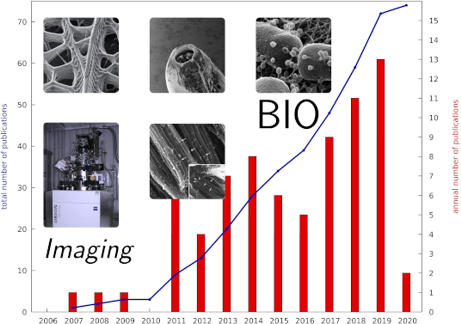
Bio-imaging with the helium-ion microscope: A review
Beilstein J. Nanotechnol. 2021, 12, 1–23, doi:10.3762/bjnano.12.1


Towards 3D self-assembled rolled multiwall carbon nanotube structures by spontaneous peel off
Beilstein J. Nanotechnol. 2020, 11, 1865–1872, doi:10.3762/bjnano.11.168
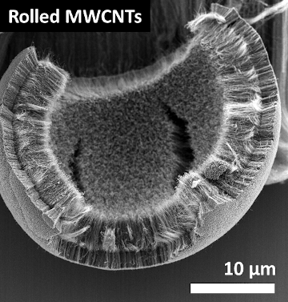
- carpets [22], less conventional and complex structures were also developed and their formation mechanism is proposed in this study. In a typical AACVD synthesis, MWCNTs grow perpendicular to the substrates (i.e., quartz reactor walls or silicon wafers [23]). Under the conditions of the present study, it
- features in the Raman spectra were observed in all MWCNT structures with different sections investigated in this study. Under the experimental conditions leading to the C1/N2/C3 structure, more peeling off is observed. After synthesis, a simple bending of the quartz tube, which is used as a reactor
- piezoelectric generator, a quartz tube (2.2 cm inner diameter), a 50 cm long horizontal tube furnace, a gas flow controller, and an acetone gas trap. The total gas flow was 2500 sccm for all experiments. In order to obtain different compositions within the MWCNTs, different sequences of different precursors



Absorption and photoconductivity spectra of amorphous multilayer structures
Beilstein J. Nanotechnol. 2020, 11, 1757–1763, doi:10.3762/bjnano.11.158
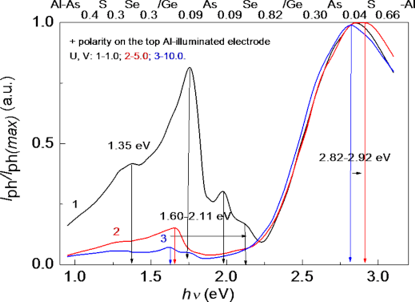
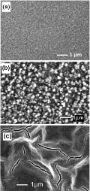
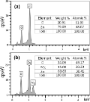
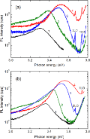
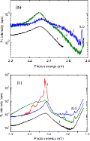
- weighed and filled into quartz ampoules, which were sealed under vacuum (P = 10−5 Torr). After sealing, the ampoules were heated for 48 h at a temperature of T = 1000 °C. The ampoules were then let to cool in air to room temperature. Some of the glass samples were then cut and polished for optical


Seebeck coefficient of silicon nanowire forests doped by thermal diffusion
Beilstein J. Nanotechnol. 2020, 11, 1707–1713, doi:10.3762/bjnano.11.153
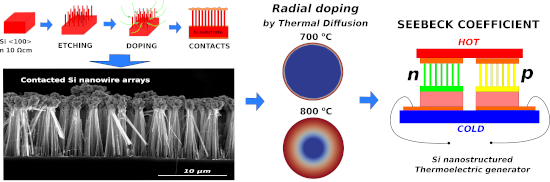
- during the HNO3 etching. The chips have then been placed in a tubular quartz furnace together with the solid source. As a solid source, we used ceramic wafers provided by Techneglass (PhosPlus TP-250). The face of the chips with the nanowires has been placed in contact with the ceramic wafer. The sealed


Controlling the electronic and physical coupling on dielectric thin films
Beilstein J. Nanotechnol. 2020, 11, 1492–1503, doi:10.3762/bjnano.11.132
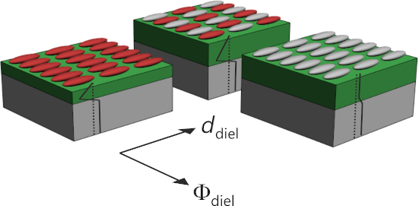
- (100) crystal was cleaned by cycles of Ar+ sputtering and annealing at 500 °C. MgO(100) films were grown by Mg evaporation in an oxygen environment. The Mg fluxes used were on the order of 1 Å/min as monitored by a quartz microbalance. The MgO deposition was done at a temperature of 270 °C and at an O2




Self-assembly and spectroscopic fingerprints of photoactive pyrenyl tectons on hBN/Cu(111)
Beilstein J. Nanotechnol. 2020, 11, 1470–1483, doi:10.3762/bjnano.11.130
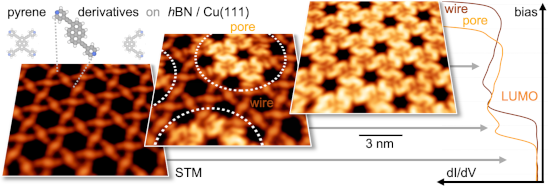
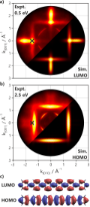
- coverage of the pyrene modules was deposited by organic molecular beam epitaxy from thoroughly degassed quartz crucibles held at 450–500 K. During deposition, the Cu(111) surface was kept at rt, and the pressure remained below 2 × 10⁻⁹ mbar. The STM images were acquired in constant current mode, with the
- absorption and emission spectra. Absorption spectra were recorded using air-equilibrated solutions at rt, with an Agilent Cary 5000 UV–vis spectrophotometer using quartz cells with a path length of 1.0 cm. Emission spectra were recorded on an Agilent Cary Eclipse fluorescence spectrofluorometer. Emission




Wafer-level integration of self-aligned high aspect ratio silicon 3D structures using the MACE method with Au, Pd, Pt, Cu, and Ir
Beilstein J. Nanotechnol. 2020, 11, 1439–1449, doi:10.3762/bjnano.11.128
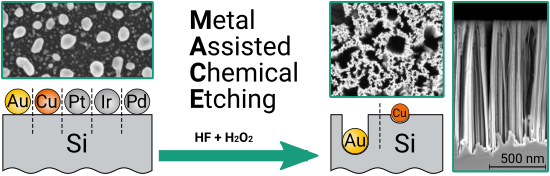
- by an in situ micro quartz crystal sensor. The particle formation has been done by thermal annealing under vacuum conditions. The wafers with Cu and Pt have been annealed in vacuo, while the wafers with Au and Pd were annealed ex situ. Each annealing consists of a heating phase, 30 min of annealing


Transient coating of γ-Fe2O3 nanoparticles with glutamate for its delivery to and removal from brain nerve terminals
Beilstein J. Nanotechnol. 2020, 11, 1381–1393, doi:10.3762/bjnano.11.122
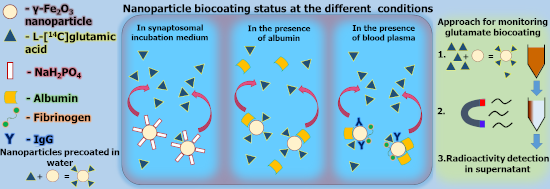
- ) equipped with a He–Ne laser LGN-111 (P = 25 mW, λ = 633 nm). A suspension of γ-Fe2O3 nanoparticles (1 mL) in the standard salt solution was placed to a cylindrical quartz cuvette of 10 mm in diameter, which was inserted into the laser correlation spectrometer. The measurement range of the instrument is


Analysis of catalyst surface wetting: the early stage of epitaxial germanium nanowire growth
Beilstein J. Nanotechnol. 2020, 11, 1371–1380, doi:10.3762/bjnano.11.121
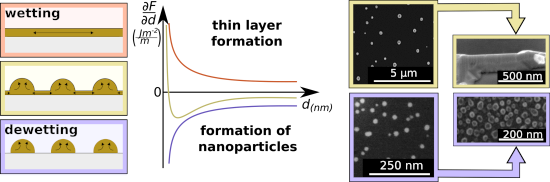
- ) wafer. The subsequent chemical–mechanical polishing provided a highly flat surface (RMS = 0.3 nm). Gold with a nominal thickness of 1 nm was evaporated from an effusion cell onto the heated substrate with a deposition rate of 0.01 nm/s, which was calibrated before with an Inficon XTC/3 quartz crystal
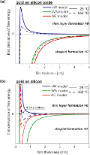
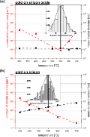


Impact of fluorination on interface energetics and growth of pentacene on Ag(111)
Beilstein J. Nanotechnol. 2020, 11, 1361–1370, doi:10.3762/bjnano.11.120
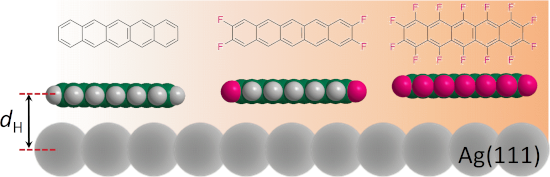
- [60] and vacuum-sublimed on clean metal surfaces (prepared by repeated Ar+ ion sputtering and annealing cycles [up to 550 °C]), with deposition rates of about 0.5 Å/min. The film mass thickness was monitored with a quartz crystal microbalance (QCM) near the sample, and a nominal thickness of 4 Å is


Gas sorption porosimetry for the evaluation of hard carbons as anodes for Li- and Na-ion batteries
Beilstein J. Nanotechnol. 2020, 11, 1217–1229, doi:10.3762/bjnano.11.106
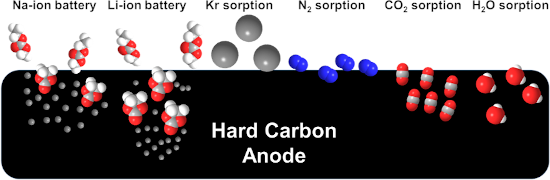
- et al. [32], Na2B4O7·10H2O (Borax) (Sigma-Aldrich, Germany) was used as a structure directing agent for the preparation of one sample. The concentration in the ᴅ-fructose solution was 0.06 wt %. 20 g of the solution with or without borax was poured into a 25 mL quartz tube and was heated in a Teflon


High permittivity, breakdown strength, and energy storage density of polythiophene-encapsulated BaTiO3 nanoparticles
Beilstein J. Nanotechnol. 2020, 11, 1190–1197, doi:10.3762/bjnano.11.103
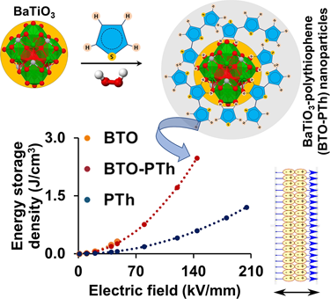
- studied using atomic force microscopy, after depositing the samples on quartz wafers. Figure 5 shows the 2D- and 3D-AFM images of BTO, BTO-PTh, and PTh samples along with their surface profiles. The micrographs of BTO nanoparticles show the presence of clusters on the surface. This is in agreement with




Revealing the local crystallinity of single silicon core–shell nanowires using tip-enhanced Raman spectroscopy
Beilstein J. Nanotechnol. 2020, 11, 1147–1156, doi:10.3762/bjnano.11.99
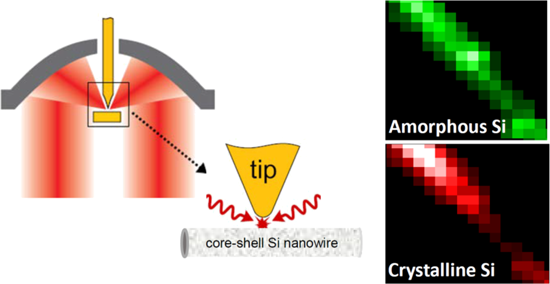
- growth temperature of 720 °C, which yields a certain SiNW diameter distribution. VLS nanowire growth is carried out in a quartz tube furnace with a precursor gas mixture of H2 (270 sccm) and SiH4 (30 sccm), at a pressure of 100 mbar. Silicon shells are grown at a temperature of 520 °C with a gas mixture


Photothermally active nanoparticles as a promising tool for eliminating bacteria and biofilms
Beilstein J. Nanotechnol. 2020, 11, 1134–1146, doi:10.3762/bjnano.11.98
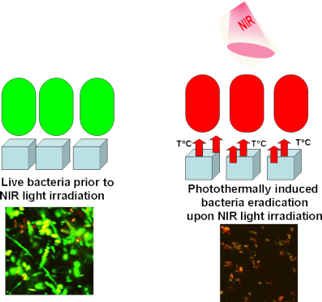
- spectrum, is another well-known suitable agent for the NIR photothermal conversion [89]. This material is prepared by assembling polyelectrolyte-stabilized reduced graphene sheets on a quartz surface to efficiently generate localized heating under simulated solar light irradiation, resulting in a >90


A few-layer graphene/chlorin e6 hybrid nanomaterial and its application in photodynamic therapy against Candida albicans
Beilstein J. Nanotechnol. 2020, 11, 1054–1061, doi:10.3762/bjnano.11.90
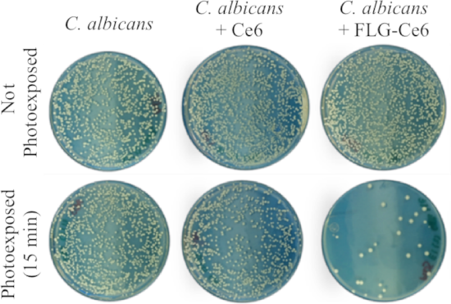
- long quartz cuvettes. The Raman spectra were obtained by means of a Thermo Scientific DXR Raman Microscope equipped with a diode-pumped solid-state laser (DPSS) at wavelength of 532 nm as the excitation source. A 10× objective with a 50 µm slit aperture and 5 s of exposure time were used. The laser


Highly sensitive detection of estradiol by a SERS sensor based on TiO2 covered with gold nanoparticles
Beilstein J. Nanotechnol. 2020, 11, 1026–1035, doi:10.3762/bjnano.11.87
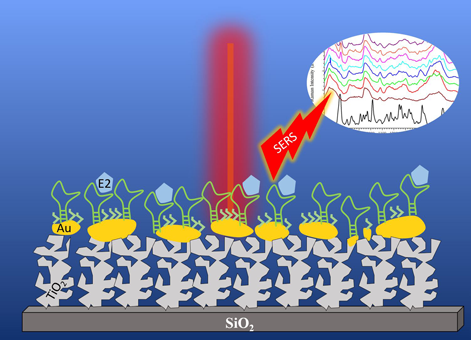
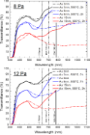
- quartz microbalance sensor. Three different values of Au thickness, namely 3, 6, and 15 nm, were selected enabling the formation of different sizes of AuNPs through subsequent annealing. Selected samples underwent annealing at 500 °C for 2 h in air, in a Lenton muffle furnace with 4 °C/min heating ramp



Microwave-induced electric discharges on metal particles for the synthesis of inorganic nanomaterials under solvent-free conditions
Beilstein J. Nanotechnol. 2020, 11, 1019–1025, doi:10.3762/bjnano.11.86
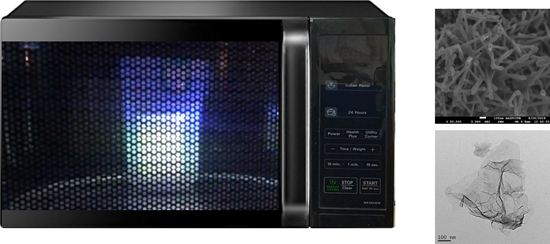
- Information File 1). The reactions were carried out in quartz or Teflon beakers. A Teflon beaker also served as a carbon and fluorine source for the experiments. Typically, 100 mg of acid-treated metal powder mixed either with graphite powder or g-C3N4 (50 mg) were placed inside a domestic kitchen microwave
- according to [18]. In a typical reaction, melamine (150 mg) and urea (71 mg) are mixed in a quartz boat and heated at 650 °C under nitrogen flow for 2 h to obtain bulk g-C3N4 as orange product. Generation of nanomaterials using microwave-induced discharge To generate nanoparticles by microwave-induced
- discharge, the reaction is conducted either in a quartz or a Teflon beaker. A Teflon beaker also serves as a carbon and fluorine source for the experiments. Typically, 100 mg of acid-treated metal powder mixed either with graphite powder or g-C3N4 (50 mg) and placed inside a domestic kitchen microwave (2.54


Gas-sensing features of nanostructured tellurium thin films
Beilstein J. Nanotechnol. 2020, 11, 1010–1018, doi:10.3762/bjnano.11.85
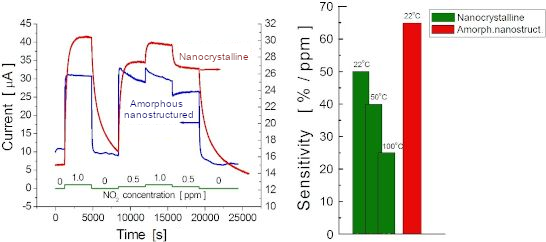
- . Subsequent studies showed that it was possible to increase the concentration range sensitivity to more than 300 ppm NO2 by growing single-crystalline microtubes. In order to do that, Te metal was evaporated onto quartz substrates under an inert argon gas at ambient pressure [7]. Later, it was also found that
- sensing parameters did not differ much from the similar parameters obtained earlier for microcrystalline Te films. Further investigations have been extended to Te nanotubes grown on quartz or Si(111) substrates through a catalyst-free growing process in a furnace filled with argon [21]. Another study used


Band tail state related photoluminescence and photoresponse of ZnMgO solid solution nanostructured films
Beilstein J. Nanotechnol. 2020, 11, 899–910, doi:10.3762/bjnano.11.75
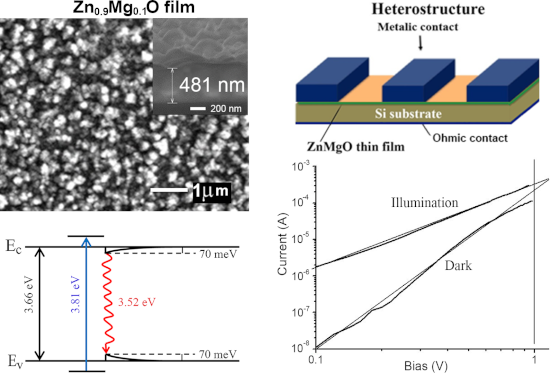
- possibility for easy doping and preparation of homogeneous films with good electrical and optical properties. The films are prepared on various substrates such as ZnO [6], MgO [17], Si [2][3][4][23], CaF2 [12], Al2O3 [18], sapphire [7][10][11][13][14][15][16][19][31][32], glass and quartz [1][20][21][23][24
- ][25][26][27][28][29][30][33][34]. The choice of the substrate is determined by the application. In particular, glass, quartz or sapphire substrates are usually used for photodetectors in the metal–semiconductor–metal (MSM) configuration, including Schottky photodetectors [1][19][24][25][28][29][30][31

Transition from freestanding SnO2 nanowires to laterally aligned nanowires with a simulation-based experimental design
Beilstein J. Nanotechnol. 2020, 11, 843–853, doi:10.3762/bjnano.11.69
- [21]. Two-zone furnaces allow for an extended homogeneous growth even on a cm range, which is in a much longer tube section than possible in a one-zone furnace [19]. The quartz tube (Øinner = 5 cm) is attached vacuum-tightly to a gas inlet and a gas outlet. The gas inlet is connected to two mass flow
- furnace with the powder boat within the upstream half of the quartz tube (Figure 1). Here, the tube was simulated as cylinder (Ø 5 cm) (Figure 1). The temperature of the tube was selected to be 800 °C according to the above-mentioned publications [15][16]. For reasons of simplification and to enable a
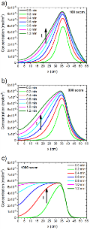
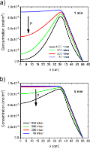
- the cross-sectional area of the quartz tube and T and p are the process temperature and the process pressure, respectively. As seen from the simulation results, the higher the volumetric flow rate per cross-sectional area, the faster the equilibrium metal vapor concentration is reached and the higher





Adsorption behavior of tin phthalocyanine onto the (110) face of rutile TiO2
Beilstein J. Nanotechnol. 2020, 11, 821–828, doi:10.3762/bjnano.11.67
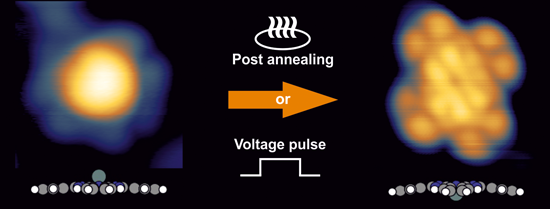
- rate (0.25 ML/min) was determined using a quartz crystal microbalance. Scanning tunneling microscopy (STM) experiments were performed with the use of either a low-temperature STM (LT-STM) operating at ca. 78 K or a room-temperature STM (RT-STM) manufactured by Scienta Omicron installed in a separate


Exfoliation in a low boiling point solvent and electrochemical applications of MoO3
Beilstein J. Nanotechnol. 2020, 11, 662–670, doi:10.3762/bjnano.11.52
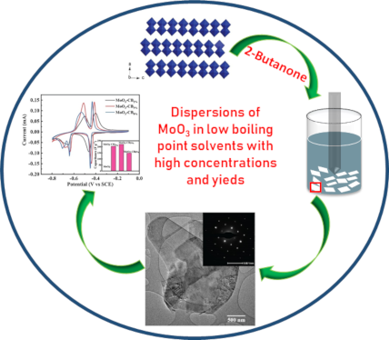
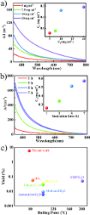
- dispersions was recorded using a UV–vis spectrophotometer (Perkin Elmer Lambda 750) in 10 mm quartz cuvettes. The concentrations of dispersions were determined by using thermogravimetric analysis. For this, 4 mL of MoO3 dispersion was filled in a 5 mL beaker followed by drying off the solvent at 80 °C in a

Soybean-derived blue photoluminescent carbon dots
Beilstein J. Nanotechnol. 2020, 11, 606–619, doi:10.3762/bjnano.11.48
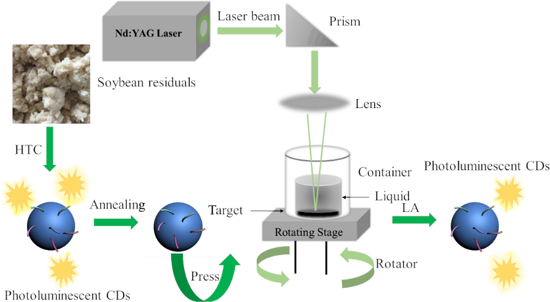
- filtration was dried at 60 °C in a vacuum oven for 24 h, and the final product was named as HTC-CDs. High-temperature annealing The high-temperature annealing was performed in a horizontal tube furnace under the flow of argon gas. A quartz boat loaded with HTC-processed carbon particles was placed in the
- at a flow rate of 50 SCCM, and finally maintained at 850 °C for 2 h to anneal the HTC-processed carbon particles. After the annealing, the furnace/system was reduced to room temperature in air. The black carbon powders, which formed in the quartz boat, were collected, and the carbon nanoparticles
- h. A mechanical press of the heated mixture at 6000 psi for 5 min led to the formation of a circular pellet of ≈1.27 cm in diameter and ≈1 mm in thickness. The circular pellet was transferred to a self-made vial with a quartz window for laser ablation, and ≈3 mL NH4OH aqueous solution was added to


Identification of physicochemical properties that modulate nanoparticle aggregation in blood
Beilstein J. Nanotechnol. 2020, 11, 550–567, doi:10.3762/bjnano.11.44
- Nanosight NS300 (Malvern, UK) instrument equipped with a blue laser (488 nm) and a quartz chamber for sample injection, equipped with an O-ring top plate. For the NP/hard protein corona complexes, the samples were diluted in PBS (0.01 M, pH 7.4). The dilution factor was chosen in order to obtain 30