Search results
Search for "selectivity" in Full Text gives 318 result(s) in Beilstein Journal of Nanotechnology. Showing first 200.
Detection and imaging of Hg(II) in vivo using glutathione-functionalized gold nanoparticles
Beilstein J. Nanotechnol. 2022, 13, 549–559, doi:10.3762/bjnano.13.46
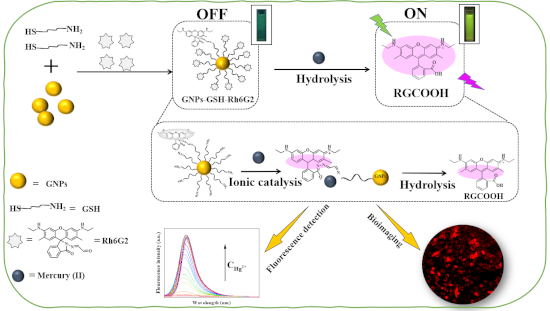
- imaging. We chose rhodamine 6G because of its excellent light stability, high fluorescence quantum yield, and good biocompatibility [36][37]. The functionalized GNPs have excellent selectivity for Hg2+. Furthermore, to evaluate the imaging effects of functionalized GNPs in cells, GNPs-GSH-Rh6G2 was
- detection (LOD) was calculated to be 8.4 μM (S/N = 3). In Table 1 the analytical performance of the constructed sensors is compared with other reported methods and with sensing techniques based on GNPs. The results indicate that the proposed strategy has good selectivity and acceptable sensitivity compared
- spectral response to the presence of metal ions, which illustrates the sensitivity and selectivity for Hg2+. Further, GSH-Rh6G2 and GNPs-GSH-Rh6G2 were employed in confocal microscopy experiments using Hela cells. The experiments showed that GNPs-GSH-Rh6G2 is more easily internalized into the cells and


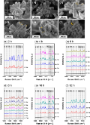
Zinc oxide nanostructures for fluorescence and Raman signal enhancement: a review
Beilstein J. Nanotechnol. 2022, 13, 472–490, doi:10.3762/bjnano.13.40




A non-enzymatic electrochemical hydrogen peroxide sensor based on copper oxide nanostructures
Beilstein J. Nanotechnol. 2022, 13, 424–436, doi:10.3762/bjnano.13.35
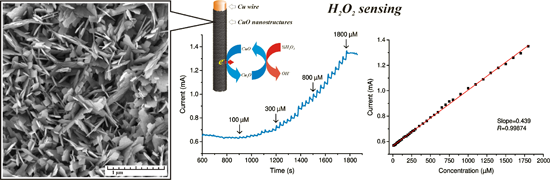
- . Currently, the electrochemical method is most widely used due to its simplicity, selectivity, and low detection limit. Modified (with enzymes) and unmodified electrodes are used as working electrodes. In the case of modified electrodes, the surface is functionalized by redox-active enzymes (the most popular
- being horseradish peroxidase) [34][35][36], and detection is carried out through physicochemical processes of interaction between H2O2 and the enzyme. This type of sensor has high catalytic activity, sensitivity, and selectivity. However, enzyme sensors have a significant disadvantage, namely enzyme
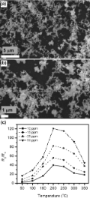
- response and, as a consequence, the selectivity of the sensor. This type of sensor is characterized by good reproducibility of measurement, low production cost, fast response, high sensitivity and selectivity, and chemical and mechanical stability in aggressive environments [40][41][42][43][44][45][46




A chemiresistive sensor array based on polyaniline nanocomposites and machine learning classification
Beilstein J. Nanotechnol. 2022, 13, 411–423, doi:10.3762/bjnano.13.34
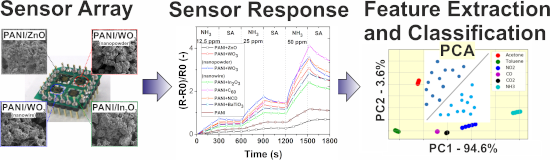
- . In most cases, the cross-sensitivity toward different chemical analytes is unavoidable, regardless of their oxidizing or reducing nature. Many authors have suggested a number of ways to overcome the drawbacks of cross-sensitivity/selectivity and reliability of the sensor arrays [3][4][5]. One
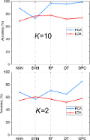
- process classification (GPC) in order to enhance the discrimination of gases and get better selectivity [13]. In this work we suggest a new method in our classification system by combining the abovementioned methods and using the output of the two most powerful techniques in dimensionality reduction and
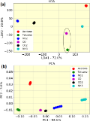
- composite sensors based on polyaniline. These sensors were used in gas sensing arrays. The sensitivity and selectivity of the gas sensing system was successfully tested on a set of six different gases. The improvement of the selectivity was analyzed by implementation of a complex statistical classification




Interfacial nanoarchitectonics for ZIF-8 membranes with enhanced gas separation
Beilstein J. Nanotechnol. 2022, 13, 313–324, doi:10.3762/bjnano.13.26
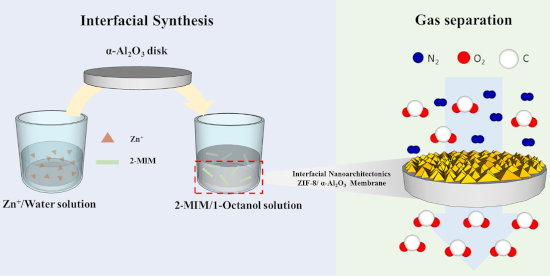
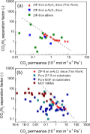
- effect through the methyl group of 2-methylimidazole. In addition to providing selectivity, ZIF-8 also possesses a high volume of cavities in which the open framework structure provides a passing lane for small molecules while large molecules are trapped [31]. The crystallographic pore aperture of ZIF-8


Engineered titania nanomaterials in advanced clinical applications
Beilstein J. Nanotechnol. 2022, 13, 201–218, doi:10.3762/bjnano.13.15
- reported by Rehman [8], who used the photodynamic properties of TiO2 for killing HeLa cancer cells. The hydrophobic nature of photosensitizers commonly used in photodynamic therapy led to selectivity and aggregation issues that jeopardize their effectiveness. Therefore, TiO2 nanoparticles (nps), which


A comprehensive review on electrospun nanohybrid membranes for wastewater treatment
Beilstein J. Nanotechnol. 2022, 13, 137–159, doi:10.3762/bjnano.13.10
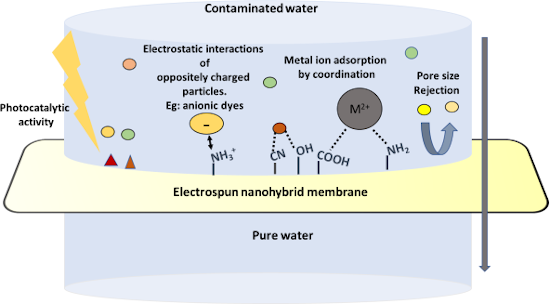
- into cross-linked polyvinylpyrrolidone (PVP) [15]. ENH membranes, along with their high porosity and high aspect ratio, possess a high permeation ability, adsorbability, and selectivity, which makes them excellent for environmental remediation, specifically for the adsorption and filtration of




A photonic crystal material for the online detection of nonpolar hydrocarbon vapors
Beilstein J. Nanotechnol. 2022, 13, 127–136, doi:10.3762/bjnano.13.9
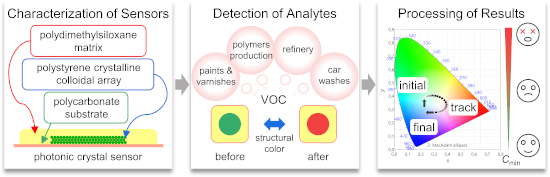
- ability to control selectivity in molecularly imprinted sensors and the simple visual response in photonic crystal sensors make it promising and even mandatory to combine these two approaches. In our previous study, the optimal parameters of polystyrene (PS) particles for sensor matrices for saturated


Tin dioxide nanomaterial-based photocatalysts for nitrogen oxide oxidation: a review
Beilstein J. Nanotechnol. 2022, 13, 96–113, doi:10.3762/bjnano.13.7
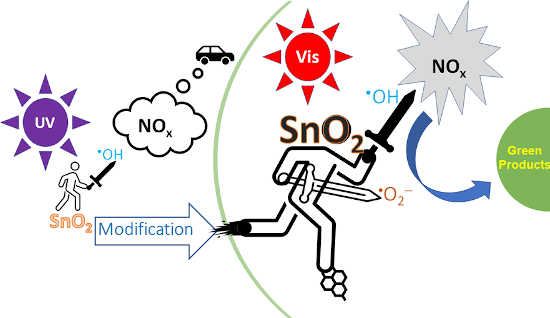
- ), significantly impacting the reaction rate during the photocatalytic process, leading to enhanced NO removal under visible light. Also, the reported selectivity of the SnO2−x/g-C3N4 heterojunction is three times higher than that of the bare materials. The finding of this work further supports the importance of


Sputtering onto liquids: a critical review
Beilstein J. Nanotechnol. 2022, 13, 10–53, doi:10.3762/bjnano.13.2






Biocompatibility and cytotoxicity in vitro of surface-functionalized drug-loaded spinel ferrite nanoparticles
Beilstein J. Nanotechnol. 2021, 12, 1339–1364, doi:10.3762/bjnano.12.99
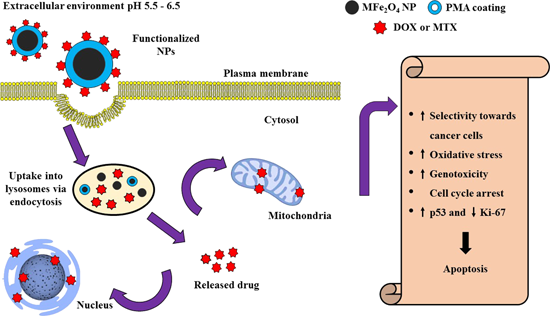
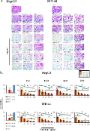
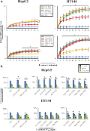
- ± 3.92 and 87.81 ± 1.60 to 21.26 ± 3.94, respectively (Figure 10c) at all tested doses. Free drug controls (DOX and MTX) showed significant cytotoxicity (p < 0.05) at the highest dose of 4 µM (Figure 10a). The obtained results suggested an increased selectivity of nanocarriers towards cancer cells as





Morphology-driven gas sensing by fabricated fractals: A review
Beilstein J. Nanotechnol. 2021, 12, 1187–1208, doi:10.3762/bjnano.12.88
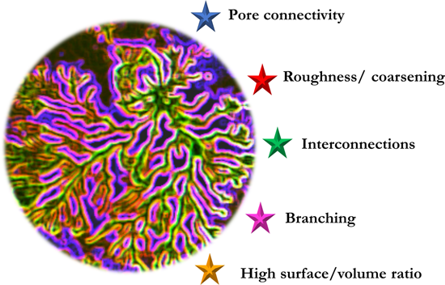
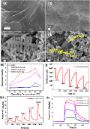
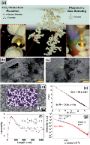
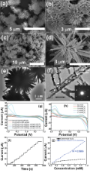
- usage [5][6][7]. The objectives in gas sensing research are usually set to enhance the sensitivity (how the sensor responds to small changes when the gas environment around it changes), selectivity (if a sensor can still respond to a particular gas when many gases present), stability (how the sensor
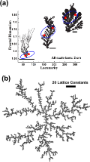
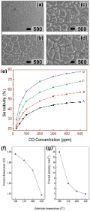
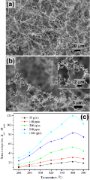
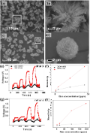
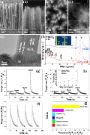
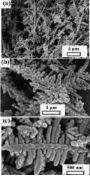
- response and better selectivity to NO2 at 65 °C. These sensing characteristics were attributed to the dendritic structure promoting diffusion and increasing the availability of adsorption sites. The structures were estimated to have a fractal dimension of 1.78. The results of these three studies show that
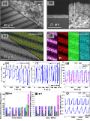
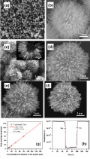
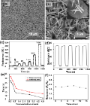
- (6 s), fast recovery time (7 s), and superior selectivity towards ethanol vapors at an optimum temperature of 250 °C. Figure 14g,h show the response curve, characteristic response, and recovery time for sensing 50 ppm of ethanol while operating at 250 °C. The porous dandelion-like structure enabled










Use of nanosystems to improve the anticancer effects of curcumin
Beilstein J. Nanotechnol. 2021, 12, 1047–1062, doi:10.3762/bjnano.12.78
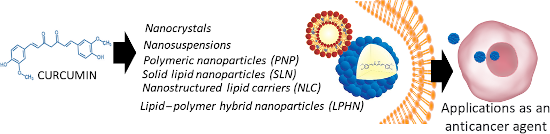
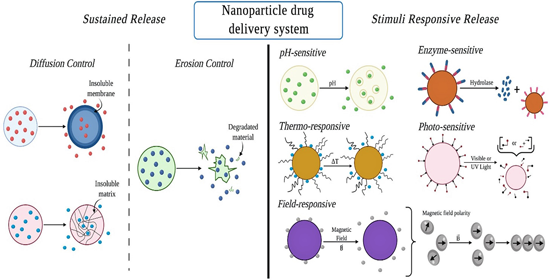
- administration is required and for regenerative medicine [9][10], although new applications are constantly being developed. Some of the main advantages of nanosized drug administration include an improved pharmacokinetic profile, higher selectivity towards tumor cells, and increased cellular and organelle
- respond to various external stimuli such as light [125], magnetic fields [126], ultrasound [127] and electric fields [128], or magnetic nanocarriers that respond to changes in pH by increasing the selectivity of the release site [129]. Magnetic nanoparticles (MNP). Magnetic nanoparticles contain molecules


Modification of a SERS-active Ag surface to promote adsorption of charged analytes: effect of Cu2+ ions
Beilstein J. Nanotechnol. 2021, 12, 902–912, doi:10.3762/bjnano.12.67
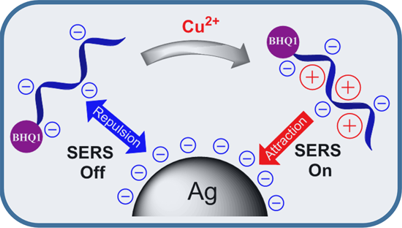
- ; oligonucleotides; porphyrin; silver nanoparticles; substrate modification; surface-enhanced Raman spectroscopy (SERS); Introduction Surface-enhanced Raman scattering (SERS) with its advantages of extreme sensitivity, high selectivity, and non-destructive nature has demonstrated great potential for the quick


Recent progress in actuation technologies of micro/nanorobots
Beilstein J. Nanotechnol. 2021, 12, 756–765, doi:10.3762/bjnano.12.59
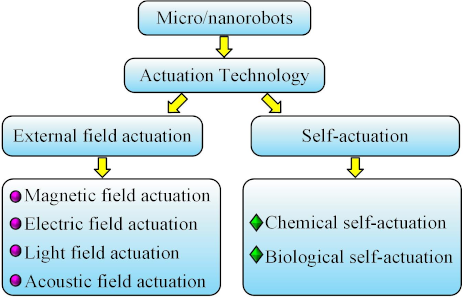
- promoting the research of neural networks and neural connectivity, offering reproducibility, selectivity, and precise connection. This provides a potential platform for advanced in vitro controllable models of artificial neural networks. With the research on single magnetic field-driven micro/nanorobots


Nanogenerator-based self-powered sensors for data collection
Beilstein J. Nanotechnol. 2021, 12, 680–693, doi:10.3762/bjnano.12.54
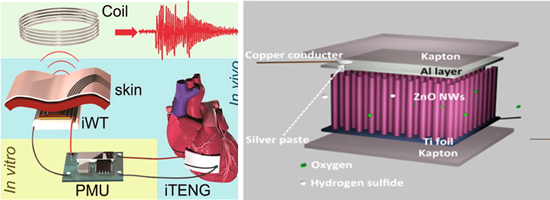
- (LPG) with high sensitivity, selectivity, and reliability [21]. The sensitivity of ZnSnO3/ZnO (1 h) NWs in 4000 ppm H2S, H2, ethanol, methanol, LPG, and saturated water vapor was measured. The sensitivity of ZnSnO3/ZnO NW for LPG is much higher than for other gases, as shown in Figure 5g



The impact of molecular tumor profiling on the design strategies for targeting myeloid leukemia and EGFR/CD44-positive solid tumors
Beilstein J. Nanotechnol. 2021, 12, 375–401, doi:10.3762/bjnano.12.31
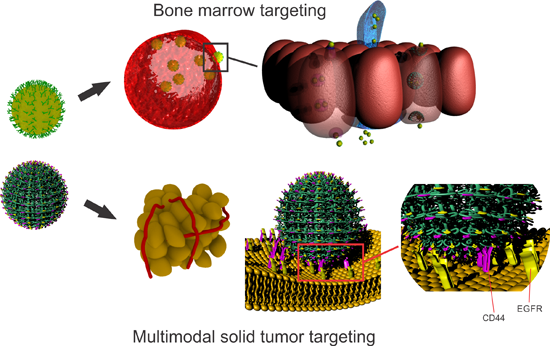
- smart nanoscale drug delivery carriers with increased selectivity and multistage targeting capabilities has emerged. Common cancer signatures and the synthesis of ligands with high avidity for the overexpressed cancer cell receptors are a valuable addition to the general targeting concepts. Important


Nickel nanoparticle-decorated reduced graphene oxide/WO3 nanocomposite – a promising candidate for gas sensing
Beilstein J. Nanotechnol. 2021, 12, 343–353, doi:10.3762/bjnano.12.28
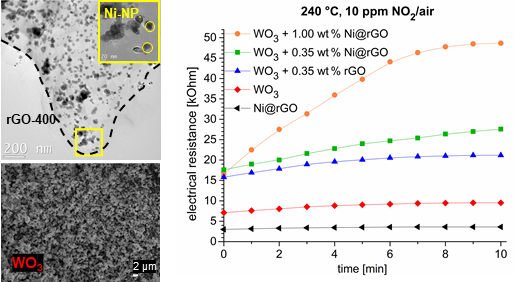
- of resistance in n-type MOS and an increase of resistance in p-type MOS and vice versa [8]. MOS have certain advantages such as fast response time and excellent sensitivity towards all kinds of gases [11]. The major disadvantages of MOS are their poor selectivity and high operating temperatures of


Exploring the fabrication and transfer mechanism of metallic nanostructures on carbon nanomembranes via focused electron beam induced processing
Beilstein J. Nanotechnol. 2021, 12, 319–329, doi:10.3762/bjnano.12.26
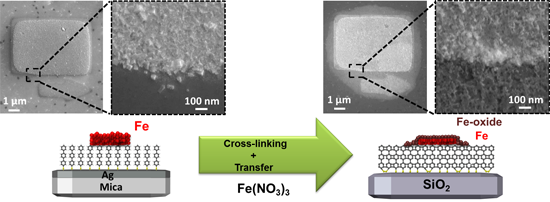
- substrate. Consequently, EBISA is feasible on a SAM of TPT molecules with Fe(CO)5 but fails on the same substrate with Co(CO)3NO. This type of chemical selectivity was reported before on other substrates such as SURMOFs [16][17]. In contrast, on thin layers of porphyrin molecules EBISA was successful with
- were studied as precursors. We could show that EBID is successful with both precursors, whereas EBISA only works with Fe(CO)5. This type of chemical selectivity was already reported in previous studies on SURMOFs [16][17]. For SAMs, we assume that the active species that leads to the dissociation of Fe


PEG/PEI-functionalized single-walled carbon nanotubes as delivery carriers for doxorubicin: synthesis, characterization, and in vitro evaluation
Beilstein J. Nanotechnol. 2020, 11, 1728–1741, doi:10.3762/bjnano.11.155
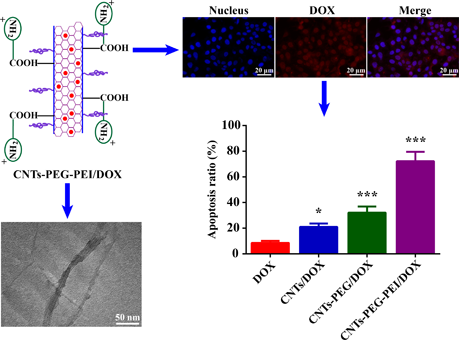
- chemotherapeutic agents to distinguish cancer cells from normal cells due to nonspecific distribution and lack of selectivity results in severe toxic side effects for health [1][2]. Therefore, a variety of nanoscale delivery systems have been designed for the controlled release of chemotherapy drugs to decrease




Analysis of catalyst surface wetting: the early stage of epitaxial germanium nanowire growth
Beilstein J. Nanotechnol. 2020, 11, 1371–1380, doi:10.3762/bjnano.11.121
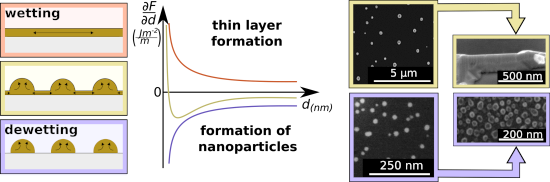
- applications. Surface treatment, for example, modifies the wetting behaviour of active fluids on composite materials or porous media to increase the efficiency and selectivity of catalytic processes [1]. Droplet-based microfluidics, including on-chip and off-chip incubation in immiscible phases, even developed


Ultrasensitive detection of cadmium ions using a microcantilever-based piezoresistive sensor for groundwater
Beilstein J. Nanotechnol. 2020, 11, 1242–1253, doi:10.3762/bjnano.11.108
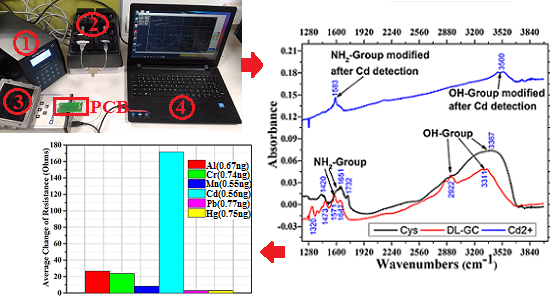
- -linked for selectivity. We have cross-linked the amine group with ᴅʟ-glyceraldehyde at pH 7 to obtain a free –OH group (a Lewis acid) for capturing Cd(II). The pKa value of 12.6 of ᴅʟ-glyceraldehyde yield a strong copmplex of the –OH group with cadmium [34] after blocking the –NH2 group of cysteamine
- change in piezoresistance was around 200–300 Ω for each microcantilever. These results show the selectivity of the proposed method for Cd(II) with respect to other HMIs. It is also evident that the microcantilever in channel 5 (Figure 4c) shows a non-linear response. The rationale behind this is that no
- selectivity for Cd(II) than for other heavy metals. The average value of change in piezoresistance of the Au-Cys-DL-GC-coated microcantilevers is approximately 130–240 Ω for Cd(II) and 5–30 Ω for the other injected heavy metals. The total value of the average change in piezoresistance for a concentration of




Applications of superparamagnetic iron oxide nanoparticles in drug and therapeutic delivery, and biotechnological advancements
Beilstein J. Nanotechnol. 2020, 11, 1092–1109, doi:10.3762/bjnano.11.94


Key for crossing the BBB with nanoparticles: the rational design
Beilstein J. Nanotechnol. 2020, 11, 866–883, doi:10.3762/bjnano.11.72
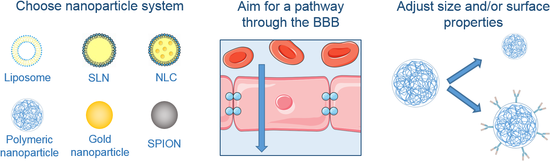
- ). Unfortunately, most drugs cannot pass the BBB through physiological pathways due to the extreme selectivity of the barrier. This restricts systemic therapeutic treatments for most CNS diseases. Different strategies have been suggested to deliver drugs to the brain (Figure 2). First, drugs can be delivered to


Hexagonal boron nitride: a review of the emerging material platform for single-photon sources and the spin–photon interface
Beilstein J. Nanotechnol. 2020, 11, 740–769, doi:10.3762/bjnano.11.61