


Search results
Search for "sensing" in Full Text gives 519 result(s) in Beilstein Journal of Nanotechnology. Showing first 200.
Frequency-dependent nanomechanical profiling for medical diagnosis
Beilstein J. Nanotechnol. 2022, 13, 1483–1489, doi:10.3762/bjnano.13.122
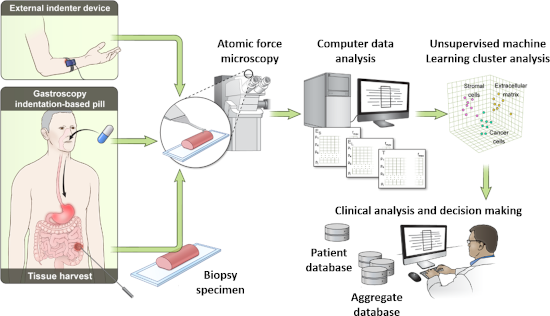
- nanomechanical measurements into medical diagnosis, which includes specialized in vivo sensing, computer analysis (AFM force spectroscopy analysis), communication with the healthcare provider, and mining of the aggregate community database. Given the mechanical nature of AFM, the above strategy naturally fits
- optical imaging, the device could be equipped with one or more piezoelectrically excited membranes coupled with a sensing mechanism, such as an AFM cantilever or other type of mechanical sensor (similar stand-alone developments already exist [31][32]). The mechanical response of the membrane could be
- measured while it is in close contact with the surrounding tissue. Similar developments could be envisioned for measurements inside veins or arteries, in which case the sensing device could be inserted by means of a catheter, such as those already in use [33]. In this case, greater miniaturization would be


Rapid and sensitive detection of box turtles using an electrochemical DNA biosensor based on a gold/graphene nanocomposite
Beilstein J. Nanotechnol. 2022, 13, 1458–1472, doi:10.3762/bjnano.13.120
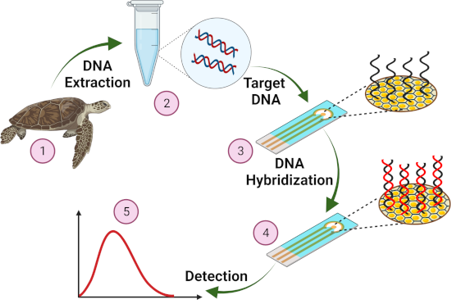
- hybridisation. As an intercalator for dsDNA, MB was used. The MB intercalates within Watson–Crick base pairs of dsDNA through a thread-like embolism technique. Thus, the sensing signal is based on the accumulation of MB, which is proportional to the hybridised DNA concentration. Thus, it can easily



Facile preparation of Au- and BODIPY-grafted lipid nanoparticles for synergized photothermal therapy
Beilstein J. Nanotechnol. 2022, 13, 1432–1444, doi:10.3762/bjnano.13.118
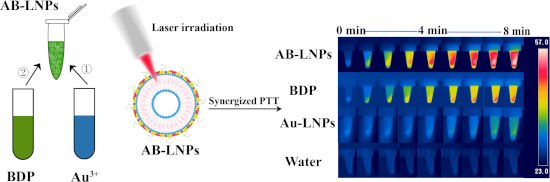
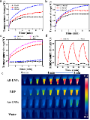
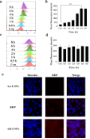
- that received a single intravenous dose of commercial AuNPs still showed high gold concentrations in the liver at day 28 [5]. To reduce tissue retention of AuNPs, ultrasmall gold nanoclusters with renal clearance ability were developed for imaging and sensing [6][7]. Nevertheless, they were not




Double-layer symmetric gratings with bound states in the continuum for dual-band high-Q optical sensing
Beilstein J. Nanotechnol. 2022, 13, 1408–1417, doi:10.3762/bjnano.13.116
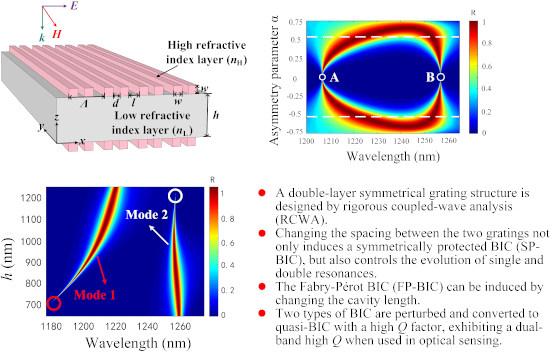
- achieved with the highest sensitivity of 453 nm/RIU and a maximum figure of merit (FOM) of 9808. Such dual-band high-Q resonator is expected to have promising applications in multi-wavelength sensing and nonlinear optics. Keywords: bound states in the continuum; dual band; high quality factor; localized
- optical field; nonlinear optics; optical sensing; Introduction High quality (Q) factor resonance in nanophotonics has attracted considerable attention in the past decades due to its wide applications in narrow-band filters [1], nonlinear optics [2], optical sensors [3] and lasers [4]. To date, most
- grating (HCG) structures in periodic subwavelengths [9][10]. Among them, HCG structures built on silicon-on-insulator (SOI) substrates establish a new platform for integrated optics as well as optical sensing [11][12] owing to its high reflectivity in bandwidth (>99%) and compatibility with the


Enhanced electronic transport properties of Te roll-like nanostructures
Beilstein J. Nanotechnol. 2022, 13, 1284–1291, doi:10.3762/bjnano.13.106
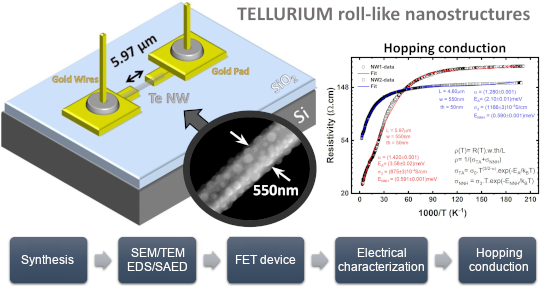
- Earth’s crust and a well-known p-type and narrow-bandgap (≈0.35 eV at room temperature) semiconductor material. Tellurium is widely used in thermoelectric devices, piezoelectric devices, photoconductive devices, gas sensing, nonlinear optical devices, solar cells, photonic crystals, holographic recording
- ) = 881 cm2/V·s) in these nanostructures. Thermoelectric devices, piezoelectric devices, photoconductive devices, gas sensing, solar cells, and field-effect transistors would have better performance if the mobility of charge carriers in the active region of the devices was greater. In addition, the low




Studies of probe tip materials by atomic force microscopy: a review
Beilstein J. Nanotechnol. 2022, 13, 1256–1267, doi:10.3762/bjnano.13.104
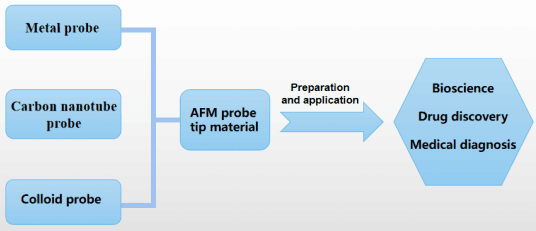
- properties, and thus the fluorescence emission can be tuned by controlling different sizes. Due to their unique electronic, physical, and optical properties, metal nanoclusters have attracted great interest in recent years for electronic devices, catalysis, bioimaging, and chemical sensing [18][19][20][21
- integration for chemical or biological sensing. Large size colloidal probe Large colloidal probes are widely used to study the mechanics of samples with weaker interaction forces and local variations over a large contact range, and large CPs enable a better comparison of the results achieved in AFM compared
A super-oscillatory step-zoom metalens for visible light
Beilstein J. Nanotechnol. 2022, 13, 1220–1227, doi:10.3762/bjnano.13.101
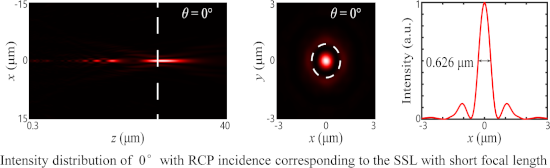
- of 0.5 λ/NA, where λ is the wavelength and NA is the numerical aperture [1]. Super-resolution optical imaging is of significant scientific and application value, which may lead to a revolution in various fields, such as optical microscopy, optical remote sensing, subwavelength lithography, and ultra


Design of surface nanostructures for chirality sensing based on quartz crystal microbalance
Beilstein J. Nanotechnol. 2022, 13, 1201–1219, doi:10.3762/bjnano.13.100
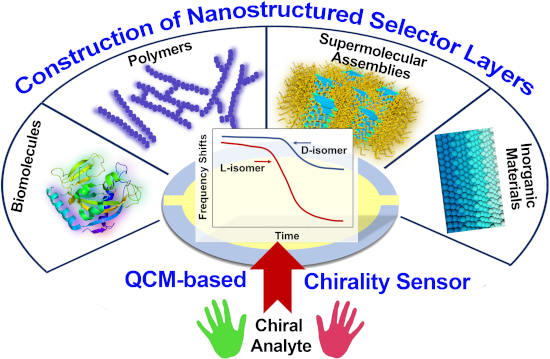
- for various sensing applications, including chirality detection due to the high sensitivity to nanogram or picogram mass changes, fast response, real-time detection, easy operation, suitability in different media, and low experimental cost. The sensing performance of QCM is dependent on the surface
- design of the recognition layers. Various strategies have been employed for studying the relationship between the structural features and the specific detection of chiral isomers. This review provides an overview of the construction of chiral sensing layers by various nanostructures and materials in the
- QCM system, which include organic molecules, supermolecular assemblies, inorganic nanostructures, and metal surfaces. The sensing mechanisms based on these surface nanostructures and the related potentials for chiral detection by the QCM system are also summarized. Keywords: assembled nanostructure


Recent advances in green carbon dots (2015–2022): synthesis, metal ion sensing, and biological applications
Beilstein J. Nanotechnol. 2022, 13, 1068–1107, doi:10.3762/bjnano.13.93
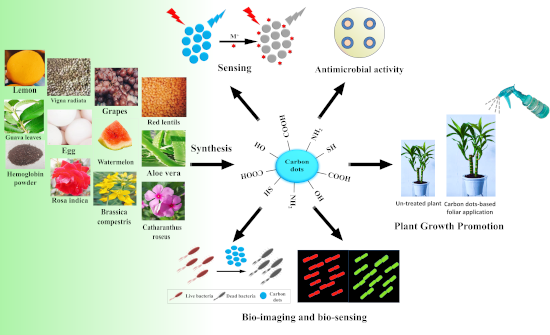
- sensing, bioimaging, catalysis, medicine, optoelectronics, and drug delivery due to their unique properties, that is, low cytotoxicity, cytocompatibility, water-solubility, multicolor wavelength tuned emission, photo-stability, easy modification, strong chemical inertness, etc. This review article
- especially focuses on the recent advancement (2015–2022) in the green synthesis of CDs, their application in metal ions sensing and microbial bioimaging, detection, and viability studies as well as their applications in pathogenic control and plant growth promotion. Keywords: bioimaging; carbon dots; carbon
- quantum dots; green synthesis; plant growth promotion; sensing; Introduction Carbon dots (CDs) are a carbon-based nanomaterial with a few nanometers feature sizes. CDs consist of a carbon core, the surface of which is functionalized with various groups. Xu et al. accidentally discovered fluorescent




Spindle-like MIL101(Fe) decorated with Bi2O3 nanoparticles for enhanced degradation of chlortetracycline under visible-light irradiation
Beilstein J. Nanotechnol. 2022, 13, 1038–1050, doi:10.3762/bjnano.13.91
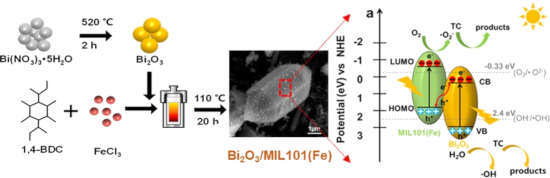
- cavities, and excellent thermal stability [20][21]. These advantages make it appalling to adsorption [22], gaseous capture/separation [23], sensing [24], and drug release applications [25]. Moreover, some MOFs can be excited under UV or visible light and exhibit light harvesting properties due to ligand


Analytical and numerical design of a hybrid Fabry–Perot plano-concave microcavity for hexagonal boron nitride
Beilstein J. Nanotechnol. 2022, 13, 1030–1037, doi:10.3762/bjnano.13.90
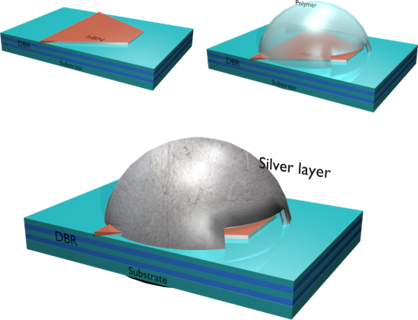
- cavity are to be analyzed inside a cryostat system. The methodology of design of the hybrid Fabry-Perot microcavity is also suited for quantum cryptography applications, provided the emitter’s wavelength is within the telecom range [6], and potential chemical sensing applications [31], since our


Comparing the performance of single and multifrequency Kelvin probe force microscopy techniques in air and water
Beilstein J. Nanotechnol. 2022, 13, 922–943, doi:10.3762/bjnano.13.82
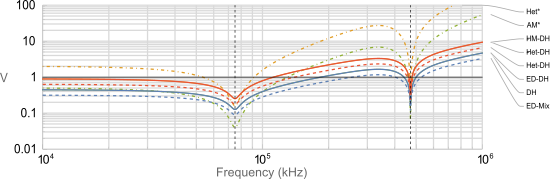
- of corrosion, sensing, solar cells, energy storage devices, and bioelectric interfaces [3][4][5][6][7][8]. Since its first application in 1991 [2], there have been significant developments in the field of KPFM [6][9][10] with significant advances in both temporal [11][12][13][14] and spatial
DNA aptamer selection and construction of an aptasensor based on graphene FETs for Zika virus NS1 protein detection
Beilstein J. Nanotechnol. 2022, 13, 873–881, doi:10.3762/bjnano.13.78
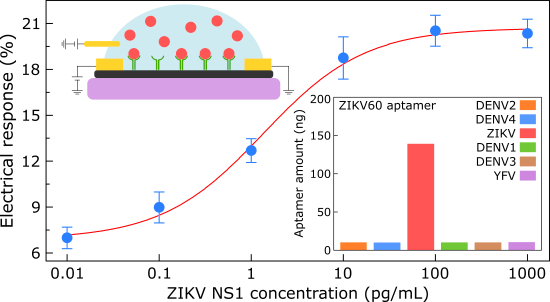
- previously described by our group elsewhere [24]. The dimensions of the sensing region (100 μm × 100 μm) were defined by O2 plasma etching. The source and drain electrodes were fabricated by electron-beam evaporation of 2 nm/100 nm of Ti/Au, and we covered the metal contacts with a 10 μm thick passivation
- average behavior of this group of sensing devices with respect to protein addition. We evaluated the sensor responses as percentage changes in graphene resistance (ΔRSD) at VG = 0.2 V caused by aptamer–protein binding. For more details on how the variations in graphene resistances were measured, see Table



A nonenzymatic reduced graphene oxide-based nanosensor for parathion
Beilstein J. Nanotechnol. 2022, 13, 730–744, doi:10.3762/bjnano.13.65
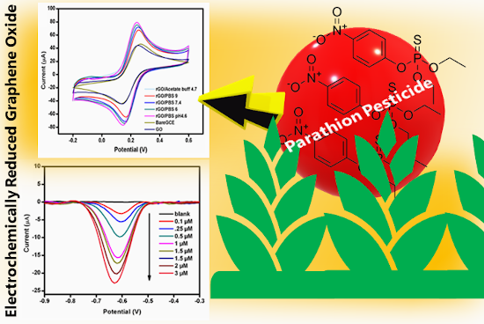
- the fabrication of a robust, nonenzymatic electrochemical-sensing electrode modified with electrochemically reduced graphene oxide (ERGO) to detect PT residues in environmental samples (e.g., soil, water) as well as in vegetables and cereals. The ERGO sensor shows a significantly affected
- activities at the electrode surface, potentially leading to the fabrication of nonenzymatic electrochemical nanosensors for detecting specific OPs on the electroactive surface [2][11][17][18][19]. For example, electrochemical sensing platforms modified with zirconia-embedded PEDOT membrane, graphene
- sensing platform was not cost-effective, stable, and sensitive in order to develop a robust electrochemical nanosensor for on-site monitoring of organophosphates in agricultural samples. To date, no reliable sensing system is available for the rapid quantification of parathion residues in environmental


Modeling a multiple-chain emeraldine gas sensor for NH3 and NO2 detection
Beilstein J. Nanotechnol. 2022, 13, 721–729, doi:10.3762/bjnano.13.64
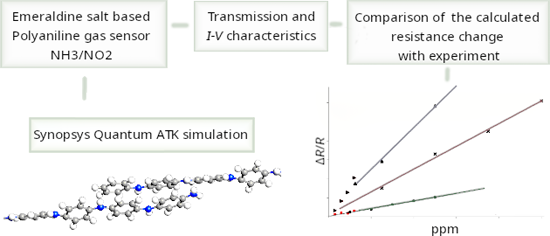
- Hana Sustkova Jan Voves Faculty of Electrical Engineering, Czech Technical University in Prague, Technicka 2, Prague 6, Czech Republic 10.3762/bjnano.13.64 Abstract This paper describes atomistic device models of a multiple-chain polyaniline (PANI) gas sensing component, utilizing the non
- it shows a resistance change when gas molecules are in the vicinity of the chain. Interesting for this application could be the detection of NH3 or NO2 [5]. Mechanism of Gas Sensing When gas molecules interact with the PANI chain, the resistance of the bulk material changes. For example, ammonia gas
- nitrogen dioxide containing a flexible PANI thin film sensing area deposited on interleaved electrodes were produced by Posta et al. [13] and by Kroutil and co-workers [7]. In the experiments of Posta and Kroutil, the gas sensors for ammonia and nitrogen dioxide were exposed for 20 min to synthetic air


Tunable high-quality-factor absorption in a graphene monolayer based on quasi-bound states in the continuum
Beilstein J. Nanotechnol. 2022, 13, 675–681, doi:10.3762/bjnano.13.59
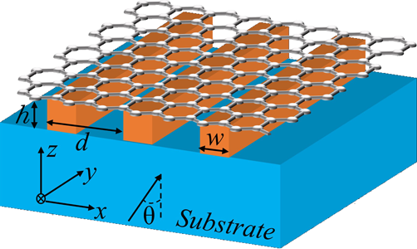
- energy conversion, while narrow-band absorbers [9][10][11][12] have great potential in sensing and monochromatic light detecting. An example is the application of narrow-band absorbers in refractive index sensing [13]. When the absorbers are surrounded by gas or liquid, the resonance wavelength will
- shift as the background refractive index changes [14]. Narrow-band absorbers have attracted attention in practical applications due to the absorption with high quality factor (Q-factor), which is beneficial to improve the sensing performance. Up to now, many strategies for improving the Q-factor have


Effects of substrate stiffness on the viscoelasticity and migration of prostate cancer cells examined by atomic force microscopy
Beilstein J. Nanotechnol. 2022, 13, 560–569, doi:10.3762/bjnano.13.47
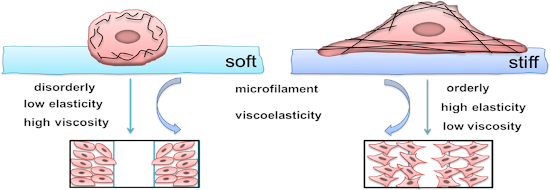
- roughness. Cytoskeletal microfilaments of prostate cancer cells respond to changes in substrate stiffness We further considered how the role of cell sensing substrates makes cancer cells more capable of migrating on stiff substrates. The distribution and content of F-actin within the cells was examined
- imaging of the cell membrane. We observed that prostate cancer cells exhibit a strong migration ability by sensing changes in the extracellular environment through actin polymerization and filamentous pseudopods. This is because the role of actin polymerisation in cell adhesion structure formation



Detection and imaging of Hg(II) in vivo using glutathione-functionalized gold nanoparticles
Beilstein J. Nanotechnol. 2022, 13, 549–559, doi:10.3762/bjnano.13.46
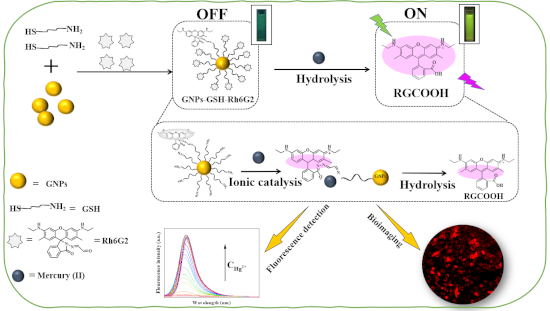
- University, Waurn Ponds, Victoria 3216, Australia 10.3762/bjnano.13.46 Abstract The optical and biological properties of functionalized gold nanoparticles (GNPs) have been widely used in sensing applications. GNPs have a strong binding ability to thiol groups. Furthermore, thiols are used to bind functional
- biocompatibility, large specific surface area, and remarkable photoelectric properties [1][2][3]. Among them, gold nanoparticles (GNPs) have been frequently employed for drug delivery, sensing, imaging, and photodynamic therapy owing to their high extinction coefficient, distinct optical properties, excellent
- cancer cells. In another work, Basu et al. designed a novel sensing system using DNA-functionalized GNPs. GNPs have a strong binding affinity to phosphate and sugar groups in DNA [20]. The combined GNPs-DNA has unique physicochemical properties and was used to detect Mg2+. Furthermore, Liu et al


Zinc oxide nanostructures for fluorescence and Raman signal enhancement: a review
Beilstein J. Nanotechnol. 2022, 13, 472–490, doi:10.3762/bjnano.13.40


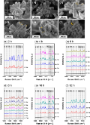


A chemiresistive sensor array based on polyaniline nanocomposites and machine learning classification
Beilstein J. Nanotechnol. 2022, 13, 411–423, doi:10.3762/bjnano.13.34
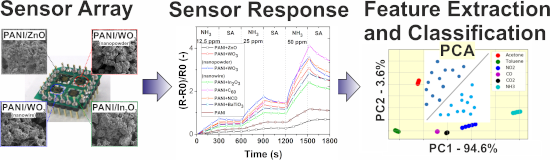
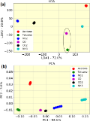
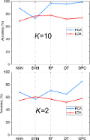
- composed by seven different conductive sensors with composite sensing layers are measured and analyzed using machine learning. Statistical tools, such as principal component analysis and linear discriminant analysis, are used as dimensionality reduction methods. Five different classification methods
- powerful tool to address the abovementioned drawbacks is the implementation of a multisensor array combined with appropriate pattern recognition and classification tools [6]. Recently, classification in gas sensing applications has been carried out by principal component analysis to identify the difference
- (carbon nanotubes (CNT), SnO2, TiO2) materials in a gas sensors based on nanocomposite layers with good sensitivity, temperature stability, reversibility, which was operating at room temperature. Herein, we extended our study by applying other nanocomposite sensing layers, namely PANI/ZnO, PANI/WO3




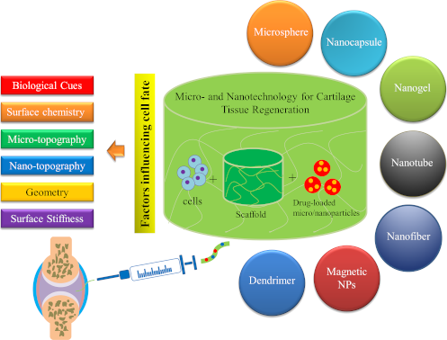
Micro- and nanotechnology in biomedical engineering for cartilage tissue regeneration in osteoarthritis
Beilstein J. Nanotechnol. 2022, 13, 363–389, doi:10.3762/bjnano.13.31


Interfacial nanoarchitectonics for ZIF-8 membranes with enhanced gas separation
Beilstein J. Nanotechnol. 2022, 13, 313–324, doi:10.3762/bjnano.13.26
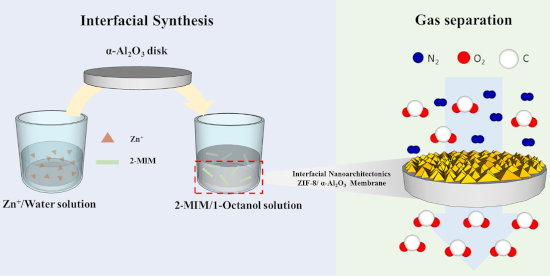
- ]. Given these structural properties, MOFs are widely applied to gas storage [18], gas/liquid separation [18][19][20], energy storage [21][22][23], sensing [24], catalysis [25], electrochemistry [26], and bio-related fields [27]. Zeolitic imidazolate frameworks (ZIFs), a subclass of MOFs, comprise


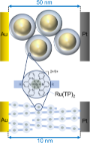
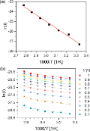
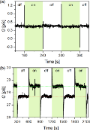
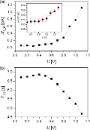
Impact of device design on the electronic and optoelectronic properties of integrated Ru-terpyridine complexes
Beilstein J. Nanotechnol. 2022, 13, 219–229, doi:10.3762/bjnano.13.16
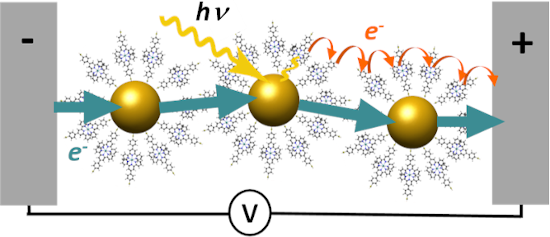
- . Molecular engineering is required to design and assemble molecules or supramolecular systems with specific functions and to ensure the device performance. Favorable molecular systems are capable of performing electronic operations such as data storage, rectification, sensing or switching. In this regard


Engineered titania nanomaterials in advanced clinical applications
Beilstein J. Nanotechnol. 2022, 13, 201–218, doi:10.3762/bjnano.13.15
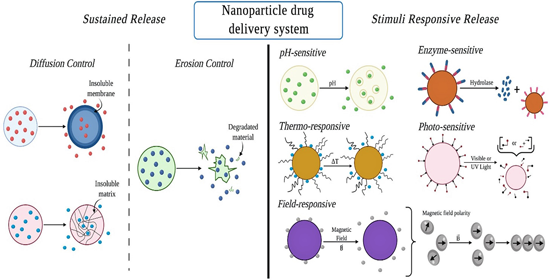
- nanostructures such as nanotubes and nanowires have been utilized in photoelectrochemical sensing for the rapid and precise identification of biological analytes at low concentrations, useful for clinical diagnosis. These nanostructures have been employed for sensing humidity, oxygen, and hydrogen, inclusive of


Piezoelectric nanogenerator for bio-mechanical strain measurement
Beilstein J. Nanotechnol. 2022, 13, 192–200, doi:10.3762/bjnano.13.14
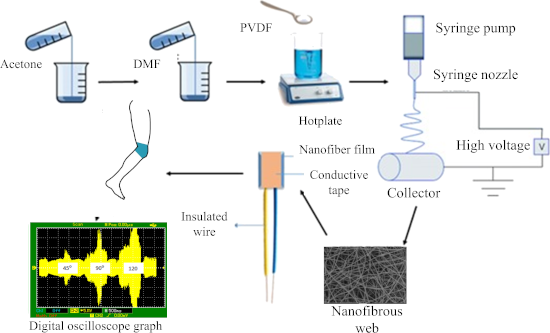
- can also be used under mats and floors so the pressure due to footsteps can be utilized as a source to generate energy [13]. Besides these, piezoelectric sensors can also be used for sensing human body motion and monitoring physical health parameters, such as electrocardiograms [14][15][16][17][18][19





