


Search results
Search for "silver" in Full Text gives 486 result(s) in Beilstein Journal of Nanotechnology. Showing first 200.
Non-stoichiometric magnetite as catalyst for the photocatalytic degradation of phenol and 2,6-dibromo-4-methylphenol – a new approach in water treatment
Beilstein J. Nanotechnol. 2022, 13, 1531–1540, doi:10.3762/bjnano.13.126
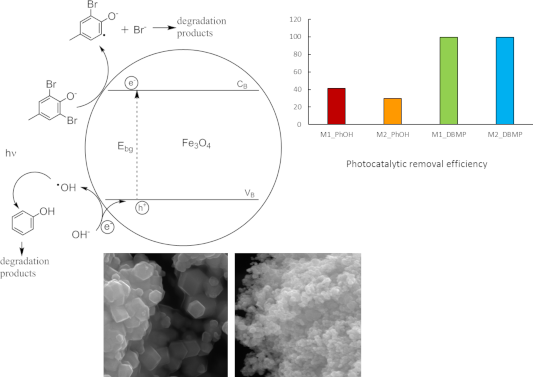
- 1 × 10⁻⁴ to 1 × 10⁻² mol·L−1 were used to quantify PhOH and DBMP. The concentration of dissolved bromide ions was determined potentiometrically with a bromide ion-selective electrode (EBr-01, Hydromet, Poland) with a silver chloride electrode (RL-100, Hydromet, Poland) as a reference electrode and a


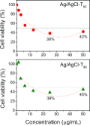
In search of cytotoxic selectivity on cancer cells with biogenically synthesized Ag/AgCl nanoparticles
Beilstein J. Nanotechnol. 2022, 13, 1505–1519, doi:10.3762/bjnano.13.124
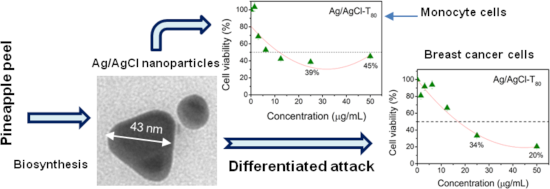
- , Saltillo Coahuila, 25294, México 10.3762/bjnano.13.124 Abstract Green synthesis may be a useful approach to achieve selective cytotoxicity of silver nanoparticles on cancer cells and healthy cells. In this study, the concomitant biosynthesis of silver (Ag)/silver chloride (AgCl) nanoparticles from
- comparison to monocytes. Keywords: cancer cells; cytotoxic behavior; green synthesis; pineapple extract; silver chloride nanoparticles; silver nanoparticles; structural characterization; Introduction The study of metallic nanoparticle synthesis by green methods is gaining importance, especially in cases
- where plant extracts are used to synthesize nanoparticles. The nanoparticles can be produced in a simple, inexpensive, and scalable way, with low reaction time and in aqueous media. Since no toxic by-products are generated, these methods are eco-friendly [1]. Silver nanoparticles (AgNPs) are commonly





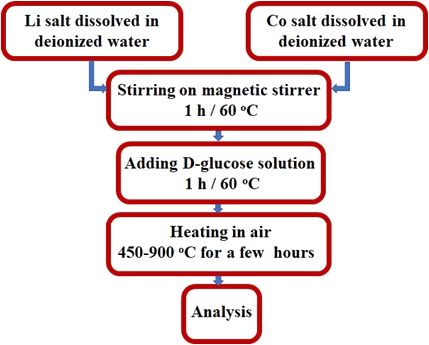
Structural studies and selected physical investigations of LiCoO2 obtained by combustion synthesis
Beilstein J. Nanotechnol. 2022, 13, 1473–1482, doi:10.3762/bjnano.13.121
- with silver paste (Hans Wolbring GmbH) to form electrodes. IS measurements were performed using a Novocontrol AlphaA Broadband Dielectric/Impedance Spectrometer (Novocontrol GmbH) at room temperature. Measurements were carried out in the frequency range from 1 Hz to 1 MHz with an oscillation voltage of




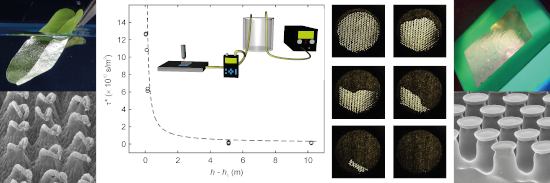
Dry under water: air retaining properties of large-scale elastomer foils covered with mushroom-shaped surface microstructures
Beilstein J. Nanotechnol. 2022, 13, 1370–1379, doi:10.3762/bjnano.13.113
- allow for a persistent air layer. The jar was closed and stored on a rack in the office. After one month, the samples were taken out of the water and dried in air. The dried samples were mounted to aluminum stubs and fixated using silver paste. To enhance the conductivity, the samples were sputtered


Supramolecular assembly of pentamidine and polymeric cyclodextrin bimetallic core–shell nanoarchitectures
Beilstein J. Nanotechnol. 2022, 13, 1361–1369, doi:10.3762/bjnano.13.112
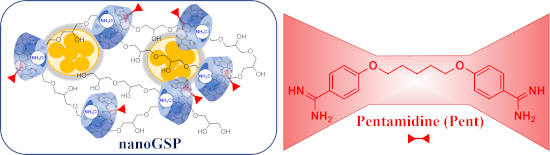
- monometallic (nanoG) structures or core–shell bimetallic (nanoGS) architectures with an external silver layer. Here, we describe the preparation of a supramolecular assembly between nanoGS and pentamidine, an antileishmanial drug endowed with a wide range of therapeutic properties (i.e., antimicrobial, anti
- during the reduction/stabilization of metal NPs was investigated for the first time by NMR spectroscopy. Keywords: antimicrobial agents; bimetallic nanoparticles; gold/silver core–shell; Leishmania; pentamidine; polycyclodextrin; Introduction Noble metal nanoparticles (NPs), in particular those
- composed of gold and/or silver, are versatile agents endowed with unique physicochemical properties, which recently have drawn great interest for a variety of applications ranging from catalysis to nanomedicine [1][2][3]. The size of the NPs is a key parameter that defines their optical properties


Near-infrared photoactive Ag-Zn-Ga-S-Se quantum dots for high-performance quantum dot-sensitized solar cells
Beilstein J. Nanotechnol. 2022, 13, 1337–1344, doi:10.3762/bjnano.13.110
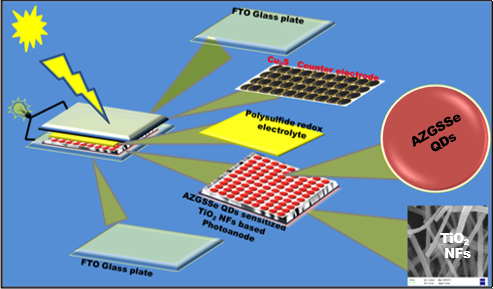
- sensitizers to fabricate QDSCs. The QDSC constructed by using AZGSSe QD-sensitized TiO2 nanofibers (AZGSSe/TiO2) as the photoanode showed a PCE of 4.91%. Experimental Materials Silver(I) chloride (AgCl), selenium powder (Se), mercaptopropionic acid (MPA), zinc(II) chloride (ZnCl2), gallium(III) chloride


Studies of probe tip materials by atomic force microscopy: a review
Beilstein J. Nanotechnol. 2022, 13, 1256–1267, doi:10.3762/bjnano.13.104
- , dimethoate, and phorate were broken. The hydrolysis products contain sulfhydryl groups that bind to the silver atoms on the surface of the silver nanoclusters. The formation of non-fluorescent polymers resulted in a significant quenching of the fluorescence of the silver nanoclusters. Cu2+ effectively
- quenched the fluorescence of DNA-templated silver nanoclusters (DNA-AgNCs), while the strong chelation between glyphosate and Cu2+ restored the fluorescence of the nanoclusters. The method showed good linearity in the concentration range of 1 ng/mL–50 ng/mL, and the detection limit reached 0.2 ng/mL. In
- nanoclusters while their fluorescence quantum yields and stability are improved to a larger extent. Gold-silver bimetallic nanoclusters (AuAgNCs) exhibit enhanced luminescence efficiency and photostability due to Förster resonance energy transfer (FRET) and synergistic effects. Zhang et al. [27] synthesized
A cantilever-based, ultrahigh-vacuum, low-temperature scanning probe instrument for multidimensional scanning force microscopy
Beilstein J. Nanotechnol. 2022, 13, 1120–1140, doi:10.3762/bjnano.13.95
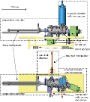
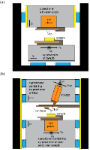
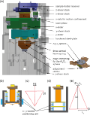
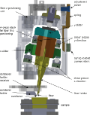
- oscillation, temperature sensor (below the sample holder), and heaters, silver-coated Cu wires (DABURN 2451 [52]) are used. For electrical screening, wires carrying opposite voltages (X+ and X−, Y+ and Y− for the scanner as well as W+ and W− for the w-piezo) are twisted. Furthermore, groups of twisted pairs






Recent advances in green carbon dots (2015–2022): synthesis, metal ion sensing, and biological applications
Beilstein J. Nanotechnol. 2022, 13, 1068–1107, doi:10.3762/bjnano.13.93
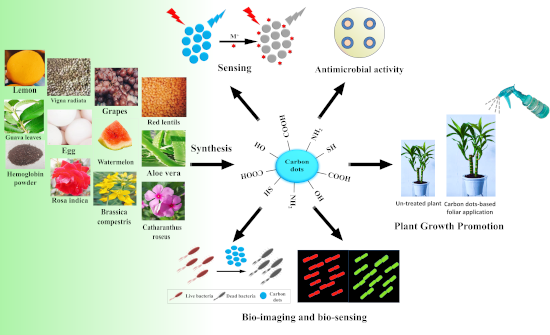
- solvent casting process after the ACMCDs were supported by silver nanoparticles, employing them as both a reducing agent and a template. The nanocomposite antibacterial film is anticipated to have a lot of potential applications such as food packaging, water purification, and disinfecting sanitary




Biomimetic chitosan with biocomposite nanomaterials for bone tissue repair and regeneration
Beilstein J. Nanotechnol. 2022, 13, 1051–1067, doi:10.3762/bjnano.13.92
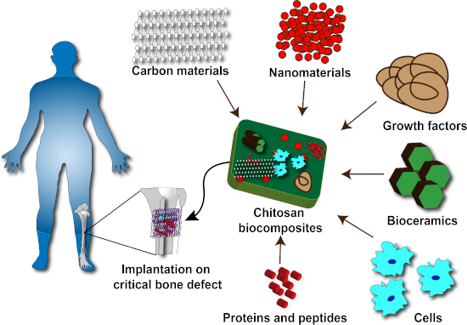
- , researchers have tried several ways to develop different materials using chitosan-based nanocomposites of silver, copper, gold, zinc oxide, titanium oxide, carbon nanotubes, graphene oxide, and biosilica. The combination of materials helps in the expression of ideal bone formation genes of alkaline
- tissue engineering applications. Keywords: antibacterial activity; biomimetic materials; bone graft substitutes; chitosan; gold; osteoinductive; silver; Introduction Bone-related defects and diseases are a serious concern to the life of patients [1]. Autografts, allografts, and synthetic grafts are
- , uniform raw materials quality, and are abundant. Chitosan is a natural polymeric substance and an extensively studied material for bone tissue engineering due to its biocompatibility, biodegradability, and antimicrobial properties [7][8][9][10]. Chitosan in combination with silver, gold, copper, titanium
Analytical and numerical design of a hybrid Fabry–Perot plano-concave microcavity for hexagonal boron nitride
Beilstein J. Nanotechnol. 2022, 13, 1030–1037, doi:10.3762/bjnano.13.90
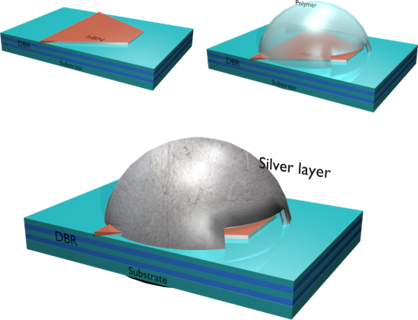
- . Afterwards an 80 nm silver layer could be added, by thermal evaporative deposition, on top of the concave shape polymer to ensure a high reflectivity inside our microcavity. When designing the concave shape polymer a small rectangular aperture at its edge must be taken into account in the fabrication step
- silver (Ag), polymer (pol), air, hBN and DBR layer. The transfer matrices Lpol and Lair are defined as [25]: where G1,2 = arctan(L1,2λ0/n1,2πW01,02) is the Guoy phase shift in the air (n1 = 1) and polymer layer, respectively, where W01 = W02. The transmittance of the microcavity is calculated, from the
- cavity, with an in-plane dipole inside, for a silver layer thickness of 80 nm. Identical values for the geometrical parameters previously mentioned (R2, L2, L1), except for R1 = 7.7 μm, were taken for the FDTD simulations, where an in-plane dipole emitter sits at the surface of the hBN layer to ensure a


Electrocatalytic oxygen reduction activity of AgCoCu oxides on reduced graphene oxide in alkaline media
Beilstein J. Nanotechnol. 2022, 13, 1020–1029, doi:10.3762/bjnano.13.89
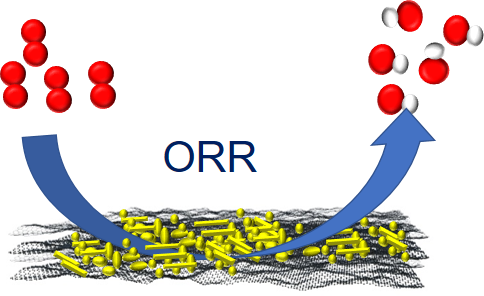
- , Faculty of Engineering and Technology, SRM Institute of Science and Technology, Kattankulathur – 603203, Tamil Nadu, India 10.3762/bjnano.13.89 Abstract Silver-based electrocatalysts as promising substitutes for platinum materials for cathodic oxygen electroreduction have been extensively researched
- ; microwave synthesis; oxygen electroreduction; reduced graphene oxide; silver NPs; Introduction Fuel cells and rechargeable metal–air batteries have become an integral part of the renewable energy system because of their superior efficiency, high power density, and reliability. Also, they are
- effects, and carbon monoxide poisoning [16][17]. The electrocatalytic reactivity (mechanism and kinetics) of silver has similarities to that of Pt regarding the ORR performance, with considerably high onset potential, half-wave potential, current density, and number of transferred electrons. The important


Effects of focused electron beam irradiation parameters on direct nanostructure formation on Ag surfaces
Beilstein J. Nanotechnol. 2022, 13, 1004–1010, doi:10.3762/bjnano.13.87
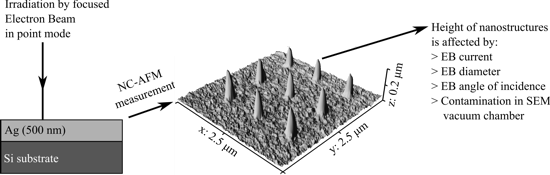
- surfaces undergoing irradiation by a focused electron beam. Keywords: atomic force microscopy; electron beam; lithography; nanostructure; silver; sputtering; surface; Introduction Metallic nanostructures have various uses, including in nano-electro-mechanical systems [1], plasmonic biosensors [2], and
- nanophotonics [3]. They can also serve as catalysts for controlled chemical vapour deposition [4]. While gold is the most widely used material for fabrication of plasmonic nanostructures, silver can offer a less expensive alternative [5][6][7]. Electron beam (EB) lithography is a popular method for the
- distribution there. Under the assumption that carbon and carbon-containing silver areas are more susceptible to N plasma etching, we could theorize that carbon atoms in this particular case have reached up to 140 nm deep within the Ag layer. The carbon diffusion could have been caused by a number of reasons





Bioselectivity of silk protein-based materials and their bio-inspired applications
Beilstein J. Nanotechnol. 2022, 13, 902–921, doi:10.3762/bjnano.13.81


Temperature and chemical effects on the interfacial energy between a Ga–In–Sn eutectic liquid alloy and nanoscopic asperities
Beilstein J. Nanotechnol. 2022, 13, 817–827, doi:10.3762/bjnano.13.72
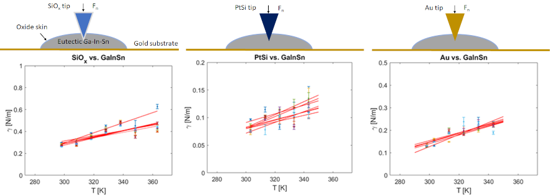
- entropy at higher temperatures. This entropy increase can be rationalized by decreasing the coordination number at a liquid surface at higher temperatures. However, a few exceptions have been observed to take positive values. For pure silver, a positive temperature sensitivity has been observed in the



Hierarchical Bi2WO6/TiO2-nanotube composites derived from natural cellulose for visible-light photocatalytic treatment of pollutants
Beilstein J. Nanotechnol. 2022, 13, 745–762, doi:10.3762/bjnano.13.66
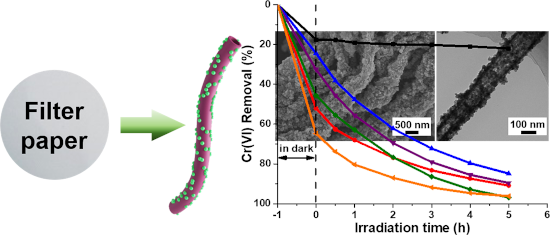
- , anhydrous ethanol, acetone, barium sulfate (BaSO4), rhodamine B, isopropyl alcohol (IPA), N-methylpyrrolidone, ethylenediaminetetraacetic acid disodium salt (EDTA-2Na), silver nitrate (AgNO3), sodium sulfate (Na2SO4), ethylene glycol (EG), potassium dichromate (K2Cr2O7), phosphoric acid (H3PO4), and


A nonenzymatic reduced graphene oxide-based nanosensor for parathion
Beilstein J. Nanotechnol. 2022, 13, 730–744, doi:10.3762/bjnano.13.65
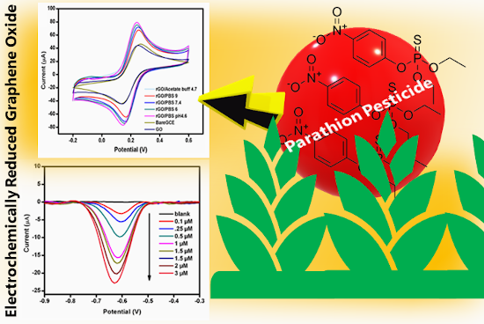
- nanoribbons doped with silver nanoparticles, rGO doped with ZrO2, and CuO–TiO2 hybrid nanocomposites were proposed to detect methyl parathion [19][20][21][22]. Rajaji et al. (2019) modified glassy carbon electrodes with graphene oxide encapsulated 3D porous chalcopyrite (CuFeS2) nanocomposites to detect


Reliable fabrication of transparent conducting films by cascade centrifugation and Langmuir–Blodgett deposition of electrochemically exfoliated graphene
Beilstein J. Nanotechnol. 2022, 13, 666–674, doi:10.3762/bjnano.13.58
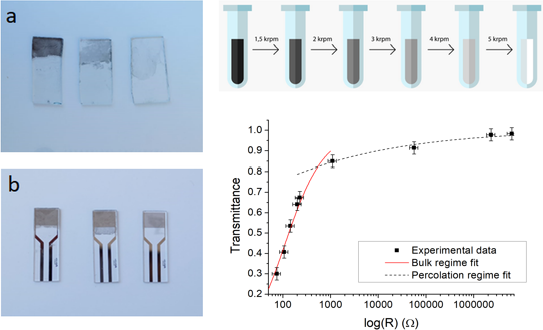
- substrates with dimensions of ca. 2 cm × 1 cm (Figure 2a). Although a great number of different types of substrate materials have been used, such as silica [37], chromium [38], tin [39], silver [40], or platinum [41], glass substrates were used in this paper. Glass is generally a popular choice, not just


Antibacterial activity of a berberine nanoformulation
Beilstein J. Nanotechnol. 2022, 13, 641–652, doi:10.3762/bjnano.13.56
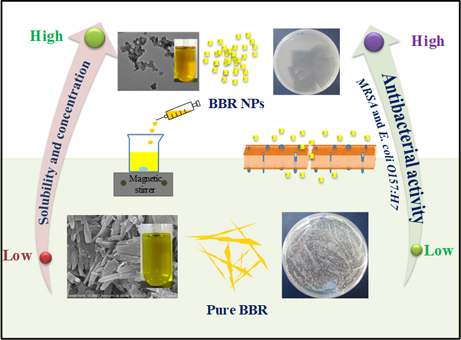
- types of nanoformulations, such as polymer-, lipid-, dendrimer-, graphene-, gold-, or silver-based nanoparticles, have been used for the delivery of BBR [29][30][31]. Yu et al. [29] prepared poly(ethylene glycol)–lipid–poly(lactic-co-glycolic acid) nanoparticles loaded with BBR to improve the oral



Sodium doping in brookite TiO2 enhances its photocatalytic activity
Beilstein J. Nanotechnol. 2022, 13, 599–609, doi:10.3762/bjnano.13.52
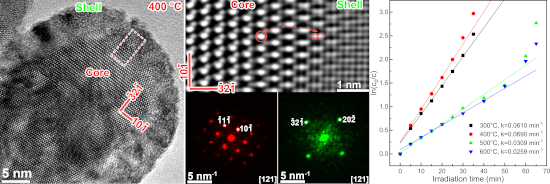
- increased due to its importance for photocatalytic application. Ohtani et al. reported that extra-fine brookite TiO2 exhibited good photocatalytic activity for redox reactions in aqueous propan-2-ol and silver sulfate solution [7]. Kobayashi et al. suggested that the photoactivity of brookite nanoparticles


Zinc oxide nanostructures for fluorescence and Raman signal enhancement: a review
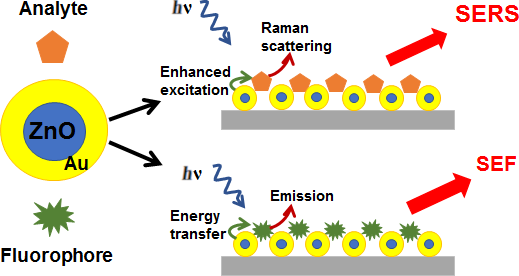
Beilstein J. Nanotechnol. 2022, 13, 472–490, doi:10.3762/bjnano.13.40




Controllable two- and three-state magnetization switching in single-layer epitaxial Pd1−xFex films and an epitaxial Pd0.92Fe0.08/Ag/Pd0.96Fe0.04 heterostructure
Beilstein J. Nanotechnol. 2022, 13, 334–343, doi:10.3762/bjnano.13.28
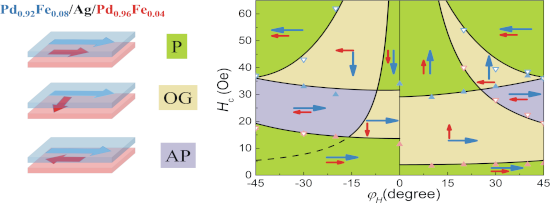
- the silver layer. All AMR and VSM experiments were carried out with the PPMS-9 system (Quantum Design). Results Сurrent along the [100] direction We start with the presentation of the results for a sample S00 of the Pd0.92Fe0.08 film where the electrical current flowed along the [100] direction of the
- PdFe1 and PdFe2 layers. It is achieved by introducing the non-magnetic spacer layer N of silver satisfying the epitaxial growth conditions. The different coercive fields were obtained choosing the Pd0.92Fe0.08 and Pd0.96Fe0.04 compositions for the ferromagnetic PdFe1 and PdFe2 layers [18]. Figure 6


Engineered titania nanomaterials in advanced clinical applications
Beilstein J. Nanotechnol. 2022, 13, 201–218, doi:10.3762/bjnano.13.15
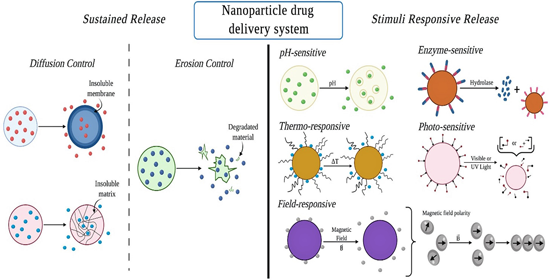
- (GNP2) presented good osseointegration [61]. In another recent study, TiO2 nanotubes (TNT) were grown on the surface of medical-grade titanium alloy and then coated with silver nps (Ag nps) to improve the antimicrobial properties of the implants. Moreover, to avoid direct contact of Ag nps with human
- TiO2 nps to kill even desiccation-resistant microbes, their value has increased in the food, cosmetic, and drug industries. Recently, glass surfaces coated with silver and TiO2 nps showed promising results against bacteria S. aureus (Gram positive) and E. coli (Gram negative) as compared to the
- -doped titania nps and undoped titania nps. Interestingly, polyester fabric modified by silver-doped TiO2 nps showed the best bactericidal property [98]. Huppmann et al. designed an antimicrobial polymer for medical and sanitary applications using TiO2 nps as a filler in a medical-grade polypropylene (PP


Sputtering onto liquids: a critical review
Beilstein J. Nanotechnol. 2022, 13, 10–53, doi:10.3762/bjnano.13.2
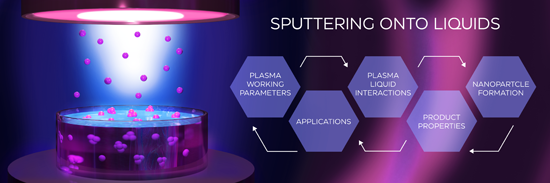
- research papers for almost 20 years until 1996 when two research groups reported SoL experiments. Ye et al. studied the formation of silver films on the surface of silicon oil [10] while Wagener et al. prepared silver and aluminium NPs by deposition onto silicon oil using various experimental conditions
- his work stayed almost unnoticed. There had been no sufficient progress regarding the kinetics of NP formation during the 35 years after Takiyama’s work. Studies of pulse radiolysis reduction of silver (Ag) ions showed the presence of small ionic Agрz+ clusters (p = 2–9, z = 1–2) that grow and become
- nuclei of the final NPs [94][95]. Because silver clusters absorb light at different wavelengths than the surface plasmon resonance (SPR) band of Ag NPs (which is used for monitoring of NP growth kinetics by UV–vis spectroscopy) one can spot the induction period on the sigmoidal kinetic curves. Noteworthy






Self-assembly of amino acids toward functional biomaterials
Beilstein J. Nanotechnol. 2021, 12, 1140–1150, doi:10.3762/bjnano.12.85
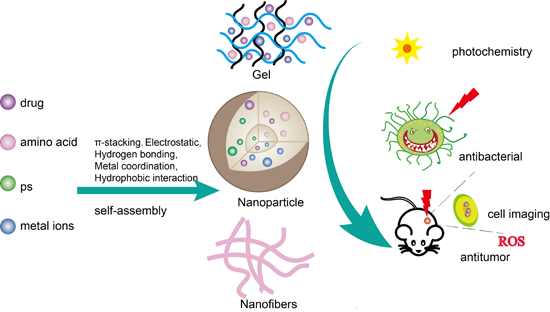
- , the substrate affinity of metal nanoparticles (1.53 mM) is comparable to that of natural lipase (1.27 mM). Metal ions, especially silver ions (Ag+), have been widely studied regarding antibacterial, antifungal, antiviral, anti-inflammatory, anti-angiogenic, and antitumor activities [63][64]. Silver
- metallohydrogels showed fewer toxicological side effects and were highly biocompatible than Ag+ in the administered dosage range. Furthermore, Fmoc-amino acid metallohydrogels tested under the same conditions showed significantly better wound healing than silver sulfadiazine cream and the control group. It has




