Search results
Search for "spatial distribution" in Full Text gives 123 result(s) in Beilstein Journal of Nanotechnology.
Continuum models of focused electron beam induced processing
Beilstein J. Nanotechnol. 2015, 6, 1518–1540, doi:10.3762/bjnano.6.157
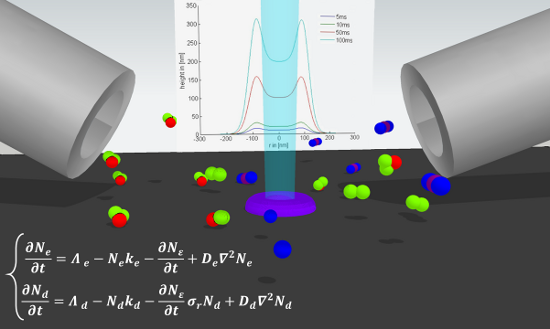
- capillaries this is an enormous computational effort. A reduced capillary length Lr can be entered instead, still giving accurate results. For molecular flow conditions, the spatial distribution of impinging molecules on the substrate is not significantly altered for lengths Lr > 15d. For transient flow


![[Graphic 37]](/bjnano/content/inline/2190-4286-6-157-i117.png?max-width=637&scale=1.18182) and chemisorbed
and chemisorbed ![[Graphic 38]](/bjnano/content/inline/2190-4286-6-157-i118.png?max-width=637&scale=1.18182) adsorbates versus pressure, calcul...
adsorbates versus pressure, calcul...


High sensitivity and high resolution element 3D analysis by a combined SIMS–SPM instrument
Beilstein J. Nanotechnol. 2015, 6, 1091–1099, doi:10.3762/bjnano.6.110
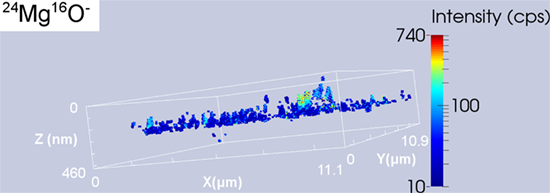
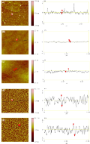
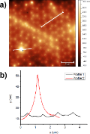
- image, the combined 3D SIMS–AFM image of the PS/PVP sample and a linescan presenting the local sample surface topography of PVP as well as the corresponding CN− secondary ion signal. Because PVP contains nitrogen (in contrast to PS) its spatial distribution can be easily imaged in SIMS by tracking the


Multiscale modeling of lithium ion batteries: thermal aspects
Beilstein J. Nanotechnol. 2015, 6, 987–1007, doi:10.3762/bjnano.6.102


Oxygen-plasma-modified biomimetic nanofibrous scaffolds for enhanced compatibility of cardiovascular implants
Beilstein J. Nanotechnol. 2015, 6, 254–262, doi:10.3762/bjnano.6.24
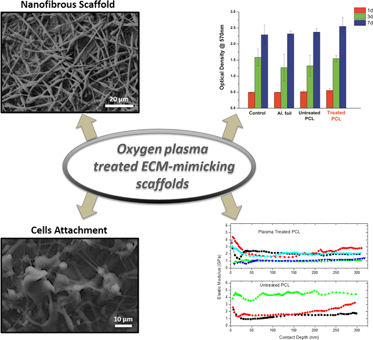
- with the unmodified ones. After seven days of culture, the cells seem to have obtained a spindle-like morphology and especially in the case of the treated scaffolds a notably more uniform spatial distribution of the cells is observed. The morphological analysis through SEM imaging, of the direct


Kelvin probe force microscopy in liquid using electrochemical force microscopy
Beilstein J. Nanotechnol. 2015, 6, 201–214, doi:10.3762/bjnano.6.19
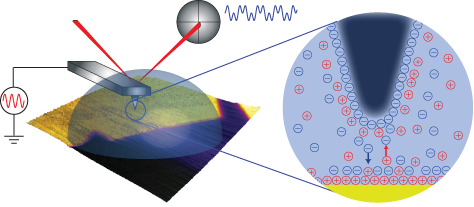
- spatial distribution of the first component demonstrates that PCA separates the overall behavior into metal and insulator regions. The first two PCs contain >97% of the statistically relevant information as shown from the dominance plot in Figure 7a. Loading maps beyond 2nd PC are dominated by noise. Note


![[Graphic 6]](/bjnano/content/inline/2190-4286-6-19-i11.png?max-width=637&scale=1.18182) response collected 200 nm above a grounded Au electrode in (a, b, c) air, (d, e, f) decane an...
response collected 200 nm above a grounded Au electrode in (a, b, c) air, (d, e, f) decane an...


![[Graphic 22]](/bjnano/content/inline/2190-4286-6-19-i27.png?max-width=637&scale=1.18182) spectra [bias-on] collected 500 nm above HOPG in aqueous solutions of increasing salt concent...
spectra [bias-on] collected 500 nm above HOPG in aqueous solutions of increasing salt concent...

![[Graphic 25]](/bjnano/content/inline/2190-4286-6-19-i30.png?max-width=637&scale=1.18182) spectra [bias-on] collected 500 nm above (a) HOPG and (b) Au in milli-Q water (vertical color...
spectra [bias-on] collected 500 nm above (a) HOPG and (b) Au in milli-Q water (vertical color...

![[Graphic 27]](/bjnano/content/inline/2190-4286-6-19-i32.png?max-width=637&scale=1.18182) spectra [bias-on] recorded 500 nm above a HOPG/Au boundary in milli-Q water. T...
spectra [bias-on] recorded 500 nm above a HOPG/Au boundary in milli-Q water. T...

Spectroscopic mapping and selective electronic tuning of molecular orbitals in phosphorescent organometallic complexes – a new strategy for OLED materials
Beilstein J. Nanotechnol. 2014, 5, 2248–2258, doi:10.3762/bjnano.5.234
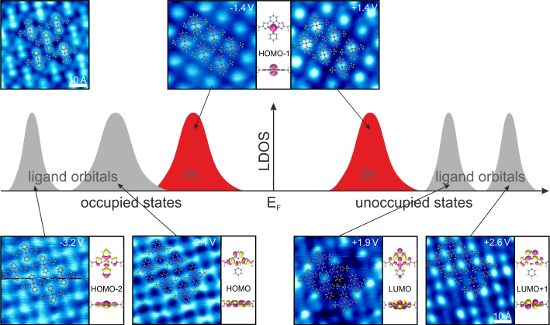
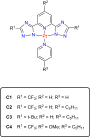
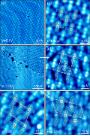
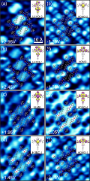
- the local density of states of the sample. Energy-resolved spectral maps (that visualize the spatial distribution of molecular orbitals) were acquired by measuring dI/dV at a fixed bias as a function of lateral position in constant-current mode. For the DFT calculations shown here, Kohn–Sham molecular



Synthesis of Pt nanoparticles and their burrowing into Si due to synergistic effects of ion beam energy losses
Beilstein J. Nanotechnol. 2014, 5, 1864–1872, doi:10.3762/bjnano.5.197
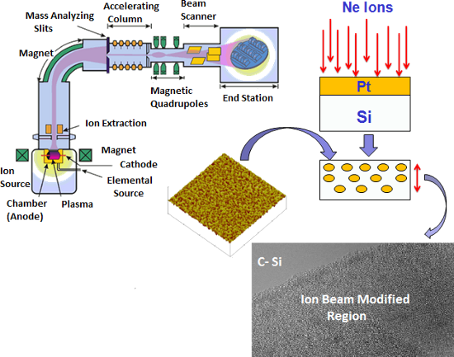
- -dimensional structures of various elements with narrow size distribution is a big challenge for scientists [9][10][11]. Due to certain advantages, namely, the control of growth parameters and spatial distribution, ion beam synthesis of buried nanoparticles (NPs) has received considerable attention in recent
- annealing temperature are chosen to control the growth process leading to the final size distribution of the particles [17]. Homogenous nucleation requires a threshold concentration of implanted materials. Further, annealing may affect the spatial distribution of particles significantly due to thermally



On the structure of grain/interphase boundaries and interfaces
Beilstein J. Nanotechnol. 2014, 5, 1603–1615, doi:10.3762/bjnano.5.172
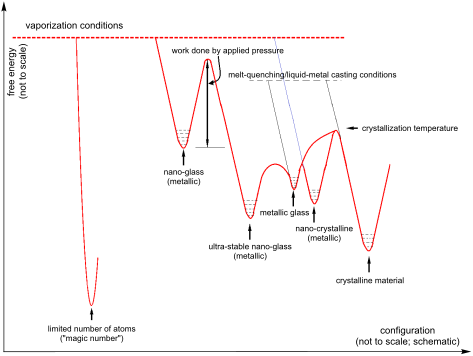
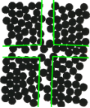
- ) interactions, the spatial distribution of the atoms and electrons, the number of atoms and free volume fraction present in the structural/basic unit and the experimental conditions should serve the purpose. As the development of a quantitative model, which reflects the effects of all these variables is
- electronic interactions and those due to their spatial distribution). It is not clear if such configurations are possible in non-metals and if it is not possible, the reason for the same is not known. Such a structure may have an elastic modulus greater than that of the bulk. Free energy increases even if
- -angle boundary, with only a difference in the free volume fraction, the proportion of structural and basic units, the spatial distribution of these units and the free volume. The experimental observation (S. V. Divinski, personal communication) that diffusivity in melt-quenched metallic glass is between


Optical modeling-assisted characterization of dye-sensitized solar cells using TiO2 nanotube arrays as photoanodes
Beilstein J. Nanotechnol. 2014, 5, 895–902, doi:10.3762/bjnano.5.102
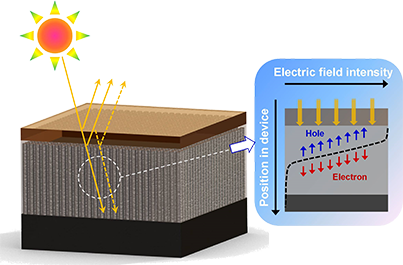
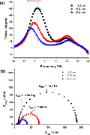
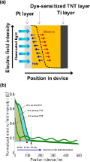
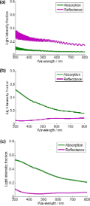
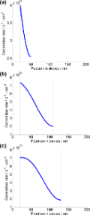
- transfer matrix method (GTMM) has been applied to calculate and analyze the interference effect by multi-layers in solar cells [15]. The optical modeling using GTMM provides reliable information about the spatial distribution of the electric field intensity and the internal light absorption efficiency of


Fibrillar adhesion with no clusterisation: Functional significance of material gradient along adhesive setae of insects
Beilstein J. Nanotechnol. 2014, 5, 837–845, doi:10.3762/bjnano.5.95
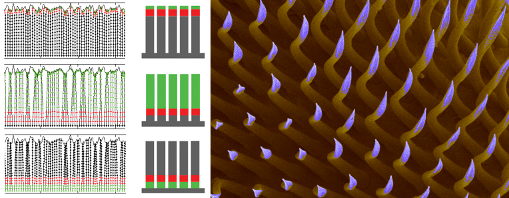
- spatial distribution. In some cases, structure can return back to the original state, but in some cases it can not. If it is so, the fibers remain collected into strongly confined bunches (so-called clustering/condensation phenomenon). This phenomenon is very important from the practical point of view


Dye-sensitized Pt@TiO2 core–shell nanostructures for the efficient photocatalytic generation of hydrogen
Beilstein J. Nanotechnol. 2014, 5, 360–364, doi:10.3762/bjnano.5.41
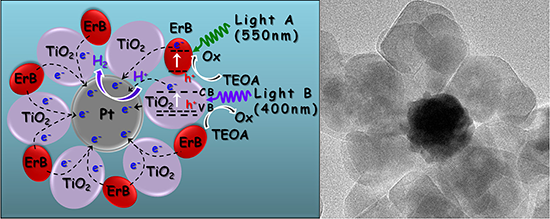
- different wavelengths, a synergic effect was observed, which led to a greatly enhanced H2 generation yield. This is attributed to the rational spatial distribution of the three components (dye, TiO2, Pt), and the vectored transport of photogenerated electrons from the dye to the Pt particles via the TiO2
- greatly enhanced activity for the H2 generation when the ErB and TiO2 are co-excited through the combination of two irradiation beams at different wavelengths. The enhancement is attributed to the rational spatial distribution of three components (ErB, TiO2, Pt), and the vectored transport of


Fabrication of carbon nanomembranes by helium ion beam lithography
Beilstein J. Nanotechnol. 2014, 5, 188–194, doi:10.3762/bjnano.5.20
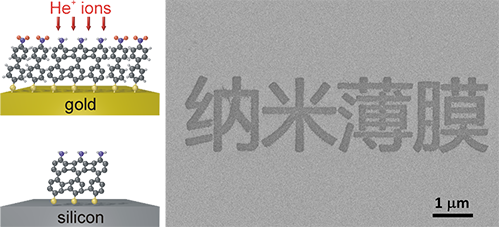
- complementary spectroscopic techniques and they suggested a dissociative electron attachment (DEA) as the dominating process to which both primary electrons and secondary electrons contribute [13]. However, a detailed picture of how the spatial distribution of cross-links evolves until a complete CNM has been


Optical near-fields & nearfield optics
Beilstein J. Nanotechnol. 2014, 5, 186–187, doi:10.3762/bjnano.5.19

- optical near-fields of nanostructures. Since the field enhancement can be quite large, light-induced local changes of the material can also be utilized to map the spatial distribution of the near-fields as demonstrated by Dickreuter et al. [4]. For this purpose, light-induced local changes of the material
Simulation of electron transport during electron-beam-induced deposition of nanostructures
Beilstein J. Nanotechnol. 2013, 4, 781–792, doi:10.3762/bjnano.4.89
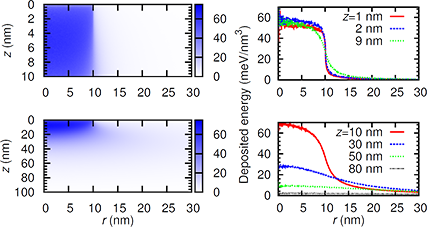
- easily corrected by applying appropriate beam-deflection voltages. Nevertheless it is interesting per se to examine the spatial distribution of the charge deposition process induced by the incoming beam, if only to better delimit the spatial region that is probed and affected by the beam. Figure 12



Mapping of plasmonic resonances in nanotriangles
Beilstein J. Nanotechnol. 2013, 4, 588–602, doi:10.3762/bjnano.4.66
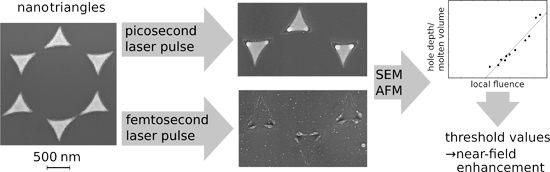
- ” by Lumerical Inc. to simulate the spatial distribution of the electric field of a triangle and the energy dissipated during its illumination. To get realistic results, an AFM image of a gold triangle like the one in Figure 4 was used as a basis for generating the geometry of the simulation. This


Large-scale atomistic and quantum-mechanical simulations of a Nafion membrane: Morphology, proton solvation and charge transport
Beilstein J. Nanotechnol. 2013, 4, 567–587, doi:10.3762/bjnano.4.65
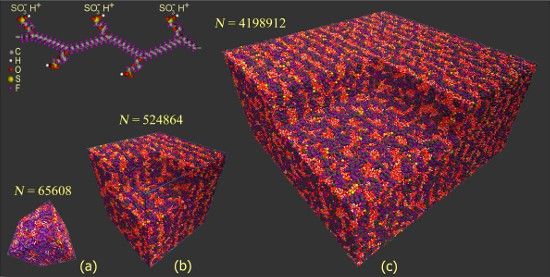
- minority (hydrophilic) phases have percolating network-like structures, although the spatial distribution of microdomains does not appear to visually conform to simple periodic shapes. The water network is, of course, not a static entity, but a dynamic system whose shape can change as the water molecules


Femtosecond-resolved ablation dynamics of Si in the near field of a small dielectric particle
Beilstein J. Nanotechnol. 2013, 4, 501–509, doi:10.3762/bjnano.4.59
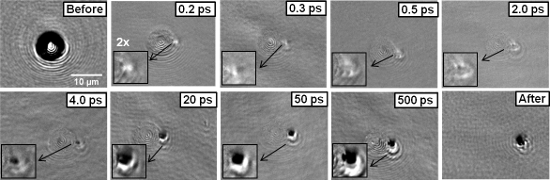
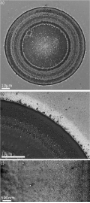
- the wave vector of the scattered light) behaves like a spherical lens. A closer look at the spatial distribution of intensities reveals a fine structure with characteristic maxima and minima that cannot be predicted by a simple geometrical model and that depends on the complex interference of the
- is above or below the melting threshold of polycrystalline GST. We have checked that the calculated spatial distribution of the near field is essentially the same for both Si and GST substrates. The comparison between the imprinted and calculated near field distribution shows an excellent agreement


Near-field effects and energy transfer in hybrid metal-oxide nanostructures
Beilstein J. Nanotechnol. 2013, 4, 306–317, doi:10.3762/bjnano.4.34
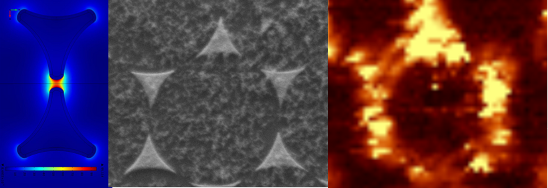
- triangle to the centre of the opposing base) is 100 nm. Resonances are found, which depend on the size of the antenna but also on the dielectric constants of the environment (substrate and cover layer). The spatial distribution of the enhancement factor in the region of the maximum (around 700 nm) for








Functionalization of vertically aligned carbon nanotubes
Beilstein J. Nanotechnol. 2013, 4, 129–152, doi:10.3762/bjnano.4.14
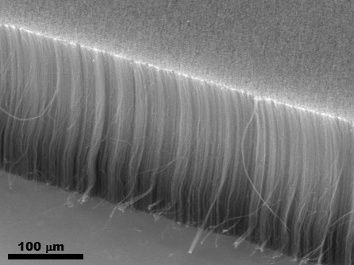
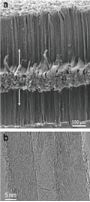
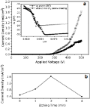
- damage and no etching were observed. Dispersed NPs with diameters close to 2–3 nm were formed at the tip of the tubes. In contrast, at the middle of the tube, NPs with diameters close to 3–5 nm or NPs clusters were observed (Figure 14). The NP spatial distribution depends on the defect density








Plasmonic oligomers in cylindrical vector light beams
Beilstein J. Nanotechnol. 2013, 4, 57–65, doi:10.3762/bjnano.4.6
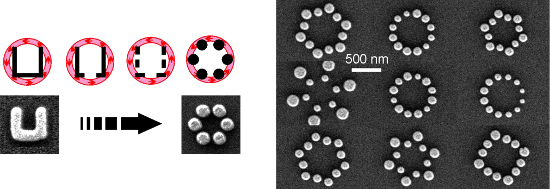
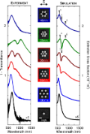
- resembling the high symmetry of the cluster itself. The strong enhancement, as well as the strong local fields, is proof that we indeed excite the cluster with its eigenpolarizations. Such near-field patterns, in strength as well as spatial distribution, are not obtainable upon linear polarized excitation




Probing three-dimensional surface force fields with atomic resolution: Measurement strategies, limitations, and artifact reduction
Beilstein J. Nanotechnol. 2012, 3, 637–650, doi:10.3762/bjnano.3.73
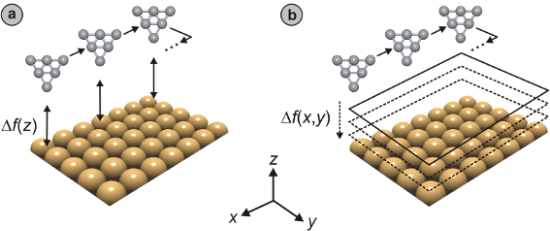
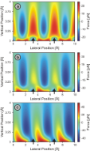
- atoms and molecules laterally on sample surfaces were quantified [34] and the lateral force field on graphite could be studied in detail [20]. Finally, three-dimensional force spectroscopy experiments performed in a liquid environment have revealed the spatial distribution of water molecules at a water




Nanolesions induced by heavy ions in human tissues: Experimental and theoretical studies
Beilstein J. Nanotechnol. 2012, 3, 556–563, doi:10.3762/bjnano.3.64
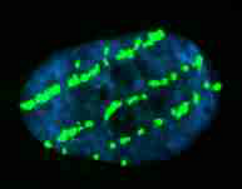
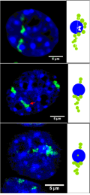
- particles with tissues. The MCHIT [5] based on the Geant4 toolkit was created in the Frankfurt Institute for Advanced Studies (FIAS) to study the propagation of therapeutic beams in extended media. MCHIT calculates the spatial distribution of energy deposited in a tissue-like phantom, taking into account



Terthiophene on Au(111): A scanning tunneling microscopy and spectroscopy study
Beilstein J. Nanotechnol. 2011, 2, 561–568, doi:10.3762/bjnano.2.60
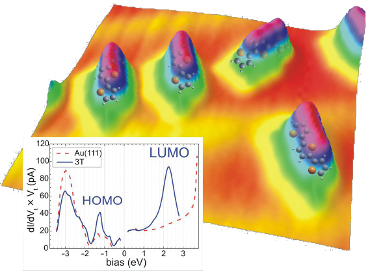
- separation of the molecules from the surface of 0.315 nm [20]. Such a considerable difference requires an explanation. Typically one would argue in STM that a change of the density of states (DOS) or the barrier height, Φ, above a molecule changes the tip–sample separation. However, the spatial distribution
- = +2.26 eV and a width of 0.71 eV, which corresponds to a lifetime of electrons in the LUMO of ~0.5 fs. The spatial distribution of electronic states at an energy E can be imaged by measuring the conductivity of the tunneling junction simultaneously with topography at a given bias Vt = E and a bias
- HOMO, respectively. Also shown is a Lorentzian fitted (black curve) to the positive branch on the molecule (center 2.26 eV, width 0.71 eV corresponding to a lifetime of ~0.5 fs). (a) and (e) shape of single 3T molecule on Au(111) (2 × 2 × 0.15) nm3, (b) and (f) ∂VI maps showing the spatial distribution