Search results
Search for "structure" in Full Text gives 2228 result(s) in Beilstein Journal of Nanotechnology. Showing first 200.
Beyond the bilayer: multilayered hygroscopic actuation in pine cone scales
Beilstein J. Nanotechnol. 2025, 16, 1695–1710, doi:10.3762/bjnano.16.119
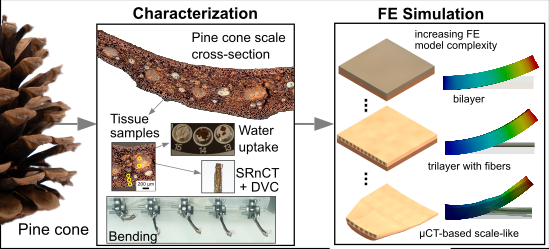
- of the DVC analysis due to the porous structure of the brown tissue. When the simulations are performed with the lower y-axis shrinkage, this lateral curvature is negligible, whereas when the higher x-axis shrinkage is chosen, the inverted movement becomes even more pronounced (Figure S3, Supporting


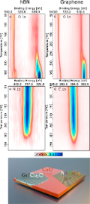
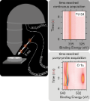
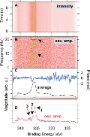
Ambient pressure XPS at MAX IV
Beilstein J. Nanotechnol. 2025, 16, 1677–1694, doi:10.3762/bjnano.16.118
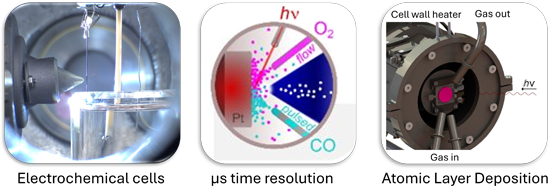
- observation of catalytic surfaces under reaction conditions. This allows for full life cycle characterization of catalysts, offering insights into surface structure, composition, and dynamic behavior during catalysis. Thanks to its intrinsic surface sensitivity, APXPS is uniquely positioned to probe the
- instrumentation development which highlight better the use of advanced light sources in probing the structure and dynamics of nanostructured materials and instrumental developments that enable novel investigations of materials under operando conditions. We will therefore discuss scientific examples about single
- sheet. This well-defined platform mimics the structure of metal–nitrogen–carbon catalysts used in oxygen reduction reactions (ORRs). Using a combination of results obtained from APXPS at HIPPIE and pump–probe infrared–visible sum-frequency generation (SFG) in a dedicated setup at the Department of





Energy spectrum and quantum phase transition of the coupled single spin and an infinitely coordinated Ising chain
Beilstein J. Nanotechnol. 2025, 16, 1668–1676, doi:10.3762/bjnano.16.117
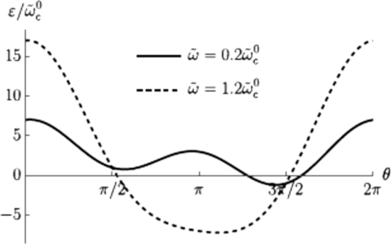
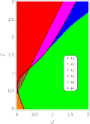
- Hamiltonian. In the limit of infinite Ising chain, or equivalently of the infinite total spin, the LMG Hamiltonian can be solved exactly. We exploit this fact and analytically obtain the energy spectrum of the whole system. Based on this result, we study the structure of the extrema of the ground state energy
- the properties of the phase transition if the chain is coupled to the external single spin. In this case, we have to minimize the ground state energy of the whole system. From Equation 14 we find the spectrum: These functions also have nontrivial minima structure depending on the values of the
- should be followed by a minimum and vice versa. Additional extrema arise due to hybridization between the energy levels ε±(θ,φ) of the bare LMG model with the single spin directed up or down, leading to the appearance of avoided crossings and richer extremum structure of the ground state energy. The

![[Graphic 39]](/bjnano/content/inline/2190-4286-16-117-i63.svg?max-width=637&scale=1.18182)


![[Graphic 51]](/bjnano/content/inline/2190-4286-16-117-i75.svg?max-width=637&scale=1.18182)
Prospects of nanotechnology and natural products for cancer and immunotherapy
Beilstein J. Nanotechnol. 2025, 16, 1644–1667, doi:10.3762/bjnano.16.116

- polymeric membranes, non-ionic surfactants, macromolecules, and phospholipids [176][177]. The properties of the pharmaceutical form are governed by size, shape, core structure, and ligands, which can alter factors such as solubility, charge density, hydrophobicity, stability, and binding affinity [178]. The


Nanotechnology-based approaches for the removal of microplastics from wastewater: a comprehensive review
Beilstein J. Nanotechnol. 2025, 16, 1607–1632, doi:10.3762/bjnano.16.114
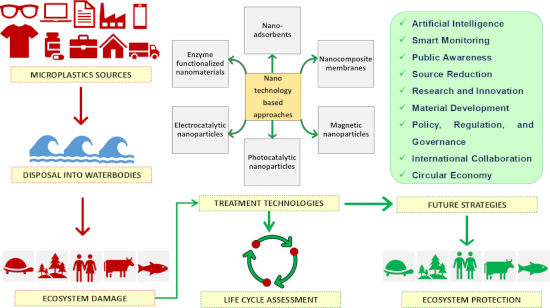
- various techniques for synthesis of nanoparticles. Nanoparticle synthesis is essential for tailoring materials that effectively remove MPs. Various approaches allow researchers to customize structure and functionality based on application needs. For example, the sol–gel process transforms a colloidal
- hydrophobic nature make them highly effective in capturing various organic pollutants, including methylene blue, neutral red, and polycyclic aromatic hydrocarbons. Notably, the unique hexagonal honeycomb crystal structure imparts exceptional stability, allowing them to perform efficiently under challenging
- . Nanoparticles, owing to their high surface-to-volume ratio, demonstrate superior catalytic performance compared to bulk materials. Furthermore, the particle size of semiconductors influences their bandgap energy and crystalline structure, which in turn affects their redox potential and the spatial distribution



Bioinspired polypropylene-based functionally graded materials and metamaterials modeling the mistletoe–host interface
Beilstein J. Nanotechnol. 2025, 16, 1592–1606, doi:10.3762/bjnano.16.113
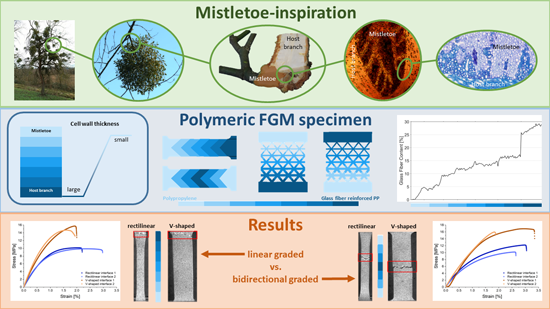
- ]. Biological materials and their highly modified structure–function relationship are designed to enable organisms to survive and/or adapt to the environmental conditions in which they live [24][25]. The European mistletoe (Viscum album) is an excellent model of a long-lasting connection between two material
- nutrients and to maintain mechanical stability during joint growth for over 20 years, despite its ever-increasing weight and the additional loads caused by wind and snow [29]. Analyses of the tissue and cell structure have revealed a chemical lignification gradient along the V-shaped interface between the
- material with rectilinear interface. Triangular structures were selected for their isotropic properties, which help minimize the impact of loading direction deviations during testing. The metamaterial structure consisted of unit cells with a uniform beam thickness of 1.8 mm (Figure 2G). The effective


Few-photon microwave fields for superconducting transmon-based qudit control
Beilstein J. Nanotechnol. 2025, 16, 1580–1591, doi:10.3762/bjnano.16.112
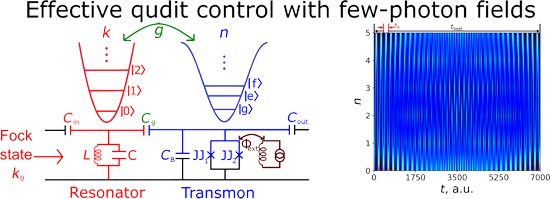
- non-classical field and a transmon-based qudit with several, even high-lying, levels being taken into account. We develop methods of rapid quantum control of the designed transmon-based qudit and its state population dynamics. The structure of the article is as follows: First, the model of the system
- JJ system will interact directly with the current (magnetic field) in the cavity, and the coupling strength will change from to , where α is a fine structure constant. This case corresponds to the so-called “ultrastrong coupling regime” [50][51], which is beyond the scope of this article. Later, it


Photocatalytic degradation of ofloxacin in water assisted by TiO2 nanowires on carbon cloth: contributions of H2O2 addition and substrate absorbability
Beilstein J. Nanotechnol. 2025, 16, 1567–1579, doi:10.3762/bjnano.16.111
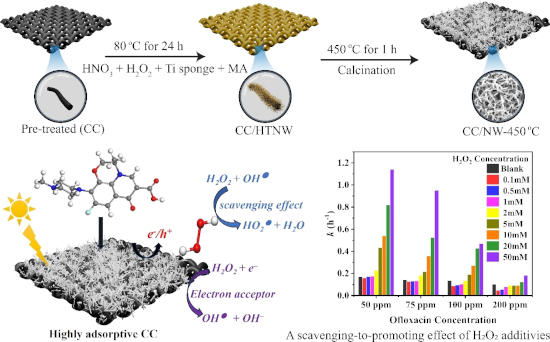
- pore size distribution, which shows a sharp peak at approximately 4.0 nm, suggesting a uniform pore size. The corresponding pore size distribution curve (Figure 3b, inset) indicates a mesoporous structure. Before calcination, the BET surface area of the titanate on carbon cloth was found to be 3.9 m2·g
- cloth, facilitating the separation of photogenerated electron–hole pairs [13][35], and (3) the substrate’s fibrous structure significantly enhancing the effective contact area and preventing the aggregation of nanowires. Conclusion TiO2 nanowire thin films of ca. 1.5 μm in thickness were precipitated on


Modeling magnetic properties of cobalt nanofilms used as a component of spin hybrid superconductor–ferromagnetic structures
Beilstein J. Nanotechnol. 2025, 16, 1557–1566, doi:10.3762/bjnano.16.110
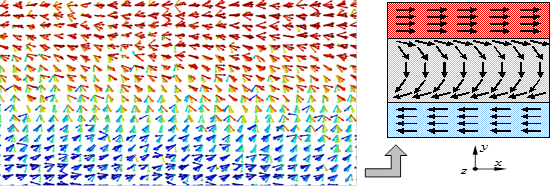
- structure and composition of Co–Ni–Fe films were evaluated, and it was found out how the deposition rate affects the conversion of a weak magnetic field into magnetic induction. In addition, thin-film structures based on Fe and Co are among the most promising materials that can be applied in the creation of
- the atom, which was calculated as a vector sum of the spins of individual electrons included in its structure and their orbital moments. The mathematical model of atomic displacement and changes in their magnetic moments is based on the Langevin [21] and Landau–Lifshitz–Hilbert [22][23] equations
- material structure corresponded to a face-centered cubic crystal lattice (fcc). The size of the system in the first problem was small at 500 atoms (5 × 5 × 5 elementary crystal cells) and was due to the study of a similar system in [22]. The appearance of the modeled cobalt crystallite and the magnetic


Transient electronics for sustainability: Emerging technologies and future directions
Beilstein J. Nanotechnol. 2025, 16, 1545–1556, doi:10.3762/bjnano.16.109

- and the presence of specific ions, such as hydrogen phosphate and chloride (HPO42− and Cl−) [43] are known to accelerate the degradation process. The biodegradation rate of silicon is also influenced by its crystallographic structure. Polycrystalline silicon degrades faster than single-crystalline
- ) [63][73]. In this process, PI is first coated onto PMMA, followed by photolithographic patterning of the inorganic electronic materials. The PMMA layer is then dissolved, allowing the patterned structure, protected by the thin PI layer, to be transferred onto a desired target substrate. Since the
- thick Mg trace for up to three weeks in PBS (pH 7.4, 37 °C). However, organic films suffer from intrinsic porosity due to their polymer chain structure, which limits their water-blocking performance compared to inorganic counterparts. In contrast, inorganic coatings, traditionally employed in the field


Influence of laser beam profile on morphology and optical properties of silicon nanoparticles formed by laser ablation in liquid
Beilstein J. Nanotechnol. 2025, 16, 1533–1544, doi:10.3762/bjnano.16.108
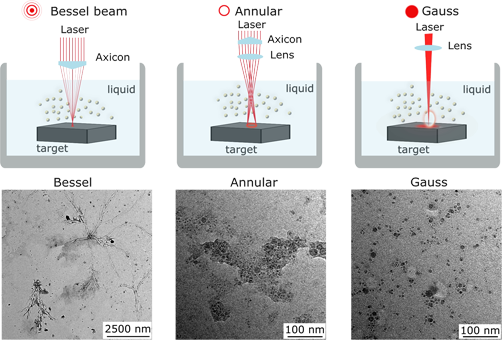
- Abstract In this study, silicon nanoparticles (NPs) were produced by pulsed laser ablation in a liquid, aiming to investigate the influence of a laser beam profile on the properties of the resultant NPs. Morphology, inner structure, and phase composition of the formed NPs were characterized by means of
- batteries by providing a solution to the urgent problem of large volumetric expansion known for Si during lithiation process [3]. Due to the possibility of lateral expansion in Si nanowires, the cracking of the electrodes during lithiation is minimized. In addition, the one-dimensional structure of Si
- conductivities resulted in NPs of different morphology, structure, and optical characteristics. It should be noted that, as a rule, NPs of nearly spherical morphology are formed by PLAL under typical experimental conditions. Non-spherical NPs were also reported to be produced by PLAL [13]; but this requires


Dendrimer-modified carbon nanotubes for the removal and recovery of heavy metal ions from water
Beilstein J. Nanotechnol. 2025, 16, 1522–1532, doi:10.3762/bjnano.16.107

- , which can be later released by altering the pH of the solution. Numerous nanomaterials have been explored and modified by introducing a high number of binding sites (functional groups) and/or generating a porous structure to enhance the adsorption of heavy metal ions [14][15]. Although such modified
- functionalization process did not alter the intrinsic structure of the materials as the peak profile of all the samples is similar to that of bare CNTs. Moreover, the absence of any extra peaks further confirms that the washing process has effectively removed the residual substrates and DES. FTIR spectroscopy has
- with increasing dendrimer functionalization. SEM images are helpful to identify the morphological changes after the functionalization of CNTs. The comparative observation of SEM images of CNTs, CNTs-G1, CNTs-G3, and CNTs-G5 clearly reveals tube shape structure for all the materials confirming no


Cross-reactivities in conjugation reactions involving iron oxide nanoparticles
Beilstein J. Nanotechnol. 2025, 16, 1504–1521, doi:10.3762/bjnano.16.106
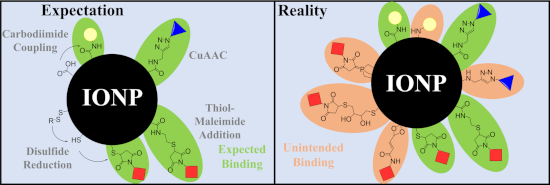
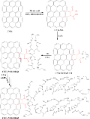
- should be detectable directly by UV–vis spectroscopy. Unfortunately, we could not detect binding with any of these dyes (results not shown). All three dyes showed relatively low aqueous solubility, and have their primary amine attached directly to an aromatic ring structure, which may contribute to both
- conclude that the structure of the payload molecule plays a very important role in determining the efficacy of the EDC/NHS coupling reaction, in that steric hindrance and the electronic structure of the molecule are critical parameters to take into consideration when choosing a suitable amine; thus
- , efforts should be made to include a linker, which separates the primary amine from the aromatic ring structure. Importantly, we also note that there is no cross-reactivity observed here, likely due to these same factors that prevent the dyes from binding to surface Fe via their amines, unlike with PPA







Nanomaterials for biomedical applications
Beilstein J. Nanotechnol. 2025, 16, 1499–1503, doi:10.3762/bjnano.16.105
- designing nanomaterials that can bring the drug to the required place and then release it in a planned way. One of the earliest nanocarriers examined for drug delivery was liposomes. They are tiny spheres made of lipids, either naturally or synthetically, and their structure is closely similar to the cell
- can interact directly with cells at the molecular level [30]. This enables scientists to control not only the physical structure of the tissue but also the biological signals that control cell behavior. Releasing growth factors in a controlled way can be a feature of nanostructured scaffolds to
- processes [39]. Therefore, patients can benefit from faster healing, durable implants, and fewer challenges after surgery. Studies are still being conducted to ensure their long-term safety, so their use for therapeutics and tissue structure continue to expand. From cancer therapies to advanced prosthetics
Laser processing in liquids: insights into nanocolloid generation and thin film integration for energy, photonic, and sensing applications
Beilstein J. Nanotechnol. 2025, 16, 1428–1498, doi:10.3762/bjnano.16.104
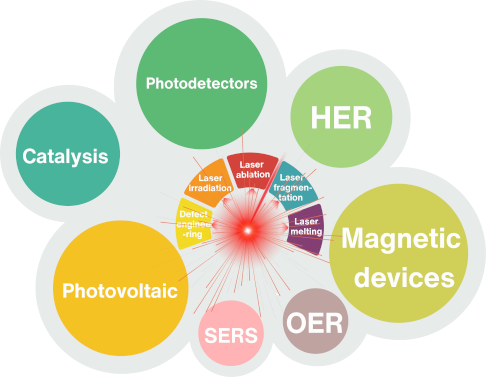
- crystallographic structure. The findings suggest that smaller particle sizes are primarily achieved by increasing the number of laser pulses, though there is a limit to the number of pulses that should be applied. Furthermore, the energy output notably influenced the size distribution, with higher energy leading
- contrast, conventional PLAL methods are dominated by surface energy, resulting in a Fe core–Au shell structure. The study identifies the limitations of lower fluence, inhomogeneous heating, and insufficient particle association during laser irradiation, and clarifies the mechanism behind PLML. For single
- factors such as size, surface-to-volume ratio, crystalline structure, composition, oxidation state, shape, and defects [68]. To synthesize NPs, colloids suspended in transparent liquids are irradiated with short or ultra-short laser pulses, which result in selective absorption by the NPs. This occurs






Photochemical synthesis of silver nanoprisms via green LED irradiation and evaluation of SERS activity
Beilstein J. Nanotechnol. 2025, 16, 1417–1427, doi:10.3762/bjnano.16.103
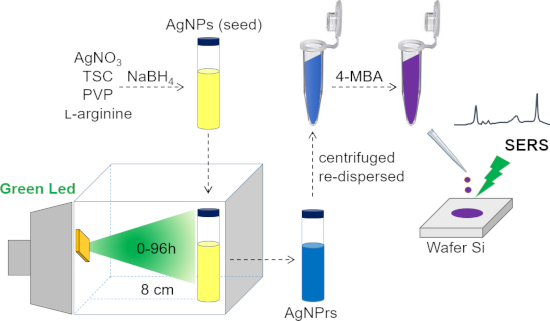
- broad diffraction peaks at 38.2°, 44.3°, 64.5°, and 77.7°, corresponding to the (111), (200), (220), and (311) crystal planes, respectively. These peaks are characteristic of the face-centered cubic (fcc) structure of silver nanoparticles. The diffraction intensity at the (111) crystal facets was three
- times higher than that at the (200) facets, consistent with the typical structure of AgNPrs [9][16]. Moreover, no diffraction peaks corresponding to Ag2O were detected, indicating that the photoreduction process for synthesizing AgNPrs was efficient. In summary, after 72 h of LED irradiation under the
- confirm that AgNPrs exhibited superior SERS performance, consistent with prior studies investigating the direct SERS detection of 4-MBA [18][19]. Due to their anisotropic structure, AgNPrs concentrate surface electrons and form electromagnetic “hot spots” at the edges and tip of the nanoprisms [22][24][25


The role of biochar in combating microplastic pollution: a bibliometric analysis in environmental contexts
Beilstein J. Nanotechnol. 2025, 16, 1401–1416, doi:10.3762/bjnano.16.102

- using CiteSpace has proven instrumental. CiteSpace facilitates citation network visualization, co-citation analysis and the identification of emerging research trends, providing insights into the intellectual structure of this scientific domain [26]. By uncovering key contributors and trends
- 2022, reflecting efforts to mitigate MP pollution through biochar application in terrestrial and aquatic environments. From 2022 to 2024, terms like “community structure”, “agriculture”, and “impact” suggest a shift toward investigating biochar's influence on the physicochemical properties of soil and
- and biochar concentration, underscoring biochar’s pivotal role in soil remediation and plant performance enhancement in MP-contaminated soils. Enhancement of soil physicochemical properties MPs exert significant impacts on soil physicochemical properties, altering its physical structure, chemical


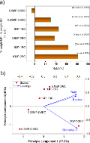

Parylene-coated platinum nanowire electrodes for biomolecular sensing applications
Beilstein J. Nanotechnol. 2025, 16, 1392–1400, doi:10.3762/bjnano.16.101
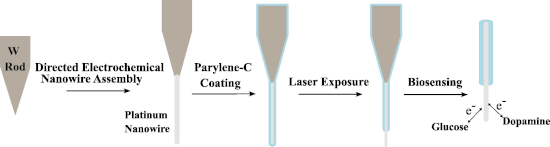
- , parylene-C encapsulation, and laser-assisted nanowire tip exposure. The nanowire electrode structure and the corresponding functionality are described. Electrochemical testing results of dopamine and glucose detection are also presented. Results and Discussion After optimization of the growth parameters


Synthesis and antibacterial properties of nanosilver-modified cellulose triacetate membranes for seawater desalination
Beilstein J. Nanotechnol. 2025, 16, 1380–1391, doi:10.3762/bjnano.16.100
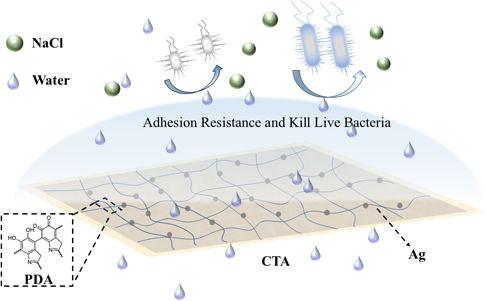
- waterborne microorganisms because six-membered cyclic ethers in its molecular structure have β-A chains of dehydrated glucose units linked by C–O–C bonds [28]. Therefore, enhancing the antibacterial properties of CTAs is crucial from both academic and practical perspectives. In this study, we employed the
- and Discussion Structure of membrane material To verify the target structure of the synthesized material, Fourier-transform infrared spectroscopy (FTIR) and nuclear magnetic resonance spectroscopy (NMR) were conducted, with the spectra depicted in Figure 1 and Figure 2, respectively. The FTIR bands
- absorption bands in the FTIR spectrum of PCTA and Ag@PCTA. This is because the functional groups in the PDA structure including –OH, –NH2, and C=O, which have band positions at 3200–3600 cm−1, 3300–3500 cm−1, and 1660–1700 cm−1, respectively, coincided with those of CTA. Moreover, the modifying agents (PDA


Automated collection and categorisation of STM images and STS spectra with and without machine learning
Beilstein J. Nanotechnol. 2025, 16, 1367–1379, doi:10.3762/bjnano.16.99
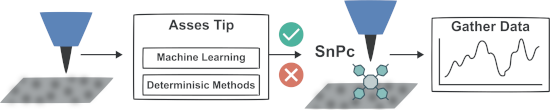
- “flat” DOS, which is typically achieved by using a purely metallic tip. However, most tips do not demonstrate a perfectly flat local density of states (LDOS) as they have a complex electronic structure governed by the geometry of the metallic cluster at the tip apex [8][9][10][11][12]. Non-metallic
- contaminants can also strongly perturb the electronic structure of the tip. Methods of optimising the probe state for ideal STS are slow and laborious, involving indentation into a metal surface and bias pulses applied to the tip, manually checking spectra and imaging after each probe shaping attempt. The
- ” sites of the herringbone structure. An STS spectrum (differential conductance) can be obtained in practice using one of two methods. Both begin by positioning the STM tip at a desired lateral position on the surface whilst scanning in STM feedback. At this point, the feedback loop is disabled, keeping





Enhancing the therapeutical potential of metalloantibiotics using nano-based delivery systems
Beilstein J. Nanotechnol. 2025, 16, 1350–1366, doi:10.3762/bjnano.16.98
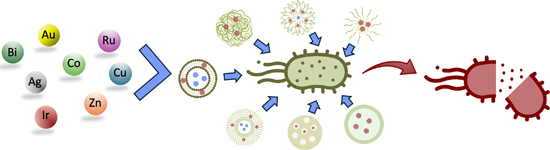
- sparked the interest in the design of antibiotic drugs that include metal ions in their structure, the so-called metalloantibiotics [16][17]. Metal-based antibiotics offer significant advantages over purely organic drug candidates in the fight against AMR [18]. In metal complexes, the wide range of
- , significantly expanding their applications [58]. The structure of liposomes can vary, with unilamellar and multilamellar vesicles being the two main forms, offering flexibility in the types of drugs they can deliver. In addition, size, surface charge, and lipid composition of these nanoparticles can be tailored
- interface or within imperfections of the solid core [74]. Despite their advantages, SLNs face certain challenges, such as limited drug loading capacity due to the crystalline structure of the solid lipid matrix, risks of drug leakage during storage, and a relatively high water content in the formulation [73


Ferroptosis induction by engineered liposomes for enhanced tumor therapy
Beilstein J. Nanotechnol. 2025, 16, 1325–1349, doi:10.3762/bjnano.16.97
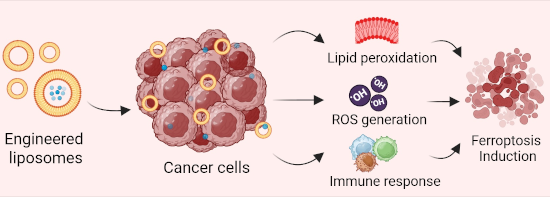
- hydrophobic phospholipid bilayer and a hydrophilic core. Depending on the physicochemical properties of the drug, this type of structure allows the entrapment of both hydrophilic and hydrophobic drugs [1]. Liposomes, like other nanosystems, have many benefits, such as prolonged systemic blood circulation
- , mechanisms have been developed in the cell to neutralize these damaging agents. One of the most important pathways involves the enzyme GPX4. GPX4 has a selenoprotein structure and is controlled by the mevalonate (MVA) pathway [43]. Directly and with the help of GSH, GPX4 causes the consumption of lipid
- liposomes. Glycerophospholipids influence the biophysical properties of liposomes; longer hydrocarbon chains can lead to a denser membrane structure and improve drug retention. Lipid degradation is significantly reduced when liposomes containing sphingomyelin are exposed to acidic conditions. Cholesterol


Deep-learning recognition and tracking of individual nanotubes in low-contrast microscopy videos
Beilstein J. Nanotechnol. 2025, 16, 1316–1324, doi:10.3762/bjnano.16.96
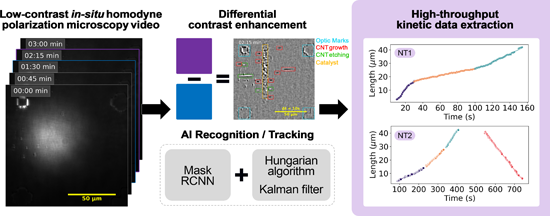
- . However, the widespread application of CNTs is hindered by the lack of control over their structure during growth. Therefore, developing highly selective synthesis methods is crucial for advancing CNT-based devices. This requires a deep understanding of the relationship between nanotube structure and
- adds useful information to the video. Additionally, differential videos capture other processes causing local changes in optical absorption. For instance, if the nanotube structure (also called helicity or chirality) changes during growth, this manifests as a second segment moving synchronously with
- of nanotube kinetics, which involves switches between growth, pauses, shrinkage, and structure change during growth [20]. Pauses (Figure 3c,d) cannot be efficiently traced by the Hungarian method or Kalman filter, necessitating manual verification to ensure correct assignment of newly grown segments


Wavelength-dependent correlation of LIPSS periodicity and laser penetration depth in stainless steel
Beilstein J. Nanotechnol. 2025, 16, 1302–1315, doi:10.3762/bjnano.16.95
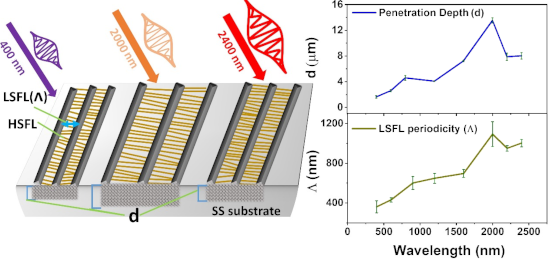
- structure with laser irradiation wavelengths ranging from 400 to 2200 nm. From this, a linear trend in LIPSS characteristics was observed up to 2000 nm, and the threshold of the LIPSS formation was determined [52]. In the present work, we extend the LIPSS over a large area, instead of a single line, using
- ladder-like structure requires adjusting the scanning speed and step size between successive scans. Figure 4 shows the LSFL perpendicular to the incident beam polarization, with the HSFL forming deep inside the grooves of the LSFL. The orientation of these embedded HSFL is perpendicular to the LSFL and
- parallel to the incident beam polarization. In all FESEM images, the incident polarization direction is represented by a violet arrow at the top left corner. High-resolution images of the embedded HSFL ladder-like structure is shown in Figure 5 for two wavelengths for better understanding. The aspect ratio





Enhancing the photoelectrochemical performance of BiOI-derived BiVO4 films by controlled-intensity current electrodeposition
Beilstein J. Nanotechnol. 2025, 16, 1289–1301, doi:10.3762/bjnano.16.94
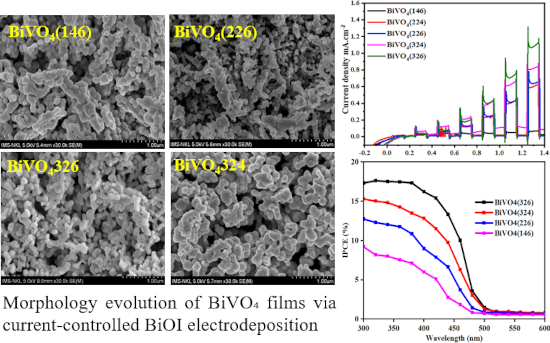
- monoclinic scheelite BiVO4 structure with dominant (121) and (004) peaks. FESEM imaging revealed that the different deposition conditions influenced the surface morphologies of the BiOI and BiVO4 films. Photocurrent density measurements showed that BiVO4(326) achieved 1.2 mA·cm−2 at 1.23 V vs RHE
- better control over film morphology and crystallinity under mild conditions. Kim et al. [18] reported that BiVO4 films fabricated via electrodeposition achieved a maximum photocurrent density of 1.4 mA·cm−2 at 1.23 V vs RHE. These films exhibited a three-dimensional nanoporous structure that facilitated
- in PEC performance. Our method offers a higher degree of control over both the intermediate BiOI layer and the final BiVO4 structure, thereby enabling enhanced charge separation and surface reaction kinetics. Furthermore, this approach provides a deeper understanding of the relationship between the