Search results
Search for "surface properties" in Full Text gives 226 result(s) in Beilstein Journal of Nanotechnology. Showing first 200.
Formation of metal/semiconductor Cu–Si composite nanostructures
Beilstein J. Nanotechnol. 2019, 10, 2497–2504, doi:10.3762/bjnano.10.240
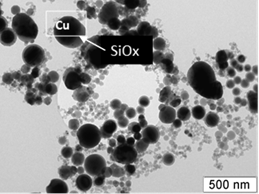
- create composite Janus-like or core–shell nanoparticles. The size and the unique morphology at the nanoscale provide new optical, electronic, magnetic and surface properties to these nanoparticles [1][2]. In addition, it is possible to combine materials of which alloys do not exist in nature. The shell


Self-assembly of a terbium(III) 1D coordination polymer on mica
Beilstein J. Nanotechnol. 2019, 10, 2440–2448, doi:10.3762/bjnano.10.234
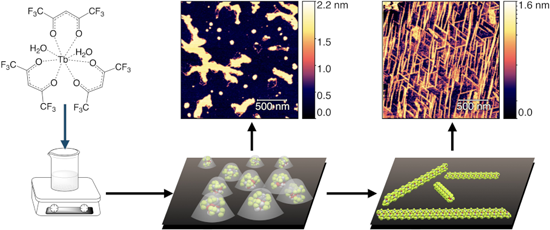
- -surface properties [11][12]. The terbium(III) ion, (TbIII), is a particularly suitable candidate for the creation of surface-based magnetic and luminescent devices [5][6]. It has one of the highest magnetic moments of all elements in the periodic table, and it shows a very strong magnetic anisotropy when




Ion mobility and material transport on KBr in air as a function of the relative humidity
Beilstein J. Nanotechnol. 2019, 10, 2084–2093, doi:10.3762/bjnano.10.203
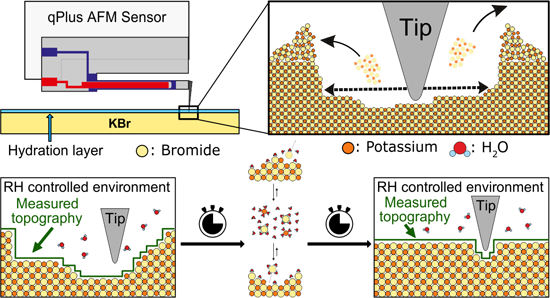
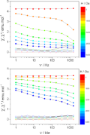
- force microscopy; material transport; relative humidity; Introduction Defining surface properties under ambient conditions is challenging as they are heavily influenced by the environment. In general, there are various contributing factors such as temperature, air pressure and air composition


Nanostructured and oriented metal–organic framework films enabling extreme surface wetting properties
Beilstein J. Nanotechnol. 2019, 10, 1994–2003, doi:10.3762/bjnano.10.196
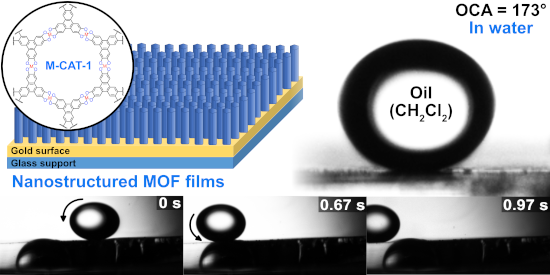
- a large glass substrate allowed for the realization of an efficient, transparent, antifog coating, enabling a clear view even at extreme temperature gaps up to ≈120 °C. This work illustrates the strong link between MOF film morphology and surface properties based on these framework materials
- , S5.7, Supporting Information File 1). Strikingly, we observed complete water spreading on the M-CAT-1 films and a WCA of 0° for both films, thus these surfaces can be considered superhydrophilic (Figure 3D and S5.5, Supporting Information File 1). These observed surface properties were further
- contact with the surface (see Figure S5.7, Supporting Information File 1). These surface properties resemble those of surface designs found in nature. For example, referring to marine life, fish scales in air show an amphiphilic behavior due to their high surface energy, but under water they turn


Kelvin probe force microscopy work function characterization of transition metal oxide crystals under ongoing reduction and oxidation
Beilstein J. Nanotechnol. 2019, 10, 1596–1607, doi:10.3762/bjnano.10.155
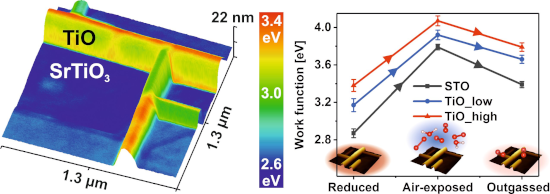
- splitting [1][44]. For industrial uses, the samples have to be exposed to ambient conditions, therefore it is necessary to investigate the impact of air exposure on electronic surface properties. Moreover, transition metal oxides are often regarded as promising materials for sensing applications, due to the


Synthesis of P- and N-doped carbon catalysts for the oxygen reduction reaction via controlled phosphoric acid treatment of folic acid
Beilstein J. Nanotechnol. 2019, 10, 1497–1510, doi:10.3762/bjnano.10.148
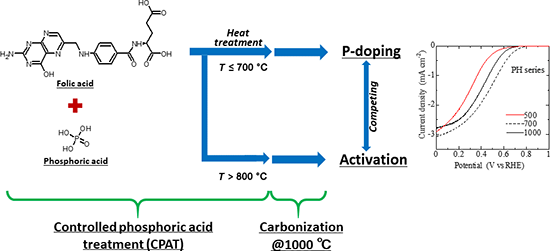
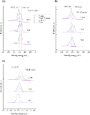
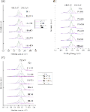
- ). Surface properties of H- and P-type precursors (for the naming scheme of the samples see section “Experimental”). Distribution of the N species in H-type and P-type precursors. BET-SSAs and XPS-determined elemental surface compositions of HH- and PH-series carbon materials. Distribution of N-species in HH





Warped graphitic layers generated by oxidation of fullerene extraction residue and its oxygen reduction catalytic activity
Beilstein J. Nanotechnol. 2019, 10, 1391–1400, doi:10.3762/bjnano.10.137
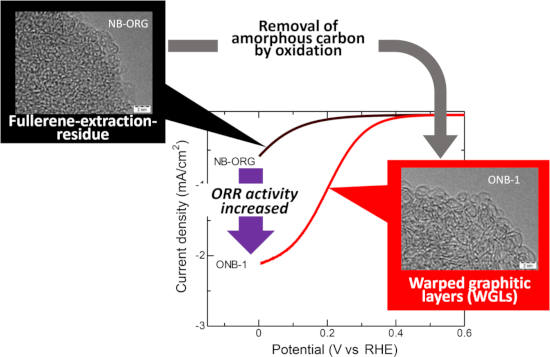
- equation. The decrease in the heat of adsorption activated the adsorbed state of oxygen molecules. However, lowering the heat too much led to a small interaction between the adsorbent and the adsorbate (i.e., less activation). Further evidence for the changes in the surface properties due to WGL exposure



A biomimetic nanofluidic diode based on surface-modified polymeric carbon nitride nanotubes
Beilstein J. Nanotechnol. 2019, 10, 1316–1323, doi:10.3762/bjnano.10.130
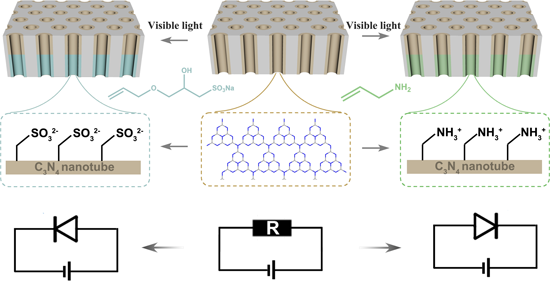
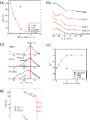
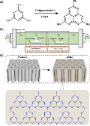
- transportation controlled by surface charges in carbon nitride nanotubes (black squares). The red curve shows the data of the bulk solution (red curve). (a) Scheme of the unilateral modification process and surface properties after modification. (b) The SEM view and corresponding elemental mapping (C, N, S) of


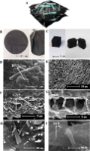
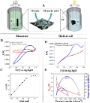
Multicomponent bionanocomposites based on clay nanoarchitectures for electrochemical devices
Beilstein J. Nanotechnol. 2019, 10, 1303–1315, doi:10.3762/bjnano.10.129
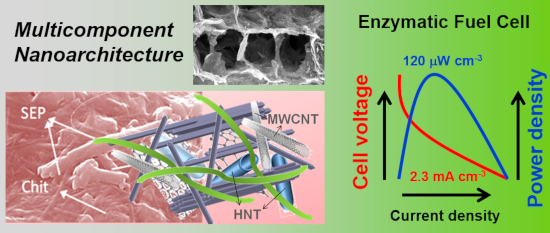
- therefore assessed by the van der Pauw method based on the four-point technique [26]. This method is useful to accurately measure the surface properties of a sample of arbitrary shape. Figure 4C displays the in-plane electrical conductivity of the films as a function of the MWCNT content (composition of



Alloyed Pt3M (M = Co, Ni) nanoparticles supported on S- and N-doped carbon nanotubes for the oxygen reduction reaction
Beilstein J. Nanotechnol. 2019, 10, 1251–1269, doi:10.3762/bjnano.10.125
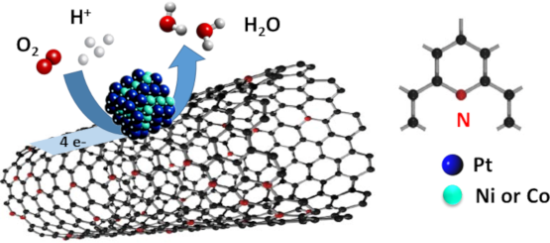
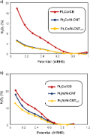
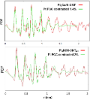
- carbon materials. Several CNT materials have been synthetized, fully characterized (structural and surface properties) and used as catalyst supports. CNT-supported bimetallic Pt3Co or Pt3Ni NPs were synthetized. To evaluate catalyst performance, electrochemical characterization was performed using a







Playing with covalent triazine framework tiles for improved CO2 adsorption properties and catalytic performance
Beilstein J. Nanotechnol. 2019, 10, 1217–1227, doi:10.3762/bjnano.10.121
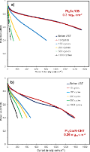
- ][40][41][42][43][44]. Most importantly, the rational balance between morphological and basic material surface properties has been claimed to control the catalyst stability on stream: the higher the “chemically accessible” surface basicity, the lower the sample deactivation/passivation due to the
- performance of selected CTFs was the result of a compromise between morphological and accessible basic surface properties of the samples. In particular, the higher the chemically accessible basic surface of the catalytic materials, the higher their stability (as catalysts) on stream. Indeed, from the
- catalyst surface. The higher the basic surface properties of the CTF, the higher the desorption rate of reagents and products and the higher the catalyst lifetime on stream. This evidence is in line with other findings from the literature where basic properties of the material are crucial in preventing the


Photoactive nanoarchitectures based on clays incorporating TiO2 and ZnO nanoparticles
Beilstein J. Nanotechnol. 2019, 10, 1140–1156, doi:10.3762/bjnano.10.114
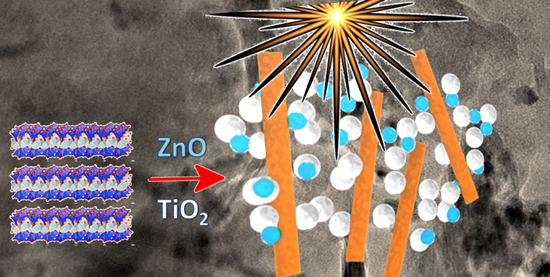
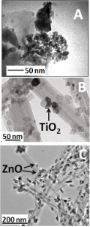
- important to control the synthesis procedures in order to obtain the desired surface properties of the NPs, as well as suitable size and shape and nanopore characteristics in the resulting pillared layered structures. The formation of house-of-cards-like structures during the preparation of ZnO NPs in the



Fe3O4 nanoparticles as a saturable absorber for giant chirped pulse generation
Beilstein J. Nanotechnol. 2019, 10, 1065–1072, doi:10.3762/bjnano.10.107
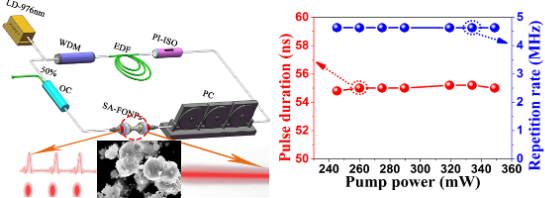
- . Conclusion In summary, FONPs prepared via a sol–hydrothermal method were successfully used as a SA to construct a high-performance fiber laser. The surface properties, molecular vibration, structure and composition of the FONPs were systemically studied using SEM, TEM, HR-TEM, EDS, Raman spectra, XRD and UV


Tailoring the stability/aggregation of one-dimensional TiO2(B)/titanate nanowires using surfactants
Beilstein J. Nanotechnol. 2019, 10, 1024–1037, doi:10.3762/bjnano.10.103
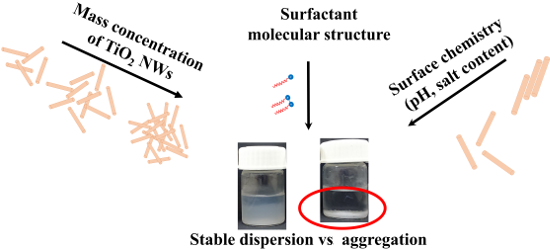
- behavior. In order to gain more insight into changes in the surface properties after surfactant adsorption on the TNW surface, a surface complexation model was employed. With this first attempt to quantify the contribution of the surfactant structure on the adsorption equilibrium according to the observed
- concentrations of the cationic monomeric DATB and corresponding gemini 12-2-12 surfactants (Figure S1, Supporting Information File 1) were chosen as a tool to modify the TNW surface properties. Effect of DTAB concentration: The variation of dh and the zeta potential in TNW/DTAB systems at three TNW mass


Amorphous NixCoyP-supported TiO2 nanotube arrays as an efficient hydrogen evolution reaction electrocatalyst in acidic solution
Beilstein J. Nanotechnol. 2019, 10, 62–70, doi:10.3762/bjnano.10.6
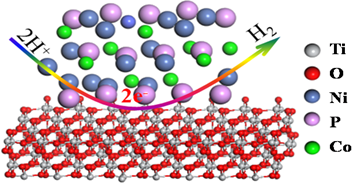
- adding an additional metal element to these mono-metal posphides, the electronic structure and surface properties of the phosphides can be intrinsically altered that may greatly improve the catalytic performance. Compared to mono-metal phosphides, some binary metal phosphides (MgFeP, FeNiP, NiCoP, etc




A comparison of tarsal morphology and traction force in the two burying beetles Nicrophorus nepalensis and Nicrophorus vespilloides (Coleoptera, Silphidae)
Beilstein J. Nanotechnol. 2019, 10, 47–61, doi:10.3762/bjnano.10.5
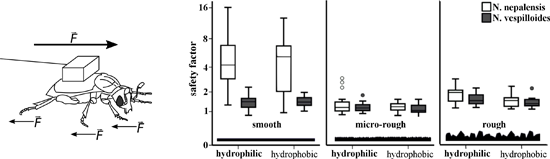
- attachment with respect to various surface properties was investigated by using a 2 × 3 experimental design. Traction force was measured for two different surface energies (hydrophilic vs hydrophobic) varying in roughness from smooth to micro-rough to rough. Nanotribometric tests on single legs were also
- respective surfaces [15][16][17]. Another property that influences insect adhesion is surface polarity, which can be affected by surface roughness, apparently reinforcing hydrophobic or hydrophilic surface characteristics. The testing of both of these surface properties in combination in our experiments has
- ., being either hydrophilic (treated with plasma) or hydrophobic (treated with antispread). The data were compared between and within the species. The within-species comparisons were conducted between the different surface properties such as roughness and wettability. Results Tarsus morphology At its




The nanoscaled metal-organic framework ICR-2 as a carrier of porphyrins for photodynamic therapy
Beilstein J. Nanotechnol. 2018, 9, 2960–2967, doi:10.3762/bjnano.9.275
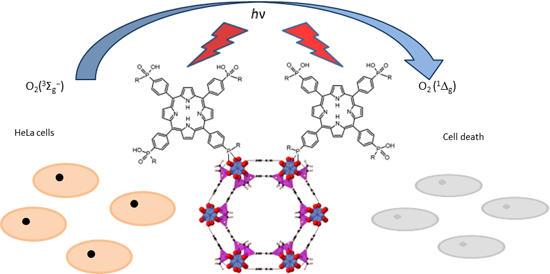
- Essential Medium (EMEM) without foetal bovine serum to avoid modification of the particle surface properties by nonspecific binding of serum albumin. The cellular uptake of the nanoparticles was quantified by flow-cytometry analysis of porphyrin fluorescence associated with the cells. Figure 6A shows the


Characterization of the microscopic tribological properties of sandfish (Scincus scincus) scales by atomic force microscopy
Beilstein J. Nanotechnol. 2018, 9, 2618–2627, doi:10.3762/bjnano.9.243

- ). Sandfish scales were sputtered with 20 nm of silver before imaging while the probes were not sputtered in order to prevent unwanted changes of the surface properties for the adhesion measurements. Therefore, a low working distance between probes and SEM detector and a low acceleration voltage between 1 and


Friction reduction through biologically inspired scale-like laser surface textures
Beilstein J. Nanotechnol. 2018, 9, 2561–2572, doi:10.3762/bjnano.9.238
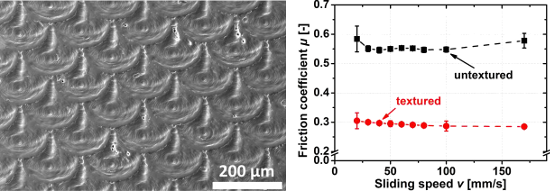
- were reported [15][16][27][28]. This is true for the dimple diameter [15][27][28], as well as for the dimple depth [16][28]. Size effects are a common phenomenon in materials science and have been found to influence mechanical and magnetic as well as surface properties like adhesion [38][39][40][41


Enhanced antineoplastic/therapeutic efficacy using 5-fluorouracil-loaded calcium phosphate nanoparticles
Beilstein J. Nanotechnol. 2018, 9, 2499–2515, doi:10.3762/bjnano.9.233
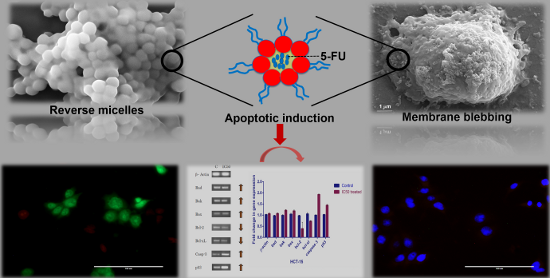
- agglomeration and enhanced colloidal stability [29]. Since the particle stability mainly depends on the electrical charge of the surface, properties such as cellular uptake, rate of drug release, and blood retention time are directly correlated with the zeta potential value. Furthermore, the zeta potential


Evidence of friction reduction in laterally graded materials
Beilstein J. Nanotechnol. 2018, 9, 2443–2456, doi:10.3762/bjnano.9.229
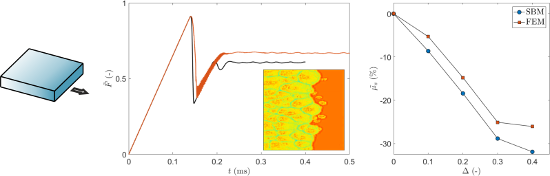
- macroscopic tribological properties through local variations of material and surface properties, i.e., Young’s moduli and friction coefficients, reducing static friction compared to the non-graded case. The results also allow the predictions of a discrete approach like the spring-block model [31][32] to be


![[Graphic 5]](/bjnano/content/inline/2190-4286-9-229-i10.svg?max-width=637&scale=1.18182) as function of time for the non-graded material: SBM solution for dif...
as function of time for the non-graded material: SBM solution for dif...


Synthesis of carbon nanowalls from a single-source metal-organic precursor
Beilstein J. Nanotechnol. 2018, 9, 1895–1905, doi:10.3762/bjnano.9.181
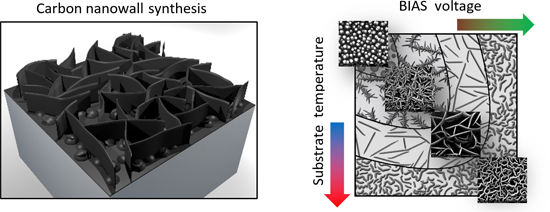
- surface. Surface diffusion can generally be considered as particles moving between adjacent adsorption sites on a surface. This motion strongly depends on the energy of the particle at the surface, typically increasing with increasing temperature, as well as on the various surface properties influencing


Synthesis of rare-earth metal and rare-earth metal-fluoride nanoparticles in ionic liquids and propylene carbonate
Beilstein J. Nanotechnol. 2018, 9, 1881–1894, doi:10.3762/bjnano.9.180
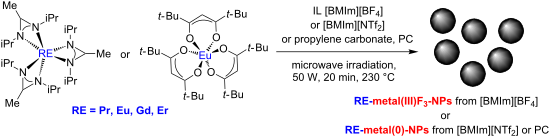
- particles via electrostatic and steric interactions without altering the surface properties [32][33][34][35][36][37]. In addition, they have a high thermal stability, negligible vapor pressure and are not flammable [38]. PC is an aprotic, highly dipolar solvent with low viscosity [39][40], low flammability


Direct AFM-based nanoscale mapping and tomography of open-circuit voltages for photovoltaics
Beilstein J. Nanotechnol. 2018, 9, 1802–1808, doi:10.3762/bjnano.9.171
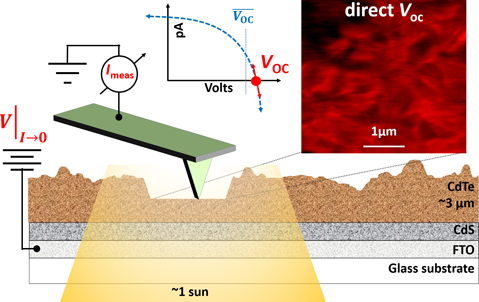
- secondary PID loop varies the sample bias to maintain a fixed cantilever amplitude, phase, or frequency. The capacitive and/or coulombic interactions that perturb these signals null when the probe bias equals the ensemble specimen voltage beneath the tip, providing a directly measured map of local surface
- properties. There is a particular need for such efficient direct property-mapping routines for computed tomographic AFM (CT-AFM), in which images are serially acquired during progressive surface milling [6][8]. For instance, to investigate the nearly 50% reduction in efficiency for CdTe solar cells compared


Controllable one-pot synthesis of uniform colloidal TiO2 particles in a mixed solvent solution for photocatalysis
Beilstein J. Nanotechnol. 2018, 9, 1715–1727, doi:10.3762/bjnano.9.163
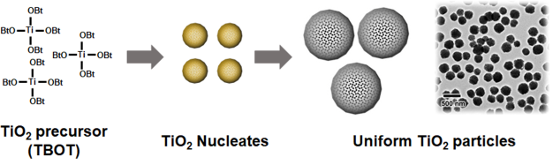
- differences in the surface area. It is well known that the photocatalytic activity is highly influenced by several factors, such as crystalline properties, surface area, dispersity, etc. Since we calcined all TiO2 samples at the same temperature, it can be regarded that the crystalline properties and surface
- properties are similar. However, different concentrations of surfactant used during the synthesis affect the surface area of the final TiO2 samples, resulting in different photocatalytic activity. Based on our observations, we can conclude that our TiO2 particles, having high anatase crystallinity with mixed