Search results
Search for "tension" in Full Text gives 205 result(s) in Beilstein Journal of Nanotechnology. Showing first 200.
Evidence of friction reduction in laterally graded materials
Beilstein J. Nanotechnol. 2018, 9, 2443–2456, doi:10.3762/bjnano.9.229
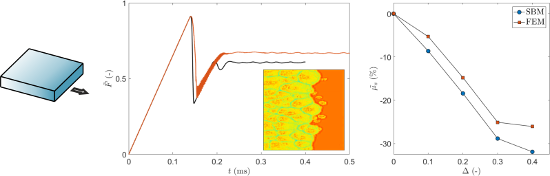
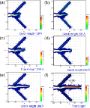
- in Figure 5, but in the opposite direction. Thus, the material portion of the sliding plate is in tension for Δ > 0 and in compression for Δ < 0. Qualitatively speaking, a positive gradient in the Young’s modulus is equivalent to a negative gradient in the local coefficients of friction. Again, FEM


![[Graphic 5]](/bjnano/content/inline/2190-4286-9-229-i10.svg?max-width=637&scale=1.18182) as function of time for the non-graded material: SBM solution for dif...
as function of time for the non-graded material: SBM solution for dif...


Adhesive contact of rough brushes
Beilstein J. Nanotechnol. 2018, 9, 2405–2412, doi:10.3762/bjnano.9.225
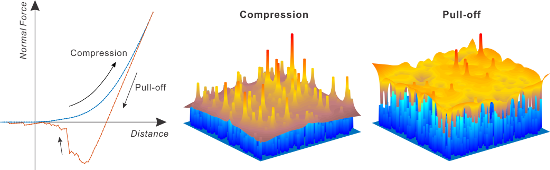
- heights (see the side of the contact) one can see the “negative spikes” which stem from the not-yet-destroyed adhesive contacts of individual pillars loaded in tension. The scheme of indenting and pull-off stages of an adhesive contact of exponentially distributed pillars. An example of a pillar structure


Surface energy of nanoparticles – influence of particle size and structure
Beilstein J. Nanotechnol. 2018, 9, 2265–2276, doi:10.3762/bjnano.9.211
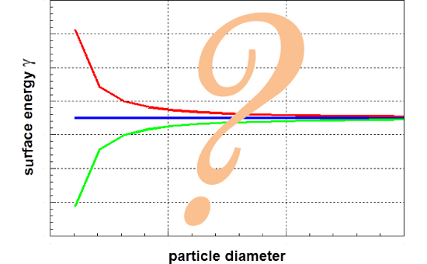
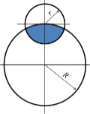
- Gibbs using the term “surface tension” [1][2]. In the meantime, it has become clear that in case of solids one has to distinguish between “surface energy” and “surface stress”. Both quantities are related by the Shuttleworth equation [3]. Since the surface stress, σ, exerts a pressure, p, on a curved
- tension”). The analysis of the surface energy data of nanoparticles and the dependence of the surface energy on particle size and temperature is of essential importance because the phase (crystalline or liquid) depends on the particle size. Additionally, it is possible that the particles form a stable
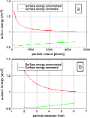
- this, the basic ideas of both approaches are explained in this paper. Approach based on classical thermodynamics and continuum considerations When Gibbs [1][2] introduced surface energy using the term surface tension he predicted a decrease of the surface energy with decreasing droplet size. As an





Electrospun one-dimensional nanostructures: a new horizon for gas sensing materials
Beilstein J. Nanotechnol. 2018, 9, 2128–2170, doi:10.3762/bjnano.9.202
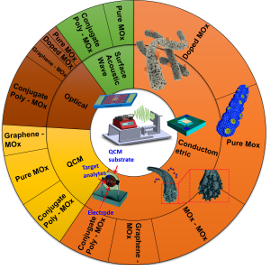
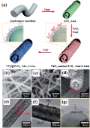
- droplet into a cone shape, where surface tension reduces the surface area by keeping it in a spherical shape. When the charged repulsive expansion exceeds surface tension based contraction, a charged jet of the solution is ejected from the tip of the Taylor cone and travels toward the target surface [48
- sensing platforms (i.e., micro-electromechanical systems (MEMs)). The electrospinning process is governed by various parameters such as viscosity, conductivity, molecular weight of fiber components, surface tension of polymer solution, electric potential, working distance, and flow rate. Each parameter






Interaction-tailored organization of large-area colloidal assemblies
Beilstein J. Nanotechnol. 2018, 9, 1582–1593, doi:10.3762/bjnano.9.150
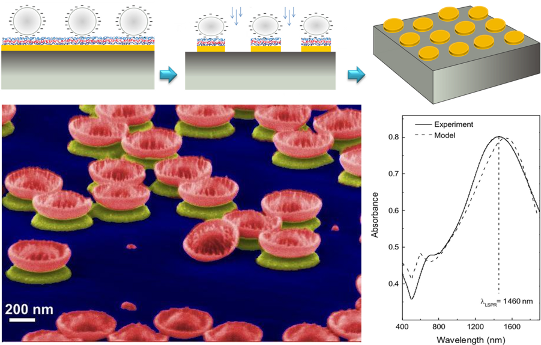
- are not completely fixed in their positions on the substrates [29]. It is worth noting that the intensity of capillary forces increases with the particle radius and as the distance between two particles in a liquid is reduced: Fcap ≈ 2πσrc2(sin2θ) / r where σ is the surface tension of the liquid, θ is


A simple extension of the commonly used fitting equation for oscillatory structural forces in case of silica nanoparticle suspensions
Beilstein J. Nanotechnol. 2018, 9, 1095–1107, doi:10.3762/bjnano.9.101
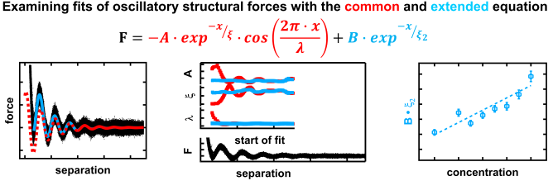
- been measured for suspensions with concentrations of nanoparticles ranging from 2 to 10 wt %. Wafer and cantilever were completely immersed in the sample suspension using a custom-built liquid cell. For each suspension 100 force curves were recorded as deflection (electric tension) in volts over the


Review on nanoparticles and nanostructured materials: history, sources, toxicity and regulations
Beilstein J. Nanotechnol. 2018, 9, 1050–1074, doi:10.3762/bjnano.9.98



Fatigue crack growth characteristics of Fe and Ni under cyclic loading using a quasi-continuum method
Beilstein J. Nanotechnol. 2018, 9, 1000–1014, doi:10.3762/bjnano.9.93
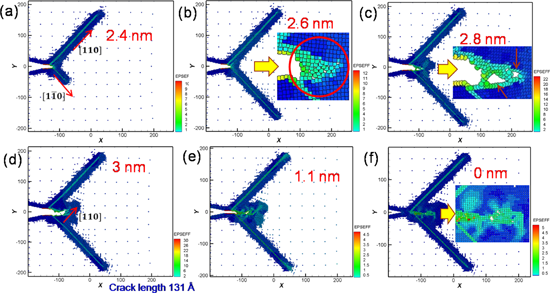
- cyclic loading of tension or shear. To completely analyze the crack growth and expansion characteristics of single-crystal Fe and Ni, the quasi-continuum (QC) method as proposed by Miller and Tadmor [15], instead of the traditional MD method, was employed as its computational efficiency is considerably
- . [23] have proposed a correction method to fix the error originating from the ghost force in the solution. Figure 1b shows the sample under cyclic loading of tension–compression (mode I) and shear–reverse shear (mode II). W1 and L1 represent the width and length of the sample (40 nm). W2 and L2
- . Results and Discussion Crack growth and expansion characteristics under tension and compression The orientation for analyzing the crack growth characteristics under cyclic loading of tension and compression (mode I) was selected according to the similar atomic orientation between Ni and Fe [18], which is









Nanoscale mapping of dielectric properties based on surface adhesion force measurements
Beilstein J. Nanotechnol. 2018, 9, 900–906, doi:10.3762/bjnano.9.84
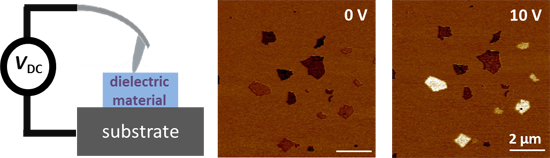
- liquid interfacial tension, θ0 is the contact angle at zero external voltage, and d, εr and ε0 are the thickness, relative permittivity of the dielectric layer, and the absolute dielectric permittivity of vacuum, respectively. Hence, the adhesion force between the AFM tip and the sample is affected by


Tuning adhesion forces between functionalized gold colloidal nanoparticles and silicon AFM tips: role of ligands and capillary forces
Beilstein J. Nanotechnol. 2018, 9, 660–670, doi:10.3762/bjnano.9.61
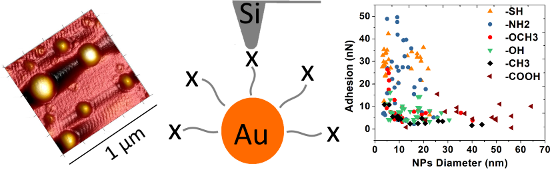
- ° and θTL = 60° [36] are the static contact angles of the liquid on substrate (–NH2) and tip, respectively and γLV = 7.28 × 10⁻² N/m is the liquid (water) surface tension. For the given values the capillary forces are around 7 nN. From Equation 2, it can be deduced that for the low humidity there is no


Optimisation of purification techniques for the preparation of large-volume aqueous solar nanoparticle inks for organic photovoltaics
Beilstein J. Nanotechnol. 2018, 9, 649–659, doi:10.3762/bjnano.9.60
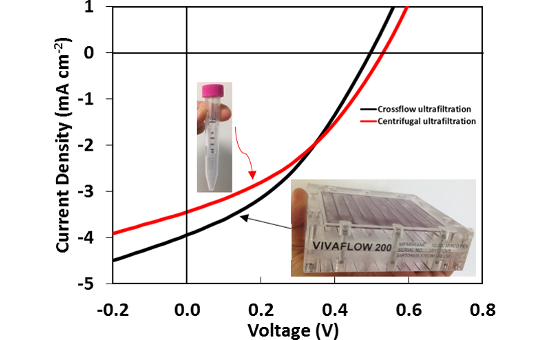
- spectroscopy-based method and by surface tension measurements of the nanoparticle ink filtrate; revealing that centrifugal ultrafiltration removed SDS at a higher rate than crossflow ultrafiltration even though a similar filter was applied in both cases (10,000 Da Mw cut-off). The influence of SDS
- at a dilution factor of 7.8 × 10⁴, while crossflow purified inks did not reach a maximum efficiency until a dilution factor of 6.1 × 10⁹. This difference was ascribed to the different wetting properties of the prepared inks and was further corroborated by surface tension measurements of the ASNP inks
- which revealed that the peak efficiencies for both methods occurred for similar surface tension values of 48.1 and 48.8 mN m−1. This work demonstrates that addressing the surface tension of large-volume ASNP inks is key to the reproducible fabrication of nanoparticle photovoltaic devices. Keywords


Single-step process to improve the mechanical properties of carbon nanotube yarn
Beilstein J. Nanotechnol. 2018, 9, 545–554, doi:10.3762/bjnano.9.52
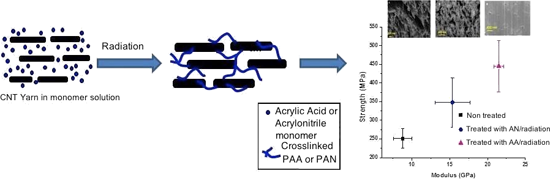
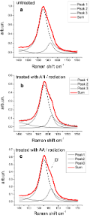
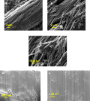
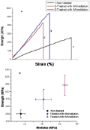
- functionalized with AN (80% v/v) in MeOH/H2O (30% v/v). To avoid the homopolymerization process, 4% of inhibitor metal salt (FeSO4·7H2O) was added to all the solutions. Immediately after the yarns were immersed in the solution, they were stretched on a cardboard. A light tension was placed on the fibers ends so




Ultralight super-hydrophobic carbon aerogels based on cellulose nanofibers/poly(vinyl alcohol)/graphene oxide (CNFs/PVA/GO) for highly effective oil–water separation
Beilstein J. Nanotechnol. 2018, 9, 508–519, doi:10.3762/bjnano.9.49
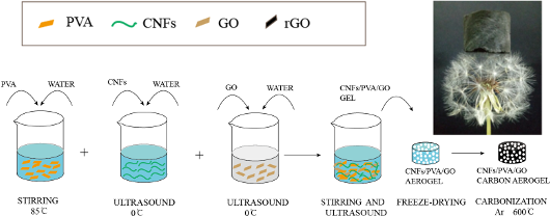
- aerogels with high porosity, small hole size and low surface energy. Obviously, the absorption capacity difference of the carbon aerogels was largely determined by the density of the carbon aerogel and surface tension of the solvents and oils. Additionally, the density, which demonstrates the quantity of


Engineering of oriented carbon nanotubes in composite materials
Beilstein J. Nanotechnol. 2018, 9, 415–435, doi:10.3762/bjnano.9.41
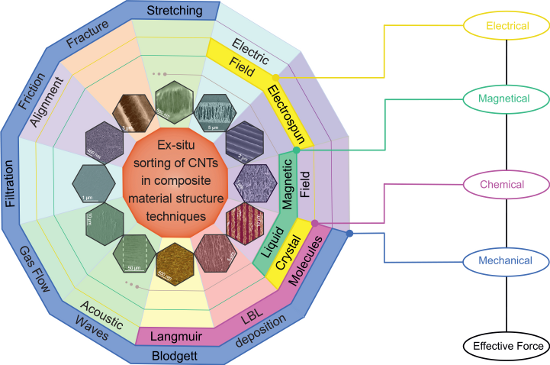
- polymer layer, manual alignment is preferred [41]. Based on the fundamental principles of this approach, another method for making thin films of CNTs has been developed using the same tools. Fluid containing CNTs is spread on a solid substrate using a spiral film applicator. The surface tension and








Periodic structures on liquid-phase smectic A, nematic and isotropic free surfaces
Beilstein J. Nanotechnol. 2018, 9, 342–352, doi:10.3762/bjnano.9.34
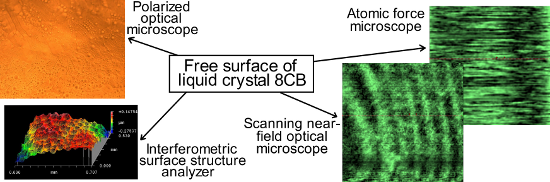
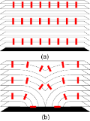
- liquid surface [16][17][18][19][20]. In the article [16], a case was considered where periodic stripe structures occur on the charged liquid helium surface as a result of competition between electrostatic forces and surface tension. Qualitatively, our problem is similar to this case and can be described
- ) which has polarized and confocal modes. Figure 14 demonstrates a scanning electron microscope photo of the SNOM probe with a magnification of about 104, extra high tension of 10 kV, tilt angle of 0°, and an aperture size of 30 μm. The aperture is about 200 nm. Figure 15 shows the regions of operation of









Bombyx mori silk/titania/gold hybrid materials for photocatalytic water splitting: combining renewable raw materials with clean fuels
Beilstein J. Nanotechnol. 2018, 9, 187–204, doi:10.3762/bjnano.9.21
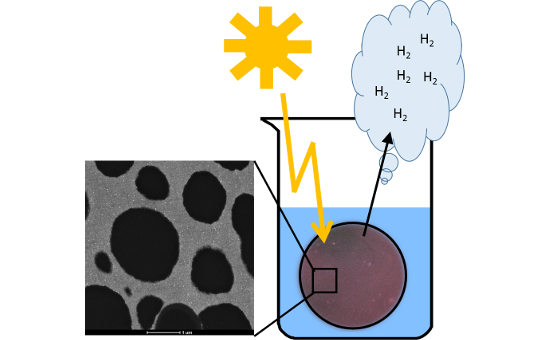
- instrument software (Sol.I.D.) was employed for calculations of results supporting Washburn’s equation. A mercury surface tension of 0.48 N/m and a contact angle of intruded mercury of 140° were assumed. Reflection solid-state UV–vis spectrometry was done on a Perkin-Elmer (PE) Lambda 950 UV–vis spectrometer




Humidity-dependent wound sealing in succulent leaves of Delosperma cooperi – An adaptation to seasonal drought stress
Beilstein J. Nanotechnol. 2018, 9, 175–186, doi:10.3762/bjnano.9.20
- tension during ontogeny and which are more efficient in supporting the larger adult woody plant body. However, in some species, adult plants remain locked in the production of initial wide-band tracheid in their wood. This can be interpreted as a case of paedomorphosis [12][13]. In leaves of D. cooperi
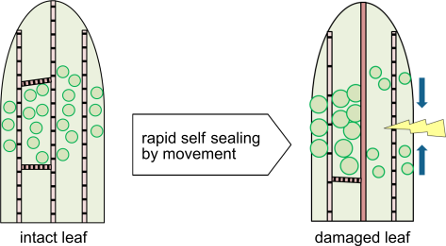
- become succulent (Figure 4b). As a consequence, in adult succulent leaves, the epidermis, the net of vascular bundles and the central vascular strand are pre-stressed under tension, whereas the parenchyma and chlorenchyma are pre-stressed under compression. In intact leaves, these internal pre-stresses
- ). The effect is caused by the mechanical instabilities that come into play if fissures destroy the aforementioned mechanical equilibrium in a leaf that is composed of five tissue shells that are pre-stressed alternatively under compression or tension. Konrad et al. [7] have developed an analytical


Hyperthermic intracavitary nanoaerosol therapy (HINAT) as an improved approach for pressurised intraperitoneal aerosol chemotherapy (PIPAC): Technical description, experimental validation and first proof of concept
Beilstein J. Nanotechnol. 2017, 8, 2729–2740, doi:10.3762/bjnano.8.272
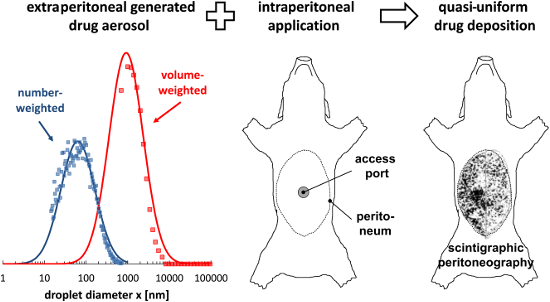
- temperature due to decreasing dynamic viscosity, density and surface tension of the liquid. To increase the droplet flux as well as the in-tissue drug penetration homogenously over the whole peritoneum, the HINAT-LAU aerosol is also unipolar-charged before entering the capnoperitoneum. For this purpose, an




Localized growth of carbon nanotubes via lithographic fabrication of metallic deposits
Beilstein J. Nanotechnol. 2017, 8, 2592–2605, doi:10.3762/bjnano.8.260
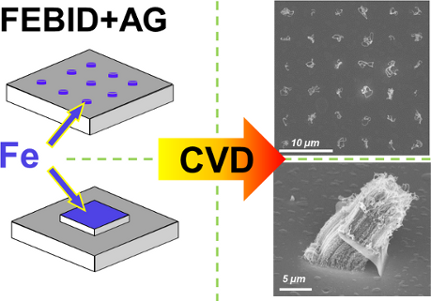
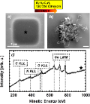
- summarized as sketched in Figure 9. We speculate that the Fe EBID deposits eventually sinter or alloy to a certain extent with the underlying alumina layer. By chance this process might lead to increased tension within the deposited structure and could cause lifting at the rim of the latter. During CVD, the




Nanoprofilometry study of focal conic domain structures in a liquid crystalline free surface
Beilstein J. Nanotechnol. 2017, 8, 2544–2551, doi:10.3762/bjnano.8.254
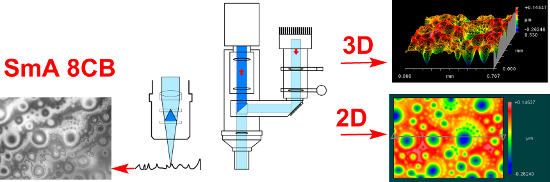
- the elastic moduli of liquid crystals. The shear modulus, G, is given as where C and C1 are scaling constants depending on surfactant, t is the relative temperature, γ is the surface tension coefficient of the free surface with FCDs, and L is the FCD dimension. This relation underlines that the
- is physically related to the domain size and surface tension. This is very important for the analysis of the stable director field configurations and mechanisms behind their destruction in LC displays. Even in the case of a homogeneous director field orientation on solid substrates, FCDs can occur




Direct writing of gold nanostructures with an electron beam: On the way to pure nanostructures by combining optimized deposition with oxygen-plasma treatment
Beilstein J. Nanotechnol. 2017, 8, 2530–2543, doi:10.3762/bjnano.8.253
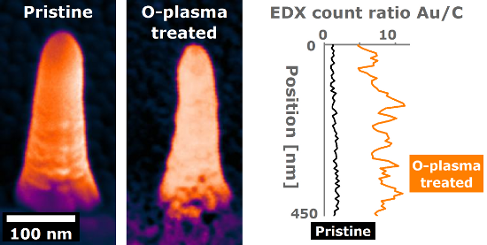
- variation, which we deem more likely. To maximize the deposition rate, i.e., to reduce the total deposition time, the electron beam parameters – acceleration voltage, i.e., high tension (HT), current (I), dwell time (DT), and pixel-to-pixel spacing (PPS) – had to be properly adjusted. It was experimentally
- , the full experimental parameter space of a typical FEBID system is multidimensional – it encompasses electron beam parameters (such as acceleration voltage, i.e., high tension, electron beam current, electron dose, i.e., deposition time), precursor parameters (such as precursor type, flux, and
- possibly addition of other gases), and substrate parameters (such as substrate type and temperature). To reduce the level of complexity, here we restrict the full parameter space to a subspace spanned by the axes of high tension, electron beam current, and deposition time. The deposition of Au NPs was

Surfactant-induced enhancement of droplet adhesion in superhydrophobic soybean (Glycine max L.) leaves
Beilstein J. Nanotechnol. 2017, 8, 2345–2356, doi:10.3762/bjnano.8.234
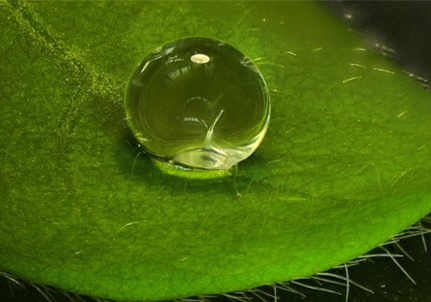
- roll off. Droplet adhesion can be improved by adding adjuvants, such as surfactants. Surfactants enhance the leaf surface wettability by reduction of the surface tension of applied liquids. Surfactants are amphiphilic molecules with a nonpolar, hydrophobic structural group together with a hydrophilic


High-stress study of bioinspired multifunctional PEDOT:PSS/nanoclay nanocomposites using AFM, SEM and numerical simulation
Beilstein J. Nanotechnol. 2017, 8, 2069–2082, doi:10.3762/bjnano.8.207
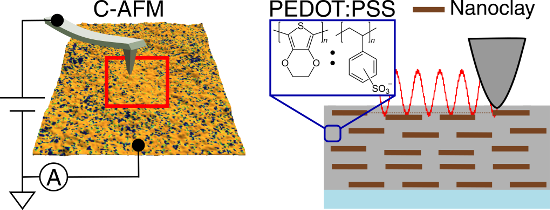
- of tens of nanometers, for example in polymer solar cells [59]. It is also worth noting that in both cases, thick and thin, there was a decrease in the average contact-resonance frequency for MTM compared to LAP. In macroscale tension testing, MTM has shown higher stiffness than LAP [11]. CRFM


Stick–slip boundary friction mode as a second-order phase transition with an inhomogeneous distribution of elastic stress in the contact area
Beilstein J. Nanotechnol. 2017, 8, 1889–1896, doi:10.3762/bjnano.8.189
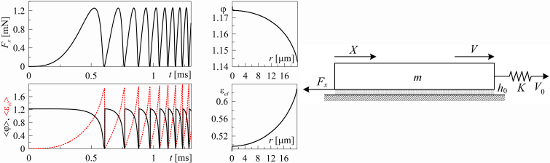
- and the driving device always exists. The dependence shown in Figure 2 allows us to conclude that the stick–slip mode, with increasing frequency of the melting/solidification phase transitions, is established in the system. The growth of the frequency is caused by the increasing tension of the driving
- velocity of the stamp center is calculated from Equation 10 and does not coincide with the velocity V0 mostly due to the presence of the friction force Fx (Equation 16). After the motion has begun, the tension of the spring and related growth of the elastic force causes the growth of the upper stamp


![[Graphic 15]](/bjnano/content/inline/2190-4286-8-189-i33.png?max-width=637&scale=1.18182) = 1.0, ...
= 1.0, ...


Evaluation of preparation methods for suspended nano-objects on substrates for dimensional measurements by atomic force microscopy
Beilstein J. Nanotechnol. 2017, 8, 1774–1785, doi:10.3762/bjnano.8.179
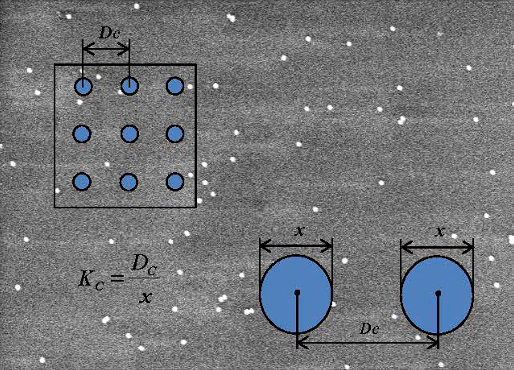
- in surface tension causes the liquid to flow away from regions of low surface tension associated with a strong recirculation in the droplet, which removes particles from the contact line and moves them along the free surface toward the droplet centre. Rinsing method: Apart from the interruption of