Search results
Search for "thermal conductivity" in Full Text gives 132 result(s) in Beilstein Journal of Nanotechnology.
Structural, optical, opto-thermal and thermal properties of ZnS–PVA nanofluids synthesized through a radiolytic approach
Beilstein J. Nanotechnol. 2015, 6, 529–536, doi:10.3762/bjnano.6.55
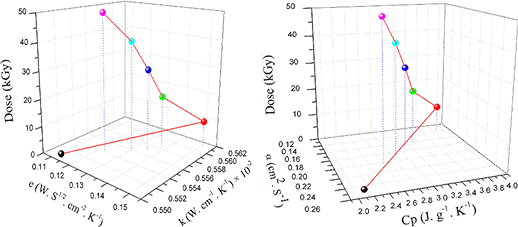
- , powder X-ray diffraction (XRD) for confirming the formation and crystalline structure of ZnS nanoparticles, UV–visible spectroscopy for measuring the electronic absorption characteristics, transient hot wire (THW) and photoacoustic measurements for measuring the thermal conductivity and thermal
- effusivity of the samples, from which, for the first time, the values of specific heat and thermal diffusivity of the samples were then calculated. Keywords: Fourier transform infrared spectroscopy (FTIR); specific heat; thermal conductivity; thermal effusivity; ZnS nanoparticles; Introduction Over the
- originating from chemical initiators [6]. The interest in measuring the thermal conductivity (k) and the thermal effusivity (e) of nanofluids containing semiconductors has increased [15] because of their increasing use in devices [16]. The photoacoustic (PA) effect has been demonstrated to be a valid


Synthesis of boron nitride nanotubes and their applications
Beilstein J. Nanotechnol. 2015, 6, 84–102, doi:10.3762/bjnano.6.9
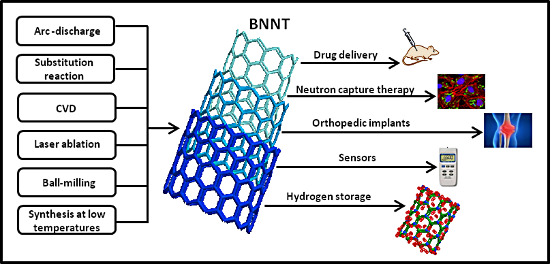
- radiation absorption. Their electrical insulation is indeed very high, despite a high thermal conductivity [6]. Due to these properties, they can be used in a wide range of applications. BNNTs can resist oxidation in air up to 1000 °C while CNTs are resistant only up to 500 °C under the same conditions [7


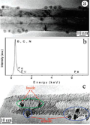


SERS and DFT study of copper surfaces coated with corrosion inhibitor
Beilstein J. Nanotechnol. 2014, 5, 2489–2497, doi:10.3762/bjnano.5.258
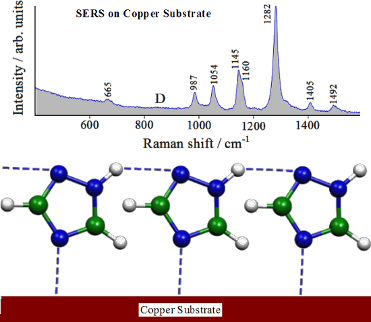
- large electrical and thermal conductivity, mechanical workability and durability (due to its endurance to weathering). These properties, however, can be compromised by the occurrence of corrosion. In fact, copper undergoes severe corrosion in the presence of ions such as chlorides, which can be present


Synthesis of Pt nanoparticles and their burrowing into Si due to synergistic effects of ion beam energy losses
Beilstein J. Nanotechnol. 2014, 5, 1864–1872, doi:10.3762/bjnano.5.197
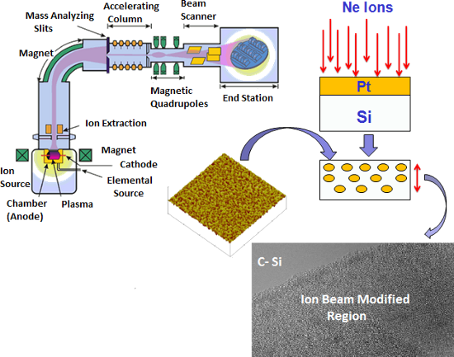
- combination is 846/ion (TRIM calculations). Using the thermal properties of silicon (a specific heat of 710 J/kg∙K and a thermal conductivity of 150 W/m∙K) and electronic energy deposited by the ions in silicon, we expect a spike temperature of about ≈2540 K (within 1 ps and 1 nm away from the ion track) [44



Carbon-based smart nanomaterials in biomedicine and neuroengineering
Beilstein J. Nanotechnol. 2014, 5, 1849–1863, doi:10.3762/bjnano.5.196
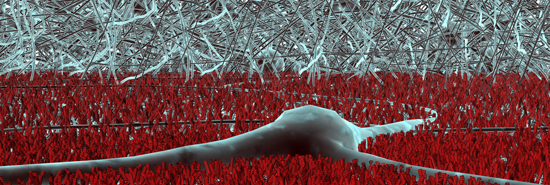
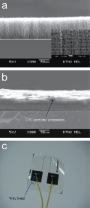
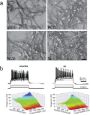
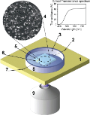
- mobility of electrical charge carriers and high thermal conductivity [8][9]. Diamond exhibits these properties both in bulk as well as at the nanoscale and combines them with typical features of nanomaterials, such as a large surface area and small overall size. NDs, mainly obtained by detonation of TNT


A study on the consequence of swift heavy ion irradiation of Zn–silica nanocomposite thin films: electronic sputtering
Beilstein J. Nanotechnol. 2014, 5, 1691–1698, doi:10.3762/bjnano.5.179
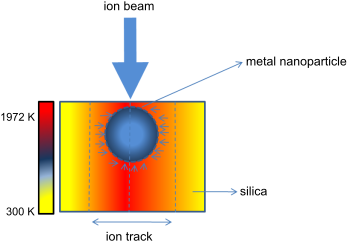
- , the incoming ion transfers its energy to electrons of the target. Due to the high thermal conductivity, the deposited energy is quickly transferred to other electrons and the heat transferred to the metal lattice through electron–phonon coupling is not sufficient to cause the melting of the metal
- . Whereas in the case of silica, a smaller deposited energy is enough to cause melting due to the low thermal conductivity and the high value of g. If we consider the case of metal nanoparticles embedded in silica (nanocomposite system), the scenario becomes quite different. The temperature of the metal
- through interaction with electrons of silica as well as of the metal nanoparticle. When the incident ion interacts with the electrons of the metal nanoparticle, the deposited energy rapidly diffuses to other electrons within the nanoparticle due to high thermal conductivity (ca. 318 W/(m·K) at 25 °C


Liquid fuel cells
Beilstein J. Nanotechnol. 2014, 5, 1399–1418, doi:10.3762/bjnano.5.153
- separating the individual cells in the stack should have a high corrosion resistance, good electronic and thermal conductivity, and be designed to evenly distribute reactants and products. It is worth noting that the bipolar plates have an impact on the cost structure comparable with the impact of catalytic
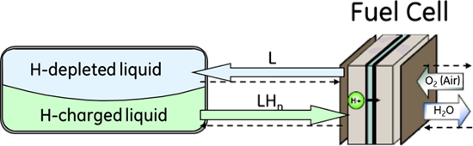
- requires substantial thermal energy, which is technically challenging due to their low thermal conductivity. The dehydrogenation of methylcyclohexane to toluene for both transportation and seasonal hydrogen storage was proposed 20 years ago [18]. Later the less volatile decalin/naphtalene couple with 7.3

Review of nanostructured devices for thermoelectric applications
Beilstein J. Nanotechnol. 2014, 5, 1268–1284, doi:10.3762/bjnano.5.141
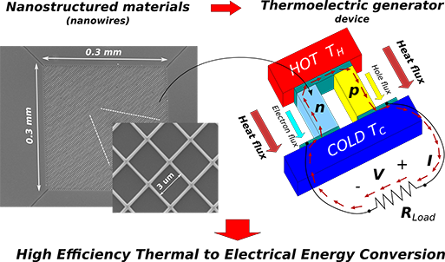
- TEG for thermal conduction: Most of the heat passes through the generator and it is wasted on the cold side without being converted in useful electrical power. Thus, one of the main target of research efforts in thermoelectricity is to develop materials with a very low thermal conductivity, while
- known materials both from the physical and the technological point of views, and it is at the center of a worldwide manufacturing infrastructure. Thermoelectric applications of silicon are currently limited by its high thermal conductivity (148 W/mK). However, several studies have observed a strong
- reduction of thermal conductivity in rough silicon nanowires [8][9][10]. For this reason, section IV is dedicated to the review of the main techniques currently investigated for the fabrication of silicon nanostructures that can be integrated in devices for thermoelectric generation. Review Principles of


Organic and inorganic–organic thin film structures by molecular layer deposition: A review
Beilstein J. Nanotechnol. 2014, 5, 1104–1136, doi:10.3762/bjnano.5.123
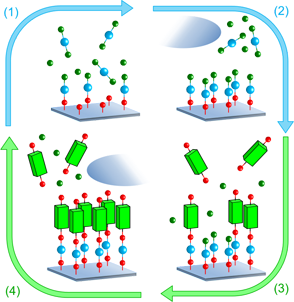
- reactions occurring during the growth. Also the GPC is far below the length of a Zn–EG unit, which was estimated to be around 6.9 Å. Thermal conductivity of the DEZ+EG hybrid was measured to be around 0.22–0.23 W/(m·K), with little variation in the values when thicker samples were analyzed. The volumetric
- 150 °C was obtained. Although considerably higher than when comparing to GPC obtained earlier, it is still far from the ideal growth, which was estimated to be around 8.4 Å per cycle. Thermal conductivity of the DEZ+HQ films was considerable higher than those of the DEZ+EG films, i.e., about 0.32–0.38




Integration of ZnO and CuO nanowires into a thermoelectric module
Beilstein J. Nanotechnol. 2014, 5, 927–936, doi:10.3762/bjnano.5.106
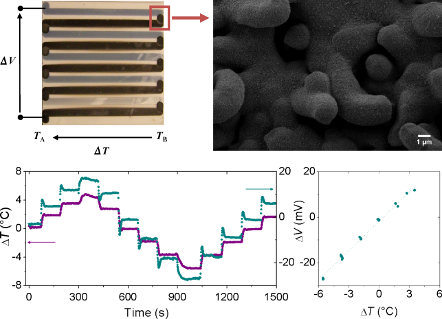
- ) performance of a material, including the thermal conductivity κ, the electrical conductivity σ and the Seebeck coefficient S. Further, the efficiency of a thermoelectric device depends on the thermoelectric power factor (TPF) and the figure of merit (ZT) of the material, which are defined as S2σ and S2Tσ/κ
- and the figure of merit ZT. In particular, in order to evaluate ZT is necessary to measure the thermal conductivity of the materials. Thermal conductivity measurements are still ongoing, because we need the reengineering of the test device to get rid of the thermal influence of the substrate. We


An analytical approach to evaluate the performance of graphene and carbon nanotubes for NH3 gas sensor applications
Beilstein J. Nanotechnol. 2014, 5, 726–734, doi:10.3762/bjnano.5.85
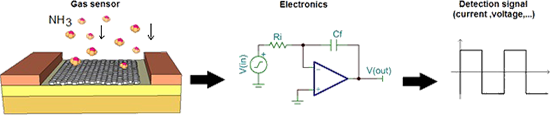
- . A CNT is known to have a very high electrical and thermal conductivity as well as a high Young's modulus giving it the mechanical strength. The applications of CNTs are broad due to their compact structure and include transistors, sensors, solar cells, fuel cells, etc. [17]. Andre Geim and


Resonance of graphene nanoribbons doped with nitrogen and boron: a molecular dynamics study
Beilstein J. Nanotechnol. 2014, 5, 717–725, doi:10.3762/bjnano.5.84
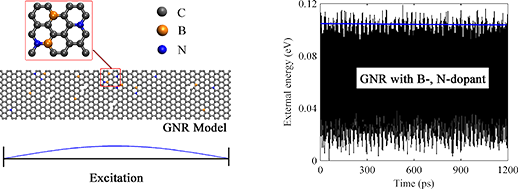
- been reported to have supreme stiffness (Young’s modulus ≈ 1 TPa), very high electron mobility, electrical and thermal conductivity, optical absorption as well as many other excellent properties [2][3]. These properties of graphene open up huge potential applications in the area of electronics


Analytical development and optimization of a graphene–solution interface capacitance model
Beilstein J. Nanotechnol. 2014, 5, 603–609, doi:10.3762/bjnano.5.71
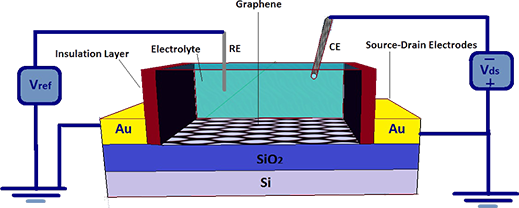
- these days. Geim, in 2004, demonstrated that the six-membered rings are the basis of all carbon materials in electrochemical biosensor research [7]. The remarkable electrical properties of graphene such as fast electron transport, tunable energy bandgap, high thermal conductivity, and ballistic




High activity of Ag-doped Cd0.1Zn0.9S photocatalyst prepared by the hydrothermal method for hydrogen production under visible-light irradiation
Beilstein J. Nanotechnol. 2014, 5, 587–595, doi:10.3762/bjnano.5.69
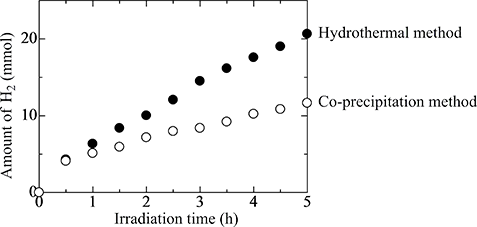
- reaction. A 500 W halogen lamp was used as the visible-light source. Hydrogen gas evolved was identified by an online system with thermal conductivity detector (TCD) gas chromatography (GC, Agilent 7890A) using Supelco 13X molecular sieves and argon carrier gas, which amount was measured by volumetric


Artificial sunlight and ultraviolet light induced photo-epoxidation of propylene over V-Ti/MCM-41 photocatalyst
Beilstein J. Nanotechnol. 2014, 5, 566–576, doi:10.3762/bjnano.5.67
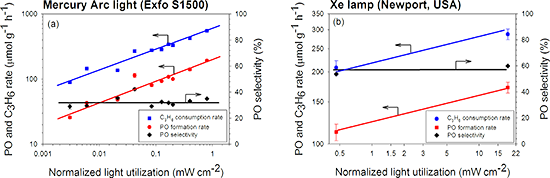
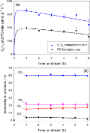
- ionization detector (FID) and a thermal conductivity detector (TCD) and the analysis was performed with both molecular sieve 5 Å and Porapak-N columns. The product formation rate, propylene consumption rate and the product selectivity were defined according to the following equations. The spectrum of: (a) UV




Nanoscale particles in technological processes of beneficiation
Beilstein J. Nanotechnol. 2014, 5, 458–465, doi:10.3762/bjnano.5.53
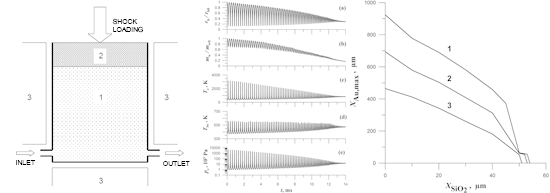
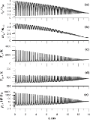
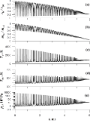
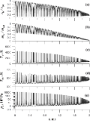
- dominate over those of thermal conductivity. Since the vapor temperature is significantly higher than that of the liquid and the phase equilibrium is violated, it is necessary to take into account the heat exchange between vapor and liquid due to phase transformation. Furthermore, imperfection of dense gas
- of the fine solid particle in its interaction with the bubbles are described within the framework of one-dimensional (plane) problem of thermal conductivity for the corresponding three-layer incompressible body, in which the noble metal is placed between two layers of mineral. In this case, the
- the bubble. The change in the liquid temperature is determined by the set of thermal conductivity equations that, in particular, takes into account the heat exchange with the vapor. The liquid velocity is determined by the continuity equation for the incompressible liquid. The set of gas-dynamics and


Dye-sensitized Pt@TiO2 core–shell nanostructures for the efficient photocatalytic generation of hydrogen
Beilstein J. Nanotechnol. 2014, 5, 360–364, doi:10.3762/bjnano.5.41
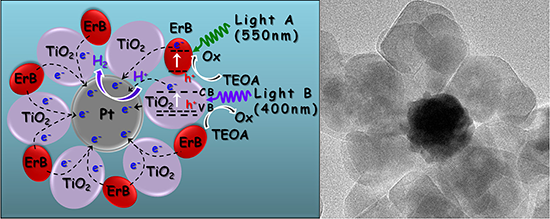
- thermal conductivity detector (TCD). XRD patterns of Pt@TiO2 and Pt/TiO2 samples. TEM and SEM images of the Pt@TiO2 sample. (A) (B) TEM images of Pt@TiO2, (C) HRTEM images of Pt@TiO2, (D) SEM image of Pt@TiO2. UV–vis diffuse reflectance spectra of the Pt@TiO2 and Pt/TiO2 samples. The H2 yield from Pt@TiO2


En route to controlled catalytic CVD synthesis of densely packed and vertically aligned nitrogen-doped carbon nanotube arrays
Beilstein J. Nanotechnol. 2014, 5, 219–233, doi:10.3762/bjnano.5.24
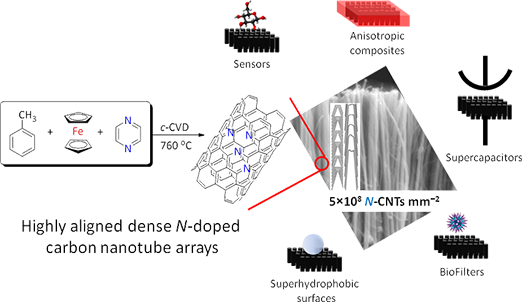
- variety of electrical engineering applications has been continuously growing [6][7]. The enhancement of other properties of N-CNTs, including the chemical reactivity [8], the dispersibility in a variety of solvents/matrices [9], the structural strength [10] or the thermal conductivity [11] has been also


Challenges in realizing ultraflat materials surfaces
Beilstein J. Nanotechnol. 2013, 4, 875–885, doi:10.3762/bjnano.4.99
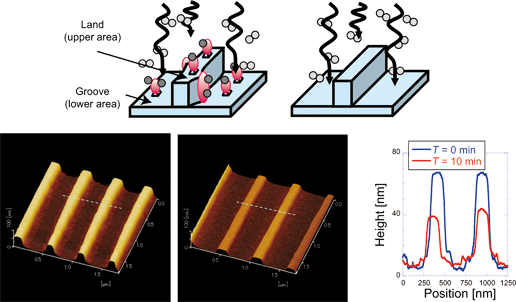
- substrate can be a serious problem, because substrates with large Ra values induce defects or dislocations in the deposited active layer [4]. Diamond is a promising material for future power devices because of its many excellent characteristics including high values for hardness and thermal conductivity

Routes to rupture and folding of graphene on rough 6H-SiC(0001) and their identification
Beilstein J. Nanotechnol. 2013, 4, 625–631, doi:10.3762/bjnano.4.69
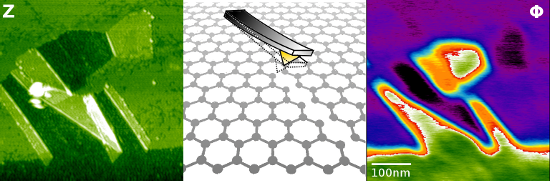
- shown to have unique properties such as high mechanical strength and elasticity, a very high electrical and thermal conductivity, the impermeability to gases, and many others [2]. All of them make it highly attractive for numerous applications, and a most promising candidate for advanced


Mapping of plasmonic resonances in nanotriangles
Beilstein J. Nanotechnol. 2013, 4, 588–602, doi:10.3762/bjnano.4.66
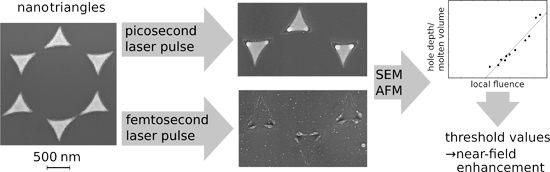
- comparatively short thermal diffusion length leads to strong thermal gradients with a length scale that is below the dimensions of the illuminated particle (thermal diffusion length: lD = ≈ 200 nm with thermal diffusivity of gold D = κ/(cp·ρ) = 1.27·10−4 m2·s−1 and laser pulse length τ = 300 ps; κ: thermal
- conductivity; cp: specific heat capacity; ρ: mass density). For higher intensities, larger parts of the triangles melt. In analogous to fs pulses there is an intensity regime where the nanostructures are removed by the laser irradiation without causing major damage on the Si substrate surface. The removal


Structural and thermoelectric properties of TMGa3 (TM = Fe, Co) thin films
Beilstein J. Nanotechnol. 2013, 4, 461–466, doi:10.3762/bjnano.4.54
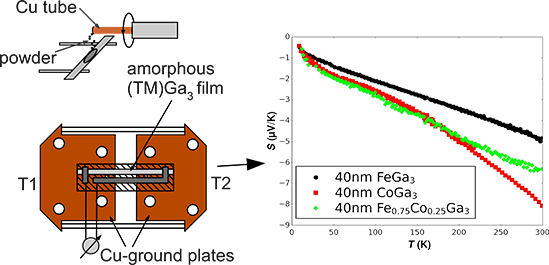
- annealing in order to improve film crystallinity. In the present study with its emphasis on thermoelectric properties of the (TM)Ga3 films, the related figure of merit [10] ZT = S2σT/λ (S: Seebeck coefficient, σ: electrical conductivity, λ: thermal conductivity, T: Kelvin temperature) indicates that low


Synthesis and thermoelectric properties of Re3As6.6In0.4 with Ir3Ge7 crystal structure
Beilstein J. Nanotechnol. 2013, 4, 446–452, doi:10.3762/bjnano.4.52
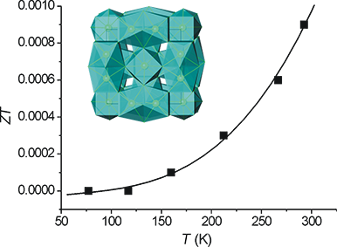
- . Re3As6.6In0.4 behaves as a bad metal or heavily doped semiconductor, with electrons being the dominant charge carriers. It possesses high values of Seebeck coefficient and low thermal conductivity, but relatively low electrical conductivity, which leads to rather low values of the thermoelectric figure of merit
- is the absolute temperature, S the Seebeck coefficient, σ the electrical conductivity, and κ the thermal conductivity. It is shown in the literature [1] that the best thermoelectric materials are to be sought among narrow-gap semiconductors composed of heavy elements, in which structural features
- favor low thermal conductivity [2]. Attempts to improve the ZT value have led to the investigation of various types of thermoelectrics beyond the long-known lead and bismuth tellurides [3][4]. Among new candidates are the filled skutterudites [5][6], semiconducting clathrates [7], disordered materials


Grating-assisted coupling to nanophotonic circuits in microcrystalline diamond thin films
Beilstein J. Nanotechnol. 2013, 4, 300–305, doi:10.3762/bjnano.4.33
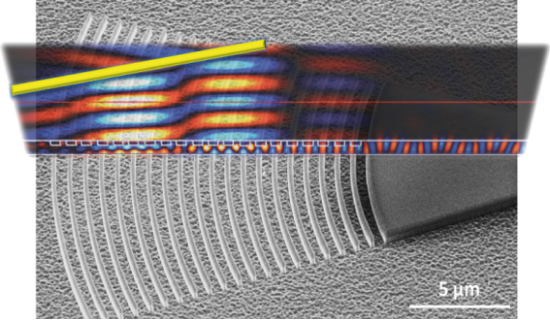
- diamond has found a wealth of applications for the fabrication of windows that permit transmission in the long-IR or microwave regions [14]. In addition, diamond provides attractive material properties, such as biocompatibility, chemical inertness, high thermal conductivity, and mechanical hardness [15


Size variation of infrared vibrational spectra from molecules to hydrogenated diamond nanocrystals: a density functional theory study
Beilstein J. Nanotechnol. 2013, 4, 262–268, doi:10.3762/bjnano.4.28
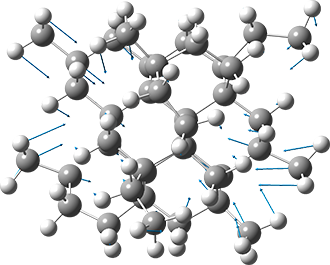
- extraordinary properties of bulk diamond that include high hardness, inertness and high thermal conductivity. The additional properties added by reduction to the nanoscale make diamonds and related carbon materials a focus for recent investigations [1][2][3][4][5][6][7][8][9]. One of the first steps of