


Search results
Search for "thiol" in Full Text gives 179 result(s) in Beilstein Journal of Nanotechnology.
Dielectrophoresis of gold nanoparticles conjugated to DNA origami structures
Beilstein J. Nanotechnol. 2016, 7, 948–956, doi:10.3762/bjnano.7.87
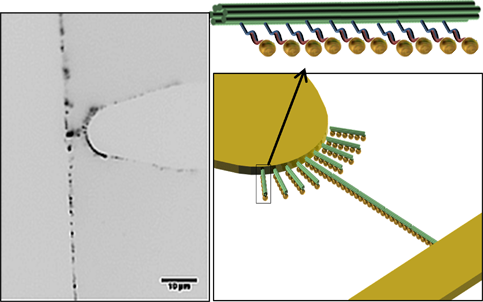
- a thiol functionality at the 3′ end (sequence: 5′TTTTT TTTTT TTTTT TTT–C3H5SH3′, HPLC purified, Biomers.net). For this, 3.2 pmol phosphinated gold nanoparticles were mixed in equivalent ratio with the oligonucleotides in Na+-TBE buffer solution (50 mM NaCl, 89 mM Tris, 89 mM boric acid, 1 mM EDTA pH


Gold nanoparticles covalently assembled onto vesicle structures as possible biosensing platform
Beilstein J. Nanotechnol. 2016, 7, 655–663, doi:10.3762/bjnano.7.58
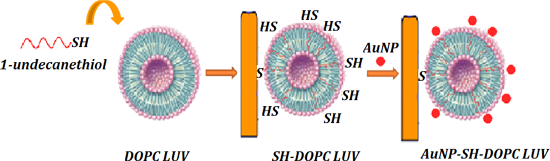
- per-6-thio-β-cyclodextrin accomplished via covalent gold–thiol bonds [10]. These AuNPs provide an excellent platform for drug delivery due to the functional versatility of their monolayers. The vesicles with AuNPs are suitable for applications such as transport inside cells [11], photodynamic
- systems were around 175 nm with a polidispersity of 0.2 determined by DLS indicating that the size of the LUVs does not change significantly by the incorporation of SH to the bilayer. A question may arise here about the orientation of the thiol molecules in the bilayer. That is, whether there are thiol
- was exposed and immersed in the SH–DOPC LUV solution for 30 min, enough time to form bonds between AuE and SH/DOPC [25]. This procedure was carried out in order to covalently bond the vesicles on the AuE through the thiol incorporated in the bilayer. Then, the AuE modified with SH–DOPC LUVs was


Novel roles for well-known players: from tobacco mosaic virus pests to enzymatically active assemblies
Beilstein J. Nanotechnol. 2016, 7, 613–629, doi:10.3762/bjnano.7.54
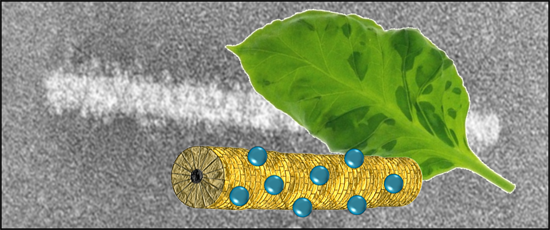
- variants and solid supports, in some cases involving thiol bonding ([7][173] and references therein; [110][174][175][176]). So far, however, it remains to be tested whether TMV particles immobilized via protruding RNA ends or through non-covalent attachment would retain their arrangement inside the flow


Comparison of the interactions of daunorubicin in a free form and attached to single-walled carbon nanotubes with model lipid membranes
Beilstein J. Nanotechnol. 2016, 7, 524–532, doi:10.3762/bjnano.7.46
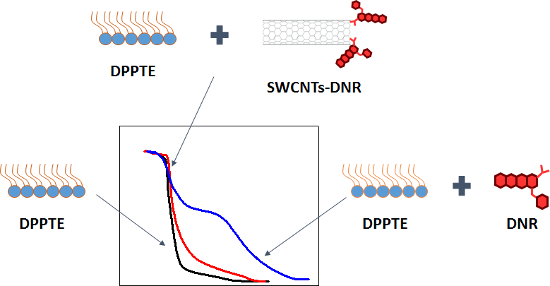
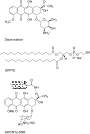
- controlled way [21][22]. Due to the presence of a thiol group in the polar headgroup region, this lipid has negative charge and it is possible to transfer monolayers onto solid support by means of both Langmuir–Blodgett method and self-assembly, which results in the differences in the packing of the




Rigid multipodal platforms for metal surfaces
Beilstein J. Nanotechnol. 2016, 7, 374–405, doi:10.3762/bjnano.7.34

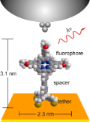
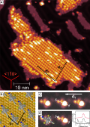
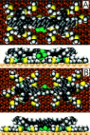
- . Since the early stages of molecular electronics, most studies deal with molecules attached to the gold surface through one thiol (–SH) group [63]. While the details of the adsorption mechanism are still under debate, it is commonly considered that the hydrogen of the thiol group is eliminated in contact
- with gold and that a covalent Au–S bond is formed [23][64]. This bond has a dissociation energy of around 2.1 eV (ca. 50 kcal·mol−1), which is large enough to ensure the thermal stability of thiol monolayers up to 80 °C [65]. Furthermore, it is stronger than the Au–Au bond with a dissociation energy of
- around 0.8 eV [66], which can lead to the removal of small gold clusters by mechanically removing thiols. The versatility of the thiol anchoring guarantees a dense coverage of both flat and rough gold surfaces. The clean close packed Au(111) surface exhibits a hexagonal arrangement of atoms with a well










Hemolysin coregulated protein 1 as a molecular gluing unit for the assembly of nanoparticle hybrid structures
Beilstein J. Nanotechnol. 2016, 7, 351–363, doi:10.3762/bjnano.7.32
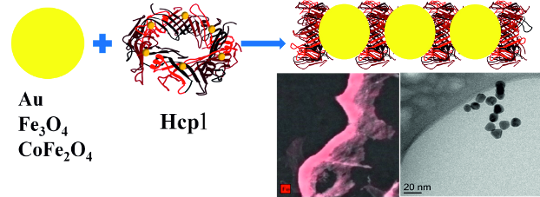
- connection via gold–thiol binding. The Au NP network shows similar reactivity to the colloidal Au NPs as a catalyst in the reduction reaction of 4-nitrophenol to 4-aminophenol. To explore the broad application of our concept, Hcp1_cys3 is also applied to assemble Fe3O4 and CoFe2O4 NPs. The reaction is




Case studies on the formation of chalcogenide self-assembled monolayers on surfaces and dissociative processes
Beilstein J. Nanotechnol. 2016, 7, 263–277, doi:10.3762/bjnano.7.24
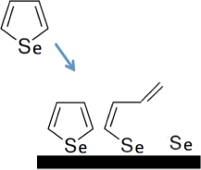
- . We discuss some recent studies based on X-ray photoelectron spectroscopy that shed light on these aspects for a series of such organic molecules. Keywords: copper; nickel; palladium; reactivity; selenol; selenophene; self-assembly; thiol; thiophene; Introduction In recent years research related to
- head group (thiol) molecules [1][2][3][4][5][6][7][8][9][10][11][12][13][14][15][16][17][18][19][20][21][22][23][24][25][26][27], but interest in other head group atoms such as C [28][29], N [30] and other chalcogenides has also received increased attention. In particular, selenium head group SAMs have
- transition metal surfaces [44][45]. A few years ago, the research groups of Nuzzo [46], Whitesides [46] and others [48] noted that for alkane thiol SAMs, the initial desulfurization occurs via S–C bond scission. This leads to the formation of a sulfidic interface layer, upon which a more or less ordered


Single-molecule mechanics of protein-labelled DNA handles
Beilstein J. Nanotechnol. 2016, 7, 138–148, doi:10.3762/bjnano.7.16
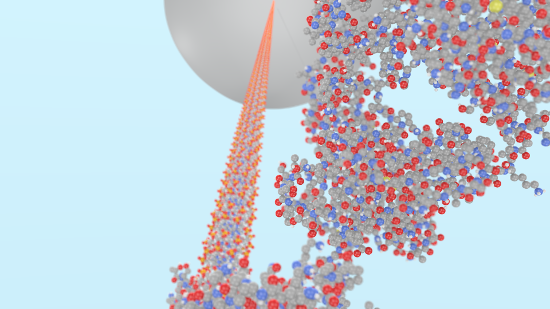
- and coupling to polystyrene beads PCR amplification of plasmid pTYB1 (7477 bp, New England Biolabs, Ireland (NEB)) with 5’-biotin (5’-AAT TCT TGA AGA CGA AAG GGC GGC-3’ for 4056 bp DNA and 5’-GGA TAC GAC GAT ACC GAA GAC AGC-3’ for 3034 bp DNA) and 5’-thiol or 5’-DIG end-modified primers (both have the
- OT setup. For DNA with DIG at the 5’ end and thiol at the 3’ end a PCR using the 7477 bp long plasmid pTYB1 was carried out with 5’-DIG end-modified and 5’-thiol end-modified primers. Subsequently, the thiol-end was covalently coupled to amino-beads with 2.1 µm diameter (Spherotech, Lake Forest, IL
- , USA) using a sulfo-SMCC cross linker (Fisher Scientific, Dublin, Ireland). DIG-DNA-Thiol was activated for 1 h at room temperature with a ratio of approx. 1000 SMCC molecules per DNA as previously described [8]. Excess of SMCC was removed using a ChargeSwitch® cleaning kit, and the activated DNA was



Surface-site reactivity in small-molecule adsorption: A theoretical study of thiol binding on multi-coordinated gold clusters
Beilstein J. Nanotechnol. 2016, 7, 53–61, doi:10.3762/bjnano.7.6
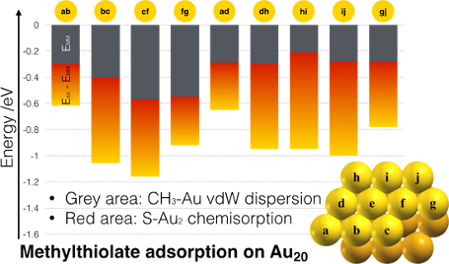
- ; sulfur–gold interactions; thiol adsorption; Introduction The interactions between organic molecules and metallic surfaces have been the subject of significant interest in recent years, because of their fundamental relevance in a broad array of nanoscience applications. One area of interfacial research
- , given its broad relevance in spectroscopy, sensing, nanotechnology and biophysics. Many reviews have been written in the last two decades on the topic of thiol adsorption on gold flat surfaces and clusters [50][51][52][53][54][55][56][57][58][59][60][61][62], and on that of aminoacid–gold binding [3][10
- adsorption case, as considering the complex in the molecular (gold + adsorbate) basis set is appropriate in the context of chemical bonding of the two. Results and Discussion Dissociative binding of methyl thiol on the Au20 cluster Despite the small size of the molecular backbones considered in this study


Effects of electronic coupling and electrostatic potential on charge transport in carbon-based molecular electronic junctions
Beilstein J. Nanotechnol. 2016, 7, 32–46, doi:10.3762/bjnano.7.4
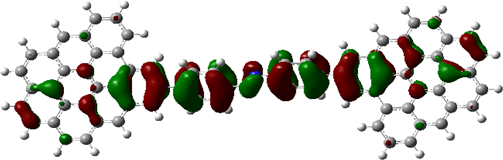
- of molecules oriented between two conductors, with charge transport through the molecular layer. The vast majority of existing junction structures are based on metal/molecule bonding such as the Au/thiol self-assembled monolayers [13][14][15][16][17][18][19][20][21], Langmuir–Blodgett films on metals


Chemiresistive/SERS dual sensor based on densely packed gold nanoparticles
Beilstein J. Nanotechnol. 2015, 6, 2498–2503, doi:10.3762/bjnano.6.259
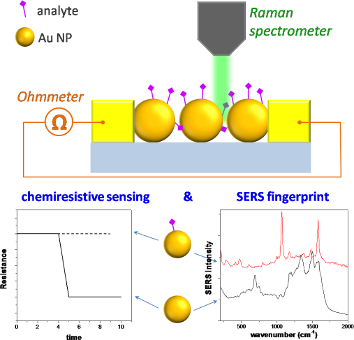
- transfer, which is in turn observed as a resistance decrease. Moreover, in our system MBA is a thiol-terminated molecule while folic acid is not, and therefore one can expect that the MBA molecules can replace folic acid ligands from the surface of the gold particles. MBA is smaller than folic acid, and


Nanostructured surfaces by supramolecular self-assembly of linear oligosilsesquioxanes with biocompatible side groups
Beilstein J. Nanotechnol. 2015, 6, 2377–2387, doi:10.3762/bjnano.6.244
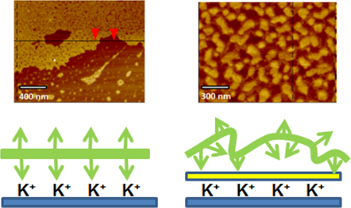
- cyclic tetravinylsiloxanetetraols [50]. The thiol-ene additions were photoinitiated by 2,2-dimethoxy-2-phenylacetophenone (DMPA) (full experimental data can be found in Supporting Information File 1). Thin layers of LPSQ-COOH/X were deposited onto freshly cleaved mica substrates by dip coating from their
- compounds patches of base layers can be observed that are more smooth (Rq = 0.077 and 0.047 nm). They do not exhibit clear phase contrast and it cannot be asserted whether they are areas of well-packed molecules or bare mica (Rq = 0.032 nm for bare mica). The surface of mica covered with TG bearing thiol
- . A similar trend can be observed for samples adsorbed on supports pretreated with mica-TG or mica-NAC (Figure 8 and Figure 9). Thiol groups are present on both surfaces. Thiols are more nucleophilic than hydroxyls and thus their ability for the formation of hydrogen bonds is different. P1 produces




Self-organization of gold nanoparticles on silanated surfaces
Beilstein J. Nanotechnol. 2015, 6, 2345–2353, doi:10.3762/bjnano.6.242
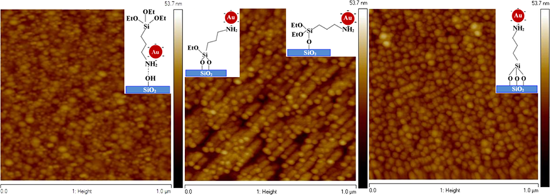
- Molecular self-assembly or self-organization is a technique which is widely used for the spontaneous arrangement of nanomaterials. Coupling agents such as thiol-terminated, amine-terminated, alkyl-terminated and phenyl-terminated silanes on metal nanoparticles (so called adsorbates) attach on various


Surfactant-controlled composition and crystal structure of manganese(II) sulfide nanocrystals prepared by solvothermal synthesis
Beilstein J. Nanotechnol. 2015, 6, 2319–2329, doi:10.3762/bjnano.6.238
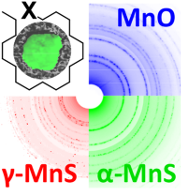
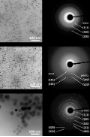
- precursor. When we used a single surfactant (carboxylic acid, alcohol, thiol, amine), α-MnS nanocrystals were obtained. The peculiar role of the amine seems to be related to its basicity. The nanocrystals were characterized by TEM and electron diffraction; ATR-FTIR spectroscopy provided information about
- , alcohol, and thiol surfactants. This set allowed us to understand how basicity, nucleophilicity and ability to undergo condensation reaction with stearic acid affect the structure directing ability of the surfactant. The crystal structure of the resulting NCs was determined by analyzing the electron


Orthogonal chemical functionalization of patterned gold on silica surfaces
Beilstein J. Nanotechnol. 2015, 6, 2272–2277, doi:10.3762/bjnano.6.233
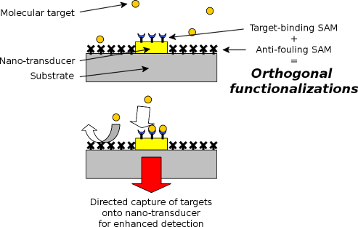
- martyrs, 38054 Grenoble, France 10.3762/bjnano.6.233 Abstract Single-step orthogonal chemical functionalization procedures have been developed with patterned gold on silica surfaces. Different combinations of a silane and a thiol were simultaneously deposited on a gold/silica heterogeneous substrate. The
- orthogonality of the functionalization (i.e., selective grafting of the thiol on the gold areas and the silane on the silica) was demonstrated by X-ray photoelectron spectroscopy (XPS) as well as time-of-flight secondary ion mass spectrometry (ToF–SIMS) mapping. The orthogonal functionalization was used to
- Discussion Micropatterned gold on a silica substrate (with features of ≈100 µm) functionalized with either (1) 1H,1H,2H,2H-perfluorodecanethiol and 2-[methoxy(polyethyleneoxy)propyl]trimethoxysilane (F-thiol + PEG/Si) or (2) trichloro(1H,1H,2H,2H-perfluorooctyl)silane and 11-mercapto-1-undecanoic acid (F


Optimized design of a nanostructured SPCE-based multipurpose biosensing platform formed by ferrocene-tethered electrochemically-deposited cauliflower-shaped gold nanoparticles
Beilstein J. Nanotechnol. 2015, 6, 1840–1852, doi:10.3762/bjnano.6.187
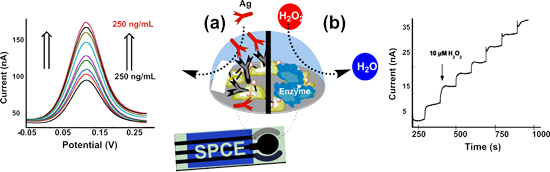
- that were tethered with a β-cyclodextrin/ferrocene inclusion complex as a transducing system. Connection between gold and the ferrocene host was achieved thanks to a thiol terminal group [13]. The ferrocene complex acted as an electron shuttle allowing for glucose oxidation at low potentials. Li et al


Imaging of carbon nanomembranes with helium ion microscopy
Beilstein J. Nanotechnol. 2015, 6, 1712–1720, doi:10.3762/bjnano.6.175
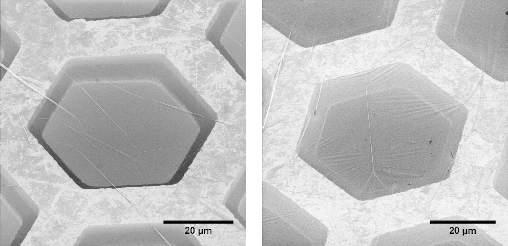
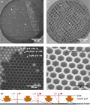
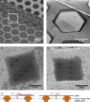
- -thiol (BPT); (c) S,S'-(3',4',5',6'-tetraphenyl-[1,1':2',1''-terphenyl]-4,4''-diyl) diethanethioate (HPB); (d) naphtalene-2-thiol (NPTH); (e) 2-bromo-11-(1’-[4’-(S-acetylthiomethyl)phenyl]acetyl)-5,8,14,17-tetra(3’,7’-dimethyloctyl)-hexa-peri-hexabenzocoronene (HBC-Br). The CNMs in the presented figures




Conductance through single biphenyl molecules: symmetric and asymmetric coupling to electrodes
Beilstein J. Nanotechnol. 2015, 6, 1690–1697, doi:10.3762/bjnano.6.171
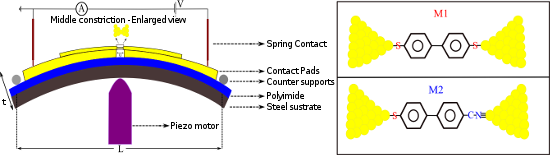
- groups like amine, nitro, nitrile, carboxy, iso cyanate, pyridine. The electron donating group leads to higher conductance while electron withdrawing groups have a smaller conductance. The Au–S thiol is a well known anchoring group due strong covalent bond coupling [15]. The iso cyano group has been
- of the asymmetric molecule with one thiol and one carbonitrile end group. This choice is motivated by two effects: Firstly, the interaction between thiol and gold electrodes is stronger than for the carbonitrile group [19]. Secondly, coupled with the details of bond formation is the fact that these
- two end groups have an opposite effect on the level alignment of the highest occupied (HOMO) and lowest unoccupied (LUMO) molecular levels [19][40]. While thiol tends to pull the HOMO up by shifting a small amount of charge to the molecule, the cyano group has the opposite effect. These properties may


Electrical properties and mechanical stability of anchoring groups for single-molecule electronics
Beilstein J. Nanotechnol. 2015, 6, 1558–1567, doi:10.3762/bjnano.6.159
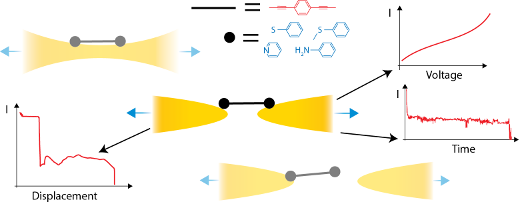
- mechanically controlled break junction (MCBJ) technique. The four molecules studied share the same core structure, namely oligo(phenylene ethynylene) (OPE3), while having different aurophilic anchoring groups: thiol (SAc), methyl sulfide (SMe), pyridyl (Py) and amine (NH2). The focus of this paper is on the
- combined characterization of the electrical and mechanical properties determined by the anchoring groups. From conductance histograms we find that thiol anchored molecules provide the highest conductance; a single-level model fit to current–voltage characteristics suggests that SAc groups exhibit a higher
- -molecule junctions are formed if thiol (SH), methyl sulfide (SMe), pyridyl (Py) and amine (NH2), groups are used as anchoring groups [16][28][29][30]. In a comparative study Hong et al. [20], found that the low-bias conductance follows the trend SH > NH2> Py > CN by comparing a series of tolanes anchored


Peptide-equipped tobacco mosaic virus templates for selective and controllable biomineral deposition
Beilstein J. Nanotechnol. 2015, 6, 1399–1412, doi:10.3762/bjnano.6.145
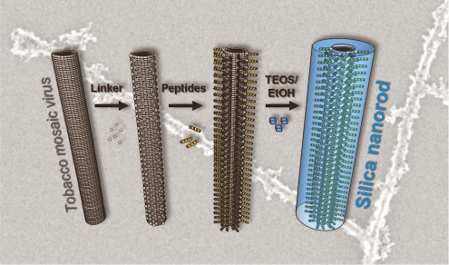
- subunit [76] were chemically equipped with a dense peptide coating via succinimidyl ester-activated, bifunctional, PEG-based linkers, and their subsequent maleimide-mediated conjugation to thiol groups of terminal cysteine residues present in every peptide. Five different peptide sequences were selected


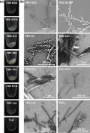


Nano-contact microscopy of supracrystals
Beilstein J. Nanotechnol. 2015, 6, 1229–1236, doi:10.3762/bjnano.6.126
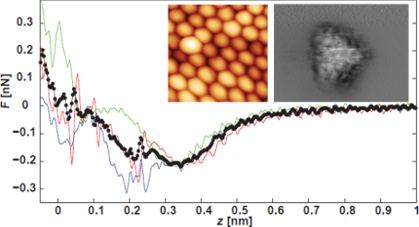
- qPlus probe became nanocrystal- (or thiol-)terminated. Imaging was performed in constant current STM, constant frequency shift (Δf) DFM, and constant height DFM modes. In addition to traditional STM, we also carried out dynamic STM (dSTM) imaging and spectroscopy, where the tip was oscillated with a
- intra-nanocrystal features is challenging for a number of reasons. First, the exact nature of our tip apex is unknown, and very possibly terminated either by free thiol ligands or entire nanocrystals. Second, due to the high aspect ratio of the nanocrystal surface (as compared to an atomically flat
- scenario where we have both a thiol-terminated tip and thiol-coated nanocrystal, and where the thiols on both the tip and nanocrystal would be relatively free to relax as the tip approaches the sample. These observations are also consistent with the numerous reconfiguration events that we observe during

![[Graphic 1]](/bjnano/content/inline/2190-4286-6-126-i1.png?max-width=637&scale=1.18182) = 20 pA, ...
= 20 pA, ...


Electrical characterization of single molecule and Langmuir–Blodgett monomolecular films of a pyridine-terminated oligo(phenylene-ethynylene) derivative
Beilstein J. Nanotechnol. 2015, 6, 1145–1157, doi:10.3762/bjnano.6.116
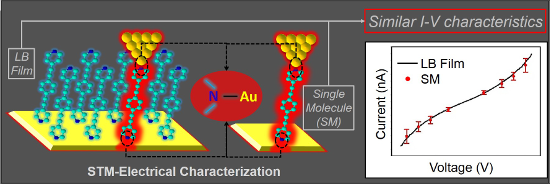
- other LB films), the conductance value for compound 1 is 3–20 times greater than for LB films of other oligo(phenylene-ethynylene) (OPE) derivatives bearing anchoring groups such as thiol (–SH), amine (–NH2), carboxylate (–COO−), trimethylsilylethynyl (–C≡CSiMe3) or acetylide (–C≡C) [23][24][30][45
- ]. Similar variations in conductance as a function of surface contacting group have been found for polymethylene (alkane) bridges contacted with thiol, amine or carboxylic acid moieties to gold electrodes [75]. The higher conductance for 1 could be attributed to both the shorter molecular length and
- anchoring group in metal–molecule–metal and metal–monolayer–metal junctions formed by LB methods. The data indicate that it exhibits a higher conductance when compared with other anchoring end groups used in OPE derivatives assembled by the LB technique such as thiol, amine, carboxylic acid


Influence of gold, silver and gold–silver alloy nanoparticles on germ cell function and embryo development
Beilstein J. Nanotechnol. 2015, 6, 651–664, doi:10.3762/bjnano.6.66
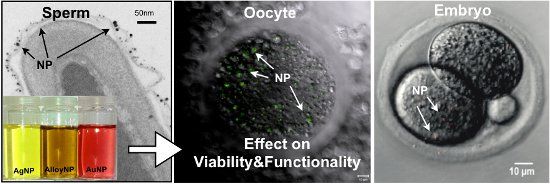
- electron donors such as thiol groups found on the negatively-charged sperm membrane [57][68]. Oligonucleotide-conjugated nanoparticles might bind directly to nucleic acid specific binding sites which have been shown to exist on the sperm surface [69]. The fact that BSA coating inhibits nanoparticle
- nanoparticles may lead to a decrease in motility (i) either by production of reactive oxygen species (ROS) or (ii) by binding to free thiols present on the sperm surface as gold nanoparticles posses a high affinity to thiol groups. The thiols on the sperm surface are part of membrane bound Na+/K+-ATPases and





Self-assembled anchor layers/polysaccharide coatings on titanium surfaces: a study of functionalization and stability
Beilstein J. Nanotechnol. 2015, 6, 617–631, doi:10.3762/bjnano.6.63
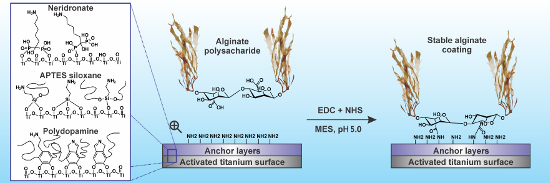
- different organic compounds, providing functional groups for further modification. Covalent bonding, which provides a stable fixation of immobilized compounds, is an alternative approach to coatings based on adsorption processes. The most common strategies for the formation of anchoring layers are thiol
- -based self-assembled monolayers (SAMs) [20] and silanes [21][22]. Despite the ease of preparation and high uniformity of the resulting layers, the thiol–SAMs provide an anchoring chemistry scheme limited only to noble metals. Furthermore, the established thiol bond is prone to oxidation and can be
- -aminopropyltriethoxysilane (APTES) can result in several surface structures such as covalent attachment, self-assembly, multilayer formation by surface-initiated (SI) polymerization and particle adsorption [22]. The obstacles and limitations inherent to thiol–SAMs and silanes can be circumvented by the use of moieties


Synergic combination of the sol–gel method with dip coating for plasmonic devices
Beilstein J. Nanotechnol. 2015, 6, 500–507, doi:10.3762/bjnano.6.52
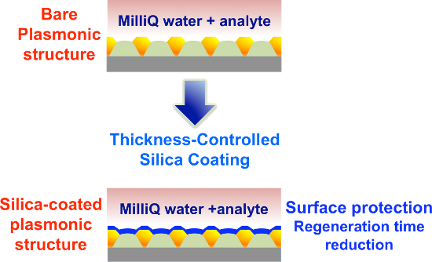
- serves to stabilize the sensing platform (as in the case of metal nanoparticles) and provides a specific affinity, resulting in improved selectivity [7][8][11][12]. Furthermore, the surface chemistry of thiol-based self-assembled monolayers has shown some limitations mainly related to their temporal





