


Search results
Search for "water" in Full Text gives 1635 result(s) in Beilstein Journal of Nanotechnology. Showing first 200.
Characterization of ion track-etched conical nanopores in thermal and PECVD SiO2 using small angle X-ray scattering
Beilstein J. Nanotechnol. 2025, 16, 899–909, doi:10.3762/bjnano.16.68
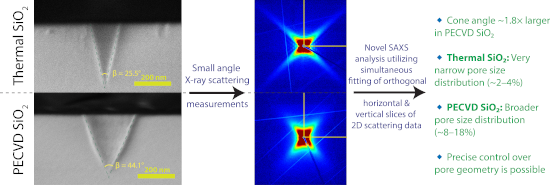
- durations. The etching process was stopped by removing samples from the etchant followed by three successive rinses in de-ionized water, each lasting 30 s, after which the samples were air dried. The scanning electron microscopy images of the nanopores were obtained using a FEI Verios 460 microscope. For


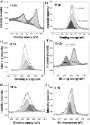
Heat-induced transformation of nickel-coated polycrystalline diamond film studied in situ by XPS and NEXAFS
Beilstein J. Nanotechnol. 2025, 16, 887–898, doi:10.3762/bjnano.16.67
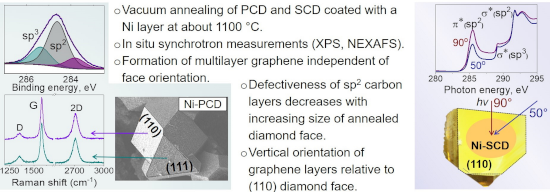
- 68.1 eV corresponds to the oxidized states of nickel (Ni–O). The appearance of these states may be due to the interaction of nickel with residual water in the vacuum chamber or with oxygen desorbed from the silicon substrate during annealing [47]. The low-energy doublet with the Ni 3p3/2 component at


Insights into the electronic and atomic structures of cerium oxide-based ultrathin films and nanostructures using high-brilliance light sources
Beilstein J. Nanotechnol. 2025, 16, 860–871, doi:10.3762/bjnano.16.65

- methods [30][31][32]. Initial studies were performed by exposing the surface of interest to the chosen molecule at UHV-compatible pressures. The interaction between cerium oxide and, for example, CO [21][33], SO2 [34], methanol [32], ethanol [35], and water [36] have been considered. The higher energy
- addition of water facilitating the production of ethanol [57]. Given the high penetration depth of hard X-rays in materials, XAS in the hard X-ray range is much easier than XPS to be carried out under ambient pressure conditions; it provided valuable insight into the working principles of ceria-based
- XANES and gas chromatography was employed to correlate in real time the changes of the chemical state of Cu, Fe, and Ce cations with oxygen vacancy and water formation during thermal treatments in hydrogen at ambient pressure [58]. The pure ceria film, in the Ce4+ oxidation state with a dominant Ce L3


Synchrotron X-ray photoelectron spectroscopy study of sodium adsorption on vertically arranged MoS2 layers coated with pyrolytic carbon
Beilstein J. Nanotechnol. 2025, 16, 847–859, doi:10.3762/bjnano.16.64
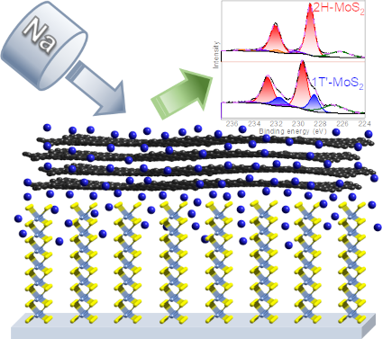
- an aqueous solution of iron chloride (30 wt %) for 2 h to dissolve the copper foil. The remaining free PyC film was washed twice in dilute HCl (10 wt %) and then in deionized water until neutral pH was reached. The floating PyC film was trapped either on bare or MoS2-covered SiO2/Si substrates and


Facile one-step radio frequency magnetron sputtering of Ni/NiO on stainless steel for an efficient electrode for hydrogen evolution reaction
Beilstein J. Nanotechnol. 2025, 16, 837–846, doi:10.3762/bjnano.16.63
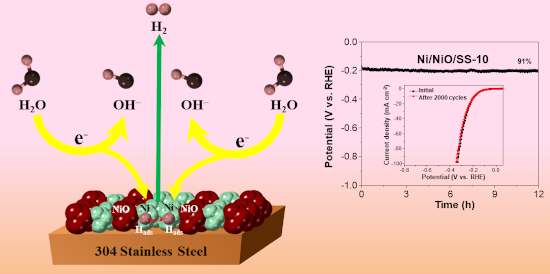
- operation. The high efficiency is attributed to the collaborative work of the NiO and Ni metal components and the good electrical conductivity of SS, which is advantageous for dissociative adsorption of water molecules, recombination of hydrogen atoms, and improvement of electronic/ionic motion. This work
- may introduce a facile and eco-friendly strategy for fabricating noble metal-free, efficient nanomaterials for electrocatalytic HER. Keywords: electrocatalysts; magnetron sputtering; nickel; nickel oxide; water electrolysis; Introduction The world is facing a critical challenge through the
- increasing consumption of fossil fuels, causing CO2 emissions and resulting in climate change [1]. Hydropower can be harnessed to provide sustainable energy for future generations because there are no harmful emissions with only water vapor as a byproduct [2][3][4]. Also, hydropower offers better energy


Synthesis and magnetic transitions of rare-earth-free Fe–Mn–Ni–Si-based compositionally complex alloys at bulk and nanoscale
Beilstein J. Nanotechnol. 2025, 16, 823–836, doi:10.3762/bjnano.16.62
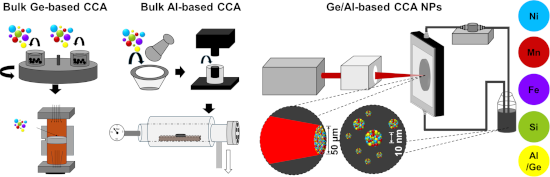
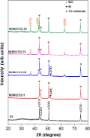
- powder was compressed at 100 MPa to produce cylindrical pellets of 10 mm in diameter and 2 mm in thickness (middle panel, Figure 1b). Finally, the samples underwent heat treatment in a near-vacuum environment (down to 10 mbar) at 600 °C for seven days, followed by rapid quenching in water. This procedure


Supramolecular hydration structure of graphene-based hydrogels: density functional theory, green chemistry and interface application
Beilstein J. Nanotechnol. 2025, 16, 806–822, doi:10.3762/bjnano.16.61
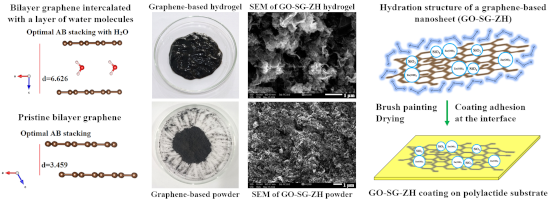
- graphene nanosheets in water-intercalated AB bilayer graphene structures. A layer of water molecules significantly decreases the intersheet van der Waals force. A novel hydrogel of graphene oxide–silica gel–zinc hydroxide (GO-SG-ZH) is experimentally synthesized to demonstrate the advantages of hydrated
- hydrogel structure in comparison with dry powder structure. The synthesis of graphene-based hydrogels is a green chemistry approach to attain extraordinary properties of graphene-based nanostructures. Analytical characterizations exhibited moisture contents, water evaporation rates, three-dimensional
- advance nanoscale properties and nanotechnology applications. Keywords: antibacterial coating; bioinspired hydration; density functional theory; graphene-based hydrogel; supramolecular structure; Introduction Biological cells are assemblies of biomolecules that are hydrated with water molecules. The


Morphology and properties of pyrite nanoparticles obtained by pulsed laser ablation in liquid and thin films for photodetection
Beilstein J. Nanotechnol. 2025, 16, 785–805, doi:10.3762/bjnano.16.60
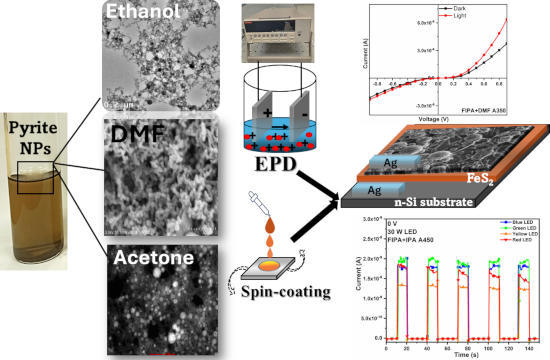
- structures synthesized in aqueous solutions by chemical methods. The diverse range of observed pyrite morphologies highlights the influence of synthesis conditions on the final crystal shape [2]. In another study, pyrite nanoparticles (FeS2) were synthesized in deionized water with and without the assistance
- cubic, tetrakaidecahedron, hollow sphere, and rod-like have been reported for different phases of FeS2 samples prepared in water by single-step hydrothermal process [2]. The transition from spherical to hollow spheres composed of rod-like structures was associated with the conversion of the marcasite
- shapes in FAC, FMET, and FET are observed. A similar effect was observed in studies of Cu NPs, where spherical shapes were seen in deionized water, ethanol, and methanol, while rod-like morphologies were observed when methanol was used as the solvent [71]. Therefore, the solvent properties and their






Changes of structural, magnetic and spectroscopic properties of microencapsulated iron sucrose nanoparticles in saline
Beilstein J. Nanotechnol. 2025, 16, 762–784, doi:10.3762/bjnano.16.59
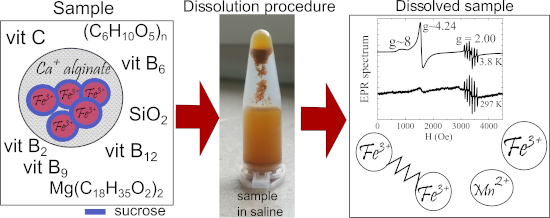
- structure vanished. In the TEM dark-field images, the metallic cores were not stated, which suggests that observed nanoscale structures represent post-dissolution residues such as water-insoluble SiO2 or cellulose. The lack of core–shell structures in TEM images taken from FST does not indicate their total
- the obtained pattern agrees well with the literature [21][22]. There are no changes in these lines between both samples which is associated to the fact that cellulose interacts with water but is insoluble in it. It was expected that lines related to SiO2 [23][24] for both samples, and to sucrose [4][6
- is water insoluble; however, it is slowly dissolved in the solution of sodium chloride, which was registered in the carried out XPS studies. Also, the dissolution process turned out to be not without significance for the concentration of Na ions, whose level increased. It is an effect of salt





Serum heat inactivation diminishes ApoE-mediated uptake of D-Lin-MC3-DMA lipid nanoparticles
Beilstein J. Nanotechnol. 2025, 16, 740–748, doi:10.3762/bjnano.16.57
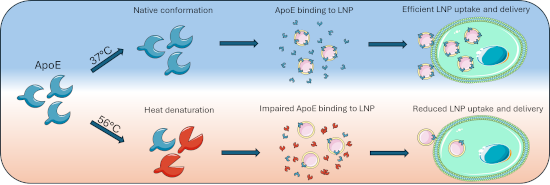
- part was placed in a water bath at 56 °C for 30 min, while the other part was left untreated. After heat inactivation, FCS was stored at −20 °C until use. LNP production LNPs were prepared via microfluidics mixing, using a Nanoassemblr Benchtop device (Precision Nanosystems). In short, D-Lin-MC3-DMA
- Analytical, UK). The zeta potential of LNPs was measured using a Zetasizer Nano Z (Malvern Panalytical). Before analysis, LNP stocks were diluted 1:20 in ultrapure water. LNP uptake Cells were seeded in 48-well plates the day prior to the uptake experiment at 2 × 10⁴ cells/well. The plates were pre-coated


Synthesis of a multicomponent cellulose-based adsorbent for tetracycline removal from aquaculture water
Beilstein J. Nanotechnol. 2025, 16, 728–739, doi:10.3762/bjnano.16.56
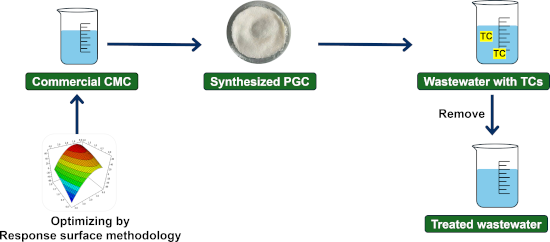
- effective adsorbent for the removal of average 70% TC antibiotic residues, particularly oxytetracycline, chlortetracycline, TC, and doxycycline. Keywords: adsorption; aquaculture water; removal efficiency; response surface methodology; tetracycline antibiotic; Introduction The aquaculture industry plays a
- substantial economic losses. Nowadays, various methods, including adsorption, biological processing, photocatalysis, and electrochemical methods, have been used to remove antibiotics from contaminated water. However, these conventional treatment methods are restricted by costs, prolonged treatment durations
- , low adsorption efficiency, water matrices, and secondary pollutant formation, limiting their overall efficiency. A promising method for tackling tetracycline antibiotics involves membrane technologies such as osmosis membrane technology [6][7]. However, this approach presents significant upfront


Efficiency of single-pulse laser fragmentation of organic nutraceutical dispersions in a circular jet flow-through reactor
Beilstein J. Nanotechnol. 2025, 16, 711–727, doi:10.3762/bjnano.16.55
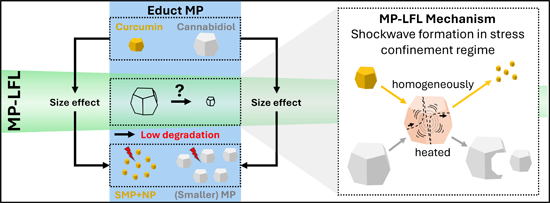
- phthalocyanines (VOPc and CuPc) in deionized water and other pure solvents but also influences the size and crystal phase via the chosen laser parameters [21][33]. Furthermore, spectroscopic analyses successfully demonstrated that an extinction enhancement occurs with increasing irradiation time and higher
- Discussion To evaluate the laser fragmentation efficiency in the CJ setup, the nutraceuticals curcumin and CBD (Figure 1) were dispersed at different concentrations (0.01 to 1.0 wt %) in deionized water and homogenized by ultrasonication. The MP-LFL yield of SMPs and NPs was quantified by the extinction
- production of ROS are also conceivable. Even though the laser intensities applied at the jet’s entrance (ca. 3·1010 W·cm−2) are one order of magnitude below the irradiance threshold range for the optical breakdown of water (i.e., 4.5·1011 W·cm−2 at 30 ps, 1064 nm [59]), it is difficult to pinpoint to which


Colloidal few layered graphene–tannic acid preserves the biocompatibility of periodontal ligament cells
Beilstein J. Nanotechnol. 2025, 16, 664–677, doi:10.3762/bjnano.16.51
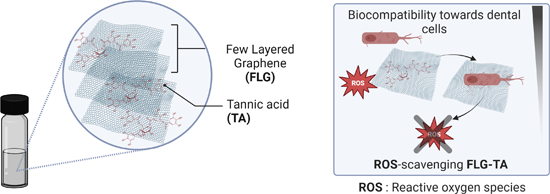
- resazurin cell viability assay kit (Alamar Blue) was sourced from Biotium (Fremont, CA, USA). Other reagents and solvents were procured from Thermo Fisher Scientific (Waltham, MA, USA). Deionized water used throughout this work was obtained using a Milli-Q water system (Merck Millipore, Burlington, MA, USA
- ). FLG–TA synthesis Graphite (1 g) and tannic acid (0.1 g) were added to 1 L of distilled water in a vial. The mixture was sonicated using an ultrasonic probe (Branson Digital Sonifier 550, 110 W, 40 Hz) for 2 h in an ice-water bath under continuous stirring. The resulting suspension was then allowed to
- settle for 24 h. Physicochemical characterizations SEM images were obtained using a high-resolution scanning electron microscope (JEOL JSM 5600, France) operating at 10 kV with a working distance of 10 mm. FLG sheets were individually dispersed in water, and a few drops of the resulting solution were




Aprepitant-loaded solid lipid nanoparticles: a novel approach to enhance oral bioavailability
Beilstein J. Nanotechnol. 2025, 16, 652–663, doi:10.3762/bjnano.16.50
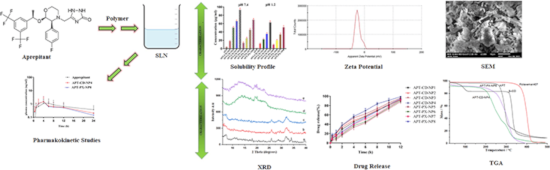
- blood–brain barrier [8]. Its mean volume of distribution is approximately 70 L. In the range of pH 2–10, APT has very low solubility (0.37 µg/mL) [9]. Because of the low water-solubility, the low permeability, and the rate-limiting step of poor gastrointestinal absorption, APT is categorized as a BCS
- as hot homogenization, cold homogenization, and solvent evaporation are used to prepare SLNs, but precipitation is the most compatible method for compound, polymer, and lipid. The precipitation method consists of dissolving the lipid with organic solvents and adding water to cause supersaturation of
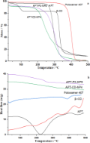
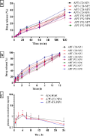
- SLN formulations in distilled water exhibited a homogeneous white color. The encapsulation efficacy of the SLNs formulations was in the range of 25.33% ± 0.89% to 80.55% ± 0.15%. A higher content of β-CD in the formulation enhanced the encapsulated amount of APT. The hydrophobic structure of β-CD



Nanoscale capacitance spectroscopy based on multifrequency electrostatic force microscopy
Beilstein J. Nanotechnol. 2025, 16, 637–651, doi:10.3762/bjnano.16.49

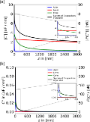
- response can be studied at almost arbitrary frequencies. Using this method, Gramse et al. have demonstrated broadband spectroscopy of dielectric layers in air [72] and water [59]. Building on this idea, we propose a novel, multifrequency AFM-based method for nanoscale capacitance characterization at




A formulation containing Cymbopogon flexuosus essential oil: improvement of biochemical parameters and oxidative stress in diabetic rats
Beilstein J. Nanotechnol. 2025, 16, 617–636, doi:10.3762/bjnano.16.48
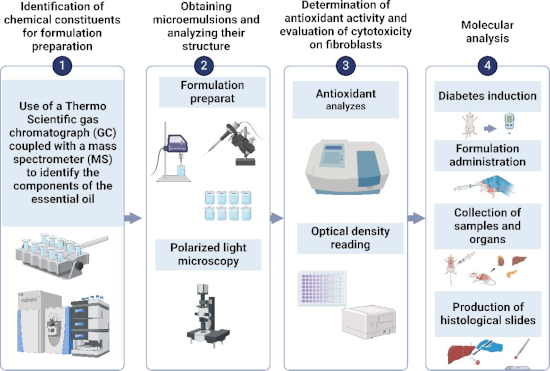
- after in vivo administration [8]. Among these systems, microemulsions (MEs) stand out for their ability to increase the solubility, absorption, and bioavailability of lipophilic compounds such as EOs. MEs are transparent, thermodynamically stable, low-viscosity systems containing oil and water
- [14]. Another important parameter is the hydrophilic–lipophilic balance (HLB). Surfactants with low HLB values between 3 and 6 generally promote the formation of water/oil (W/O) emulsions, while high HLB values between 8 and 18 predominantly result in O/W emulsions [14]. The HLB values of Eumulgin® CO
- /v), containing distilled water as the aqueous phase and EOCF as the oil phase, as shown in Figure 1. Although the PTPD with propylene glycol and Olivem® 300 (1:1, v/v) also showed regions characterized as ME, these regions contained only a low amount of EOCF (1%). Therefore, for the in vivo study




Focused ion and electron beams for synthesis and characterization of nanomaterials
Beilstein J. Nanotechnol. 2025, 16, 613–616, doi:10.3762/bjnano.16.47

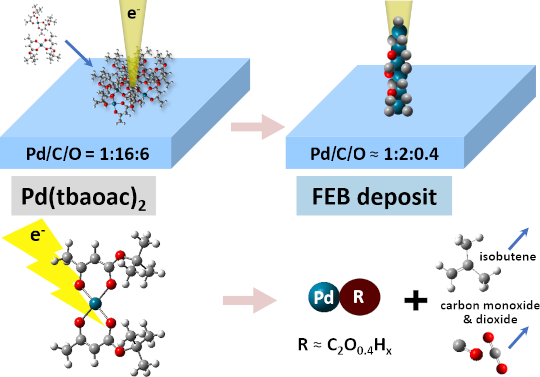
- the substrate. Metallic structures can be fabricated directly or through post-purification methods, such as water-assisted treatment, which has been effective for Au and Pt deposits [10]. Interestingly, morphological changes in the underlying SiO2 layer were observed during the process, resembling
- effects noted in water-assisted graphene etching [11]. While controlling the purity of deposits appears more straightforward, achieving precise nanoscale shapes remains challenging, particularly when structures are fabricated in close proximity. Experimental results demonstrate that FEBID, followed by

Polyurethane/silk fibroin-based electrospun membranes for wound healing and skin substitute applications
Beilstein J. Nanotechnol. 2025, 16, 591–612, doi:10.3762/bjnano.16.46
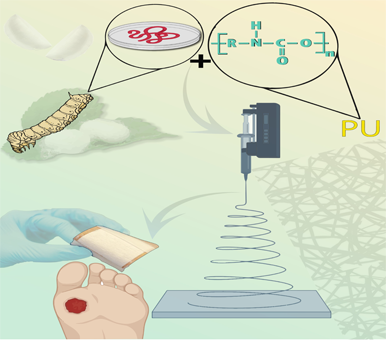
- , produced by silkworms, beetles, mites, and spiders [14]. Silk is an FDA-approved biomaterial for medical applications [15]. SF has distinctive physical, chemical, and mechanical properties [16]. Its characteristics, including biocompatibility, biodegradability, elasticity, solubility in water, and ease of
- that have good biocompatibility. PUs provide significant potential for modifying polymer structures to obtain various mechanical properties [145]. Water-based polyurethanes The development of water-based polyurethanes (WPUs) has revolutionized the field of PU synthesis [146]. It has offered a greener
- and environmentally friendly PU synthesis route by replacing the common process of solvent-based PU synthesis. The emission of volatile organic compounds in synthesis and application can be avoided by adopting water-based PUs [147]. This has brought a shift in urethane research. WPUs have emerged as a



Feasibility analysis of carbon nanofiber synthesis and morphology control using a LPG premixed flame
Beilstein J. Nanotechnol. 2025, 16, 581–590, doi:10.3762/bjnano.16.45
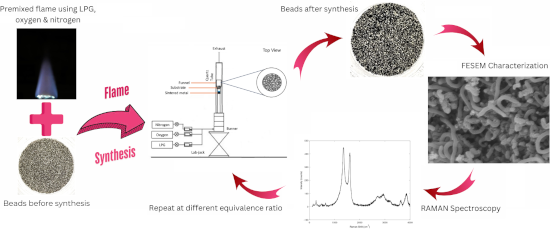
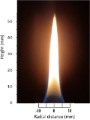
- room temperature, the product was purified with 1% HCl solution, distilled water, and ethanol, then vacuum-dried at 50 °C for about 4 h. The final product was nearly pure CNFs, as shown by FESEM images. TEM images indicated an average CNF diameter of 100 nm. Raman spectra showed a strong, narrow peak
- . discussed several applications of CNFs. Thin CNFs have a large surface area and are used for adsorptive hydrogen storage. Also, CNFs are used as electrode materials in supercapacitors. They can also be used for water purification and carbon capture and storage [20]. LPG gas contains a flammable mixture of
- impregnated beads Zirconia beads of 0.30 mm diameter were selected as a substrate. The beads were cleaned by sonication in ethanol followed by rinsing with distilled water; the rinsed beads were dried in an oven to remove contaminants. The cleaned zirconia beads were impregnated with nickel catalyst to be



Functionalized gold nanoflowers on carbon screen-printed electrodes: an electrochemical platform for biosensing hemagglutinin protein of influenza A H1N1 virus
Beilstein J. Nanotechnol. 2025, 16, 540–550, doi:10.3762/bjnano.16.42
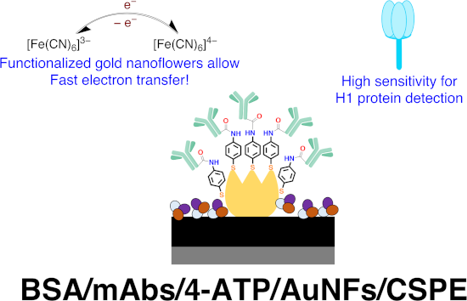
- process, forming stable AuNFs that remain at the surface of the electrode upon contact with water and ethanol as no change in the CV was observed after contact with these solvents (Supporting Information File 1, Figure S1). This suggests strong mechanical adhesion of the AuNFs to the CSPE surface. The
- HAuCl4 solution containing 6 mM HCl and 0.5 M sulfuric acid was added on top of the CSPE, and a potential of −0.25 V (vs Ag/AgCl) was applied for 60 s. The electrode was then rinsed with 25 mL deionized water, dried under a flow of N2, and stored at room temperature (RT) in dark. Functionalization with 4


Electron beam-based direct writing of nanostructures using a palladium β-ketoesterate complex
Beilstein J. Nanotechnol. 2025, 16, 530–539, doi:10.3762/bjnano.16.41
- multiple cycles of water–acetone–isopropanol solvents in an ultrasonification bath and then dried using pressurized N2 gas. For the precursor delivery, we used a heatable, custom-built GIS. Before precursor filling, the GIS underwent the same cleaning procedure as the substrate. The solid precursor was


Zeolite materials with Ni and Co: synthesis and catalytic potential in the selective hydrogenation of citral
Beilstein J. Nanotechnol. 2025, 16, 520–529, doi:10.3762/bjnano.16.40
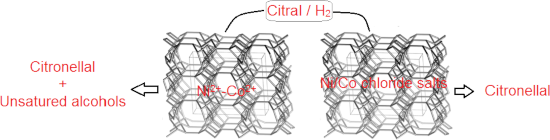
- SEM image (Figure 2). To remove excess solution, water washes are typically applied. The materials obtained via IE underwent extensive washing with distilled water, while those obtained via Imp were only lightly washed, leading to the observed differences in chloride content. According to this, there
- for materials obtained by IE are higher than those of ZSA. This increase is consistent with expectations [17][18], as the ion exchange and water washing treatments effectively clean the materials’ surface, thereby enhancing the available surface area and porosity (microporosity) for adsorption. The
- washed with distilled water to remove chloride ions and oven-dried at 110 °C. The Imp processes were conducted using a total of 6% of corresponding metals (Ni, Co, and Ni/Co) per gram of ZSA and solutions with total metal contents of 0.2 mol/L. Both the ZSA and the solutions were heated to 80 °C before


Water in nanoporous hexagonal boron nitride nanosheets: a first-principles study
Beilstein J. Nanotechnol. 2025, 16, 510–519, doi:10.3762/bjnano.16.39
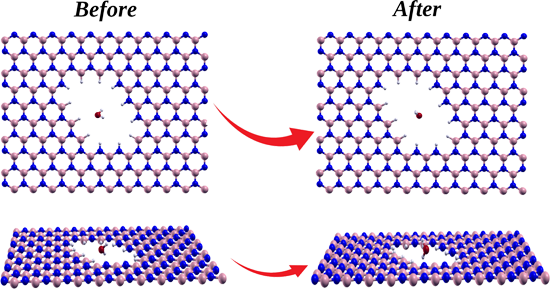
- Cruzeiro, 35400-000, Ouro Preto, MG, Brazil 10.3762/bjnano.16.39 Abstract Nanoporous membranes are being explored as efficient materials for water filtration and desalination applications. In this study, we analyzed the behavior of pores within a freestanding hexagonal boron nitride (h-BN) monolayer in
- contact with water molecules. Our investigation revealed that triangular and rhombic pores induce wrinkles in non-deposited h-BN monolayers because of the repulsion between hydrogen orbitals at their 60° vertices. We found that the addition of N–H or B–H pairs at 60° vertices mitigates these out-of-plane
- that rhombic pores have a high affinity for water absorption, much higher than that of triangular pores. This suggests that the type of pore can significantly alter the hydrophobicity of h-BN and influence water flow through the membrane. Additionally, we observed that water molecules tend to form




N2+-implantation-induced tailoring of structural, morphological, optical, and electrical characteristics of sputtered molybdenum thin films
Beilstein J. Nanotechnol. 2025, 16, 495–509, doi:10.3762/bjnano.16.38
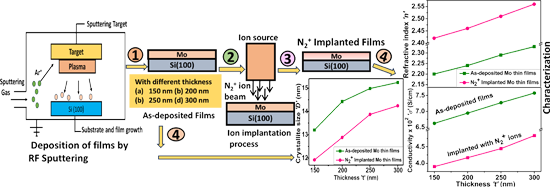
- minimizing the reflected power. Before deposition, the target surface was pre-sputtered for 15 min to remove any surface contamination. The silicon substrates were meticulously cleaned by washing them with distilled water and isopropyl alcohol and rinsing them with acetone. The vacuum chamber was evacuated


Performance optimization of a microwave-coupled plasma-based ultralow-energy ECR ion source for silicon nanostructuring
Beilstein J. Nanotechnol. 2025, 16, 484–494, doi:10.3762/bjnano.16.37

- diameter of the plasma cup is around 52 mm. The cup is surrounded by water-cooled NdFeB magnets, which produce a multi-cusp field to confine the plasma. The 2.45 GHz magnetron microwave source is attached to the back side of the ion source, as shown in Figure 2. The dimension of the cylindrical resonator





