Search results
Search for "zeta potential" in Full Text gives 238 result(s) in Beilstein Journal of Nanotechnology. Showing first 200.
Effect of different silica coatings on the toxicity of upconversion nanoparticles on RAW 264.7 macrophage cells
Beilstein J. Nanotechnol. 2021, 12, 35–48, doi:10.3762/bjnano.12.3
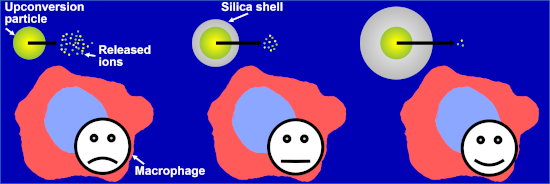
- measurements. The DLS and ZP results are also shown in Table 1. The zeta potential changed from negative to positive after AHAPS functionalization due to the positive surface charge of the amine group in the AHAPS ligand. The zeta potential values of the AHAPS-functionalized samples slightly decreased after
- transfer from ethanol to water, as reported in several publications [51][52], and, consequently, their hydrodynamic diameter values increased. The zeta potential of the non-functionalized particles is more negative in water than in ethanol, and, in this case, the Z-average value also increases. The Z
- (pore size: 0.2 µm, Rotilab). Nylon filters were used for particles dispersed in cyclohexane and ethanol, whereas regenerated cellulose filters were used for particles dispersed in water or DMEM. Zeta potential measurements of the dispersions in ethanol and water were carried out using capillary zeta


PEG/PEI-functionalized single-walled carbon nanotubes as delivery carriers for doxorubicin: synthesis, characterization, and in vitro evaluation
Beilstein J. Nanotechnol. 2020, 11, 1728–1741, doi:10.3762/bjnano.11.155
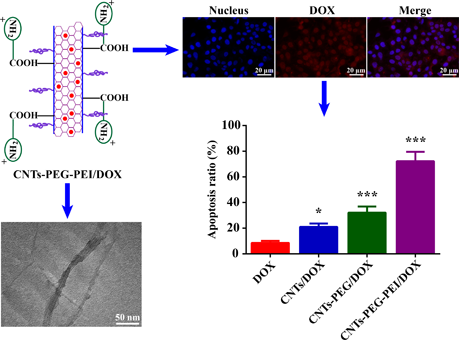
- transmission electron microscopy (TEM, JEM-200CX). To determine particle size and zeta potential, a sample of 200 μL (with a concentration of 50 μg·mL−1) was dispersed in deionized water to a final volume of 3 mL. Particle size and zeta potential were measured using laser particle analysis (Malvern Zetasizer
- 3000HS). A volume-weighted Gaussian size distribution was fit to the autocorrelation functions to obtain the particle size and zeta potential values. The atomic fractions of C, O, and N in the different SWCNTs samples were determined by X-ray photoelectron spectroscopy (XPS, Thermo Fisher Scientific
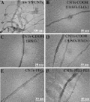
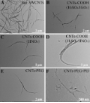
- . Although the numerical result obtained by size analysis does not represent the accurate length of the SWCNTs it is a good reference value for comparison. The zeta potential of raw SWCNTs is nearly neutral, while those of all CNTs-COOH samples are significantly decreased and all below −25 mV, indicating




Electrokinetic characterization of synthetic protein nanoparticles
Beilstein J. Nanotechnol. 2020, 11, 1556–1567, doi:10.3762/bjnano.11.138
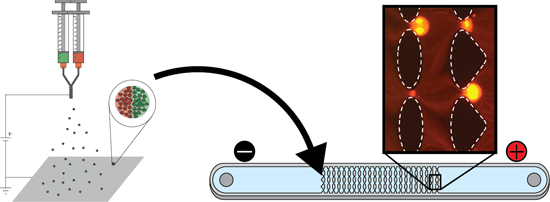
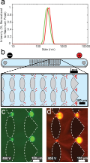
- hydrodynamic diameter values of 373 ± 180 nm and 356 ± 190 nm, respectively (Figure 2a). The zeta potential values (ζp) of the SPNPs were also measured via electrophoretic light scattering in the same suspension medium used in the EK experiments. The obtained results were −20.0 ± 0.6 mV for the SPNP-BSA-488
- -covered glass wafers to ensure all the internal walls had the same zeta potential. These microchannels were designed to include an inlet and an outlet liquid reservoir in which electrodes are placed, and an array of PDMS insulating posts located at the center of the channel (Figure 2b and Figure S1
- hemispheres. Furthermore, a complete EK characterization for all eight SPNPs samples was reported, including the zeta potential value of the particles, two electrophoretic mobility types, and the empirical electrokinetic equilibrium condition (eEEEC) [25]. The latter parameter is an essential component that



Transient coating of γ-Fe2O3 nanoparticles with glutamate for its delivery to and removal from brain nerve terminals
Beilstein J. Nanotechnol. 2020, 11, 1381–1393, doi:10.3762/bjnano.11.122
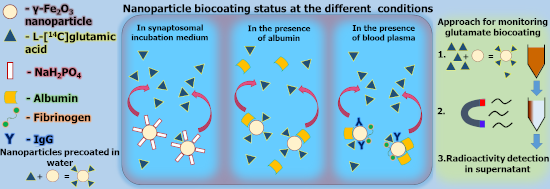
- = 85.1 ± 0.3 nm, with a polydispersity index PI = 0.108 ± 0.006, and a zeta potential ζ = −55.2 ± 0.5 mV at pH 7.8. Using radiolabeled ʟ-[14C]glutamate and liquid scintillation counting, a methodological approach was developed for a direct monitoring of the glutamate biocoating at the surface of γ-Fe2O3
- aggregation than other studied proteins [27]. Zhang et al. analyzed the effects of different concentrations of nanoparticles on the zeta potential in serum protein media, and demonstrated that 5% fetal bovine serum can cover almost the whole surface of nanoparticles at a concentration below 500 µg/mL. The
- zeta potential of the nanoparticles was determined by the proteins located at the nanoparticle surface. In contrast, the sign of the nanoparticle charge could be reversed when the nanoparticle concentration was 1000 µg/mL. These data indicated that the serum proteins did not cover the whole surface of


Applications of superparamagnetic iron oxide nanoparticles in drug and therapeutic delivery, and biotechnological advancements
Beilstein J. Nanotechnol. 2020, 11, 1092–1109, doi:10.3762/bjnano.11.94
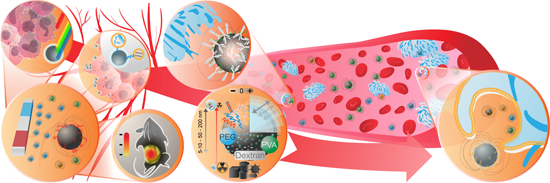
- , and some of the properties result from the primary properties mentioned above (zeta potential, secondary conjugation and interaction with serum and cells components, hydrodynamic dimension, dispersibility, and magnetization). However, a few very important properties are still not completely understood
- interaction with cells depend on surface charge and zeta potential. A higher zeta potential (positive or negative) leads to more stable and dispersed particles in the colloid [76][91]. Positively charged particles tend to stick to the cell surfaces (which have a negatively charged outer layer in general) and
- were reported to be toxic in utero [92]. Highly negatively charged SPIONs were reported to be slightly toxic in vitro and in vivo. They are easily accumulated and degraded by the liver Kupffer cells and parenchymal cells [92][93][94]. The zeta potential and the ionic character of particles as well as


Wet-spinning of magneto-responsive helical chitosan microfibers
Beilstein J. Nanotechnol. 2020, 11, 991–999, doi:10.3762/bjnano.11.83
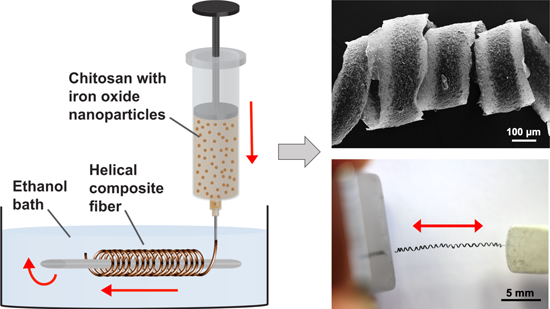
- rheometer (Malvern, Herrenberg, Germany) with a cone-plate geometry (1° angle and 50 mm diameter). The shear stress was measured at 20 °C with a stepwise increase in the shear rate and a one minute holding time at each shear-rate step. The size and zeta potential measurements were performed with 10 mg·mL−1


Key for crossing the BBB with nanoparticles: the rational design
Beilstein J. Nanotechnol. 2020, 11, 866–883, doi:10.3762/bjnano.11.72
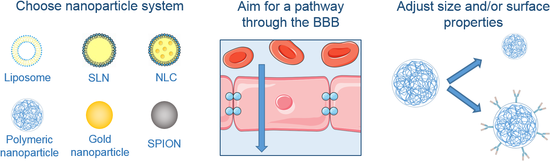
- also accumulate in other organs [128][129]. Influence of size and zeta potential It has been shown that surface functionalization or surface coating are the most important determinants for BBB crossing. For functionalized nanoparticles, size seems to have little impact and nanoparticles in a large size
- follow a similar pathway. They could be endocytosed by the astrocytes at their end feet and then diffuse through their cytoplasms in the brain tissue. Nanoparticles could then diffuse faster and with less size restrictions than through the tortuous ECS. As already described above, the zeta potential can


Exfoliation in a low boiling point solvent and electrochemical applications of MoO3
Beilstein J. Nanotechnol. 2020, 11, 662–670, doi:10.3762/bjnano.11.52
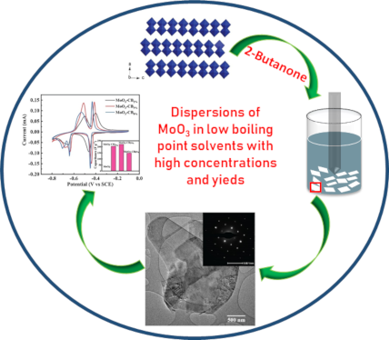
- the MoO3 layers were recorded using a 532 nm excitation laser. X-ray diffractograms (XRD; Rigaku Smart lab) of the bulk and exfoliated MoO3 were obtained using a Cu Kα (1.54 Å) X-ray source. The surface potential of MoO3 dispersions was determined by zeta potential measurements using a Malvern
- peaks at 485 and 733 cm−1 suggesting the presence of MoO3−x [13]. The Raman spectra clearly suggest that MoO3 nanosheets are chemically stable in 2-butanone even after exposure to sunlight. Zeta potential measurements were carried out to determine the charge on the surface of the nanosheets, which is
- critical for the stability of the dispersions. The high zeta potential of −33.5 mV (Figure 2f) affirms the stability of MoO3 dispersions in 2-butanone. Exfoliated two-dimensional materials are known to exhibit good electrochemical properties compared to the bulk materials [22][23]. The electrochemical

Silver-decorated gel-shell nanobeads: physicochemical characterization and evaluation of antibacterial properties
Beilstein J. Nanotechnol. 2020, 11, 620–630, doi:10.3762/bjnano.11.49
- anionic sulfonic groups) should be considerably diminished. To test this hypothesis, zeta potential measurements have been done. The analysis was performed in buffer solutions from pH 3 to pH 10 for the PSSAg beads, but also for PSS particles, PSS beads with incorporated silver ions and silver
- nanoparticles (non-incorporated in the polymer). The data is shown in Figure 6. One can see that for the PSS and the PSS with incorporated Ag+ ions the obtained results are very similar. At high pH values, the zeta potential values are ca. −30 mV, while they gradually increase with increasing pH value. This can
- be explained assuming that in both cases the negative charge of sulfonic groups is neutralized by sodium or silver cations. With decreasing pH values the sulfonate groups are increasingly protonated and the absolute value of the zeta potential decreases. The zeta potential of PSSAg beads exhibits


Identification of physicochemical properties that modulate nanoparticle aggregation in blood
Beilstein J. Nanotechnol. 2020, 11, 550–567, doi:10.3762/bjnano.11.44
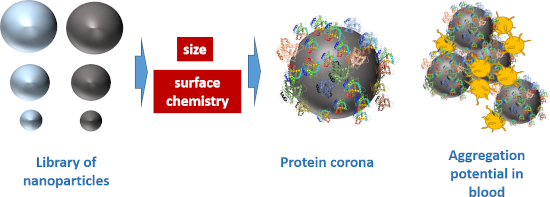
- particles per frame, as suggested by the manufacturer’s recommendations. The measurement duration was set at 60 s. Zeta potential Zeta-potential measurements were performed based on the electrophoretic light scattering (ELS) technique, using a Zetasizer (Nano ZS Malvern Instruments, UK) instrument, as a
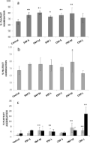
- nanoparticle samples comparing to the small ones. SEM analysis confirmed that all particles appear spherical with a uniform size, confirming the DLS analysis (Figure 1). The zeta potential of the samples was measured by electrophoretic light scattering (ELS) in the pH range from 2 to 9 (Figure 2a). As expected
- , both SNPs and CNPs exhibited a negative zeta potential across the whole pH range. It gradually increased with the increase of the pH of the suspension although it never reached positive values, indicating the presence of weakly acidic groups at the surface. In the case of CNPs, acidic carboxylic or




Multilayer capsules made of weak polyelectrolytes: a review on the preparation, functionalization and applications in drug delivery
Beilstein J. Nanotechnol. 2020, 11, 508–532, doi:10.3762/bjnano.11.41

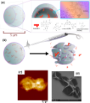
- varying the size of the sacrificial template [10]. The shell thickness can also be altered by the number of layers and the preparation conditions, thus providing control over thickness and morphology. Notably, these capsules have better encapsulation efficiency (EE) and a stable zeta potential mainly due



Nanoparticles based on the zwitterionic pillar[5]arene and Ag+: synthesis, self-assembly and cytotoxicity in the human lung cancer cell line A549
Beilstein J. Nanotechnol. 2020, 11, 421–431, doi:10.3762/bjnano.11.33
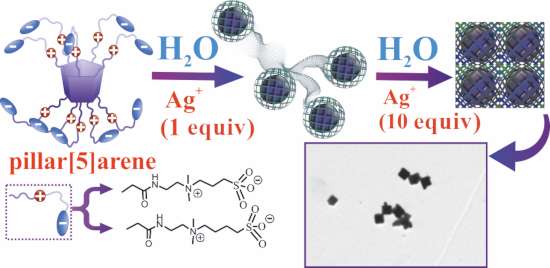
- File 1, Table S1). The minimum polydispersity index (PDI) values (PDI = 0.041) were obtained for the macrocycle 3/AgNO3 = 1:10 ratio (c(3) = 10−4 M, c(AgNO3) = 10−3 M) with an average hydrodynamic diameter of 122 nm (Supporting Information File 1, Figure S14). The high value of the zeta potential of
- of 122 nm. The high values of the zeta potential of the system ζ (3/Ag+) = +31.8 mV additionally confirm the formation of a stabilized supramolecular system. The cytotoxic effect of pillar[5]arenes 3 and 4 on A549 cells in the MTT test was characterized. The compounds did not show a statistically




Synthesis and enhanced photocatalytic performance of 0D/2D CuO/tourmaline composite photocatalysts
Beilstein J. Nanotechnol. 2020, 11, 407–416, doi:10.3762/bjnano.11.31
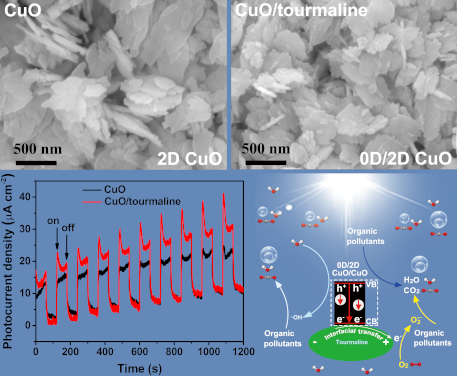
- ) spectra were analyzed using an A300 spectrometer (Bruker, Germany) with DMPO as a free radical scavenger under visible light irradiation (λ = 420 nm) for 20 min. The surface properties were characterized via an ASAP 2020 instrument (Micromeritics, USA). The zeta potential was measured with a ZETASIZER
- , [photocatalyst]0 = 0.5 g L−1, volume = 100 mL, temperature = 25 °C. (b) Zeta potential of the CuO/tourmaline composite under various pH values. Five successive photocatalytic MB degradation (%) cycles over the CuO/tourmaline-4:1 composite. Experimental conditions: [MB]0 = 0.01 g L−1, [photocatalyst]0 = 0.5 g L−1


Brome mosaic virus-like particles as siRNA nanocarriers for biomedical purposes
Beilstein J. Nanotechnol. 2020, 11, 372–382, doi:10.3762/bjnano.11.28
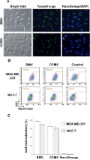
- by flow cytometry (Figure 1B). The differences in the extent of cell internalization could be explained by the surface charge as revealed by zeta potential measurements. The flow cytometry analysis of cell internalization was also performed after trypsin treatment, which promotes detachment of the
- . Surprisingly, a remarkable difference was found. CCMV showed a high activation of macrophages, while BMV showed almost no immunogenic response (Figure 3C,D). There is 80% homology in the amino acids sequences of CCMV and BMV [21], however, they differ in their surface charge. The zeta potential at pH 7 was
- determined. Under these conditions, the zeta potential of CCMV is −9.27 ± 0.47 mV, more negative than that of BMV (−5.16 ± 0.40 mV). The surface charge of the capsid could be the reason why CCMV activates macrophage cells to a greater extent, because it is well known that at a higher anionic charge the


Poly(1-vinylimidazole) polyplexes as novel therapeutic gene carriers for lung cancer therapy
Beilstein J. Nanotechnol. 2020, 11, 354–369, doi:10.3762/bjnano.11.26
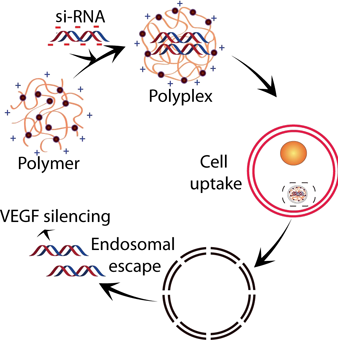
- 100, Perkin Elmer, USA). Dynamic light scattering (DLS) and zeta potential measurements: The hydrodynamic size of the PVI–siRNA polyplexes was measured on a Zetasizer Nano ZS (Malvern instruments, UK). Samples at different volume ratios containing a final siRNA concentration of 100 nM were used for
- the measurements. The measurements were made using a quartz microcell of 1 mL capacity and 3 mm path length. Clear disposable cells were employed for zeta potential measurements. All measurements were performed for each sample in triplicates 20 min after sample preparation at 25 °C. Electrophoresis
- nanoparticles in the size range of 80 to 120 nm is clearly discernible from the electron micrographs. The hydrodynamic diameter of the blank PVI nanoparticles measured using dynamic light scattering was found to be about 237 ± 34.6 nm. The zeta potential measured for the blank PVI nanoparticles in HEPES buffer


Understanding nanoparticle flow with a new in vitro experimental and computational approach using hydrogel channels
Beilstein J. Nanotechnol. 2020, 11, 296–309, doi:10.3762/bjnano.11.22
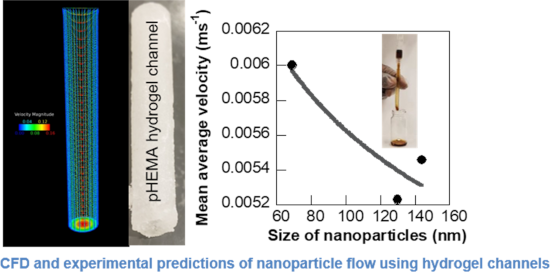
- obtain varying size and surface charge of the iron oxide NPs and to render the NPs biocompatible. Figure 5a shows a representative schematic of the iron oxide NPs synthesized. The hydrodynamic sizes and zeta potential values of the different iron oxide NPs were investigated in detail using a Litesizer
- (PDI: 0.17) and 140 nm (PDI: 0.12), respectively. The iron oxide NP formulations showed similar surface charges (Figure 5c). The low absolute values of zeta potential of the NPs suggested positively charged surfaces stabilized via steric hindrances from the polymer coating. The experimental flow
- . Characterization of iron oxide nanoparticles A Litesizer 500 (Anton Paar) particle analyzer equipped with zeta potential capability was used to measure the hydrodynamic size, stability, and surface charge of aqueous dispersions of iron oxide NPs at pH 7 at room temperature (Figure S4, Supporting Information File 1


Phase inversion-based nanoemulsions of medium chain triglyceride as potential drug delivery system for parenteral applications
Beilstein J. Nanotechnol. 2020, 11, 213–224, doi:10.3762/bjnano.11.16
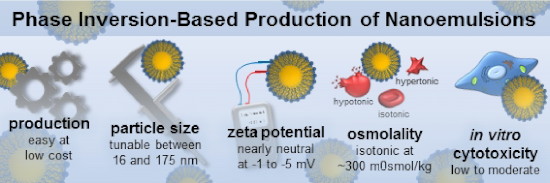
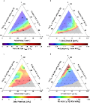
- concentration of the surfactant Kolliphor HS 15 and hence the increase of the ratio of Kolliphor HS 15 to MCT resulted in a prompt decrease of the particle diameter. The constant limit is reached at ratios above three. The zeta potential of all nanoemulsions shown in Figure 4c was slightly negative between −1.6
- . Particle size and zeta potential measurement Particle diameters and zeta potentials were determined with the Malvern Instruments Zetasizer Nano ZS. To determine the particle diameters, the samples were diluted 1:100 in water and three measurements of 15 runs were conducted at 25 °C in the backscattering
- mode. The zeta potential was determined in triplicate with samples diluted 1:10 in 0.1× PBS with pH 7.4 at 25 °C with 10 to 50 runs per measurement. Investigation of the stability The samples were stored at 5 ± 3 °C, room temperature and at 40 ± 2 °C according to the storage conditions of the ICH




Long-term stability and scale-up of noncovalently bound gold nanoparticle-siRNA suspensions
Beilstein J. Nanotechnol. 2019, 10, 2568–2578, doi:10.3762/bjnano.10.248
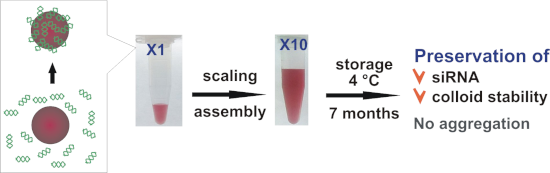
- ±0.025 and 0.304 ± 0.010, respectively, thus indicating the homogeneity of the suspensions [23]. The main part (≈90% of the average value of the zeta potential) of the AuNP-siRNA particles in samples ×1 and ×10 had a charge of −38.85 ± 2.66 mV and −49.42 ± 2.07 mV, respectively (the main peaks in Figure
- 1C,D). The seed AuNP-siRNA (citrate) AuNPs had a zeta potential value of −33.6 ± 2.0 mV, indicating that attachment of siRNA influenced this value. The analysis of the zeta potential values of samples ×1 and ×10 revealed changes in the ratio between particles with different surface charge; this is
- clearly illustrated by the shape of the curves (Figure 1C,D; Supporting Information File 1, Table S1). At the same time, there were the particles with a charge value of −78.84 ± 10.85 mV (sample ×1) and −20.59 ± 8.04 mV (sample ×10), which was 9–11% of the average value of zeta potential. The average zeta


Bombesin receptor-targeted liposomes for enhanced delivery to lung cancer cells
Beilstein J. Nanotechnol. 2019, 10, 2553–2562, doi:10.3762/bjnano.10.246
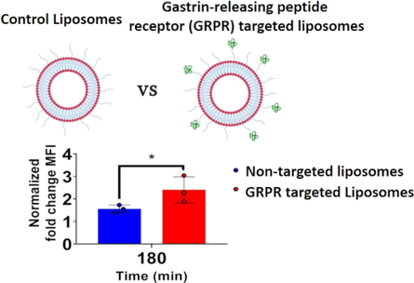
- formulations were prepared using the thin-film technique to yield small and monodisperse vesicles as judged by dynamic light scattering (DLS) analysis (Table 1). The colloidal properties of both liposomal formulations were highly similar in terms of size, polydispersity and zeta potential and consistent with
- those reported for other pegylated liposomes by others [27]. The vesicles were colloidally stable in PBS over 72 h at temperatures of 4, 25 and 37 °C with no significant changes in size, PDI or zeta potential observed (Figure 3a,b). It was noted that the diameter of both liposome formulations was larger
- and 50 nm pore sizes to produce a narrow size distribution of LUVs. Characterization of liposomal formulations Liposomes were characterized for size and zeta potential using Zetasizer Nano ZS. For size measurements the liposomal suspension was diluted 1:10 with PBS. For zeta potential measurements

pH-Controlled fluorescence switching in water-dispersed polymer brushes grafted to modified boron nitride nanotubes for cellular imaging
Beilstein J. Nanotechnol. 2019, 10, 2428–2439, doi:10.3762/bjnano.10.233
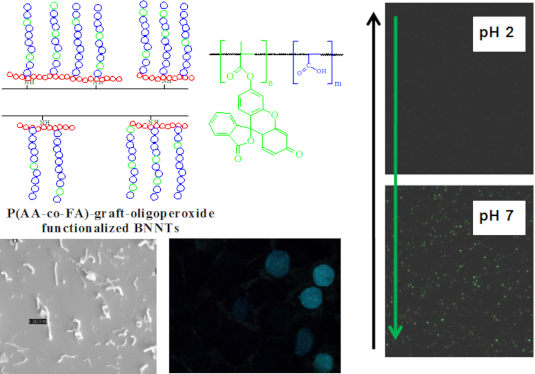
- 9600 nm/min scan rate. The excitation and emission wavelength and the maximum fluorescence intensity of each peak were recorded. The concentration of BNNTs was 1 mg/mL. The pH of the suspension was adjusted by adding HCl or NaOH. Dynamic light scattering (DLS) The size distribution and zeta potential
- the nanomaterial were assumed to be 2.0 and 1.500, respectively. All size and zeta potential measurements were carried out in triplicate. All data were analyzed by using Malvern Instrument DST 5.00 software. 1 mg of sample was suspended in 1 mL of distilled water and sonicated for 2–10 min. After the
- -distribution profile (Figure 6) and zeta potential of BNNTs and P(AA-co-FA)-functionalized BNNTs in water were also studied. P(AA-co-FA)-functionalized BNNTs demonstrate a smaller Z-average diameter than the native BNNTs. The zeta potentials of BNNTs and P(AA-co-FA)-functionalized BNNTs are −19.4 and −14.3 mV


Coating of upconversion nanoparticles with silica nanoshells of 5–250 nm thickness
Beilstein J. Nanotechnol. 2019, 10, 2410–2421, doi:10.3762/bjnano.10.231
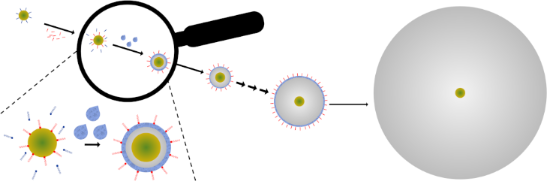
- remain constant. Hence, the number of micelles stays constant, and their size is increased to accommodate the growing core–shell particles. Consequently, the formation of core-free silica particles is suppressed. When the negative zeta potential of the particles, which continuously decreased during the
- shell followed by the Stöber-like regrowth. Similar findings were also obtained for larger UCNP. It turned out in several preliminary experiments conducted by the same procedure that the zeta potential of the particles after the initial silica growth in the reverse microemulsion was always only around
- significantly alter their zeta potential. For this reason, further silica shell growth was performed in a reverse microemulsion. For this procedure, initially, the concept for growing larger silica shells on oleate-coated iron oxide NPs introduced by Ding et al. was adapted for the UCNPs [36] and used for a


The role of Ag+, Ca2+, Pb2+ and Al3+ adions in the SERS turn-on effect of anionic analytes
Beilstein J. Nanotechnol. 2019, 10, 2338–2345, doi:10.3762/bjnano.10.224
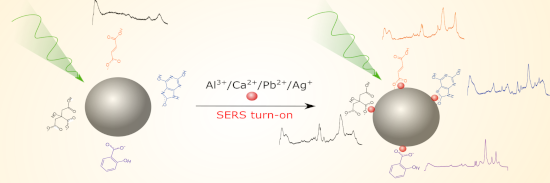
- − showing a high affinity for the silver surface. The colloidal nanoparticles used here are surrounded by citrate anions in an electrostatic interaction with the silver surface, which confer the nanoparticles a negative zeta potential and thus electrostatically stabilize the AgNPs and prevent aggregation


Incorporation of doxorubicin in different polymer nanoparticles and their anticancer activity
Beilstein J. Nanotechnol. 2019, 10, 2062–2072, doi:10.3762/bjnano.10.201
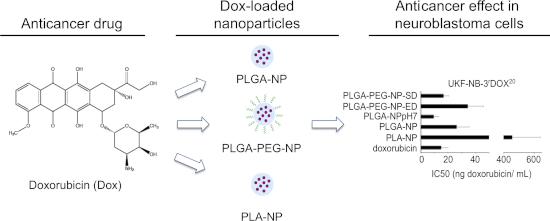
- comparatively simple preparation methods. The resulting nanoparticles were compared by particle diameter, polydispersity index, zeta potential, drug load, and drug release behaviour. Preliminary results on the preparation of doxorubicin-loaded PLGA nanoparticles have been previously published [34]. Selected
- had no influence on the nanoparticle characteristics such as particle diameter, PDI, and zeta potential (Table 2). However, loading efficiency and drug load increased. The drug load raised from 6.7 ± 0.3 µg doxorubicin/mg nanoparticle (44.8 ± 5.8% loading efficiency) without pH adjustment to 7.9 ± 0.8
- particle size, size distribution and zeta potential Average particle size and the polydispersity were measured by photon correlation spectroscopy (PCS) using a Malvern zetasizer nano (Malvern Instruments, Herrenberg, Germany). The resulting particle suspensions were diluted 1:100 with purified water and





Gold-coated plant virus as computed tomography imaging contrast agent
Beilstein J. Nanotechnol. 2019, 10, 1983–1993, doi:10.3762/bjnano.10.195
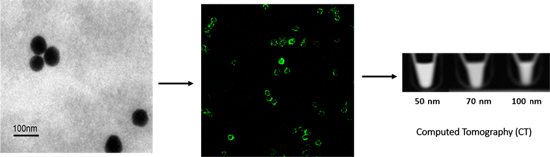
- correlogram generated by the DLS instruments, that measures the time at which the correlation starts to significantly decay, gave a slope of 85.3° consistent with a monodisperse distribution. The steeper the line (closer to 90°) the more monodisperse the particles are. The zeta potential cannot be measured
- directly, rather it is deduced from the electrophoretic mobility of the charged NPs under an applied electric field. The electrophoretic mobility toward the positive or the negative electrode determines the zeta potential values as negative or positive. The zeta potential values for Au-CPMV particles of
- different suspensions are summarized in Table 1. The zeta potential is consistent, in each case, with the formation of a similar layer deposited on the surface of the Au-CPMV particles [34]. The zeta potential values of unfunctionalized Au-CPMV agrees with previously reported values [35] ranging between




Synthesis and potent cytotoxic activity of a novel diosgenin derivative and its phytosomes against lung cancer cells
Beilstein J. Nanotechnol. 2019, 10, 1933–1942, doi:10.3762/bjnano.10.189
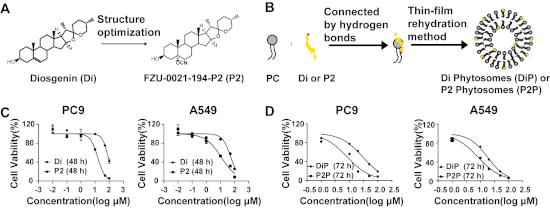
- sterol structure similarly to cholesterol, P2 phytosomes (P2Ps) were prepared to further improve the water solubility of P2. The P2Ps exhibited a particle size of 53.6 ± 0.3 nm with oval shape and a zeta potential of −4.0 ± 0.7 mV. P2Ps could inhibit the proliferation of lung cancer cells more
- , Di phytosomes (DiP) and P2 phytosomes (P2P) were prepared by a thin-film rehydration method (Figure 3A). Blank lipid nanoparticles without drugs (P) were also prepared with the same process. Particle size and zeta potential of the phytosomes were measured by dynamic light scattering (DLS). The
- of liposomal membranes [34]. The existence of cholesterol analogues Di and P2 in phytosomes could improve the structural stability of phytosomes. The zeta potential values of DiP and P2P were −6.4 and −4.0 mV, respectively. Because the negatively charged particles interact weakly with negatively