


Search results
Search for "STEM" in Full Text gives 301 result(s) in Beilstein Journal of Nanotechnology. Showing first 200.
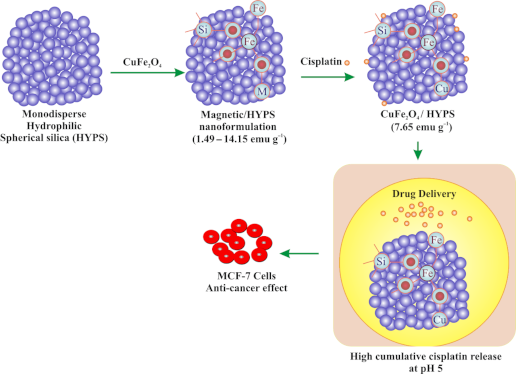
Targeted therapeutic effect against the breast cancer cell line MCF-7 with a CuFe2O4/silica/cisplatin nanocomposite formulation
Beilstein J. Nanotechnol. 2019, 10, 2217–2228, doi:10.3762/bjnano.10.214
- Research and Medical Consultations, Imam Abdulrahman Bin Faisal University, P.O. Box 1982, 31441 Dammam, Saudi Arabia Department of Stem Cell Research, Institute for Research and Medical Consultations, Imam Abdulrahman Bin Faisal University, P.O. Box 1982, 31441 Dammam, Saudi Arabia College of Engineering


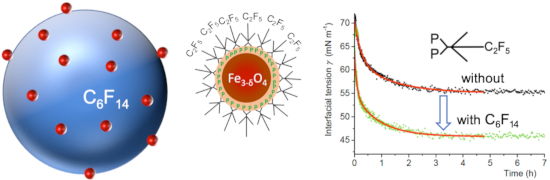
Microbubbles decorated with dendronized magnetic nanoparticles for biomedical imaging: effective stabilization via fluorous interactions
Beilstein J. Nanotechnol. 2019, 10, 2103–2115, doi:10.3762/bjnano.10.205
- and 11.66 mol m−3 [14]. IONP dispersions with Fe concentrations ranging from 0.1 to 10−4 mg mL−1 were obtained by diluting the 1 mg mL−1-concentrated stem aqueous dispersions with HEPES buffer. The IONP@C4X9OEG8Den (X = F and H) aqueous dispersions were sonicated for 30 min (setting 5) before


Gold-coated plant virus as computed tomography imaging contrast agent
Beilstein J. Nanotechnol. 2019, 10, 1983–1993, doi:10.3762/bjnano.10.195
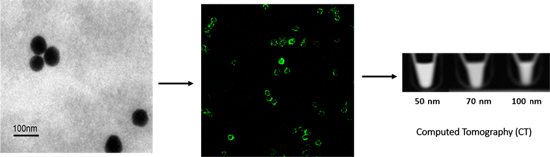
- conclude that the prepared VCAM1-PEG5000Au-CPMV is an acceptable targeting model for further in vivo studies. STEM–EDX elemental maps Low-voltage STEM offers a contrast enhancement over conventional TEM analysis due to lower energy (20–30 kV). The higher electron scattering provides better insight into the
- and size, indicating that they are resistant to solubilization or oxidation. The dual STEM and EDX spectra from the Antibody-PEG5000Au-CPMV gave useful information about the spatial distribution of gold and sulfur across the cellular surface. The simultaneously acquired EDX spectrum images confirmed
- that gold and sulfur are at the surface as a consequence of the modification of Au-CPMV with the antibody linker. Furthermore, STEM-EDX analysis provided compositional and topographical 3-D elemental distributions (Figure 5). CT Imaging Iodine-containing compounds are routinely used as CT imaging




Magnetic properties of biofunctionalized iron oxide nanoparticles as magnetic resonance imaging contrast agents
Beilstein J. Nanotechnol. 2019, 10, 1964–1972, doi:10.3762/bjnano.10.193
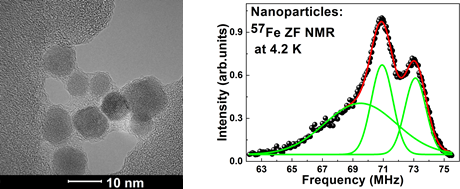
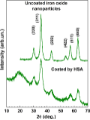
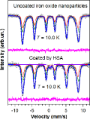
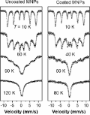
- ]. Experimental methods TEM of pure and HSA-coated MNPs was performed using a Titan 80-300 TEM/STEM (ThermoFisher Scientific, USA) operated at 300 kV. XRD spectroscopy was carried out with a Rigaku MiniFlex diffractometer using Cu Kα radiation. The Mössbauer absorption spectra of 57Fe nuclei were recorded in the




Synthesis and potent cytotoxic activity of a novel diosgenin derivative and its phytosomes against lung cancer cells
Beilstein J. Nanotechnol. 2019, 10, 1933–1942, doi:10.3762/bjnano.10.189
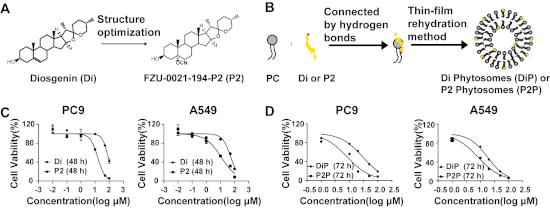
- anticancer activities, such as restraining the hTERT gene expression in A549 lung cancer cells [3], inhibiting breast cancer stem-like cells via Wnt β-catenin signaling [4], impeding hepatocellular carcinoma cells by increasing DDX3 expression [5], and inducing apoptosis of prostate cancer cells through



Fabrication and characterization of Si1−xGex nanocrystals in as-grown and annealed structures: a comparative study
Beilstein J. Nanotechnol. 2019, 10, 1873–1882, doi:10.3762/bjnano.10.182
- consequential interface characteristics and its effect on the photocurrent spectra. Keywords: grazing incidence XRD (GIXRD); high-power impulse magnetron sputtering (HiPIMS); HRTEM; magnetron sputtering; photocurrent spectra; SiGe nanocrystals in SiO2/SiGe/SiO2 multilayers; STEM-HAADF; TEM; Introduction
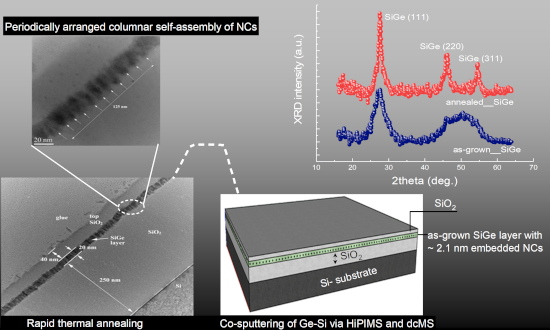
- white contrast seen in the high-angle annular dark-field scanning transmission electron microscopy (HAADF-STEM) image (Figure 5b) emphasizes the Ge atoms density, revealing the morphology of the SiGe crystallites. The SiGe NCs have columnar/ellipsoidal morphology oriented with the large axis parallel to
- pattern taken on annealed MLs (600 °C, 1 min). (a) XTEM image of MLs annealed at 600 °C (1 min) showing columnar morphology of SiGe NCs in the film. The crystallites have a periodicity of ≈12.5 nm. (b) STEM-HAADF image. (c) HRTEM image with SiGe NCs separated by amorphous regions (with SiGeO). (a) TEM low


Synthesis of nickel/gallium nanoalloys using a dual-source approach in 1-alkyl-3-methylimidazole ionic liquids
Beilstein J. Nanotechnol. 2019, 10, 1754–1767, doi:10.3762/bjnano.10.171
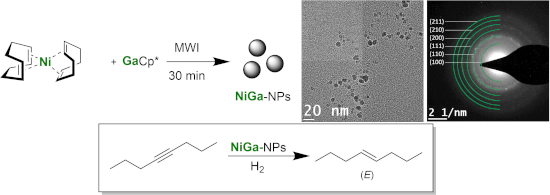
- (HAADF-STEM) and supported by energy-dispersive X-ray spectrometry (EDX), selected-area energy diffraction (SAED) and X-ray photoelectron spectroscopy (XPS). NiGa@[BMIm][NTf2] catalyze the semihydrogenation of 4-octyne to 4-octene with 100% selectivity towards (E)-4-octene over five runs, but with poor
- indicates a Ga(K)/O(K) ratio of 95:5 ± 4% (Figure 7). This ratio and the subsequent analyses by high-angle annular dark-field (HAADF)-scanning (S)TEM-EDX have to be interpreted very cautiously as EDX is not very well suited for the quantification of elements lighter than fluorine. HAADF-STEM images (Figure
- to NiGa nanoparticles. To complete this investigation, GaCp* was successfully decomposed in [BMIm][NTf2] to Ga2O3-doped Ga particles with a size of 350 ± 100 nm. The formation of core–shell sparticles can be ruled out by HRTEM/STEM-EDX-measurements. Phase-pure NiGa nanoparticles were tested in the




Layered double hydroxide/sepiolite hybrid nanoarchitectures for the controlled release of herbicides
Beilstein J. Nanotechnol. 2019, 10, 1679–1690, doi:10.3762/bjnano.10.163
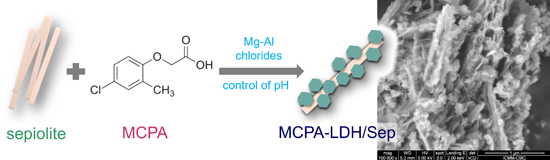
- scanning electronic microscope (FE-SEM) FEI-NOVA NanoSEM 230, and TEM images were performed on a JEOL 2100F STEM 200 kV microscope. Release of MCPA in water The release of MCPA from the MCPA-LDH hybrid, MCPA-LDH/Sep nanoarchitectures and the A-Z bionanocomposite materials was performed in 100 mL deionized


Kelvin probe force microscopy work function characterization of transition metal oxide crystals under ongoing reduction and oxidation
Beilstein J. Nanotechnol. 2019, 10, 1596–1607, doi:10.3762/bjnano.10.155
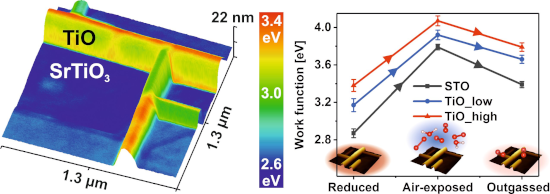
- the high-angle annular dark-field imaging scanning transmission electron microscope (HAADF-STEM) mode as we have recently shown in [12]. A closer look at TiO reveals the γ-TiO structure in a Fm-3m space group and 2.1 Å unit cell, which stands in perfect agreement with subject literature values [27
- the trend of a decreasing work function upon reduction and an increasing one due to reoxidation [30]. It is worth mentioning that substantial discrepancies between the measured WF for transition metal oxides, besides the different quality of the samples, could stem from the suboptimal conditions


Materials nanoarchitectonics at two-dimensional liquid interfaces
Beilstein J. Nanotechnol. 2019, 10, 1559–1587, doi:10.3762/bjnano.10.153
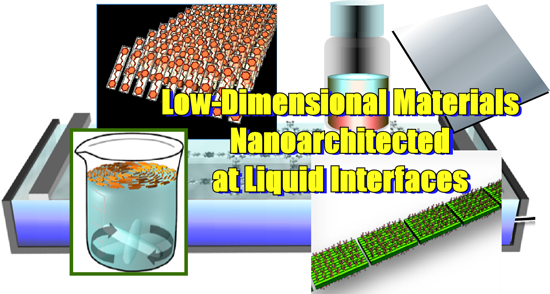
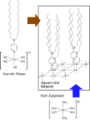
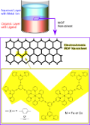
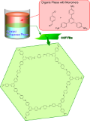
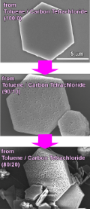
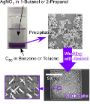
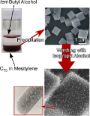
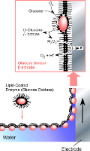
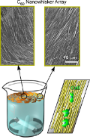
- , various materials such as molecular machines, molecular receptors, block-copolymer, DNA origami, nanocarbon, phages, and stem cells were assembled at liquid interfaces by using various useful techniques. This review overviews techniques such as conventional Langmuir–Blodgett method, vortex Langmuir













Highly ordered mesoporous silica film nanocomposites containing gold nanoparticles for the catalytic reduction of 4-nitrophenol
Beilstein J. Nanotechnol. 2019, 10, 1368–1379, doi:10.3762/bjnano.10.135
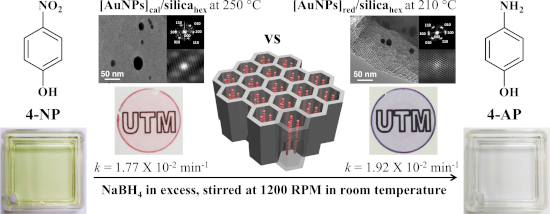
- other reports, the AuNP–film catalyst in this work showed higher catalytic activity for the reduction of 4-NP to 4-AP which was 10 times (0.199 × 10−2 min−1) and 4 times (0.45 × 10−2 min−1) higher than for AuNPs prepared from Gnida glauca leaf and stem extracts [45]. Another report by Shende et al. [46


Fabrication of phase masks from amorphous carbon thin films for electron-beam shaping
Beilstein J. Nanotechnol. 2019, 10, 1290–1302, doi:10.3762/bjnano.10.128
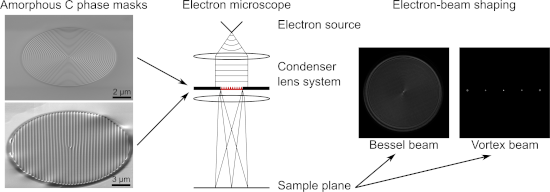
- kρ with constant D also increases the number of side maxima, which could lead to unwanted signal from other sample areas contributing to the main signal in a STEM experiment. Furthermore, each ring of a BB contains roughly the same intensity, which means that additional rings reduce the intensity in
- of generated Bessel beams For applications of a BB as a STEM probe the non-diffracting beam shape must be obtained in the object plane where the sample is located. This is achieved by placing a PM in the condenser system of a TEM. We used a Philips CM200 FEG/ST operated at 200 kV and positioned a PM



Alloyed Pt3M (M = Co, Ni) nanoparticles supported on S- and N-doped carbon nanotubes for the oxygen reduction reaction
Beilstein J. Nanotechnol. 2019, 10, 1251–1269, doi:10.3762/bjnano.10.125
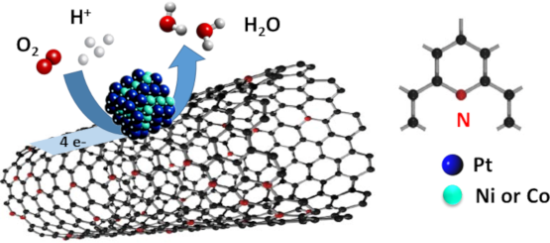
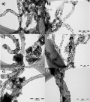
- Co islands (Supporting Information File 1, Figure S7a,b) were identified using the scanning transmission electron microscopy/high-angle annular dark-field imaging (STEM-HAADF) technique. Energy-dispersive X-ray spectroscopy (EDX) analysis on the N-CNT surface or in the Co aggregates confirmed the
- presence of Co. The same analysis was made on the sample Ni/N-CNTHT. There also, despite the high Ni loading (48% w/w), no Ni NPs were observed (Figure 6c,d). STEM-HAADF analysis shed light into the presence of non-crystallized Ni at the surface of the carbon support. EDX analysis confirmed the presence of
- also evidenced by STEM-HAADF images of Pt3Co/N-CNT (Figure 7b, 001 selected area). In the same way, the Pt3Ni composition was determine by EDX analysis for the sample Pt3Ni/N-CNTHT (Supporting Information File 1, Figure S9). This sample also displays some residual nickel atoms or clusters







Green fabrication of lanthanide-doped hydroxide-based phosphors: Y(OH)3:Eu3+ nanoparticles for white light generation
Beilstein J. Nanotechnol. 2019, 10, 1200–1210, doi:10.3762/bjnano.10.119
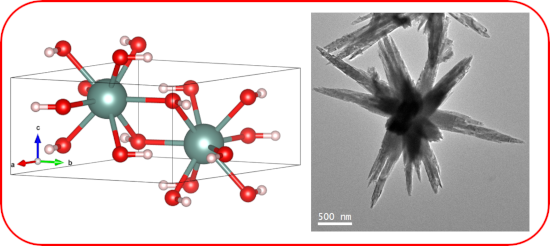
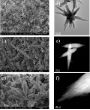
- structure indicates two yttrium atoms located at one face of the hexagonal phase and shared oxygen saturated with hydrogens. To investigate the crystal formation of the samples fabricated at 5 min, several low-magnification high-angle annular dark field (HAADF) STEM micrographs were taken and are presented
- in Figure 1c. These micrographs reveal that the sample consists of agglomerated nanoparticles. The clusters formed by the sub-10 nm nanoparticles have sizes between 50 nm to a few micrometers. It is possible to visualize the individual nanoparticles in the lower left HAADF STEM micrograph where the
- about the morphology of Y(OH)3:7.5% Eu3+ crystals, general TEM and HAADF-STEM micrographs of the sample prepared at 60 min are presented in Figure 2d–f. A multipod-like structure (Figure 2d) together with the rice-like structures (Figure 2e,f) were obtained. Higher magnification images, as presented in



Photoactive nanoarchitectures based on clays incorporating TiO2 and ZnO nanoparticles
Beilstein J. Nanotechnol. 2019, 10, 1140–1156, doi:10.3762/bjnano.10.114
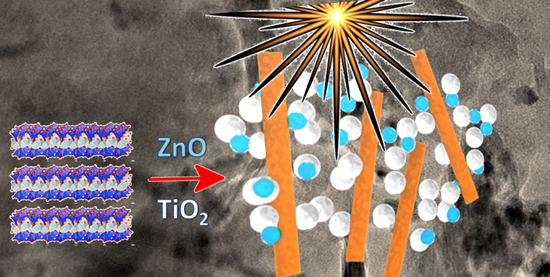
- isopropoxide; reprinted with permission from [109], copyright 2008 American Chemical Society. ZnO-Fe3O4@sepiolite nanoarchitecture prepared in two steps: First, the fiber clay is modified by assembly of magnetite NPs. After that, the ZnO NPs are added yielding a magnetic photocatalyst. The STEM images on the



Synthesis and characterization of quaternary La(Sr)S–TaS2 misfit-layered nanotubes
Beilstein J. Nanotechnol. 2019, 10, 1112–1124, doi:10.3762/bjnano.10.111
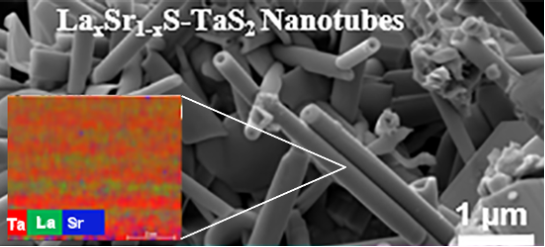
- spectroscopy. Density functional theory calculations were carried out to support the experimental observations. Keywords: aberration-corrected STEM; DFT; misfit-layered compounds; nanotubes; Raman spectroscopy; Introduction Since their discovery in 1992 [1], inorganic nanotubes (INTs) have attracted the
- electron microscopy (SEM) was done by LEO model Supra 55VP SEM. Transmission electron microscopy (TEM) and scanning transmission electron microscopy (STEM) were performed on a Titan Themis 80-300 microscope with probe and image spherical aberration (Cs) correctors, at 200 kV. Energy-dispersive X-ray
- plausible explanation and more careful study of this tendency is undertaken by means of DFT calculations vide infra. The tubular morphology of the SrxLa1−xS–TaS2 sample with 10 atom % Sr in the precursor was further confirmed by high-angle annular dark field (HAADF)-STEM analysis as shown in Figure 3 (top


CuInSe2 quantum dots grown by molecular beam epitaxy on amorphous SiO2 surfaces
Beilstein J. Nanotechnol. 2019, 10, 1103–1111, doi:10.3762/bjnano.10.110
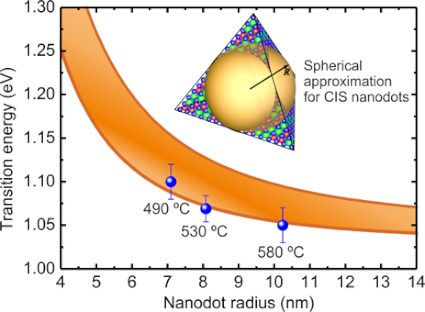
- electron microscopy (STEM) images were taken with a FEI Titan ChemiSTEM 80-200 kV Cs-probe corrected transmission electron microscope, operating at 200 kV accelerating potential and equipped with an energy-dispersive X-ray spectroscopy (EDS) SuperX-Bruker silicon drift detector. In this method a coherent
- present one line for each element. The STEM lamellae were prepared in a focused ion beam (FIB) FEI Dual-Beam Helios 450S with FIB Mo-grids using a technique known as “lift-out” [35]. To improve FIB preparation and visualization of the nanodots in the STEM, the samples were coated with an amorphous carbon
- layer prior to the protective Pt bi-layer deposition assisted by electron and ion beams. The final polishing of the lamella was done using 1 keV in energy to reduce the lateral damage and the Ga implantation effects in the lamellae. EDS was performed in the same STEM microscope in order to check the [Cu


Synthesis of MnO2–CuO–Fe2O3/CNTs catalysts: low-temperature SCR activity and formation mechanism
Beilstein J. Nanotechnol. 2019, 10, 848–855, doi:10.3762/bjnano.10.85
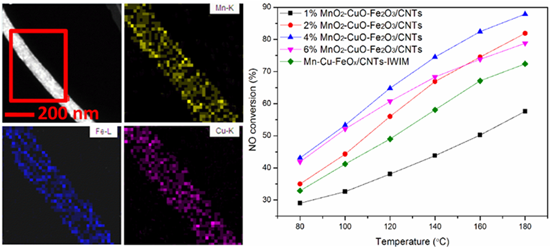
- the results of NO conversion and of previous studies [6][16][17]. Scanning transmission electron microscopy STEM and element mapping were adopted to further investigate the morphology of the catalyst. As shown in Figure 5a, bright dots associated to the metal elements can be found, indicating the
- formation of metal oxide catalysts on CNTs. The STEM-EDX mappings (Figure 5b–g) exhibit a series of columnar element-distribution images, further proving that the metal oxide catalysts have been successfully loaded on the CNTs. Hydrogen temperature-programmed reduction analysis In SCR reaction, the redox
- -prepared catalysts: (A) XPS full-scan spectrum, (B) Mn 2p, (C) Cu 2p, and (D) Cu Auger spectra of 4% MnO2–CuO–Fe2O3/CNTs; (E) Fe 2p and (F) O 1s spectra for (a) 4% MnO2–CuO–Fe2O3/CNTs and (b) Mn–Cu–FeOx/CNTs-IWIM. (a) STEM images and (b–g) element mappings of 4% MnO2–CuO–Fe2O3/CNTs. H2-TPR curves of two




Study of silica-based intrinsically emitting nanoparticles produced by an excimer laser
Beilstein J. Nanotechnol. 2019, 10, 211–221, doi:10.3762/bjnano.10.19
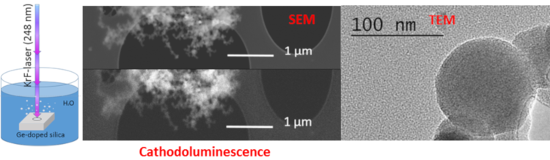
- nanoparticles tend to be slightly more spherical in shape for a higher energy per pulse. Scanning transmission electron microscope (STEM) data have shown that, regardless of size and applied energy per pulse, in each nanoparticle, some inhomogeneity is present in the form of brighter (i.e., more dense) features
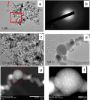
- produced nanoparticles, we recorded transmission electron microscopy (TEM) and scanning transmission electron microscope (STEM) images of the samples. Figure 3a illustrates the TEM image recorded for the same nanoparticles previously studied by EDX and SEM (red square named 1 in Figure 1a. Figure 3b
- , indicating that the produced particles are amorphous. Figure 3e and 3f show the dark-field STEM images recorded for large nanoparticles and for a group of small ones detected in sample A. In both images we note the presence of several brilliant spots. Such spots are present independent from the particle size



Scanning probe microscopy for energy-related materials
Beilstein J. Nanotechnol. 2019, 10, 132–134, doi:10.3762/bjnano.10.12

- significant role for the in-operando characterization. SPM methods offer a plethora of operation modes beyond topography imaging, which is well reflected in the articles of this thematic issue. The majority of contributions stem from research on photovoltaic materials. Here, electrical conductive atomic force
Graphene–graphite hybrid epoxy composites with controllable workability for thermal management
Beilstein J. Nanotechnol. 2019, 10, 95–104, doi:10.3762/bjnano.10.9
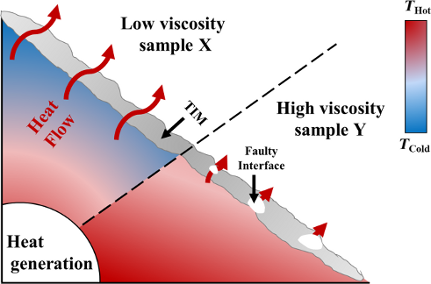
- liquid or paste-like TIMs, differences in thermal expansion between the hot and cold surfaces could result in the TIM leaking out of the interface, thus increasing the contact resistance. These malfunctions in the performance of TIMs could stem from their high viscosity values during application on



Pull-off and friction forces of micropatterned elastomers on soft substrates: the effects of pattern length scale and stiffness
Beilstein J. Nanotechnol. 2019, 10, 79–94, doi:10.3762/bjnano.10.8
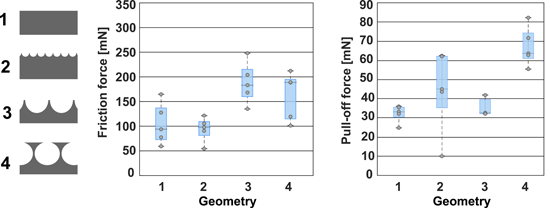
- micropillars of 100 μm height and a stem diameter of 60 μm, terminated with a thin (2 μm) disc of 40 μm in diameter [11]. These so-called mushroom-shaped micropillars generated higher pull-off forces than flat-punch micropillars, a phenomenon attributed to a higher adaptability to substrate roughness due to





Amorphous NixCoyP-supported TiO2 nanotube arrays as an efficient hydrogen evolution reaction electrocatalyst in acidic solution
Beilstein J. Nanotechnol. 2019, 10, 62–70, doi:10.3762/bjnano.10.6
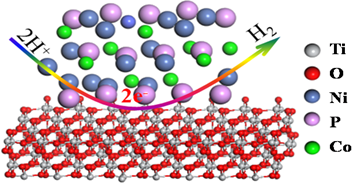
- TiO2 (101) phase, as shown in the upper left and square areas. The STEM-HAADF and corresponding EDS maps of single tube NixCoyP/TNAs are revealed in Figure 4. From the figure, the diameter of the TiO2 nanotube was determined to be about 150 nm with a chemical composition of Ti, O, Ni, Co, and P evenly
- the samples. (a) TNAs, (b) NixCoyP/TNAs. (a) TEM and (b) HR-TEM images of the NixCoyP/TNAs. HAADF STEM image and EDS elemental maps of the NixCoyP/TNAs. High-resolution XPS spectra of (a) Ti 2p, (b) O 1s, (c) Ni 2p, (d) Co 2p and (e) P 2p of the NixCoyP/TNAs. (f) UV–vis diffuse reflection absorbance




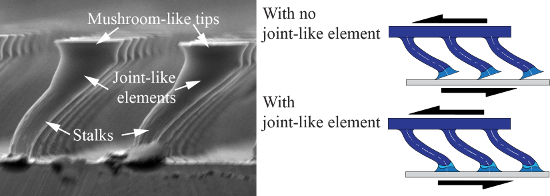
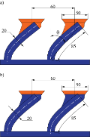
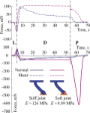
The effect of flexible joint-like elements on the adhesive performance of nature-inspired bent mushroom-like fibers
Beilstein J. Nanotechnol. 2018, 9, 2893–2905, doi:10.3762/bjnano.9.268
- time, displacements, velocities in the Y–Z plane and record the data from two load cells. The LDP experiments were performed first by attaching the load cell stem to the acrylic peg by gluing the peg to the stem when in contact with a glass slide. After the glue is allowed to cure for 30 min, the
- the microplate array and glass slide is visually checked using the inverted microscope, precision stages are used to bring the load cell stem in contact with the back of the acrylic peg. To prevent the fibers from buckling, the load cell is brought down with 1 μm steps while the load cell output is
- checked at each step. Once the contact is obtained, a small droplet of glue is applied to the area between stem and the back of the glass slide using needle-like tweezers (Figure 11b). The glue is allowed to dry for 10 min (Figure 11c). By using the custom Labview software, the stage is brought up in the






Charged particle single nanometre manufacturing
Beilstein J. Nanotechnol. 2018, 9, 2855–2882, doi:10.3762/bjnano.9.266
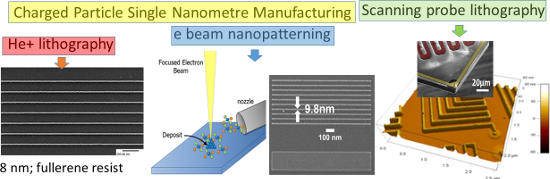
- electron beams from a thermionic cathode in the cathode ray tube pioneered by Braun in 1897 [1], followed by the first practical scanning transmission electron microscope (STEM) built in Berlin by von Ardenne in 1939 [2]. The first commercial SEM was built by Ruska’s team at Siemens in 1939 [3





