


Search results
Search for "cancer" in Full Text gives 318 result(s) in Beilstein Journal of Nanotechnology. Showing first 200.
A review on nanostructured silver as a basic ingredient in medicine: physicochemical parameters and characterization
Beilstein J. Nanotechnol. 2021, 12, 440–461, doi:10.3762/bjnano.12.36
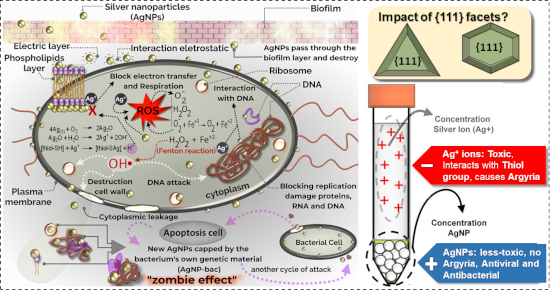
- against a wide range of bacteria (i.e., Gram-negative [67], Gram-positive [31], and multiresistant bacteria (MR) [27][68][69][70][71]), fungi [69][72][73][74], and viruses [8][75][76][77] in addition to anti-inflammatory [78][79][80], anti-cancer [27][81], and anti-angiogenic properties [33][47][82
- ]. Silver has been widely used to heal ulcerative wounds and to treat burns. Due to the antimicrobial and anti-inflammatory properties of AgNPs, these particles can prevent bacterial infection at the wound area and accelerate healing [27][83]. AgNPs have been shown to improve the efficacy of cancer


The impact of molecular tumor profiling on the design strategies for targeting myeloid leukemia and EGFR/CD44-positive solid tumors
Beilstein J. Nanotechnol. 2021, 12, 375–401, doi:10.3762/bjnano.12.31
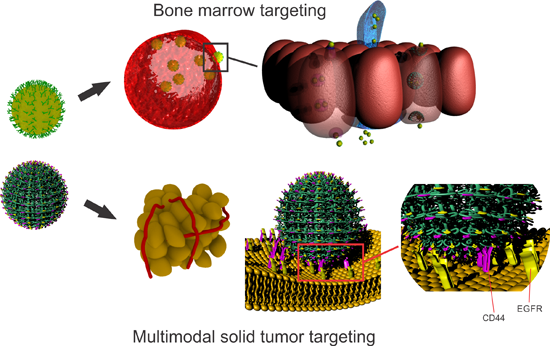
- , Doha, Qatar 10.3762/bjnano.12.31 Abstract Nanomedicine has emerged as a novel cancer treatment and diagnostic modality, whose design constantly evolves towards increasing the safety and efficacy of the chemotherapeutic and diagnostic protocols. Molecular diagnostics, which create a great amount of
- efficacy of the cancer treatment. This article will focus on novel design strategies for nanoscale drug delivery systems, based on the unique molecular signatures of myeloid leukemia and EGFR/CD44-positive solid tumors, and the impact of novel discoveries in molecular tumor profiles on future
- , which usually results in therapy failure and noticeable side effects. Nanomedicine has emerged as a novel cancer treatment and diagnostic modality, whose design constantly evolves towards increasing the safety and efficacy of the chemotherapeutic and diagnostic protocols. Recently, a novel generation of


Doxorubicin-loaded gold nanorods: a multifunctional chemo-photothermal nanoplatform for cancer management
Beilstein J. Nanotechnol. 2021, 12, 295–303, doi:10.3762/bjnano.12.24
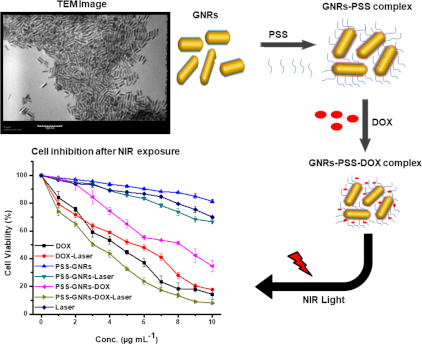
- Medical Toxicology Lab, Department of Zoology, Government College University Lahore, Lahore-54000, Pakistan 10.3762/bjnano.12.24 Abstract Two of the limitations associated with cancer treatment are the low efficacy and the high dose-related side effects of anticancer drugs. The purpose of the current
- based on chemotherapy and photothermal strategies appears to be a promising platform in cancer management. Keywords: chemotherapy; doxorubicin; gold nanorods; NIR laser; photothermal therapy; Introduction Despite the enormous advances in medical research, cancer is still the second most common cause
- of death worldwide from which 9.6 million people died in 2018 [1]. Hepatocellular carcinoma (HCC) is one of the major types of liver cancer with high incidence of mortality [2]. Currently, there are a number of treatment modalities, including chemotherapy, immunotherapy, targeted therapy, irradiation


Differences in surface chemistry of iron oxide nanoparticles result in different routes of internalization
Beilstein J. Nanotechnol. 2021, 12, 270–281, doi:10.3762/bjnano.12.22
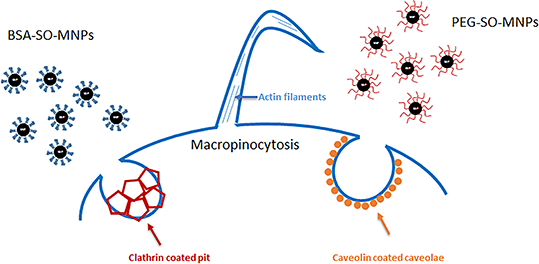
- Barbora Svitkova Vlasta Zavisova Veronika Nemethova Martina Koneracka Miroslava Kretova Filip Razga Monika Ursinyova Alena Gabelova Cancer Research Institute, Biomedical Research Center of the Slovak Academy of Sciences, Dubravska cesta 9, 845 05 Bratislava, Slovakia Institute of Experimental
- eligible for the targeted delivery of the drug-loaded particles to the tumor mass via an external magnetic field [2]. Furthermore, MNPs are promising biosensors [3] and antimicrobial tools [4], and they play an important role in the development of multifunctional theranostics to combat cancer [5]. MNPs are
- valuable in vitro model of human alveolar epithelial type-2 cells [21], which are considered as drivers of lung fibrosis [22] and lung tumor development [23]. Inhalation therapy represents a prospective non-invasive curative modality for lung cancer and a therapy for other lung illnesses [24]. Drug



The nanomorphology of cell surfaces of adhered osteoblasts
Beilstein J. Nanotechnol. 2021, 12, 242–256, doi:10.3762/bjnano.12.20
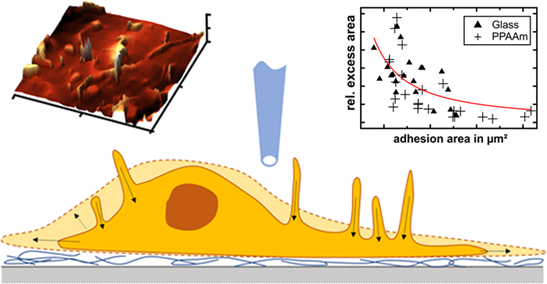
- breast cancer cells [30], and on keratinocytes [35]. In general, these features are associated with migration, receptor internalization, and micropinocytosis [30][36][37]. Membrane ruffling is regulated by a distinct signaling pathway [38] and the supporting actin is denser and more cross-linked [35
- ] compared to flat membrane regions. Three types of ruffles can be discriminated, namely (linear) dorsal, peripheral, and circular dorsal ruffles [36]. Colocalization with hyaluronan synthase has been found in a breast cancer cell line (MCF-7) [30]. Usually the error current, that is, the deviation between


A review on the biological effects of nanomaterials on silkworm (Bombyx mori)
Beilstein J. Nanotechnol. 2021, 12, 190–202, doi:10.3762/bjnano.12.15
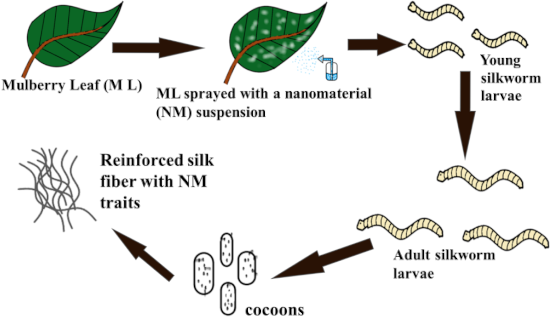
- development, organogenesis, neuronal development, aging, inheritance, and cancer [84][85]. Aside from its rapid lifecycle, it is reported that the fruit fly produces genetically identical offspring when compared to mammalian models, which produce a smaller number of offspring at a time [86][87]. Also, the


Imaging of SARS-CoV-2 infected Vero E6 cells by helium ion microscopy
Beilstein J. Nanotechnol. 2021, 12, 172–179, doi:10.3762/bjnano.12.13
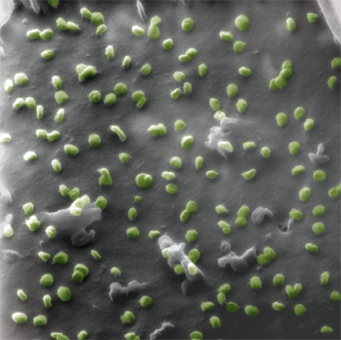
- field of cell biology for imaging various human and animal cells. These include cartilage [2], cancer [3], liver [4], kidney [5] and stem cells [6], as well as fibrin fibers [7]. To visualize viruses and their host organisms, HIM has so far been applied to image T4 phage-infected E. coli bacteria [8


Bio-imaging with the helium-ion microscope: A review
Beilstein J. Nanotechnol. 2021, 12, 1–23, doi:10.3762/bjnano.12.1
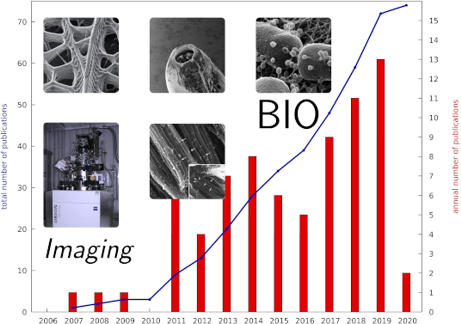
- study published in the same year, Bazou et al. employed HIM to image human colon cancer cells (Caco2) [9]. The glutaraldehyde-fixed and freeze-dried cells were imaged by both HIM and SEM to enable the direct comparison between the two instruments. HIM analysis of gold-coated and uncoated samples showed
- , HIM provided high-resolution insight into the complex network of interactions of platelets with cancer cells [10]. In 2012, Berg-Foels et al. used transmission electron microscopy, SEM, and HIM to image rabbit cartilage samples [70]. The long depth of field provided by HIM renders the technique
- study regarding biological HIM imaging of a whole variety of biological samples, including plants, bacteria, cancer cells, and a nematode worm, Pristionchus pacificus. The imaging of that worm will be discussed later in the section “Nanofabrication” regarding its innovative use of the combination of


PEG/PEI-functionalized single-walled carbon nanotubes as delivery carriers for doxorubicin: synthesis, characterization, and in vitro evaluation
Beilstein J. Nanotechnol. 2020, 11, 1728–1741, doi:10.3762/bjnano.11.155
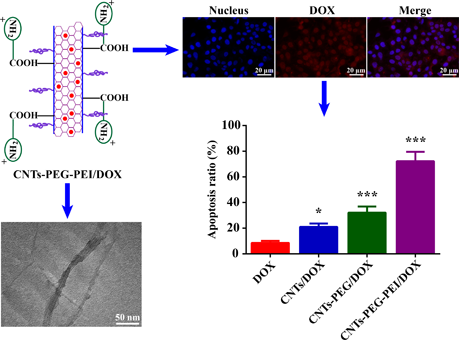
- drugs. Keywords: antitumor activity; cellular uptake; PEG functionalization; PEI functionalization; poly(ethylene glycol) (PEG); polyethylenimine (PEI); single-walled carbon nanotubes; Introduction To date, chemotherapy is the most common therapy for cancer treatment. However, the inability of
- chemotherapeutic agents to distinguish cancer cells from normal cells due to nonspecific distribution and lack of selectivity results in severe toxic side effects for health [1][2]. Therefore, a variety of nanoscale delivery systems have been designed for the controlled release of chemotherapy drugs to decrease
- the distribution in normal tissues, and to improve the biological half-lives [3][4][5][6]. Carbon nanotubes (CNTs) have attracted great interest for biomedical applications, including the delivery of bioactive molecules such as drugs, the targeted cancer therapy, and biological imaging, because of




Cardiomyocyte uptake mechanism of a hydroxyapatite nanoparticle mediated gene delivery system
Beilstein J. Nanotechnol. 2020, 11, 1685–1692, doi:10.3762/bjnano.11.150
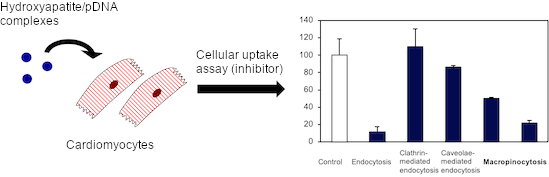
- acquisition at inflammation sites. Further studies regarding the role of CaSR and its downstream signaling pathways in HL-1 cells are required. Although the HAp-based vector used here has a low transfection efficiency, it has already been used as a gene delivery system in in vivo cancer research experiments


Fabrication of nano/microstructures for SERS substrates using an electrochemical method
Beilstein J. Nanotechnol. 2020, 11, 1568–1576, doi:10.3762/bjnano.11.139
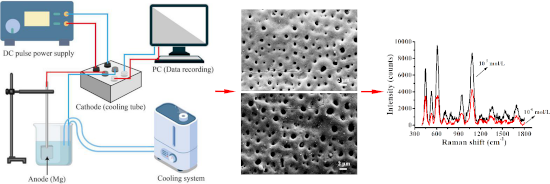
- activation of the innate immune system [51]. However, excess lysozyme activity can increase the incidence of some diseases. In certain kinds of cancer, such as leukemia [52], excessive production of lysozyme is toxic and can induce organ disorder. Figure 7 shows the SERS spectra of lysozyme (10−6 mol·L−1 and


Electrokinetic characterization of synthetic protein nanoparticles
Beilstein J. Nanotechnol. 2020, 11, 1556–1567, doi:10.3762/bjnano.11.138
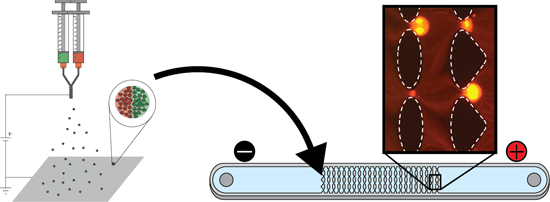
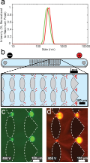
- vaccines [5][6]. Significant advances in self-assembled PNPs via protein engineering techniques have also been observed [7][8]. PNPs have successfully reached the clinic with nab-paclitaxel (Abraxane®), a PNP made of human serum albumin, which is being used for the treatment of metastatic breast cancer
- , non-small cell lung cancer, and pancreatic adenocarcinomas [9]. Current technologies allow for the synthesis of smart PNPs that release their active enzymatic load into oxidative environments [6]. A next step to further advance smart protein nanoparticle technologies is to develop a scalable method



Antimicrobial metal-based nanoparticles: a review on their synthesis, types and antimicrobial action
Beilstein J. Nanotechnol. 2020, 11, 1450–1469, doi:10.3762/bjnano.11.129
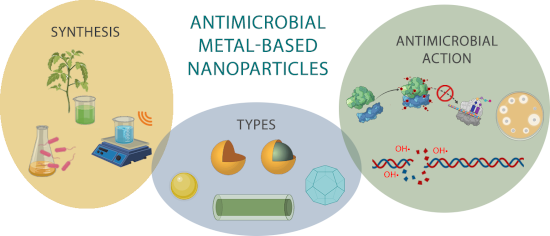
- NPs has been directed towards water disinfection, food packaging in addition to their known use as a UV filter to prevent skin cancer [114]. Lopez de Dicastillo et al. (2019) developed hollow TiO2 nanotubes and nanospheres with high antimicrobial activity through the combination of electrospinning and
- photocatalytic, electrochemical, and catalytic properties. Furthermore, NiO NPs exhibit anti-inflammatory properties, generating interest in the biomedical field to use these NPs as antibiotics or in cancer treatments [116][133]. NiO NPs synthesized from Eucalyptus globulus leaf extract showed excellent


Wafer-level integration of self-aligned high aspect ratio silicon 3D structures using the MACE method with Au, Pd, Pt, Cu, and Ir
Beilstein J. Nanotechnol. 2020, 11, 1439–1449, doi:10.3762/bjnano.11.128
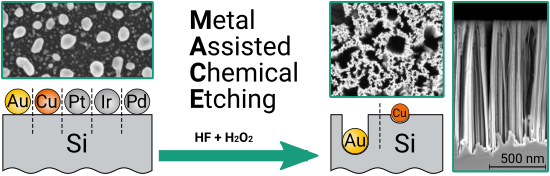
- platform and can be adapted to detect biomolecules [9]. Silicon nanowires are used as template for cancer sensors. The nanowires are implemented as gate in integrated sensing FETs [10][11]. A wide range of chemical sensors and biosensors benefit from porous silicon structures [12]. All these presented


Transient coating of γ-Fe2O3 nanoparticles with glutamate for its delivery to and removal from brain nerve terminals
Beilstein J. Nanotechnol. 2020, 11, 1381–1393, doi:10.3762/bjnano.11.122
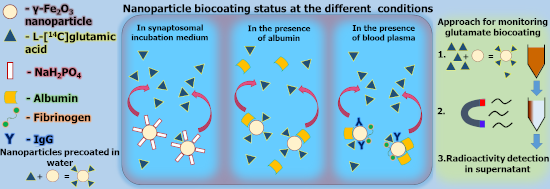
- identified. Glutamate-coated γ-Fe2O3 nanoparticles can be used for glutamate delivery to the nervous system or for glutamate adsorption (but with lower effectiveness) in stroke, brain trauma, epilepsy, and cancer treatment following by its subsequent removal using a magnetic field. γ-Fe2O3 nanoparticles with
- neurological disorders. Excessive ambient glutamate concentration is a characteristic feature of, among others, stroke, brain trauma, epilepsy, and seizure development. Superparamagnetic γ-Fe2O3 nanoparticles are very promising in targeted drug delivery, cancer therapy, diagnostics, and hyperthermia treatment
- due to their magnetism and chemical stability [9][10][11][12][13]. Among a variety of other nanoparticles, superparamagnetic iron oxide nanoparticles are used for magnetic resonance imaging in cancer theranostics and magnetic hyperthermia [9][10][11][14]. Controlled magnetic fields can lead to induced


Ultrasensitive detection of cadmium ions using a microcantilever-based piezoresistive sensor for groundwater
Beilstein J. Nanotechnol. 2020, 11, 1242–1253, doi:10.3762/bjnano.11.108
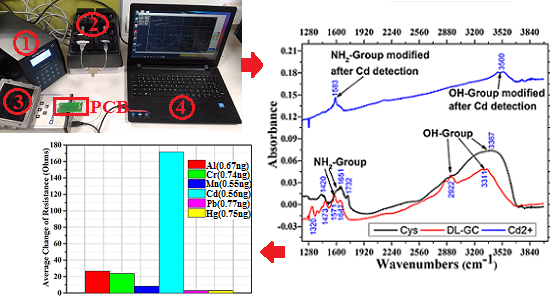
- degeneration, diarrhea, osteoporosis, renal dysfunction, cancer, anemia, and neurological disorders such as Parkinson's disease or Alzheimer's disease [4][5]. The WHO has set a water contamination limit of 3 μg/L Cd(II) [6]. We conclude from the WHO limit that cadmium is hazardous, and smaller Cd




Influence of the magnetic nanoparticle coating on the magnetic relaxation time
Beilstein J. Nanotechnol. 2020, 11, 1207–1216, doi:10.3762/bjnano.11.105
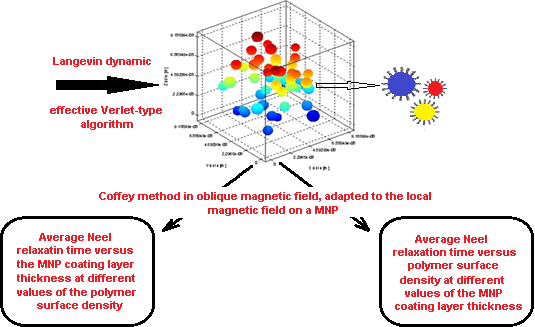
- Abstract Colloidal systems consisting of monodomain superparamagnetic nanoparticles have been used in biomedical applications, such as the hyperthermia treatment for cancer. In this type of colloid, called a nanofluid, the nanoparticles tend to agglomeration. It has been shown experimentally that the
- relaxation time; nanoparticle coating; numerical simulation; stochastic Langevin dynamics method; superparamagnetic nanoparticles; Introduction One of the most important biomedical applications of colloidal magnetic nanoparticle systems is magnetic hyperthermia applied as an alternative for cancer treatment
- . Upon reaching the tumour, the magnetic nanoparticles are locally subjected to an alternating magnetic field, generating heat that kills the cancer cells [1]. The heat is generated due to two phenomena: Néel relaxation (an internal phenomenon driven by the rotation of the particle magnetic moment inside


Photothermally active nanoparticles as a promising tool for eliminating bacteria and biofilms
Beilstein J. Nanotechnol. 2020, 11, 1134–1146, doi:10.3762/bjnano.11.98
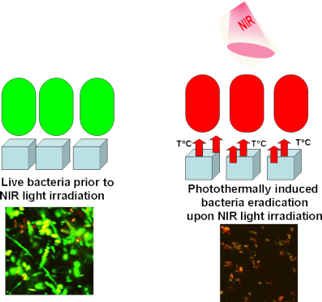
- less dependent on their size, shape and surrounding environment [35][40]. The photothermally active nanoparticles have vast potential for application in nanomedicine and biotechnology. The most important examples of their application are: hyperthermic cancer cell ablation and photothermally induced


Straightforward synthesis of gold nanoparticles by adding water to an engineered small dendrimer
Beilstein J. Nanotechnol. 2020, 11, 1110–1118, doi:10.3762/bjnano.11.95
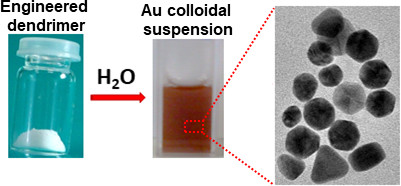
- for bio-imaging and cancer therapy [6][7]. In most cases, the synthesis of gold nanoparticles is carried out by the reaction between HAuCl4 and a reducing agent (in particular NaBH4) in the presence of a suitable compound to simultaneously prevent the aggregation of the nanoparticles and to stabilize


Applications of superparamagnetic iron oxide nanoparticles in drug and therapeutic delivery, and biotechnological advancements
Beilstein J. Nanotechnol. 2020, 11, 1092–1109, doi:10.3762/bjnano.11.94
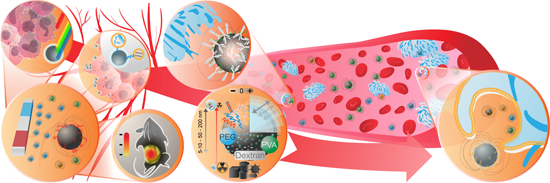
- behave like one magnetic unit, rotating in the presence of a magnetic field without retaining the magnetism after the magnetic field is removed [17]. This property makes SPIONs good candidates for MRI, and also for a type of thermic treatment of cancer, called localized hyperthermia. There are also other
- , dendrimers, albumin, silicones, liposomes, poloxamer, poly-ʟ-lysine, sugars, or polyethylene glycol (PEG) [27][28][29][30][31][32][33]. Hyperthermia treatment for cancer therapy is still under scrutiny. It shows great potential due to the property of SPIONs to produce local heat when placed under an
- trials [51]. A recent report suggests that submandibular gland cells suffer epigenetic mutations when treated with maghemite [52]. This fact becomes very important especially when developing SPION treatments for cancer. Unfortunately, to date scientists and physicians cannot provide definite protocols


A few-layer graphene/chlorin e6 hybrid nanomaterial and its application in photodynamic therapy against Candida albicans
Beilstein J. Nanotechnol. 2020, 11, 1054–1061, doi:10.3762/bjnano.11.90
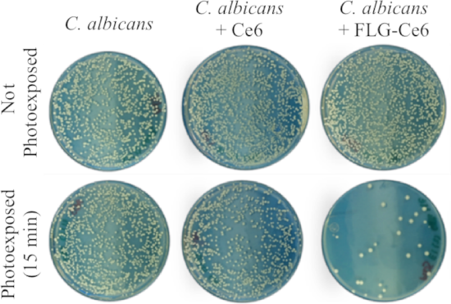
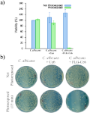
- prevailing drugs used to fight fungal infections usually require long treatments and very often present side effects [2]. For these reasons, improved antifungal therapies must be developed to treat fungal infections [4]. An alternative approach, used as medical technology to treat diseases like cancer and


Key for crossing the BBB with nanoparticles: the rational design
Beilstein J. Nanotechnol. 2020, 11, 866–883, doi:10.3762/bjnano.11.72
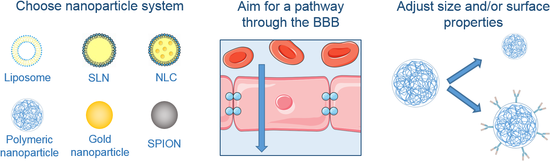
- are P-glycoproteins (P-gp or ABCB1, MDR1 gene product), breast cancer resistance proteins (BCRP/ABCG2) and the multidrug resistance-associated proteins (MRP1, 2, 4 and 5, ABCC) [31][35][36][37][38]. With their ability to transport a large variety of compounds, these efflux proteins cause a significant


Integrated photonics multi-waveguide devices for optical trapping and Raman spectroscopy: design, fabrication and performance demonstration
Beilstein J. Nanotechnol. 2020, 11, 829–842, doi:10.3762/bjnano.11.68
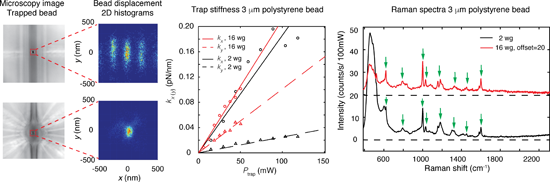
- biomarkers for cancer. In [6] we found, due to the divergence of the emitted beams, that larger facet separations (≥10 μm) lead to a strong global hot region of the light field near the waveguide facets. These global hot regions are preferential trapping sites, which may lead to adherence of the particle to


Examination of the relationship between viscoelastic properties and the invasion of ovarian cancer cells by atomic force microscopy
Beilstein J. Nanotechnol. 2020, 11, 568–582, doi:10.3762/bjnano.11.45
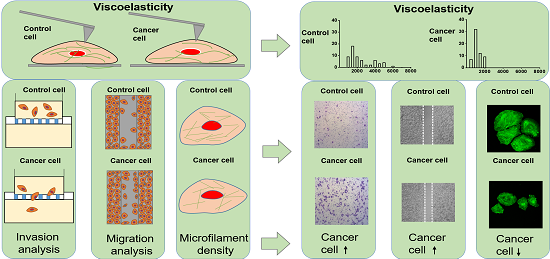
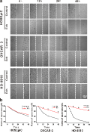
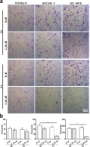
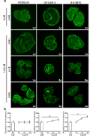
- The mechanical properties of cells could serve as an indicator for disease progression and early cancer diagnosis. This study utilized atomic force microscopy (AFM) to measure the viscoelastic properties of ovarian cancer cells and then examined the association with the invasion of ovarian cancer at
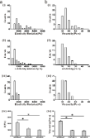
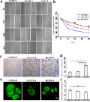
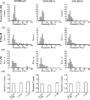
- the level of living single cells. Elasticity and viscosity of the ovarian cancer cells OVCAR-3 and HO-8910 are significantly lower than those of the human ovarian surface epithelial cell (HOSEpiC) control. Further examination found a dramatic increase of migration/invasion and an obvious decease of
- significantly related with the elasticity of the cells. An increase of elasticity and a decrease of invasion were found in OVCAR-3 and HO-8910 cells after Ech treatment. Together, this study clearly demonstrated the association of viscoelastic properties with the invasion of ovarian cancer cells and shed a


Luminescent gold nanoclusters for bioimaging applications
Beilstein J. Nanotechnol. 2020, 11, 533–546, doi:10.3762/bjnano.11.42
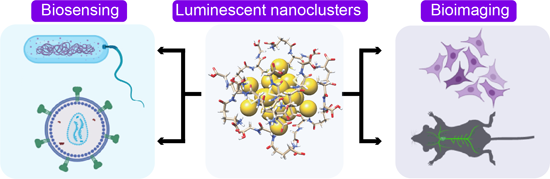
- receptor-positive (FR+) oral squamous cell carcinoma (KB) and breast cancer adenocarcinoma MCF-7 cell lines [88]. Since then, there have been numerous other reports that have shown various surface modifications to image a wide variety of cell lines. Pan et al. reported composite core–shell nanoparticle
- allowed for plasmonic and magnetic resonance, and luminescence in a single composite system for plasmonic photothermal therapy (PPTT). The bioimaging capability of the plasmonic magneto-luminescent multifunctional nanocarrier (PML-MF) systems were studied in vitro using three types of cancer cells, namely
- potential for photothermal therapy. While PML-MF alone was not toxic to healthy HEK cell lines, the treatment with DPML-MF showed a similar antiproliferative effect on healthy cell lines as that of cancerous cells. Therefore, the selective killing of cancer cells was not achieved. The superparamagnetic





