


Search results
Search for "charging" in Full Text gives 217 result(s) in Beilstein Journal of Nanotechnology. Showing first 200.
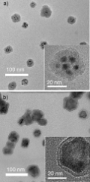
Systematic control of α-Fe2O3 crystal growth direction for improved electrochemical performance of lithium-ion battery anodes
Beilstein J. Nanotechnol. 2017, 8, 2032–2044, doi:10.3762/bjnano.8.204
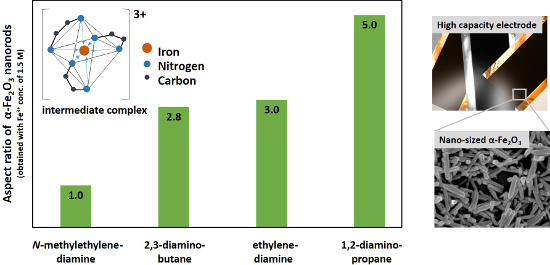
- ranges, faster charging, and lower costs), the development and optimization of electrode materials are of great interest. Considering that a target driving range of 300 miles is required for BEVs to achieve a sustainable mass market penetration (as defined by the US Department of Energy), the energy


Advances and challenges in the field of plasma polymer nanoparticles
Beilstein J. Nanotechnol. 2017, 8, 2002–2014, doi:10.3762/bjnano.8.200
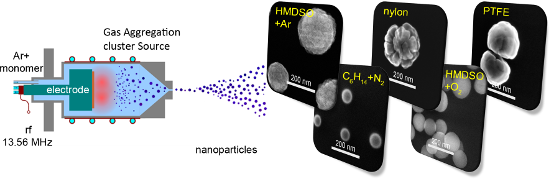
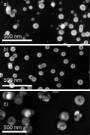
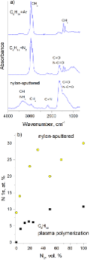
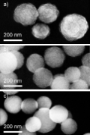
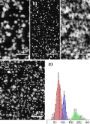
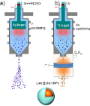
- necessarily identical) data were presented; the unreferenced data represent the authors’ new material which has not been published yet, but which is necessary for a comparative analysis in this review. Experimental arrangements allowing estimation of plasma polymer NP charging: a) electrostatic plates used






Identifying the nature of surface chemical modification for directed self-assembly of block copolymers
Beilstein J. Nanotechnol. 2017, 8, 1972–1981, doi:10.3762/bjnano.8.198
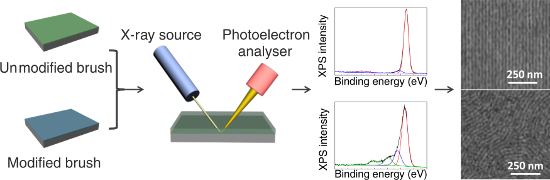
- energies of 285.3 and 286.5eV, respectively, exhibit a 0.2–0.3 eV shift towards higher energies as compared to Figure 3a, indicating different charging. The continuous blue line, corresponding to hydroxyl bonding, becomes more intense as compared to Figure 3a. Two new features are observed at 287.9 and 290
- oxide layer (SiOx), with partially oxidized silicon. Both lines are shifted due to charging induced by the grown oxide layers [25]. No relevant changes are observed in the C 1s spectra taken at the same photon energies (apart from charging), although they do not correspond to the same probing depths
- experiments performed with conventional sources [32], it is important to note that: (i) our results have been obtained with high energy resolution (see Supporting Information File 1, Figure S1), (ii) no external charge neutralization source has been used to compensate for charging effects due to the


Evaluation of preparation methods for suspended nano-objects on substrates for dimensional measurements by atomic force microscopy
Beilstein J. Nanotechnol. 2017, 8, 1774–1785, doi:10.3762/bjnano.8.179
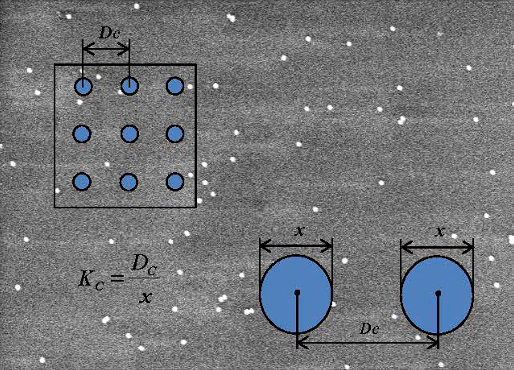
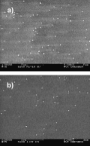
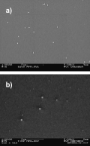
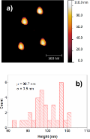
- 2. No additional post-conditioning of the sample/substrate was performed. For the SEM evaluation of membrane filtered samples it was helpful to sputter a thin (≈1 nm) platinum layer over the surface to prevent charging effects. Liquid phase preparation As mentioned before, preparation should lead
- charging [21] or radionuclides for bipolar particle charging. Previous studies [29] have shown that electrostatic deposition can provide substrates with isolated particles if particle concentration, flow conditions and precipitation time are well balanced. The electrostatic precipitation was performed
- using an electrostatic precipitator as developed by [21], which was operated with an aerosol sample flow rate of 0.3 L/min, unipolar particle charging by corona discharge at −3 kV and an electric field voltage of +13 kV. Details on the performed analyses are provided in Table 4. Thermal precipitation


Adsorption and electronic properties of pentacene on thin dielectric decoupling layers
Beilstein J. Nanotechnol. 2017, 8, 1388–1395, doi:10.3762/bjnano.8.140
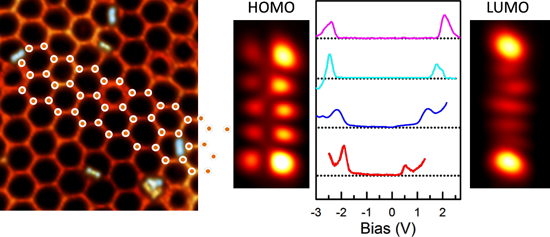
- well-defined increases in the local density of states are observed close to the Fermi level [3][4]. Tunneling through these states of pentacene results in a temporary charging of the molecule prior to the dissipation of the charge into the substrate [5]. The peaks observed in STS on pentacene are
- the gas-phase energies from the energies found on the surface can be explained by the screening of the underlying substrate during the temporary charging of the molecule [1][17][18]. In our measurements we observe a decrease of the HOMO–LUMO gap by 1.7 eV (i.e., an average shift of 0.85 eV for HOMO


Nanotopographical control of surfaces using chemical vapor deposition processes
Beilstein J. Nanotechnol. 2017, 8, 1250–1256, doi:10.3762/bjnano.8.126
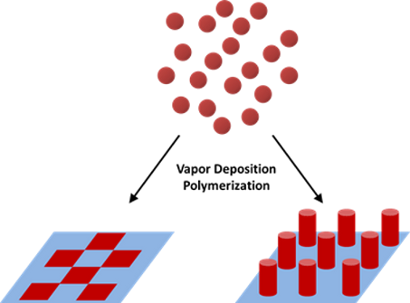
- with PPX derivatives containing nitrogen and oxygen heteroatoms, further work was conducted by Wu et al. [24]. The deposition of various PPX derivatives could be inhibited by electrically charging conducting substrates. Supplying electrical energy to the surface increases the surface energy, which




Metal oxide nanostructures: preparation, characterization and functional applications as chemical sensors
Beilstein J. Nanotechnol. 2017, 8, 1205–1217, doi:10.3762/bjnano.8.122
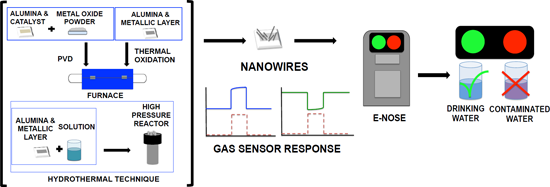
- ). Characterization techniques A field-emission scanning electron microscope (FE-SEM) LEO 1525 was used to investigate the morphology of samples. The electron beam was set at 3–5 keV energy and the samples were attached to metallic stub via carbon glue, to reduce charging effect due to the interaction of electron


Bio-inspired micro-to-nanoporous polymers with tunable stiffness
Beilstein J. Nanotechnol. 2017, 8, 906–914, doi:10.3762/bjnano.8.92
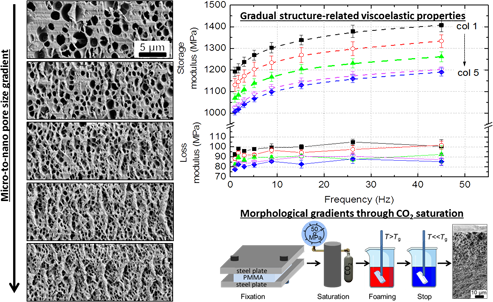
- ). Prior to SEM analysis the samples were sputtered with silver for 100 s at 25 mA with a sputter-coater (K575X, Emitech) in order to avoid charging effects and ensure a good resolution. SEM images of the surface of interest were taken before and after the indentation experiments. For the quantitative


Vapor deposition routes to conformal polymer thin films
Beilstein J. Nanotechnol. 2017, 8, 723–735, doi:10.3762/bjnano.8.76
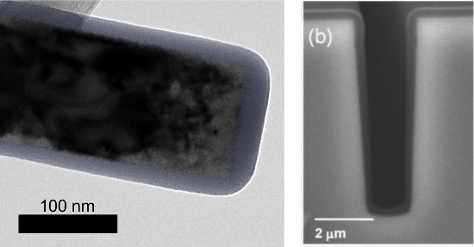
- difficult. Insufficient Z contrast and charging effects makes SEM cross sections difficult to analyze. Using a focus ion beam (FIB) system to make transmission electron microscopy (TEM) samples is a route often used with inorganic materials. However, ion damage, particularly for very thin films, is an issue


Synthesis of graphene–transition metal oxide hybrid nanoparticles and their application in various fields
Beilstein J. Nanotechnol. 2017, 8, 688–714, doi:10.3762/bjnano.8.74
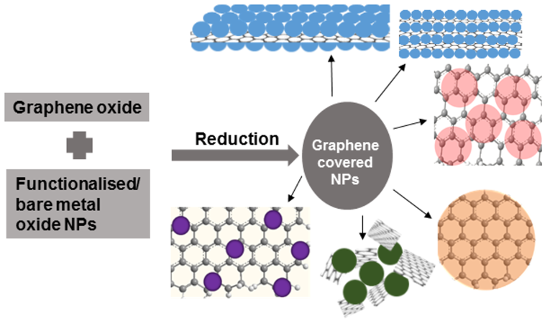
- 3a) via hydrothermal synthesis and chemical reduction of V2O5 by GO simultaneously in a Teflon lined autoclave [111]. When this hybrid is used as a cathode material in LIBs, it provides fast charging and discharging capability with long cycle performance (Figure 3b). VO2 (M) nanotube–graphene hybrids






Carbon nanotube-wrapped Fe2O3 anode with improved performance for lithium-ion batteries
Beilstein J. Nanotechnol. 2017, 8, 649–656, doi:10.3762/bjnano.8.69
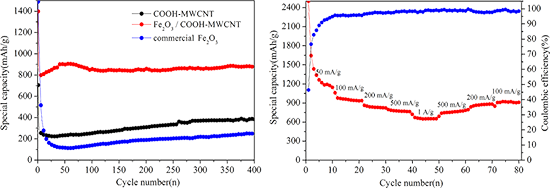
- charging and discharging [41]. In comparison to work done by Chen et al. [41], our synthesis method does not include sintering and is therefore less energy consuming. Liu et al. [24] and Zhou et al. [27] reported the synthesis of Fe2O3 followed by addition into GO suspension, which resulted in uneven


α-((4-Cyanobenzoyl)oxy)-ω-methyl poly(ethylene glycol): a new stabilizer for silver nanoparticles
Beilstein J. Nanotechnol. 2017, 8, 627–635, doi:10.3762/bjnano.8.67
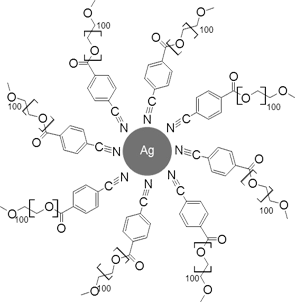
- electrostatic stabilization is likely somewhat stronger because the negatively charged carboxylate groups (from the cyanobenzoic acid moieties) also contribute to charging the SNP surface. Conclusion The current article describes synthesis and performance of α-((4-cyanobenzoyl)oxy)-ω-methyl poly(ethylene glycol


Tailoring bifunctional hybrid organic–inorganic nanoadsorbents by the choice of functional layer composition probed by adsorption of Cu2+ ions
Beilstein J. Nanotechnol. 2017, 8, 334–347, doi:10.3762/bjnano.8.36
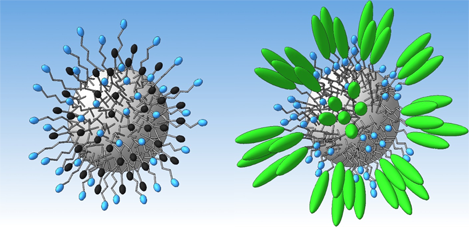
- into account the already developed principles of the production of APTES-derived materials [48][49]. The particles are generally smaller when higher TEOS/APTES ratios are applied [31]. They are less coalesced in the presence of higher ammonia content because of a stronger negative charging of the


Flexible photonic crystal membranes with nanoparticle high refractive index layers
Beilstein J. Nanotechnol. 2017, 8, 203–209, doi:10.3762/bjnano.8.22
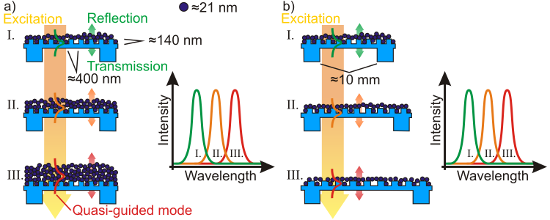
- (SEM). The cross-section was created with a focused ion beam (FIB). To protect the cutting edge, a layer of platinum was added on top of the sample. The structure itself is emphasized because of charging effects at the PDMS material border. For optical enhancement dotted guiding lines were drawn into


Fundamental properties of high-quality carbon nanofoam: from low to high density
Beilstein J. Nanotechnol. 2016, 7, 2065–2073, doi:10.3762/bjnano.7.197
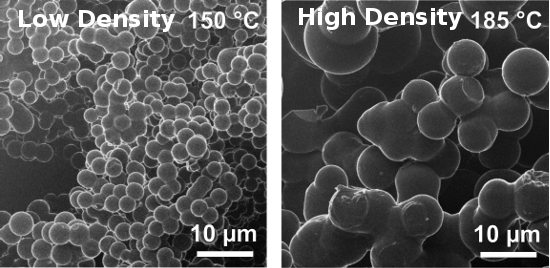
- samples were not coated with conductive layers, an electron flood gun was applied to stabilize charging. Prior to imaging, the foam material was attached to the HIM sample holder with conductive carbon pads. The HIM induces a high brightness, low-energy spread, subnanometer-size beam of helium ions [25


Zigzag phosphorene nanoribbons: one-dimensional resonant channels in two-dimensional atomic crystals
Beilstein J. Nanotechnol. 2016, 7, 1983–1990, doi:10.3762/bjnano.7.189

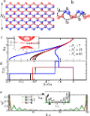
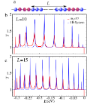
- confinement in quantum dots leads to rich physical phenomena [37]. The correlation among the energy scales involved such as energy-level spacing of the constriction, charging energy and couplings allows us to estimate when charging effects would be important [38]. In the strong-coupling regime the wave
- is weakly coupled to the upper and lower edges (weak-coupling regime) charging effects can be significant depending on the length of the constriction. In addition, metallic leads, gate electrodes and the dielectric function of the substrate modify the capacitance of the constriction and therefore a
- detailed study of the charging effects is left for future work. It is inevitable to compare our results with those obtained for graphene constrictions. Both zigzag graphene and phosphorene nanoribbons support edge states. However, their signatures on the electronic transport properties are completely



Active and fast charge-state switching of single NV centres in diamond by in-plane Al-Schottky junctions
Beilstein J. Nanotechnol. 2016, 7, 1727–1735, doi:10.3762/bjnano.7.165
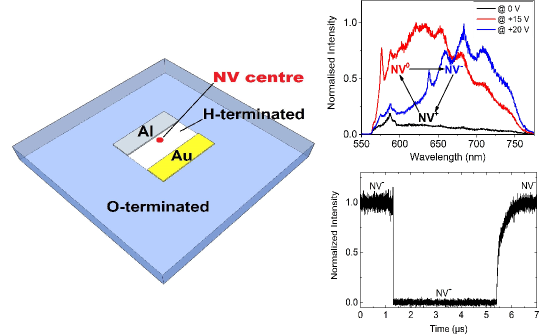
- frequencies is given in Table 1. According to the measured time constants, a switching frequency between approximately 1 MHz (charging NV) and 100 MHz (discharging NV) seems to be possible. This is much faster than the rate of hyperfine interaction between an electron and nuclear spin of A// = 2.66 kHz [13
- time constant increases above the time resolution of the measurement, we can now measure two time constants for the process of discharging NV− → NV+ like for the process of charging NV+ → NV−, too. From this, we can conclude that the transition NV− ↔ NV+ is a two-step process with NV0 as an
- second step in the two-step process of charging/discharging the NV centre (see Figure 6b and Figure 7) can be explained by the change of the charge carrier capture cross section of the NV centre. Generally, it is well known that the charge carrier capture cross section is larger for a charged defect


Filled and empty states of Zn-TPP films deposited on Fe(001)-p(1×1)O
Beilstein J. Nanotechnol. 2016, 7, 1527–1531, doi:10.3762/bjnano.7.146
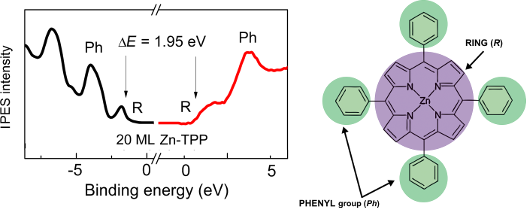
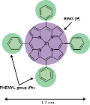
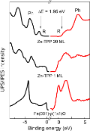
- ][26]. The IPES energy resolution is about 700 meV. All the experiments reported here were achieved under negligible charging conditions during electron spectroscopy data acquisition. The position of the vacuum level was obtained by adding the photon energy to the low-energy secondary electron cutoff

Enhanced detection of nitrogen dioxide via combined heating and pulsed UV operation of indium oxide nano-octahedra
Beilstein J. Nanotechnol. 2016, 7, 1507–1518, doi:10.3762/bjnano.7.144
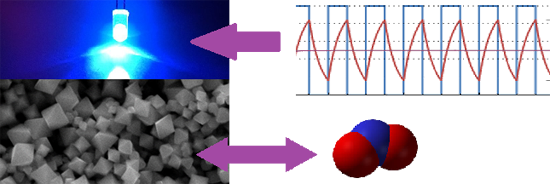
- diffractometer with parallel incident beam) and field emission scanning electron microscope (FESEM, Jeol 7600F). For SEM analysis, samples were coated with a 3 nm thick carbon layer to avoid charging effects. Sensors were produced by employing a screen-printing technique. The as-synthesized nano-octahedra were


Microwave synthesis of high-quality and uniform 4 nm ZnFe2O4 nanocrystals for application in energy storage and nanomagnetics
Beilstein J. Nanotechnol. 2016, 7, 1350–1360, doi:10.3762/bjnano.7.126
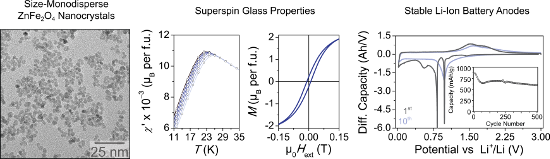
- a hemispherical electron energy analyzer. The C 1s signal from adventitious hydrocarbon at 284.8 eV was used as the energy reference to correct for charging. Mössbauer spectroscopy was performed in transmission geometry using a constant acceleration spectrometer with a 57Co radiation source embedded


Viability and proliferation of endothelial cells upon exposure to GaN nanoparticles
Beilstein J. Nanotechnol. 2016, 7, 1330–1337, doi:10.3762/bjnano.7.124
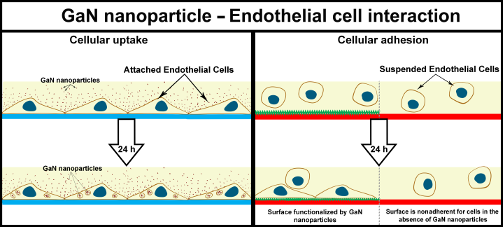
- fixed, dehydrated, dried, and a thin metallic layer was sputtered on top of them in order to avoid charging effects during scanning. The fixation process was performed at 4 °C in 2.5% glutaraldehyde for 12 h after the samples were kept in 0.2 M sodium cacodylate buffer for 24 h. The dehydration process



Mesoporous hollow carbon spheres for lithium–sulfur batteries: distribution of sulfur and electrochemical performance
Beilstein J. Nanotechnol. 2016, 7, 1229–1240, doi:10.3762/bjnano.7.114
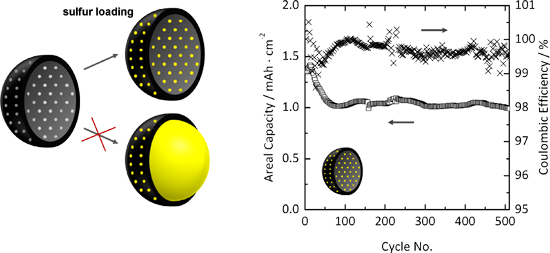
- electrolyte used in the cell was 10 μL/mgsulfur. Galvanostatic measurements were performed at 25 °C in the potential range of 2.5–1.7 V versus Li/Li+ using a MACCOR Series 4000 (Tulsa, Oklahoma) multichannel battery cycler. A constant voltage step was applied at the end of charging until a current drop of 90


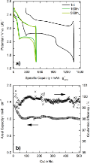
In situ characterization of hydrogen absorption in nanoporous palladium produced by dealloying
Beilstein J. Nanotechnol. 2016, 7, 1197–1201, doi:10.3762/bjnano.7.110
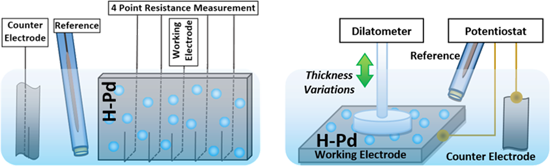
- platelets were cut for dealloying and subsequent charging experiments. The resistometric measurements were set up similar to our work on nanoporous platinum [12][13]. To sum up briefly, the rectangular sample (ca. 12 × 3 mm2) was immersed into the electrolyte hanging on five Pd wires, glued onto the
- pushrod of a Linseis L75 vertical dilatometer applying a constant pressure of 100 mN. A well-annealed, flattened Pd wire served as working electrode contact to an Autolab PGSTAT204 potentiostat. Electrochemical charging was performed at room temperature using commercial Ag/AgCl (saturated KCl) reference
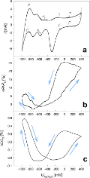
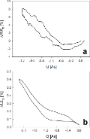
- dealloying were performed in a 1 M solution of KOH, a highly porous carbon fabric contacted by a Pd wire served as counter electrode. The property variations of np-Pd upon electrochemical charging were calculated with respect to the sample resistance R0 and thickness L0 in the electrochemical double layer

High-resolution noncontact AFM and Kelvin probe force microscopy investigations of self-assembled photovoltaic donor–acceptor dyads
Beilstein J. Nanotechnol. 2016, 7, 799–808, doi:10.3762/bjnano.7.71
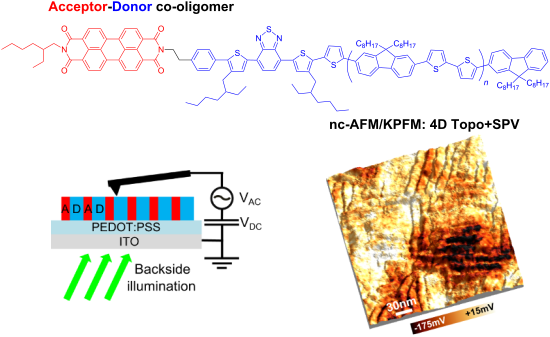
- images with a very high lateral resolution are achieved, which allows for the resolution of local photo-charging contrasts at the scale of single edge-on lamella. This work paves the way for local investigations of the optoelectronic properties of donor–acceptor supramolecular architectures down to the
- Figure S8 in Supporting Information File 1), unambiguously demonstrating that the lower SPV is intrinsically related to the charging state of a single lamella. Now we briefly discuss the origin of the observed SPV contrasts. As mentioned above, it is likely that the local SPV minima (in other words, the


Orientation of FePt nanoparticles on top of a-SiO2/Si(001), MgO(001) and sapphire(0001): effect of thermal treatments and influence of substrate and particle size
Beilstein J. Nanotechnol. 2016, 7, 591–604, doi:10.3762/bjnano.7.52
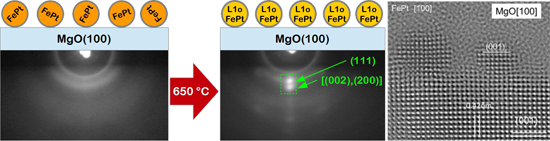
- leading to an atomically smooth surface for nanoparticle and film deposition. Since charging of the MgO substrate turned out to deteriorate the RHEED pattern, we further annealed the bare substrate under hydrogen atmosphere at 5·10−6 mbar to create oxygen vacancies, leading to a sufficient surface
- , charging has been minimized by a carbon flash evaporation, which, however, is removed by plasma etching before the subsequent annealing steps. The intensity along the Debye–Scherrer rings is homogeneous, thus the particles are randomly oriented. Diffraction features from the substrate are not visible
- FePt particles on MgO(001). The enhanced sharpness of the rings can be attributed to an improved crystallinity of the nanoparticles after annealing at 650 °C, but also to decreasing charging effects due to the formation of surface defects in the MgO substrate leading to better electrical conductivity





