Search results
Search for "chemistry" in Full Text gives 1168 result(s) in Beilstein Journal of Nanotechnology. Showing first 200.
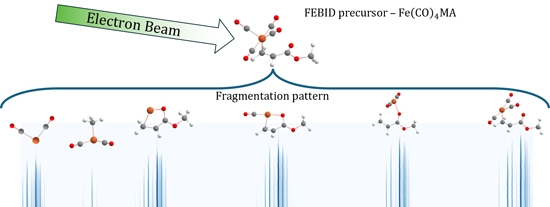
Electron-induced ligand loss from iron tetracarbonyl methyl acrylate
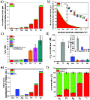
Beilstein J. Nanotechnol. 2024, 15, 797–807, doi:10.3762/bjnano.15.66
- Hlib Lyshchuk Atul Chaudhary Thomas F. M. Luxford Milos Rankovic Jaroslav Kocisek Juraj Fedor Lisa McElwee-White Pamir Nag J. Heyrovský Institute of Physical Chemistry, Czech Academy of Sciences, Dolejškova 3, 182 23 Prague, Czech Republic Department of Physical Chemistry, University of Chemistry
- and Technology, Technická 5, 16628 Prague, Czech Republic Department of Chemistry, University of Florida, Gainesville, Florida 32611-7200, United States 10.3762/bjnano.15.66 Abstract We probe the separation of ligands from iron tetracarbonyl methyl acrylate (Fe(CO)4(C4H6O2) or Fe(CO)4MA) induced by
- . Interesting differences also appear when this precursor is compared to structurally similar iron pentacarbonyl. The present findings shed light on the recent electron-induced chemistry of Fe(CO)4MA on a surface under ultrahigh vacuum. Keywords: electron collision; focused electron beam-induced deposition



Enhancing higher-order modal response in multifrequency atomic force microscopy with a coupled cantilever system
Beilstein J. Nanotechnol. 2024, 15, 694–703, doi:10.3762/bjnano.15.57

- resonant mode tracking the sample topography and the higher-order resonant mode providing information about mechanical properties [5][6]. Bimodal AFM is relatively simple to operate and offers improved imaging quality. Hence, it is widely applicable in diverse fields such as physics, chemistry, and biology


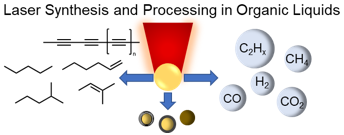
Laser synthesis of nanoparticles in organic solvents – products, reactions, and perspectives
Beilstein J. Nanotechnol. 2024, 15, 638–663, doi:10.3762/bjnano.15.54
- Theo Fromme Sven Reichenberger Katharine M. Tibbetts Stephan Barcikowski Technical Chemistry I and Center for Nanointegration Duisburg-Essen (CENIDE), University of Duisburg-Essen, Universitätsstrasse 7, 45141 Essen, Germany Department of Chemistry, Virginia Commonwealth University, Richmond, VA
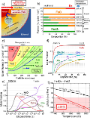
- , the corresponding reactions in organic liquids remain elusive, particularly because of the much greater complexity of carbon chemistry. To this end, this article first reviews the knowledge base of chemical reactions during LSPC and then deduces identifiable reaction pathways and mechanisms. This
- mechanisms of organic liquid decomposition and carbon shell formation are highlighted and discussed regarding current challenges and future perspectives of LSPC using organic liquids instead of water. Keywords: alloy; photochemistry; pyrolysis; radicals; surface chemistry; Introduction Since the first





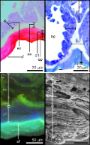
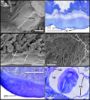
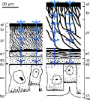
Comparative analysis of the ultrastructure and adhesive secretion pathways of different smooth attachment pads of the stick insect Medauroidea extradentata (Phasmatodea)
Beilstein J. Nanotechnol. 2024, 15, 612–630, doi:10.3762/bjnano.15.52
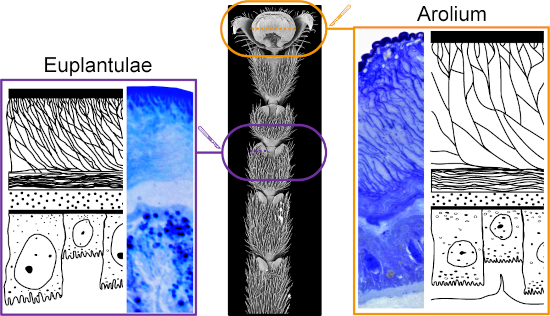
- particles together into larger complexes for easier removal [25][26]. It can also improve attachment to surfaces with different surface chemistry by mediating between the two surfaces in contact [27][28]. The lipid-containing pad secretion protects the insect from additional water loss through the thin




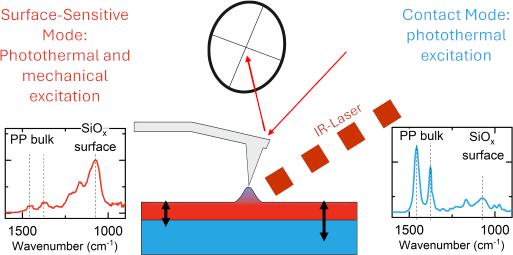
AFM-IR investigation of thin PECVD SiOx films on a polypropylene substrate in the surface-sensitive mode
Beilstein J. Nanotechnol. 2024, 15, 603–611, doi:10.3762/bjnano.15.51
- Hendrik Muller Hartmut Stadler Teresa de los Arcos Adrian Keller Guido Grundmeier Technical and Macromolecular Chemistry, Paderborn University, Warburger Str. 100, 33098 Paderborn, Germany Bruker Nano Surfaces and Metrology Division, Östliche Rheinbrückenstr. 49, 76187 Karlsruhe, Germany 10.3762
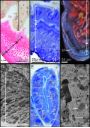
- peaks of the two samples (shown in Table 1) additionally supports the result that the chemistry of both SiOx layers is the same. AFM-IR analysis The prepared samples were analyzed by photothermal AFM-IR. First, AFM images were collected in contact mode to visualize the sample surface (Figure 4). In the


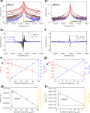
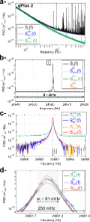
Stiffness calibration of qPlus sensors at low temperature through thermal noise measurements
Beilstein J. Nanotechnol. 2024, 15, 580–602, doi:10.3762/bjnano.15.50
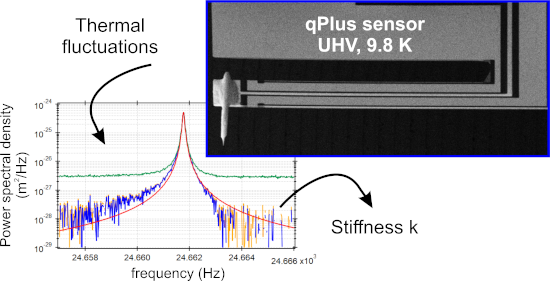
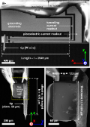
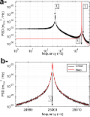
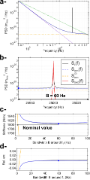
- -vacuum (UHV) system and at, or close to, liquid helium temperature (4–10 K, LT UHV), the method allows for the direct characterization of individual molecules with intramolecular contrast [4], opening up the field of studying on-surface reactions [5] or tip-induced chemistry [6]. The method also makes it

On the additive artificial intelligence-based discovery of nanoparticle neurodegenerative disease drug delivery systems
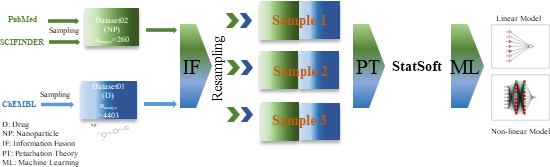
Beilstein J. Nanotechnol. 2024, 15, 535–555, doi:10.3762/bjnano.15.47
- Shan He Julen Segura Abarrategi Harbil Bediaga Sonia Arrasate Humberto Gonzalez-Diaz Department of Organic and Inorganic Chemistry, University of Basque Country UPV/EHU, 48940 Leioa, Spain IKERDATA S.L., ZITEK, UPV/EHU, Rectorate Building, nº6, 48940 Leioa, Greater Bilbao, Basque Country, Spain
- N2D3Ss for diagnosis and treatment [12][13][14][15]. Also, over the last few years, artificial intelligence/machine learning (AI/ML) models have been applied successfully to solve problems in different disciplines, especially in the interface of chemistry and ND research [16][17][18][19]. In this regard
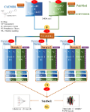




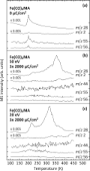
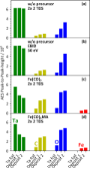
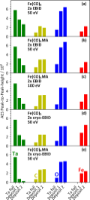
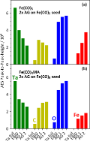
Electron-induced deposition using Fe(CO)4MA and Fe(CO)5 – effect of MA ligand and process conditions
Beilstein J. Nanotechnol. 2024, 15, 500–516, doi:10.3762/bjnano.15.45
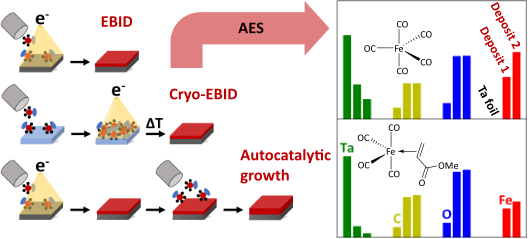
- Hannah Boeckers Atul Chaudhary Petra Martinovic Amy V. Walker Lisa McElwee-White Petra Swiderek Institute for Applied and Physical Chemistry (IAPC), Faculty 2 (Chemistry/Biology), University of Bremen, Leobener Str. 5, 28359 Bremen, Germany Department of Chemistry, University of Florida



Photocatalytic degradation of methylene blue under visible light by cobalt ferrite nanoparticles/graphene quantum dots
Beilstein J. Nanotechnol. 2024, 15, 475–489, doi:10.3762/bjnano.15.43
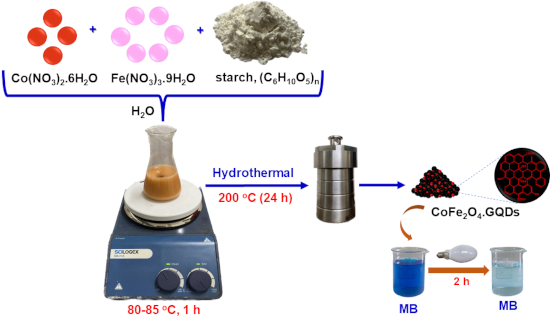
- , Vietnam Center for Advanced Chemistry, Institute of Research & Development, Duy Tan University, Vietnam Faculty of Natural Sciences, Duy Tan University, Vietnam University of Education and Science, The University of Danang, Vietnam 10.3762/bjnano.15.43 Abstract A simple approach was developed to




Classification and application of metal-based nanoantioxidants in medicine and healthcare
Beilstein J. Nanotechnol. 2024, 15, 396–415, doi:10.3762/bjnano.15.36
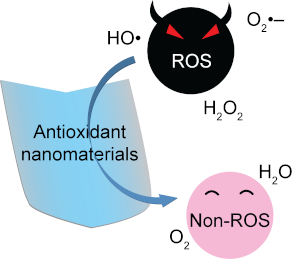
- University, 1342 Seongnam-daero, Sujeong-gu, Seongnam-si 13120, Republic of Korea Department of Materials Science, School of Applied Chemistry, Tra Vinh University, Tra Vinh City 87000, Vietnam NTT Hi-Tech Institute, Nguyen Tat Thanh University, Ward 13, District 04, Ho Chi Minh City 70000, Vietnam Faculty
- thyroid hormone disruption in zebrafish larvae co-exposed to tetrabromobisphenol A by promoting its bioaccumulation and bioavailability [192]. Xu et al. demonstrated that TiO2 nanoparticles can promote damage to adipose derived stromal cells at low concentrations [193]. Accordingly, the surface chemistry
- collaboration between chemistry, biomedical fields, nanomaterials science, and physics is needed to accurately control the shape, size, and morphology of metal-based nanoantioxidants for more specific accumulation. Classification of antioxidant nanomaterials. Multi-antioxidant activities of ceria nanoplates. (a


Exploring the relationships between physiochemical properties of nanoparticles and cell damage to combat cancer growth using simple periodic table-based descriptors
Beilstein J. Nanotechnol. 2024, 15, 297–309, doi:10.3762/bjnano.15.27
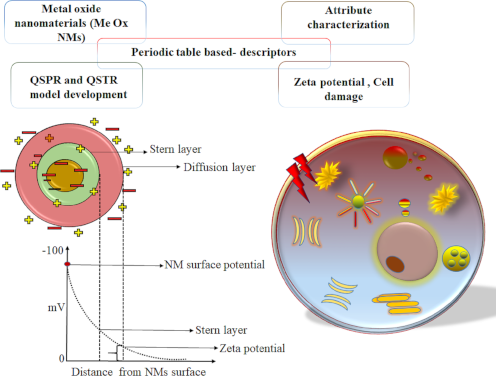
- toxicity. Furthermore, it is a well-established fact that each metal has an affinity constant for various ligands, which means that most metal cations can form stable complexes with a wide variety of ligands, further increasing their potential toxicity. In the field of physical chemistry, the zeta
- Fenton chemistry to produce hydroxyl radicals. ROS further accelerate the damage of the cell. “Valence” (V) is a factor that contributes to cell damage. It indicates the number of electrons in the outermost shell of an atom that are available for chemical bonding and is similar to other descriptors that
- surface. Unfortunately, this interaction can lead to DNA damage through processes such as delocalization, redox chemistry, and the generation of ROS. Our research aimed to examine how the time of exposure to metal oxide affects cell damage, regardless of other physiochemical properties of MeOx NPs. Our


Vinorelbine-loaded multifunctional magnetic nanoparticles as anticancer drug delivery systems: synthesis, characterization, and in vitro release study
Beilstein J. Nanotechnol. 2024, 15, 256–269, doi:10.3762/bjnano.15.24
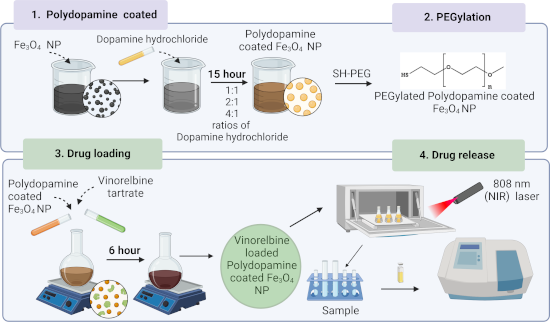
- Zeynep Ozcan Afife Binnaz Hazar Yoruc Yildiz Technical University, Faculty of Chemistry and Metallurgy, Department of Metallurgical and Materials Engineering, 34210, Istanbul, Turkey 10.3762/bjnano.15.24 Abstract In this study, a multifunctional therapeutic agent combining chemotherapy and


Multiscale modelling of biomolecular corona formation on metallic surfaces
Beilstein J. Nanotechnol. 2024, 15, 215–229, doi:10.3762/bjnano.15.21
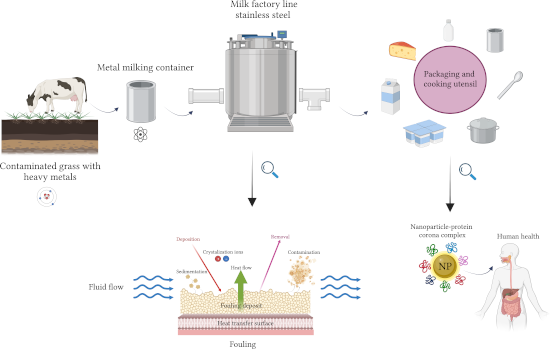
- the outer surface of macroscropic and micro- and nano-sized particulate after packaging. It also highlights the dynamic interactions at the bionano interface associated with potential human health hazards. Through biomolecule adsorption, change of conformation, and surface chemistry, foreign materials





Ion beam processing of DNA origami nanostructures
Beilstein J. Nanotechnol. 2024, 15, 207–214, doi:10.3762/bjnano.15.20
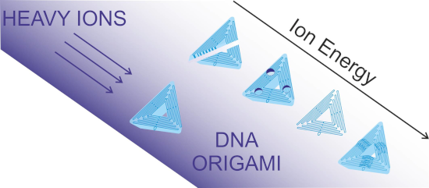
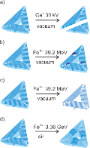
- Leo Sala Agnes Zerolova Violaine Vizcaino Alain Mery Alicja Domaracka Hermann Rothard Philippe Boduch Dominik Pinkas Jaroslav Kocisek Dynamics of Molecules and Clusters Department, J. Heyrovský Institute of Physical Chemistry of the CAS, Dolejškova 3, Prague, 182 23, Czech Republic Normandie Univ
- measurements and analysis. Funding The article is based upon work from COST Action CA20129 - Multiscale Irradiation and Chemistry Driven Processes and Related Technologies (MultIChem), supported by COST (European Cooperation in Science and Technology) and project RADIATE 21002436-ST. This work was also


CdSe/ZnS quantum dots as a booster in the active layer of distributed ternary organic photovoltaics
Beilstein J. Nanotechnol. 2024, 15, 144–156, doi:10.3762/bjnano.15.14
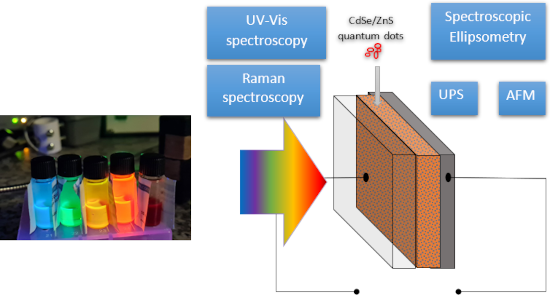
- , Department of Silicate Chemistry and Macromolecular Compounds, 30 Mickiewicza Ave, 30-059 Krakow, Poland R&D Department, PREVAC sp. z o.o., Raciborska 61, 44-362 Rogów, Poland retired, formerly: Cracow University of Technology, Institute of Physics, ul. Podchorążych 1, 30-084 Kraków, Poland 10.3762/bjnano
- . The emission wavelength is determined by the crystal size and structure; crystals of the same chemistry can have emission maxima spanning a wide range. As the size of the dots decreases, both their optical absorption and emission shift to higher energies [41]. Because hydrophilic QDs are coated with




In situ optical sub-wavelength thickness control of porous anodic aluminum oxide
Beilstein J. Nanotechnol. 2024, 15, 126–133, doi:10.3762/bjnano.15.12
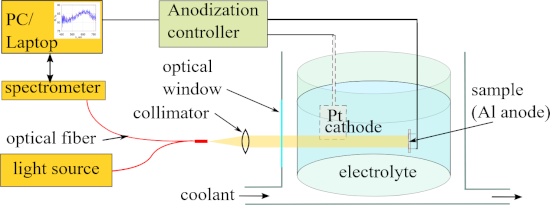
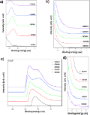
- Kaunas University of Technology, K. Baršausko St. 59, Kaunas LT-51423, Lithuania Department of Physics, Faculty of Mathematics and Natural Sciences, Kaunas University of Technology, Studentų St. 50, Kaunas LT-51368, Lithuania Faculty of Chemistry, University of Latvia, 1 Jelgavas Str., Riga LV-1004


New application of bimetallic Ag/Pt nanoplates in a colorimetric biosensor for specific detection of E. coli in water
Beilstein J. Nanotechnol. 2024, 15, 95–103, doi:10.3762/bjnano.15.9
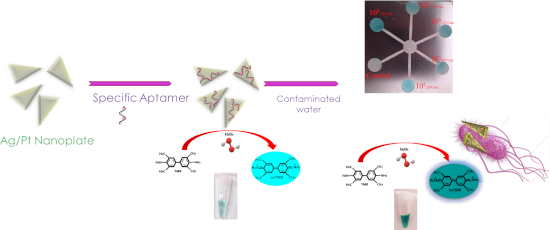
- Azam Bagheri Pebdeni Mohammad N. AL-Baiati Morteza Hosseini Nanobiosensors lab, Department of Life Science Engineering, Faculty of New Sciences & Technologies, University of Tehran, Tehran, Iran Department of Chemistry, College of Education for Pur Science, University of Kerbala, Karabal, Iraq


Berberine-loaded polylactic acid nanofiber scaffold as a drug delivery system: The relationship between chemical characteristics, drug-release behavior, and antibacterial efficiency
Beilstein J. Nanotechnol. 2024, 15, 71–82, doi:10.3762/bjnano.15.7
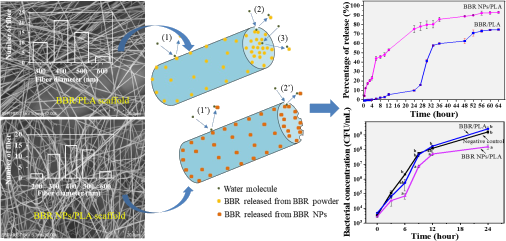
- Program of Basic Science in the Fields of Chemistry, Life Sciences, Earth Sciences, and Marine Sciences, Vietnam Ministry of Science and Technology, under Grant ĐTĐL.CN-111/21.


Influence of conductive carbon and MnCo2O4 on morphological and electrical properties of hydrogels for electrochemical energy conversion
Beilstein J. Nanotechnol. 2024, 15, 57–70, doi:10.3762/bjnano.15.6
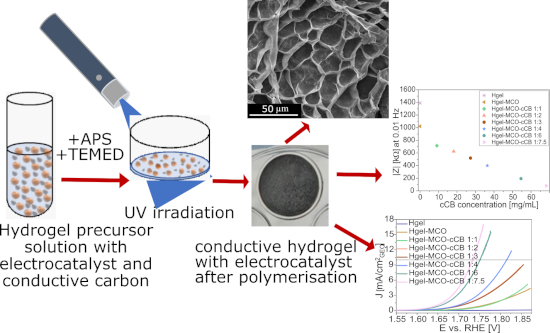
- interactions, ionic cross-linking, and hydrogen-bonded gels). Chemically synthesised hydrogels are produced by covalent cross-linking pathways such as radical polymerisation, radiation cross-linking, grafting, thermogelation, enzymatic reactions, and click chemistry [4][5]. Hydrogel materials have quite a long


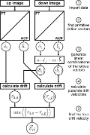
unDrift: A versatile software for fast offline SPM image drift correction
Beilstein J. Nanotechnol. 2023, 14, 1225–1237, doi:10.3762/bjnano.14.101
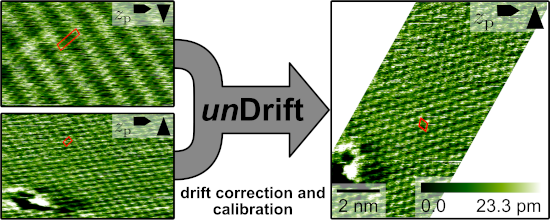
- Tobias Dickbreder Franziska Sabath Lukas Holtkemeier Ralf Bechstein Angelika Kuhnle Physical Chemistry I, Bielefeld University, Universitätsstraße 25, 33615 Bielefeld, Germany 10.3762/bjnano.14.101 Abstract Scanning probe microscopy (SPM) techniques are widely used to study the structure and
- properties of surfaces and interfaces across a variety of disciplines in chemistry and physics. One of the major artifacts in SPM is (thermal) drift, an unintended movement between sample and probe, which causes a distortion of the recorded SPM data. Literature holds a multitude of strategies to compensate


Fluorescent bioinspired albumin/polydopamine nanoparticles and their interactions with Escherichia coli cells
Beilstein J. Nanotechnol. 2023, 14, 1208–1224, doi:10.3762/bjnano.14.100
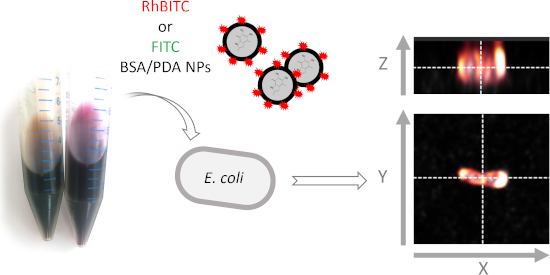
- been designed to allow for the modification of their fluorescence properties. This also modified the outer surface chemistry; thus, the ability of the NPs to pass through the cell membrane was possibly facilitated. The localization of the fluorescent BSA/PDA NPs related to the cells was investigated by



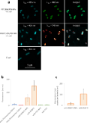
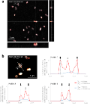
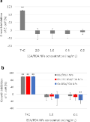
A combined gas-phase dissociative ionization, dissociative electron attachment and deposition study on the potential FEBID precursor [Au(CH3)2Cl]2
Beilstein J. Nanotechnol. 2023, 14, 1178–1199, doi:10.3762/bjnano.14.98
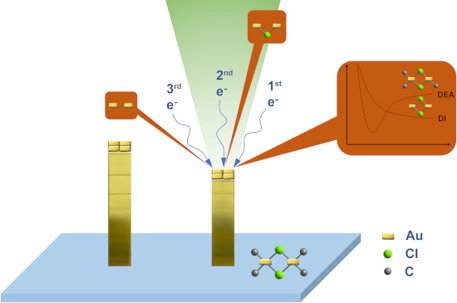
- Elif Bilgilisoy Ali Kamali Thomas Xaver Gentner Gerd Ballmann Sjoerd Harder Hans-Peter Steinruck Hubertus Marbach Oddur Ingolfsson Physikalische Chemie II, Friedrich-Alexander Universität Erlangen-Nürnberg, 91058 Erlangen, Germany Science Institute and Department of Chemistry, University of
- Iceland, Dunhagi 3, 107 Reykjavík, Iceland Inorganic and Organometallic Chemistry, Universität Erlangen-Nürnberg, 91058 Erlangen, Germany Carl Zeiss SMT GmbH, 64380 Roßdorf, Germany 10.3762/bjnano.14.98 Abstract Motivated by the potential of focused-electron-beam-induced deposition (FEBID) in the



Elasticity, an often-overseen parameter in the development of nanoscale drug delivery systems
Beilstein J. Nanotechnol. 2023, 14, 1149–1156, doi:10.3762/bjnano.14.95
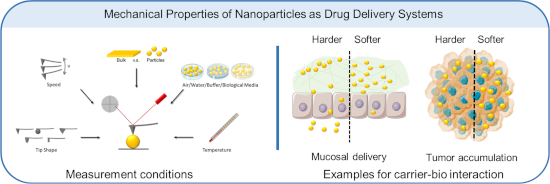
- , translation to the clinics or even market approval often fails. So far, the reason for this discrepancy is manifold. Physicochemical properties such as size, surface potential, and surface chemistry are in focus of research for many years. Other equally important parameters, influencing whether a successful


Properties of tin oxide films grown by atomic layer deposition from tin tetraiodide and ozone
Beilstein J. Nanotechnol. 2023, 14, 1085–1092, doi:10.3762/bjnano.14.89
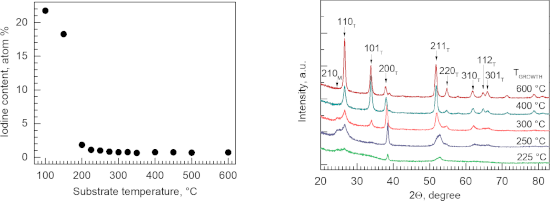
- ]. The SnO2 films grown at 300 and 500 °C, that is, those with low residual iodine content, were analysed ex situ in terms of surface chemistry using soft X-ray spectroscopy methods. The Sn 3d XPS data (Figure 10a) show almost identical spectra for the samples deposited at 300 and 500 °C, and the narrow
- film grew with the deposition temperature. Films grown at 200 °C and lower temperatures did not exhibit ordered structure and contained high amounts of residual iodine. Also, the oxygen fraction was larger than that expected from stoichiometric SnO2. Starting from about 300 °C, the precursor chemistry


A visible-light photodetector based on heterojunctions between CuO nanoparticles and ZnO nanorods
Beilstein J. Nanotechnol. 2023, 14, 1018–1027, doi:10.3762/bjnano.14.84
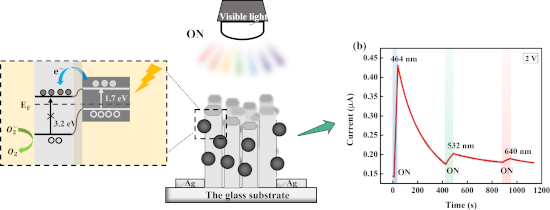
- studied and optimized to achieve higher performance and to reduce response and decay times in the future. Experimental Materials The chemical materials used in this report were zinc oxide nanoparticles (ZnO NPs, 99%, Sigma-Aldrich Chemistry), hexamethylenetetramine (HTMA, 99%, C6H12N4, Xilong Scientific
- ), zinc nitrate hexahydrate (Zn(NO3)2·6H2O, 99%, Xilong Scientific), copper(II) nitrate pentahydrate (Cu(NO3)2·5H2O, 99%, Xilong Scientific), sodium hydroxide (NaOH, 99%, Sigma-Aldrich Chemistry), ethanol (C2H5OH, 99.5%, Chemsol), and acetone (CH3OCH3, 99.7%, Chemsol). Synthesis process The synthesis