Search results
Search for "cobalt" in Full Text gives 198 result(s) in Beilstein Journal of Nanotechnology.
Gas sensing properties of MWCNT layers electrochemically decorated with Au and Pd nanoparticles
Beilstein J. Nanotechnol. 2017, 8, 592–603, doi:10.3762/bjnano.8.64
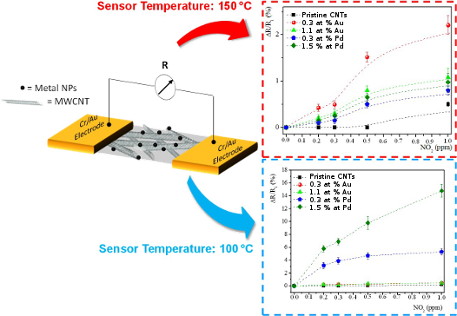
- MWCNTs, for gas sensing applications. Experimental Preparation of metal-decorated MWCNT-based chemiresistors MWCNT networked films were grown by chemical vapor deposition (CVD) directly onto the surface of an alumina substrate that was previously coated with a cobalt (Co) sputtered catalytic layer (≈6 nm


Formation and shape-control of hierarchical cobalt nanostructures using quaternary ammonium salts in aqueous media
Beilstein J. Nanotechnol. 2017, 8, 494–505, doi:10.3762/bjnano.8.53
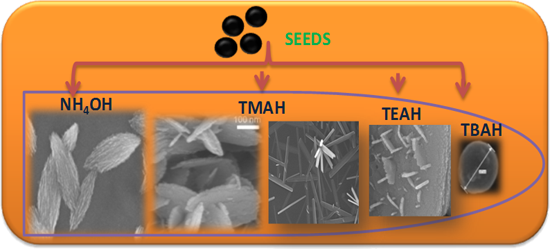
- (monomers) in presence of quaternary ammonium salts. Hydroxide ions and a magnetic moment of the monomers are essential to induce shape anisotropy in the nanostructures. The cobalt nanoplates are studied in detail, and a growth mechanism based on collision, aggregation, and crystal consolidation is proposed
- of a nanoplate. The study explains, hereto unaddressed, the temporal evolution of complex magnetic nanostructures. These ferromagnetic nanostructures represent an interesting combination of shape anisotropy and magnetic characteristics. Keywords: Brownian motion; cobalt nanoplates; electron
- microscopy; hierarchical nanostructures; magnetic moment; tetramethylazanium hydroxide (TMAH); Introduction The synthesis of ferromagnetic nanomaterials with complex functional architectures has seen rapid development during the past decade [1][2][3]. Cobalt nanostructures form an important class of


Methods for preparing polymer-decorated single exchange-biased magnetic nanoparticles for application in flexible polymer-based films
Beilstein J. Nanotechnol. 2017, 8, 408–417, doi:10.3762/bjnano.8.43
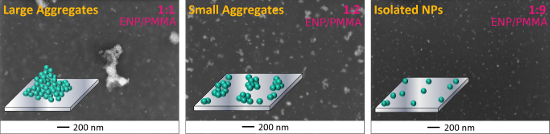
- applications. Phosphates and phosphonates are suitable for functionalizing iron and silicon oxide surfaces [29][30] through covalent bonds, in mono-, bi- or tridentate modes; but to date, they have not been used for cobalt oxide and ferrite surfaces. In the case of PMMA, we followed two routes: the first one
- polystyrene: 3024 cm−1 (νas(CH2_arom)), 2950 cm−1 (νs(CH_aliph)) and 1600 cm−1 (νC=C) when compared to a commercial reference. Similar to the PMMA-based nanohybrids, the amount of cobalt was found to be higher than that of iron for PS-functionalized ENPs. The mean free paths of 1.5 nm for iron in CoO and 1.4
- nm for cobalt in CoO were calculated following the method described previously [15]. However, electrons pass only through 0.5 nm of the Fe-rich core after having penetrated the 1 nm thick CoO shell, leading to a difference in depth analysis of the core and the shell. Then, we assumed that cobalt and
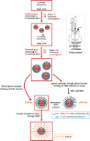


Effect of nanostructured carbon coatings on the electrochemical performance of Li1.4Ni0.5Mn0.5O2+x-based cathode materials
Beilstein J. Nanotechnol. 2016, 7, 1960–1970, doi:10.3762/bjnano.7.187
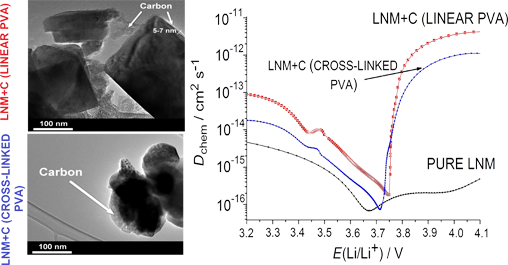
- materials; Li-ion batteries; nanocomposites; nanostructures; Introduction LiNi0.5Mn0.5O2-based electrode materials [1] were proposed as a less expensive alternative to LiCoO2 for high energy density Li-ion batteries containing less toxic elements than cobalt. The reasonable combination of their


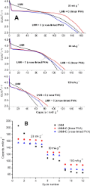

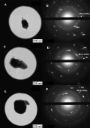
Ferromagnetic behaviour of ZnO: the role of grain boundaries
Beilstein J. Nanotechnol. 2016, 7, 1936–1947, doi:10.3762/bjnano.7.185
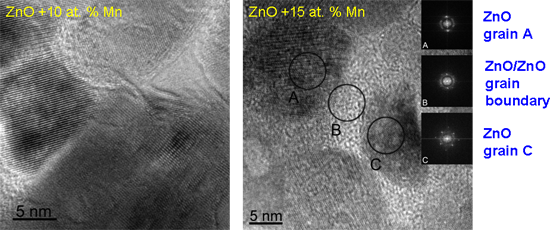
- them with “magnetic” atoms such as iron, manganese and cobalt. Other theoreticians published in that time similar works [2]. It has been predicted that the Curie temperature of such diluted doped magnetic semiconductor oxides can be quite high, even above room temperature. Especially promising was zinc
- growth of single crystals, are well known and well elaborated. It seemed that nothing could prevent the success of the synthesis of ferromagnetic ZnO doped by iron, manganese, cobalt, or other “magnetic” atoms. Indeed first successes came soon. Ferromagnetic ZnO films were synthesised by pulsed laser
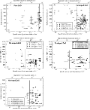
- ferromagnetic behaviour of zinc oxide and developed our own method for the synthesis of pure and doped nanocrystalline ZnO films. The obtained data are summarized in Figure 1 for pure ZnO and ZnO doped with manganese, cobalt, iron and nickel [6][7][8][9]. The full list of used references can be found in [6][7


Cubic chemically ordered FeRh and FeCo nanomagnets prepared by mass-selected low-energy cluster-beam deposition: a comparative study
Beilstein J. Nanotechnol. 2016, 7, 1850–1860, doi:10.3762/bjnano.7.177
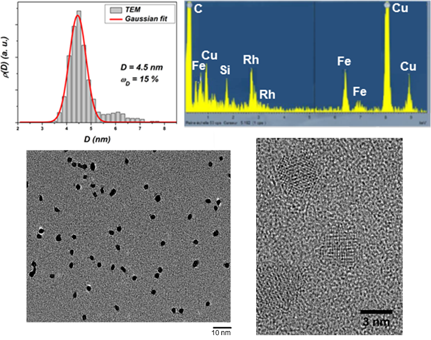
- ) structure is the equilibrium bulk structure for equimolar FeCo alloys, it was not possible to distinguish a chemical ordering by HRTEM for annealed NPs because the electron density contrast between iron and cobalt is too low. Generally, conventional diffraction measurements are used to determine the degree
- (100) and (012) are clearly visible on the FFT of Figure 4b for annealed FeRh (ΔZFeRh = 19). While in the case of FeCo alloy, the secondary minima are negligible due to the small value of the atomic contrast (ΔZFeCo = 1). Because the nuclear scattering factors for iron and cobalt differ considerably


Scanning probe microscopy studies on the adsorption of selected molecular dyes on titania
Beilstein J. Nanotechnol. 2016, 7, 1642–1653, doi:10.3762/bjnano.7.156
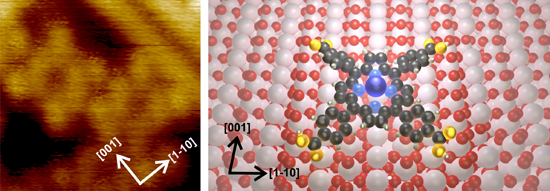
- molecules with cobalt atom substituents adsorb most probably in a flat-lying geometry [44], which aligns with the previously discussed case of CuPcs. Similarly, to the CuPcs on the TiO2(011) surface, CoPcs on the (110) face can be classified into two major groups, i.e., those of molecules with Co atoms


Multiwalled carbon nanotube hybrids as MRI contrast agents
Beilstein J. Nanotechnol. 2016, 7, 1086–1103, doi:10.3762/bjnano.7.102
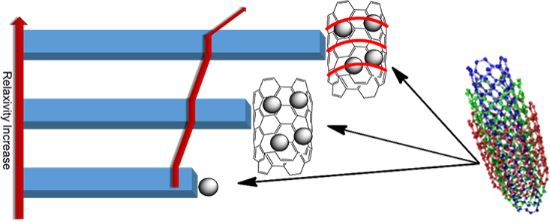
- (SPIO/oMWCNT#Wu) [38], while Wang used the thermal annealing method of iron(II) acetate (SPIO/oMWCNT#Wang) [43]. Solvothermal co-precipitation of CoCl2 and FeCl3, also by Wu, led to the non-covalent deposition of magnetic cobalt ferrite (CoFe2O4/oMWCNT#Wu) [39]. It was found that a low temperature (180



Customized MFM probes with high lateral resolution
Beilstein J. Nanotechnol. 2016, 7, 1068–1074, doi:10.3762/bjnano.7.100
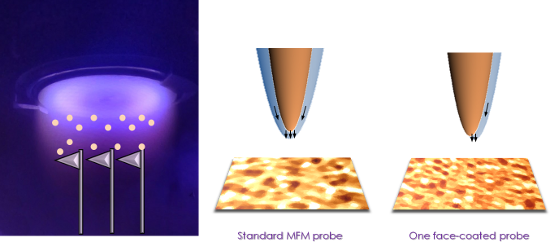
- incidence angle, it is possible to cover mainly one side of the tip pyramid. A residual magnetic film with sub-nanometre thickness was found on the remaining parts of the tip–cantilever system. No capping layer is subsequently deposited onto the Co film since, although the outermost atomic layers of cobalt
- applied. This, together with the shape anisotropy induced by the pyramidal tip, forces the magnetic moments to remain mainly oriented along the pyramid surface. Nevertheless, the orientation of the spins at the apex will depend on the apex shape and on the way the cobalt layer covers it. Results and
- estimated for a custom-coated tip with a 25 nm cobalt thickness is less than 25 mT. This value is smaller than any of those reported for different commercial models, making the tips reported here optimal for imaging of soft samples. Finally, similar stray fields than those measured for standard commercial


Synthesis of cobalt nanowires in aqueous solution under an external magnetic field
Beilstein J. Nanotechnol. 2016, 7, 990–994, doi:10.3762/bjnano.7.91
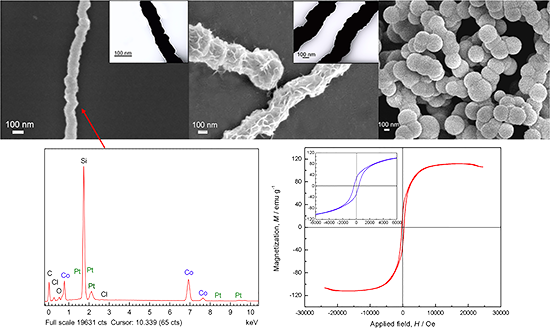
- pressures, cobalt nanowires were synthesized by chemical reduction in aqueous solution with the assistance of polyvinylpyrrolidone (PVP) as surfactant under moderate conditions for the first time, while an external magnetic field of 40 mT was applied. Uniform linear cobalt nanowires with relatively smooth
- surfaces and firm structure were obtained and possessed an average diameter of about 100 nm with a coating layer of PVP. By comparison, the external magnetic field and PVP were proven to have a crucial influence on the morphology and the size of the synthesized cobalt nanowires. The prepared cobalt
- nanowires are crystalline and mainly consist of cobalt as well as a small amount of platinum. Magnetic measurements showed that the resultant cobalt nanowires were ferromagnetic at room temperature. The saturation magnetization (Ms) and the coercivity (Hc) were 112.00 emu/g and 352.87 Oe, respectively


Thickness dependence of the triplet spin-valve effect in superconductor–ferromagnet–ferromagnet heterostructures
Beilstein J. Nanotechnol. 2016, 7, 957–969, doi:10.3762/bjnano.7.88
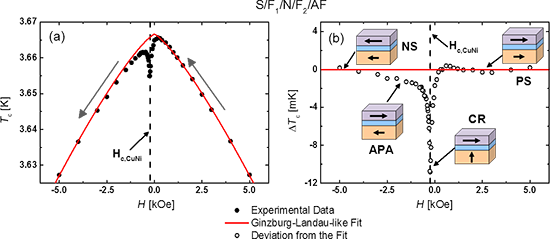
- layer was sputtered from the same target as the metallic Co layer, however, oxygen gas was mixed into the chamber atmosphere to achieve reactive growth of cobalt oxide. For more details on the sputtering procedures see [8][9][41]. The heterostructure obtained was then cut perpendicular to the thickness
- values for the splitting of the metallic and oxide cobalt signals, cross-checked with the RBS spectra for plausibility and slightly adapted to yield the best fit to the RBS spectra. Furthermore, we conducted superconducting quantum interference device (SQUID) magnetometry investigations on several SF1NF2






Magnetic switching of nanoscale antidot lattices
Beilstein J. Nanotechnol. 2016, 7, 733–750, doi:10.3762/bjnano.7.65
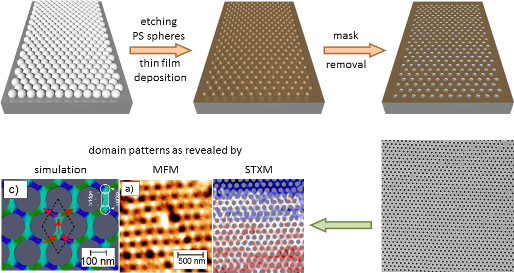
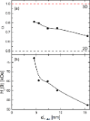
- films (cf. Figure 5b). All materials show very similar trends. It is noticeable that Py exhibits the smallest coercive fields for all antidot diameters, while the coercive fields for Iron and Cobalt are approximately on the same level for antidot diameters below d = 95 nm. For larger antidots, the



Hemolysin coregulated protein 1 as a molecular gluing unit for the assembly of nanoparticle hybrid structures
Beilstein J. Nanotechnol. 2016, 7, 351–363, doi:10.3762/bjnano.7.32
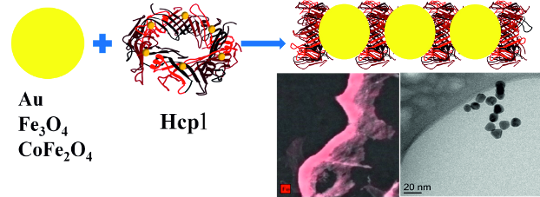
- gluing unit for the assembly of often linear, hybrid structures of plasmonic gold (Au NP), magnetite (Fe3O4 NP), and cobalt ferrite nanoparticles (CoFe2O4 NP). Furthermore, the assembly of Au NPs into linear structures using Hcp1_cys3 is investigated by UV–vis spectroscopy, TEM and cryo-TEM. One key
- Hcp1_cys3 as a connecting unit is extended to magnetite NPs (Fe3O4 NPs) and cobalt ferrite NPs (CoFe2O4 NPs). The synthesis of magnetite NPs with a size of about 8 nm and the ligand exchange followed the protocol of Cabrera et al. [36], with results as shown in the TEM images of Figure S4, Supporting
- the blank Fe3O4 NPs. A third NP system demonstrates that our concept of the utilization of Hcp1_cys3 as a gluing unit between the NPs to fabricate a linear structure is universal. We synthesized cobalt ferrite NPs (CoFe2O4 NPs) following the protocol of Cabrebra [36] and exchanged the oleic acid




Synthesis and applications of carbon nanomaterials for energy generation and storage
Beilstein J. Nanotechnol. 2016, 7, 149–196, doi:10.3762/bjnano.7.17
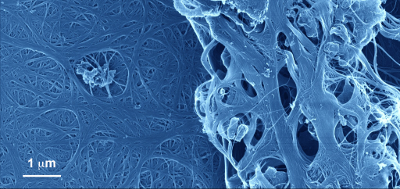
- metal catalyst such as cobalt [48]. The nanotubes are typically bound together by strong van der Waals interactions and form tight bundles. The second method, laser ablation, uses continuous wave [49] or pulsed [50] lasers to ablate a carbon target in a 1200 °C tube furnace. A laser beam evaporates a
- graphite sample containing 1% nickel and cobalt catalyst particles [51]. In the resulting vapor, the metal aggregates into carbon-saturated catalyst nanoparticles, which instigate the growth of CNTs [48]. These catalyst particles are necessary to produce SWNTs rather than MWNTs [52]. The relative amount of
- types, as well as the operating temperature [54]. The production of MWNTs typically involves ethylene or acetylene feedstock with an iron, nickel or cobalt catalyst and operating temperatures of 550–750 °C. SWNTs are produced by using methane or ethane feedstock, similar catalysts, and operating















Effects of spin–orbit coupling and many-body correlations in STM transport through copper phthalocyanine
Beilstein J. Nanotechnol. 2015, 6, 2452–2462, doi:10.3762/bjnano.6.254
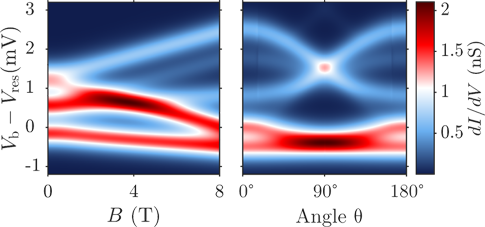
- enormous anisotropies in both spin and orbital dipole moments [9]. Furthermore, recent experimental findings for cobalt pththalocyanine in a scanning tunneling microscopy (STM) setup [10] suggest that many-body correlations play an important role in the interpretation of the transport measurements. In a



Self-assembly mechanism of Ni nanowires prepared with an external magnetic field
Beilstein J. Nanotechnol. 2015, 6, 2123–2128, doi:10.3762/bjnano.6.217
- , electronic, sensor and electrochemical devices [1][2][3][4][5][6]. In particular, Ni nanowires have been the focus of intense research due to their easy preparation compared with iron and cobalt nanowires. There are several reported routes for the preparation of Ni nanowires including template-based
- cobalt nanowires using a gamma irradiation technique under an external magnetic field. Li et al. [15] synthesized nickel chains under a weak magnetic field by hydrazine reduction in ethylene glycol. Smooth Ni nanowires were prepared by Hu et al. [16] under a stronger magnetic field. Soumare et al. [17
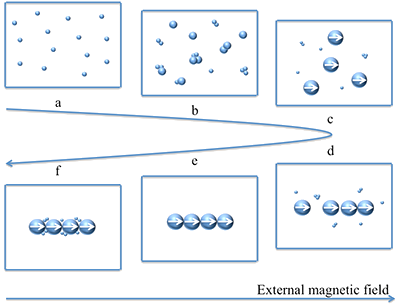
- ][21] proposed a possible mechanism of self-assembly speculated from the morphology of nickel and cobalt nanowires. Meng et al. [22] proposed a similar mechanism. However, no related experiments were designed to prove their proposed self-assembly mechanism. Herein, Ni nanowires are synthesized in




Paramagnetism of cobalt-doped ZnO nanoparticles obtained by microwave solvothermal synthesis
Beilstein J. Nanotechnol. 2015, 6, 1957–1969, doi:10.3762/bjnano.6.200
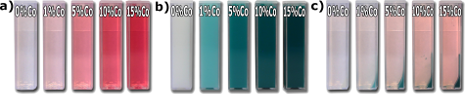
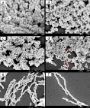
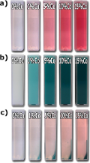
- -142 Warsaw, Poland Institute of Physics, Polish Academy of Sciences, Al. Lotników 32/46, 02-668 Warsaw, Poland 10.3762/bjnano.6.200 Abstract Zinc oxide nanopowders doped with 1–15 mol % cobalt were produced by the microwave solvothermal synthesis (MSS) technique. The obtained nanoparticles were
- , likely related to the precipitation of metallic Co in nanoparticles. Keywords: cobalt-doped zinc oxide; ferromagnetism; magnetic properties; microwave solvothermal synthesis (MSS); paramagnetism; Introduction Nanomaterials have drawn the attention of researchers from all over the world due to their new
- of the concentration of Co2+ ions in solution (nominal concentration) is shown in Figure 4 and Table 1. The actual doping level is approximately 10% lower than the Co concentration in the precursor solution. The difference between the theoretical and the measured concentration of cobalt in the Zn1




The role of low-energy electrons in focused electron beam induced deposition: four case studies of representative precursors
Beilstein J. Nanotechnol. 2015, 6, 1904–1926, doi:10.3762/bjnano.6.194
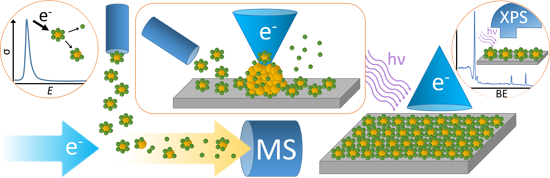
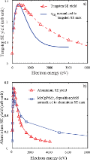
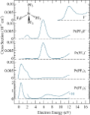
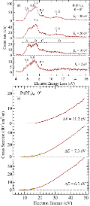
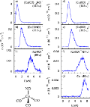
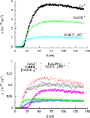
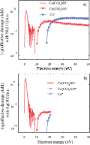
- to previously performed gas phase and surface studies of four organometallic FEBID precursors: trimethyl(methylcyclopentadienyl)platinum(IV) (MeCpPtMe3) [15][20][21], tetrakis(trifluorophosphine)platinum(0) (Pt(PF3)4) [13][14][22][23], cobalt tricarbonyl nitrosyl (Co(CO)3NO) [10][24][25] and tungsten
- . 4.3 Cobalt tricarbonyl nitrosyl; [Co(CO)3NO] and tungsten hexacarbonyl [W(CO)6] Cobalt tricarbonyl nitrosyl [Co(CO)3NO] was initially introduced in CVD as a liquid, easy-to-handle Co source. [76][77][78]. In CVD, Crawford et al. [78] reported an average composition of CoN0.5O0.9 with only traces of
- carbon when using Ar or N2 as carrier a gas at deposition temperatures below 380 °C. Above 400 °C, the authors found the deposits to consist of a mixture of CoO and Co metal. Deposition under hydrogen atmosphere, on the other hand, was found to result in pure cobalt deposits already at 350 °C [76][77








Predicting cytotoxicity of PAMAM dendrimers using molecular descriptors
Beilstein J. Nanotechnol. 2015, 6, 1886–1896, doi:10.3762/bjnano.6.192
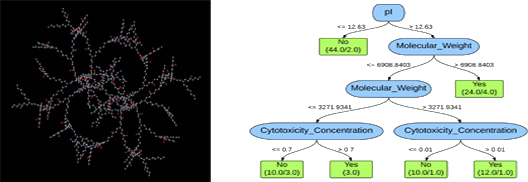
- techniques in this field. For instance, Liu et al. analyzed a number of attributes of a variety of nanoparticles in order to predict the 24 hour postfertilization mortality in zebrafish [3]. Horev-Azaria and colleagues used predictive modeling to explore the effect of cobalt–ferrite nanoparticles on the


Focused particle beam-induced processing
Beilstein J. Nanotechnol. 2015, 6, 1883–1885, doi:10.3762/bjnano.6.191

- on platinum [4]. The postprocessing of copper-based FEBID structures by vacuum annealing is presented by Aleksandra Szkudlarek and collaborators [5]. Additionally, high electric current densities can be used to induce structural changes in suspended nanowires, as is shown for cobalt deposits in the
- nanowires [7]. In the article by Oleksandr Dobrovolskiy and colleagues [8], different postgrowth purification treatments for platinum and cobalt FEBID structures are employed to fine-tune the magnetic properties of heterostructures. A novel application of electron beam-induced deposition of amorphous carbon
Radiation losses in the microwave Ku band in magneto-electric nanocomposites
Beilstein J. Nanotechnol. 2015, 6, 1700–1707, doi:10.3762/bjnano.6.173
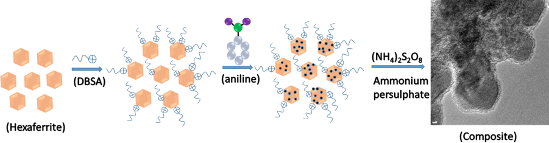
- paper, we have used the versatile citrate precursor method to synthesize La–Co-substituted barium hexaferrite. Lanthanum and cobalt are used as substituents to enhance the magnetic properties of barium hexaferrite and then emulsion polymerization is employed for the synthesis of nanocomposites. The


The Kirkendall effect and nanoscience: hollow nanospheres and nanotubes
Beilstein J. Nanotechnol. 2015, 6, 1348–1361, doi:10.3762/bjnano.6.139
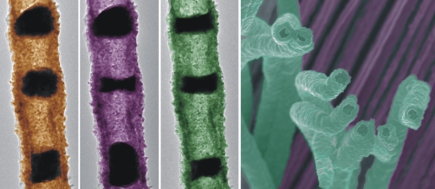
- observation: symmetrical conversion mechanism The formation of hollow Kirkendall nanospheres was first reported by Yin et al. in 2004 [7]. They observed the formation of hollow nanospheres while exploring the sulfidation of cobalt nanoparticles by injecting a solution of sulfur in 1,2-dichlorobenzene into hot
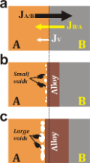
- mechanism is the pioneering work of Yin et al. on the selenization of cobalt nanoparticles [7]. They have shown that the conversion reaction starts by the formation of a very thin cobalt selenide shell on the outer skin of the Co nanoparticle (Figure 3). As the reaction proceeds in time, the Co atoms tend
- to diffuse outward through the cobalt selenide shell until reaching the outer surface of the nanoparticle. Simultaneously, the Se atoms were reported to diffuse inward through the shell until reaching the Co core. Due to the high outward diffusion flux of Co compared to the slower inward flux of Se



Influence of the shape and surface oxidation in the magnetization reversal of thin iron nanowires grown by focused electron beam induced deposition
Beilstein J. Nanotechnol. 2015, 6, 1319–1331, doi:10.3762/bjnano.6.136
- exciting research topic [1][2]. In this technique, a scanning electron microscope (SEM) dissociates the precursor molecules delivered into the area of interest by a gas-injection system, producing a deposit [3][4][5][6]. The use of precursor molecules containing cobalt [7][8][9][10] or iron [11][12][13][14
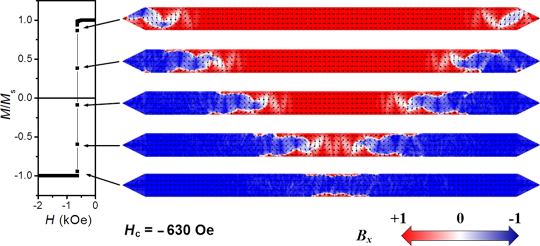
- producing the magnetization reversal. Most of magnetic devices work by producing a voltage output when the magnetization reversal occurs. In the case of cobalt deposits, it was previously found that the coercive field is governed by shape anisotropy [24] due to the polycrystalline microstructure [25], and
- is thus a function of the deposit dimensions [26]. However, more detailed studies subsequently emphasized the role played by the halo and the effective magnetic shape in the coercive field of cobalt nanowires [27][28][29]. In brief, the halo structure around the main deposit (caused by proximity


Structural transitions in electron beam deposited Co–carbonyl suspended nanowires at high electrical current densities
Beilstein J. Nanotechnol. 2015, 6, 1298–1305, doi:10.3762/bjnano.6.134
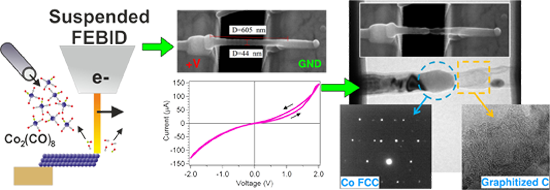
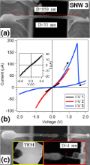
- graphitized C. The breakdown current density is found at 2.1 × 10⁷ A/cm2. The role played by resistive heating and electromigration in these transitions is discussed. Keywords: cobalt; electromigration; focused electron beam induced deposition (FEBID); metallic nanowires; Introduction The growing importance
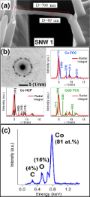
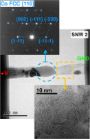
- ) and third (111) most intense reflections of CoO FCC, suggests that such a phase is not present. This comparison indicates that the deposited material is a mixture of FCC (a larger fraction) and HCP cobalt nanograins. EDX analysis was also performed by TEM. The measured spectrum, in Figure 1c, shows
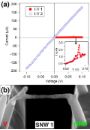
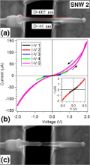
- resistivity obtained considering SNW 1 alone drops from 1.6 × 10⁴ μΩ·cm, before the transition, to about 110 μΩ·cm, a value to be compared to 6 μΩ·cm for bulk cobalt. SEM inspection after this measurement shows no further difference from the picture in Figure 2b. TEM structural analysis after these electrical

Heterometal nanoparticles from Ru-based molecular clusters covalently anchored onto functionalized carbon nanotubes and nanofibers
Beilstein J. Nanotechnol. 2015, 6, 1287–1297, doi:10.3762/bjnano.6.133
- more expensive than iron, hence other alternatives such as cobalt were explored [49]. Zhenwei et al. have studied supported Ru–M (M = Fe, Co, Ni, Mo) with potassium as a promoter for ammonia synthesis [50]. They found that the Ru–Co catalysts have the highest activity, hence we incorporated this