Search results
Search for "cross section" in Full Text gives 525 result(s) in Beilstein Journal of Nanotechnology. Showing first 200.
Piezoelectric sensor based on graphene-doped PVDF nanofibers for sign language translation
Beilstein J. Nanotechnol. 2020, 11, 1655–1662, doi:10.3762/bjnano.11.148
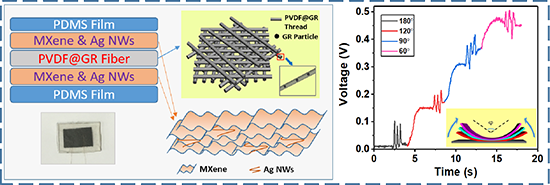
- sensing. Results and Discussion The structural design of the self-powered PES based on GR-doped PVDF nanofibers is shown in Figure 1a. The cross section of the self-powered PES shows three parts, namely the GR-doped PVDF piezoelectric layer in the center, the electrode layer of Ti3C2 MXene and Ag NWs on


Amorphized length and variability in phase-change memory line cells
Beilstein J. Nanotechnol. 2020, 11, 1644–1654, doi:10.3762/bjnano.11.147
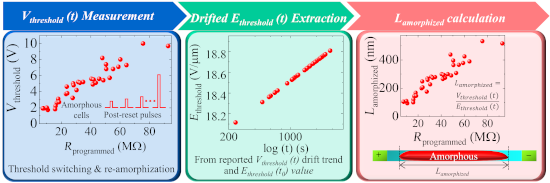
- properties of these sources of variability in Lamorphized can contribute to the design of stronger hardware security primitives. Assuming an ideal uniform cross section of the amorphous regions covering the entire cross-section area Aamorphous = WGST × tGST (WGST ≈ 130 nm, tGST ≈ 50 nm), the amorphous




Oxidation of Au/Ag films by oxygen plasma: phase separation and generation of nanoporosity
Beilstein J. Nanotechnol. 2020, 11, 1608–1614, doi:10.3762/bjnano.11.143
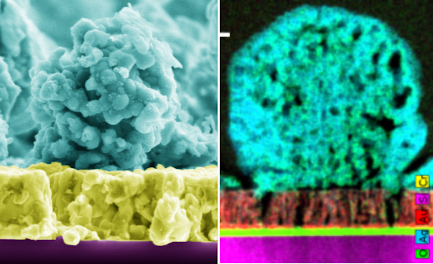
- nanospheres (Figure 2d). By further increasing the oxidation time to 30 min, an increase in microsphere size and number is seen at the surface (Figure 2e,f). The evolution of film thickness was examined by SEM cross-section imaging (Figure 3). The results show that the as-grown films exhibit a columnar
- increased in size (Figure 3e,f). To investigate whether the formed nanoporous microspheres have a hollow interior or not, a cross-section SEM specimen from the sample oxidized for 30 min was prepared using focused ion beam (FIB) (Figure 3e). According to the results, the microspheres were not hollow and the
- equipped with an FEI EDS detector and a high-angle annular dark-field (HAADF) detector operating at 200 kV. For qualitative elemental chemical analysis, ESPRIT software from Bruker was used. The cross-section film (thickness <100 nm) was prepared using a SEM/FIB Versa 3D dual beam instrument from FEI


Detecting stable adsorbates of (1S)-camphor on Cu(111) with Bayesian optimization
Beilstein J. Nanotechnol. 2020, 11, 1577–1589, doi:10.3762/bjnano.11.140
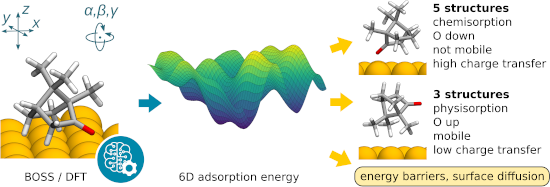
- between the two carbon atoms, highlighted in red. (c) Orthogonal unit cell of Cu(111), which is the search range in x and y directions. Energy landscapes from preparatory BOSS simulations. (a) θ–ω 2D cross section of the 3D PES in the camphor conformer search, featuring a single minimum and an energy
- barrier of 0.1 eV for methyl group rotation. (b) α–β 2D cross section of the 3D PES in the search for adsorption orientation of camphor on Cu(111). The landscape features multiple local minima and a higher-energy region at β ≈ 90°. (c) PES of the 2D translational x–y search of the adsorption site of


Optically and electrically driven nanoantennas
Beilstein J. Nanotechnol. 2020, 11, 1542–1545, doi:10.3762/bjnano.11.136

- . Prominent examples are SERS and TERS, where the intrinsically small Raman scattering cross-section is enhanced by several orders of magnitude, making single-molecule spectroscopy feasible. These spectroscopic techniques have shown tremendous progress in the last two decades [29][30][31][32]. Under high
Design of V-shaped cantilevers for enhanced multifrequency AFM measurements
Beilstein J. Nanotechnol. 2020, 11, 1525–1541, doi:10.3762/bjnano.11.135
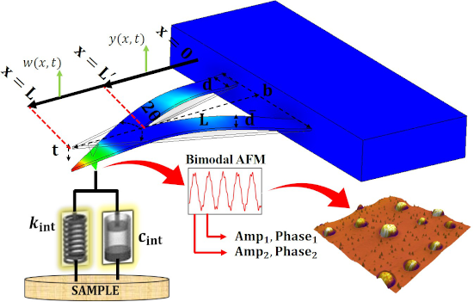
- selecting an appropriate cantilever. Theory Unlike the uniform cross section of rectangular cantilevers throughout their length, the cross section of V-shaped cantilevers varies over the length. Therefore, in order to model them as Timoshenko’s beam, the equation of motion needs to be divided into two
- portions as shown in Figure 1. The first portion, shown in Equation 1, is the equation of motion related to the length of the cantilever base to the point where the two legs merge. For this range, the cross section is a rectangle on both sides: where 0 ≤ x ≤ (L – L′). In Equation 1 and Equation 2, K, G, A1
- , y(x,t), ϕ(x,t), ρ, I, E and c are shear coefficient, shear modulus, area of cross section, transverse deflection of the beam, bending angle of the beam, mass density of the beam, moment of inertia of cross section, Young’s modulus, and internal damping of the cantilevers, respectively. The cross


![[Graphic 4]](/bjnano/content/inline/2190-4286-11-135-i26.svg?max-width=637&scale=1.18182) = 15 µm, bref = 8...
= 15 µm, bref = 8...


![[Graphic 17]](/bjnano/content/inline/2190-4286-11-135-i39.svg?max-width=637&scale=1.18182) ) of V-shaped cantilevers for...
) of V-shaped cantilevers for...


Wafer-level integration of self-aligned high aspect ratio silicon 3D structures using the MACE method with Au, Pd, Pt, Cu, and Ir
Beilstein J. Nanotechnol. 2020, 11, 1439–1449, doi:10.3762/bjnano.11.128
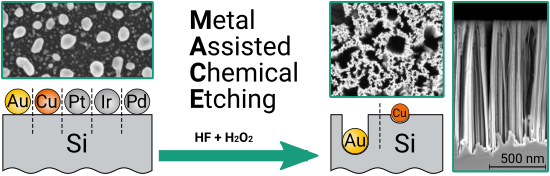
- between the connected Ir clusters. The SEM cross-section measurements show that the film has an average thickness of approx. 12 nm (see inset of Figure 2). The fabricated nanoparticles show a good compromise between process complexity and surface coverage with nanoparticles. With this bottom-up approach
- images after 90 cycles of Ir ALD. The inset shows the corresponding cross section. Microscope image of etched structures. SEM images of etched structures (with 50 mmol/L H2O2 and 1.73 mol/L HF for 10 min) using Au particles. (a, b): Cross section; (c, d): top view; (e): top view from back-scattering
- detector with highlighted Au particles. The scale applies to all images. SEM images of etched structures (with 145 mmol/L H2O2 and 1.73 mol/L HF for 10 min) using Au particles showing sticking structures. (a): Top view; (b): cross section. Measured reflectance of Au wafers after 10 min of etching in HF


Superconductor–insulator transition in capacitively coupled superconducting nanowires
Beilstein J. Nanotechnol. 2020, 11, 1402–1408, doi:10.3762/bjnano.11.124
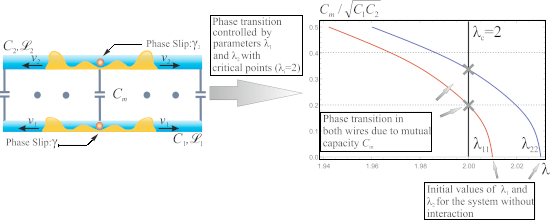
- –Schön plasmons produces a logarithmic interaction in space–time between different QPSs where the magnitude is controlled by the wire diameter (cross section) [5]. For sufficiently thick wires this interaction is strong and the QPSs are bound in close pairs. Accordingly, the (linear) resistance of such
- quasi-one-dimensional superconducting wires [5] with geometric capacitance C and kinetic inductance is controlled by the parameter [5] which is proportional to the square root of the wire cross section, s. It follows immediately from the analysis of [5] that, provided the two superconducting wires


Atomic defect classification of the H–Si(100) surface through multi-mode scanning probe microscopy
Beilstein J. Nanotechnol. 2020, 11, 1346–1360, doi:10.3762/bjnano.11.119
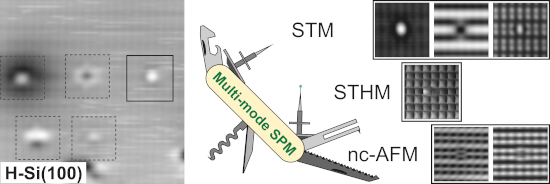
- probe the vacancy’s depth. Both of these dihydride variants can be compared to the final example of a dihydride pair in Figure 3e,f. It interestingly appears remarkably similar to the normal dimer cross-section, with only slight variation at the position of the outermost H atoms. The lack of a hydrogen
- originates above one side of a dimer, while the SiH2 is centred between the two atoms of a dimer. The neutral point defect in Figure 3q,r displays as a slight decrease in the minima above the defect. The almost normal appearance of the defect cross section compared to the regular surface suggests a similarly
- is actually measuring a signal from the back-bonded and bulk silicon atoms. This is verified by comparing the magnitude of this smaller frequency shift to an equivalent measurement of other back-bonded Si atoms, as would be measured in a cross section taken between dimers (burgundy line in Figure 4n



Structure and electrochemical performance of electrospun-ordered porous carbon/graphene composite nanofibers
Beilstein J. Nanotechnol. 2020, 11, 1280–1290, doi:10.3762/bjnano.11.112
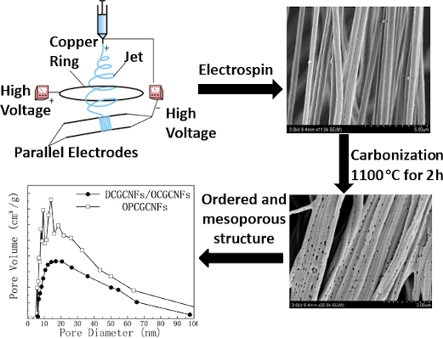
- the electrode alternating current (AC) were performed at frequencies ranging from 0.01 Hz to 100 kHz. Results and Discussion The surface and cross-section morphologies of the CNFs before and after carbonization were examined via SEM and TEM, respectively, as shown in Figure 2. According to Figure 2a


Thermophoretic tweezers for single nanoparticle manipulation
Beilstein J. Nanotechnol. 2020, 11, 1126–1133, doi:10.3762/bjnano.11.97
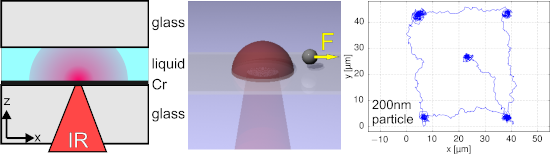
- nowadays widely used, add an optical trap repositioning feedback loop to its control software, and use a thin absorptive layer on a substrate of an experimental chamber as a heat source. Experimental chamber and laser-induced heating. (a) Chamber cross section. A 5 μm thick liquid layer is sandwiched
- for a single 200 nm particle. (a) 2D histogram of particle positions. (b) Cross section of the effective potential in x- and y-directions. Manipulation of a 200 nm nanoparticle in water. (a) The trajectory of the particle. (b) Time dependence of x- and y-position of the particle during the


Vibration analysis and pull-in instability behavior in a multiwalled piezoelectric nanosensor with fluid flow conveyance
Beilstein J. Nanotechnol. 2020, 11, 1072–1081, doi:10.3762/bjnano.11.92
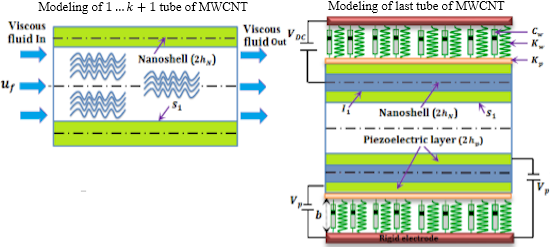
- /interface effects, the pull-in voltage and critical fluid velocity reach zero later than the rest of the parameters. Fluid-conveying multiwalled piezoelectric nanosensor. (a) Illustration of van der Walls forces between two adjacent tubes of a multiple shell cross section of a multiwalled carbon nanotube


![[Graphic 46]](/bjnano/content/inline/2190-4286-11-92-i46.svg?max-width=637&scale=1.18182) on DNF of FC-MWPENS.
on DNF of FC-MWPENS.


![[Graphic 50]](/bjnano/content/inline/2190-4286-11-92-i50.svg?max-width=637&scale=1.18182) on DNF of SS FC-MWPENS.
on DNF of SS FC-MWPENS.


![[Graphic 54]](/bjnano/content/inline/2190-4286-11-92-i54.svg?max-width=637&scale=1.18182) on DNF of SS FC-MWPENS.
on DNF of SS FC-MWPENS.


![[Graphic 59]](/bjnano/content/inline/2190-4286-11-92-i59.svg?max-width=637&scale=1.18182) for fluid velocity
for fluid velocity ![[Graphic 60]](/bjnano/content/inline/2190-4286-11-92-i60.svg?max-width=637&scale=1.18182) on DNF of SS FC-MWPENS.
on DNF of SS FC-MWPENS.

![[Graphic 61]](/bjnano/content/inline/2190-4286-11-92-i61.svg?max-width=637&scale=1.18182) for pull-in voltage on DNF of SS FC-MWPENS.
for pull-in voltage on DNF of SS FC-MWPENS.

![[Graphic 67]](/bjnano/content/inline/2190-4286-11-92-i67.svg?max-width=637&scale=1.18182) for fluid velocity
for fluid velocity ![[Graphic 68]](/bjnano/content/inline/2190-4286-11-92-i68.svg?max-width=637&scale=1.18182) on DNF of SS FC-MWPENS.
on DNF of SS FC-MWPENS.

![[Graphic 69]](/bjnano/content/inline/2190-4286-11-92-i69.svg?max-width=637&scale=1.18182) for pull-in voltage on DNF of SS FC-MWPENS.
for pull-in voltage on DNF of SS FC-MWPENS.

![[Graphic 73]](/bjnano/content/inline/2190-4286-11-92-i73.svg?max-width=637&scale=1.18182) on DNF of SS FC-MWPENS.
on DNF of SS FC-MWPENS.


![[Graphic 75]](/bjnano/content/inline/2190-4286-11-92-i75.svg?max-width=637&scale=1.18182) on DNF of SS FC-MWPENS.
on DNF of SS FC-MWPENS.

Highly sensitive detection of estradiol by a SERS sensor based on TiO2 covered with gold nanoparticles
Beilstein J. Nanotechnol. 2020, 11, 1026–1035, doi:10.3762/bjnano.11.87
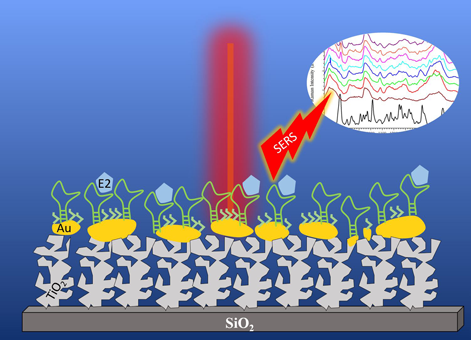
- affinity to Au but none to TiO2. Moreover, the Raman spectrum of MBA is well known and the molecule demonstrates a large scattering cross section [30]. For the functionalization of TiO2/Au surfaces, MBA was diluted in ethanol at a concentration of 2.9 mM. The TiO2/Au samples were then soaked in the
- signal of the empty sensor is designated as “Apt+MCH”. It mostly reflects the signal of the aptamer as MCH is known to have a very low Raman cross section and is thus not expected to yield a significant signal. From the comparison between the spectra of the empty sensor (Apt+MCH) and of the hormone (E2



Electrochemical nanostructuring of (111) oriented GaAs crystals: from porous structures to nanowires
Beilstein J. Nanotechnol. 2020, 11, 966–975, doi:10.3762/bjnano.11.81
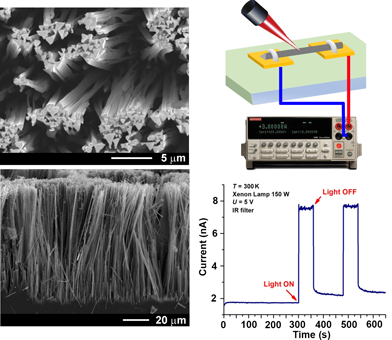
- with diameters of about 50 nm and oriented normally to a InP wafer, i.e., along the crystallographic [100] orientation, was obtained after anodic etching at elevated applied voltages [14]. High-aspect-ratio GaAs pillar arrays with triangular cross section were prepared by combining colloidal crystal
- surface orientation, with an angle of approximately 109° between the pores. The pores tend to have a triangular cross section while the pore walls and tips exhibit a pronounced crystallographic anisotropy. A specific characteristic feature of crystallographically oriented pores is their ability to
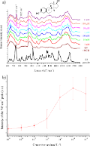
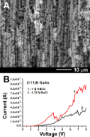
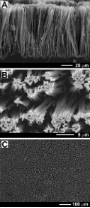
- shutter was used in the relaxation experiments. The signal from the source measure unit was fed to computer via IEEE-488 interface for further data processing. The measurements were performed at 300 K. SEM images in cross section of porous GaAs layers for three different conditions of anodization in 1.75





Integrated photonics multi-waveguide devices for optical trapping and Raman spectroscopy: design, fabrication and performance demonstration
Beilstein J. Nanotechnol. 2020, 11, 829–842, doi:10.3762/bjnano.11.68
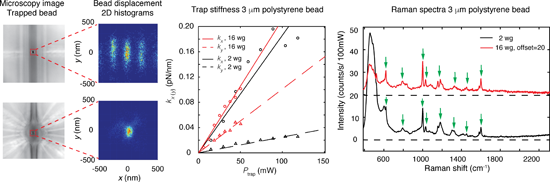
- rectangular cross section between the waveguides, while the 16-waveguide device has a cylindrical fluidic microbath with a diameter of 15 μm. Using Lumerical’s FDTD solutions, we obtain the energy density U in the central part of these devices, assuming the beams are emitted in phase. The results are
- with sample fluid. Among the devices, the diameter of the cylinder is in the range of 5–60 µm. For the 2-waveguide device, the microbath is shaped as a linear channel with a rectangular cross section (Figure 4a). For the microbath we face two issues, namely the entrapment of air bubbles during filling
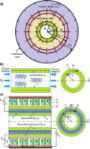
- scale indicating the energy density is the same. Main steps of the fabrication process of the multi-waveguide trapping and Raman devices based on Si3N4 waveguides. Under each cross section the step is mentioned. The cross section of step d) is at the chip edge, where the waveguide reaches a thickness of


A set of empirical equations describing the observed colours of metal–anodic aluminium oxide–Al nanostructures
Beilstein J. Nanotechnol. 2020, 11, 798–806, doi:10.3762/bjnano.11.64
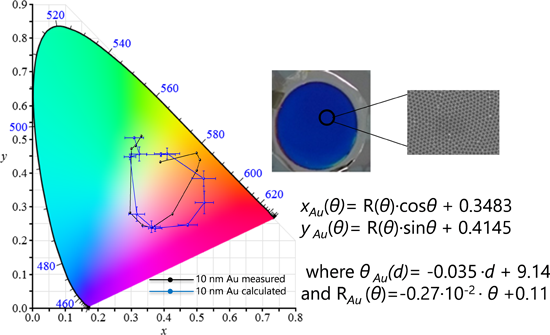
- samples with 8 nm Cr sputtered onto these films. It should be noted that measuring the thickness of the thin films as well as obtaining accurate values is very difficult due to the roughness and large surface area (2.5 cm2 in diameter) of the AAO films. This can be seen in the FESEM images of the cross
- section of an AAO film after FIB cutting (Figure S4, Supporting Information File 1). The x and y values calculated from the proposed model were plotted as a function of the x and y values from the reflectance measurements, in order to check the validity of the proposed model (Figure 5a). In order to


Hexagonal boron nitride: a review of the emerging material platform for single-photon sources and the spin–photon interface
Beilstein J. Nanotechnol. 2020, 11, 740–769, doi:10.3762/bjnano.11.61




Effect of Ag loading position on the photocatalytic performance of TiO2 nanocolumn arrays
Beilstein J. Nanotechnol. 2020, 11, 717–728, doi:10.3762/bjnano.11.59
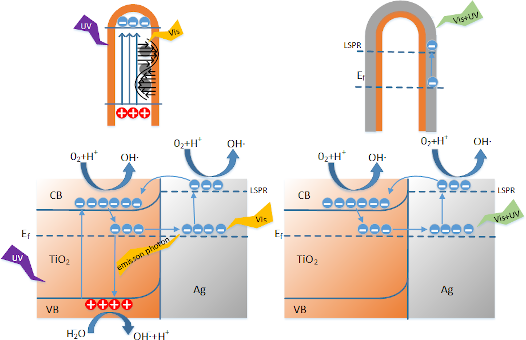
- was broken by bending the samples prior to removal of Al and AAO, exposing the internal structure of the nanocolumn as shown in Figure 3. Figure 3a shows the method used to observe the cross section of the sample. Figure 3b is the cross section of the AAO template, and we find that there is no
- coverage of the surface of the template. Figure 3c shows the cross section of a TNC sample. Comparing Figure 3b and 3c, we find that TiO2 perfectly covers the surface of AAO, the nanocolumn is a hollow structure, and the top hole still exists. As can be seen from Figure 3d, due to the low thickness of Ag
- field distribution of arrays with different structures at 457 and 320 nm. In order to further illustrate the effect of structural changes on the electric field distribution of arrays, the XY plane and the XZ plane are chosen to analyze the arrays. The XY plane chooses the cross section at 75 nm and the


Electromigration-induced directional steps towards the formation of single atomic Ag contacts
Beilstein J. Nanotechnol. 2020, 11, 680–687, doi:10.3762/bjnano.11.55
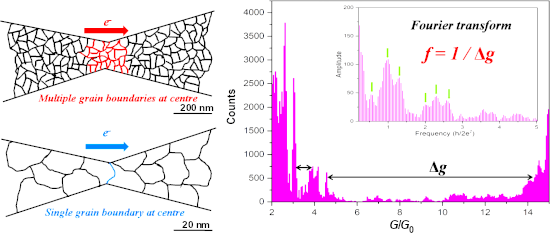
- location of the point contact nor any reproducible production of point contacts. Nevertheless, quantized conductance plateaus as a function of time were still observed for these bow-tie structures during EM. It turned out that the existence of several grains in the cross section of these Ag structures is
- planes. Secondly, due to its high directionality, EM thins one grain while depositing the material on an adjacent grain. Therefore, the local electrical resistance is determined by the contact area between the grain that is thinned and the adjacent grain that is taking up the material. Only this cross
- section and its variation by EM is considered. Thus, deviations due to unknown step densities and local strain are ignored when considering only high-symmetry directions of the interface, as we do in the following. Figure 3 represents the FT of the conductance histogram in Figure 2 of bow-tie structures


Observation of unexpected uniaxial magnetic anisotropy in La2/3Sr1/3MnO3 films by a BaTiO3 overlayer in an artificial multiferroic bilayer
Beilstein J. Nanotechnol. 2020, 11, 651–661, doi:10.3762/bjnano.11.51
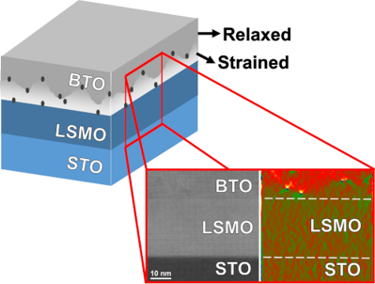
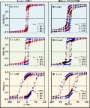
- grown on STO (green triangles), LAO (purple diamonds), and LSAT (dark cyan pentagons) substrates; (c) BTO/ LSMO bilayer with tLSMO = 20 nm (blue circles), 27 nm (green triangles) and 40 nm (black squares). Continuous red lines correspond to numerical fits. (a) Cross-section HAADF-STEM image for a BTO



Comparison of fresh and aged lithium iron phosphate cathodes using a tailored electrochemical strain microscopy technique
Beilstein J. Nanotechnol. 2020, 11, 583–596, doi:10.3762/bjnano.11.46
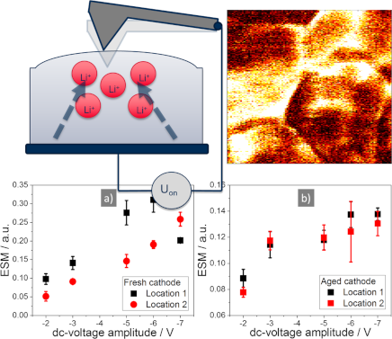
- (MBraun, O2 and H2O < 2 ppm) and washed with dimethylcarbonate (DMC, Sigma-Aldrich). Cross-section cuts were obtained with an unfocused argon beam cross-section polisher (Jeol, 19520-CCP). The transfer of samples was done inside a transfer vessel to avoid any contact with air. ESM measurements ESM
- ]. Further information about the set-up with control experiments regarding the origin of the signal can be found in [34]. The ESM measurements were performed on micrometre-sized single particles of a cross-section of the electrodes cut as specified above. Results and Discussion Cell and cathode
- characterization The ESM analysis was conducted inside of particles of the cross-sections of the fresh and aged cathodes. Two examples of the cross-section structure of the cathodes are given in Figure 1. In Figure 1a the fresh and in 1b the aged cathode cross-section is shown. The electrode consists of particles



Evolution of Ag nanostructures created from thin films: UV–vis absorption and its theoretical predictions
Beilstein J. Nanotechnol. 2020, 11, 494–507, doi:10.3762/bjnano.11.40
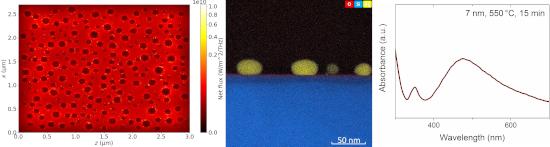
- extinction cross section. It can be up to 50 times larger than the geometrical cross section of the nanoparticle [6]. Ag nanoparticles are also interesting because of the position of the plasmon resonance. The LSPR wavelength maximum of small Ag nanoparticles with a diameter of 10 nm in air is around 420 nm
- ), they consist of Ag. Detailed EDS analysis of a cross section of a nanoisland is presented in Figure 8c. As can be seen, a thin layer of natural SiO2, about 2 nm thick, is present on the silicon surface. Interestingly, there is no oxide layer around the Ag nanostructures. The quality of the
- (f) 600 °C; (g) average nanostructure diameter as a function of the annealing temperature. (a) HRTEM image of a cross section of a nanoisland formed from a 3 nm thick film, annealed at 550 °C for 15 min; (b) EDS analysis and (c) detailed EDS analysis of the cross section of the nanoisland. Absorbance




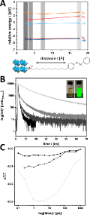
Interfacial charge transfer processes in 2D and 3D semiconducting hybrid perovskites: azobenzene as photoswitchable ligand
Beilstein J. Nanotechnol. 2020, 11, 466–479, doi:10.3762/bjnano.11.38
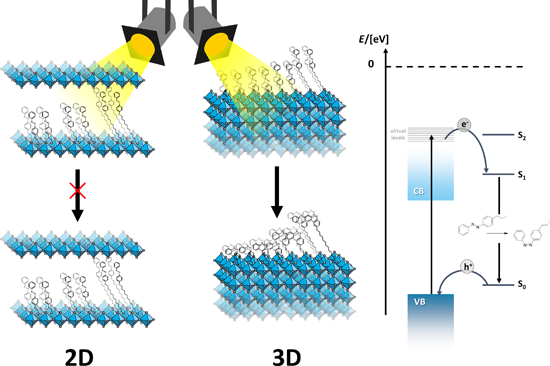
- cation needs a coordinating headgroup that is able to ionically interact with the perovskite structure. In addition, the molecular projection along the z-axis should fit into the square defined by four corner-sharing octahedral [14]. Thus, the cross section of the ligand is a limiting factor, whereas




Using gold nanoparticles to detect single-nucleotide polymorphisms: toward liquid biopsy
Beilstein J. Nanotechnol. 2020, 11, 263–284, doi:10.3762/bjnano.11.20
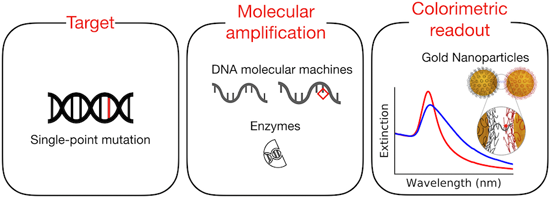
- giving rise to the so-called localized surface plasmon resonance (LSPR). The position and the bandwidth of the LSPR can be modulated by the shape of the nanocrystals and can vary between 400 and 2000 nm. The high absorption cross section (plasmonic nanoparticles absorb photons over a region about ten




Nonclassical dynamic modeling of nano/microparticles during nanomanipulation processes
Beilstein J. Nanotechnol. 2020, 11, 147–166, doi:10.3762/bjnano.11.13
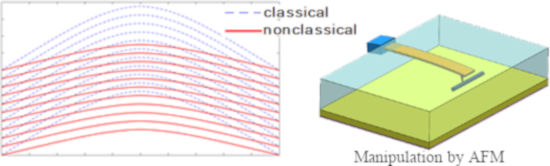
- Timoshenko beam of Figure 3 are described as where u1, u2 and u3 are displacements along the axes x, y and z, respectively, ψ(x,t) is the angular rotation of the beam cross section and w(x,t) is the beam lateral deformation. By replacing the equations of non-zero elements, one can obtain the strain, stress