Search results
Search for "crystallization" in Full Text gives 213 result(s) in Beilstein Journal of Nanotechnology. Showing first 200.
Au55, a stable glassy cluster: results of ab initio calculations
Beilstein J. Nanotechnol. 2017, 8, 2221–2229, doi:10.3762/bjnano.8.222
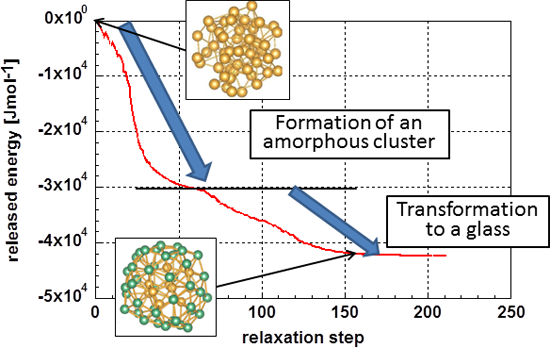
- with a diameter of 1.4 nm but not in an infinite space. Obviously, the formation of the glassy cluster in the second regime is a process similar to crystallization as it is connected to a release of energy. This is insofar astonishing as in bulk materials glass formation is not connected to any energy


Ta2N3 nanocrystals grown in Al2O3 thin layers
Beilstein J. Nanotechnol. 2017, 8, 2162–2170, doi:10.3762/bjnano.8.215
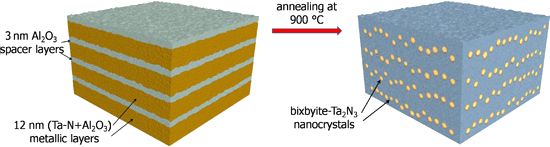
- and all MLs annealed up to 800 °C were amorphous (Figure 3). Only annealing at 900 °C leads to the crystallization of MLs. The diffraction peaks of the ML12m9 sample match those of the bixbyite-Ta2N3 phase with a lattice constant of 9.83 Å, while the ML with thinner metallic layers comprises a mixture


Systematic control of α-Fe2O3 crystal growth direction for improved electrochemical performance of lithium-ion battery anodes
Beilstein J. Nanotechnol. 2017, 8, 2032–2044, doi:10.3762/bjnano.8.204
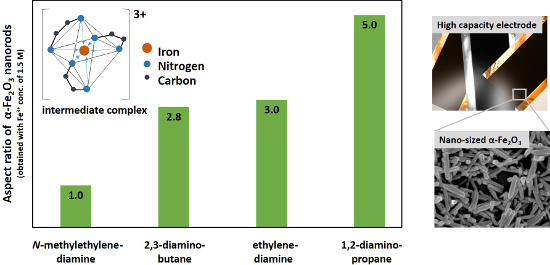
- concentration in the solution is reduced, which separates nucleation and growth processes and supports high quality crystallization [27]. The complex stability is expected to decrease during synthesis with increasing temperature and pressure until the Fe3+ in complex formation can be successfully attacked by OH


Preparation and characterization of polycarbonate/multiwalled carbon nanotube nanocomposites
Beilstein J. Nanotechnol. 2017, 8, 2026–2031, doi:10.3762/bjnano.8.203
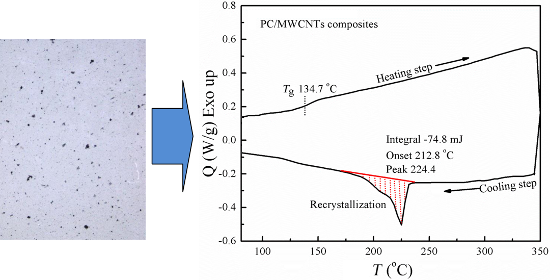
- also in business buildings and automotive light covers [1]. Some of these applications involve extended daylight exposure, which, especially due to UV radiation, induce progressive, irreversible changes affecting the lifetime, for example, optical polarization, which is associated with crystallization
- [2][3]. PC is an amorphous polymer with very low crystalline content, estimated at 1–2 wt %. Not only does UV exposure induce PC ageing, leading to crystallization, but also some solvents as well. They are thought to cause changes in chain conformation, which is associated with the presence of
- serious thermal stability issues at the hot embossing temperature of PC. It has been suggested that the addition of MWCNTs can significantly change the mechanical properties of PC, as well as affect the crystallization behavior [5]. In former work, the effect of adding gold nanoparticles on the optical


Growth and characterization of textured well-faceted ZnO on planar Si(100), planar Si(111), and textured Si(100) substrates for solar cell applications
Beilstein J. Nanotechnol. 2017, 8, 1939–1945, doi:10.3762/bjnano.8.194
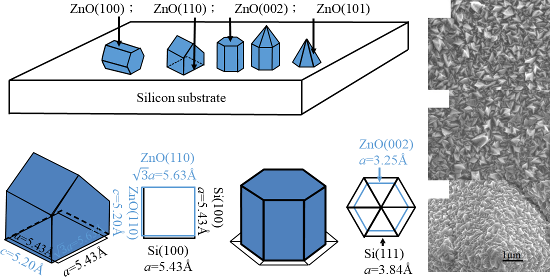
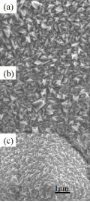
- the ZnO(002), which closely match the textured silicon surface as well. As a result, the planar Si(100) substrate will favor ZnO(110) crystallization, while the planar Si(111) substrate will favor Zn(002). The surface morphology of the ZnO film on planar Si(100) substrate will have more ridge-like
- of crystallization of ZnO grains. An emission peak around 378 nm (3.28 eV) is related to a band-to-band transition [4][5]. The CL intensity of the sample ZnOp(100) is stronger than that of the sample ZnOp(111), while both of them are much stronger than that of the sample ZnOt(100). Since a larger
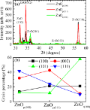



![[Graphic 2]](/bjnano/content/inline/2190-4286-8-194-i4.png?max-width=637&scale=1.18182) × lattice constant a) by 5.20 Å (l...
× lattice constant a) by 5.20 Å (l...


(Metallo)porphyrins for potential materials science applications
Beilstein J. Nanotechnol. 2017, 8, 1786–1800, doi:10.3762/bjnano.8.180
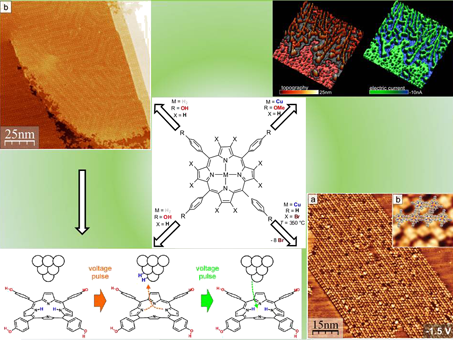
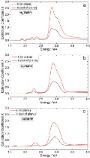
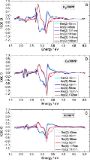
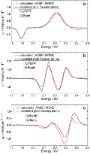
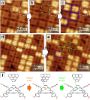
- also be a sign of crystallization induced by oxygen or moisture [62]. The origin of these changes might be attributed to (re)crystallization processes. Nevertheless, this study confirmed that long-stime stability studies of any devices based on (metallo)porphyrins are required. MOKE spectra were






Evaluation of preparation methods for suspended nano-objects on substrates for dimensional measurements by atomic force microscopy
Beilstein J. Nanotechnol. 2017, 8, 1774–1785, doi:10.3762/bjnano.8.179
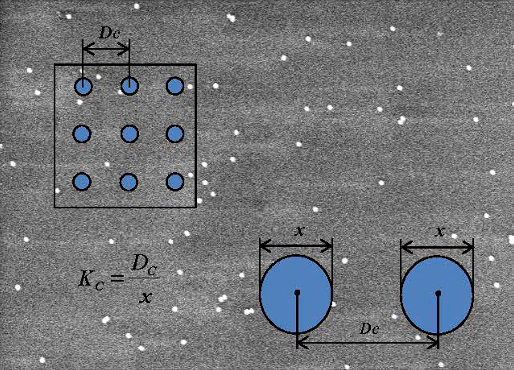
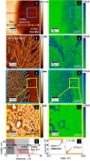
- crystallization during droplet drying. Thus, artificially generated aerosols are typically classified afterwards within differential electrical mobility classifiers according to ISO 15900:2009 [28]. To avoid an overlap of the nano-object mode and a residual mode in the particle size distribution, even finer


Methionine-mediated synthesis of magnetic nanoparticles and functionalization with gold quantum dots for theranostic applications
Beilstein J. Nanotechnol. 2017, 8, 1734–1741, doi:10.3762/bjnano.8.174
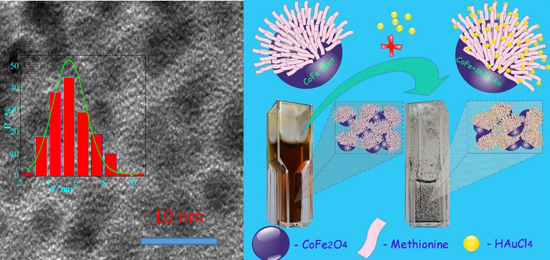
- ·4H2O were of analytical grade, purchased from Aldrich and used without further purification. NaOH was purchased from Poch SA (Poland) and purified by preparation of a saturated solution, which lead to crystallization of other sodium salts. D,L-methionine (99% purity) and D,L-methionine sulfoxide (≥99.0


Parylene C as a versatile dielectric material for organic field-effect transistors
Beilstein J. Nanotechnol. 2017, 8, 1532–1545, doi:10.3762/bjnano.8.155
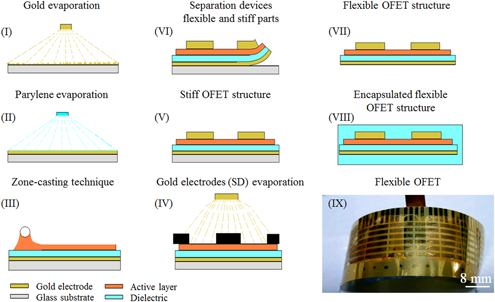
- temperature, indicates that more ordered polymer chains are formed at higher temperatures. This is due to higher energy available for chain motion and crystallization during thermal annealing. The size of crystalline domains is controlled by a number of defect mechanisms in the polymerization process. The




Light-induced magnetoresistance in solution-processed planar hybrid devices measured under ambient conditions
Beilstein J. Nanotechnol. 2017, 8, 1502–1507, doi:10.3762/bjnano.8.150
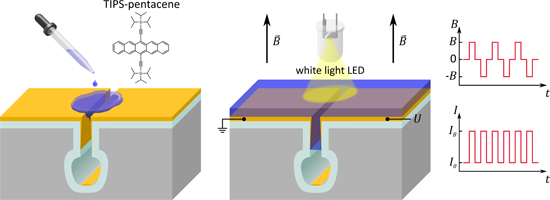
- substrates was performed at 65 °C on a hot plate and the samples were kept at 65 °C for 30 min after drop-coating, to initiate crystallization of the TIPS-pentacene film and to ensure evaporation of the solvents from the film. Unless otherwise mentioned, the electrical characterisation including the


Comprehensive Raman study of epitaxial silicene-related phases on Ag(111)
Beilstein J. Nanotechnol. 2017, 8, 1357–1365, doi:10.3762/bjnano.8.137
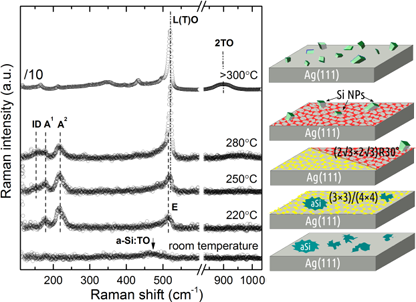
- exceeds 1000 °C [30]. Such a low crystallization temperature is surprising, but it can be explained by metal mediation. For a layered Si–Ag system a temperature as low as 400 °C was reported [31]. These results are in agreement with Auger electron spectroscopy measurements [16] and low-energy electron



Characterization of ferrite nanoparticles for preparation of biocomposites
Beilstein J. Nanotechnol. 2017, 8, 1257–1265, doi:10.3762/bjnano.8.127
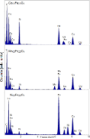
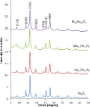
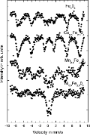
- Ni ions influence the crystallization process (which turned out to be slower in comparison to Fe). This observation explains the observed differences in the Mössbauer spectra from those presented in previous studies [17]. Energy dispersive X-ray analysis (EDX) To confirm the substitution of Fe by



Atomic structure of Mg-based metallic glass investigated with neutron diffraction, reverse Monte Carlo modeling and electron microscopy
Beilstein J. Nanotechnol. 2017, 8, 1174–1182, doi:10.3762/bjnano.8.119
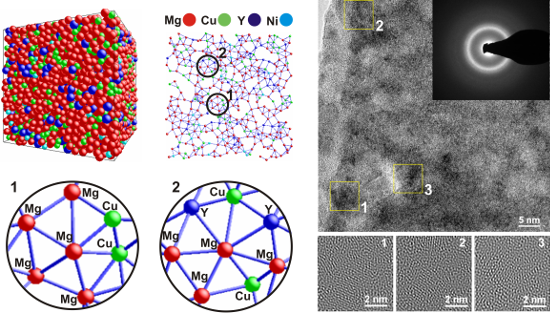
- the ternary Mg–Cu–Y glasses. Gao et al. [11] performed ab initio molecular dynamics simulations of the structural evolution of a Mg65Cu25Y10 alloy from liquid to glass state. Moreover, Laws et al. [12] provided an analysis of the dynamic crystallization in Mg65Cu25Y10 bulk metallic glass using
- . I(Q) is the corrected, normalized intensity, ci is the atomic concentration of the i-th element, fi is the atomic scattering factor of the i-th kind element, and n is the number of the atomic species in the specimen [22]. The glass transition (Tg), onset (Tx) and peak crystallization (Tp
- glass transition temperature (Tg = 420 K), the onset crystallization temperature (Tx = 467 K) and the peak crystallization temperature (Tp = 474 K) to be determined. The supercooled liquid region (ΔTx = Tx − Tg) is about 54 K. Compared to the Mg65Cu20Y10Zn5 glassy alloy described by Men et al. [33], the




Vapor-phase-synthesized fluoroacrylate polymer thin films: thermal stability and structural properties
Beilstein J. Nanotechnol. 2017, 8, 933–942, doi:10.3762/bjnano.8.95
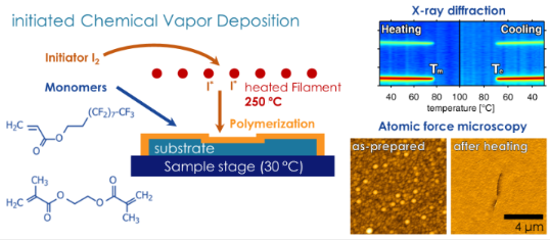
- the data. These points correspond to melting, and respectively, crystallization of the lamella. These thermal transition points are in reasonable agreement with those determined from the X-ray diffraction experiment (76 ± 2 and 69 ± 2 °C). The difference is attributed to general sensitivity and


Investigation of growth dynamics of carbon nanotubes
Beilstein J. Nanotechnol. 2017, 8, 826–856, doi:10.3762/bjnano.8.85
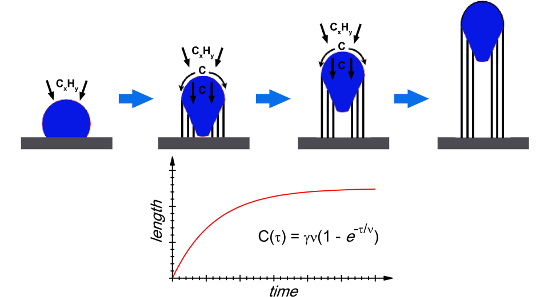
- hydrocarbon was decomposed through the bulk of metal to the sites of the crystallization into a graphite phase (carbon filaments). The degraded intermediate carbide was restored as a result of the decomposition of hydrocarbon, and this cyclic process took place as long as there were the gaseous source of


First examples of organosilica-based ionogels: synthesis and electrochemical behavior
Beilstein J. Nanotechnol. 2017, 8, 736–751, doi:10.3762/bjnano.8.77
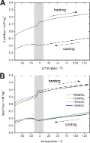
- crystallization or melting peaks are visible in the range of −170 to 150 °C. The fact that the glass transition is less visible in the cooling curves is due to supercooling and indicates rather slow dynamics of the IL due to high viscosity, similar to our previous example [25]. Table 2 shows that the glass
- ] suppresses crystallization of the IL even after over three years at ambient conditions and DSC data reproducibly show a glass transition at around −14 to −9 °C (Figure 11). These data indicate that replacing the propyl with a butyl spacer provides two advantages, (i) a less hazardous synthesis protocol and








Analysis and modification of defective surface aggregates on PCDTBT:PCBM solar cell blends using combined Kelvin probe, conductive and bimodal atomic force microscopy
Beilstein J. Nanotechnol. 2017, 8, 579–589, doi:10.3762/bjnano.8.62
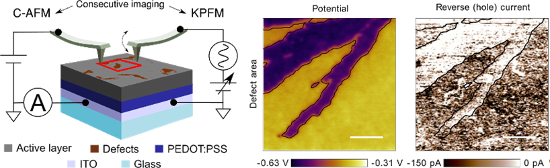
- the majority of modern PSCs consist of nanoscale bulk heterojunction (BHJ) structures [7], changes in the internal structures, such as local crystallization of polymers or phase separation of donor and acceptor mixtures, greatly affect the device performance [8][9]. Extensive research has been


Liquid permeation and chemical stability of anodic alumina membranes
Beilstein J. Nanotechnol. 2017, 8, 561–570, doi:10.3762/bjnano.8.60
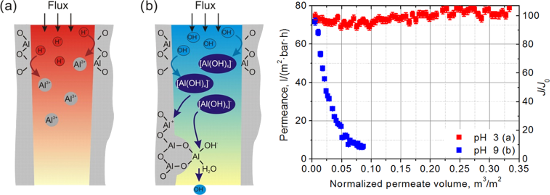
- material. To avoid the permeability loss of anodic alumina in water solutions, and to take advantage of AAO membrane applications in aqueous medium, one needs to suppress the dissolution efficiency. The most convenient way involves oxolation and partial crystallization of hydroxides to crystalline alumina
- stability improvement towards dissolution. Therefore, we have tested the long-term water permeation stability of thermally treated AAO membranes. The temperature of 600 °C was chosen to induce the crystallization of AAO and to avoid permeance loss due to destruction of the porous structure. However


Diffusion and surface alloying of gradient nanostructured metals
Beilstein J. Nanotechnol. 2017, 8, 547–560, doi:10.3762/bjnano.8.59
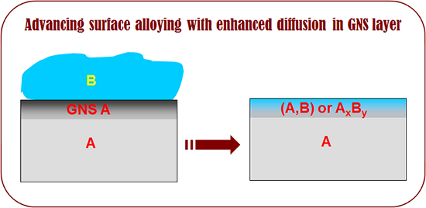
- showed much faster diffusion rates (≈4 orders of magnitude higher) with a lower activation enthalpy than the GB diffusion [17]. Moreover, interfacial diffusion coefficients in an Fe3Si nanocomposite produced by crystallization (CRY) from a melt-spun amorphous sample were revealed to be even lower in




Formation and shape-control of hierarchical cobalt nanostructures using quaternary ammonium salts in aqueous media
Beilstein J. Nanotechnol. 2017, 8, 494–505, doi:10.3762/bjnano.8.53
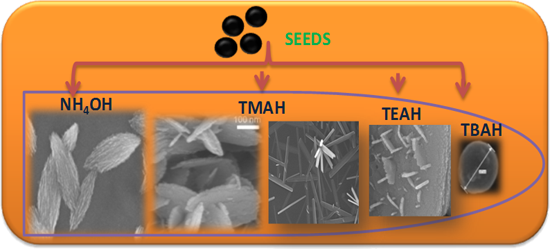
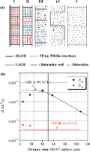
- interesting to note that the formation of spindles in the presence of NH4OH is faster (15 min) compared to the formation of nanoplates using TMAH (45 min). NH4OH is often used as a crystallization modifier and adsorbs preferentially on certain crystal planes. Cone-shaped nanostructures of cobalt were obtained


The longstanding challenge of the nanocrystallization of 1,3,5-trinitroperhydro-1,3,5-triazine (RDX)
Beilstein J. Nanotechnol. 2017, 8, 452–466, doi:10.3762/bjnano.8.49
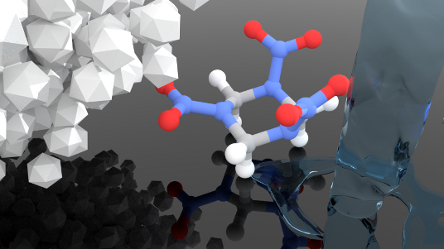
- of 1,3,5-trinitroperhydro-1,3,5-triazine (RDX). Recent advances in crystallization processes and milling technology mark the beginning of a new area which will hopefully lead the pyroelectric industry to finally embrace nanotechnology. This work reviews the previous and current techniques used to
- crystallize RDX at a submicrometer scale or smaller. Several key points are highlighted then discussed, such as the smallest particle size and its morphology, and the scale-up capacity and the versatility of the process. Keywords: crystallization; nanoparticles; RDX; review; submicrometer; 1,3,5
- studies. Therefore, RDX has been used over the years as a reference for crystallization experiments, aiming to reduce the size of energetic organic crystals below a micrometer. Many crystallization processes inspired from other fields of chemistry, such as polymer crystallization, have been applied but


Impact of surface wettability on S-layer recrystallization: a real-time characterization by QCM-D
Beilstein J. Nanotechnol. 2017, 8, 91–98, doi:10.3762/bjnano.8.10
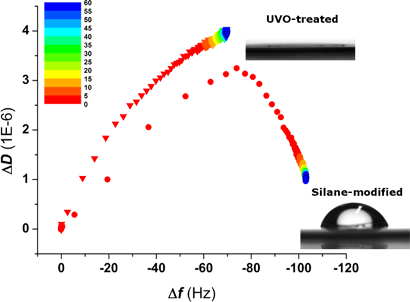
- character to the sensor. Subsequently, the SCWP was exposed to a 0.1 mg/mL solution of SbpA in crystallization buffer (CB) and left to evolve overnight. As shown in Figure 2c this protein injection caused a sudden decrease in ∆f down to values of around −100 Hz. After that a plateau that remained throughout


Obtaining and doping of InAs-QD/GaAs(001) nanostructures by ion beam sputtering
Beilstein J. Nanotechnol. 2017, 8, 12–20, doi:10.3762/bjnano.8.2
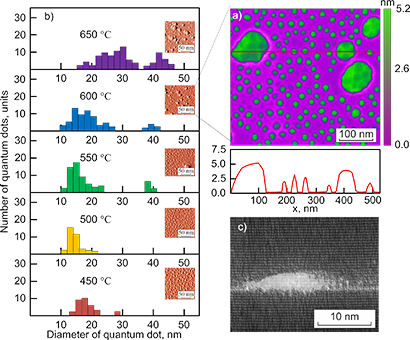
- crystallization of quantum-dimensional Ge/Si [21] and InAs/GaAs [22][23] heterostructures by ion-beam sputtering. The features of ion beam crystallization of silicon films [24] were partially investigated. Also, the morphology of Ge-QD/Si nanostructures [25] and photoluminescence of InAs-QD/GaAs nanostructures
- [26] were studied. Above-mentioned publication [22] was the first experimental work in which we investigated the ion-beam crystallization of InAs quantum dots onto GaAs substrates. The growth conditions of the crystallization process were not optimized, so the produced InAs nanoclusters had planar
- the crystallization depending on temperature, energy and beam current was not performed. Neither did we focus on doping processes in our earlier articles. The aim of the present study is to generalize features of crystallization and doping of InAs-QD/GaAs(001) quantum-dot nano-heterostructures grown


Chitosan-based nanoparticles for improved anticancer efficacy and bioavailability of mifepristone
Beilstein J. Nanotechnol. 2016, 7, 1861–1870, doi:10.3762/bjnano.7.178
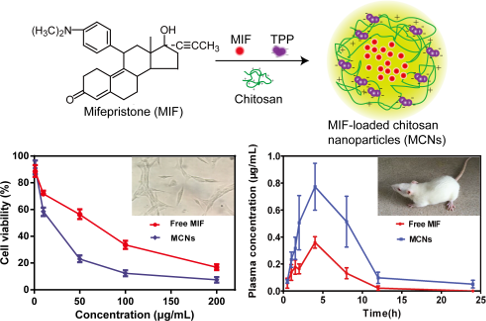
- increased its efficacy by sustained release to reduce drug crystallization [33]. These results suggested that MCNs might be a good drug delivery system for delivery of MIF for cancer therapy. Pharmacokinetic study In our previous study, we found MIF showed distinct pharmacokinetic differences between


A new approach to grain boundary engineering for nanocrystalline materials
Beilstein J. Nanotechnol. 2016, 7, 1829–1849, doi:10.3762/bjnano.7.176
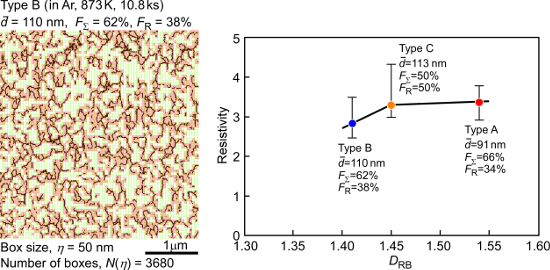
- ]), and also by other quite different methods such as crystallization from amorphous solids [57], extensive work has been performed on the mechanical properties of bulk UFG and nanostructured materials and excellent reviews have been written. Among those previous reviews [19][20][55][56][57][58][59][60