Search results
Search for "dynamic light scattering (DLS)" in Full Text gives 178 result(s) in Beilstein Journal of Nanotechnology.
A novel electrochemical nanobiosensor for the ultrasensitive and specific detection of femtomolar-level gastric cancer biomarker miRNA-106a
Beilstein J. Nanotechnol. 2016, 7, 2023–2036, doi:10.3762/bjnano.7.193
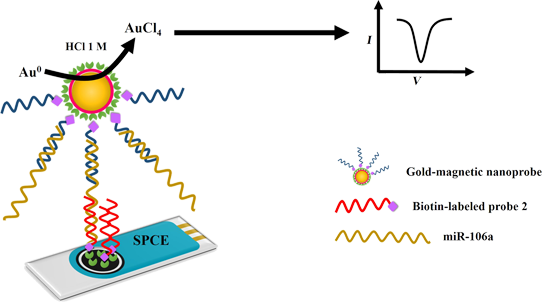
- then subjected to standard characterization analyses to evaluate whether they meet the essential criteria. For this purpose, the size and morphology of particles were estimated by means of transmission electron microscopy (TEM) (Zeiss, EM10C, 80 kV, Germany) and dynamic light scattering (DLS) analysis


Facile fabrication of luminescent organic dots by thermolysis of citric acid in urea melt, and their use for cell staining and polyelectrolyte microcapsule labelling
Beilstein J. Nanotechnol. 2016, 7, 1905–1917, doi:10.3762/bjnano.7.182
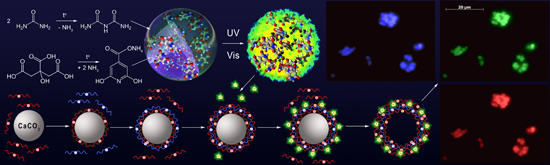
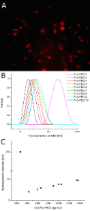
- scatter the red laser beam (left). Dynamic light scattering (DLS) measurements indicated that the O-dots tended to agglomerate in the solution, and the size of the agglomerates increased with increasing concentration (Supporting Information File 1, Figure S15). The agglomerates had a relatively high




Functionalized platinum nanoparticles with surface charge trigged by pH: synthesis, characterization and stability studies
Beilstein J. Nanotechnol. 2016, 7, 1822–1828, doi:10.3762/bjnano.7.175
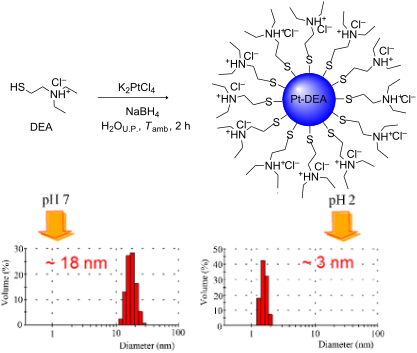
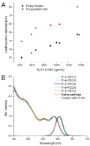
- spectroscopy was performed in H2O solutions using quartz cells with a Varian Cary 100 Scan UV–vis spectrophotometer. The diameter and the diameter distribution of MNPs in H2O solution were investigated at 25 ± 0.2 °C (pH 7 and pH 2) by means of dynamic light scattering (DLS) technique by using a Malvern Nano


Hydrophilic silver nanoparticles with tunable optical properties: application for the detection of heavy metals in water
Beilstein J. Nanotechnol. 2016, 7, 1654–1661, doi:10.3762/bjnano.7.157
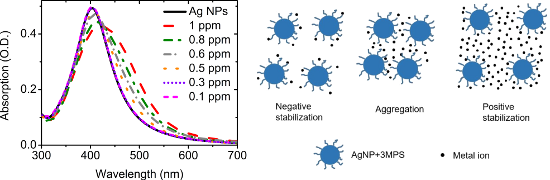
- nitrate as precursor molecules, hydrophilic thiol (3-mercapto-1-propanesulfonic acid sodium salt, 3MPS) and sodium borohydride as capping and reducing agents, respectively. The AgNPs were characterized using techniques such as surface plasmon resonance (SPR) spectroscopy, dynamic light scattering (DLS
- estimated the average diameter using about thirty nanoparticles with a resulting value of 2.5 ± 0.3 nm. Figure 4 shows the results from the dynamic light scattering (DLS) measurement on the AgNP-3MPS material (synthesis b). The distribution indicates good monodispersity of the NPs and an average diameter of


Antitumor magnetic hyperthermia induced by RGD-functionalized Fe3O4 nanoparticles, in an experimental model of colorectal liver metastases
Beilstein J. Nanotechnol. 2016, 7, 1532–1542, doi:10.3762/bjnano.7.147
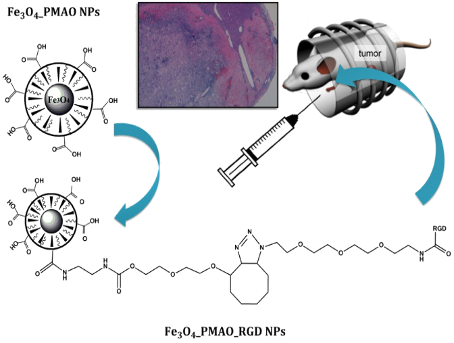
- acceleration voltage of 200 kV. Dynamic light scattering (DLS) measurements were carried out at 25 °C with a Nano ZS (Malvern Instruments) equipped with a solid-state He-Ne laser (λ = 633 nm) to determine the hydrodynamic diameter of the hydrosoluble NPs. The FTIR spectra of the nanoparticles and ligands were
- can be found in the Experimental section below. Structural, morphologic and spectroscopic characterization In order to know the characteristics and the magnetic response of the nanoparticles, X-ray diffraction (XRD), transmission electron microscopy (TEM), infrared spectroscopy (IR), dynamic light
- scattering (DLS) and thermogravimetric analysis (TGA) were performed. The XRD profiles of the synthesized Fe3O4 NPs confirmed the presence of nanocrystalline structures with quite broad diffraction peaks whose positions and relative intensities match well with the standard profile of the characteristic


On the pathway of cellular uptake: new insight into the interaction between the cell membrane and very small nanoparticles
Beilstein J. Nanotechnol. 2016, 7, 1296–1311, doi:10.3762/bjnano.7.121
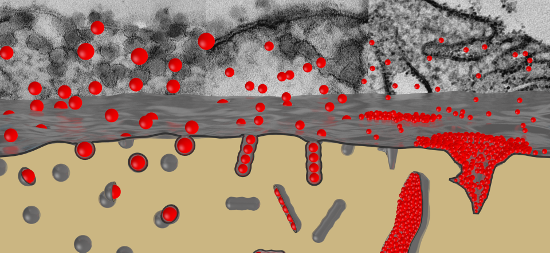
- using transmission electron microscopy (TEM) and dynamic light scattering (DLS), especially under consideration of the application conditions in physiological media. The three differently sized silica NPs investigated throughout this study, were used as purchased without further surface modification
- dispersions was determined gravimetrically. NP dispersions for cell applications were diluted with milli-Q water to achieve the desired concentration. Dynamic light scattering (DLS) experiments were performed on an ALV instrument consisting of a goniometer and an ALV-5000 multiple-tau full-digital correlator




Straightforward and robust synthesis of monodisperse surface-functionalized gold nanoclusters
Beilstein J. Nanotechnol. 2016, 7, 1278–1283, doi:10.3762/bjnano.7.118
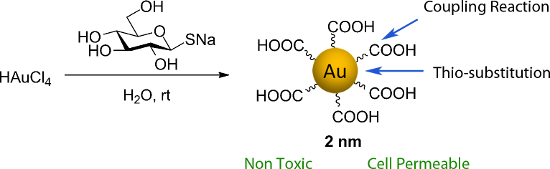
- dynamic light scattering (DLS) (Figure S4, Supporting Information File 1). The one-pot synthesis of Glc-NCs is independent on the temperature between 0 and 90 °C (Figure S5, Supporting Information File 1). The Glc-NCs are more stable than nanoclusters that were stabilized with cetyltrimethylammonium


Influence of synthesis conditions on microstructure and phase transformations of annealed Sr2FeMoO6−x nanopowders formed by the citrate–gel method
Beilstein J. Nanotechnol. 2016, 7, 1202–1207, doi:10.3762/bjnano.7.111
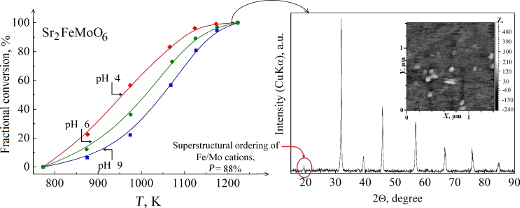
- agglomerates ranging in diameter from 0.7 to 1.2 µm. To obtain more information about the microstructural characteristics of the SFMO-4, SFMO-6, and SFMO-9 powder samples, dynamic light scattering (DLS) was also carried out. For these measurements, 10 mg of SFMO-4, SFMO-6, or SFMO-9 was dispersed in 20 mL of



Improved biocompatibility and efficient labeling of neural stem cells with poly(L-lysine)-coated maghemite nanoparticles
Beilstein J. Nanotechnol. 2016, 7, 926–936, doi:10.3762/bjnano.7.84
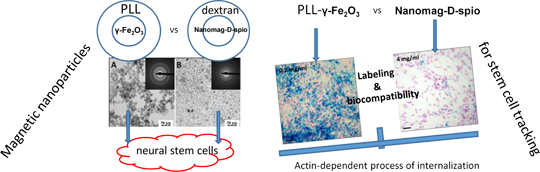
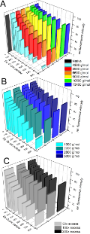
- , transmission electron microscopy (TEM) and dynamic light scattering (DLS) were used (Figure 1, Table 1). The average size of the PLL-γ-Fe2O3 nanoparticles (Figure 1A) was larger than that of nanomag®-D-spio nanoparticles (Figure 1B). The latter particles had a broader particle size distribution due to presence
- according to Equations 1–3, where ni is number of particles in class interval i with diameter Di [19]: The hydrodynamic diameter (z-average) was determined by the cumulative analysis of time correlation functions from dynamic light scattering (DLS) using an Autosizer Lo-C (Malvern Instruments Ltd., Malvern




Hierarchical coassembly of DNA–triptycene hybrid molecular building blocks and zinc protoporphyrin IX
Beilstein J. Nanotechnol. 2016, 7, 697–707, doi:10.3762/bjnano.7.62
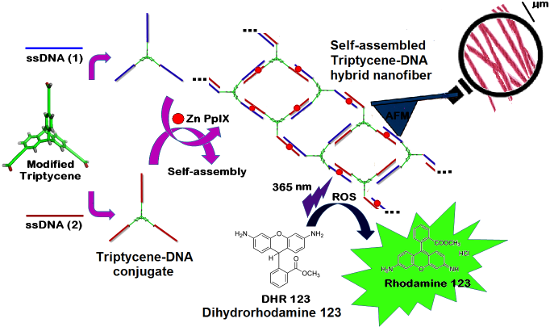
- stained with SYBR® Gold. The image was captured by an UVP-Gel documentation system. Dynamic light scattering (DLS) The size distributions of the DNA nanoconstructs in aqueous solution were obtained by CONTIN analysis of the DLS (Delsa Nano C Particle Analyser, Beckman-Coulter) data. The measurements have


Gold nanoparticles covalently assembled onto vesicle structures as possible biosensing platform
Beilstein J. Nanotechnol. 2016, 7, 655–663, doi:10.3762/bjnano.7.58
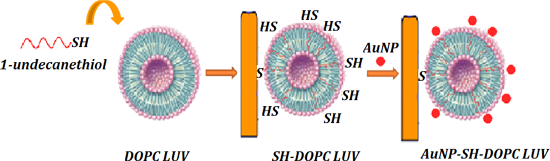
- order to covalently bind the AuNPs to the bilayer and to immobilize the vesicle on the Au electrode. This nanosystem was characterized by using UV–vis spectroscopy, transmission electron microscopy (TEM), dynamic light scattering (DLS) and cyclic voltammetry (CV). The results show that the vesicles were
- techniques discussed below. Nanomaterial characterization Dynamic light scattering (DLS) The diameters of the LUVs were determined by DLS (Malvern 4700 with goniometer and 7132 correlator) with an argon ion laser operating at 488 nm. All the measurements were performed by using a scattering angle of 90° at a


Surface coating affects behavior of metallic nanoparticles in a biological environment
Beilstein J. Nanotechnol. 2016, 7, 246–262, doi:10.3762/bjnano.7.23
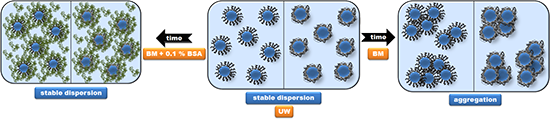
- ability [3][45]. In addressing the effects of surface coating on the stability and behavior of NPs in selected model biological environments, three types of widely used measurement techniques were employed: dynamic light scattering (DLS), electrophoretic light scattering (ELS) and transmission electron




pH-Triggered release from surface-modified poly(lactic-co-glycolic acid) nanoparticles
Beilstein J. Nanotechnol. 2015, 6, 2504–2512, doi:10.3762/bjnano.6.260
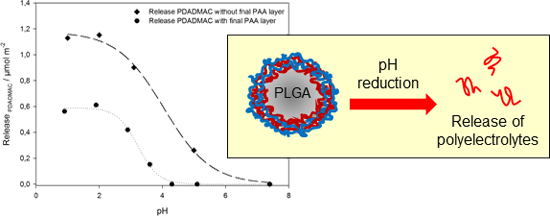
- calculated with respect to the monomeric unit of the corresponding compound. If needed, pH was adjusted by addition of 1 molar hydrochloric acid (HCl) and 1 molar sodium hydroxide solution (NaOH). Dynamic light scattering (DLS): Average particle size, polydispersity, and zeta potential were determined using


Fabrication of hybrid graphene oxide/polyelectrolyte capsules by means of layer-by-layer assembly on erythrocyte cell templates
Beilstein J. Nanotechnol. 2015, 6, 2310–2318, doi:10.3762/bjnano.6.237
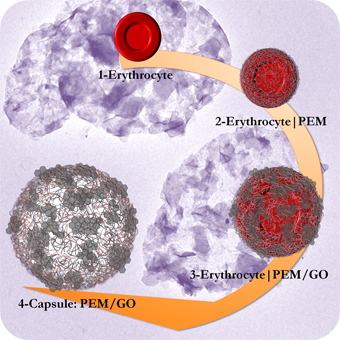
- polyallylamine hydrochloride (PAH) and polystyrenesulfonate sodium salt (PSS). Capsules where characterized by transmission electron microscopy (TEM), atomic force microscopy (AFM), dynamic light scattering (DLS) and Raman microscopy, the constituent layers by zeta potential and GO by TEM, XRD, and Raman and


Silica-coated upconversion lanthanide nanoparticles: The effect of crystal design on morphology, structure and optical properties
Beilstein J. Nanotechnol. 2015, 6, 2290–2299, doi:10.3762/bjnano.6.235
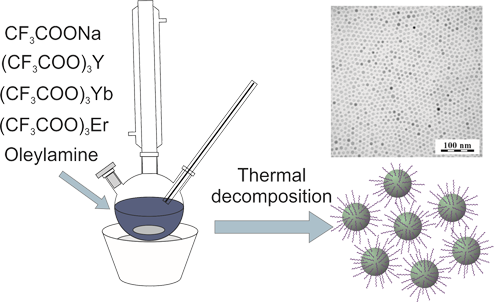
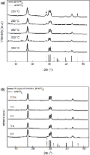
- and time on the properties of the particles was investigated. The nanoparticles were characterized by transmission electron microscopy (TEM), electron diffraction (ED), energy dispersive spectroscopy (EDX), dynamic light scattering (DLS), thermogravimetric analysis (TGA), elemental analysis and X-ray
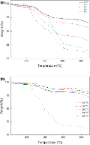
- particle size (Dh) was measured using dynamic light scattering (DLS) on a ZEN 3600 Zetasizer Nano Instrument (Malvern Instruments; Malvern, UK) at pH 1. Thermogravimetric analysis (TGA) was performed in air using a Perkin Elmer TGA 7 analyzer (Norwalk, CT, USA) from 30 to 850 °C at a heating rate of 10






An ISA-TAB-Nano based data collection framework to support data-driven modelling of nanotoxicology
Beilstein J. Nanotechnol. 2015, 6, 1978–1999, doi:10.3762/bjnano.6.202
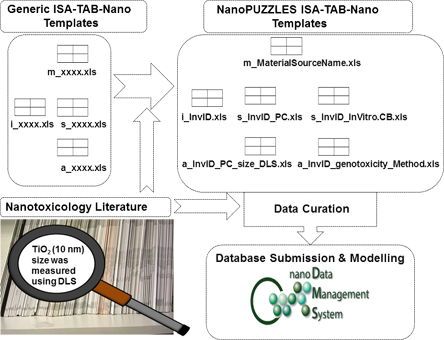
- [17][39].) The corresponding data points are presented in “Measurement Value [statistic(measurement name)]” columns, e.g., “Measurement Value [z-average(hydrodynamic diameter)]” for an Assay file describing dynamic light scattering (DLS) size measurements [41][42]. External files “External” files [17
- . For example, an Assay file template was designed for recording size measurements from a non-predetermined assay type (“a_InvID_PC_size_Method.xls”) in addition to some Assay file templates for recording size measurements obtained using specific assay types - such as dynamic light scattering (DLS
- technique such as dynamic light scattering (DLS). 15. A new “ImageLink” template was created (“ImageLink_NUMBER_for_InvID.xls”) for linking to images reported in publications which are not associated with a single file that can be redistributed as part of a dataset or uniform resource identifier (URI). The



NanoE-Tox: New and in-depth database concerning ecotoxicity of nanomaterials
Beilstein J. Nanotechnol. 2015, 6, 1788–1804, doi:10.3762/bjnano.6.183
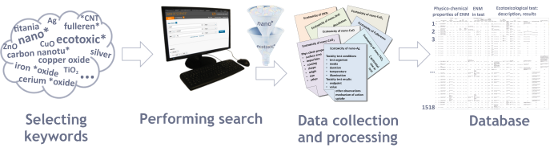
- size (59% of all the entries) that usually (in 82% of the entries) was measured using dynamic light scattering (DLS) method. The data on hydrodynamic sizes indicated that ENMs tend to agglomerate in test conditions as 69% of the reported sizes were larger than 100 nm (in comparison, nearly all


A facile method for the preparation of bifunctional Mn:ZnS/ZnS/Fe3O4 magnetic and fluorescent nanocrystals
Beilstein J. Nanotechnol. 2015, 6, 1743–1751, doi:10.3762/bjnano.6.178
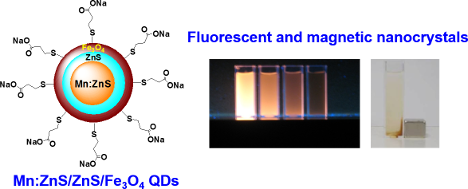
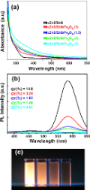
- heterostructures were characterized by X-ray diffraction (XRD), dynamic light scattering (DLS), transmission electron microscopy (TEM), UV–vis spectroscopy and photoluminescence (PL) spectroscopy. The PL spectra of Mn:ZnS/ZnS/Fe3O4 quantum dots (QDs) showed marked visible emission around 584 nm related to the 4T1
- is approximately 0.6 nm for Mn:ZnS/ZnS/Fe3O4 (1.5) QDs. The nanoparticles were characterized by their hydrodynamic diameter before and after the Fe3O4 coating using dynamic light scattering (DLS) (Table 1). The average hydrodynamic diameters, dH, are larger than the particles sizes determined using




Synthesis, characterization and in vitro biocompatibility study of Au/TMC/Fe3O4 nanocomposites as a promising, nontoxic system for biomedical applications
Beilstein J. Nanotechnol. 2015, 6, 1677–1689, doi:10.3762/bjnano.6.170
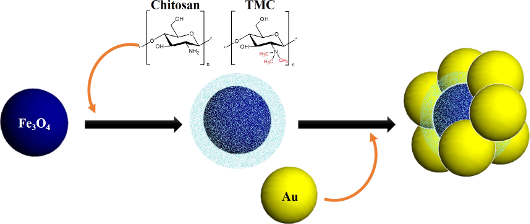
- (VSM), energy dispersive X-ray diffraction (EDXD), dynamic light scattering (DLS), and thermogravimetric analysis (TGA). Results and Discussion In this study we successfully designed, synthesized, and compared two hybrid magnetic–gold nanocomposites by applying chitosan and one of its well-known




PLGA nanoparticles as a platform for vitamin D-based cancer therapy
Beilstein J. Nanotechnol. 2015, 6, 1306–1318, doi:10.3762/bjnano.6.135
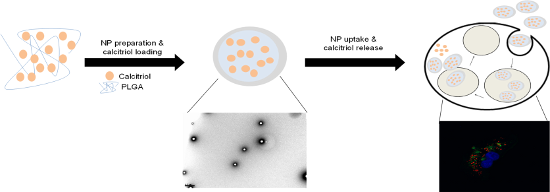
- parameters used to characterize the produced nanoparticles. The size distribution and zeta potential were determined by dynamic light scattering (DLS) and electrophoretic light scattering (ELS), respectively, using a ZetaSizer Nano ZS (Malvern Instruments, Worcestershire, UK). The size distribution was given


Synthesis, characterization and in vitro effects of 7 nm alloyed silver–gold nanoparticles
Beilstein J. Nanotechnol. 2015, 6, 1212–1220, doi:10.3762/bjnano.6.124
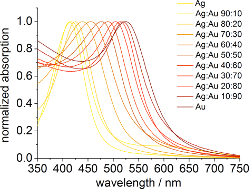
- important factor for subsequent in vitro experiments) was carried out by multiple ultracentrifugation steps. Characterization by transmission electron microscopy (TEM), differential centrifugal sedimentation (DCS), dynamic light scattering (DLS), UV–vis spectroscopy and atomic absorption spectroscopy (AAS
- size and morphology of the nanoparticles were determined by transmission electron microscopy (TEM), differential centrifugal sedimentation (DCS) and dynamic light scattering (DLS). TEM showed that the nanoparticles were nearly monodisperse, quasi-spherical, polycrystalline, and had a uniform diameter
- ) latex in water with a particle size of 476 nm provided by CPS Instruments. The calibration was carried out prior to each run. A sample volume of 100 µL was used. Dynamic light scattering (DLS) was carried out on a Malvern Zetasizer Nano ZS ZEN 3600 instrument (25 °C, laser wavelength 633 nm). The


Microwave assisted synthesis and characterisation of a zinc oxide/tobacco mosaic virus hybrid material. An active hybrid semiconductor in a field-effect transistor device
Beilstein J. Nanotechnol. 2015, 6, 785–791, doi:10.3762/bjnano.6.81
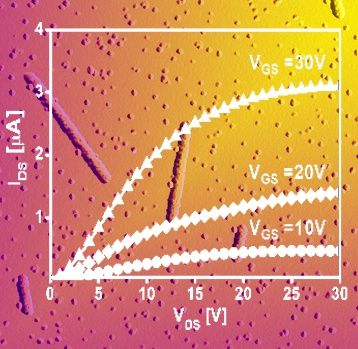
- using Tecnai F20 G20 (FEI) electron microscope working at 200 kV, using lacey carbon coated copper grids. Dynamic light scattering (DLS) measurements for the ZnO suspensions were carried out using a Zetasizer Nano (Malvern). Atomic force microscopy was performed with CP-II (Bruker-Veeco) microscope
- light scattering (DLS), transmission electron microscopy (TEM), grazing incidence X-ray diffractometry (GI-XRD) and atomic force microscopy (AFM). TEM and DLS data confirm the formation of crystalline ZnO nanoparticles tethered on top of the virus template. GI-XRD investigations exhibit an orientated
- was employed to synthesize stable zinc oxide (ZnO) nanoparticles, employing a molecular precursor. Insightful studies of the decomposition of the precursor were done using NMR spectroscopy and material characterization of the hybrid material derived from the decomposition was achieved using dynamic


Pulmonary surfactant augments cytotoxicity of silica nanoparticles: Studies on an in vitro air–blood barrier model
Beilstein J. Nanotechnol. 2015, 6, 517–528, doi:10.3762/bjnano.6.54
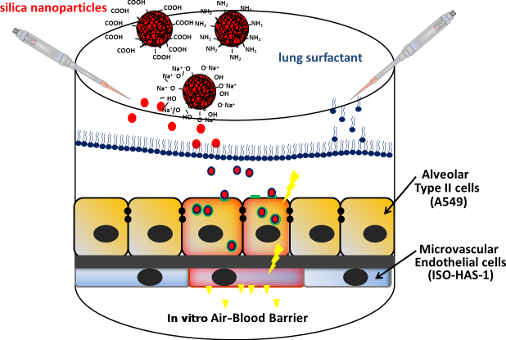
- nanoparticles. Particle size was determined using the method of dynamic light scattering (DLS). Thus, the reported sizes are z-weighted mean values of the hydrodynamic diameter. Particle diameters were measured in cell culture medium (RPMI 1640) and, for reference, in water (containing 2 mmol/L sodium bromide


Tailoring the ligand shell for the control of cellular uptake and optical properties of nanocrystals
Beilstein J. Nanotechnol. 2015, 6, 232–242, doi:10.3762/bjnano.6.22
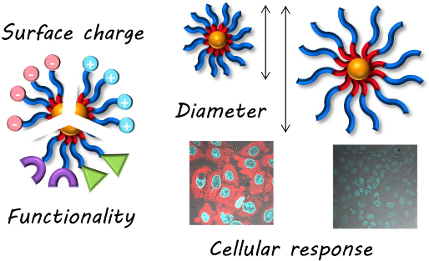
- -b-PEGs in water was investigated and showed the expected behavior depending on the size and block length ratio of the polymer [19]. The analytical data of the used characterization methods like dynamic light scattering (DLS) and fluorescence microscopy are summarized in Figure 1. As can be seen from






Intake of silica nanoparticles by giant lipid vesicles: influence of particle size and thermodynamic membrane state
Beilstein J. Nanotechnol. 2014, 5, 2468–2478, doi:10.3762/bjnano.5.256
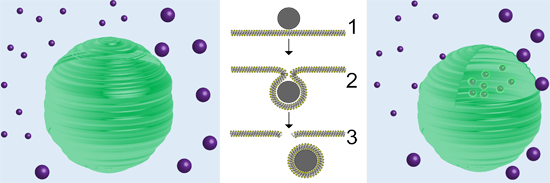
- . This is to prevent osmotic tension of the vesicle membrane at the beginning of an experiment. The colloidal stability of the particles under these conditions was confirmed by dynamic light scattering (DLS). Figure 9 describes the easy experimental procedure. Due to the slight density difference between